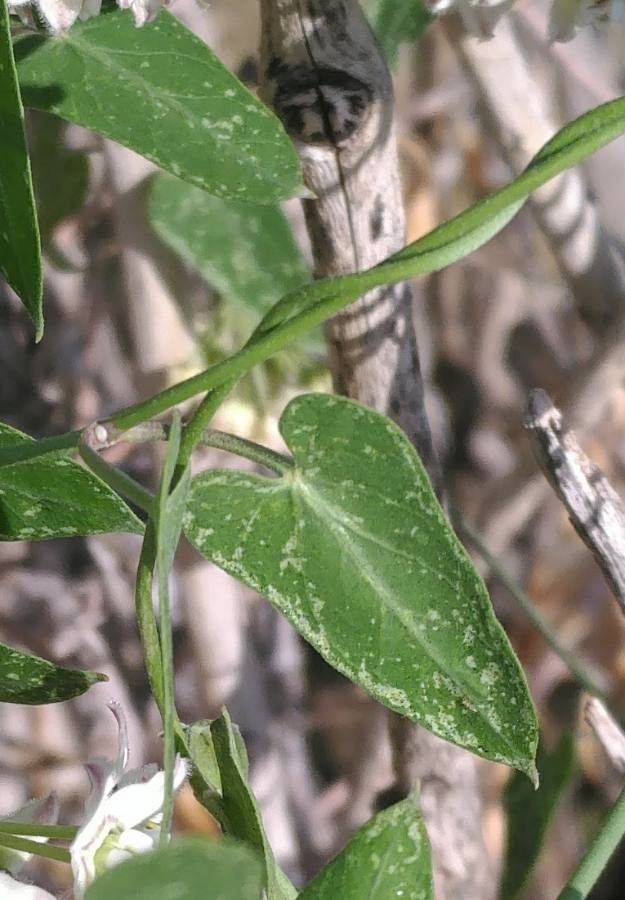
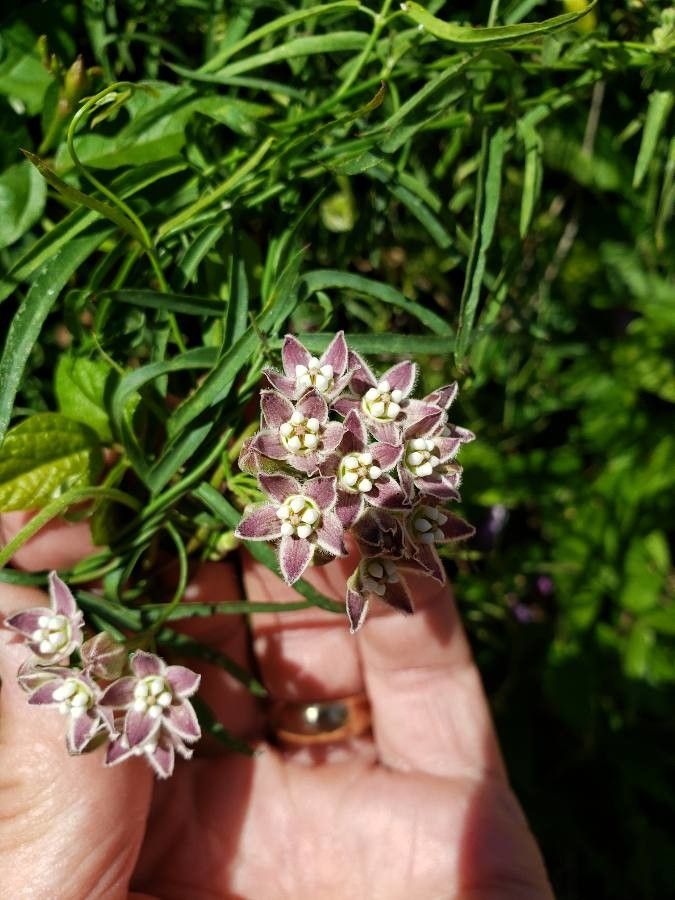
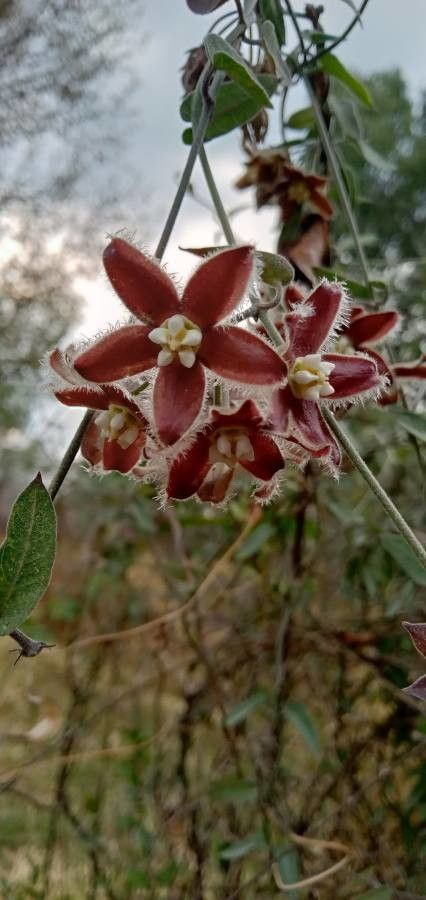
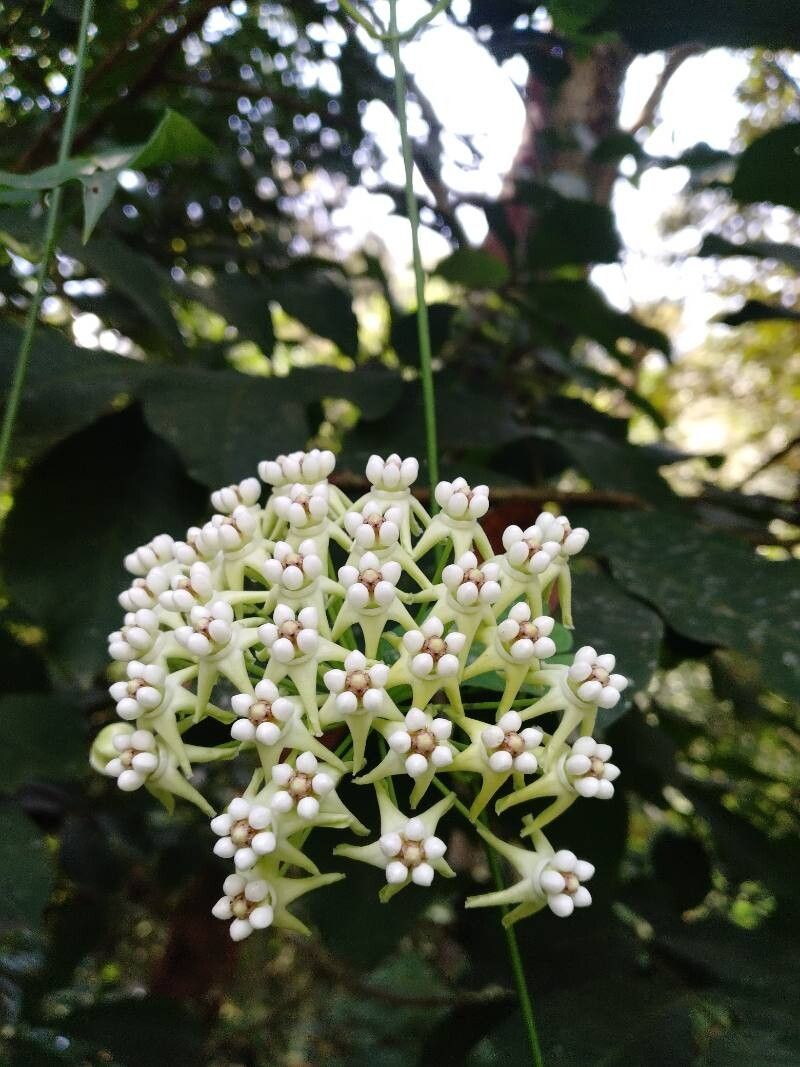
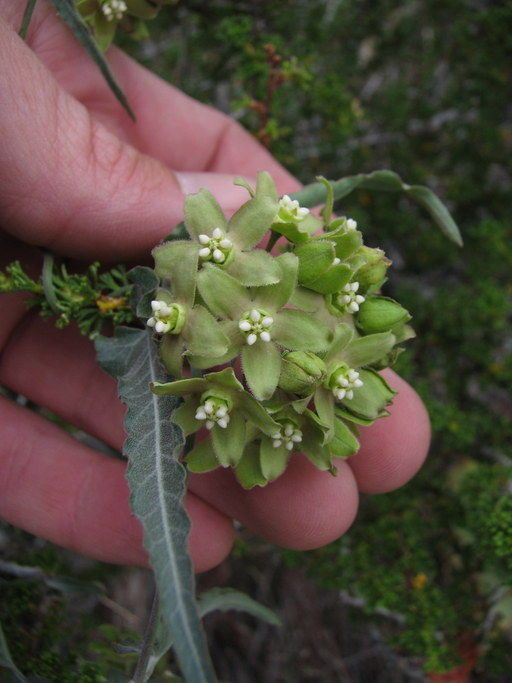
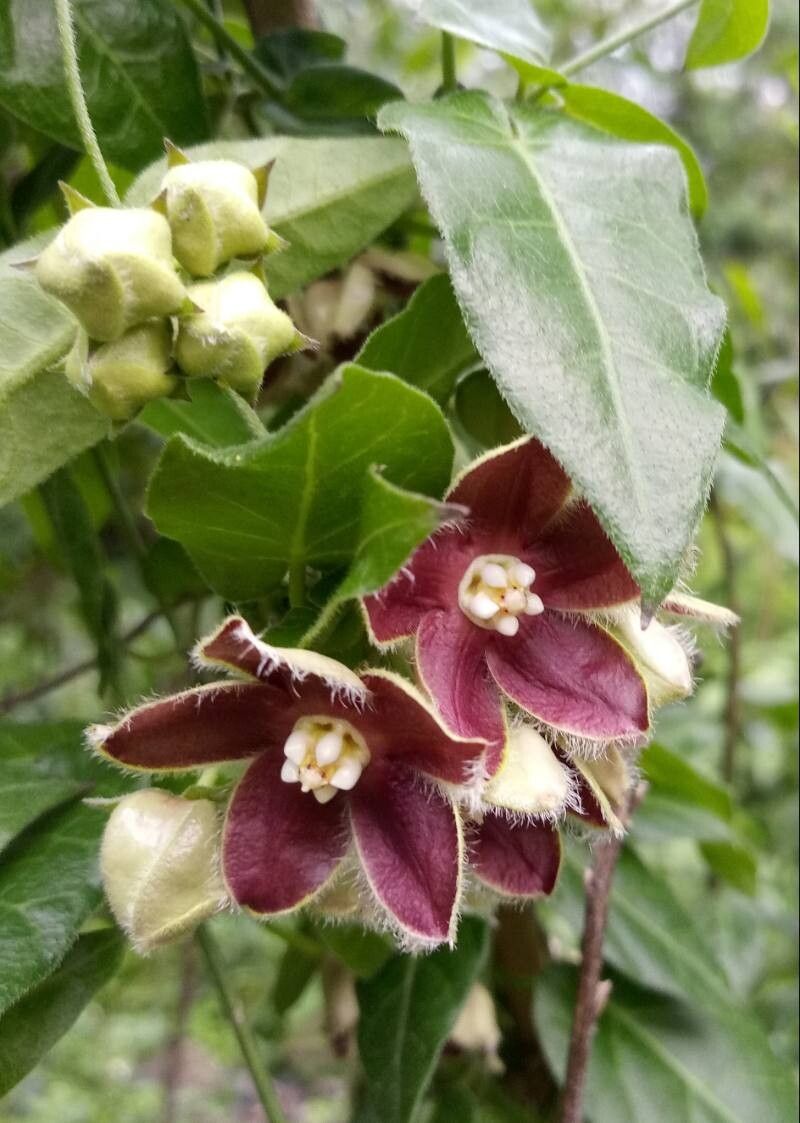
Funastrum cynanchoides, commonly known as the climbing milkweed or honeyvine milkweed, is a perennial vine belonging to the Apocynaceae family. Native to North America, it thrives in a variety of habitats such as prairies, woodlands, and disturbed areas. The plant can grow up to 20 feet in length and features slender stems with opposite leaves that are ovate or lanceolate in shape.
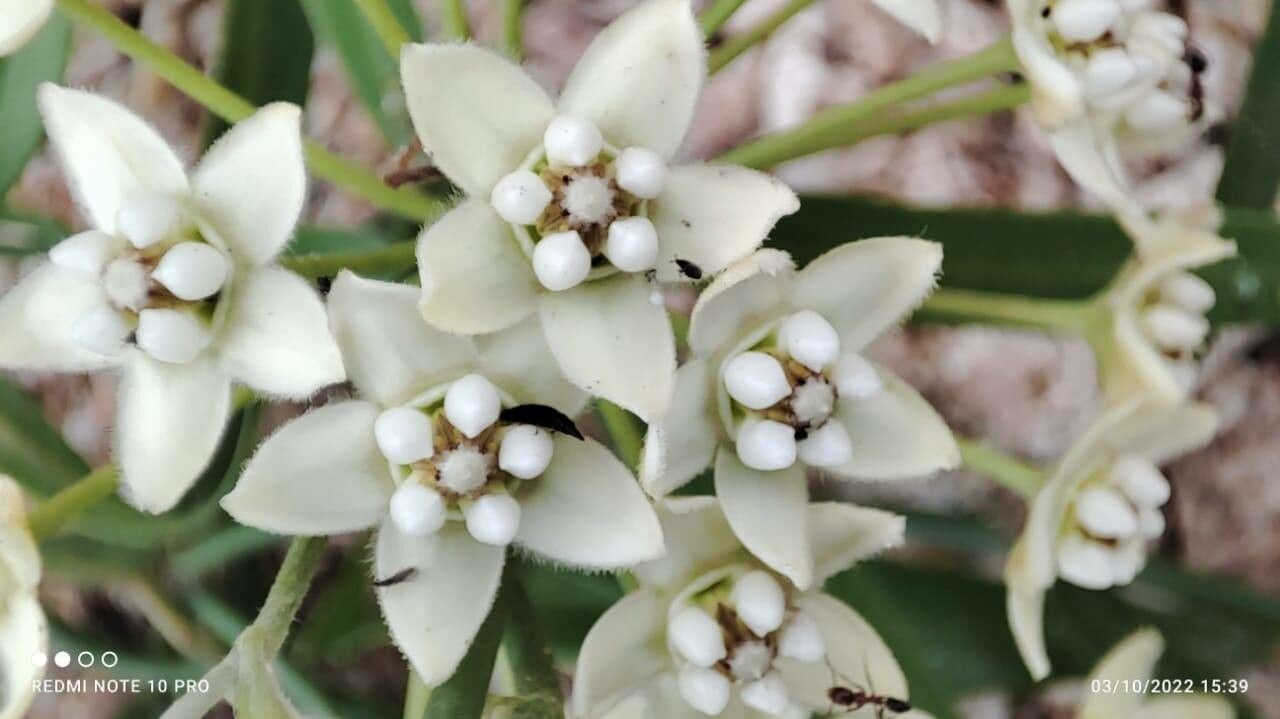
The flowers of Funastrum cynanchoides are small, white with a pinkish tint, and bloom from June to September. These blossoms attract a range of pollinators, including bees, butterflies, moths, and hummingbirds. The plant also produces long pods filled with seeds that are dispersed by the wind.
Historically, Native Americans have used Funastrum cynanchoides for medicinal purposes to treat various ailments such as snake bites, stomach problems, and headaches. However, it is important to note that the plant contains toxic compounds which can be harmful if ingested.
The climbing milkweed is significant for monarch butterflies, as it serves as an important host plant for them. Monarch butterflies lay their eggs on its leaves, and the larvae feed on the leaves, which contain toxic compounds called cardenolides. These compounds make the larvae unpalatable to predators.
Overall, Funastrum cynanchoides is an important native species that provides ecological benefits and holds cultural significance due to its medicinal uses by Native Americans.
Fringed twinevine has good resistance to disease and is generally not susceptible to illnesses. However, it can be vulnerable to pests and diseases present in its surroundings. These problems are usually not severe. In terms of care, this plant needs moderate maintenance. It should be pruned regularly to maintain a pleasing appearance and healthy growth. Applying fertilizer can also help encourage flowering. Fringed twinevine is appropriate for anyone with an outdoor area, such as a garden or patio, and does not require extensive care experience. It may demand more attention when grown indoors.
How to keep Funastrum Cynanchoides.
Light
The fringed twinevine requires moderate sunlight. Excessive sun can scorch it, while too little light may slow its growth. Its native habitat provides this balance; places with a mixture of sun and shade most closely replicate those conditions. Its growth stages typically follow the same sunlight requirement.
Water
Fringed twinevine thrives in an environment with moderate humidity and occasional rainfall, needing consistent moisture without becoming waterlogged. Water the plant weekly, and during the growing season, provide additional irrigation if it's growing outdoors to encourage robust growth.
Temperature
Fringed twinevine is a plant adapted to native temperate environments, preferring heat and thriving in temperatures ranging from 68 to 105.8 °F (20 to 41 ℃). Slight adjustments to planting zones may be necessary based on seasonal temperature changes.
Fertilizer
Fringed twinevine needs the most fertilizer during its active growing period, which occurs mainly in spring, summer, and early fall. Fertilizing is needed to supply essential nutrients the soil may lack, encouraging healthy root and stem growth and the attractive foliage that is a key characteristic of this plant.
Botanical profile.
- Plant Type
- Herb, Vine
- Life Cycle
- Perennial
- Genus
- Funastrum
- Family
- Apocynaceae
- Hardiness Zone
- 9-13
- Mature Height
- 4.57 m to 6.1 m
- Mature Spread
- 61 cm
- Leaf Color
- Green, Dark Green
- Leaf Type
- Deciduous
- Flower Color
- White
- Flower Size
- 2.54 cm
- Bloom Time
- Late spring, Summer, Early fall, Mid fall
- Planting Time
- Spring, Summer, Autumn
- Harvest Time
- Late summer, Fall
- Native Area
- Mexico
Other names.
Reader questions.
What are the sunlight requirements for the Fringed twinevine plant?
The Fringed twinevine plant thrives under moderate exposure to sunlight, necessitating about 3-6 hours of sunlight daily. It's crucial to watch how sunlight transitions through your garden, aiming for spots that offer a harmonious blend of light and shade, to ensure optimal growth and health of your plants. Excessive sun exposure can scorch the plant, while insufficient light might impede its growth. Mimicking its natural habitat, which comprises mixed sun and shade, is beneficial for its development.
What is the ideal temperature range for growing Fringed twinevine?
Fringed twinevine thrives in temperatures between 68 to 105.8 °F (20 to 41 °C), favoring heat and native to environments with temperate climates. It is an extremely heat-loving plant, and exposure to cold can harm it. In transitioning seasons, it's recommended to make slight adjustments to planting zones to accommodate the plant's temperature preferences. During colder months, maintaining indoor temperatures above the plant's minimum tolerance level will promote healthy growth, while ensuring that it is not placed too close to heaters to avoid damage.
How can artificial lighting benefit indoor Fringed twinevine plants, and what are the guidelines for using it?
Artificial lighting plays a vital role in the growth of indoor plants, particularly when natural sunlight is scarce, like in winter or less sunny spaces. It promotes faster, healthier growth by providing essential wavelengths of light. For optimal growth, LED lights are recommended due to their ability to be customized according to the plant's needs. Full sun plants require 30-50W/sq ft of artificial light, partial sun plants 20-30W/sq ft, and full shade plants 10-20W/sq ft. The light source should be placed 12-36 inches above the plant to mimic natural sunlight conditions, and most plants will need 8-12 hours of light per day to thrive.
How does low temperature affect Fringed twinevine, and what are the recommended solutions?
Fringed twinevine is sensitive to low temperatures and performs best above its minimum suitable growth temperature. Exposure to temperatures below its growth limit may result in leaves lightening in color, and following a frost, the foliage may turn brown or black, exhibiting wilting and drooping as signs of damage. To protect the plant from cold damage, remove frost-affected parts and move it to a warm, indoor environment. Placement near a south-facing window is ideal for ample sunlight, but it's crucial to avoid direct heat sources, such as heaters or air conditioning vents, to mitigate air dryness.
What are key symptoms of inadequate light for Fringed twinevine, and how do they impact the plant?
Key symptoms of inadequate light for Fringed twinevine include the growth of smaller leaves, leggy or sparse growth, faster leaf drop, slower or halted new growth, and the development of lighter-colored or irregularly patterned new leaves. Chlorosis, leaf curling, wilting, leaf scorching, and sunscald are also notable symptoms indicating either too much or too little light exposure. These conditions can affect the plant's health by reducing its ability to photosynthesize, conserve water, and maintain structural integrity, leading to potential damage or decreased growth.
What should be done if Fringed twinevine experiences high temperatures?
During hotter months, it's vital to ensure that Fringed twinevine's temperature does not exceed its maximum tolerable limit. High temperatures can cause leaf discoloration and increase susceptibility to sunburn. To mitigate this, affected areas of the plant should be trimmed, and the plant should be relocated to a spot shielded from the intense midday and afternoon sun. Adequate watering practices, such as watering in the morning and evening, are essential to maintain soil moisture and support the plant under high temperature conditions.
What solutions can support the recovery and continued growth of Fringed twinevine in suboptimal light conditions?
To support the recovery and growth of Fringed twinevine in various light conditions, gradual adjustment to more suitable lighting conditions is key. For indoor plants, progressively shifting them to sunnier spots or employing artificial lights like desk or ceiling lamps for at least 8 hours daily can be beneficial. Outdoor plants should be moved gradually to sunnier locations to prevent sunburn, with consideration of the plant's natural adaptation process. Reducing environmental obstructions or transplanting to more optimally lit locations can further ensure that your plants receive adequate sunlight. It's essential to note that while parts of the plant affected by insufficient light may not recover, new growth should reflect healthier development under improved lighting conditions.