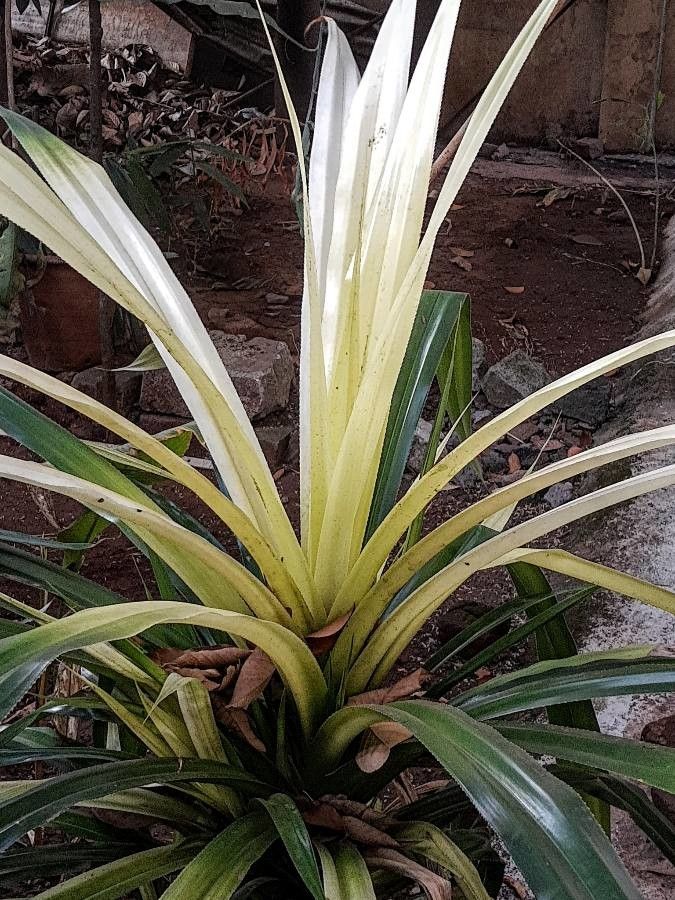
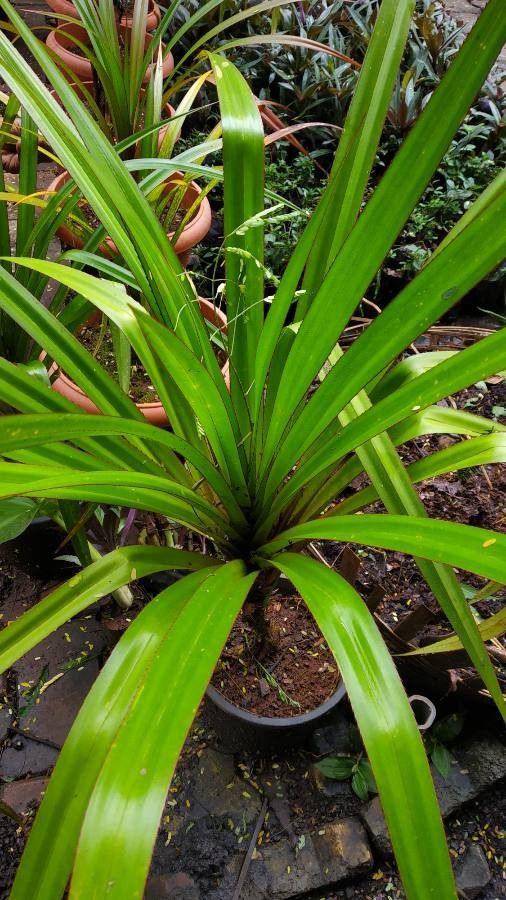
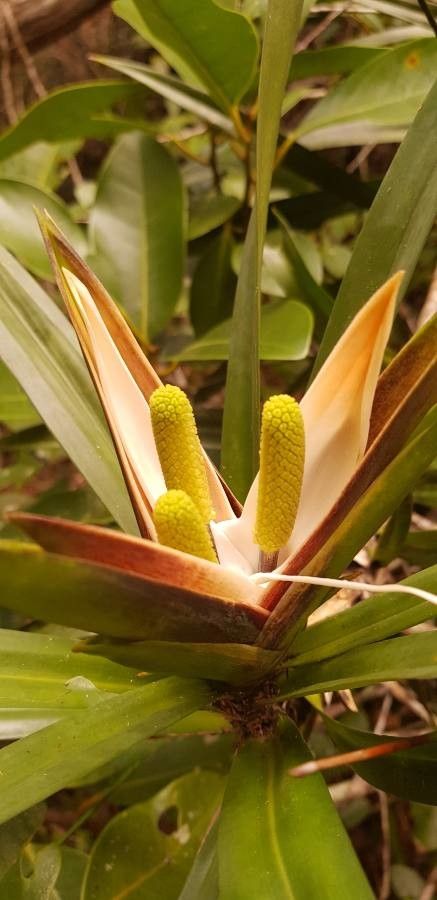
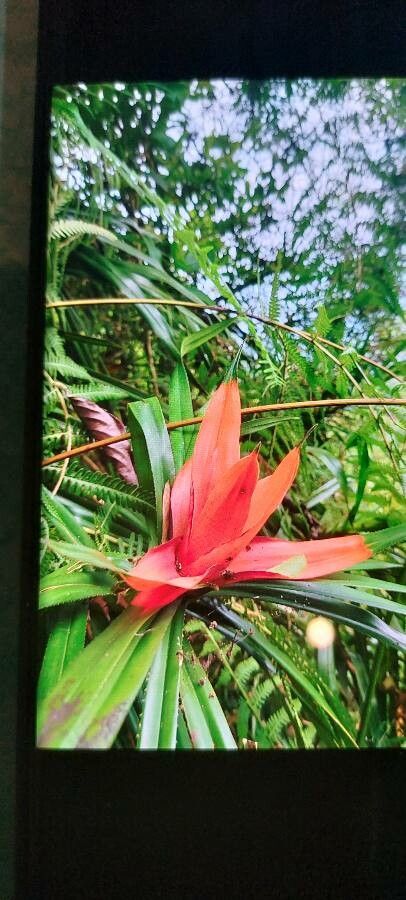
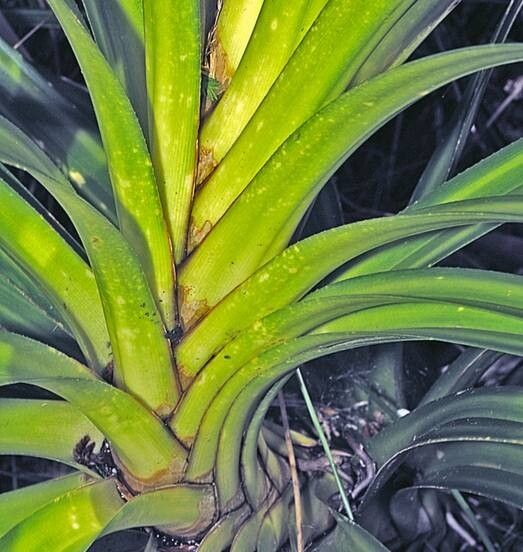
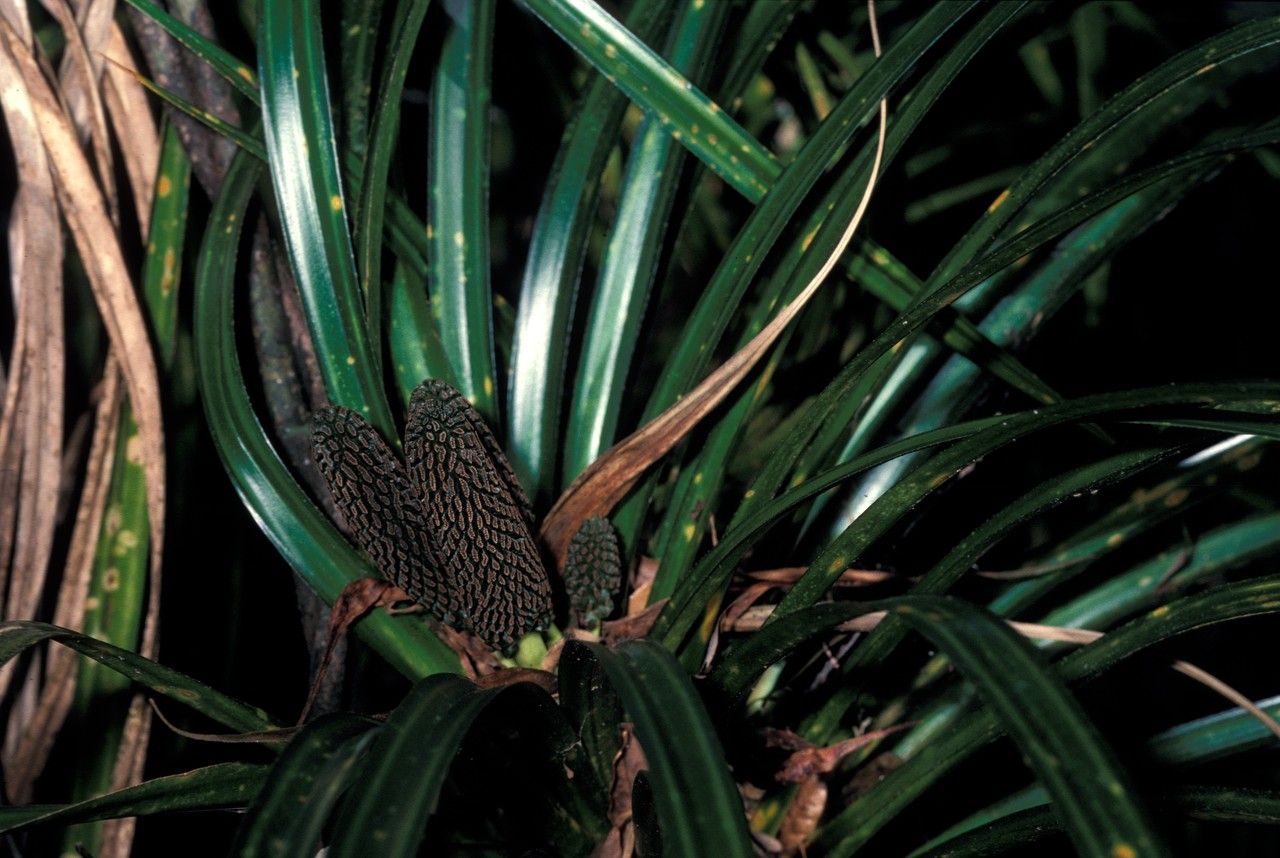
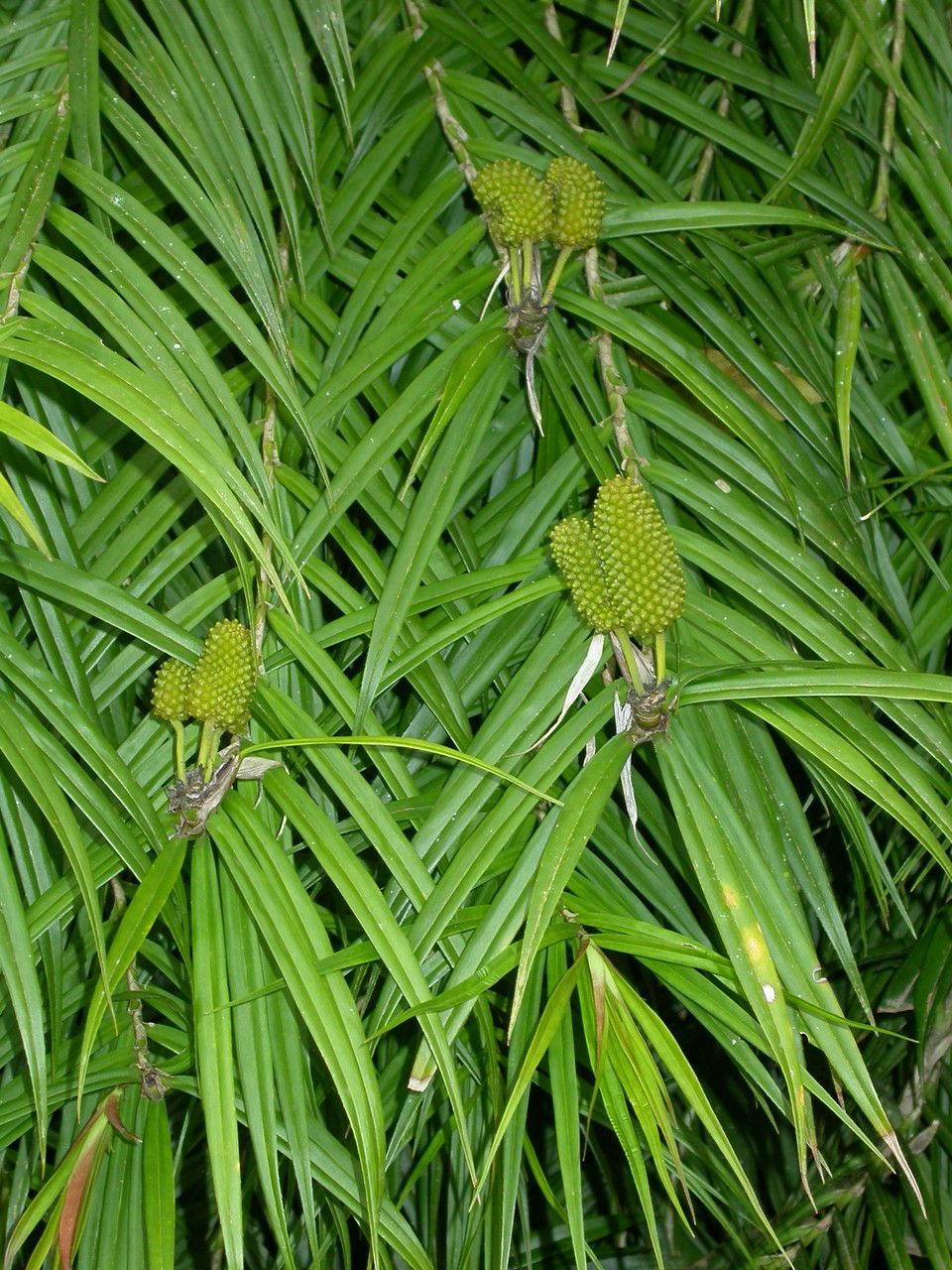
Freycinetia arborea, commonly known as the climbing pandan or forest pandan, is a species of flowering plant belonging to the family Pandanaceae. This plant is native to Southeast Asia and can be found in countries such as Malaysia, Indonesia, and the Philippines. Freycinetia arborea is a robust woody vine that can grow up to 20 meters long, equipped with aerial roots that facilitate its climb up trees or other structures. The plant features long, narrow leaves with pointed tips that can measure up to 60 centimeters in length. Its small, inconspicuous flowers, characterized by white petals, grow on spikes. Indigenous communities have traditionally utilized Freycinetia arborea for various purposes. The leaves are commonly woven into baskets and mats, while the roots have been used for medicinal purposes. This plant thrives in moist environments such as rainforests but can also tolerate drier conditions once it becomes established. It plays an important role in forest ecosystems by providing habitat for a variety of animals, including birds and insects. In summary, Freycinetia arborea is a fascinating species with cultural significance and plays a vital ecological role in the forests of Southeast Asia.
White eye has good resistance to disease and is generally not susceptible to illnesses. In terms of care, the plant is relatively low-maintenance. When grown outdoors it needs minimal watering, and larger specimens typically do not require pruning. Smaller plants, however, should be pruned after they have finished blooming. White eye is suitable for anyone with outdoor space, such as a garden or deck, and does not demand much care experience.
How to keep Freycinetia Arborea.
Light
White eye is native to the understory of tropical forests, flourishing in deep shade with occasional dappled sunlight and able to adapt to settings with very little direct sun.
Water
The white eye plant, native to the humid tropical understories, thrives best in evenly moist soil but can tolerate drought conditions once it's well established. Water the plant every three weeks, making sure that the soil never completely dries out. When grown indoors, it's important to maintain humidity levels to support the plant's growth, as this evergreen retains its greenery even with limited water.
Temperature
White eye comes from tropical areas, which generally have warm, humid climates. Consequently, it is well adapted to high heat and humidity. It does not tolerate sudden temperature changes and prefers a stable temperature environment, so avoiding indoor temperature fluctuations is important. It typically cannot withstand cold and needs higher temperatures to grow. If the environmental temperature falls too low, the plant may stop growing or even die.
Fertilizer
The best time to fertilize a White eye is in early spring, as it breaks dormancy. This stimulates overall growth and flower development. Fertilization improves foliage, stems, and branches, while encouraging large, vibrant, and long-lasting flowers. It helps transport nutrients from the roots to the blooms and enhances the plant's health and disease resistance.
Pruning
To keep your white eye plants healthy and thriving, it's important to prune them annually in early spring. Begin by removing any dead or diseased stems, and then trim back overgrown areas to maintain the desired shape. When pruning, make your cuts just above leaf nodes to encourage new growth. This practice promotes healthy development, improves air circulation, and reduces competition for sunlight, all of which contribute to a vibrant and flourishing white eye.
Botanical profile.
- Plant Type
- Vine
- Life Cycle
- Perennial
- Genus
- Freycinetia
- Family
- Pandanaceae
- Hardiness Zone
- 10-12
- Mature Height
- 3.05 m
- Mature Spread
- 4.57 m
- Leaf Color
- Dark Green
- Leaf Type
- Evergreen
- Flower Color
- Orange
- Flower Size
- 10.16 cm
- Bloom Time
- Late spring, Summer
- Planting Time
- Spring, Summer, Autumn
- Harvest Time
- Late summer, Fall
- Native Area
- Vanuatu
Other names.
Reader questions.
What are the sunlight requirements for White eye plants?
White eye plants originate from the understory of tropical forests, thriving in full shade with dappled sunlight. They prefer full shade, receiving less than 3 hours of direct sunlight, but can tolerate partial sun, which means about 3-6 hours of sunlight. It's crucial to observe how sunlight moves through your garden to find spots that provide the perfect balance of light and shade, ensuring the plants' well-being.
How can artificial lighting support White eye plants indoors?
Indoor White eye plants require adequate lighting for optimal growth, especially when natural sunlight is insufficient, like in winter or less sunny spaces. Artificial lights, like LED lights, are beneficial as they can be customized to provide specific wavelengths needed by plants. Full sun plants need 30-50W/sq ft, partial sun plants need 20-30W/sq ft, and full shade plants need 10-20W/sq ft of artificial light. The light source should be placed 12-36 inches above the plant to mimic natural sunlight, and plants generally need 8-12 hours of light per day.
What are the symptoms of light deficiency in White eye plants?
Symptoms of light deficiency in White eye plants can include small new leaves, leggy or sparse growth, faster leaf drop, slower or no new growth, and lighter-colored new leaves. Other issues like chlorosis, sunscald, leaf curling, wilting, and leaf scorching may occur due to inappropriate light conditions. These symptoms show the plant struggling with either too little or too much sunlight, indicating the need for adjustments in their light exposure.
What solutions are available for light-related issues in White eye plants?
To address light-related issues in White eye plants, indoors, ensure they receive ample filtered light, including brief periods of direct morning sunlight, ideally placing them 1-2 meters away from a window. Use artificial light for at least 8 hours daily if natural light is insufficient. Outdoors, gradually adapt plants to sunnier spots to avoid sunburn. For ground plants, reduce obstructions like tree branches that block sunlight or consider transplanting them during their dormant period to a location with ample sunlight. Remember, parts of the plant that have been adversely affected by insufficient sunlight may not recover, but new growth can be healthy with improved light exposure.