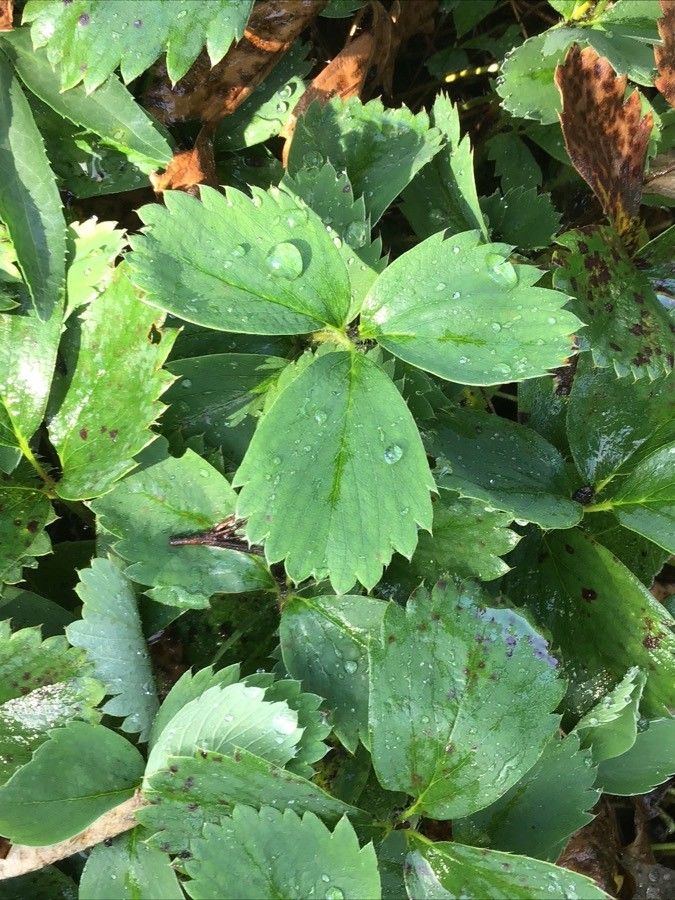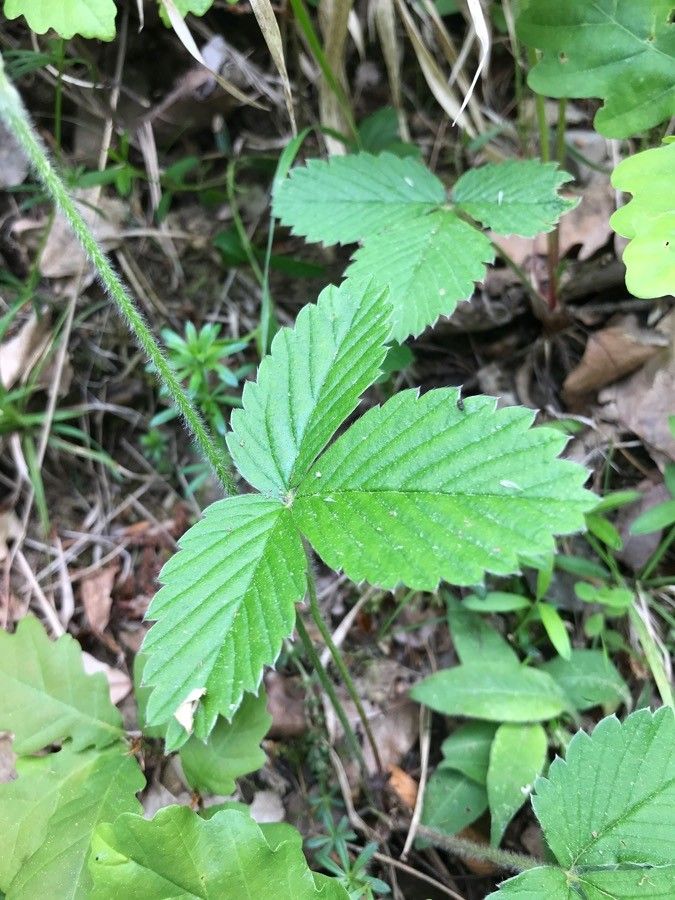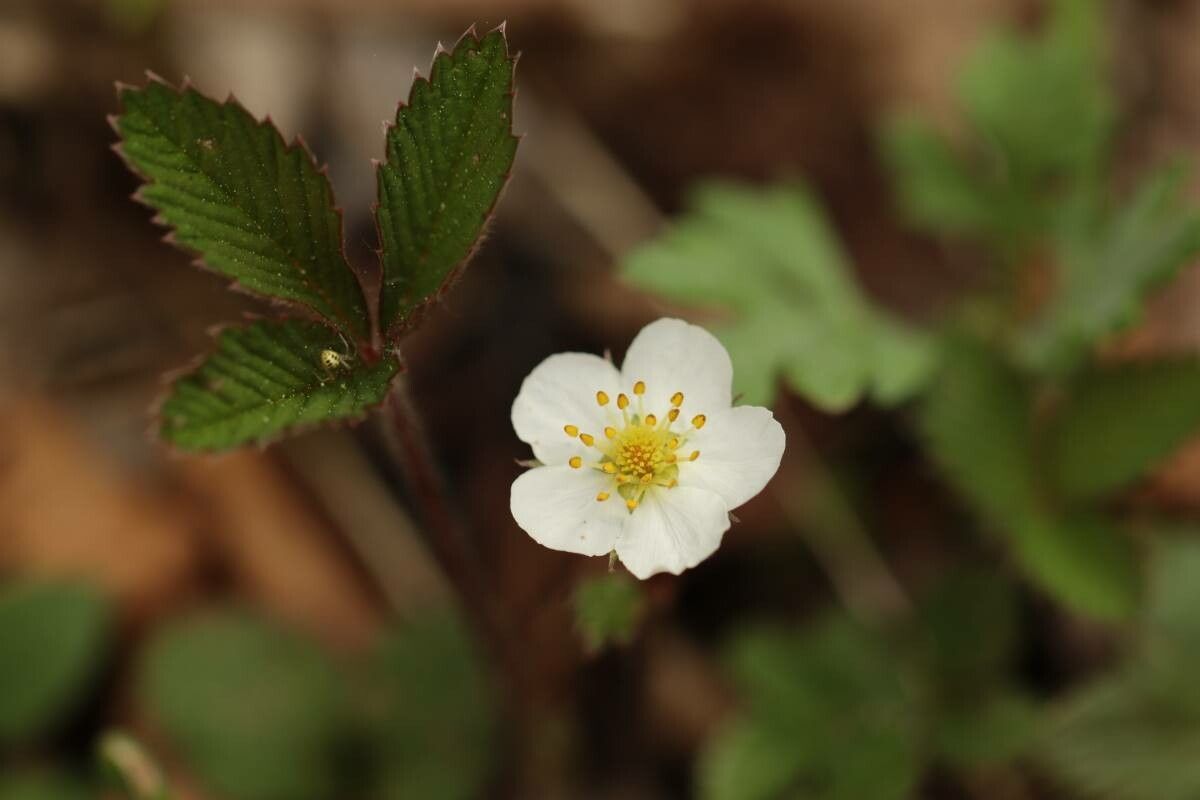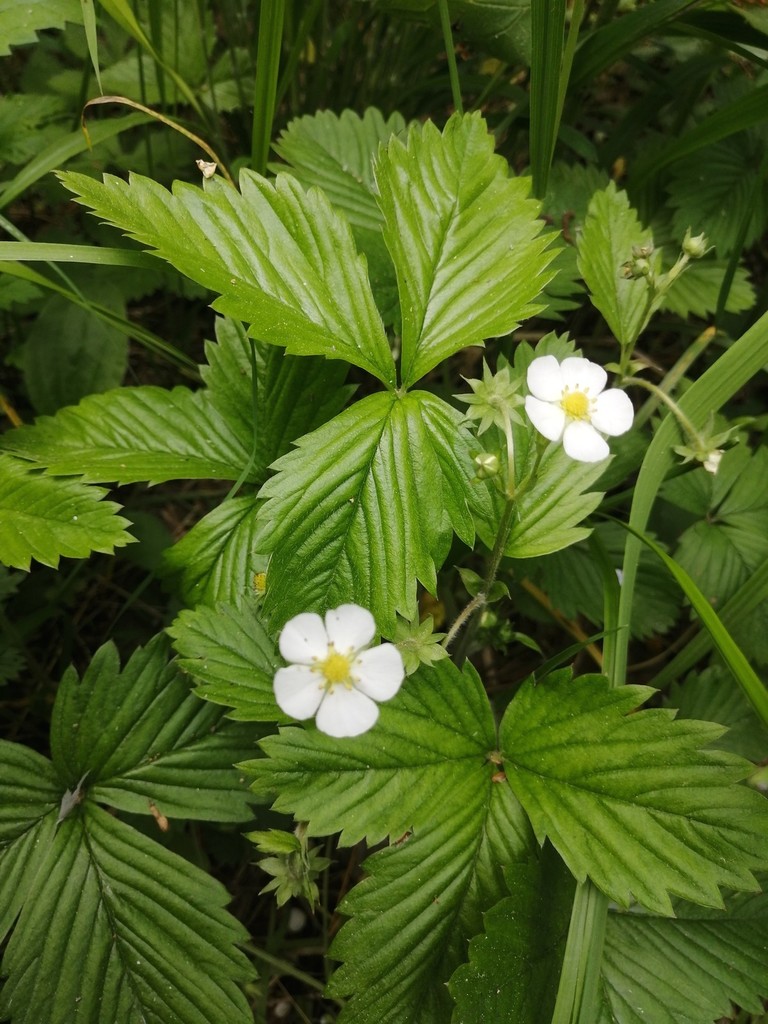
Fragaria vesca—commonly known as wild strawberry or woodland strawberry—is a perennial herbaceous plant in the Rosaceae family. It is native to Europe, Asia, and North America, and can be found thriving in woodlands, meadows, and along roadsides. This low-growing plant produces runners that can extend up to 30 cm in length. The leaves of Fragaria vesca are trifoliate with toothed edges, typically measuring 5-15 cm long. The flowers, which bloom from April to June, are white or pinkish-white with five petals. The plant produces small red berries that are sweet in taste. For centuries, Fragaria vesca has been valued for its medicinal properties, owing to its high content of vitamin C, antioxidants, and anti-inflammatory compounds. It has traditionally been used to treat digestive disorders such as diarrhea, dysentery, and stomach ulcers. Beyond its medicinal uses, Fragaria vesca is an important food source for wildlife, including birds and small mammals. Its attractive appearance and delicious fruit also make it a popular choice for cultivation in gardens. In summary, Fragaria vesca is a significant herbaceous perennial that offers medicinal benefits while playing an essential ecological role by providing food for various wildlife species.
Woodland Strawberry: Many of my childhood memories involve collecting wild fruits in the hills, and my favorite among them is the woodland strawberry. These fruits resemble miniature strawberries, and their vibrant red color is truly appealing. Not only do they look delightful, but they also have a deliciously sweet and sour taste that has led them to become a commercial favorite. Since they grow naturally in the woods along hillsides, they are aptly named woodland strawberries.
Wild strawberry is fairly disease-resistant and typically does not suffer from many illnesses. Still, it can be affected by pests and diseases present in its environment. Such infections are generally mild. Regarding upkeep, this plant needs moderate maintenance. It should be pruned regularly to preserve a neat appearance and healthy growth. Fertilizing can also encourage flowering. Wild strawberry is well suited for anyone with outdoor space, like a garden or patio, and does not demand extensive care experience. When grown indoors, it may require more attention.
How to keep Fragaria Vesca.
Light
Wild strawberry grows best with plentiful sunlight, enjoying the brightness of the day. This trait reflects its natural habitat — clearings or the edges of forests, where the sun often shines. While it does well in those conditions, it can also prosper in light shade. However, both too little and too much sun can reduce its growth and fruit production.
Water
The woodland strawberry, native to the understories of temperate forests, thrives in moist, well-drained soil with consistent moisture levels. While it requires weekly watering, it also shows moderate drought tolerance. This herbaceous perennial grows well outdoors where it can benefit from natural rainfall, but it also adapts nicely to container gardening, which allows for controlled moisture throughout the growing season.
Humidity
This plant needs special care because it loves high humidity levels of 60-80% or more. The best way to achieve this is by placing a humidifier near the plant. Daily misting is also essential! Make sure the room has good ventilation.
Temperature
The wild strawberry prefers temperatures from 41 to 95 ℉ (5 to 35 ℃), reflecting the conditions of its native habitat. It can tolerate seasonal temperature shifts as long as they remain within that preferred range.
Fertilizer
One fertilizer application in spring is generally enough for Wild strawberry, although multiple feedings can maximize growth. Apply fertilizer about once a month to once every six weeks. Fertilizing improves the leaves' appearance and function, helping maintain even color and a healthy texture. It also promotes root development and nutrient uptake, supporting long-term plant health.
Pruning
To ensure healthy growth and increased fruit yield, it's important to care for woodland strawberries with proper pruning. Begin by pruning in early to late spring to remove old, damaged leaves and thin out overcrowded runners. This encourages better growth. After the fruiting season, prune again to help rejuvenate the plants. Regular maintenance, as supported by trusted horticultural sources, will keep your plants robust and improve your harvest.
Pot & Repot
When repotting wild strawberry, pick a pot 1-2 inches (2.5–5.1 cm) larger that has ample drainage. Use a well-draining potting mix. Repot in spring or fall, making sure the root ball sits slightly lower than the rim of the flower pot. Water thoroughly after repotting and place it in a warm spot with indirect sunlight.
Toxicity
Dogs can eat strawberries in moderation. Large consumption (especially the leaves & stem) causes gastrointestinal problems.
Further reading →
The toxicity and danger assessments provided are for reference only. We do not assure their accuracy, so it's crucial not to depend on them. Seek professional advice when necessary for accurate guidance.
Botanical profile.
- Plant Type
- Herb
- Life Cycle
- Perennial
- Genus
- Fragaria
- Family
- Rosaceae
- Hardiness Zone
- 5-9
- Mature Height
- 5 cm to 30 cm
- Mature Spread
- 23 cm to 30 cm
- Leaf Color
- Green
- Leaf Type
- Semi-evergreen, Deciduous
- Flower Color
- White
- Flower Size
- 1.27 cm to 1.52 cm
- Bloom Time
- Spring
- Planting Time
- Winter, Spring
- Harvest Time
- Mid spring, Late spring, Early summer
- Native Area
- India, Austria, Turkey, Sweden, Mexico, Slovakia, Montenegro, Pakistan, Croatia, Slovenia, Belarus, Uzbekistan, Russia, Germany, Estonia, Koppen, South Korea, Latvia, Romania, Belgium, Moldova, Netherlands, France, Tajikistan, Czech Republic, Cyprus, Bulgaria, Poland, Armenia, Greece, North Macedonia, Ukraine, Serbia, China, Lithuania, Norway, Afghanistan, Kyrgyzstan, Kazakhstan, Italy, Spain, Switzerland, Denmark, Finland, Israel, Bosnia and Herzegovina, Bhutan, Iran, Albania, Ireland, United Kingdom, Hungary, Azerbaijan, Turkmenistan
Other names.
Reader questions.
When Should I Water My Woodland Strawberry?
Proper watering is crucial for the health and growth of woodland strawberries. The primary indicator for when to water your woodland strawberry is the soil's dryness; if the top 1 inch of soil feels dry to touch, it's time to water the plant. Additionally, if the leaves begin to wilt or droop, or show yellow or brown edges, it may be a sign of water scarcity. Be cautious, as overwatering or underwatering can cause issues such as root rot, diseases, and reduced flowering. Always monitor for signs like slowed growth or no flowering, which could indicate inadequate watering.
Why should I put fertilizer on my Woodland strawberry?
Proper fertilization is crucial for maintaining the health and appearance of the Woodland strawberry's leaves. By fertilizing the plant, you can ensure that the leaves have a consistent color and a healthy texture. Additionally, fertilization benefits the Woodland strawberry below the soil's surface by promoting the growth of new roots and maintaining existing ones. This not only keeps the plant healthy in the present, but also improves its ability to absorb nutrients from the soil in the long term.
What are the sunlight requirements for woodland strawberry?
Woodland strawberry needs specific sunlight conditions to thrive optimally. It requires full sun, which means it should receive above 6 hours of sunlight daily, or partial sun, equating to about 3-6 hours of sunlight. Observing the movement of sunlight through your garden helps in choosing the right spots that provide a perfect balance of light and shade, ensuring the plant's happiness and health.
What temperature is best for Woodland strawberry?
The temperature requirements for Woodland strawberry vary depending on the time of year. There are two main seasons to consider: the growing season and the dormancy season. During the growing season, when the Woodland strawberry is sprouting, it is best for the temperature to be between 65-80℉ (18-27℃). If the temperature drops below 15℉ (-10℃), the plant may suffer, causing its leaves to brown and wilt. However, if the cold snap is short, the Woodland strawberry may be able to survive with some assistance. In the warmer parts of the year, it is important to protect the Woodland strawberry from excessively high temperatures. The top temperature range for the plant is 95-105℉ (35-40℃). Anything above that can damage the foliage and blooms of the Woodland strawberry. High temperatures can lead to wilting, drooping, and even sunburn on the leaves, making it challenging for the plant to recover. Fortunately, there are several quick and easy ways to address this issue.
How Should I Water My Woodland Strawberry?
Watering your woodland strawberry properly is key to avoiding overwatering and underwatering. It is recommended to water directly at the base of the plant to ensure that the water reaches the roots effectively, avoiding overhead watering to reduce the risk of mold. Using a watering can with a long, narrow spout can aid in targeted watering, and considering the use of a moisture meter might help in maintaining the correct moisture level. Focus on watering slowly at the base of the plant and surrounding soil, and apply mulch to help retain soil moisture. Additionally, watering in the early morning or late evening can prevent water loss due to evaporation.
When should I put fertilizer on my Woodland strawberry plant to make it grow better?
If you grow Woodland strawberries outdoors, they will start sending out new growth in early spring, indicated by the emergence of leaves. This is the time to start fertilizing for the year. Usually, a single application of fertilizer in spring is sufficient for Woodland strawberries. However, if you want to maximize their growth, you can fertilize them multiple times throughout spring and early summer. If you choose this approach, feed them approximately once every month to a month and a half.
How should woodland strawberry be cared for in terms of sunlight exposure?
Caring for woodland strawberry involves ensuring it gets abundant sunlight, as it enjoys the day's radiance, echoing its natural habitat like clearings or forest edges where sunlight is a frequent visitor. While it can tolerate some shade, both too much and too little sun can negatively affect its growth and fruit production. For indoor plants, artificial lighting is an effective substitute when natural light is lacking, especially in winter or darker spaces. Optimal growth under artificial light involves choosing the right type of light, such as LEDs, adjusting the light intensity and distance correctly, and mimicking natural daylight hours, ensuring plants get 8-12 hours of light per day.
The temperature needs for young Woodland strawberry plants in their first year.
If you have just planted a Woodland strawberry outside for the first time, it may require extra care during the coldest months. Frost can cause serious damage and prevent the plant from regrowing in the spring. To protect it, make sure the temperature stays above 40℉(5℃). This can be achieved by either bringing the plant indoors for a month or two, or using mulch or fabric barriers to shield it from frost. During the first year or two, it is advisable to plant the Woodland strawberry in a shadier location, as smaller and weaker plants struggle to regulate their temperature in hot weather. Limit the direct sunlight to a maximum of five hours per day, especially if the temperature goes above 80℉(27℃). To control summer heat, use shadecloth and water or mist the plant frequently.
How Much Water Does Woodland Strawberry Really Need?
Woodland strawberry prefers consistently moist soil. The amount of water needed depends on factors such as pot size, root depth, and the plant's size. Larger pots retain water longer, while smaller pots may require more frequent watering. The plant's roots typically extend 6-8 inches deep, and the water should reach this depth. Adjust the watering volume based on the plant's stage, ensuring to maintain moist but not waterlogged soil. Regular checks for lively green leaves, sturdy stems, and abundant flowering can indicate proper hydration. Too much or too little water can lead to issues like root rot or stunt growth, so maintaining a consistent watering routine is beneficial.
When is the best time to not add fertilizer to my Woodland strawberry plant?
During late fall and winter, your Woodland strawberry enters a dormant phase and stops producing new growth. It is important not to fertilize your Woodland strawberry during this period. In spring and summer, if you choose to fertilize multiple times, you should gradually reduce the amount of fertilizer as summer approaches because the growth rate of your Woodland strawberry will slow down. Overall, it is not recommended to fertilize your Woodland strawberry during excessively hot weather or when the soil is exceptionally dry. Fertilizing in these conditions can stress your plant and lead to premature death.
What are the symptoms of inadequate sunlight on woodland strawberry?
Woodland strawberry may not show immediate abnormalities when deprived of sufficient sunlight, but lack of proper lighting can impact its flowering, fruiting, and overall growth. Symptoms include slower or ceased new growth, lighter-colored leaves indicating nutrient deficiencies, chlorosis leading to yellowing leaves due to excess sunlight, sunscald causing damages on plant tissues, leaf curling as a defense mechanism against too much sun, wilting from overwhelming water loss, and leaf scorching characterized by brown, dry edges on leaves as a result of excessive sun exposure.
How can I keep Woodland strawberries safe from hot or cold weather?
If you experience cold temperatures (below 15℉(-10℃)) during the growing season, there are ways to protect Woodland strawberry from frost or cold damage. If you are growing Woodland strawberry in a container, simply bring the container inside in bright, indirect light until the temperatures rise above the lower threshold again. For ground-planted Woodland strawberry, you can use mulch or horticultural fabric to create a barrier around the plant, which will insulate it from frost and cold wind. On hot days with temperatures exceeding 80℉(27℃), be cautious about exposing Woodland strawberry to more than six hours of sunlight per day, preferably in the morning. To reduce direct sunlight during the hottest parts of the day, you can put up shade cloth or a fine plastic mesh. Additionally, installing a misting system that releases a cooling mist around the base of the plant during the day can help lower ground temperatures.