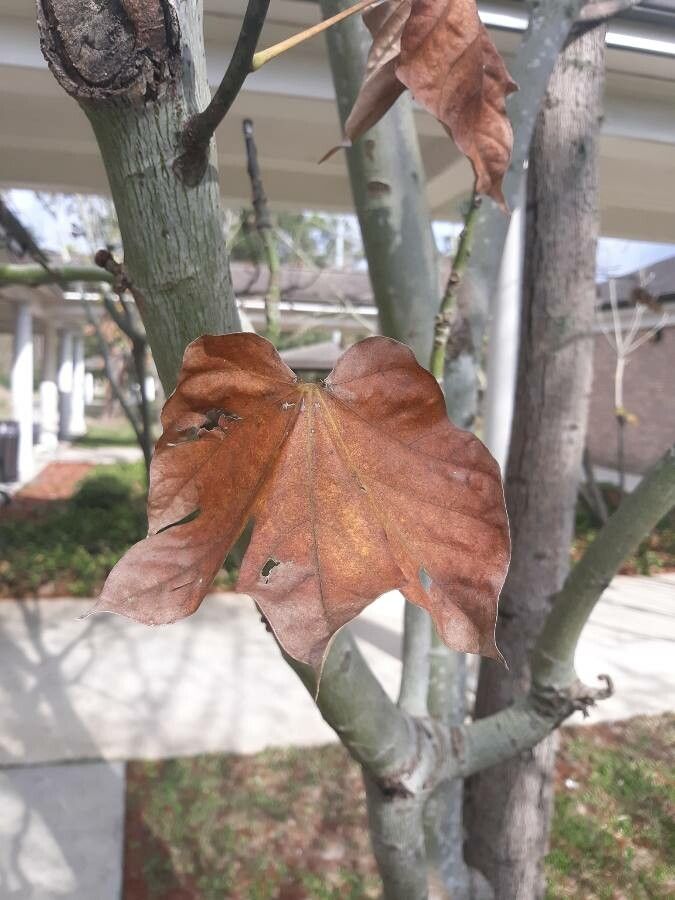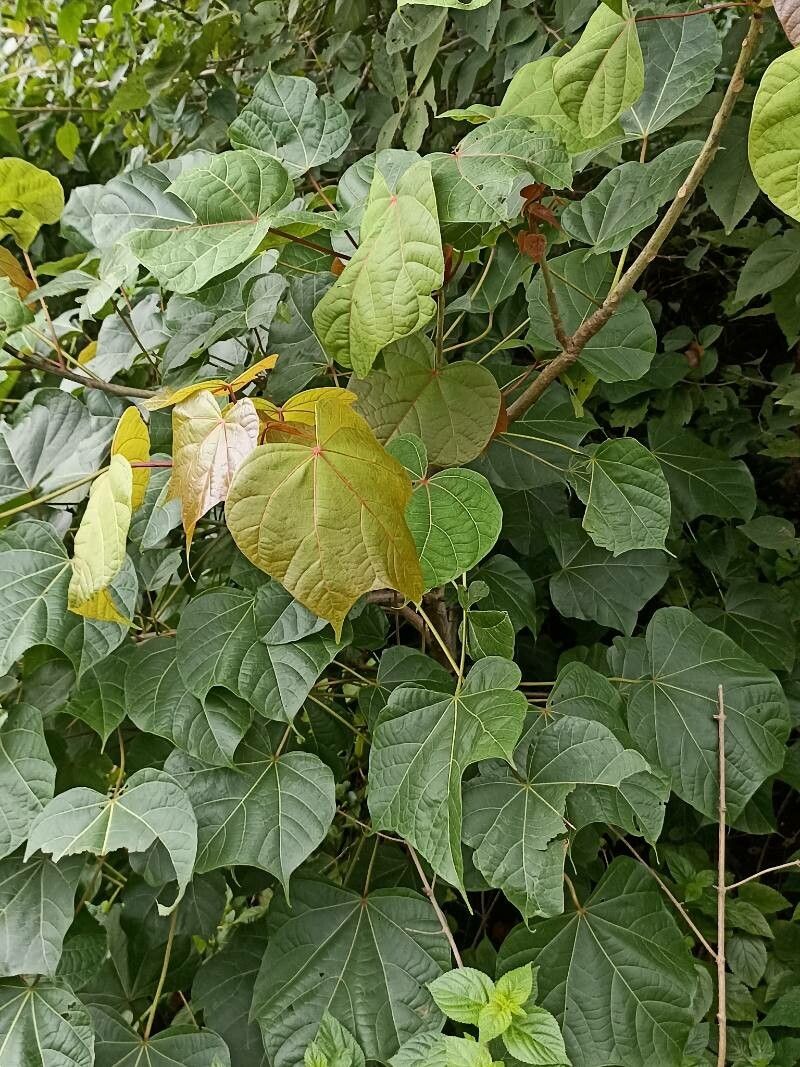
Firmiana colorata, the scarlet sterculia, is a medium-sized tree with spreading branches. It sheds leaves before the onset of flowering. After leaf-shedding, buds sprout and develop into flowers. The tree flowers from March to April.
Scarlet sterculia is fairly resistant to disease and typically does not suffer from illnesses. Regarding care, this plant is fairly low-maintenance. When grown outdoors it needs only light watering, and mature specimens usually do not require pruning. Smaller plants, however, should be trimmed after they finish blooming. Scarlet sterculiat is appropriate for anyone who has an outdoor area, like a garden or a deck, and it does not demand extensive gardening experience.
How to keep Firmiana Colorata.
Light
Scarlet sterculia is native to open habitats, like sunny meadows and forest edges, which offer plenty of light. It grows best in full sun but can also tolerate partial sun, adapting to a range of sunlight exposures.
Water
The scarlet sterculia thrives in humid climates where moisture is effectively retained. It prefers consistent hydration and typically needs to be watered twice a week. Its growth is influenced by rainfall patterns, as it responds to seasonal wet and dry conditions. Additionally, it demonstrates moderate drought tolerance.
Temperature
Scarlet sterculia is native to temperate regions and performs best at temperatures of 68 to 95°F (20 to 35°C). Environmental adjustments are only required if temperatures fall outside that range.
Fertilizer
The best time to fertilize a Scarlet sterculia is in early spring as it comes out of dormancy. This encourages overall growth and the development of flowers. Fertilizing improves the foliage, stems, and branches and supports the production of large, vivid, and long-lasting blooms. It helps move nutrients from the roots to the flowers and enhances the plant's health and resistance to disease.
Pruning
The Scarlet Sterculia is known for its vibrant red flowers. To keep the plant healthy, prune it in early spring by removing dead branches and thinning out excessive growth to improve air circulation. This helps prevent overcrowding, promotes a strong structure, and encourages healthy flowering. Make sure to use clean, sharp tools to minimize stress on the plant and reduce the risk of disease.
Botanical profile.
- Plant Type
- Tree
- Life Cycle
- Perennial
- Genus
- Firmiana
- Family
- Malvaceae
- Hardiness Zone
- 10
- Mature Height
- 14.94 m
- Mature Spread
- 7.92 m to 11.89 m
- Leaf Color
- Green
- Leaf Type
- Deciduous
- Flower Color
- Red
- Flower Size
- 3.05 cm
- Bloom Time
- Late spring, Early summer
- Planting Time
- Spring, Summer, Autumn
- Harvest Time
- Late summer, Early fall, Mid fall
- Native Area
- Nepal, Sri Lanka, India, Malaysia, Indonesia, Cambodia, Vietnam, Myanmar, Bhutan, Bangladesh, Laos, Thailand, China
Other names.
Reader questions.
What are the sunlight requirements for Scarlet sterculia (Firmiana colorata)?
Scarlet sterculia, also known by its botanical name Firmiana colorata, thrives in various sunlight conditions. For optimal growth, it requires 'Full sun' which means the plant should receive above 6 hours of sunlight daily. However, it can also tolerate 'Partial sun' conditions, needing about 3-6 hours of sunlight. When planning where to place your Scarlet sterculia in the garden, it's important to observe the movement of sunlight throughout the day. Choosing a spot that provides a perfect balance of light and shade is crucial for the happiness and health of your plant.
What is the botanical name of Scarlet Sterculia?
The botanical name of Scarlet Sterculia is Firmiana colorata.
What are the ideal temperature conditions for growing Scarlet Sterculia?
Scarlet Sterculia thrives best in temperate locations, with ideal temperature conditions ranging from 68 to 95°F (20 to 35°C). Adjustments to the plant’s environment are recommended if temperatures fall outside this range to ensure optimal growth.