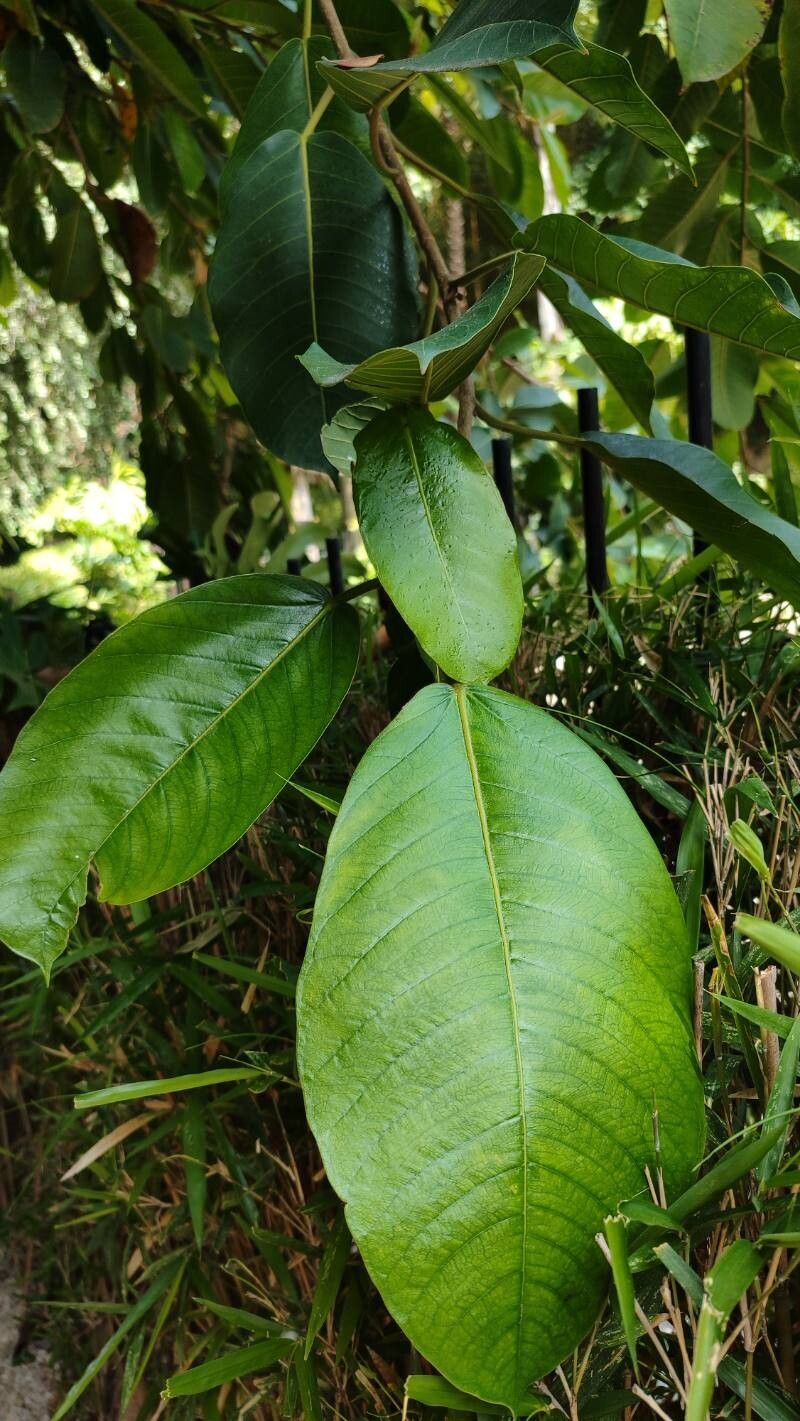
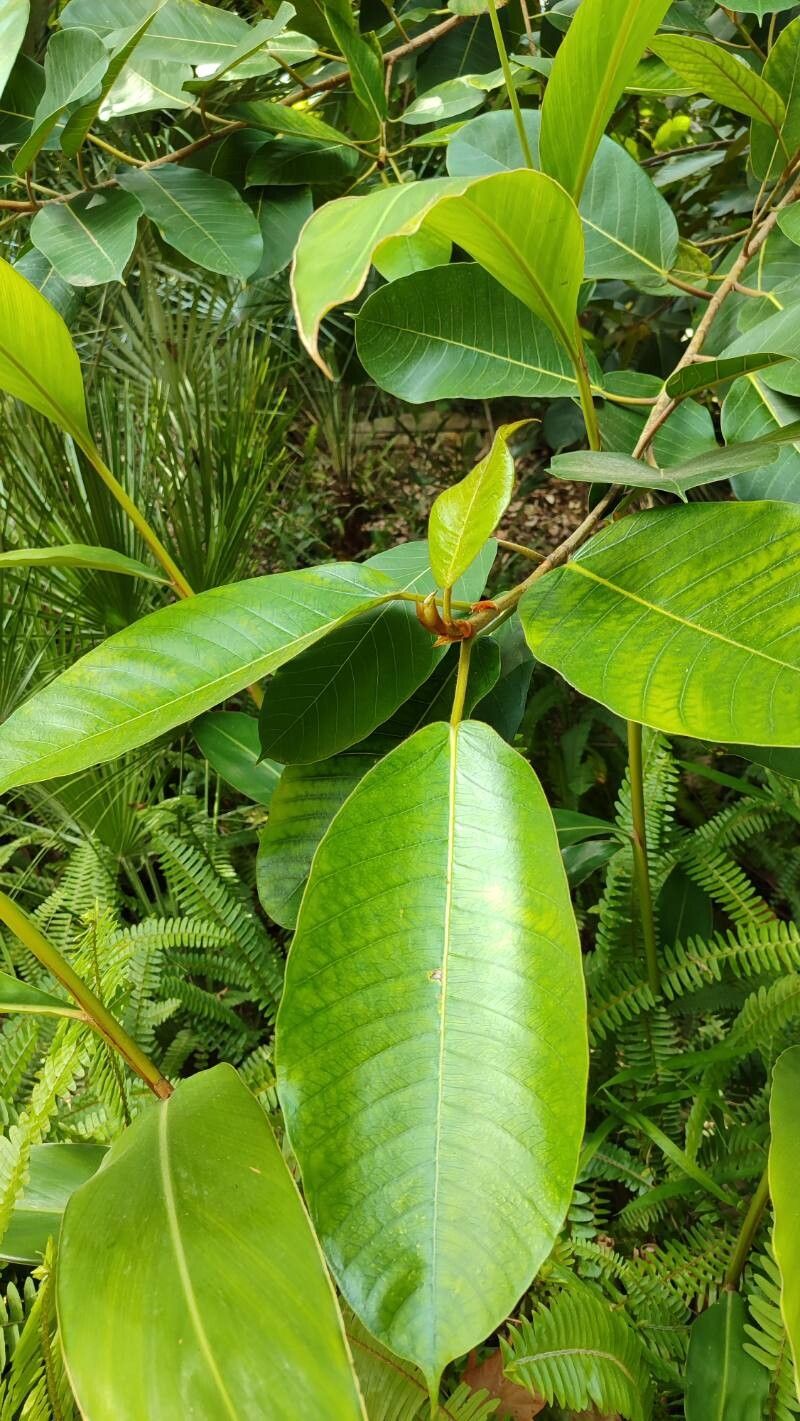
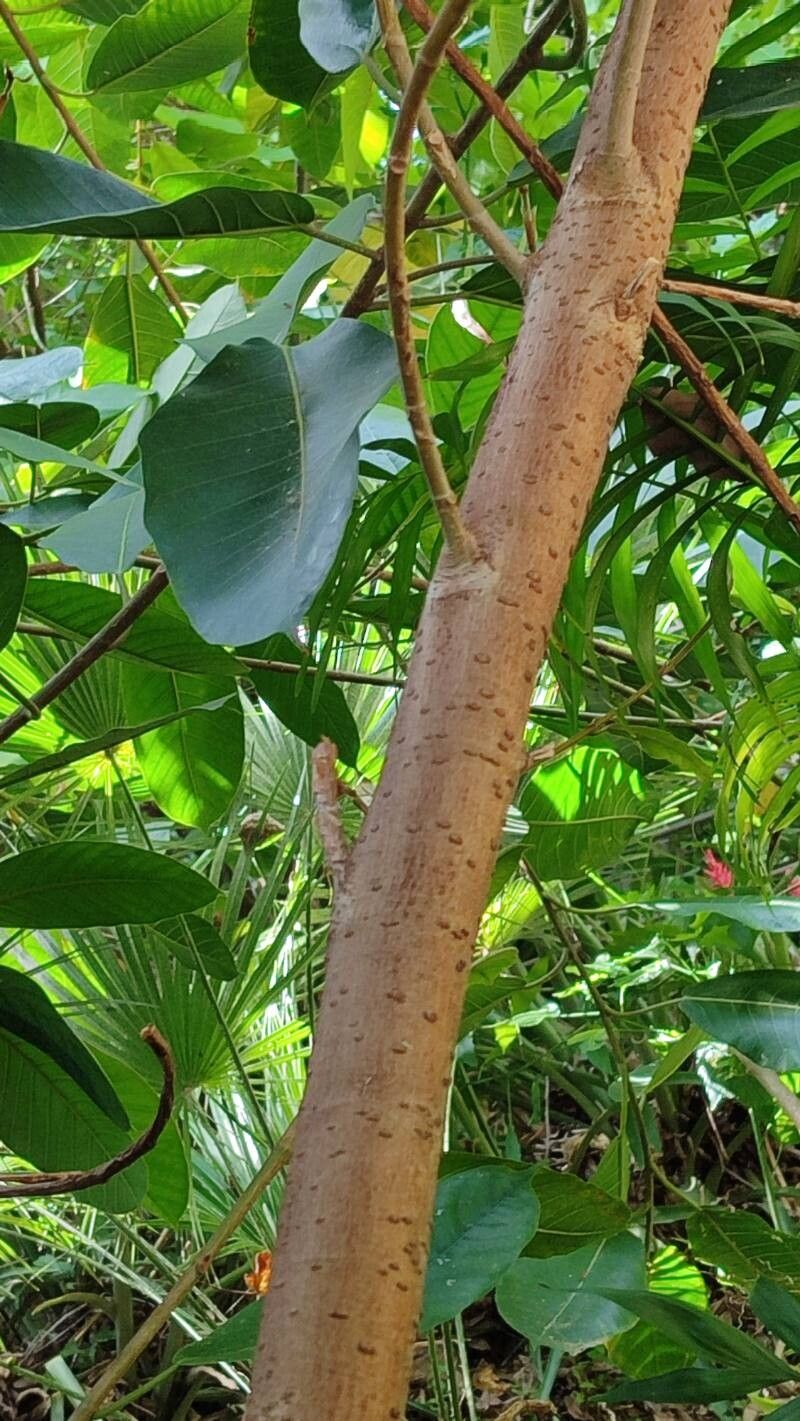
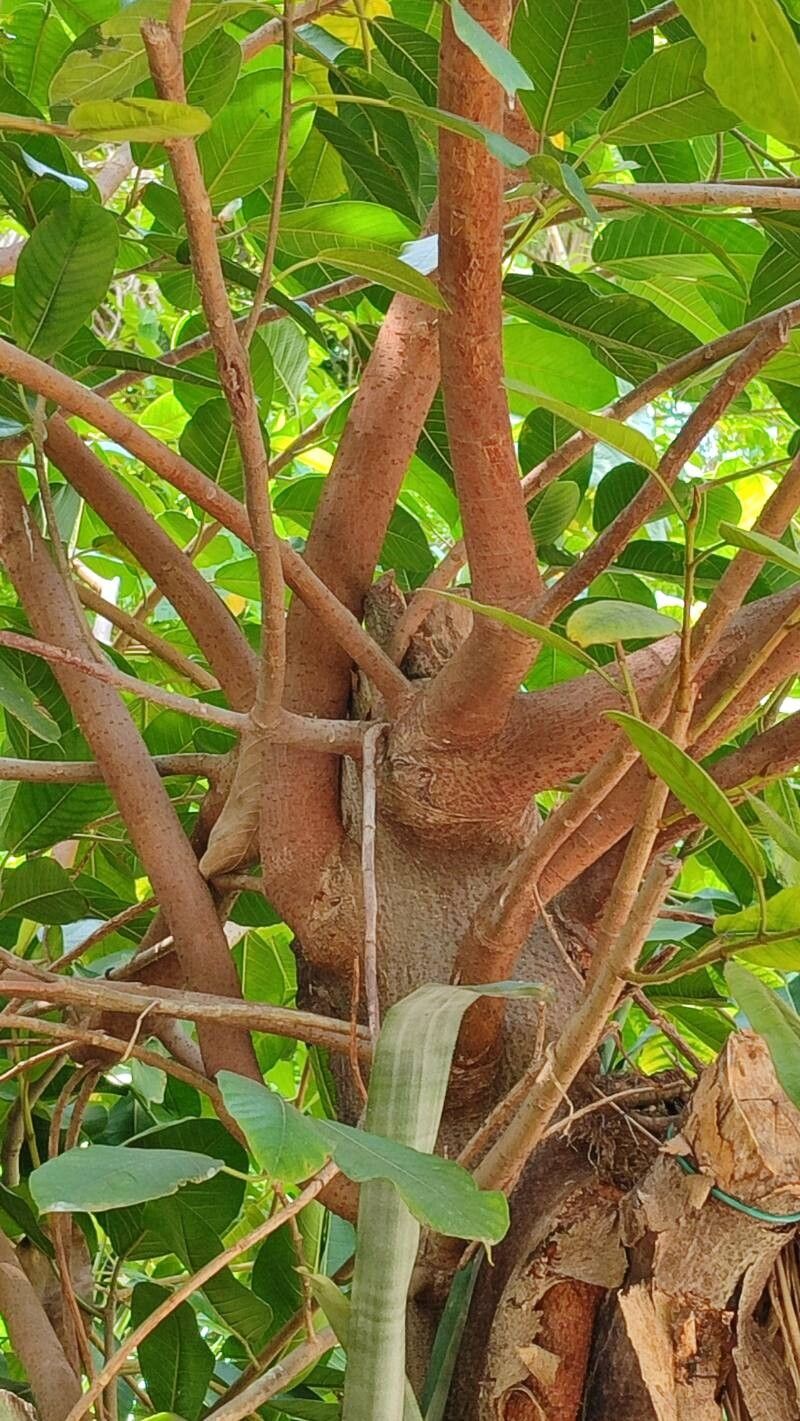
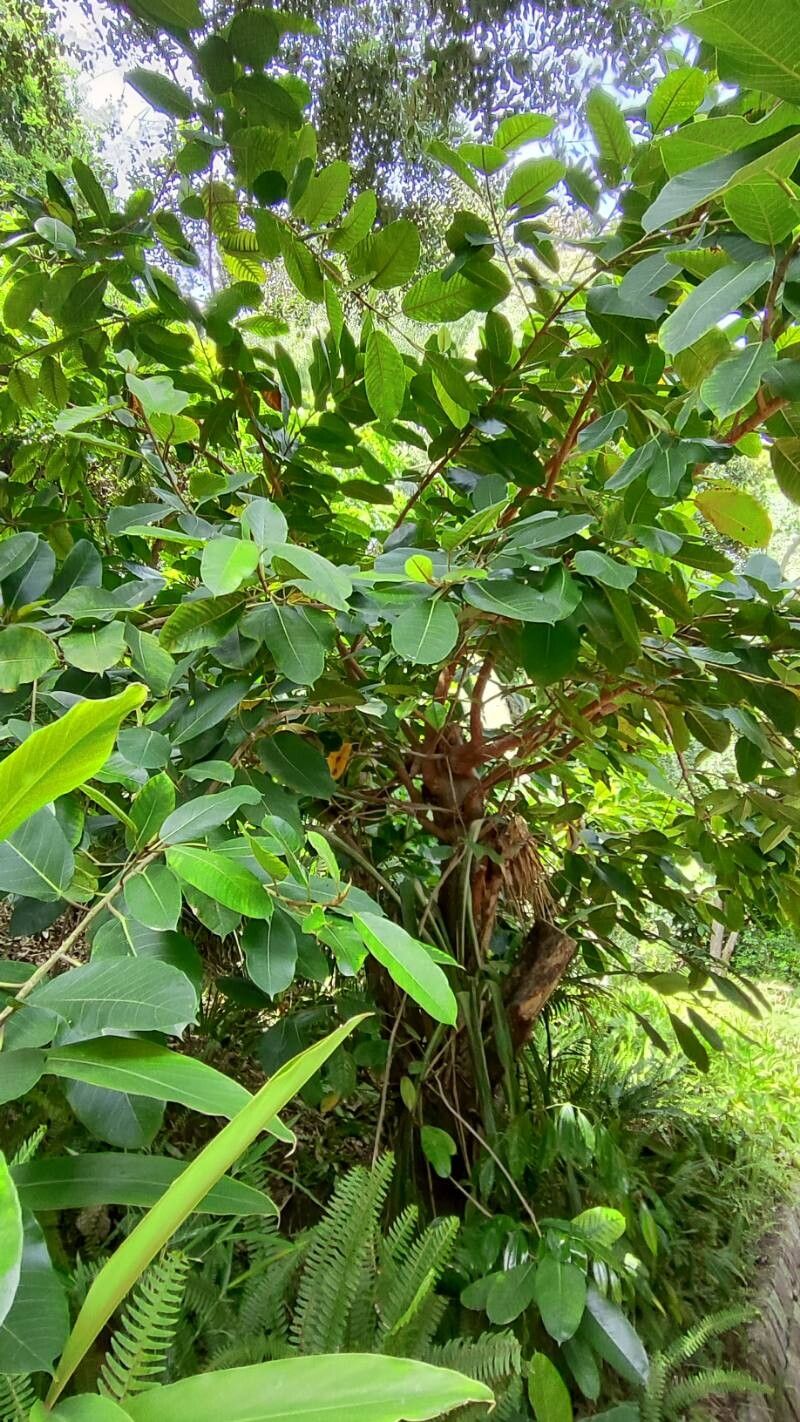
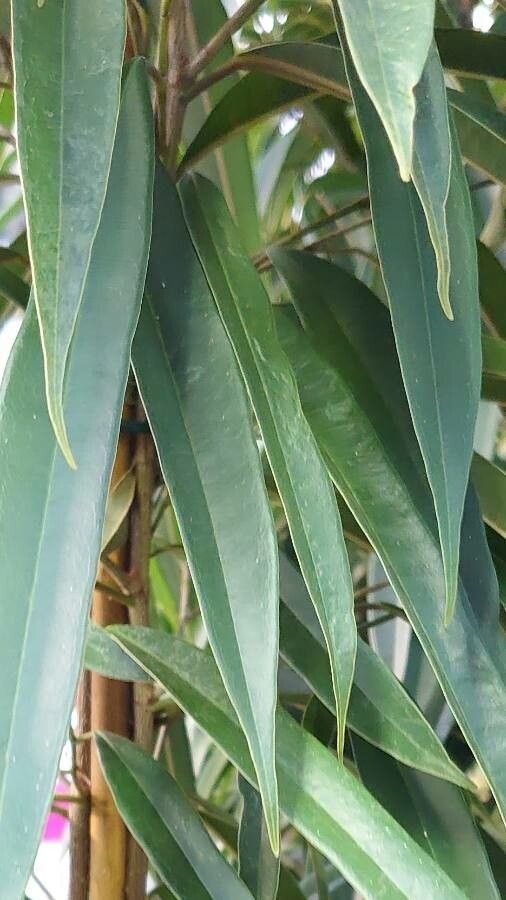
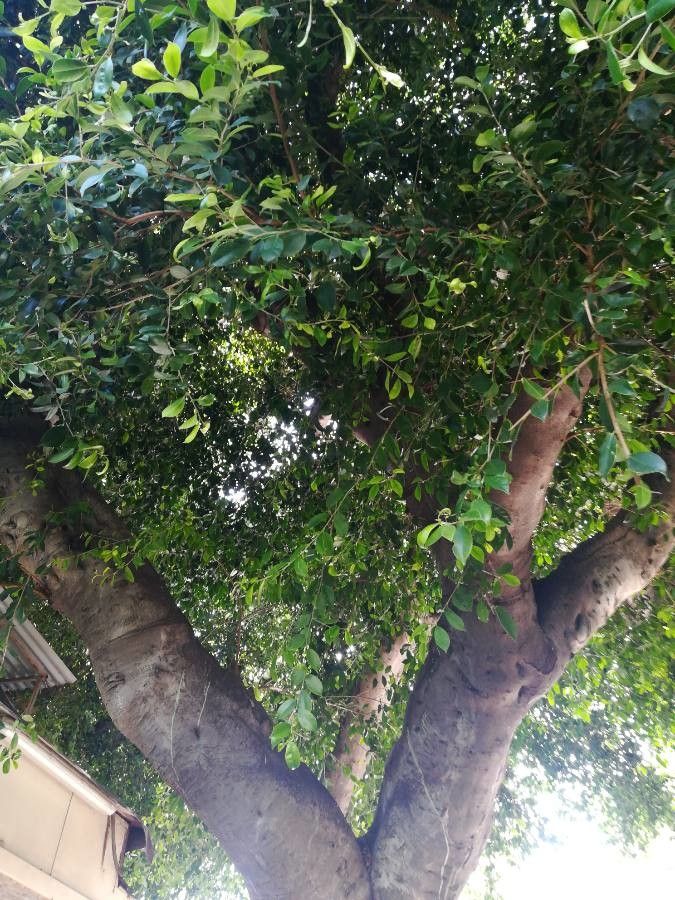
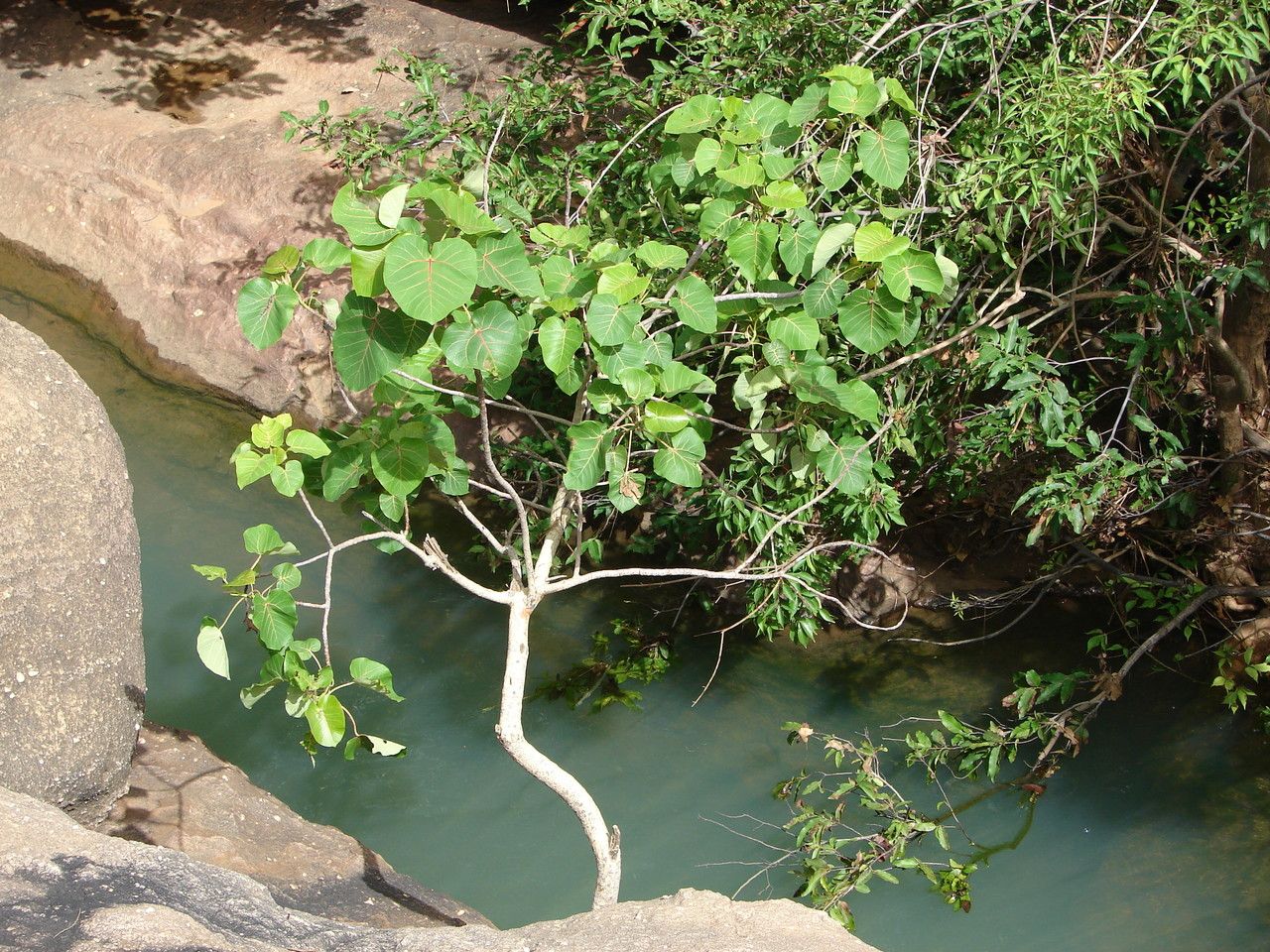
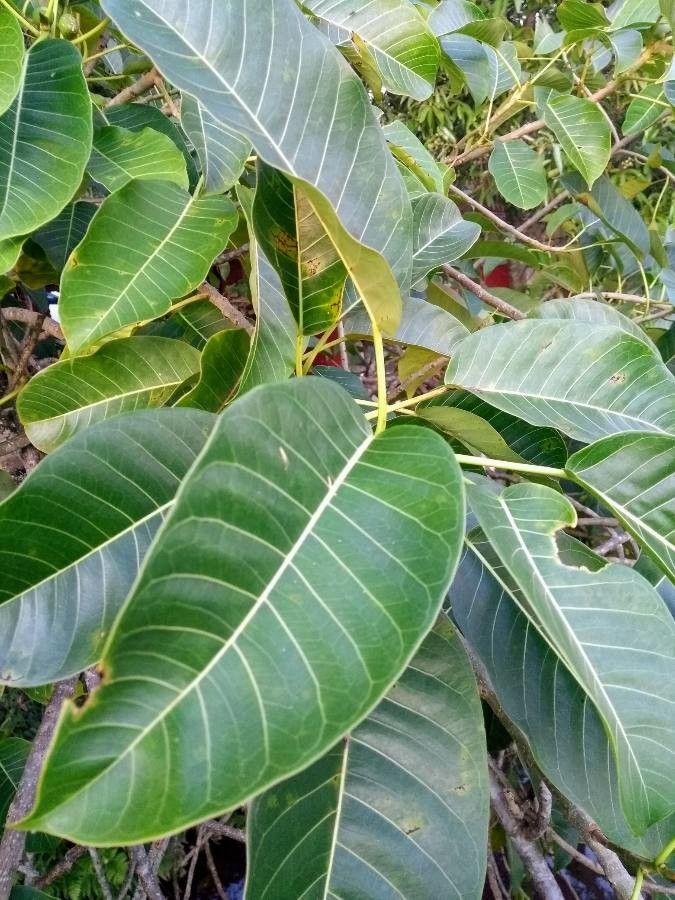
Ficus drupacea, also known as the brown-woolly fig or Mysore fig, is a tropical tree native to Southeast Asia and Northeast Australia. It is a strangler fig; it begins its life cycle as an epiphyte on a larger tree, which it eventually engulfs. Its distinctive features include dense, woolly pubescence, bright yellow to red fleshy fruit, and grayish white bark. It can reach heights of 10–30 meters (33–98 ft). Its fruit are eaten by pigeons, and it is pollinated by Eupristina belgaumensis. It occurs in environments ranging from sea-level beachfront environments to montane forests, up to 1,000 metres.
The brown woolly fig is resistant to disease and typically does not suffer from illnesses. Regarding maintenance, this species is fairly easy to care for. When grown outside it needs only light watering, and mature specimens usually do not require pruning. Young or smaller plants, however, should be trimmed once they finish flowering. The brown woolly fig is appropriate for anyone who has outdoor space like a garden or a deck and does not demand extensive gardening experience.
How to keep Ficus Drupacea.
Light
Brown woolly fig occurs naturally in habitats like forest understories and rocky areas, where it grows in shaded conditions. It favors partial sun but can tolerate both full sun and full shade, showing its hardy, adaptable nature.
Water
The brown woolly fig, native to Southeast Asia, flourishes in humid conditions and requires consistent moisture. To keep its foliage lush, it is recommended to water the plant weekly. As an evergreen, the brown woolly fig benefits from adequate indoor humidity, which enhances its growth and overall vitality.
Temperature
The brown woolly fig comes from tropical regions, where the climate is usually warm and humid. As a result, it is well adapted to high temperatures and humidity. It does not tolerate sudden temperature changes and prefers a stable thermal environment, so avoiding temperature fluctuations indoors is important. It generally cannot endure cold temperatures and needs warmer conditions for growth. If the surrounding temperature falls too low, the plant may stop growing or even die.
Fertilizer
The best time to fertilize a Brown woolly fig is in early spring, as it comes out of dormancy. This supports overall growth and flower development. Fertilizing improves the foliage, stems, and branches, and encourages flowers that are larger, more vibrant, and longer-lasting. It also helps transport nutrients from the roots to the flowers and enhances the plant's health and disease resistance.
Pruning
To maintain healthier growth in the brown woolly fig, it is important to prune it from early to late winter. Focus on removing dead or diseased branches and thinning out crowded areas to enhance air circulation and light exposure. This practice not only promotes healthier growth but also helps control the plant's size and reduces pest problems. Be sure to use sharp, clean tools to prevent damage or infection.
Botanical profile.
- Plant Type
- Tree
- Life Cycle
- Perennial
- Genus
- Ficus
- Family
- Moraceae
- Hardiness Zone
- 10-12
- Mature Height
- 20.12 m to 29.87 m
- Mature Spread
- 14.94 m to 24.99 m
- Leaf Color
- Dark Green, Forest Green
- Leaf Type
- Evergreen
- Bloom Time
- All year round
- Planting Time
- Spring, Summer, Autumn
- Harvest Time
- All year round
- Native Area
- Nepal, Sri Lanka, India, Malaysia, Indonesia, Cambodia, Vietnam, Myanmar, Philippines, Bhutan, Bangladesh, Laos, Thailand, China
Other names.