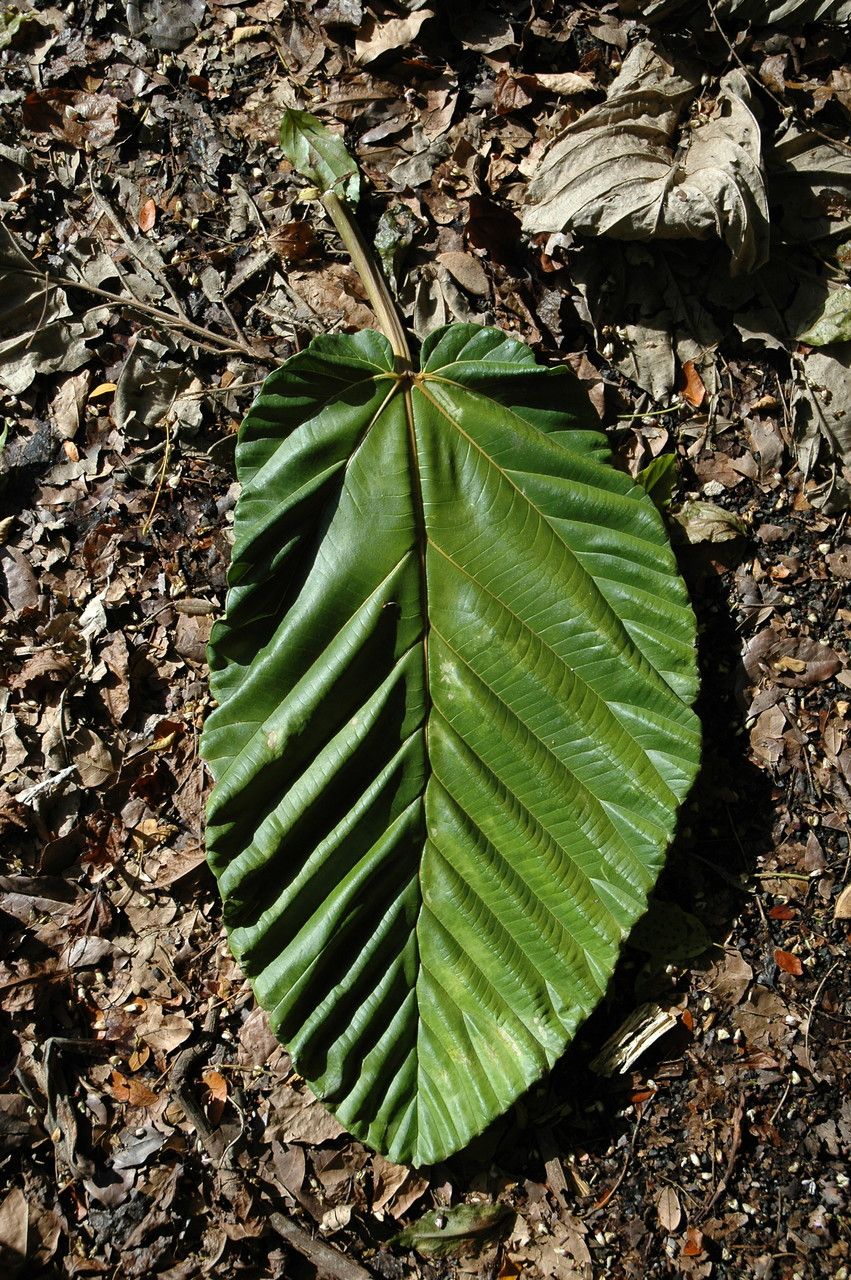
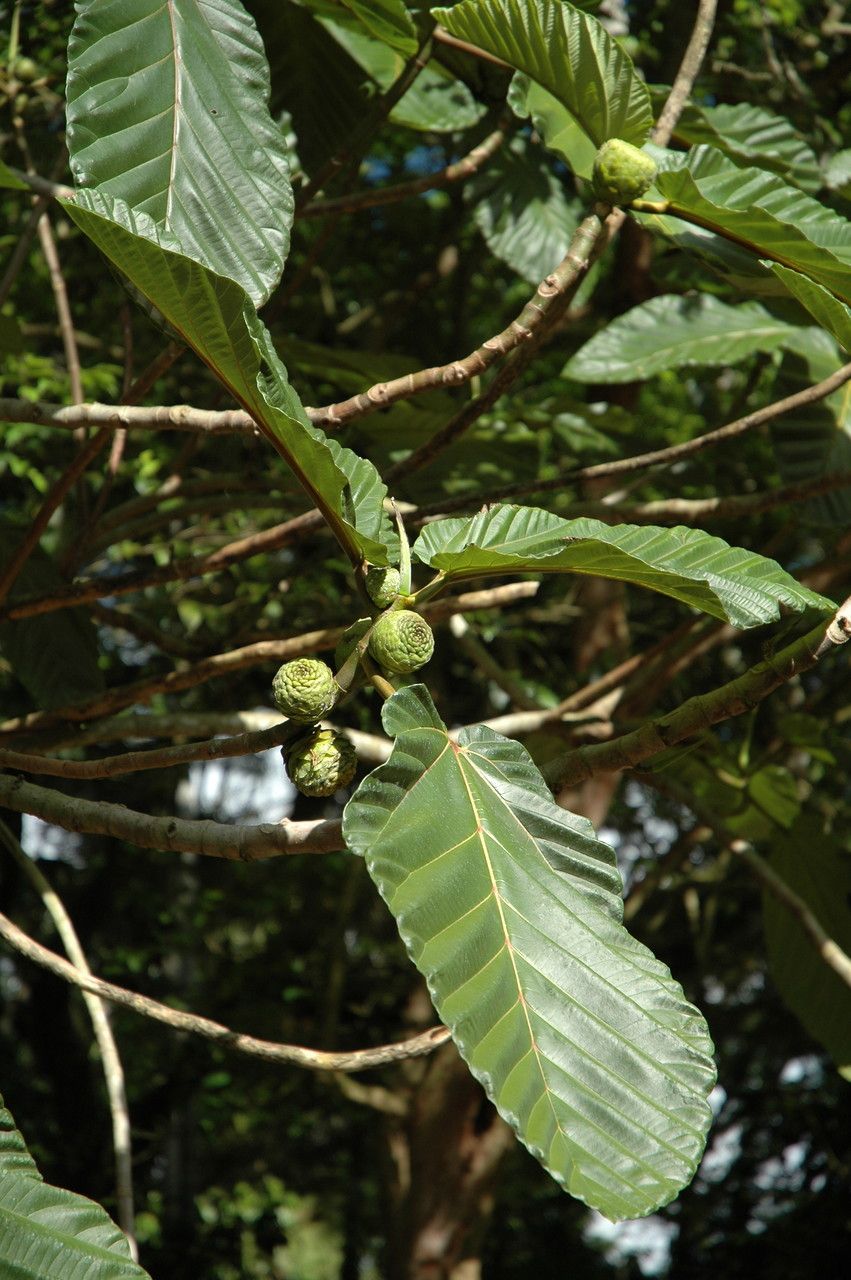
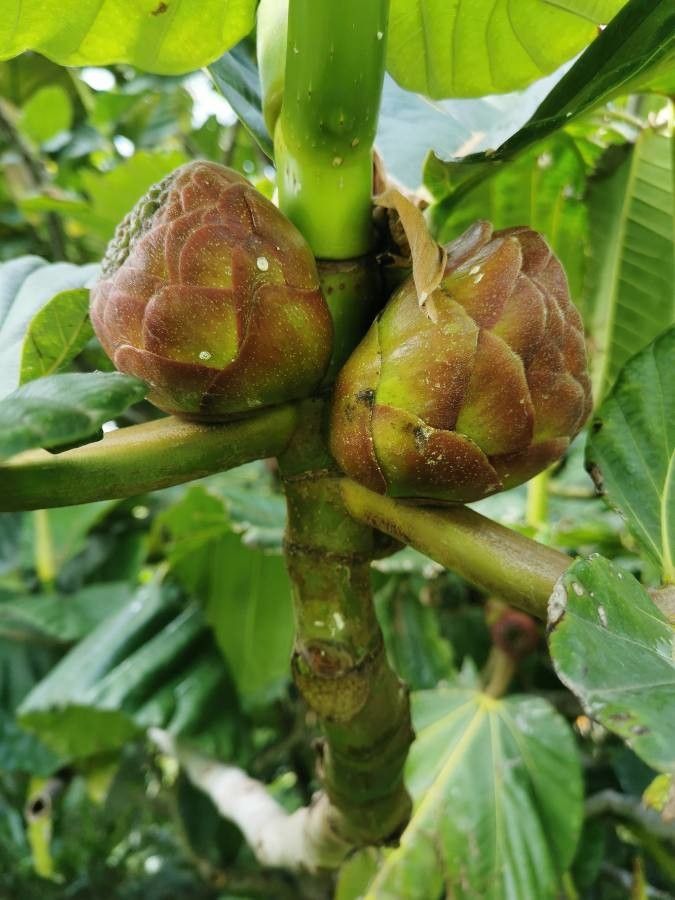
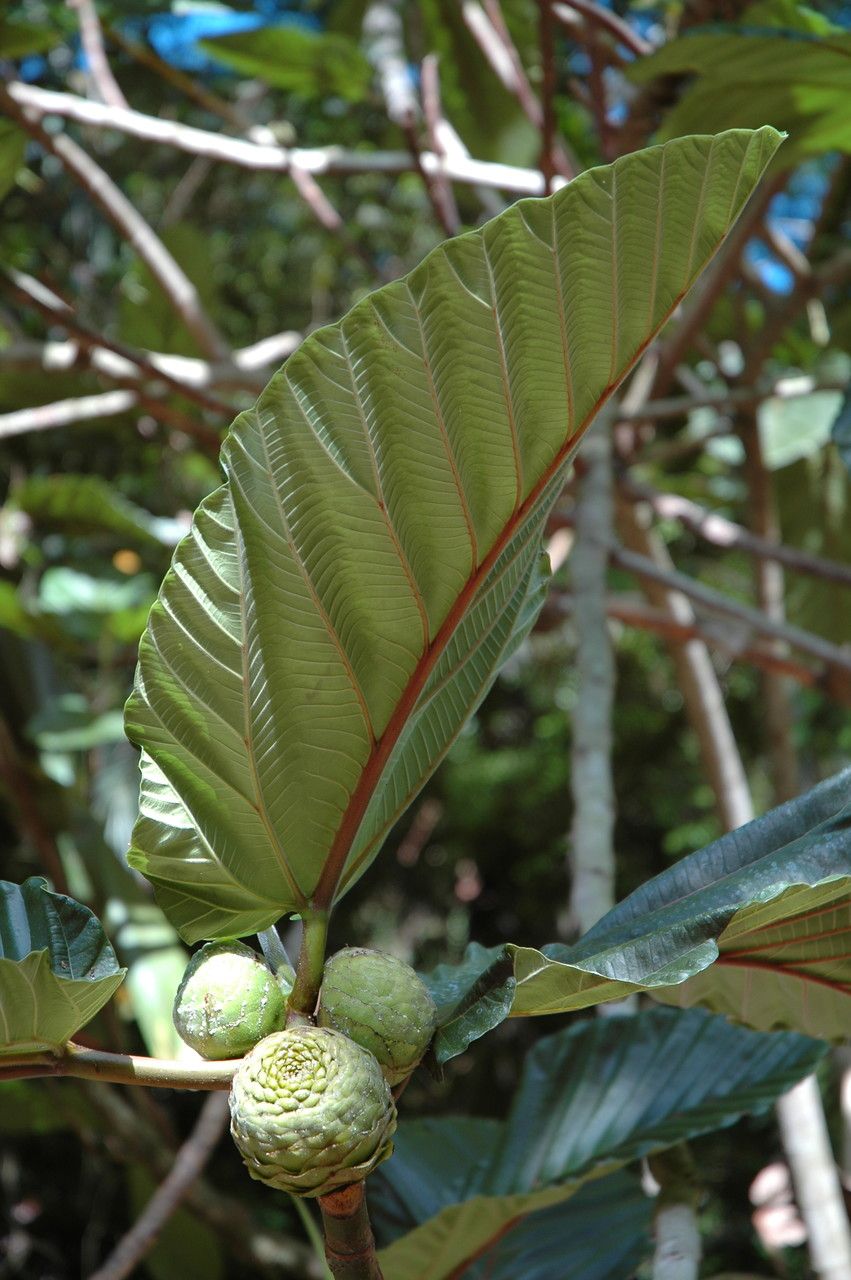
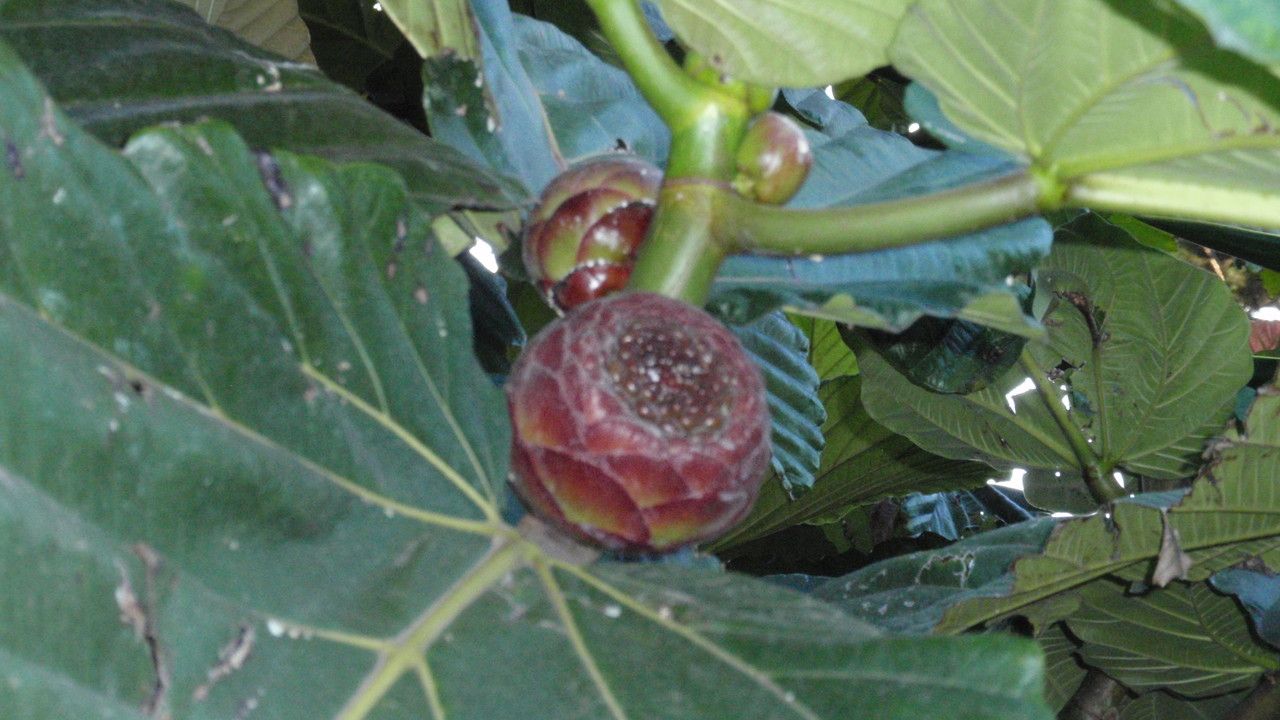
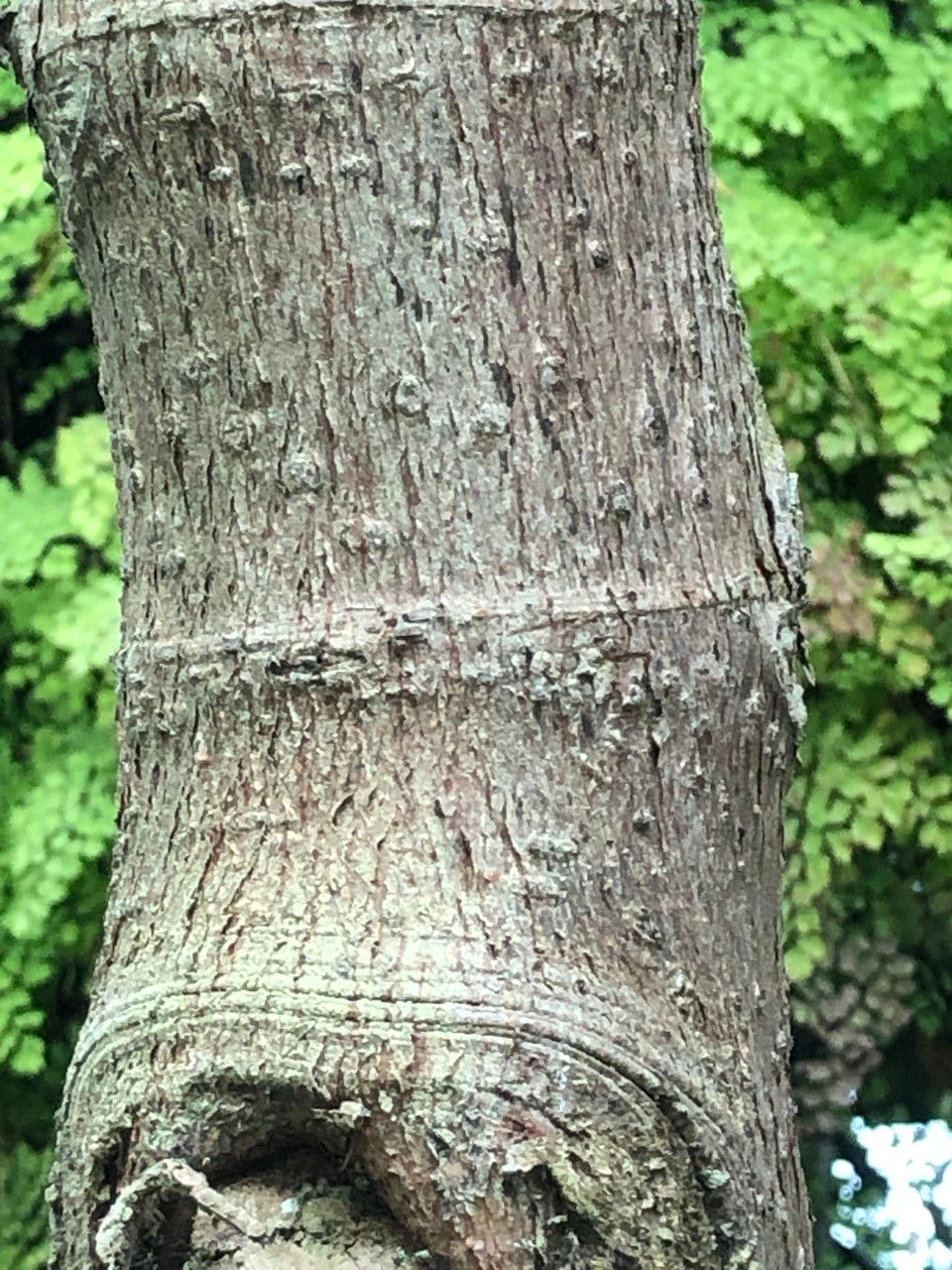
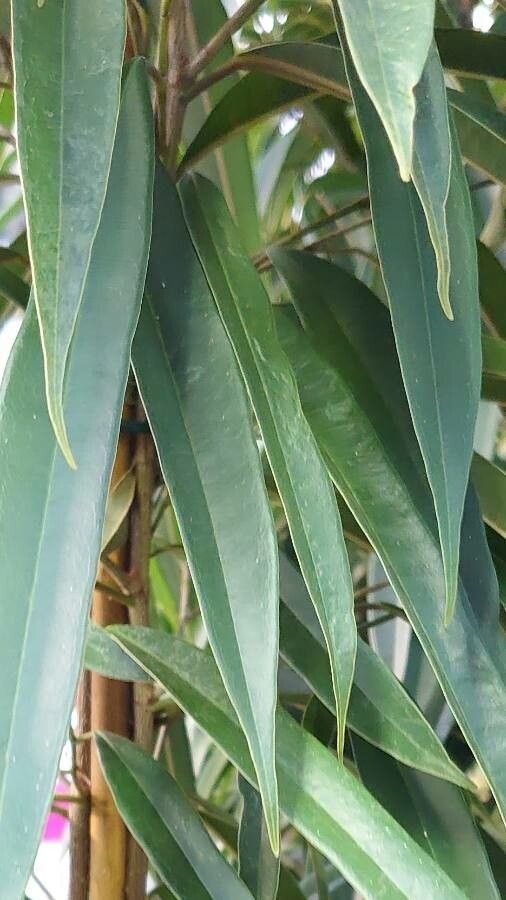
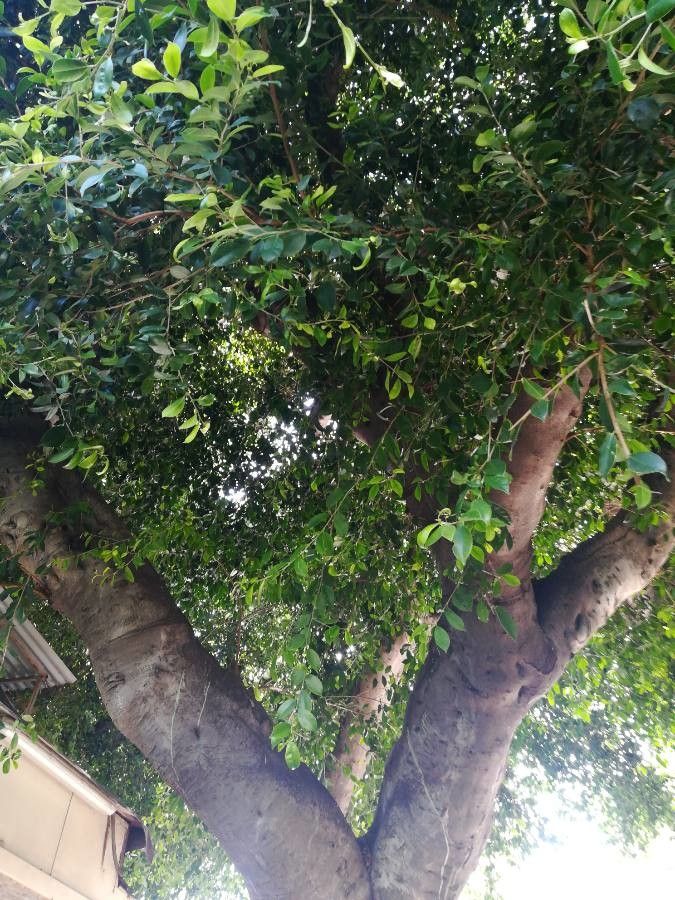
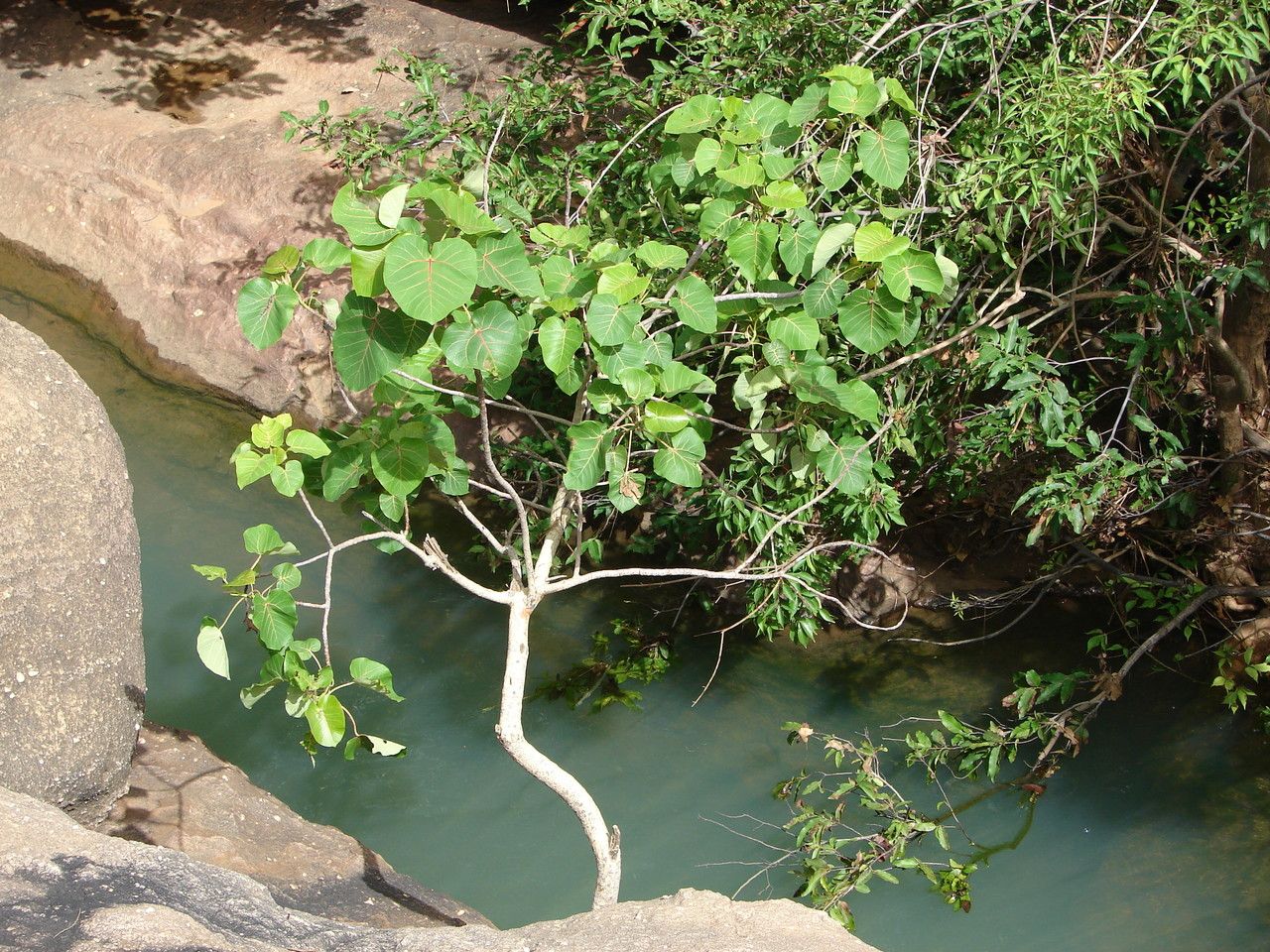
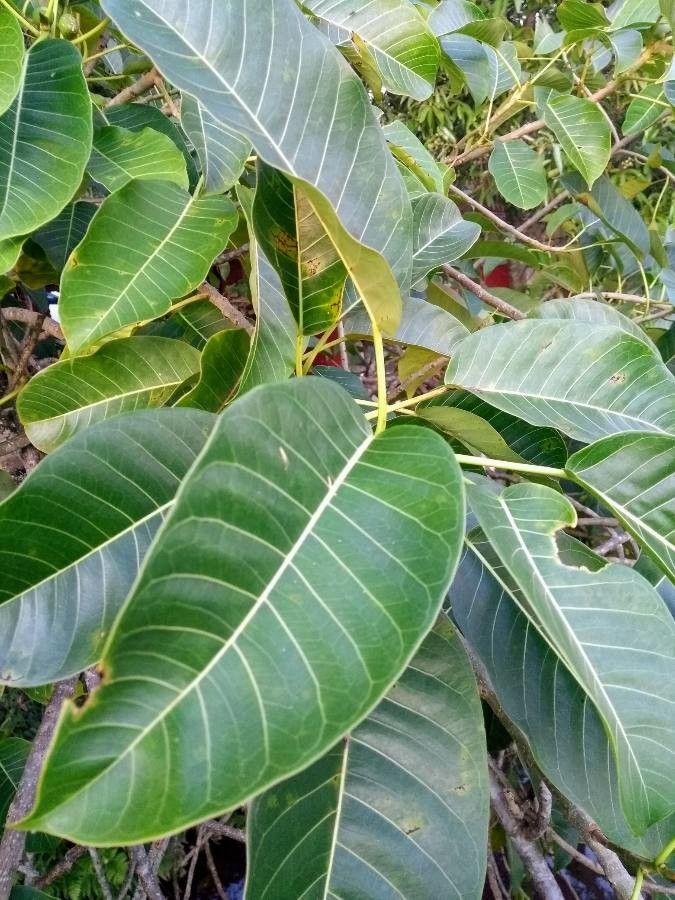
Ficus dammaropsis, called kapiak in Tok Pisin, is a tropical fig tree with huge pleated leaves 60 cm (24 in) across and up to 90 cm (3 feet) in length. It is native to the highlands and highlands fringe of New Guinea. It generally grows at altitudes of between 850 and 2,750 metres (2,790 and 9,020 ft). Its fruit, the world's largest figs (syconia), up to six inches (15 centimeters) in diameter, are edible but rarely eaten except as an emergency food. They are pollinated by the tiny wasp Ceratosolon abnormis. The young leaves are pickled or cooked and eaten as a vegetable with pig meat by highlanders.The lowland form of this species found commonly below 900 meters is recognized as a distinct species, Ficus brusii.
Highland breadfruit shows strong disease resistance and is generally not susceptible to illnesses. Regarding care, this plant is fairly low-maintenance. When grown outdoors, it needs only minimal watering, and larger plants typically do not require pruning. Smaller plants, however, should be pruned after they have bloomed. Highland breadfruitt is suitable for anyone with outdoor space, like a garden or deck, and does not demand much prior gardening experience.
How to keep Ficus Dammaropsis.
Light
Highland breadfruit is native to habitats like forest understories or rocky areas, where it grows in natural shade. It prefers partial sun but can tolerate full sun or full shade, demonstrating its versatility and hardiness.
Humidity
This plant needs special care because it loves high humidity levels of 60-80% or more. The best way to achieve this is by placing a humidifier near the plant. Daily misting is also essential! Make sure the room has good ventilation.
Temperature
Highland breadfruit comes from tropical areas where the climate is generally warm and humid. Consequently, it is well suited to high temperatures and humidity. It does not tolerate sudden temperature shifts and prefers a steady temperature, so avoiding temperature fluctuations indoors is important. It typically cannot withstand cold and needs higher temperatures to grow. If the environmental temperature falls too low, the plant may stop growing or even die.
Fertilizer
The best time to fertilize a Highland breadfruit is in early spring, as it breaks dormancy. This supports overall growth and flower formation. Fertilization improves the foliage, stems, and branches, while encouraging flowers that are larger, more vivid, and longer-lasting. It helps move nutrients from the roots to the flowers and strengthens the plant's health and disease resistance.
Botanical profile.
Other names.