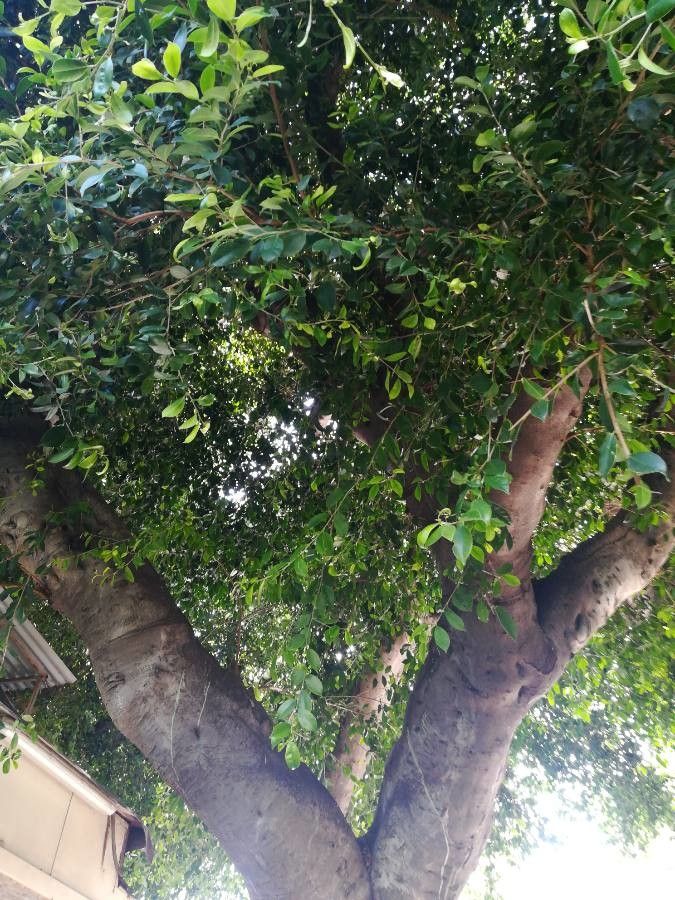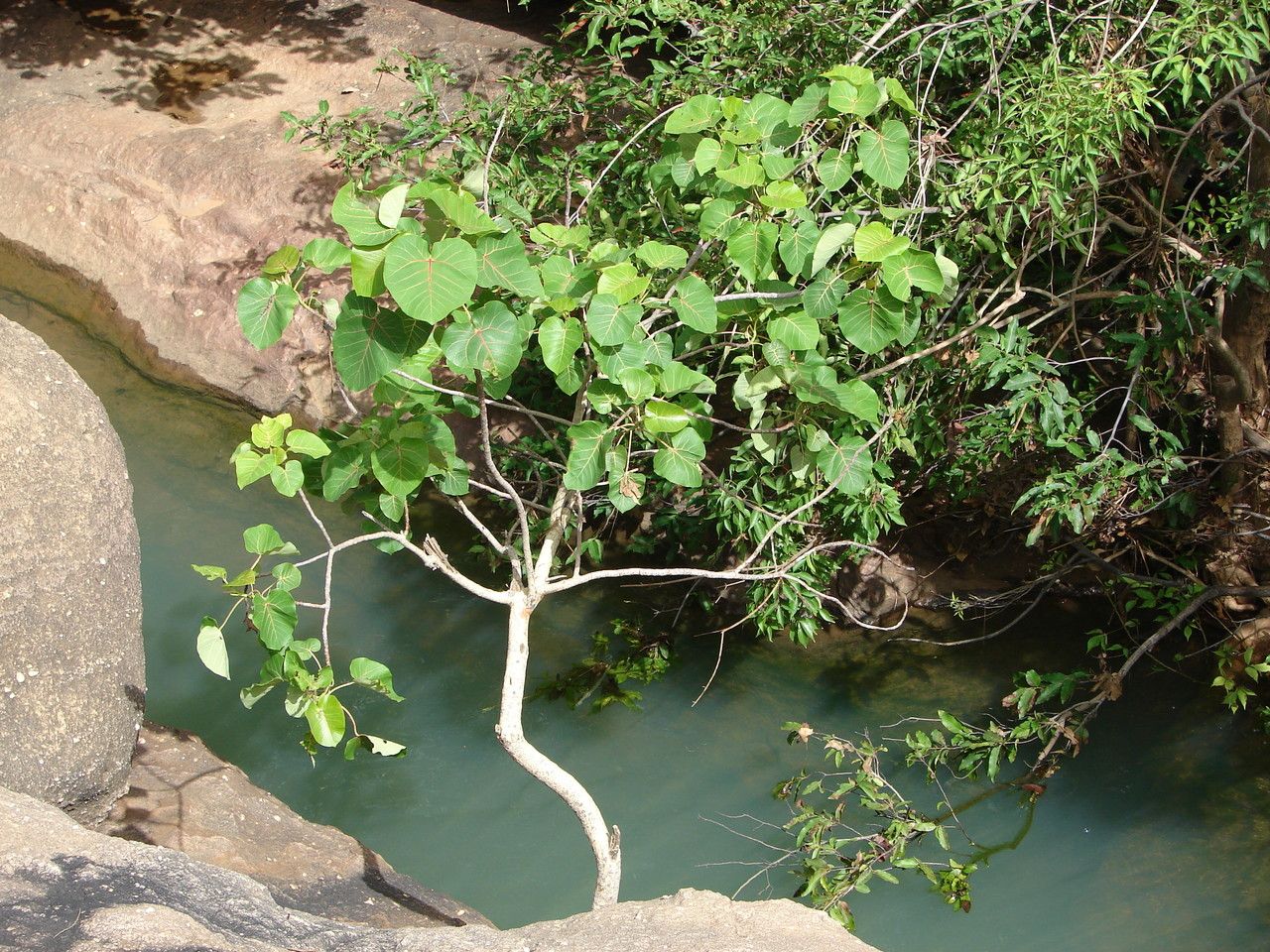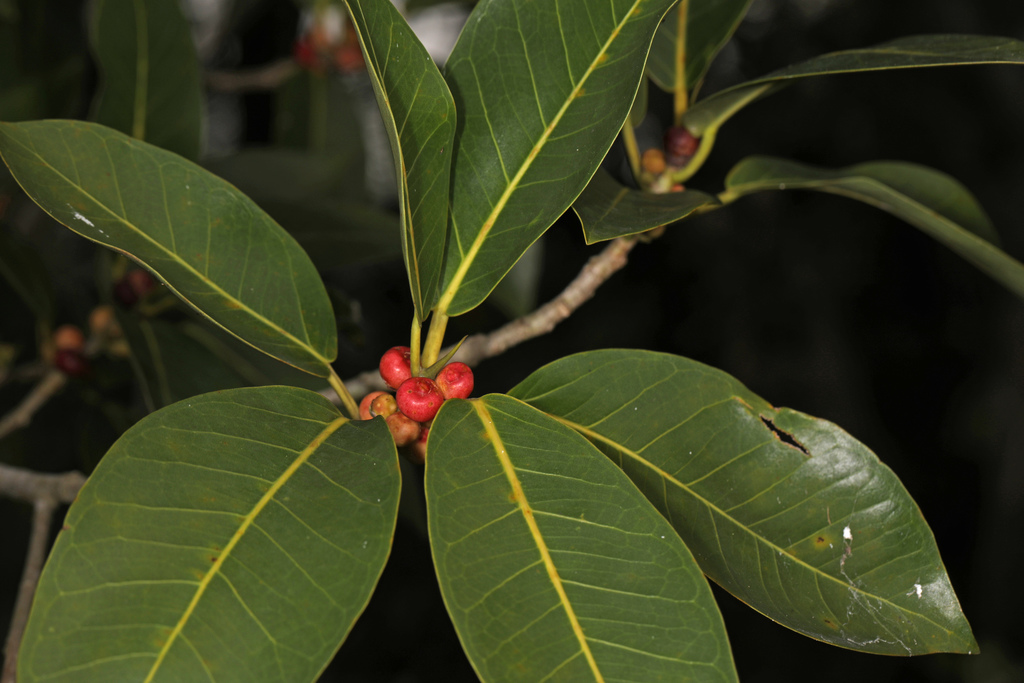
Ficus aurea, commonly known as the Florida strangler fig or golden fig, is a species of tree in the Moraceae family. It is native to Florida, the Bahamas, and the Caribbean. This tree can reach up to 30 meters in height and features a dense canopy of leaves that provide ample shade. Its bark is smooth and grayish-brown, adorned with small bumps called lenticels.
The Florida strangler fig earns its name from its unique growth habit. It starts life as an epiphyte on another tree or structure, eventually sending down aerial roots that envelop and strangle its host. As it matures, Ficus aurea becomes self-supporting, developing a trunk that can grow several meters in diameter.
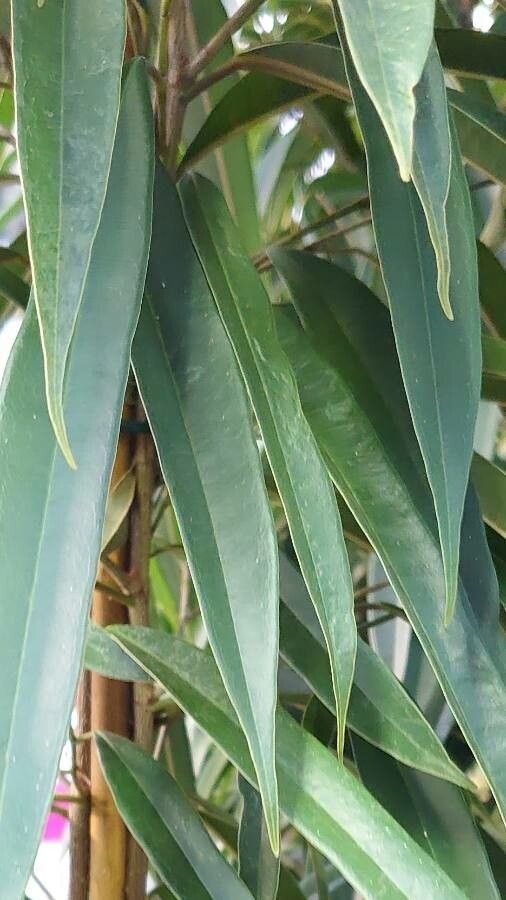
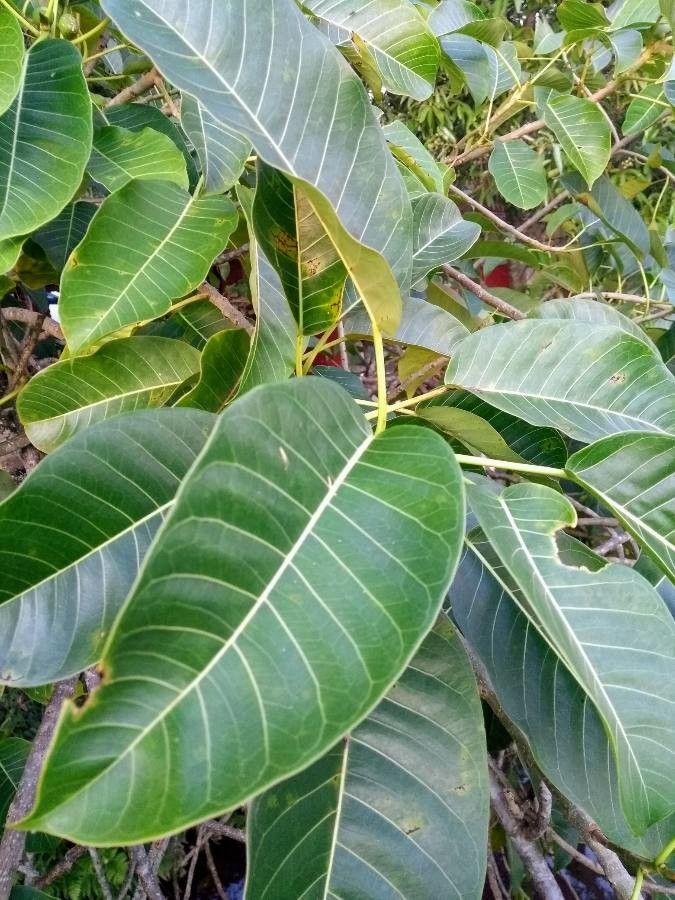
The leaves of the Ficus aurea are glossy green, oval-shaped with pointed tips, and arranged alternately on branches that can reach up to 15 cm in length.
The life cycle of the Florida strangler fig is fascinating. It begins as an epiphyte, germinating in the canopy of a host tree. As its roots reach downward and make contact with the ground, the fig begins to envelop the host. Over time, it grows around the host tree, eventually strangling it and becoming a freestanding tree in its place. FUN FACT · FROM THE LIBRARY
The tree produces small fruit, about 1 cm in size, which are green when unripe and turn yellow-orange upon maturing. These fruits are abundant on the tree.
Ficus aurea has been used medicinally by indigenous peoples for centuries. It contains compounds believed to have anti-inflammatory properties that may help alleviate pain associated with arthritis and other inflammatory conditions.
Overall, Ficus aurea is an impressive species known for its unique growth habit and historical medicinal uses. It is both fascinating from a botanical perspective and valuable for its practical applications in traditional medicine practices.
The Florida strangler fig gets its name from its unique life cycle and tendency to envelop and eventually replace its host tree. This species is native to Florida.
The Florida strangler fig is fairly disease-resistant and is typically not susceptible to illnesses. Regarding care, this plant is fairly low-maintenance. Outdoors it needs only light watering, and mature specimens usually do not require pruning. That said, smaller plants should be pruned after they finish blooming. The Florida strangler fig is suitable for anyone who has an outdoor area, like a garden or deck, and it does not demand extensive experience in plant care.
How to keep Ficus Aurea.
Light
The Florida strangler fig requires substantial sunlight to remain healthy and grow optimally. It can tolerate lower light levels, but that may hinder its growth and development. In the wild it is typically found in locations with abundant sunlight. However, too much exposure can lead to leaf scorching.
Water
The Florida strangler fig thrives in humid environments and is drought-tolerant, although it prefers consistent moisture. For optimal health, water the Florida strangler fig once every 1 to 2 weeks. As an evergreen plant, it retains water well, which helps it maintain lush foliage across various climate zones.
Humidity
This plant needs special care because it loves high humidity levels of 60-80% or more. The best way to achieve this is by placing a humidifier near the plant. Daily misting is also essential! Make sure the room has good ventilation.
Temperature
The florida strangler fig does best in temperatures ranging from 68℉ to 100.4℉ (20℃ to 38℃) and prefers a humid subtropical climate. It thrives in locations where average temperatures never drop below 60℉ (15.5℃), particularly during winter. In summer, some afternoon shade helps prevent overheating and excessive moisture loss.
Fertilizer
Fertilizing is essential for caring for a Florida strangler fig. Regular feeding during the growing season preserves the energy needed for its showy foliage and supports overall growth. Skipping fertilization can lead to unhealthy leaves, reduced ornamental value, and stunted or weak growth that is susceptible to breakage.
Pruning
The Florida strangler fig is known for its rapid growth and aerial roots, which makes winter pruning necessary when the tree is dormant. To ensure healthier growth and improve air circulation and light penetration, it is important to remove weak branches. Regular pruning helps prevent structural issues and maintains the tree's vigor. For the best practices, consult local horticultural guidelines.
Pot & Repot
When repotting a Florida strangler fig, select a pot 1-2 inches (2.5–5.1 cm) larger that provides good drainage. Use a well-draining potting mix. Repot in spring or fall, making sure the root ball sits slightly lower than the rim of the flower pot. Water thoroughly after repotting and place the plant in a warm spot with indirect sunlight.
Botanical profile.
- Plant Type
- Tree
- Life Cycle
- Perennial
- Genus
- Ficus
- Family
- Moraceae
- Hardiness Zone
- 9-11
- Mature Height
- 29.87 m
- Mature Spread
- 14.94 m to 21.03 m
- Leaf Color
- Green, Blue
- Leaf Type
- Evergreen, Semi-evergreen
- Flower Color
- White, Red
- Bloom Time
- All year round
- Planting Time
- Spring, Autumn
- Harvest Time
- All year round
- Native Area
- Bahamas, Belize, Cuba, Honduras, Mexico, Guatemala, El Salvador, Nicaragua, Costa Rica, Panama, Jamaica
Other names.
Reader questions.
How should I water my Florida strangler fig tree for the best results?
When watering your Florida strangler fig, you have flexibility in choosing how to water it. You can use various common watering tools like watering cans, hoses, or even cups. The important thing is to apply the water directly to the soil, making sure to moisten all parts of the root system equally. Using filtered water is advantageous to avoid any harmful particles that tap water might contain. It is also recommended to use water that is at or slightly above room temperature, as very cold or hot water can be a bit shocking for the fig. Nonetheless, the Florida strangler fig is generally resilient and will respond well to any kind of water you provide.
Why should I add fertilizer to my Florida strangler fig?
Florida strangler fig requires regular fertilization primarily because its showy leaves demand significant energy for their production and maintenance. The challenge is that the plant not only needs energy for leaf upkeep but also for supporting the growth of its stems, branches, roots, and other essential structures. If you fail to fertilize, two likely outcomes may occur. Firstly, the leaves of your Florida strangler fig will lose their natural color and texture, appearing overall unhealthy, which significantly diminishes its ornamental appeal. Secondly, the overall growth of the plant will slow down or produce weak growth that might be prone to breakage.
What are the sunlight requirements for the Florida Strangler Fig?
The Florida Strangler Fig requires extensive sunlight exposure for optimal health and growth, thriving best in full sun, which means it needs above 6 hours of sunlight daily. It can tolerate partial sun, approximately 3-6 hours of sunlight, although lesser light levels might stunt its growth and development. This plant's native habitats are typically in areas with abundant solar radiation. However, it's crucial to provide a balance because overexposure to sunlight might result in leaf scorching. When sunlight through your garden varies throughout the day, it's essential to choose spots that offer the right mix of light and shade, ensuring your plant's well-being.
What are the ideal conditions for growing a Florida strangler fig?
The Florida strangler fig thrives in temperatures ranging between 68°F and 100.4°F (20°C to 38°C) and prefers a humid subtropical climate. It grows best where the average temperatures do not fall below 60°F (15.5°C), especially during the winter months. The plant is highly heat-loving but requires some afternoon shade during the summer to prevent overheating and excessive moisture evaporation. In autumn, if grown outdoors, it's advised to move the Florida strangler fig indoors near a bright window but away from heaters. Keeping the temperature above 20°C during winter supports its growth. Exposure to temperatures near 0°C can be harmful to the plant.
What should I do if I give too much or too little water to my Florida strangler fig?
Outdoor plants, especially newly planted plants or plant seedlings, can be prone to lack of watering. Remember to water enough for a few months when the tree is small or just planted. Once the roots are established, the Florida strangler fig can rely on rain most of the time. When your Florida strangler fig is planted in pots, overwatering is often more likely. If you accidentally overwater your plant, take immediate action to address the issue. First, stop watering the plant to minimize the effect of overwatering. Then, remove the plant from its pot to check its roots. If there are no signs of root rot, you can return the plant to its container. However, if you find signs of root rot, trim away the affected roots and consider applying a fungicide to prevent further damage. Finally, repot the Florida strangler fig in well-draining soil. For underwatered Florida strangler figs, simply water the plant more frequently. The leaves will droop, dry out, and fall off if the plant is underwatered, but they will quickly regain fullness after sufficient watering. Adjust your watering frequency as soon as you notice signs of underwatering.
When should I put fertilizer on my Florida strangler fig?
Florida strangler figs benefit from occasional feedings, so there is no need to set a regular feeding schedule when planting these plants. One simple way to fertilize your Florida strangler fig is to apply fertilizer while watering the plant at times. Additionally, during the growing season, the plant requires a sufficient amount of water. Feeding the plant once every two to three weeks is recommended, and this should be continued throughout the period when the plant is producing new growth.
How can artificial lighting support the Florida Strangler Fig's growth indoors?
Indoor plants, including the Florida Strangler Fig, require adequate lighting for optimal growth, especially in conditions where natural sunlight is insufficient, such as in winter or less sunny spaces. Artificial lights, particularly LED lights that can be customized to specific wavelengths, offer a vital solution. For plants needing full sun, 30-50W/sq ft of artificial light is recommended; for partial sun plants, 20-30W/sq ft; and for full shade plants, 10-20W/sq ft. The light source should be placed 12-36 inches above the plant, mimicking natural sunlight, and plants typically need 8-12 hours of light per day.
What should I do if my Florida strangler fig is exposed to low temperatures?
If your Florida strangler fig is exposed to low temperatures, the first signs might include leaves lightening in color when temperatures fall below -5°C, with frost damage causing them to turn brown or black. Symptoms can progress to wilting and drooping. To aid the plant, trim off frost-damaged parts and move it to a warmer indoor environment for cold protection. Place it near a south-facing window for ample sunlight, ensuring it's not too close to heaters or air conditioning vents to avoid air dryness.
How frequently should I give water to my Florida strangler fig?
To ensure your outdoor plants receive sufficient water, it's important to consider the natural rainfall in your area. If there is a lack of rainfall, you should water your plants every 2 weeks in the spring and fall, and more frequently during the summer. In the winter, when growth slows down and plants require less water, reduce your watering. In fact, you may not need to water them at all. However, if you have a young or newly planted Florida strangler fig, it is recommended to water it more often to help establish its growth and adaptability to drought conditions. For potted plants, there are two main approaches to determining watering frequency for your Florida strangler fig. The first is to follow a predetermined watering schedule, such as once a week or every other week. However, this may not always be effective as it doesn't account for the specific conditions of your plant's environment. Another option is to base your watering frequency on soil moisture. Ideally, you should wait until the top two to four inches of soil have completely dried out before watering again. This method takes into account the changing water needs of the plant, especially during the summer when it requires more hydration.
When is it not a good time to fertilize my Florida strangler fig?
For most of the year, you can fertilize your Florida strangler fig regularly. This is especially important during the active growing season in spring, summer, and early fall. However, in the winter, you should completely avoid fertilizing this plant. During this time, the Florida strangler fig enters a dormant growth phase where it produces little to no new growth. Because it uses less energy during this phase, fertilization is unnecessary.
What are the symptoms of light deficiency in the Florida Strangler Fig?
When the Florida Strangler Fig is cultivated indoors or in conditions with insufficient lighting, it may exhibit symptoms of light deficiency. These include smaller new leaves compared to mature ones, leggy or sparse growth with longer spaces between leaves or stems, leading to a stretched-out appearance, faster leaf drop as the plant conserves resources, delayed growth or complete cessation of new growth, lighter-colored new leaves showing a lack of chlorophyll, and symptoms of overexposure such as chlorosis, sunscald, leaf curling, wilting, and leaf scorching. Each of these symptoms indicates the plant's struggle with light absorption, affecting its overall health.
How should I care for my Florida strangler fig during high temperatures?
During periods of high temperatures, particularly above 38°C and up to 43°C, the Florida strangler fig's leaves may lighten, indicating susceptibility to sunburn. Care for your plant by trimming away sunburned and dried parts. Relocating the plant to a shaded area, especially from the midday and afternoon sun, can help. Maintain soil moisture by watering the plant in the morning and evening. This approach helps manage the stress caused by high temperatures and protects the plant.