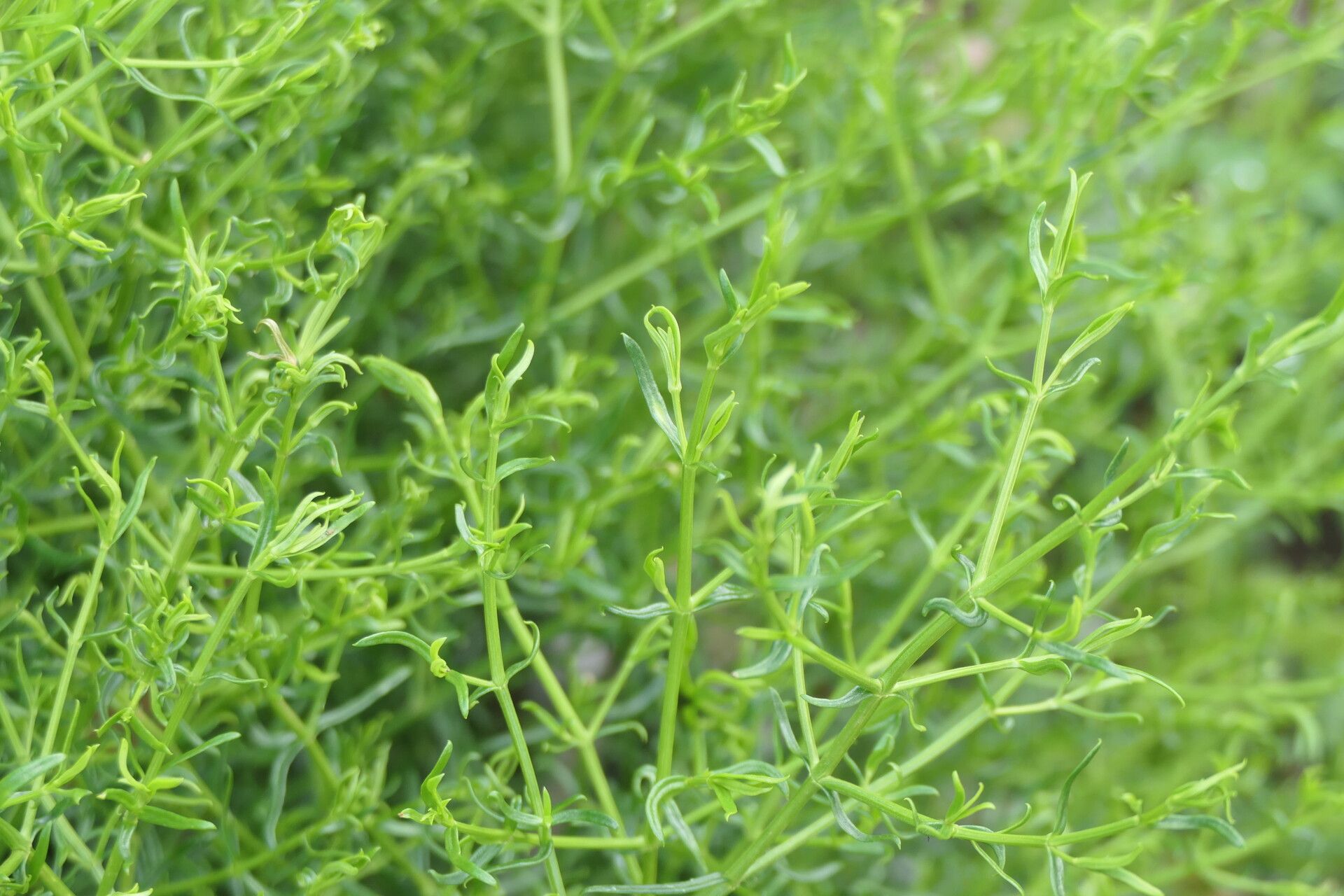
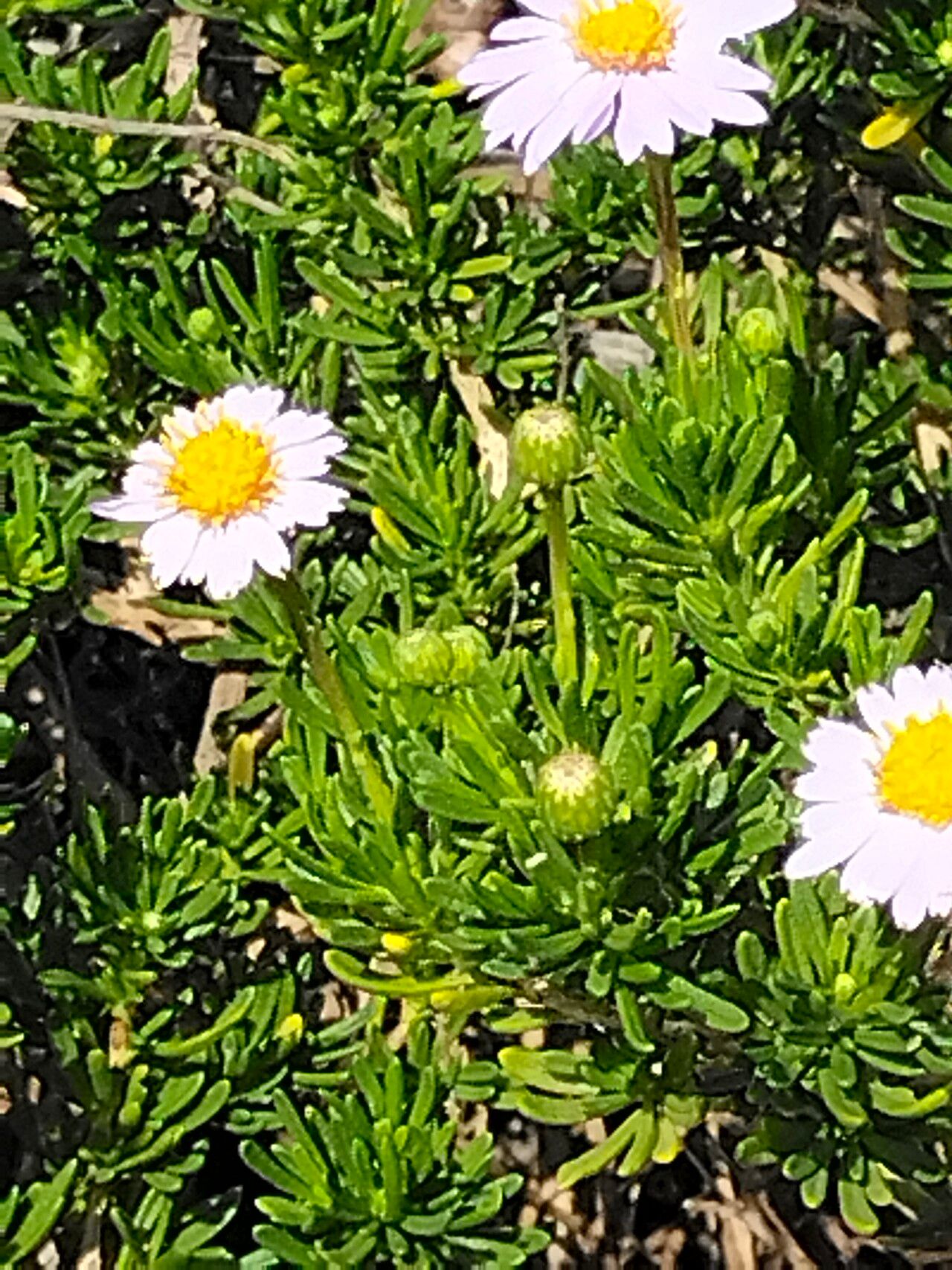
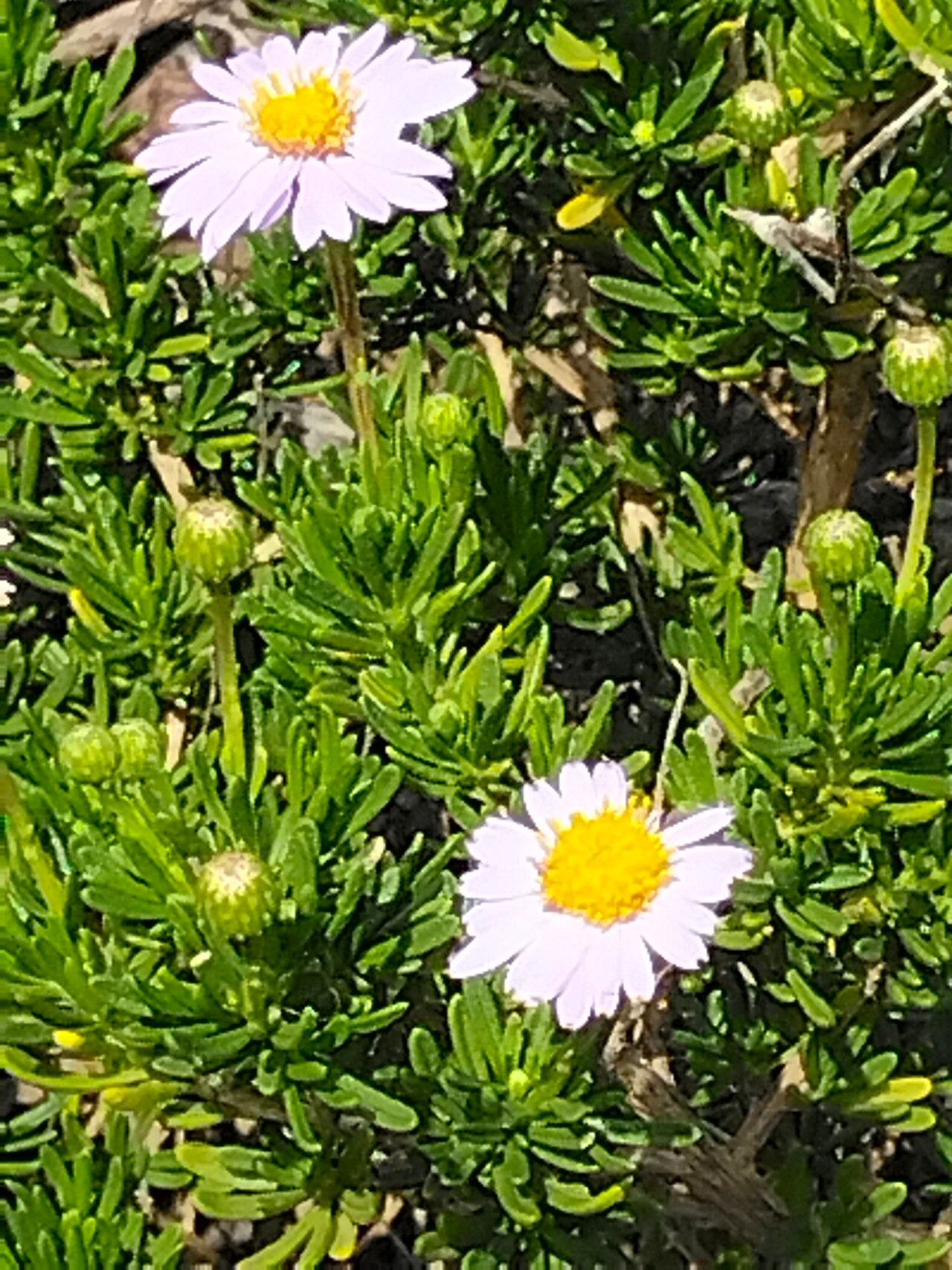
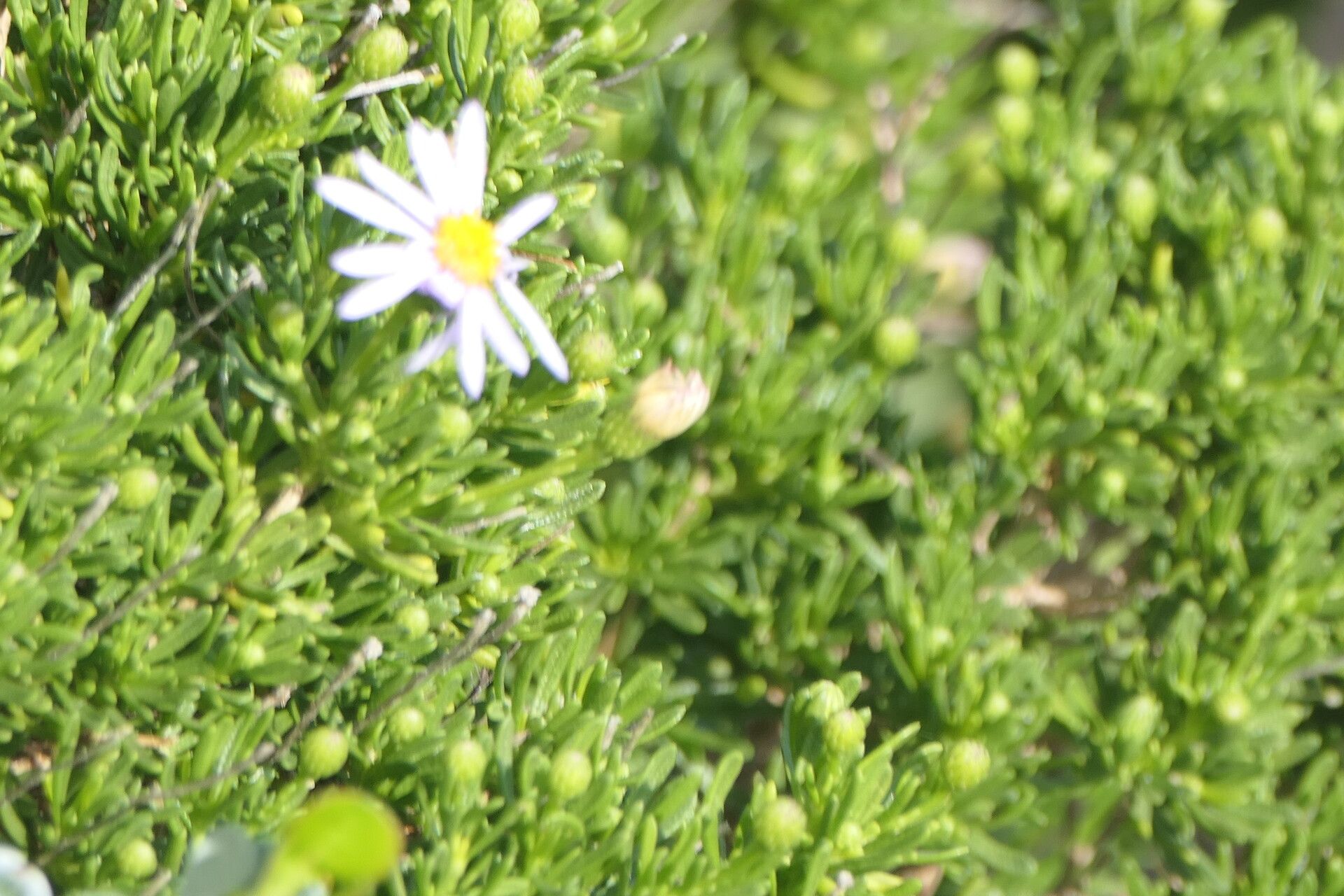
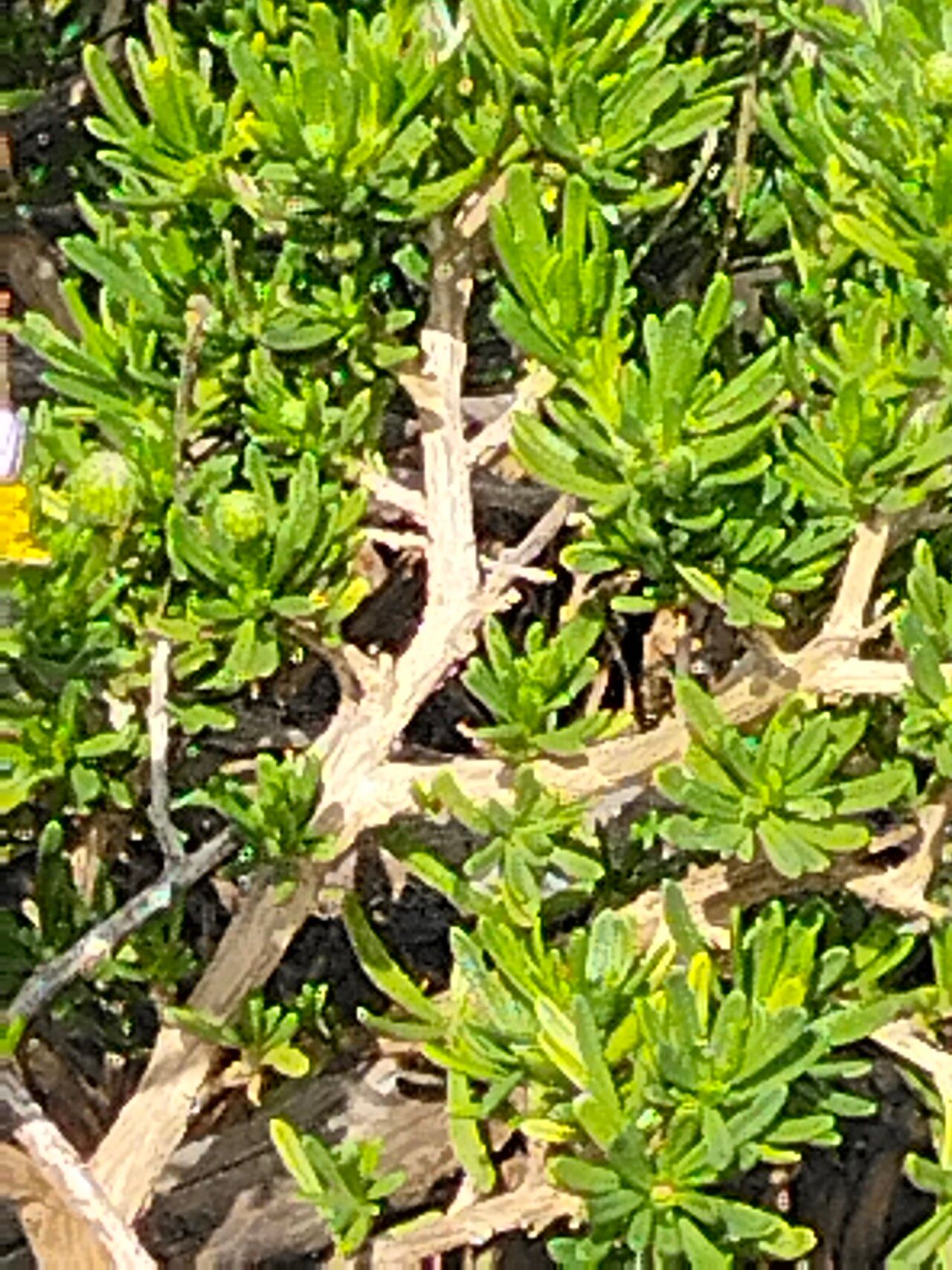
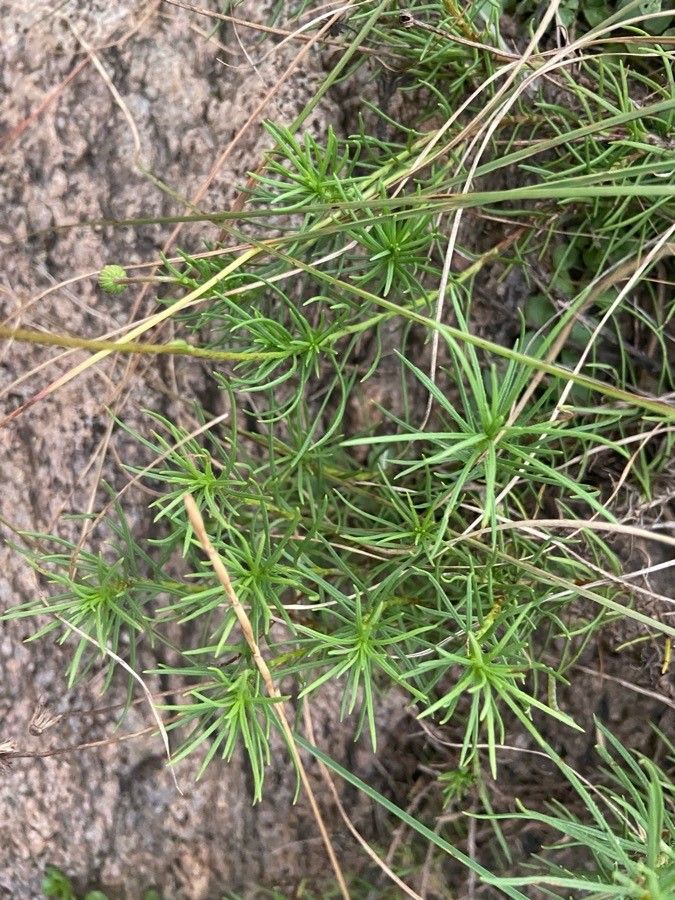
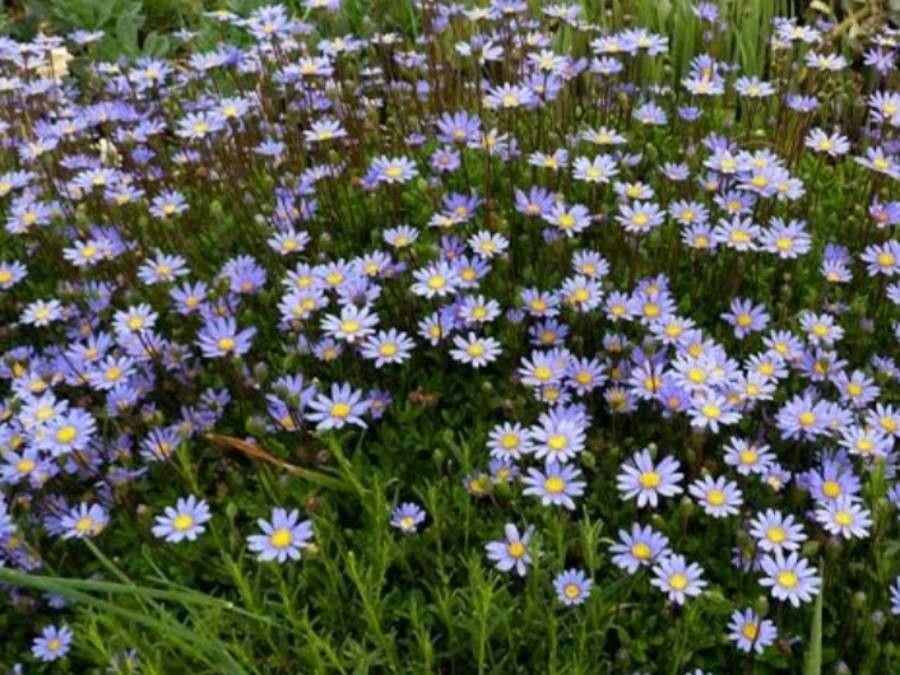
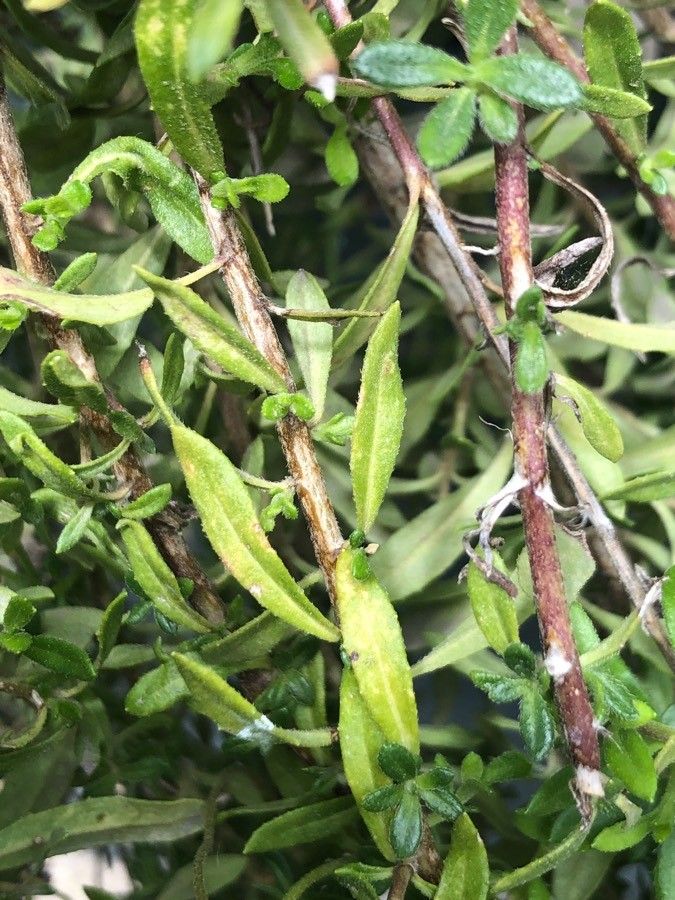
Felicia filifolia is a Southern African member of the family Asteraceae. It is a hardy, sprawling shrub growing to about 1 metre tall. Leaves are narrow (filifolia = threadlike leaves) and clustered along the twigs. When blooming it is densely covered in flowerheads with ray florets that are pink-mauve to white and disc florets that are yellow. In the wild, flowers can be found August to December.The species is widespread over mountainous areas, commonly found growing amongst rocks. It is suspected of causing haemorrhaging when ingested by sheep.
Wild aster is fairly disease-resistant and is usually not prone to illnesses. However, it can be affected by pests and diseases present in its environment. Such infections are generally mild. It requires moderate care. Regular pruning is needed to maintain a good appearance and healthy growth. Applying fertilizer can also encourage flowering. Wild aster is suitable for people with outdoor spaces like a garden or patio and does not demand much gardening experience. It may need more attention when grown indoors.
How to keep Felicia Filifolia.
Light
Wild aster is a sun-loving, perennial herbaceous plant that comes from open habitats and commonly thrives in meadows and grasslands. It prefers full sun but can also tolerate partial sun.
Temperature
Wild aster demonstrates good adaptability to temperature, tolerating high heat and considerable temperature fluctuations. When temperatures are elevated, care should be taken with watering and providing suitable shade to prevent sunburn. However, wild aster is relatively less tolerant of low temperatures. Although it can endure some cold, excessively cold conditions may cause frost damage.
Fertilizer
The best time to fertilize a Wild aster is in early spring, as it comes out of dormancy and begins active growth. Fertilizing supplies essential nutrients for healthy growth. Although Wild aster needs relatively little fertilizer, applying it once a year can improve its survival and encourage better, longer-lasting flowers.
Pruning
Wild asters, known for their delicate foliage and vibrant flowers, benefit greatly from early spring pruning. To encourage bushiness and abundant blooms, remove dead stems and trim back one-third of the plant. Light pruning helps maintain the plant's shape, supports new growth, and prevents disease. Follow these steps for a flourishing wild aster garden.
Botanical profile.
- Plant Type
- Herb
- Life Cycle
- Perennial
- Genus
- Felicia
- Family
- Asteraceae
- Hardiness Zone
- 9-11
- Mature Height
- 30 cm to 61 cm
- Mature Spread
- 30 cm to 49 cm
- Leaf Color
- Green
- Leaf Type
- Evergreen
- Flower Color
- White
- Flower Size
- 2.03 cm to 3.05 cm
- Bloom Time
- Spring, Early summer, Mid summer
- Planting Time
- Spring, Summer
- Harvest Time
- Late spring, Summer, Early fall
Other names.
Reader questions.
What are the sunlight requirements for Wild aster?
Wild aster, botanically known as Felicia filifolia, thrives in conditions where it receives the adequate amount of sunlight. It requires full sun, which means it needs to be exposed to more than 6 hours of sunlight daily. However, it can also grow in partial sun, which equates to about 3-6 hours of sunlight each day. It's important to observe the movement of sunlight through your garden throughout the day to find spots that offer a harmonious balance of light and shade. This ensures the plants are happy and healthy.
What is the botanical name of Wild aster?
The botanical name of Wild aster is Felicia filifolia.