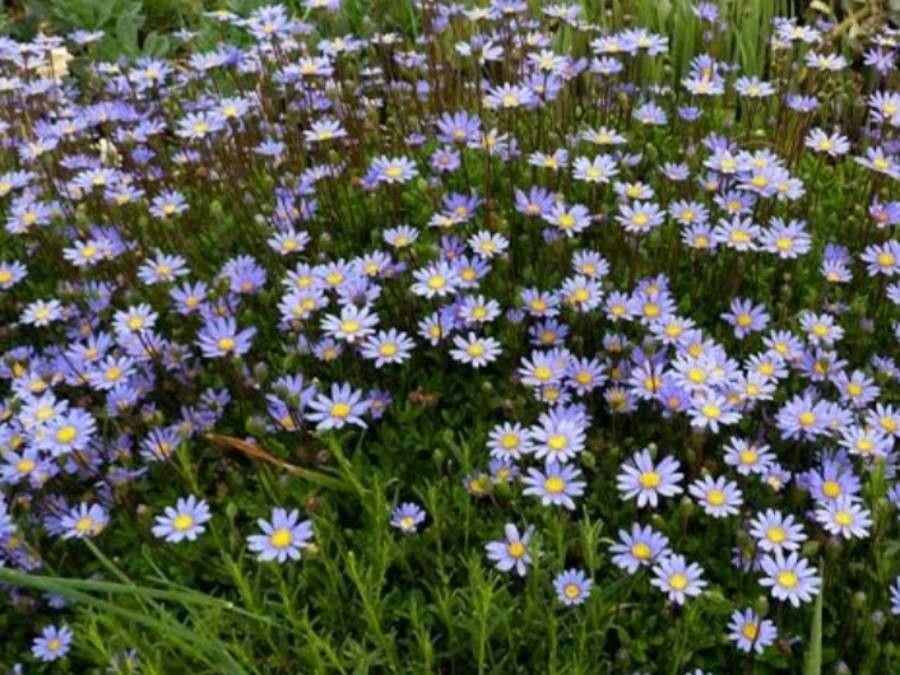
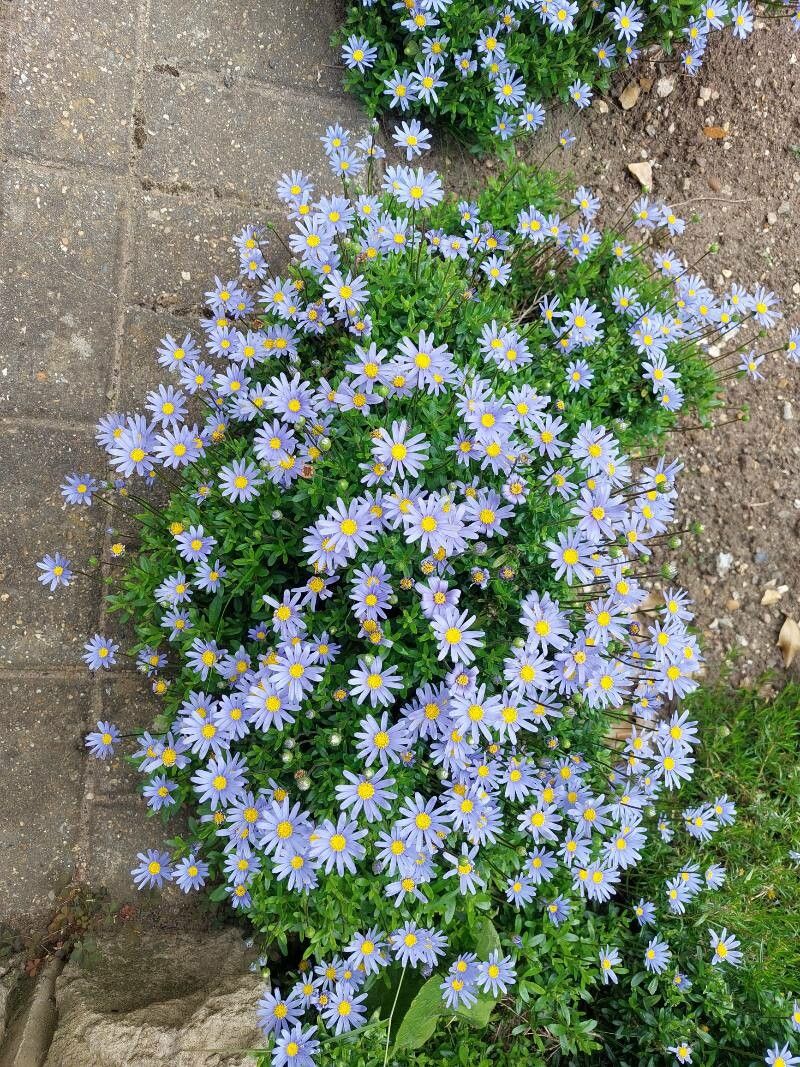
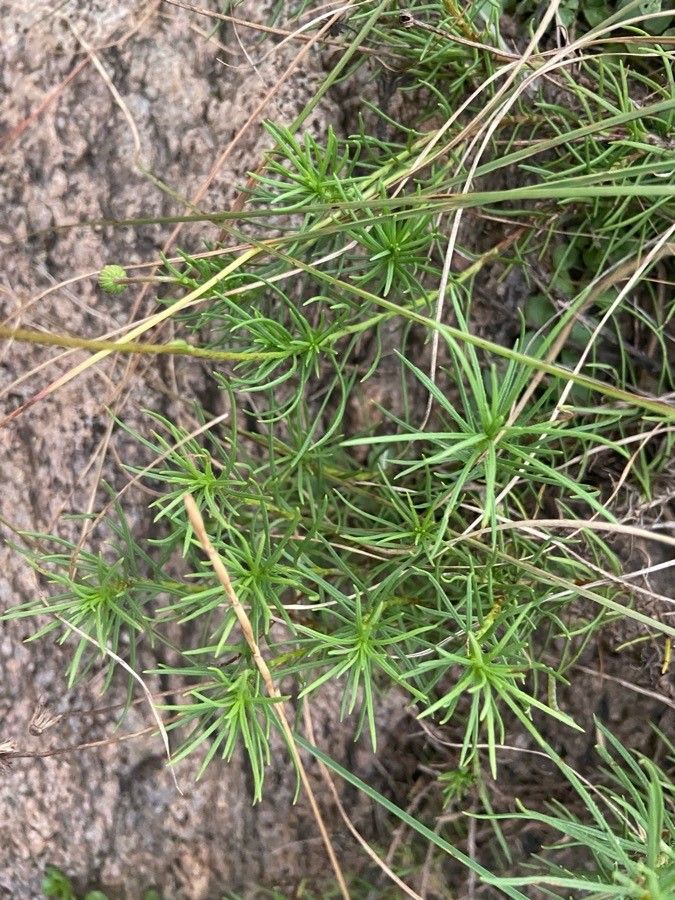
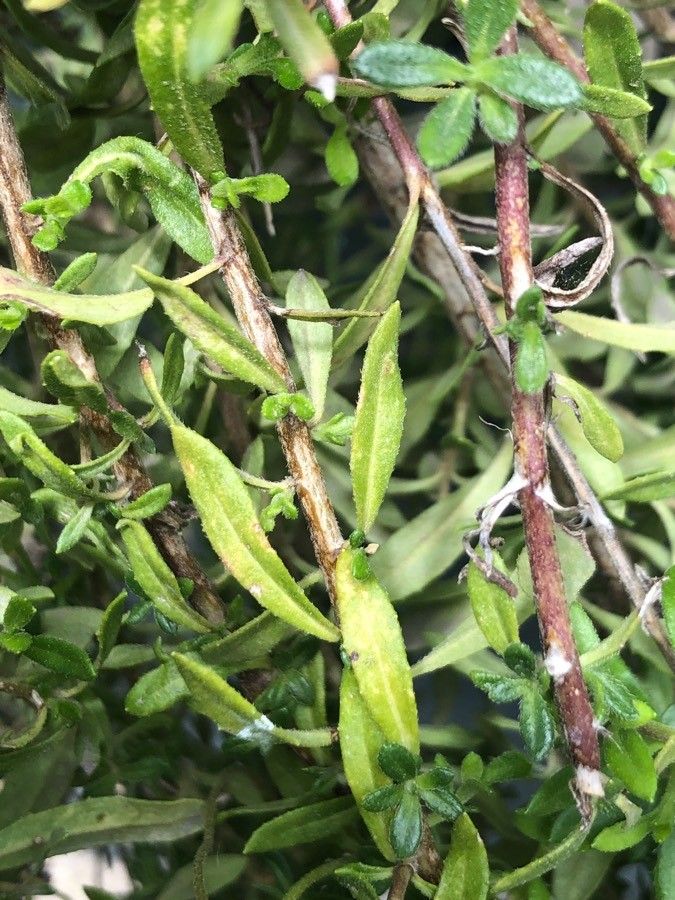
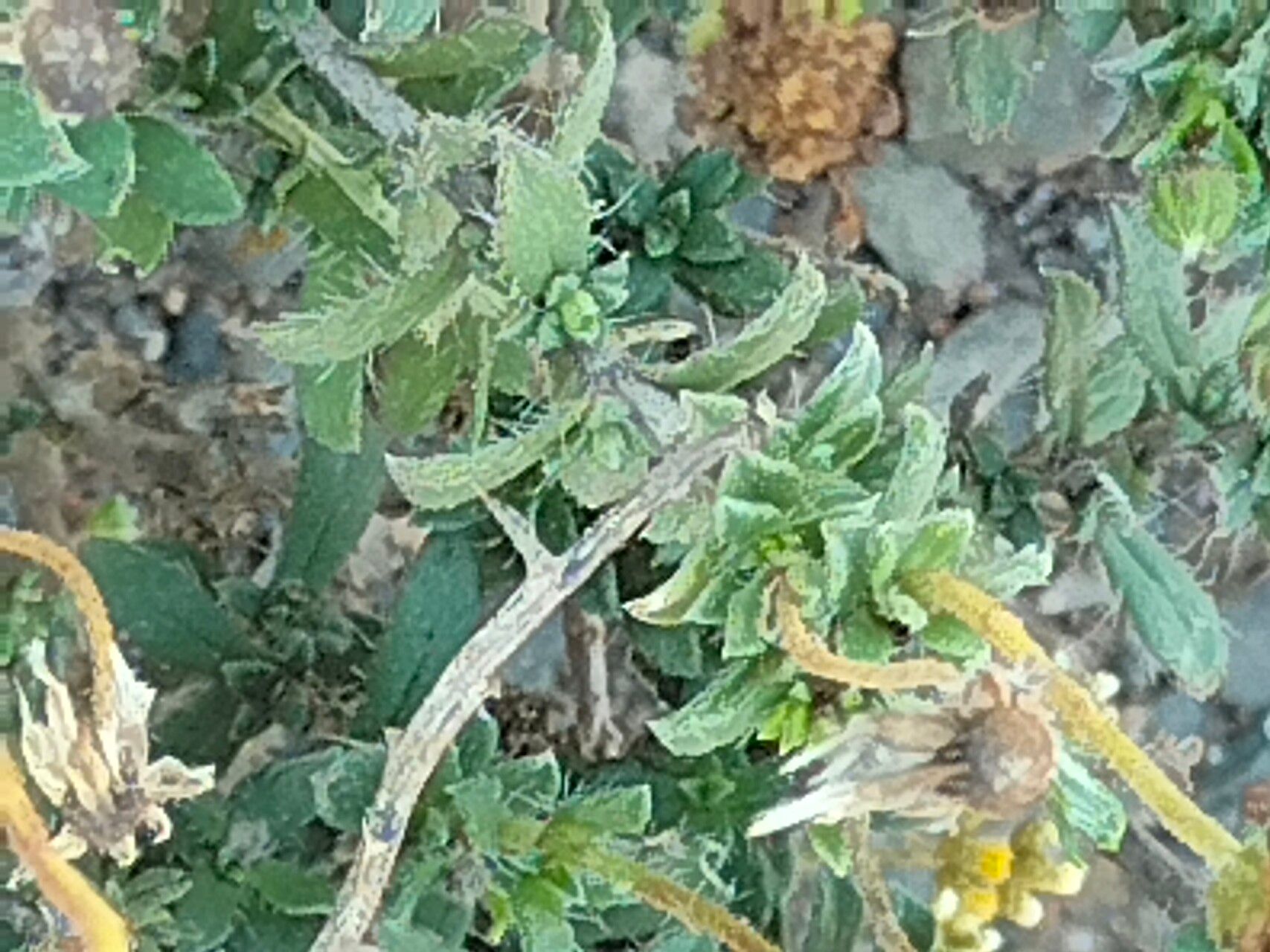
Felicia aethiopica is a low shrublet of up to about 50 cm (1+2⁄3 ft) high that is assigned to the family Asteraceae. It has rigid, leathery, inverted egg-shaped leaves, with only the lowest pair set oppositely. It has flower heads with an involucre of about 8 mm (1⁄3 in) in diameter with bracts that each contain three resin ducts, and have one whorl of twelve to fourteen ray florets with about 11 mm long and 1½ mm wide blue straps surrounding many yellow disc florets. The plant is called wild aster or dwarf Felicia in English, and wilde-aster or bloublombossie in Afrikaans. Flowering occurs year-round. Wild aster can be found in the Western and Eastern Cape provinces of South Africa.
African Felicia is fairly resistant to disease and typically does not develop illnesses easily. Still, it can be vulnerable to pests and diseases present in its environment. When infections do occur, they are generally mild. Regarding upkeep, this plant needs a moderate level of care. It should be pruned regularly to preserve a neat appearance and support healthy growth. Applying fertilizer can also encourage more blooms. African Felicia is well suited for anyone who has outdoor space, such as a garden or a patio, and it does not demand extensive gardening experience. If grown indoors, it may need more attentive care.
How to keep Felicia Aethiopica.
Light
African Felicia is a sun-loving, perennial herbaceous plant that originates from open habitats and is commonly found in meadows and grasslands. It prefers full sun but can also tolerate partial sun conditions.
Temperature
African Felicia can tolerate a wide range of temperatures, but its distribution may still be restricted by different combinations of moisture and heat. It performs best in warm summer climates with sufficient rainfall or regular watering. Extended periods of cloudy, rainy weather and prolonged high temperatures can increase the chance of African Felicia dying. In winter, protecting the plant from cold can boost its survival rate.
Fertilizer
The best time to fertilize an African Felicia is in early spring, when it is coming out of dormancy and starting active growth. Fertilizer supplies the essential nutrients for healthy development. Although African Felicia has relatively low fertilizer needs, giving it fertilizer once a year can improve its survival and encourage better, longer-lasting blooms.
Pruning
Felicia aethiopica is a low-growing evergreen shrub that produces daisy-like flowers. To ensure optimal growth, lightly prune it in early spring. This involves removing any dead wood and trimming the stems. Such pruning encourages new growth, improves airflow, reduces the likelihood of pests, and extends the flowering period. Always use sterilized tools to prevent the spread of disease.
Botanical profile.
- Plant Type
- Herb, Shrub
- Life Cycle
- Perennial
- Genus
- Felicia
- Family
- Asteraceae
- Hardiness Zone
- 9-11
- Mature Height
- 30 cm to 61 cm
- Mature Spread
- 30 cm to 61 cm
- Leaf Color
- Green
- Leaf Type
- Evergreen
- Flower Size
- 3.05 cm to 5.08 cm
- Bloom Time
- All year round
- Planting Time
- Spring, Summer, Autumn
- Harvest Time
- All year round
Reader questions.
What is Felicia aethiopica?
Felicia aethiopica, also known by its botanical name Felicia aethiopica, does not have further information provided regarding its essentials or symptoms in the data. It appears more information is needed to offer a comprehensive understanding of this species.