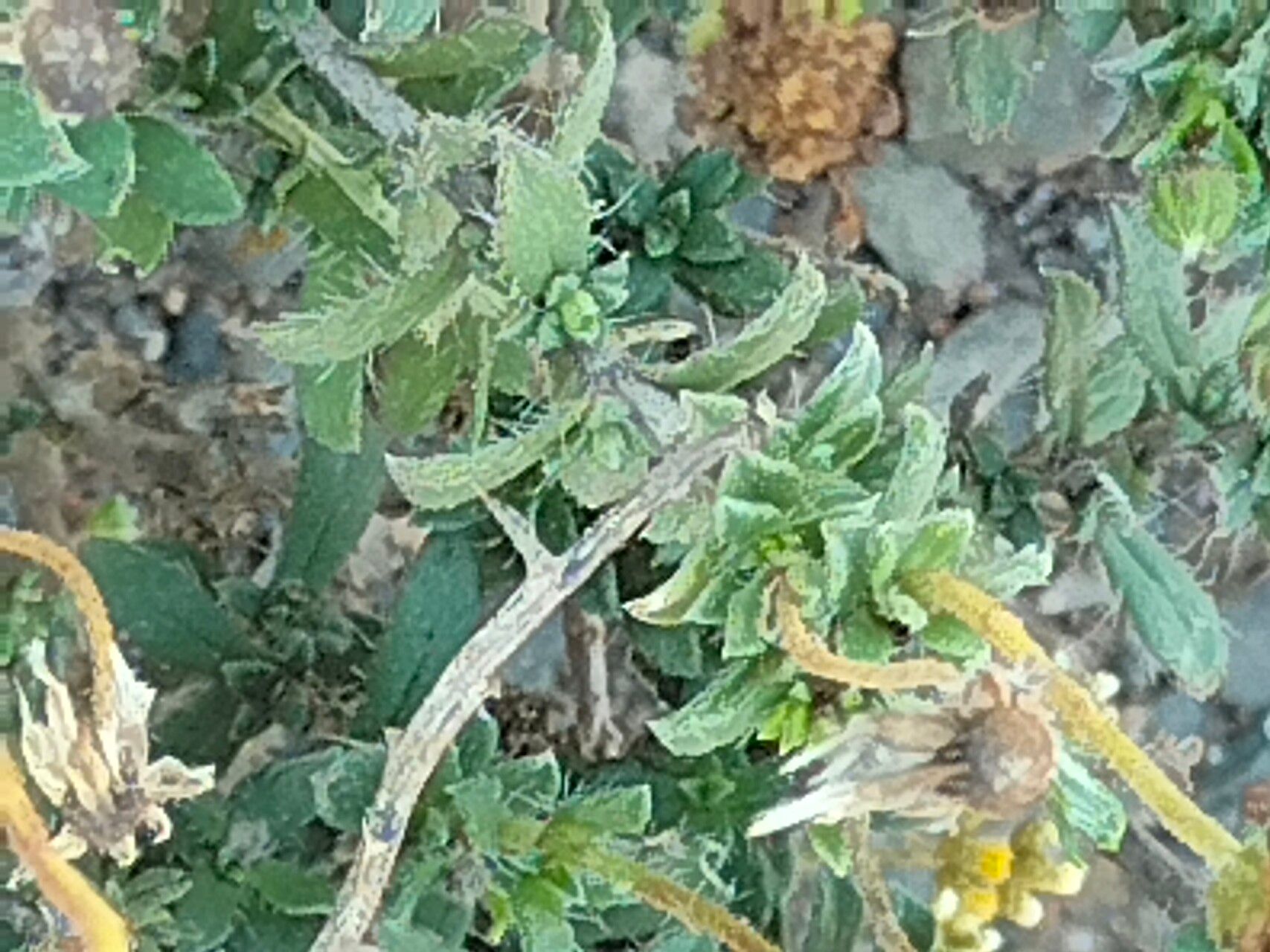
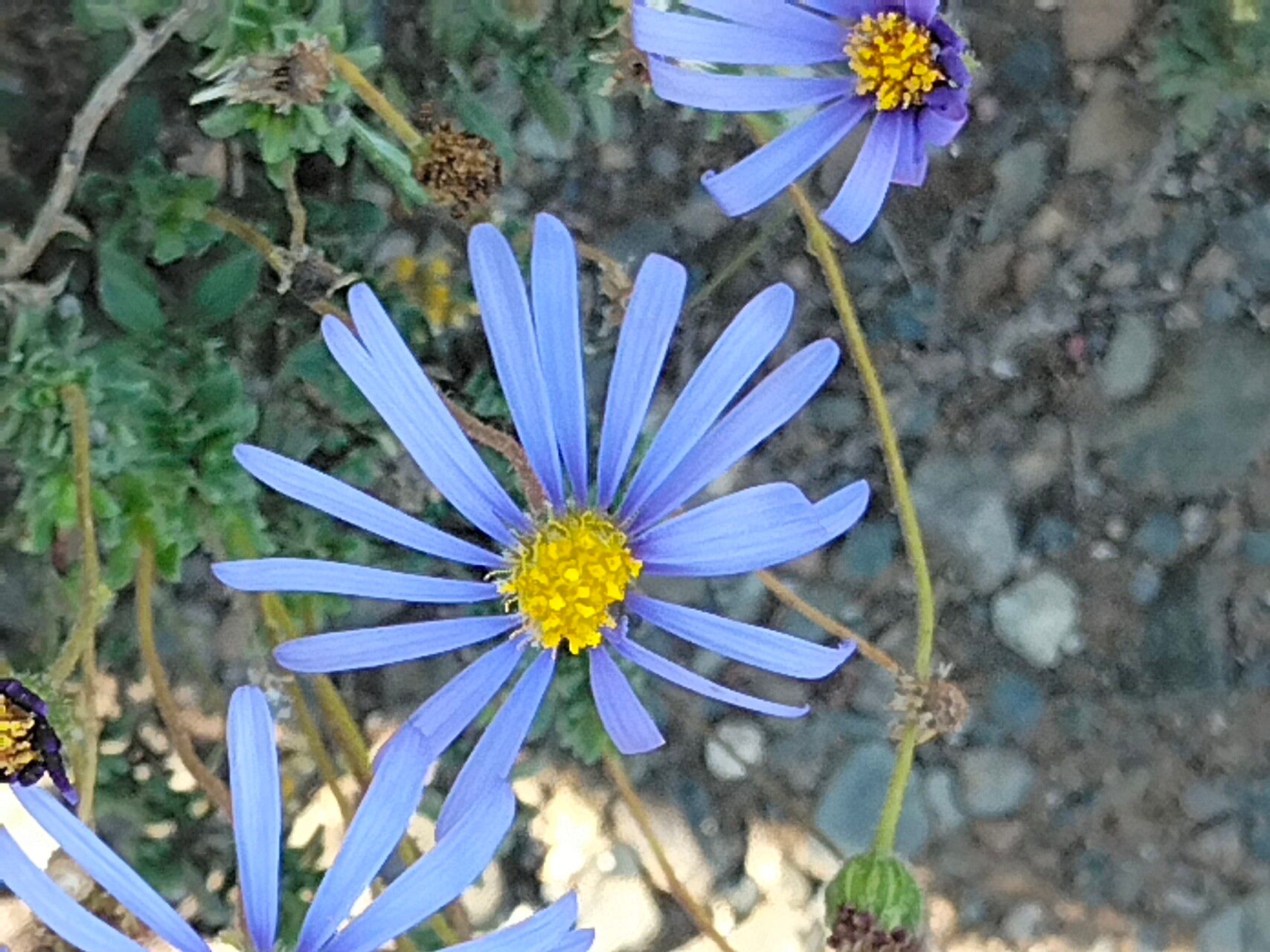
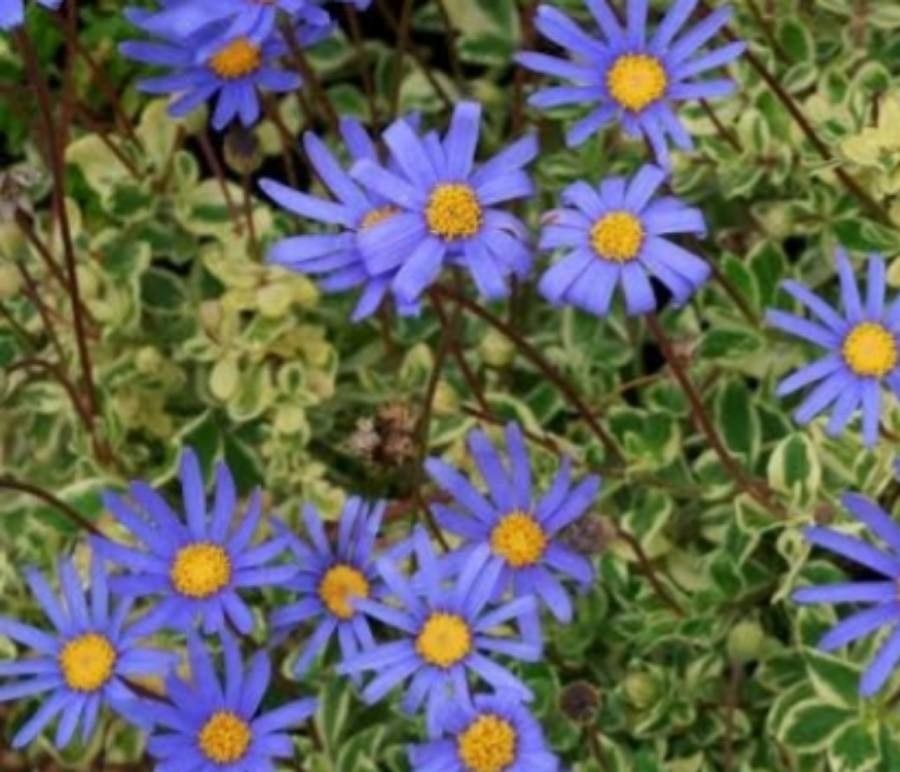
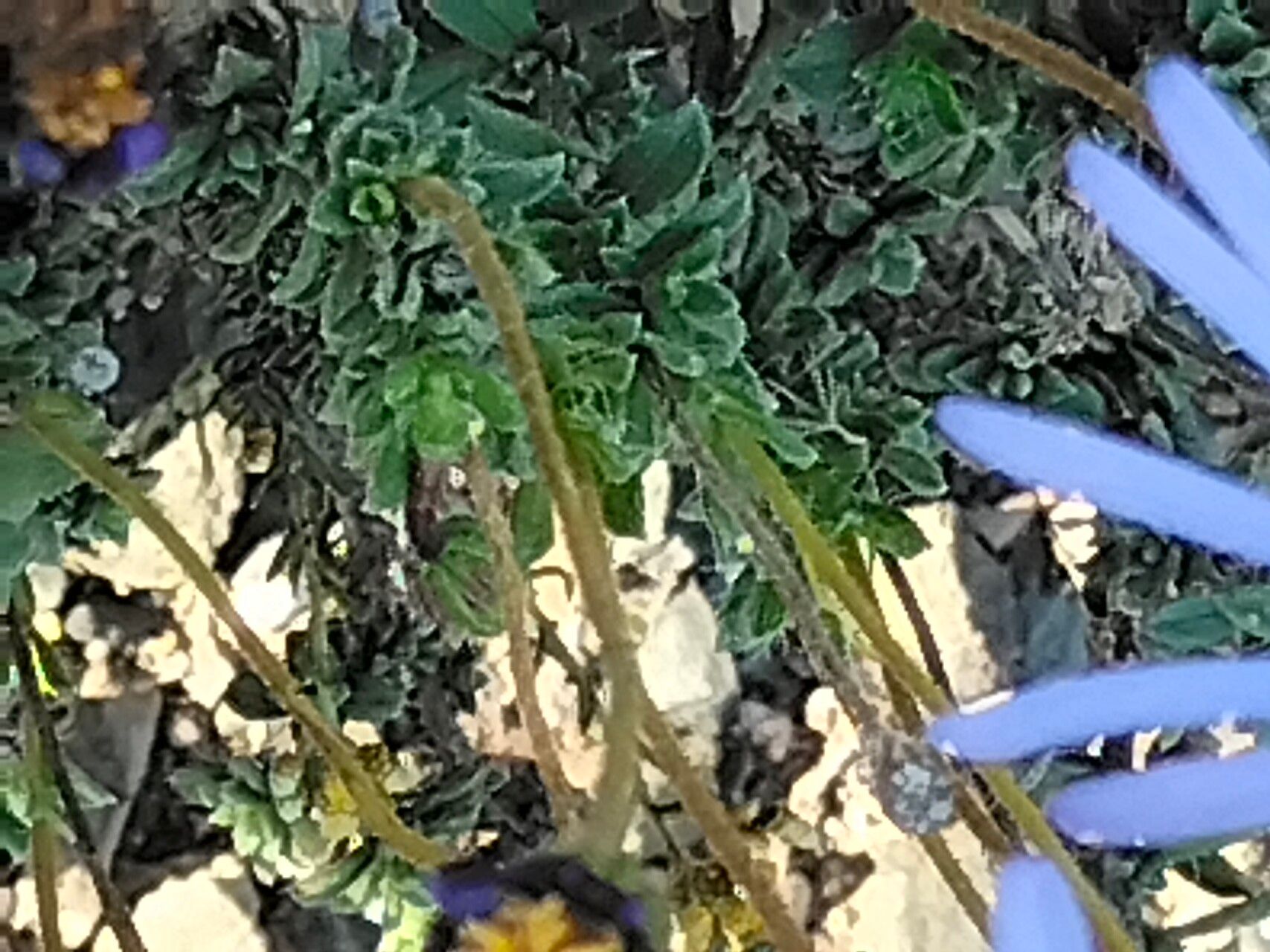
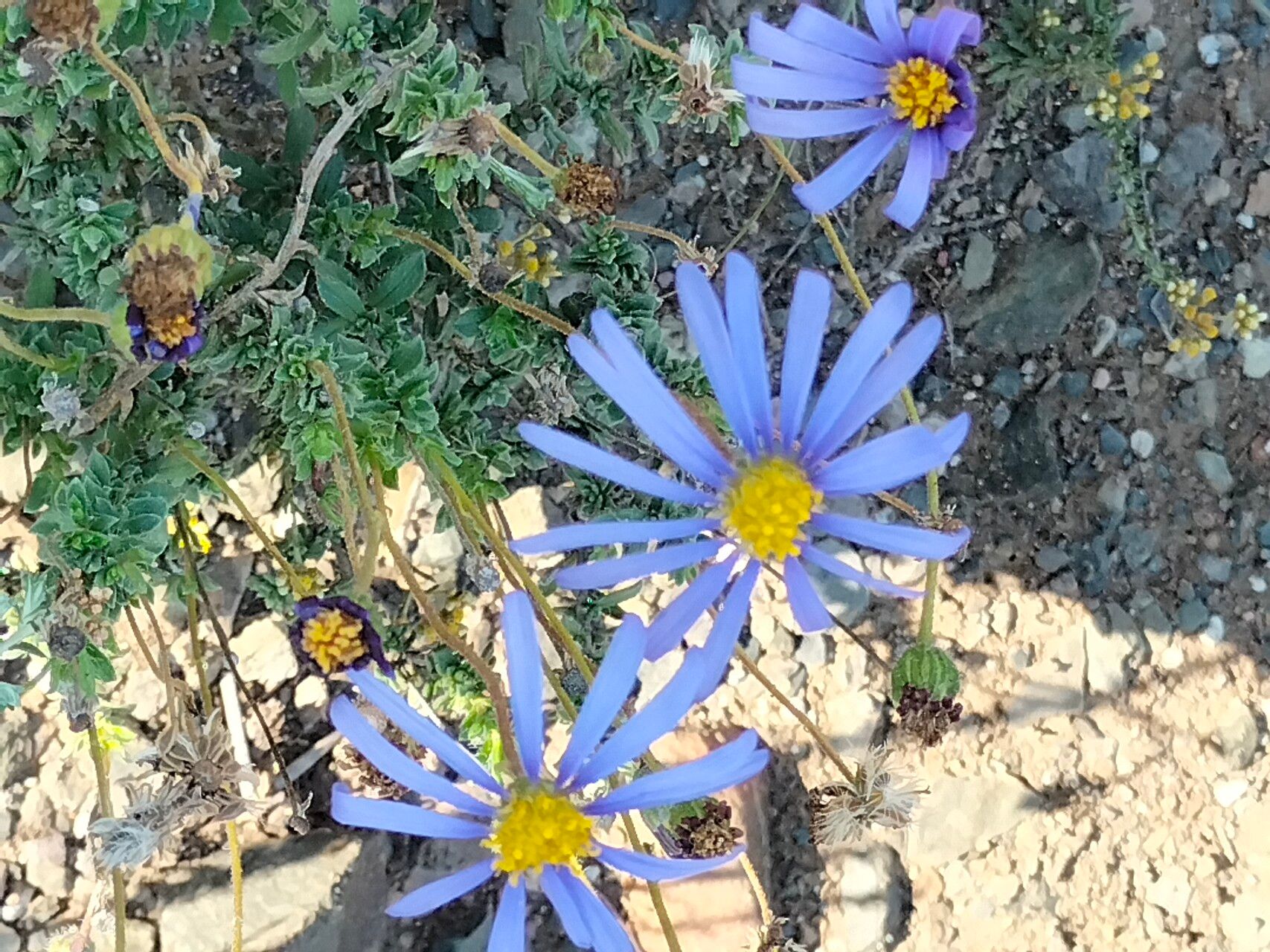
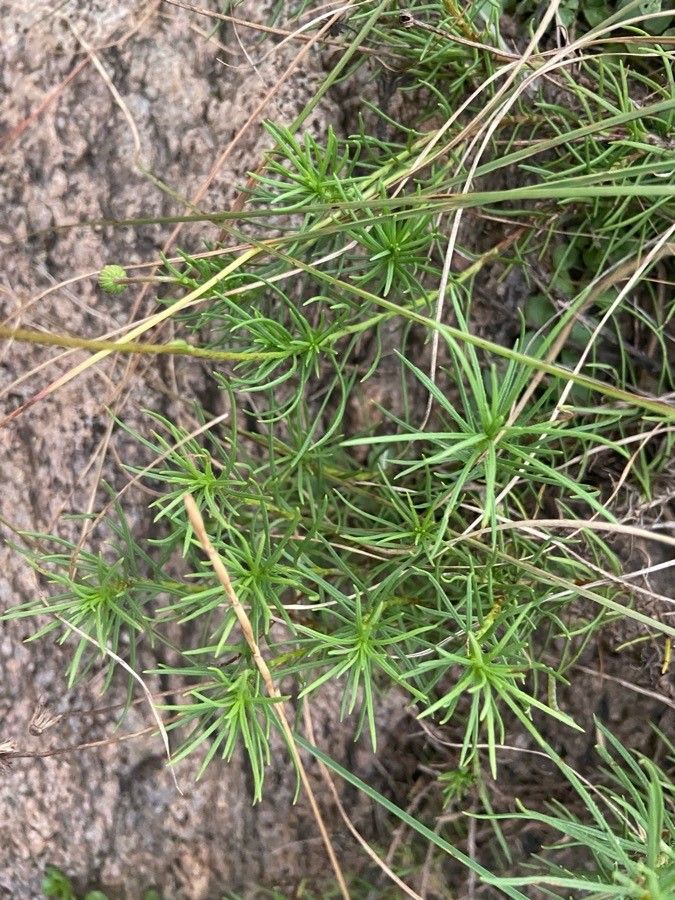
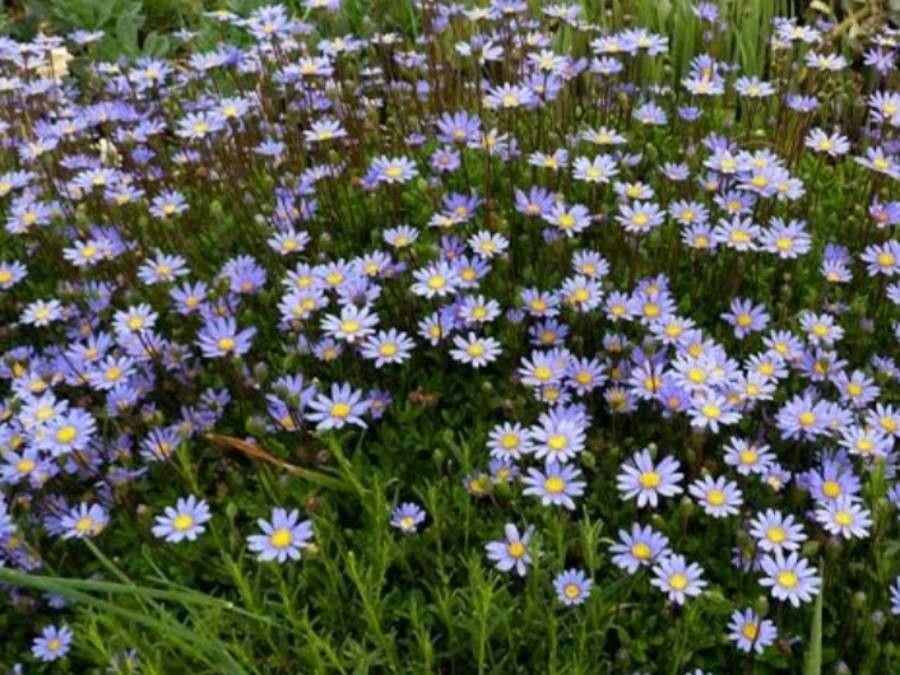
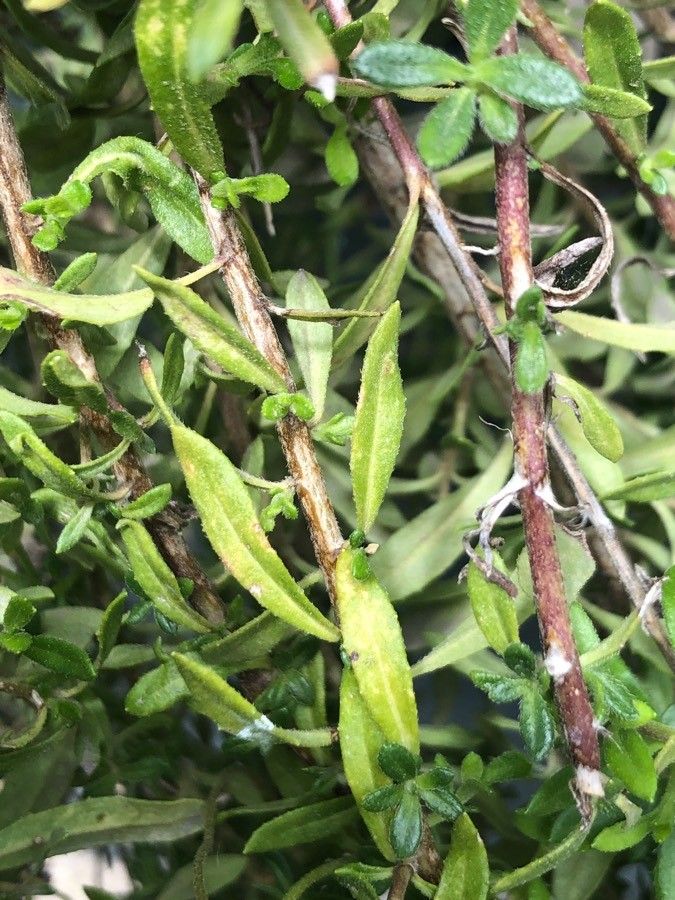
Felicia amoena is a variably hairy, sometimes glandular, biennial or perennial plant, of about 25 cm (10 in) high, that is assigned to the family Asteraceae. It is somewhat woody at its base, roots at the nodes if these contact the soil, and has ascending branches. The leaves are oppositely arranged along the stems at and just above a branching fork, further up the leaves alternate. The flower heads sit individually on up to 12 cm (4+1⁄2 in) long stalks. They are 2–3 cm (4⁄5–1+1⁄5 in) in diameter and consist of about twelve to twenty five heavenly blue ray florets that surround many yellow disc florets. Three subspecies have been recognised, that differ in width of the leaves and the involucral bracts, the size of the heads and number of ray florets and in having glandular hairs. These can be found in coastal sands and inland areas in the Western Cape and Eastern Cape provinces of South Africa. Flower heads can be found from June till October.
How to keep Felicia Amoena.
Water
Felicia amoena flourishes in moderately moist conditions, preferring soil that remains consistently damp. To support healthy growth, it should be watered weekly. Its evergreen nature is advantageous, as it helps regulate transpiration rates and maintain water efficiency throughout the year. It is important to note that this species is not drought-tolerant and does not require high humidity levels.
Pruning
Felicia amoena is known for its vibrant flowers and compact growth. To keep the plant healthy, prune it in early spring. This will help remove any winter damage, trim back overgrown stems, and improve air circulation, resulting in healthier blooms. Make sure to use sharp, clean tools, and avoid heavy pruning while it's flowering to preserve its ornamental beauty.
Botanical profile.
- Plant Type
- Herb
- Genus
- Felicia
- Family
- Asteraceae
Reader questions.
What are the sunlight requirements for Felicia amoena?
Felicia amoena, also known as Felicia amoena, thrives in different sunlight conditions depending on its needs for optimal growth. For 'Full sun', it requires above 6 hours of sunlight daily. In the case of 'Partial sun', about 3-6 hours of sunlight per day is needed. It's important to observe the movement of sunlight through your garden to find spots that offer a perfect blend of light and shade. This ensures the plants remain happy and healthy, considering the sunlight they receive reflects upon their growth and well-being.