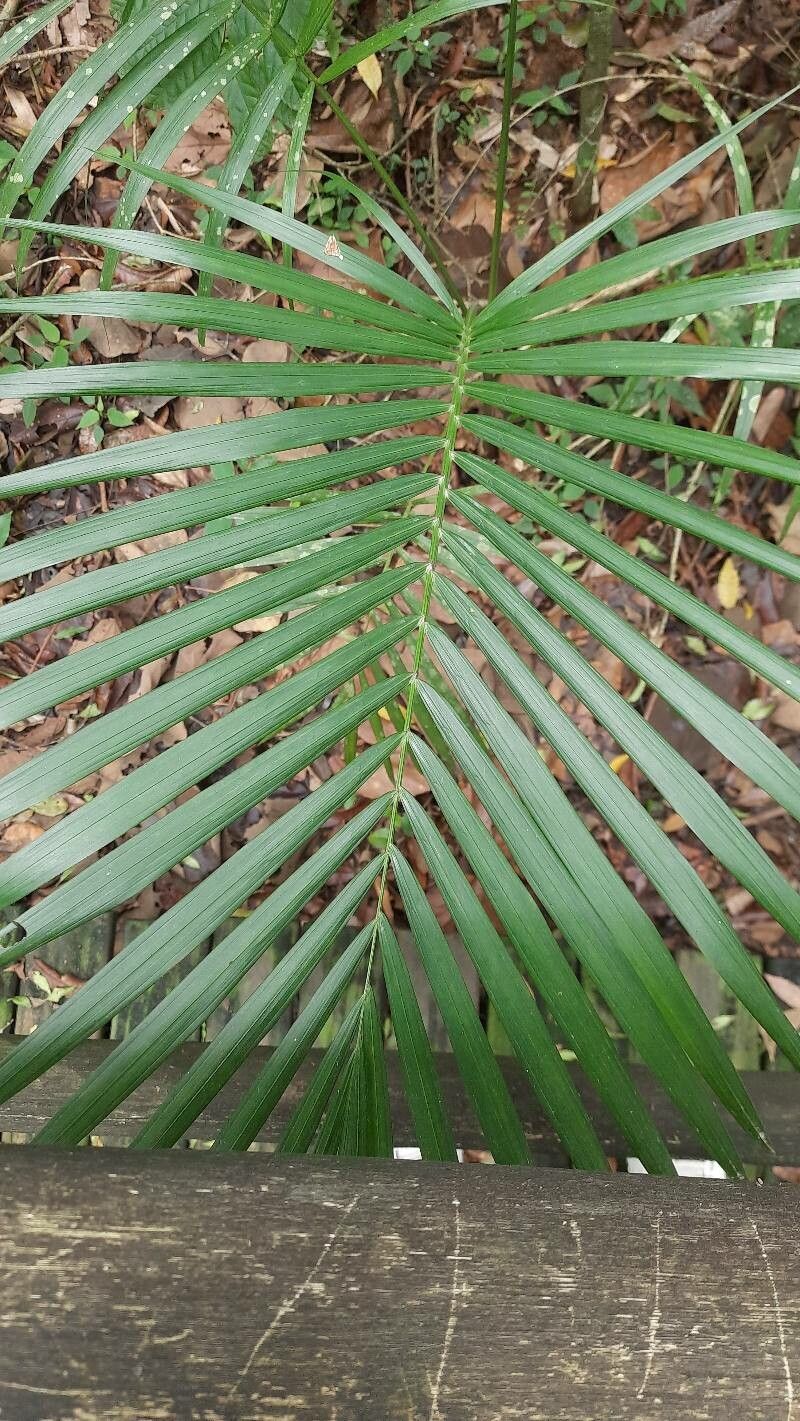
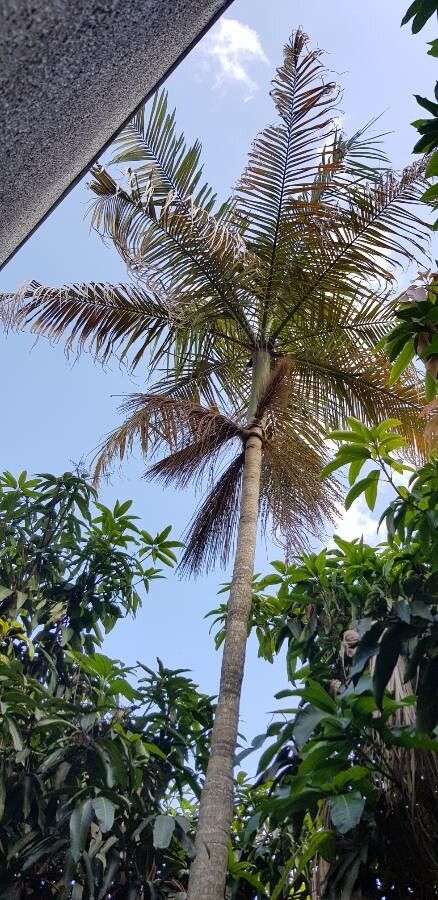
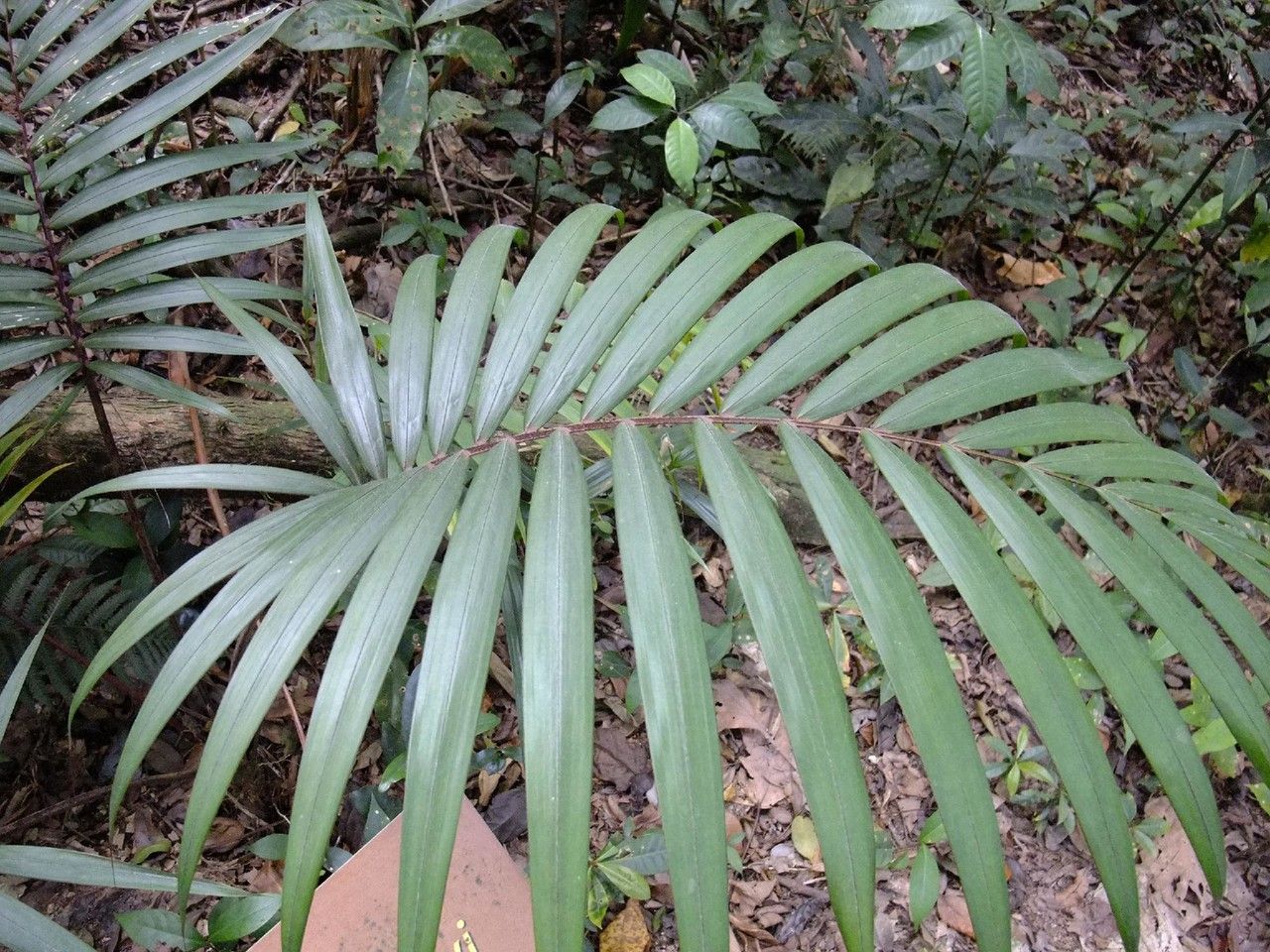
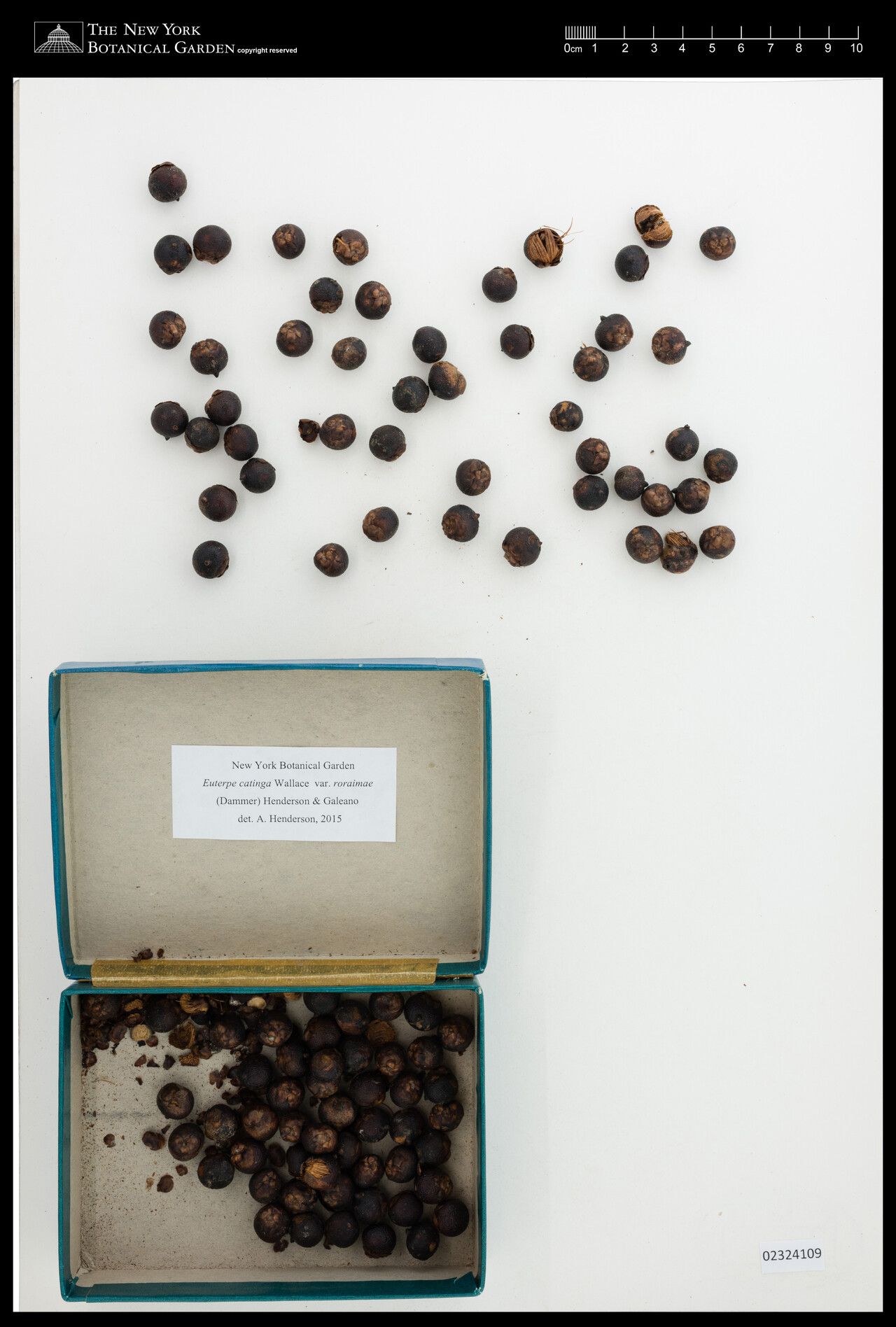
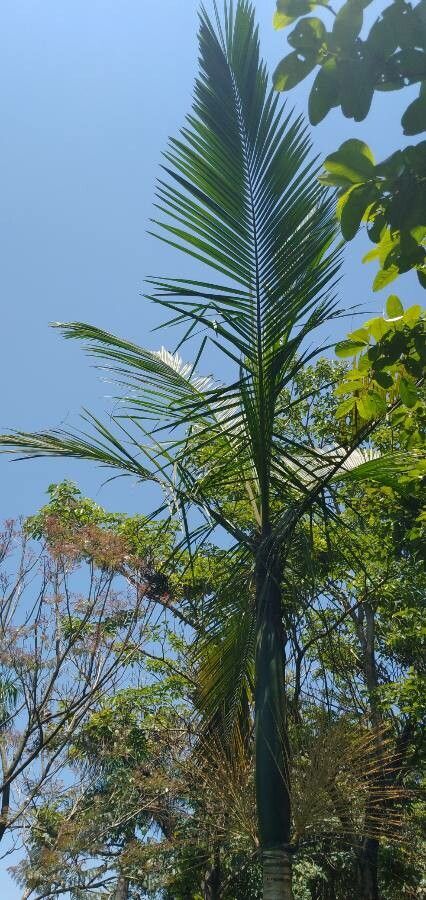
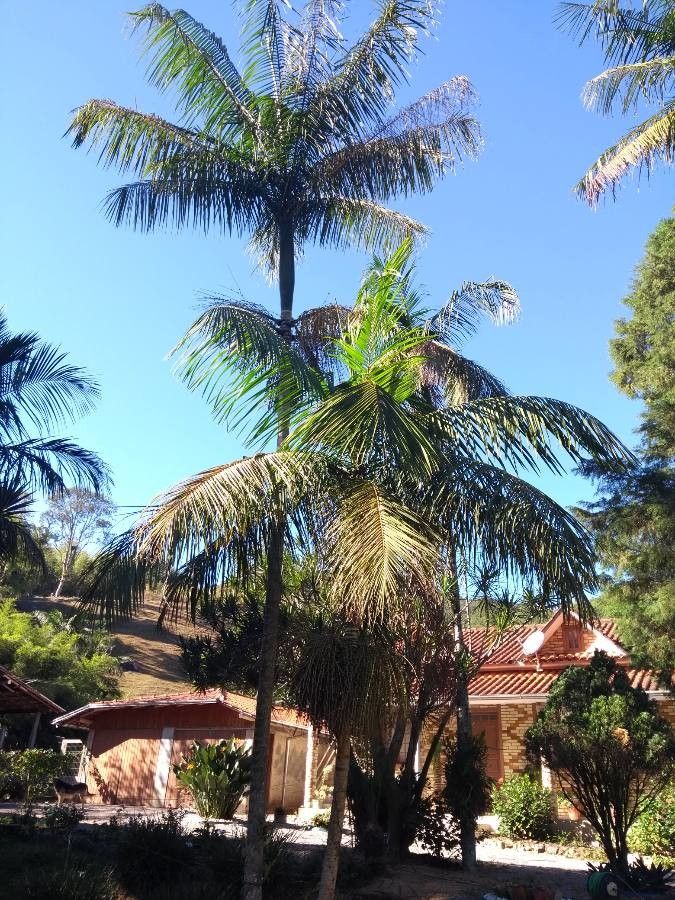
Euterpe edulis, commonly known as juçara, jussara (an archaic alternative spelling), açaí-do-sul or palmiteiro, is a palm species in the genus Euterpe. It is now predominantly used for hearts of palm. It is closely related to the açaí palm, the açaí palm has differences though (Euterpe oleracea), a species cultivated for its fruit and superior hearts of palm. The larvae of Caligo brasiliensis are reported to feed on E. edulis. Although it was formerly widely harvested in Brazil for hearts of palm, it is now uncommon in the wild and no longer harvested commercially due to past over harvesting.This endangering of the species could cause it to fall extinct.
Heart of palm resists disease well and is generally not prone to illnesses. In terms of care, this plant is relatively low maintenance. When grown outdoors, it needs minimal watering, and larger plants usually do not require pruning. However, smaller plants should be pruned after they have bloomed. Heart of palm is suitable for anyone with outdoor space, such as a garden or deck, and does not require much care experience.
How to keep Euterpe Edulis.
Light
Heart of palm originates from habitats like forest understories and rocky areas, where it encounters natural shade. It prefers partial sun but can adapt to full sun or full shade, demonstrating its versatile and hardy nature.
Temperature
Heart of palm comes from tropical areas, which have warm, humid climates. Therefore, it is adapted to high heat and moisture. It does not tolerate abrupt shifts in temperature and does best in a consistent thermal environment, so avoiding indoor temperature swings is important. It generally cannot withstand cold conditions and needs relatively warm temperatures to grow. If the surrounding temperature falls too far, the plant may stop growing or die.
Fertilizer
To encourage healthy growth, fertilize your Heart of palm in early spring. Regular feeding improves overall health, leading to vigorous growth, better tolerance of difficult conditions, and increased resistance to pests and diseases. Keep to a specific fertilization schedule for your Heart of palm to ensure foliage that is vibrant, deeply colored, and lush.
Pruning
The heart of palm has a tall trunk and feathery leaves, requiring only minimal spring pruning to remove any damaged fronds. Making clean cuts during pruning helps prevent disease and promotes healthy growth. Regular trimming also enhances air circulation and improves the plant’s appearance. For specific care guidelines based on your local climate, consult local resources.
Botanical profile.
- Plant Type
- Palm
- Life Cycle
- Perennial
- Genus
- Euterpe
- Family
- Arecaceae
- Hardiness Zone
- 10-11
- Mature Height
- 10.06 m to 20.12 m
- Mature Spread
- 3.05 m to 4.88 m
- Leaf Color
- Dark Green
- Leaf Type
- Evergreen
- Flower Color
- White
- Flower Size
- 0.25 cm to 0.51 cm
- Bloom Time
- Summer, Early fall, Mid fall
- Planting Time
- Spring, Summer, Autumn
- Harvest Time
- Fall, Winter
- Native Area
- Brazil
Other names.