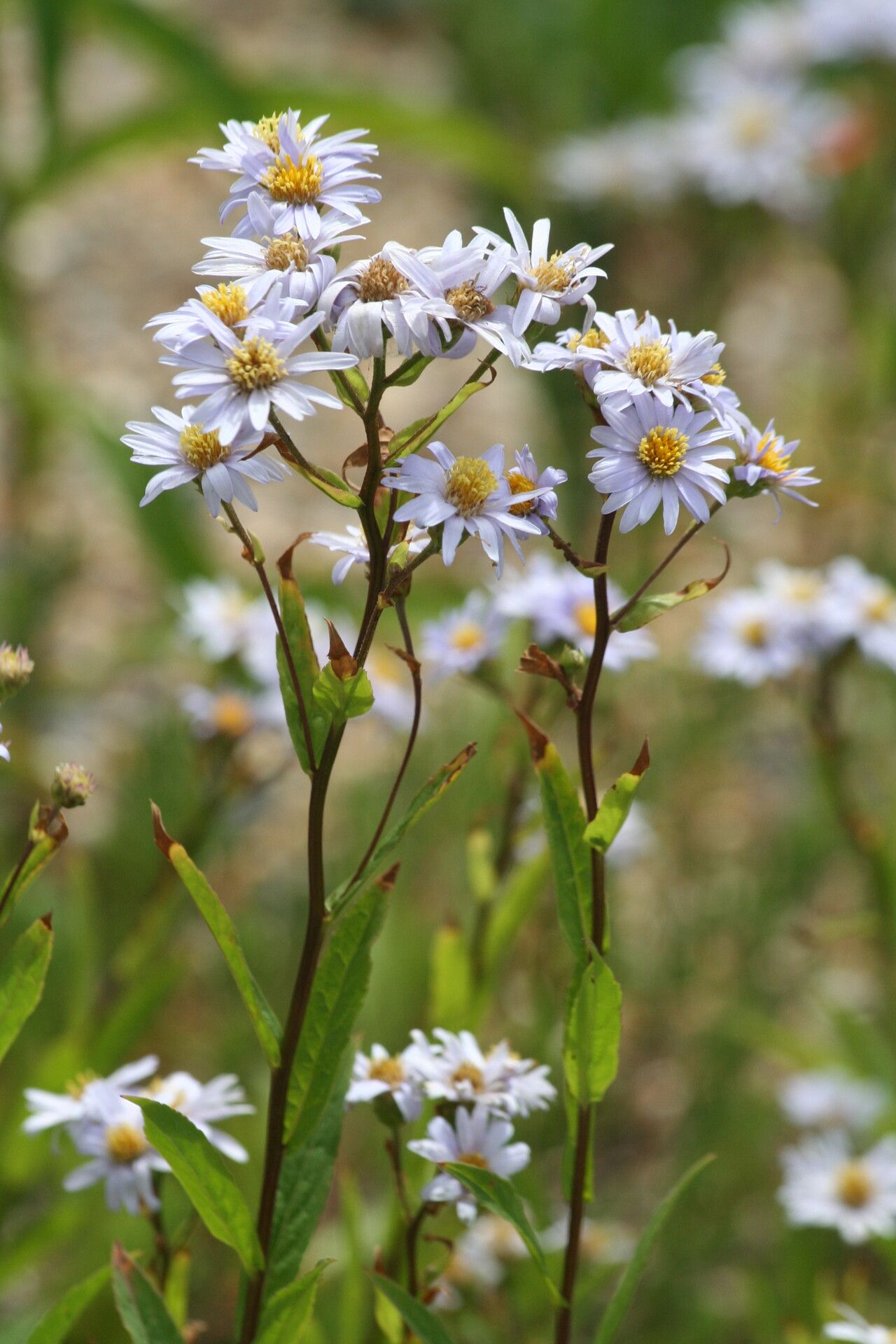
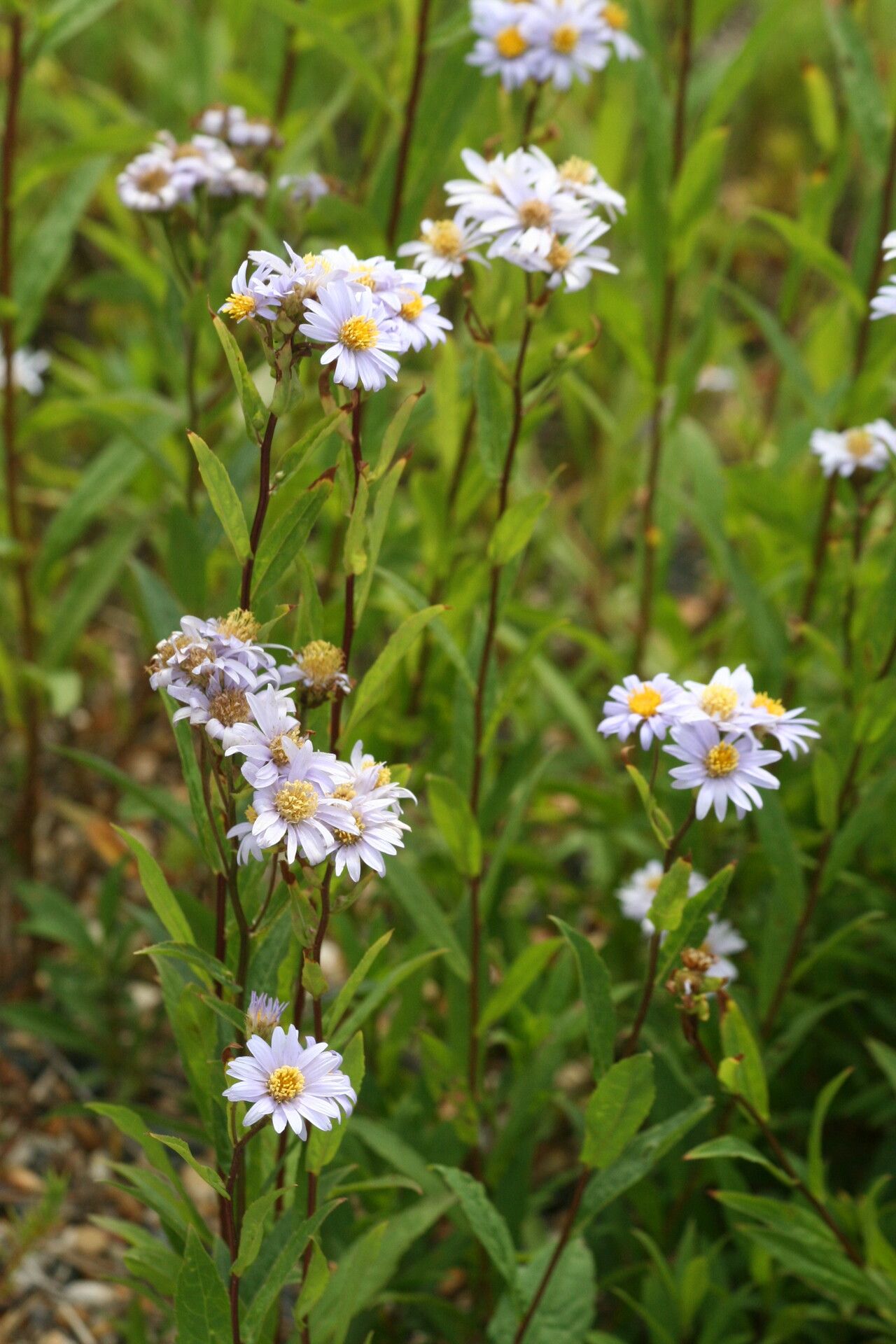
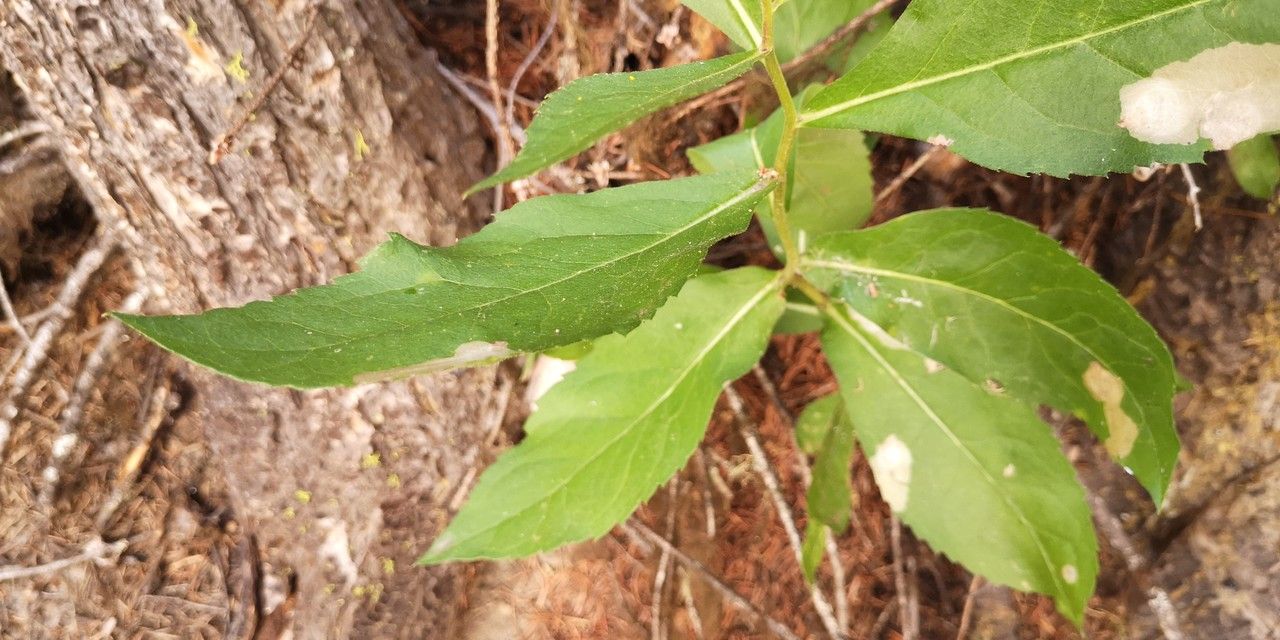
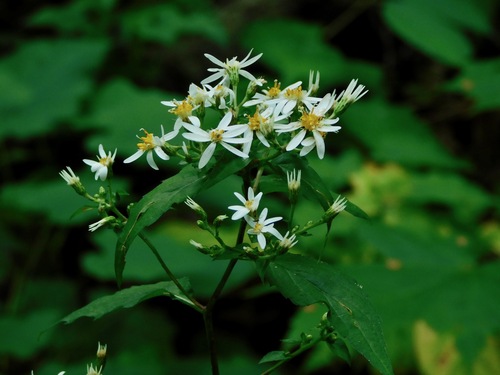
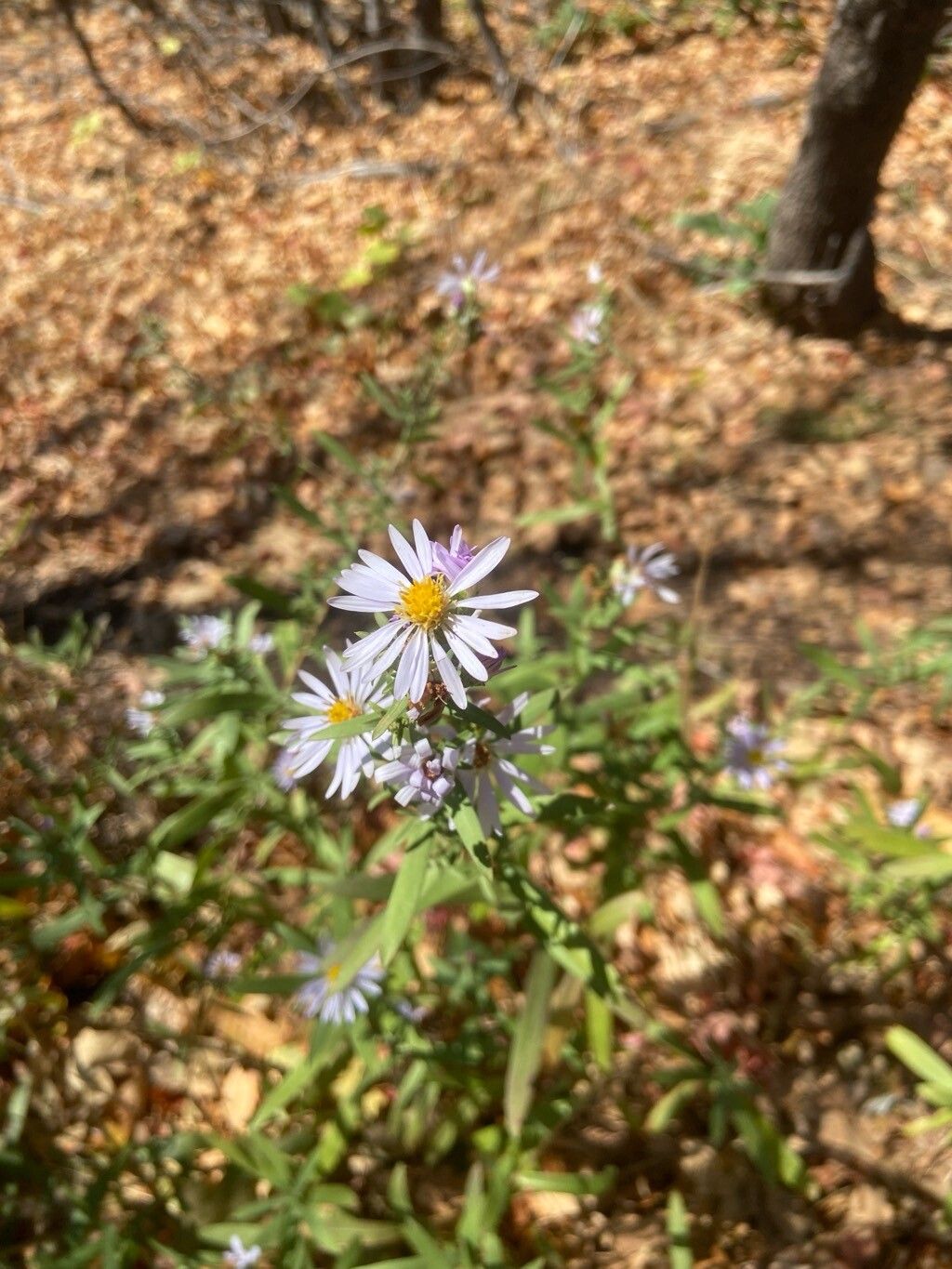
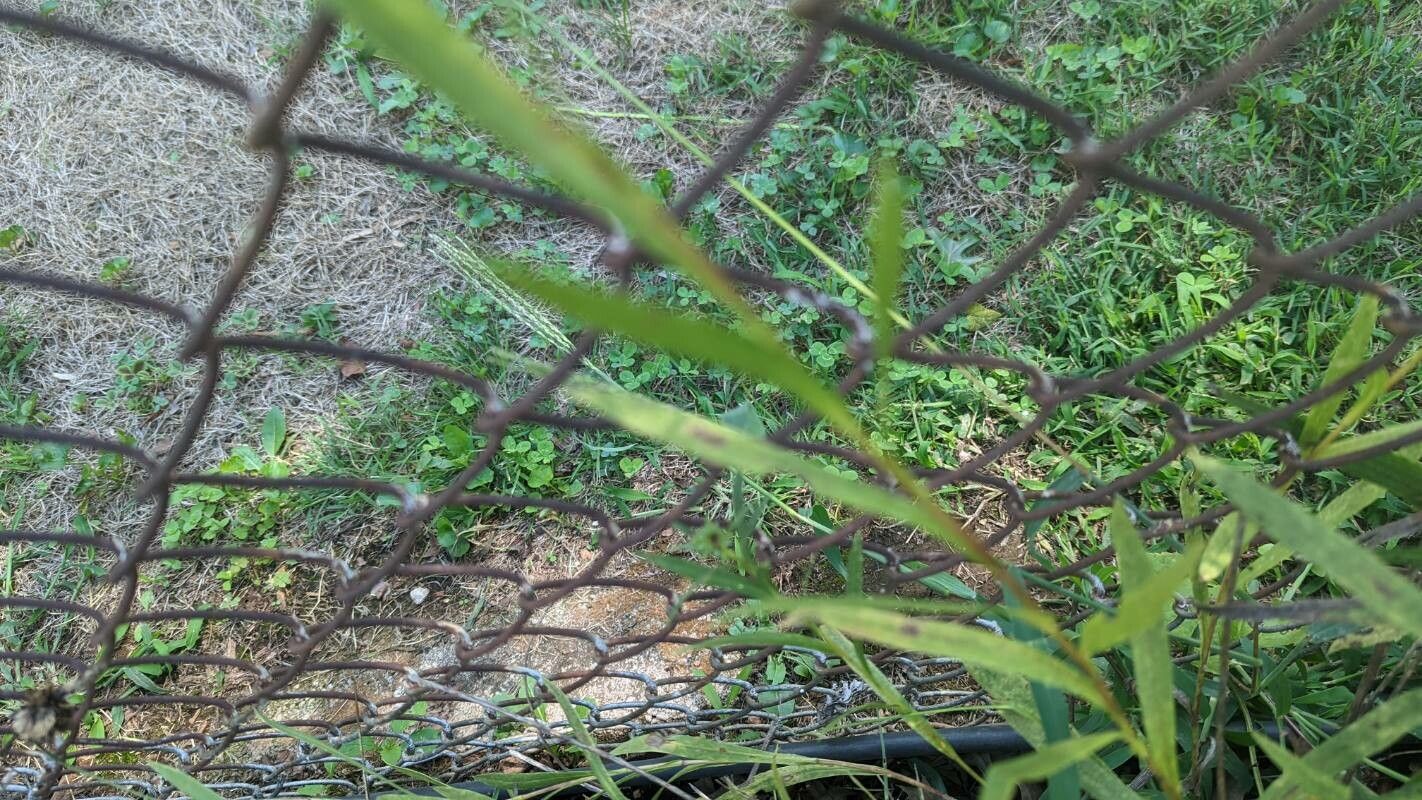
Eurybia radula, commonly known as the low rough aster or rough wood aster, is an herbaceous perennial in the family Asteraceae. It is native to eastern North America where it is present from Newfoundland and Labrador in the far northeast of Canada, west to Ontario and south to Kentucky and Virginia in the United States. The low rough aster is also present on the French overseas territory of St. Pierre and Miquelon just south of Newfoundland. It typically grows in wet soils in a wide variety of habitats from bogs and fens to creek shores to ditches. Although it is not considered threatened over most of its distribution, it is imperiled or possibly extirpated over much of its range in the United States. Its flower heads emerge in the late summer to early fall and show pale blue-violet rays with yellow centres.
Low rough aster has strong disease resistance and is usually not prone to illnesses. Still, it can be affected by pests and diseases present in its environment. These problems are generally not serious. For care, this plant requires a moderate level of maintenance. It should be pruned regularly to keep a neat appearance and support healthy growth. Fertilizing can also help encourage flowering. Low rough aster is well-suited for someone with an outdoor area, such as a garden or patio, and does not demand extensive care experience. It may need more attention when kept indoors.
How to keep Eurybia Radula.
Light
Low rough aster is native to habitats such as forest understories and rocky areas, where it occurs in natural shade. It prefers partial sun but can tolerate both full sun and full shade, showing its versatile, hardy nature.
Temperature
Low rough aster can tolerate a wide range of temperatures, but its range may still be restricted by different combinations of water and heat. It does best in warm summer climates with sufficient rainfall or watering. Extended periods of cloudy, rainy weather or prolonged high temperatures can increase the likelihood of Low rough aster dying. In winter, appropriate protection from the cold can boost the plant's chances of survival.
Fertilizer
A single fertilizer application in spring is generally enough for Low rough aster, though repeated feedings can increase growth. Apply fertilizer every month to six weeks. Fertilization improves the leaves' appearance and function, encouraging even color and a healthy texture. It also promotes root development and nutrient uptake, supporting the plant's long-term health.
Pruning
Prune low rough aster in early spring, before new growth begins, to promote healthier growth and better airflow. Remove any dead or damaged stems to shape the plant and encourage denser foliage. Be sure to use sharp, clean tools to prevent disease, which will enhance the appearance and blooming potential of the low rough aster.
Botanical profile.
- Plant Type
- Herb
- Life Cycle
- Perennial
- Genus
- Eurybia
- Family
- Compositae
- Hardiness Zone
- 3-8
- Mature Height
- 30 cm to 91 cm
- Mature Spread
- 20 cm to 40 cm
- Leaf Color
- Dark Green
- Leaf Type
- Deciduous
- Flower Color
- White
- Flower Size
- 2.03 cm to 3.05 cm
- Bloom Time
- Mid summer, Late summer
- Planting Time
- Spring, Summer, Autumn
- Harvest Time
- Late summer, Early fall, Mid fall
Other names.
Reader questions.
What are the sunlight requirements for Low rough aster (Eurybia radula)?
Low rough aster (Eurybia radula) thrives in conditions that meet specific sunlight requirements. For full sun exposure, the plant should receive above 6 hours of sunlight daily. If the plant is in partial sun, it should get about 3-6 hours of sunlight each day. It's essential to observe how sunlight moves through your garden throughout the day. Identifying spots that offer a perfect balance of light and shade is crucial for the happiness and health of your plants.
Is there any special advice on selecting a spot for planting Low rough aster?
When selecting a spot for planting Low rough aster (Eurybia radula), it’s important to watch how sunlight gracefull moves through your garden. Choosing the right location involves finding the perfect balance of light and shade to ensure the plants' happiness. Paying close attention to the changing patterns of sunlight in your garden will help in deciding the best spot for your plant.