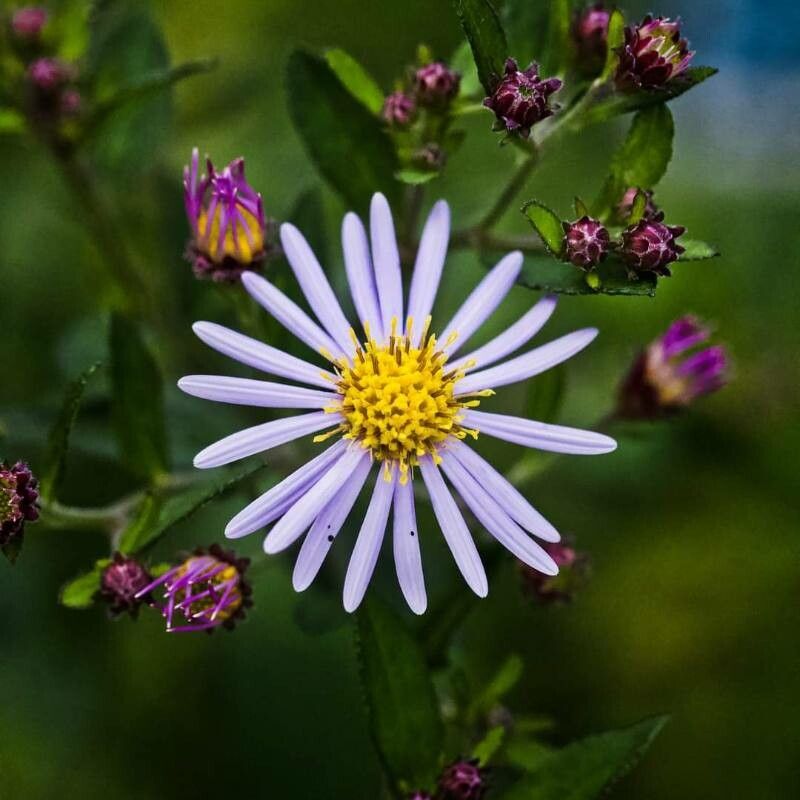
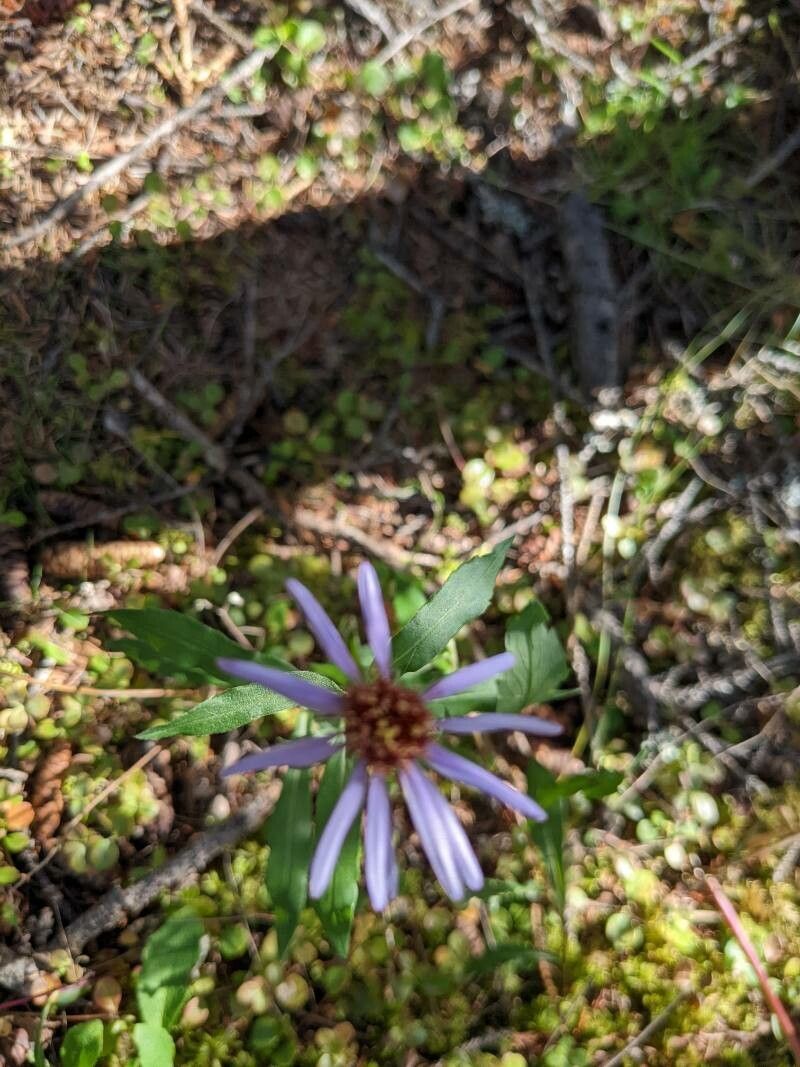
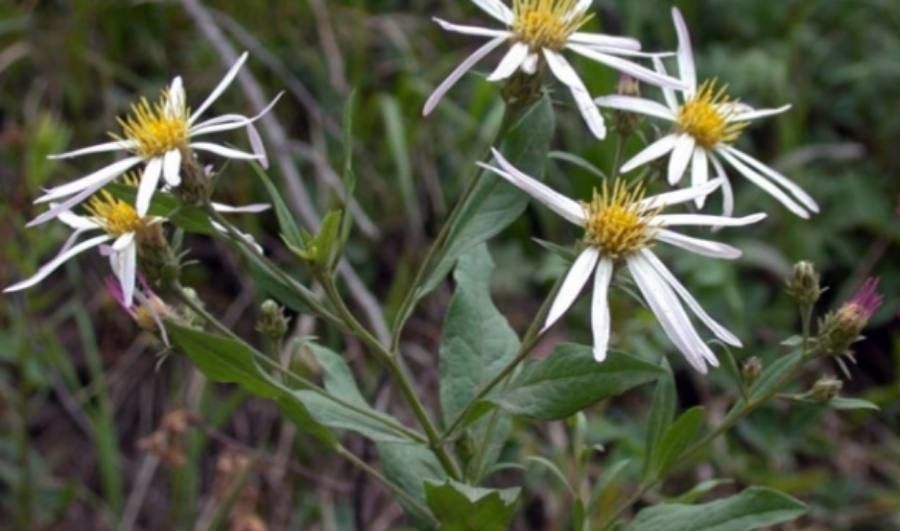
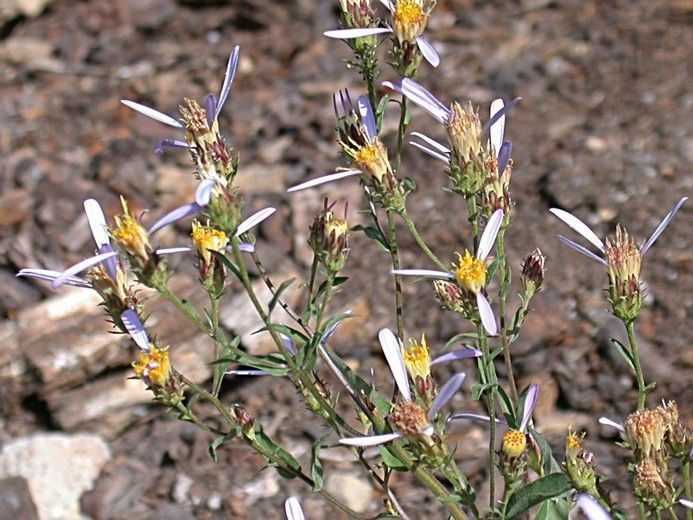
Eucephalus ledophyllus is a North American species of flowering plant in the family Asteraceae known by the common name Cascade aster. It is native to Washington, Oregon and northern California in the United States, mostly in the Cascade Mountains. Some of the populations are inside national parks and monuments: Mount Rainier National Park, North Cascades National Park, and Mount St. Helens National Volcanic Monument.Eucephalus ledophyllus is a perennial herb up to 80 cm (32 inches) tall, with a large woody caudex. One plant will usually produce 3-20 flower heads in a showy array. Each head has 5–21 purple ray florets surrounding numerous yellow disc florets. VarietiesEucephalus ledophyllus var. covillei (Greene) G.L.Nesom - Oregon, California - flower stalks not cottony Eucephalus ledophyllus var. ledophyllus - Washington, Oregon - flower stalks cottony
Cascade aster has strong resistance to disease and is generally not likely to develop illnesses. Still, it can be vulnerable to pests and diseases present in its environment. Such infections tend to be mild. Regarding upkeep, this plant needs a moderate level of care. It should be pruned on a regular basis to preserve a good appearance and encourage healthy growth. Applying fertilizer can also help boost flowering. Cascade aster is well suited for anyone with an outdoor area, like a garden or patio, and does not demand extensive care experience. It may need more attention if kept indoors.
How to keep Eucephalus Ledophyllus.
Light
The growth of the Cascade aster is best facilitated by a moderate level of sunlight. Overexposure to harsh sunlight can be detrimental to its health, just as insufficient sunlight can notably hinder its growth. Since this plant is native to environments where sunlight is partially filtered, it flourishes optimally under such conditions during all its developmental phases.
Water
The Cascade aster thrives in outdoor gardens and adds beauty by attracting pollinators when it blooms. It prefers consistent moisture and should be watered weekly, but be careful not to overwater it. Fortunately, it requires minimal additional watering.
Temperature
The Cascade aster is capable of adjusting to a diverse array of temperature conditions. However, its proliferation might still be restricted by varying sets of hydration and thermal conditions. The plant flourishes optimally in summer's warm weather with sufficient rainfall or irrigation. Extended durations of inclement and rainy conditions, together with an extended period of high temperature, can enhance the probability of the Cascade aster withering. During winter, effective safeguarding against cold can boost the plant's prospects of survival.
Fertilizer
The optimal time to fertilize Cascade aster is at the beginning of spring when blossoms are developing. The appropriate fertilizer promotes enhanced flowering and aids in the production of beautiful blooms by Cascade aster. Fertilization in the earliest part of spring guarantees outstanding flowers throughout the season and supplies energy for periods of dormant growth.
Pruning
Cascade aster is known for its vibrant purple blooms and benefits greatly from regular pruning during early to late spring. By removing dead stems and spent flowers, you can encourage new growth and continuous blooming, which enhances the plant's appearance and reduces the risk of disease. This practice is essential for maintaining the plant's health and vitality.
Botanical profile.
- Plant Type
- Herb, Shrub
- Life Cycle
- Perennial
- Genus
- Eucephalus
- Family
- Asteraceae
- Hardiness Zone
- 4-8
- Mature Height
- 30 cm to 61 cm
- Mature Spread
- 20 cm to 30 cm
- Leaf Color
- Dark Green
- Leaf Type
- Evergreen
- Flower Color
- Lavender, White
- Flower Size
- 2.03 cm to 3.05 cm
- Bloom Time
- Mid summer, Late summer
- Planting Time
- Spring, Summer, Autumn
- Harvest Time
- Early fall, Mid fall
Other names.
Reader questions.
What are the sunlight requirements for a Cascade aster?
Cascade aster requires a moderate amount of sunlight to thrive optimally, generally about 3-6 hours of sunlight daily. It is essential to watch how sunlight moves through your garden and choose spots that offer a balance of light and shade, suitable for the plant, ensuring its health and happiness. Despite its versatility, intensive exposure or minimal sunlight can negatively impact its growth, as it naturally originates from environments with filtered sunlight.
How can artificial lighting benefit indoor Cascade asters?
Indoor Cascade asters benefit significantly from artificial lighting, especially when natural sunlight is insufficient, like in winter or less sunny spaces. Adequate lighting from artificial sources promotes faster, healthier growth. LED lights are recommended for their ability to provide specific wavelengths needed by plants. The intensity of light should vary depending on the plant's needs: full sun plants require 30-50W/sq ft, partial sun plants need 20-30W/sq ft, and full shade plants need 10-20W/sq ft. The artificial light source should be placed 12-36 inches above the plant and kept on for 8-12 hours per day to mimic natural sunlight conditions.
What are the signs of inadequate or excessive sunlight exposure in Cascade asters?
Cascade asters show various symptoms when exposed to inadequate or excessive sunlight. Inadequate light can cause smaller new leaves, leggy or sparse growth, faster leaf drop, slower or halt in new growth, and lighter-colored or pale new leaves. On the other hand, excessive light exposure can lead to chlorosis (yellowing of leaves), sunscald, leaf curling, wilting, and leaf scorching. These symptoms indicate either a lack of chlorophyll and essential nutrients due to insufficient light or damage from intense sunlight exposure.
How can I address light-related issues for Cascade asters?
To address light-related issues in Cascade asters, gradually adjust their exposure to sunlight. For indoor plants, start by shifting them to sunnier spots each week until they receive the necessary 3-6 hours of direct sunlight daily. If moving the plant is not feasible, or for additional support, use artificial light sources like desk or ceiling lamps, or invest in professional plant grow lights, keeping them on for at least 8 hours daily. For outdoor plants, move them to optimal sunlight spots gradually to prevent sunburn. Ensure new growth has ample light for healthy development. Additionally, reducing obstacles that block sunlight, such as pruning trees, or transplanting to a sunnier location can benefit the plant's exposure to adequate sunlight.