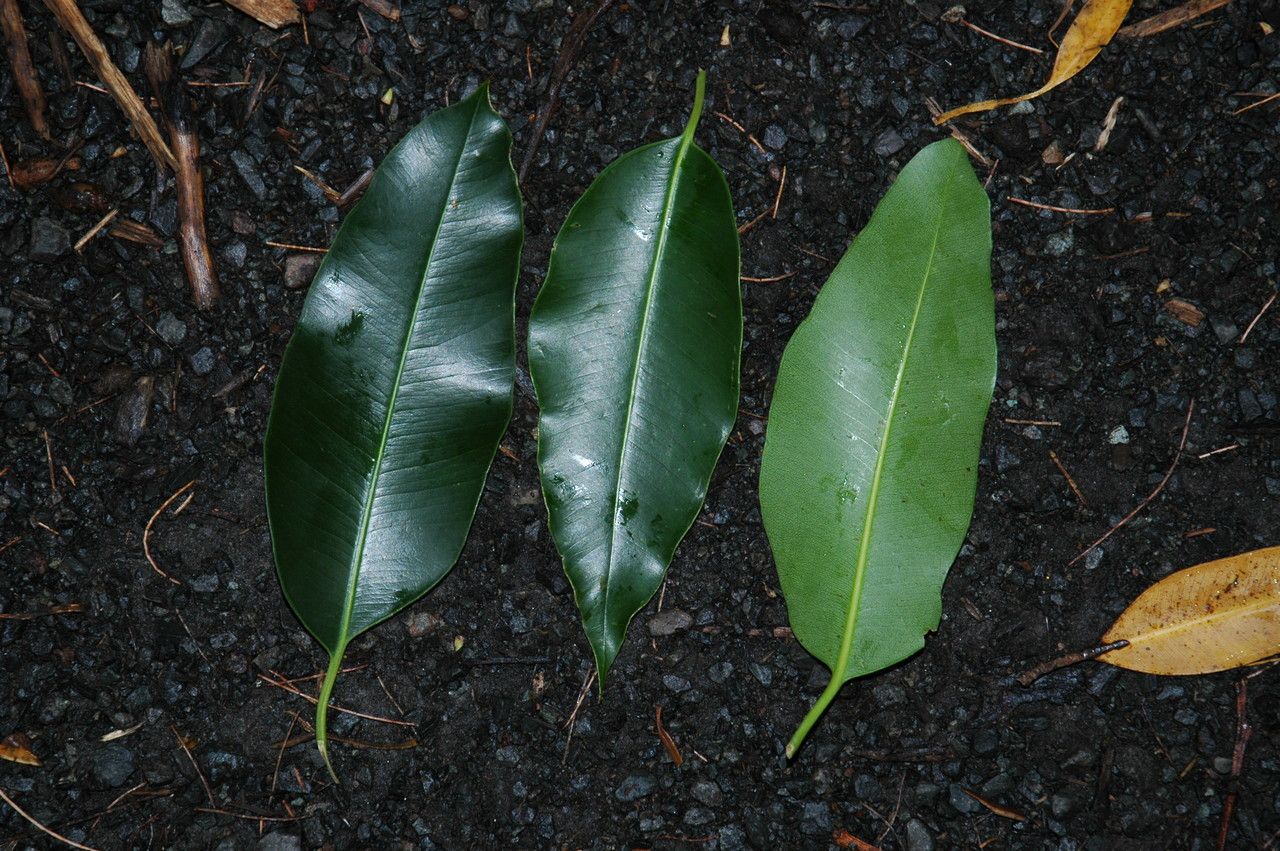
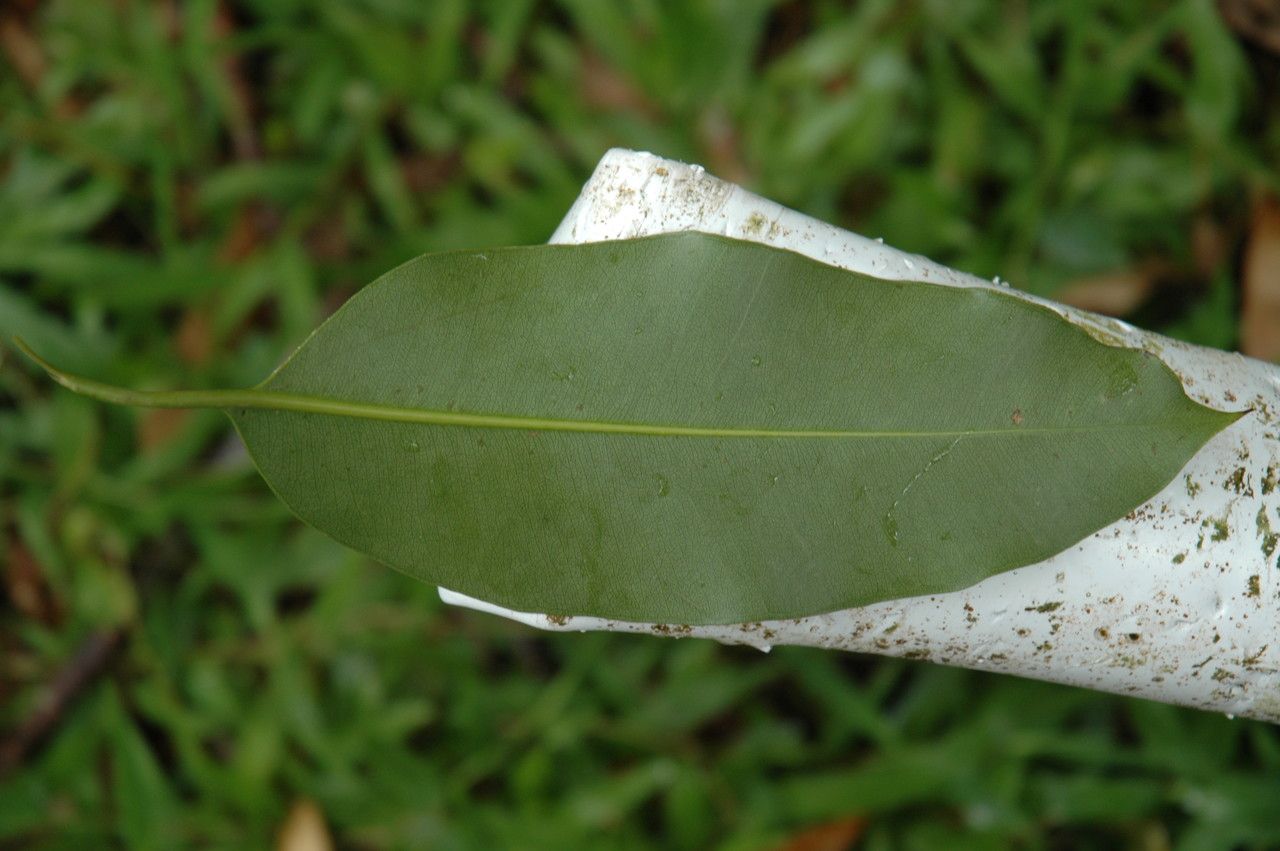
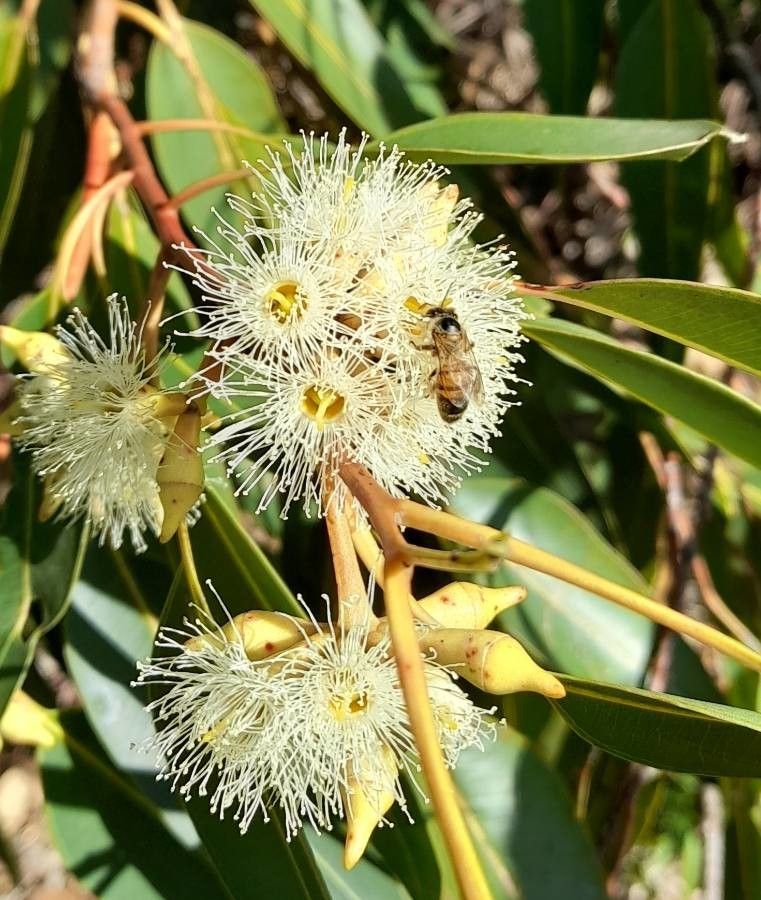
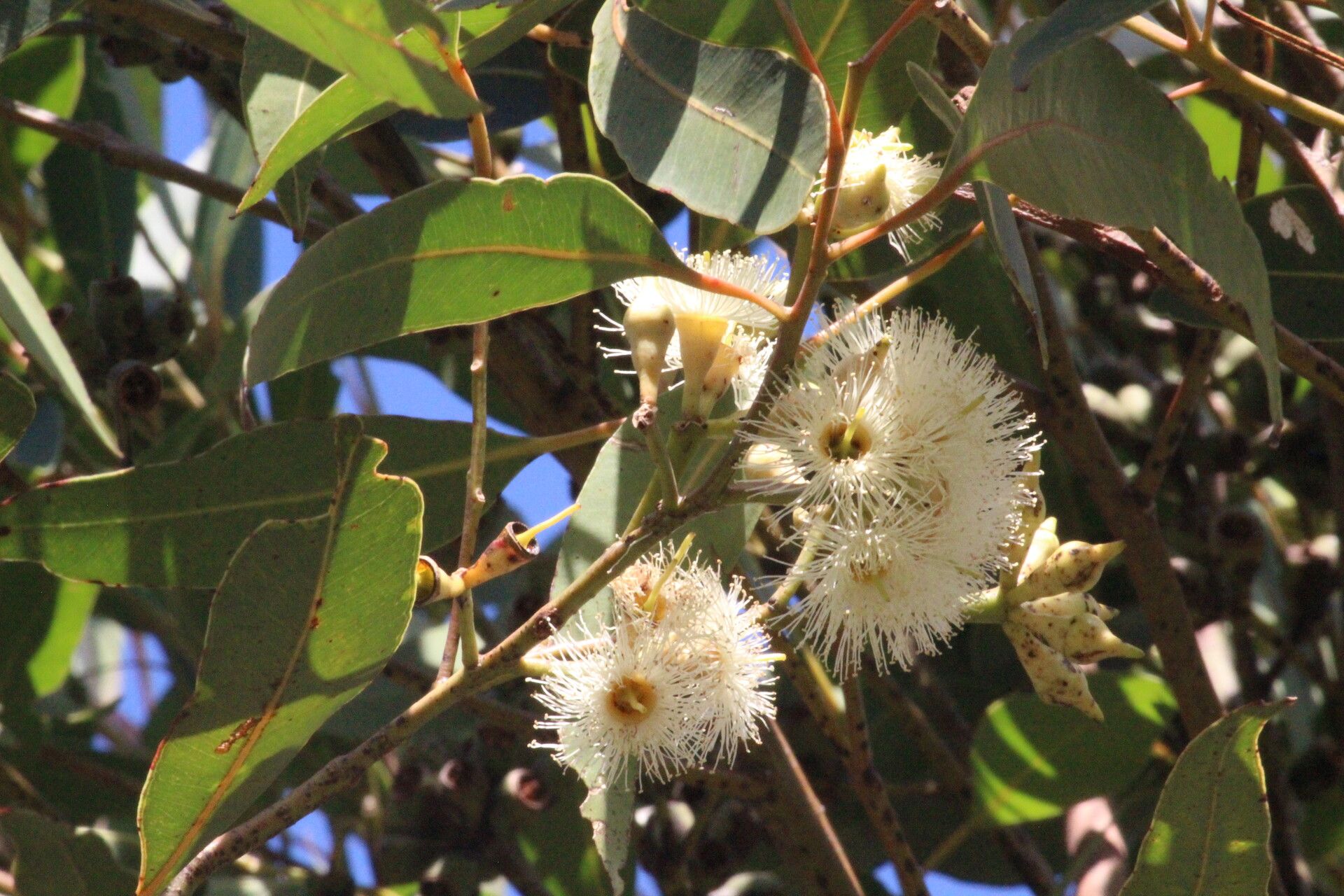
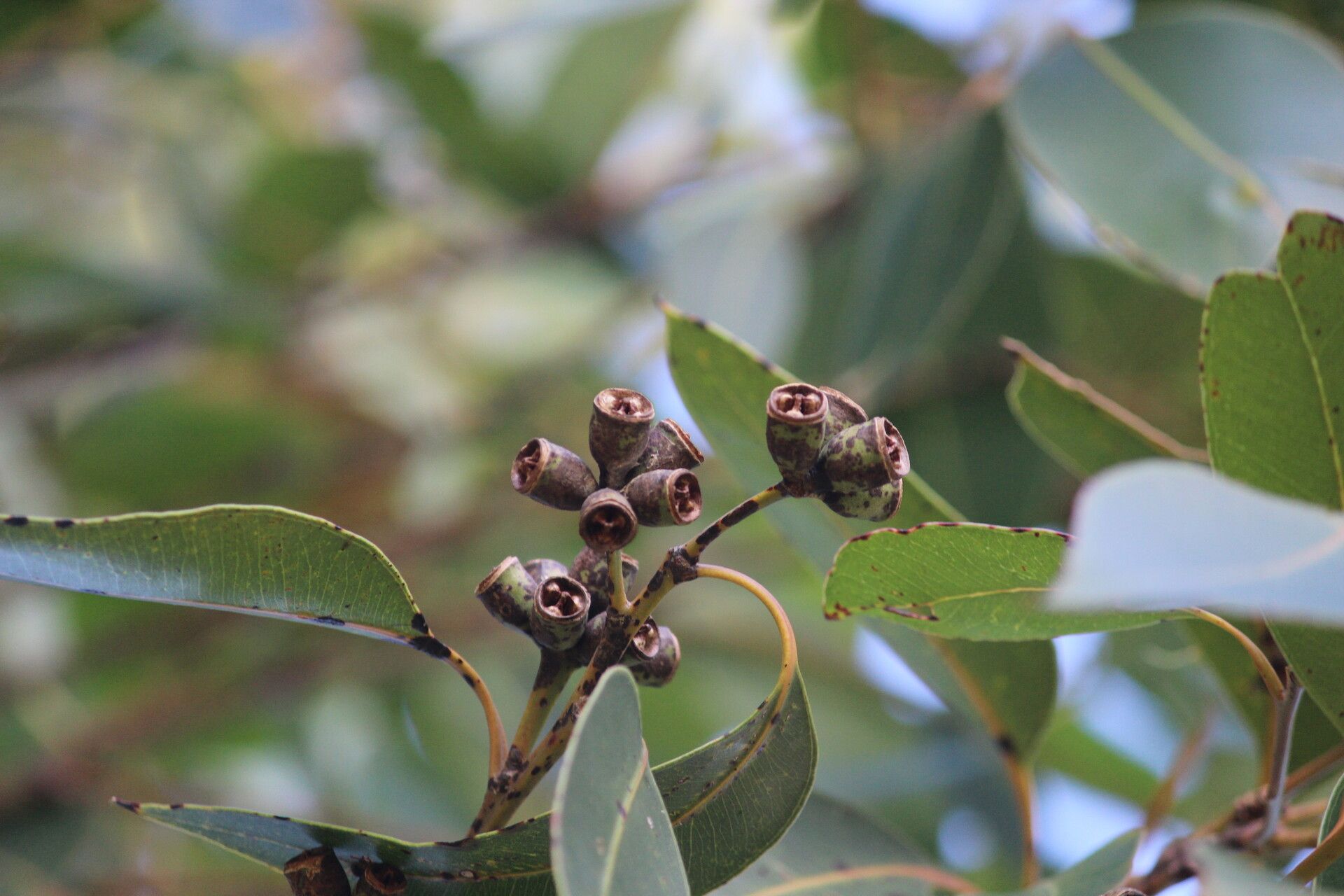
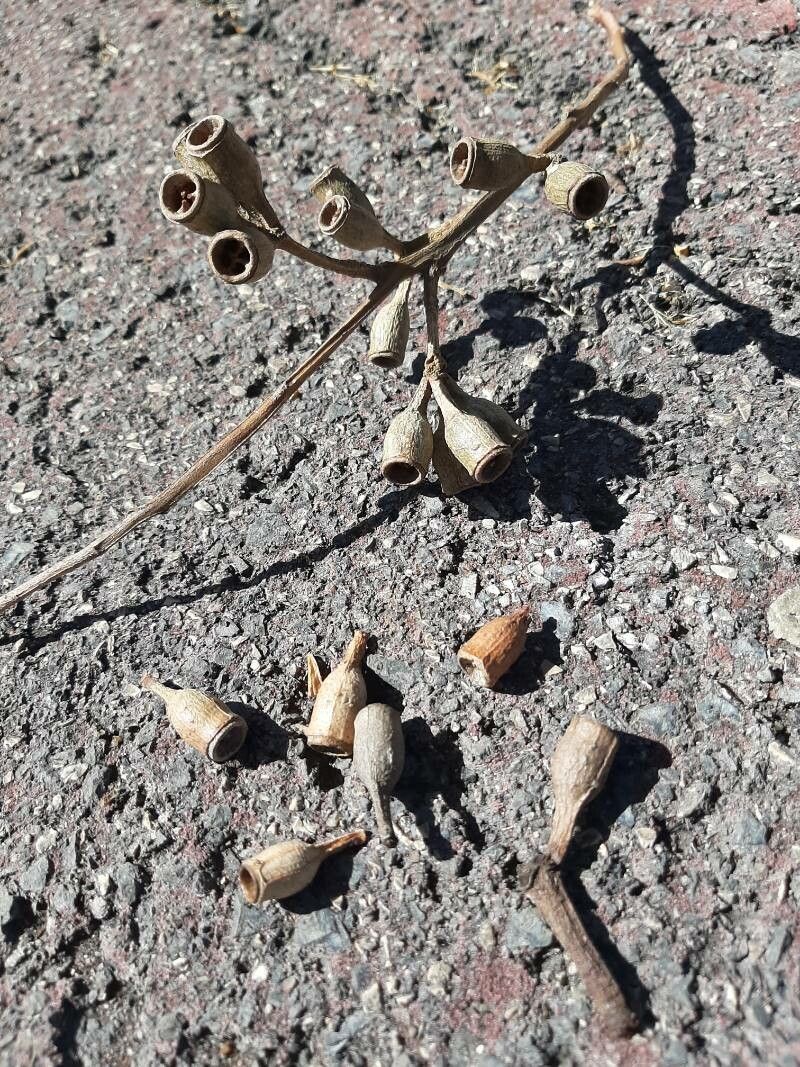
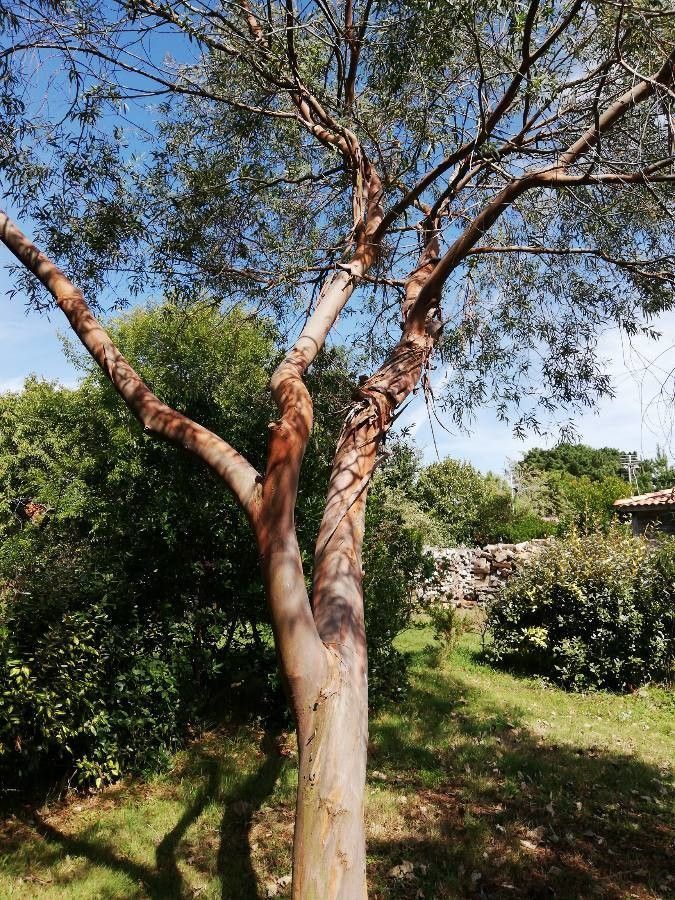
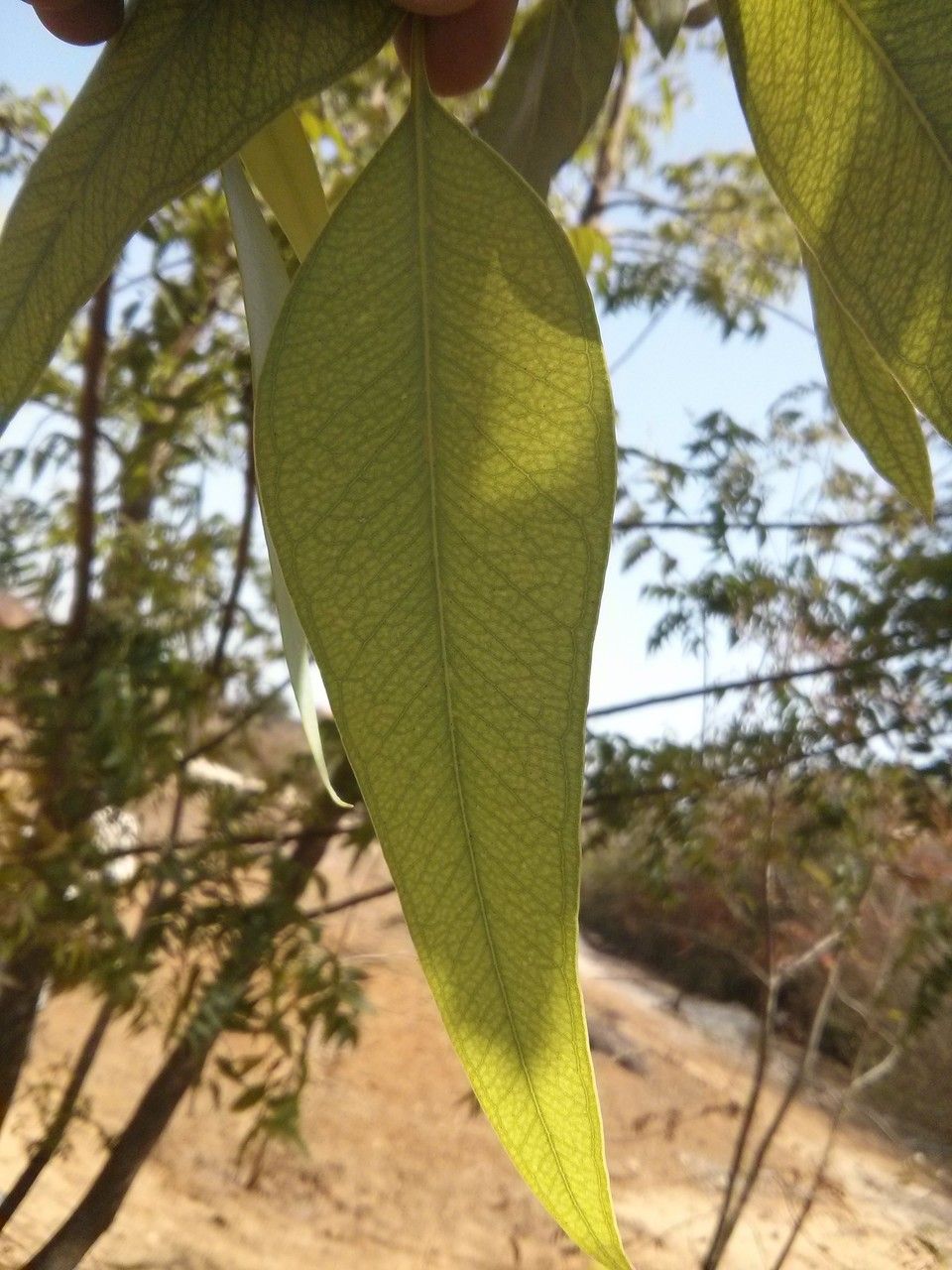
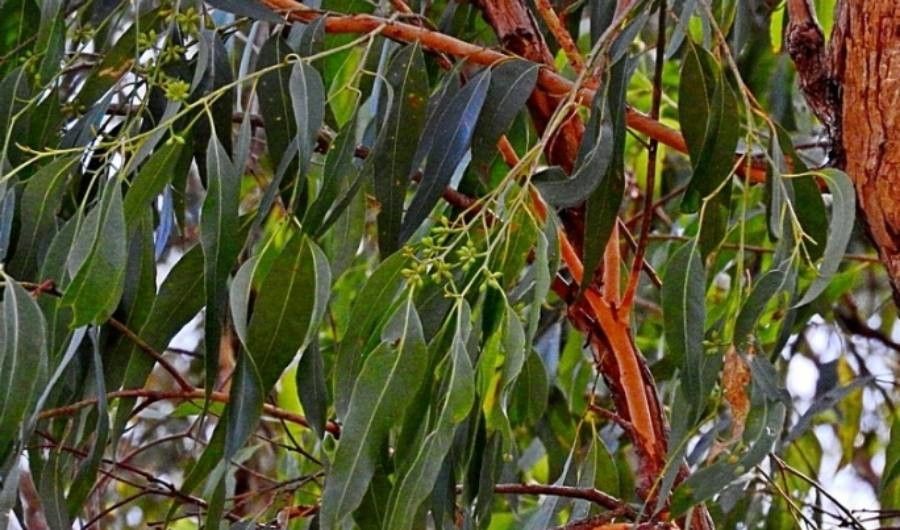
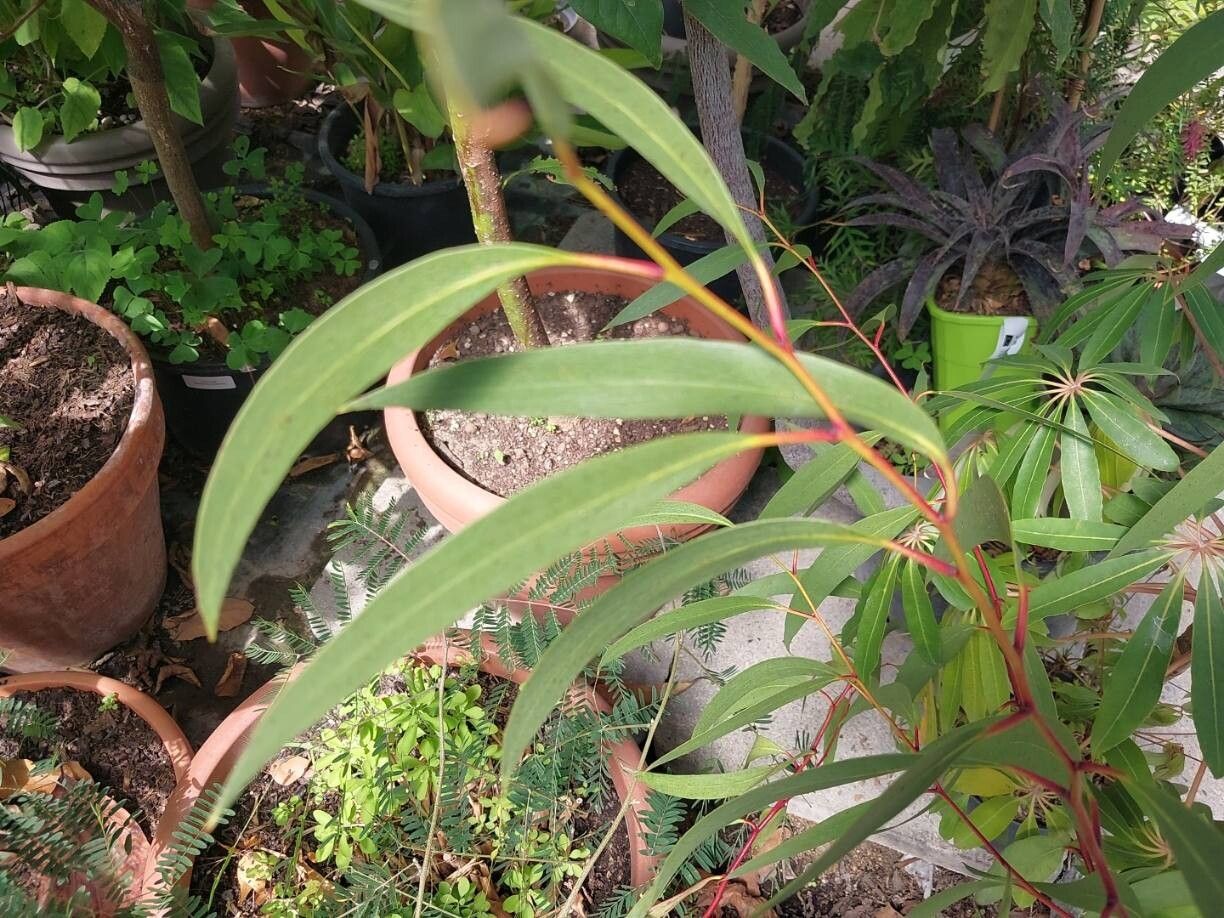
Eucalyptus robusta, commonly known as swamp mahogany, is a tall evergreen tree indigenous to Australia. It can reach heights of up to 40 meters and features a straight trunk covered in rough bark that peels away in long strips. The dark green, lance-shaped leaves can measure up to 20 centimeters in length.
Swamp mahogany trees thrive in wetlands and along riverbanks, where they can tolerate waterlogged soils. They are also popular as ornamental trees due to their appealing foliage and rapid growth rate.
The wood of Eucalyptus robusta is highly prized for its strength and durability, making it widely used in construction, furniture making, and paper production. Additionally, the leaves have medicinal properties and have been traditionally used by indigenous Australians to treat ailments such as coughs, colds, fever, and infections.
Swamp mahogany, a distinctive tree from Australia, is notable for its durable timber, which is commonly used in indoor construction. This long-living tree is well-adapted to the local climate and has the remarkable ability to recover quickly from bushfires. FUN FACT · FROM THE LIBRARY
Overall, Eucalyptus robusta is an ecologically significant species. It provides critical habitat for wildlife such as koalas and birds, and it holds economic value due to the quality timber it produces.
Swamp Mahogany: The common name "swamp mahogany" comes from the tree's red-brown bark, which resembles that of mahogany trees, despite the fact that Eucalyptus robusta is not a true mahogany. The "swamp" part of the name refers to its typical habitat, as this tree primarily grows in swamps and waterlogged soils.
Swamp mahogany has strong disease resistance and is generally not prone to illness. In terms of care, this plant is fairly low maintenance. When planted outdoors it needs minimal watering, and larger plants typically do not require pruning. Smaller plants should be pruned after they have bloomed. Swamp mahogany is suitable for anyone with an outdoor space, such as a garden or deck, and does not demand extensive care experience.
How to keep Eucalyptus Robusta.
Light
The swamp mahogany grows best in locations that receive continuous sunlight. It can, however, adjust to areas with somewhat reduced light that comes intermittently during the day. Its vigor is mainly dependent on sun exposure: too little light will restrict its growth, while too much can cause leaf scorch.
Water
Swamp mahogany, native to coastal swamps in Australia, thrives in environments with high humidity and consistently moist soils. To maintain the right level of moisture in the soil, water the plant every 1-2 weeks, ensuring it stays moist but not waterlogged. This evergreen plant typically receives sufficient hydration from natural rainfall, which reduces the need for frequent watering.
Temperature
Swamp mahogany favors a temperature range of 59 to 100°F (15 to 38°C). Its natural habitat is generally warm and damp, often growing near swamps, lakes, and rivers. During hot summer months, it's advisable to water and mist the plant to help it manage the increased heat.
Fertilizer
Fertilize your Swamp mahogany in early spring to encourage healthy growth. Regular feeding improves overall health, producing vigorous growth, increased tolerance of harsh conditions, and better resistance to diseases and pests. Follow a consistent fertilization schedule for your Swamp mahogany to maintain foliage that is vibrant in color and lush in appearance.
Pruning
Swamp mahogany benefits from pruning in the early to late winter months. Using sharp tools, carefully remove any dead branches to improve air circulation. Aim to maintain the tree's natural shape and prevent overcrowding. Proper pruning not only reduces the risk of pests and diseases but also promotes vigorous growth. For detailed guidelines, consult reliable horticultural resources.
Pot & Repot
When repotting Swamp mahogany, choose a pot 1-2 inches (2.5–5.1 cm) larger with ample drainage. Use a well-draining potting mix. Repot in spring or fall, ensuring the root ball sits slightly below the rim of the flower pot. Water thoroughly after repotting and place it in a warm spot with indirect sunlight.
Botanical profile.
- Plant Type
- Tree
- Life Cycle
- Perennial
- Genus
- Eucalyptus
- Family
- Myrtaceae
- Hardiness Zone
- 8-11
- Mature Height
- 20.12 m to 29.87 m
- Mature Spread
- 20.12 m
- Leaf Color
- Green
- Leaf Type
- Evergreen
- Flower Color
- White
- Flower Size
- 1.52 cm to 2.03 cm
- Bloom Time
- Mid spring, Late spring, Early summer, Mid summer
- Planting Time
- Spring, Autumn
- Harvest Time
- Early spring, Mid summer, Late summer, Fall, Winter
Other names.
Reader questions.
How should I water my Swamp mahogany?
Your Swamp mahogany plant is not very particular about how you water it. You can choose to use any common watering tool, such as watering cans, hoses, or even cups, to moisten the soil. It is important to water the plant directly on the soil, ensuring that all areas receive equal moisture to meet the needs of the root system. Filtering the water is recommended since tap water may contain harmful particles. Additionally, using water that is at or slightly above room temperature is beneficial as extreme temperatures can be a little shocking to the Swamp mahogany. However, the plant generally responds well to any type of water it receives.
Why is it important to add fertilizer to my Swamp mahogany?
No matter which type of Swamp mahogany you have, regularly fertilizing it will greatly improve its overall health. Providing the proper nutrients will result in stronger growth and increased resistance to difficult growing conditions and pests. Keeping the foliage of your Swamp mahogany intact is vital as it is one of its most appealing features. Therefore, it is important to establish and follow a consistent fertilization schedule tailored to your specific Swamp mahogany. This will encourage the development of vibrant, lush leaves with a deep color.
What are the sun requirements for Swamp Mahogany?
Swamp Mahogany thrives in conditions where it can receive full sun, defined as over 6 hours of sunlight, or partial sun, which amounts to about 3-6 hours of sunlight daily. It is essential to observe the movement of sunlight through your garden to identify spots providing the ideal balance of light and shade, ensuring the health and happiness of your plants.
What are the ideal temperature conditions for growing Swamp Mahogany?
Swamp Mahogany, scientifically known as Eucalyptus robusta, thrives in temperatures ranging from 59 to 100°F (15 to 38°C). Native to warm and moist environments, such as areas near swamps, lakes, and rivers, it enjoys the warm climate. In the peak of summer, the plant benefits from additional watering and misting to cope with higher temperatures. While it has some resistance to cold, enduring temperatures above -5°C without needing special care, precautions should be taken if temperatures are expected to drop below this point. Utilizing protection like plastic film or fabric can help shield the Swamp Mahogany from cold damage, ensuring these coverings are removed once temperatures rise.
What should I do if I give my Swamp mahogany too much or too little water?
For outdoor plants, especially newly planted ones or seedlings, it's common for them to lack water. It's important to remember to water them enough for the first few months, especially when the tree is small or recently planted. Once the roots are established, Swamp mahogany trees can generally rely on rainwater most of the time. When Swamp mahogany is planted in pots, overwatering is more likely to occur. If you accidentally overwater your Swamp mahogany, it's important to take immediate action to remedy the situation. First, stop watering the plant immediately to minimize the effects of overwatering. Then, consider removing the plant from its pot to inspect its roots. If you find no signs of root rot, you can return the plant to its container. However, if you do find signs of root rot, trim away the affected roots and consider using a fungicide to prevent further damage. Finally, repot the Swamp mahogany in well-draining soil. In the case of underwatering, simply water the Swamp mahogany plant more frequently. Underwatering is often easy to fix, as the leaves will droop, dry out, and fall off. Once sufficient watering is provided, the leaves will quickly return to their fullness. Make sure to adjust your watering frequency as soon as you notice underwatering occurring.
When should I fertilize my Swamp mahogany tree?
To ensure healthy growth, start fertilizing your Swamp mahogany in late winter or early spring. This will provide the necessary nutrients for growth once the weather starts to warm up. If you live in a warm climate region, consider giving your Swamp mahogany an additional fertilizer feeding in early fall. This not only boosts soil nutrients for the next growing season, but also helps the tree become more resilient against winter cold, preventing foliage damage. Fertilizing earlier in the year will allow new branches to develop and withstand the winter.
What essentials should be considered for the growth of Swamp Mahogany?
The Swamp Mahogany performs best in environments with continuous sunlight exposure but can also adjust to slightly less sunlight received intermittently throughout the day. Its health and growth are significantly affected by the amount of sun exposure; inadequate light can limit its growth, and excessive sunlight may result in leaf scorch. For indoor plants requiring supplemented lighting, especially during winter or in less sunny areas, artificial lighting like LED lights, set at appropriate wattage, distance, and duration, becomes crucial for fostering optimal growth.
How should Swamp Mahogany be cared for in low temperatures?
Swamp Mahogany has a moderate tolerance to low temperatures and prefers environments where the temperature remains above 15°C. As winter approaches, it is crucial to maintain the temperature above -5°C to prevent damage. Exposure to temperatures below -10°C can result in drooping leaves, which may recover in mild situations but could ultimately wilt and fall off in severe cases. To safeguard the plant against the cold, frosted parts should be trimmed off, and preventive measures like wrapping the plant with non-woven fabric or cloth, and setting up a wind barrier should be taken to protect it from cold winds.
How often do I need to water my Swamp Mahogany?
To ensure healthy growth and water needs for your plants, here are some guidelines. Most outdoor plants can rely on natural rainfall, but if you live in a region with low rainfall, it's important to water them adequately. During the spring and fall, watering every two weeks should be sufficient. However, during the summer, when plants require more water, you'll need to water them more frequently. In the winter, when plants grow slower and require less water, you can reduce watering. In fact, you may not need to provide any additional water throughout the winter. If you have a young or newly planted Swamp mahogany, it's important to water it more often to help it establish and grow into a more adaptable and drought-tolerant plant. For potted plants like the Swamp mahogany, there are two methods to determine watering frequency. The first option is to stick to a predetermined watering schedule, such as once a week or once every other week. However, this approach may not take into account the specific growing conditions of your Swamp mahogany. Another approach is to monitor the soil moisture. Wait until the top two to four inches of soil, about one-third to one-half the depth of the pot, have completely dried out before watering again. This method allows you to adjust the watering frequency based on the plant's needs and the season. Keep in mind that during the summer, the plant's water requirements will be highest, so a predetermined schedule may not be sufficient.
When is not a good time to fertilize my Swamp mahogany?
To ensure the best care for your Swamp mahogany, avoid fertilizing it at certain times of the year. Firstly, during the early and mid-winter months, when the plant is dormant, it does not require any feeding. Additionally, it's not advisable to fertilize the Swamp mahogany during the late spring and summer, as the weather tends to be hotter and drier, which can harm the plant if fertilized. To prevent any negative effects, it's best to stick to a fertilization schedule that only includes feeding in early spring and early fall.
What are the important symptoms of light deficiency or overexposure in Swamp Mahogany?
When Swamp Mahogany gets insufficient light, it may show symptoms like small and mature leaves, leggy growth, faster leaf drop, stalled new growth, and pale new leaves indicating lack of chlorophyll. Conversely, excessive sunlight can cause chlorosis, sunscald, leaf curling, wilting, and leaf scorching, highlighting the plant's struggle with intense light exposure. These symptoms reflect the plant's response to its lighting conditions and the adjustments needed for its care.
What care does Swamp Mahogany require in high temperatures?
During the summer months, it is important to ensure the Swamp Mahogany does not endure temperatures above 38°C to avoid stress. Exposure to temperatures exceeding 43°C can lead to signs of distress such as a lightening of leaf color, dry and withered leaf tips, curling leaves, and increased susceptibility to sunburn. To combat these issues, trim away any sunburned or dried parts of the plant, move it to a shaded area or employ a shade cloth to mitigate the effects of the sun, especially during the midday and afternoon. Additionally, watering the plant in the early morning and evening helps keep the soil adequately moist and supports the plant's health through extreme temperatures.