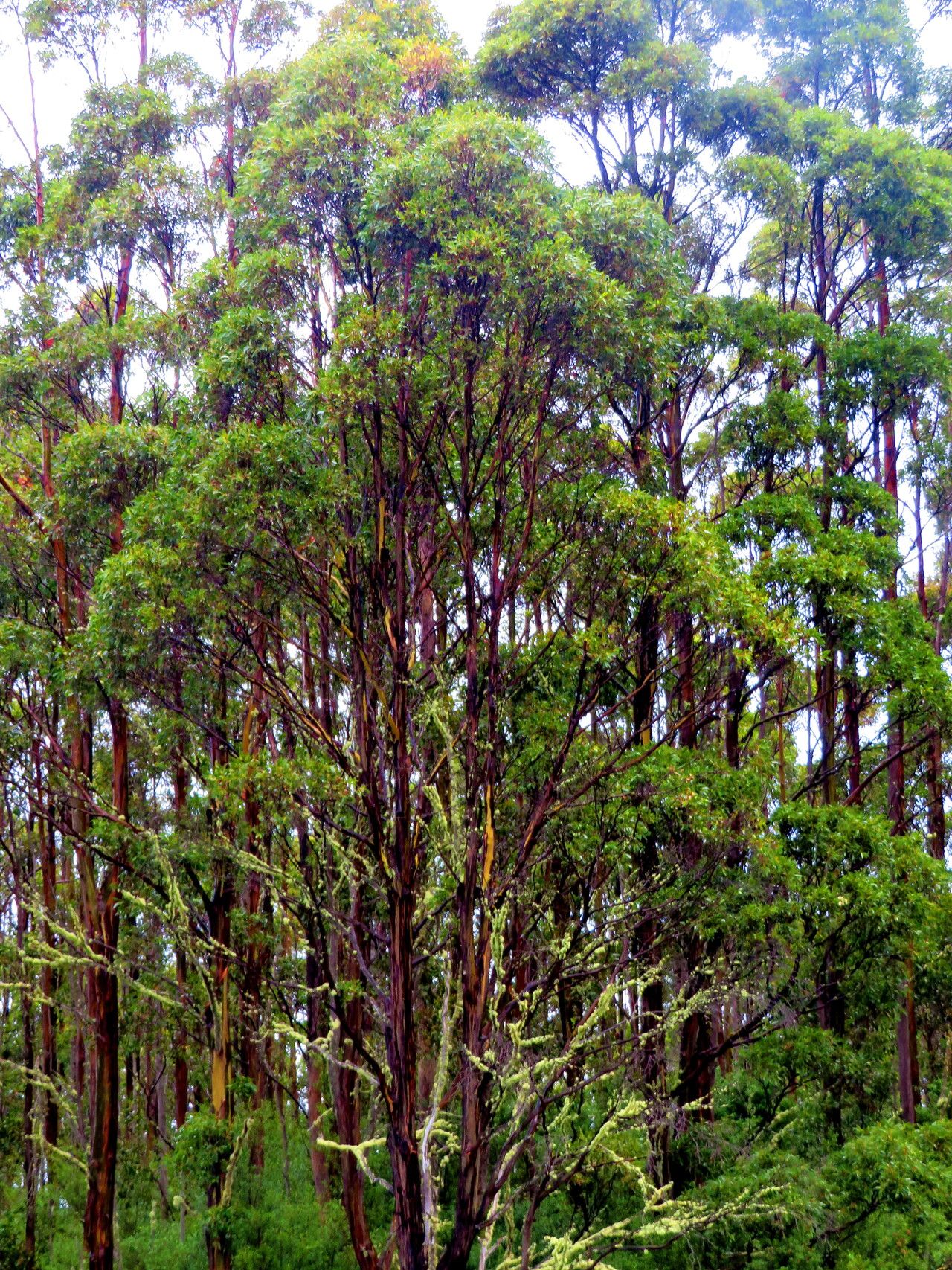
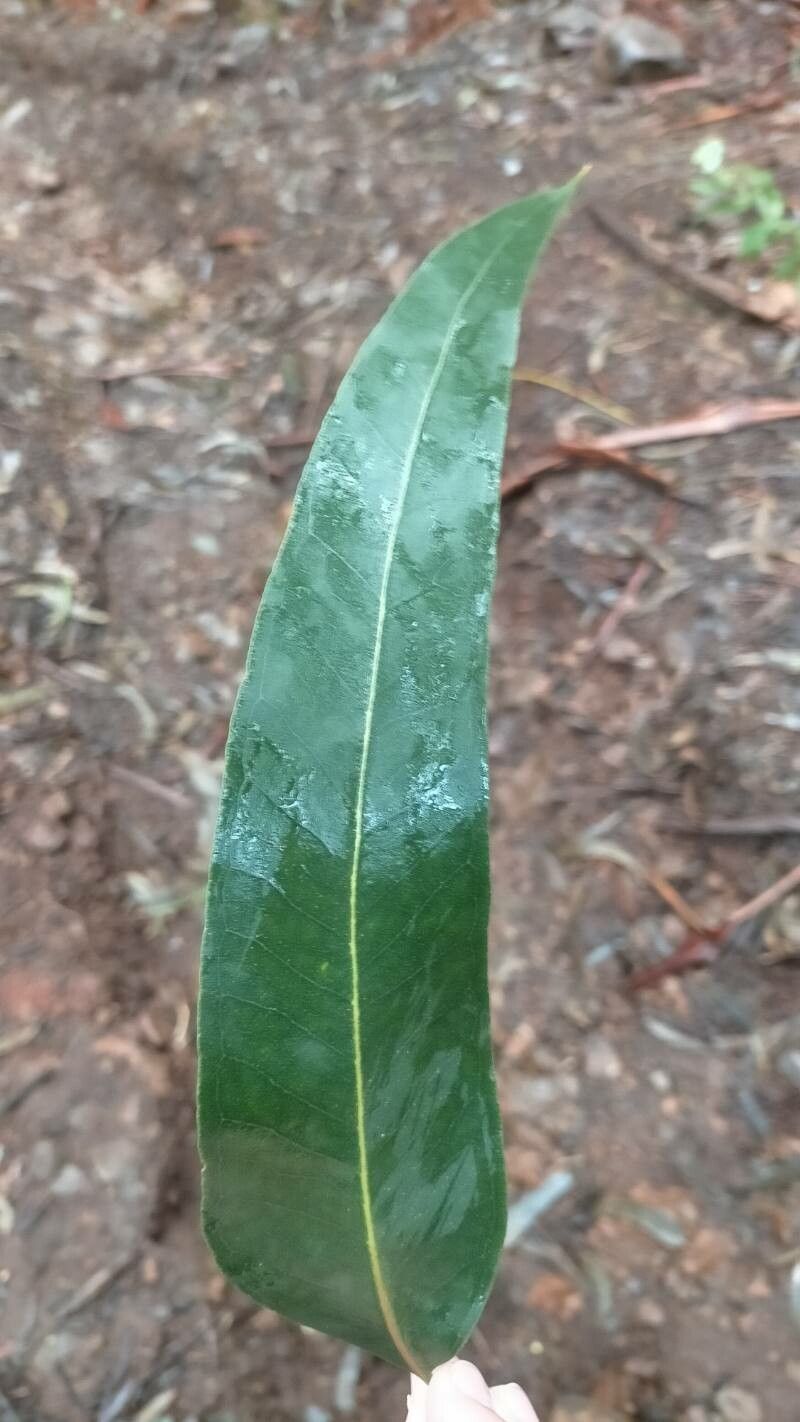
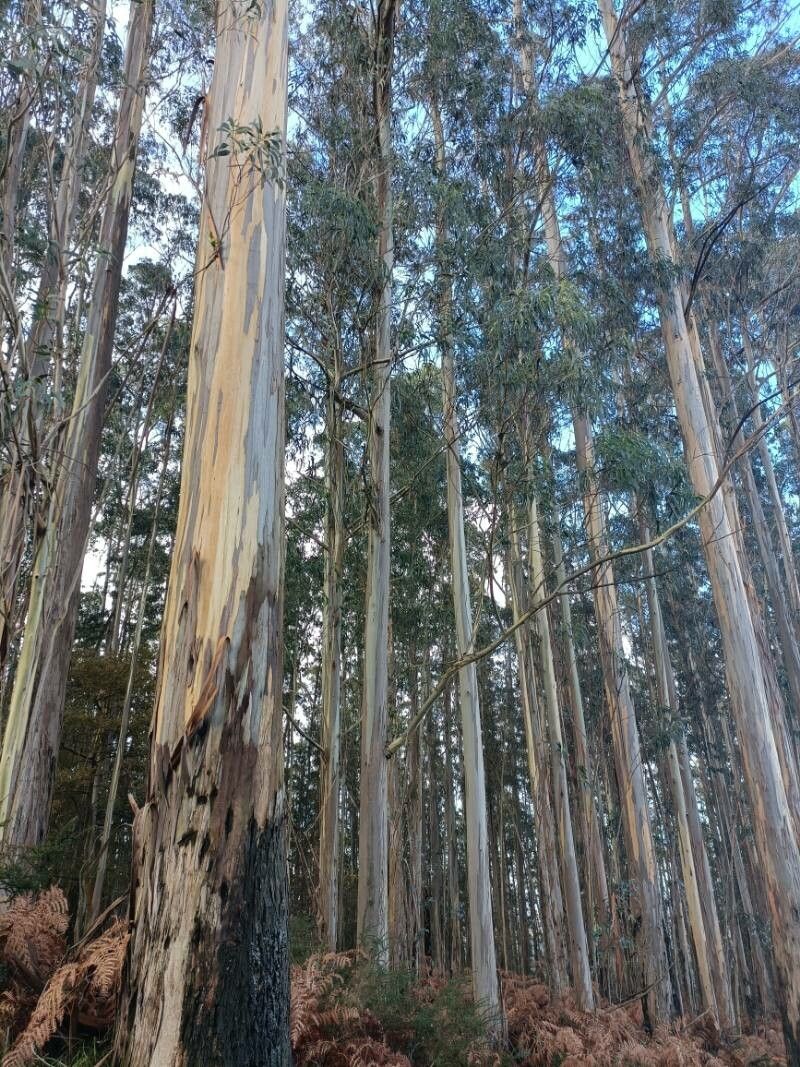
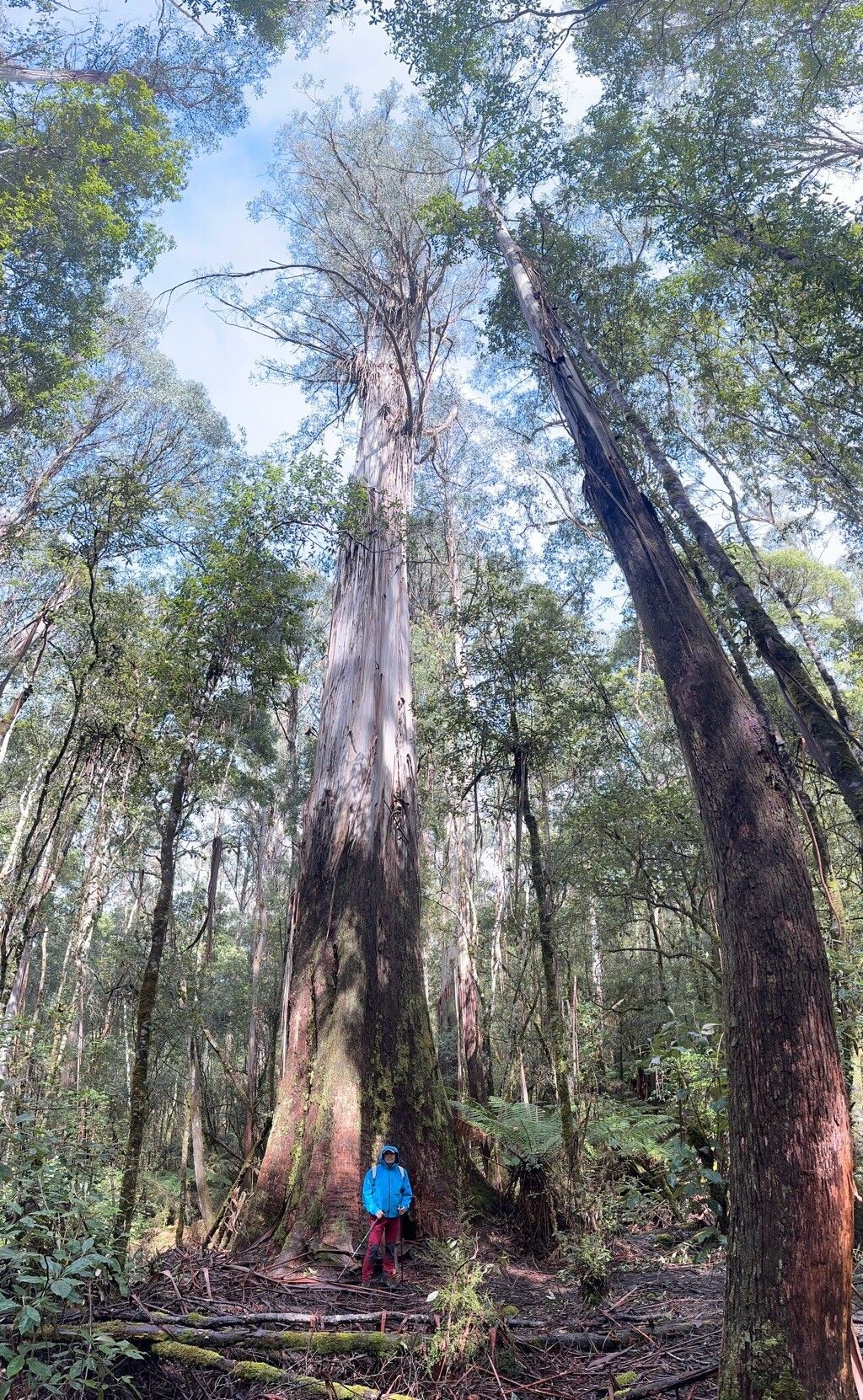
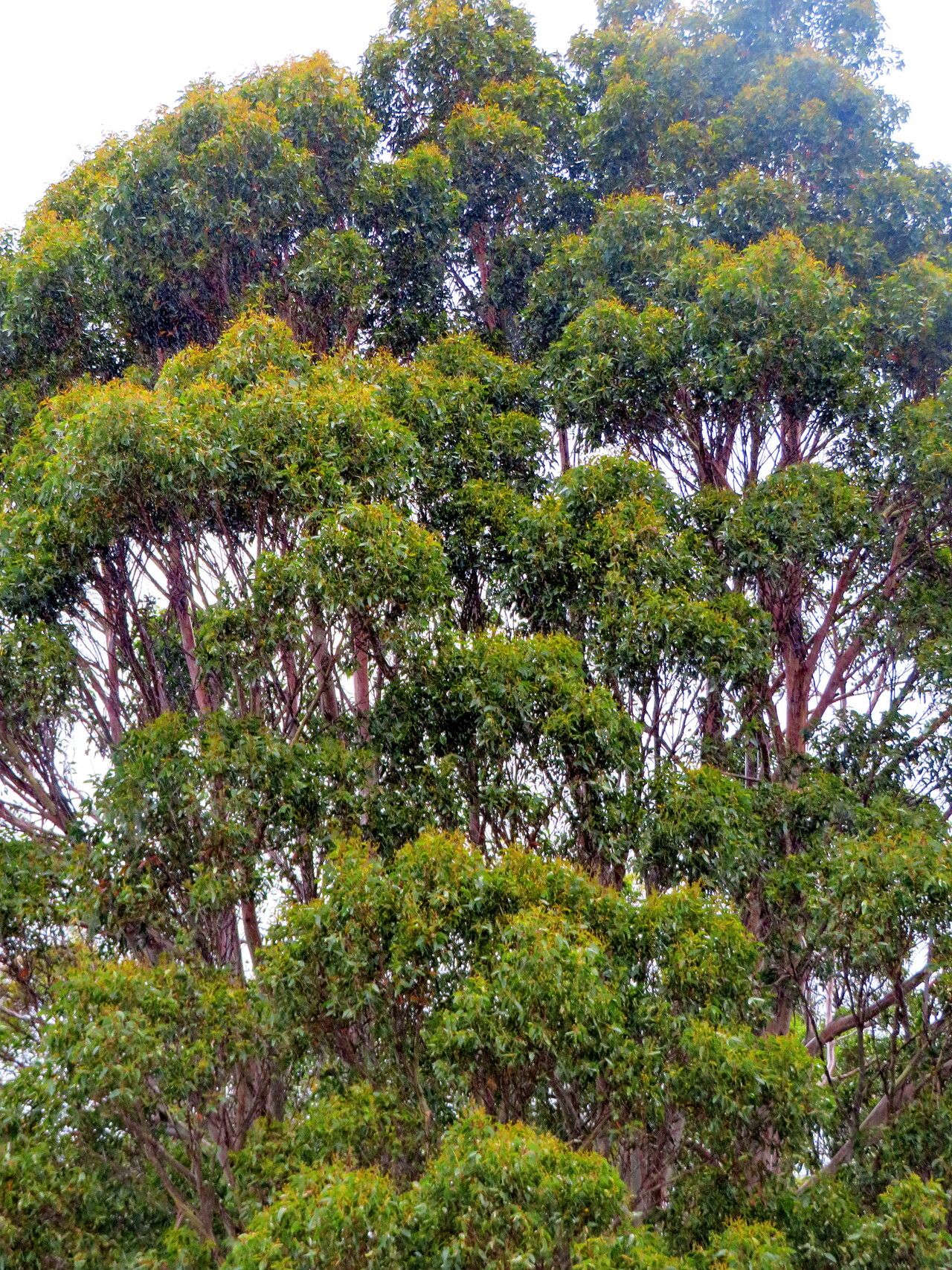
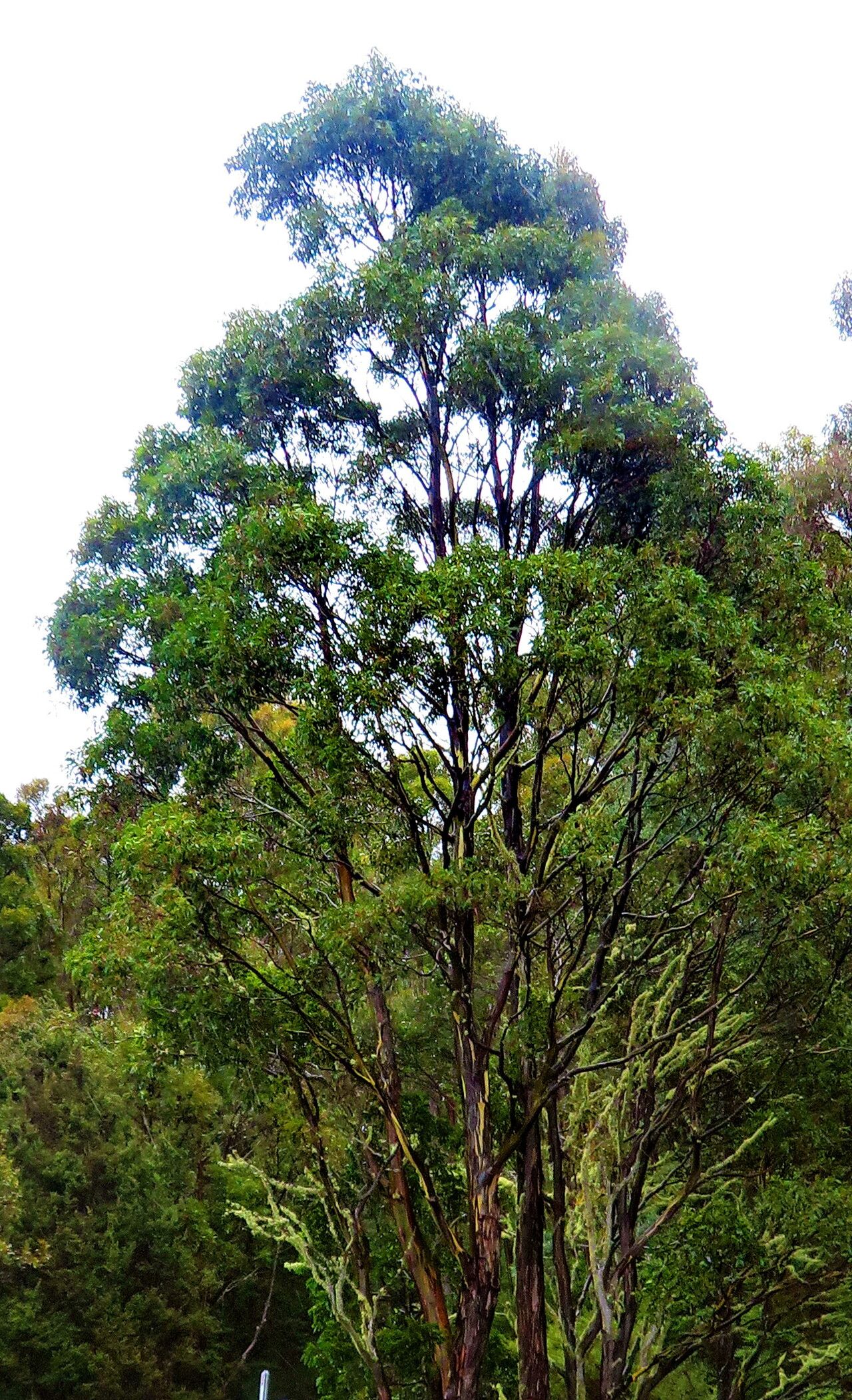
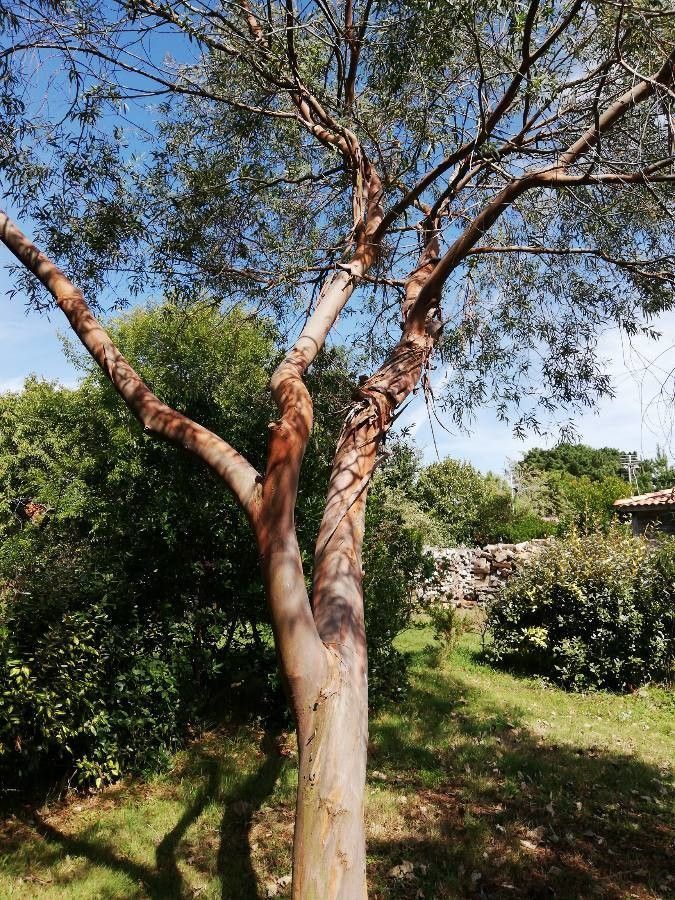
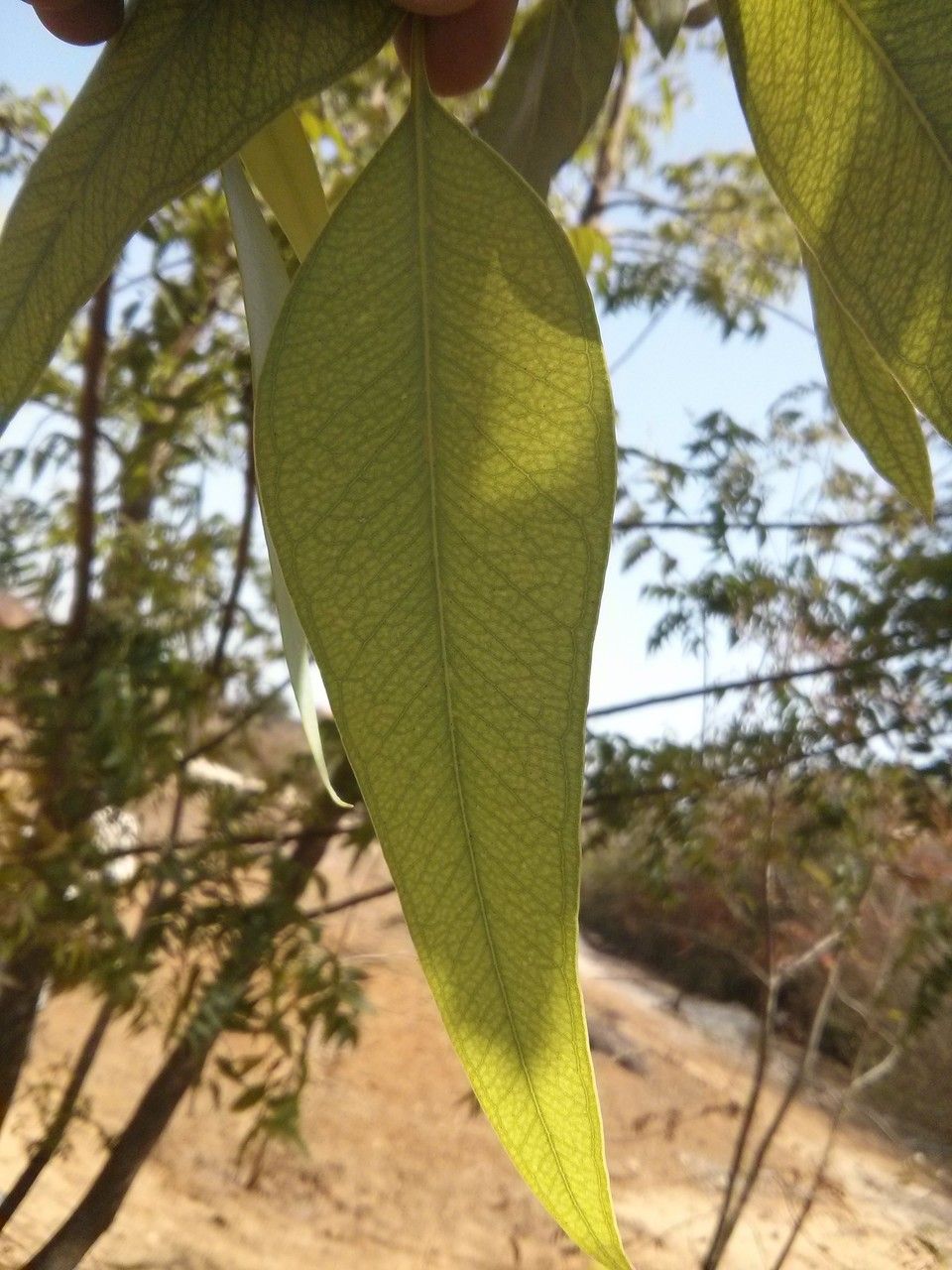
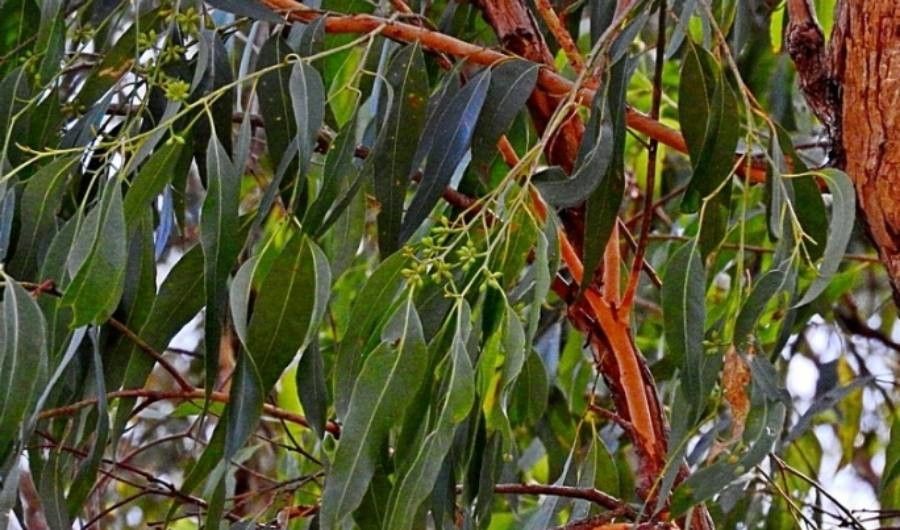
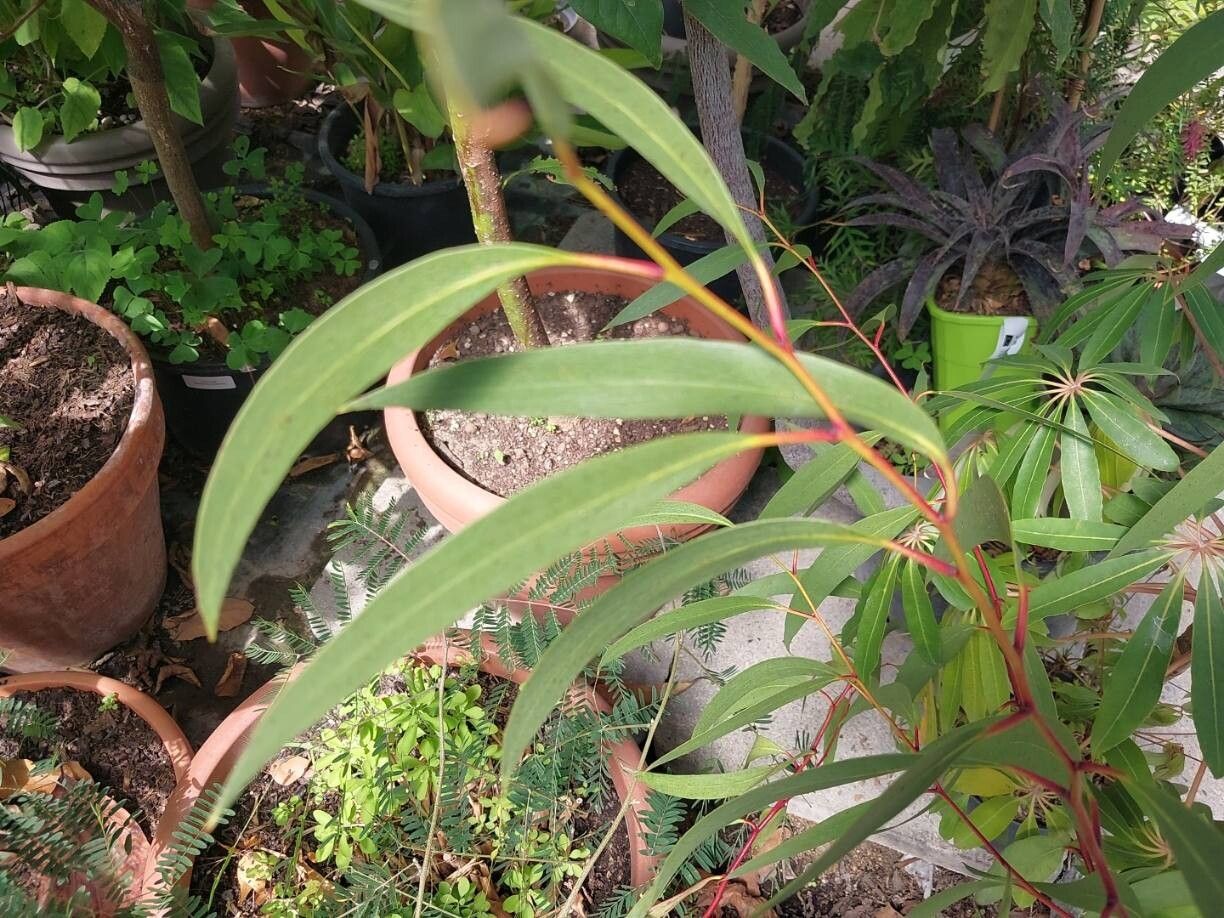
Eucalyptus regnans, known variously as mountain ash, swamp gum, or stringy gum, is a species of medium-sized to very tall forest tree that is native to the Australia states of Tasmania and Victoria. It is a straight-trunked tree with smooth grey bark, but with a stocking of rough brown bark at the base, glossy green, lance-shaped to curved adult leaves, flower buds in groups of between nine and fifteen, white flowers and cup-shaped or conical fruit. It is the tallest of all flowering plants; the tallest measured living specimen, named Centurion, stands 100.5 metres (330 feet) tall in Tasmania. It often grows in pure stands in tall wet forest, sometimes with rainforest understorey, and in temperate, high rainfall areas with deep loam soils. A large number of the trees have been logged, including some of the tallest known. This species of eucalypt does not possess a lignotuber and is often killed by bushfire, regenerating from seed. Mature forests dominated by E. regnans have been found to store more carbon than any other forest known. The species is grown in plantations in Australia and in other countries. Along with E. obliqua and E. delegatensis it is known in the timber industry as Tasmanian oak.
Mountain ash has strong resistance to disease and is usually not susceptible to illnesses. In terms of upkeep, this plant is fairly low-maintenance. When grown outdoors, it needs little watering, and larger specimens typically do not require pruning. Smaller plants, however, should be pruned after they finish blooming. Mountain asht is appropriate for anyone with an outdoor area, such as a garden or a deck, and does not demand extensive care experience.
How to keep Eucalyptus Regnans.
Light
The mountain ash grows best with plentiful, unobstructed sunlight. Its typical environment supplies abundant sun, allowing it to develop healthily and robustly. Both too much and too little light can harm it, resulting in stunted growth or scorched leaves.
Water
Mountain ash, native to temperate rainforests, thrives best with consistent moisture and moderate humidity. While it can tolerate short dry spells, it flourishes when watered regularly every 2-3 weeks. As an outdoor plant, it especially benefits from rainfall during its peak growing season.
Temperature
Mountain ash shows strong adaptability to a range of climate conditions, whether facing scorching summers or frigid winters. However, it does have an optimal temperature range for growth. When temperatures rise too high, the plant becomes vulnerable to heat and humidity stress, which can lead to its death. In areas where temperatures near the lower limit of its cold tolerance, it's important to use insulation measures to protect the plant.
Fertilizer
To encourage healthy growth, fertilize your Mountain ash in early spring. Routine feeding improves the tree’s overall health, resulting in robust growth, increased tolerance of harsh conditions, and enhanced resistance to pests and diseases. Keep to a consistent fertilization schedule for your Mountain ash to maintain lush foliage with deep color and a vibrant appearance.
Pruning
Mountain ash trees grow quickly and can reach impressive heights. It's best to prune them from early to late winter to remove dead or crossing branches. This not only improves the tree's structure but also enhances air circulation. Regular pruning helps boost the tree's vigor and reduces the likelihood of pest infestations. Remember, both the timing and the technique of pruning are crucial for maintaining the tree's health.
Botanical profile.
- Plant Type
- Tree, Shrub
- Life Cycle
- Perennial
- Genus
- Eucalyptus
- Family
- Myrtaceae
- Hardiness Zone
- 8-11
- Mature Height
- 20.12 m
- Mature Spread
- 7.92 m
- Leaf Color
- Dark Green, Forest Green
- Leaf Type
- Evergreen
- Flower Color
- White
- Flower Size
- 1.02 cm to 2.03 cm
- Bloom Time
- Late winter, Early spring, Mid spring
- Planting Time
- Spring, Summer
- Harvest Time
- Late spring, Early summer, Mid summer
Other names.
Reader questions.
What are the sunlight requirements for Mountain Ash?
Mountain Ash thrives best under abundant sunlight, requiring more than 6 hours of direct sunlight daily (full sun) for optimal growth. It can also grow in conditions with about 3-6 hours of sunlight (partial sun). It's crucial to observe your garden's sunlight patterns to select spots that provide a balance of light and shade, catering to the needs of your plants and ensuring their health and happiness.
What is the botanical name of Mountain Ash?
The botanical name of Mountain Ash is Eucalyptus regnans.
Why is adequate sunlight essential for Mountain Ash, and how can artificial lighting aid?
Adequate sunlight is crucial for the Mountain Ash as it thrives in its natural habitat under unobstructed sunlight, which supports healthy and robust growth. Insufficient sunlight can lead to stunted growth or leaf scorching. In cases where natural light is not enough, especially indoors or during less sunny seasons, artificial lighting becomes vital. It promotes faster, healthier growth by providing the necessary light spectrum. LED lights, for example, can be customized to emit specific wavelengths needed by plants. The light should be placed 12-36 inches above the plant, simulating natural light conditions for 8-12 hours daily, depending on the plant's needs.
What are the common symptoms of light deficiency or overexposure in Mountain Ash?
Mountain Ash exhibits symptoms related to both light deficiency and overexposure. Light deficiency symptoms include small leaves, leggy or sparse growth, faster leaf drop, slower or no growth, and lighter-colored leaves, indicating a lack of chlorophyll. Overexposure symptoms include chlorosis (leaves turning yellow), sunscald, leaf curling, wilting, and leaf scorching. These symptoms reflect the plant's struggle with inappropriate light conditions, affecting its health and ability to photosynthesize effectively.
How can I address sunlight related issues for Mountain Ash indoors and outdoors?
To address sunlight related issues for Mountain Ash, gradually acclimate your plants to the correct sunlight conditions. Indoors, move plants to sunnier spots weekly until they receive at least 6 hours of direct sunlight, using south-facing windows or artificial lights to supplement light. Outdoors, similarly, transition plants to sunnier locations gradually to avoid shock. If sunlight is obstructed, consider pruning or transplanting to a brighter location. Note that damaged plant parts may not recover, but new growth will be healthy with proper light exposure.