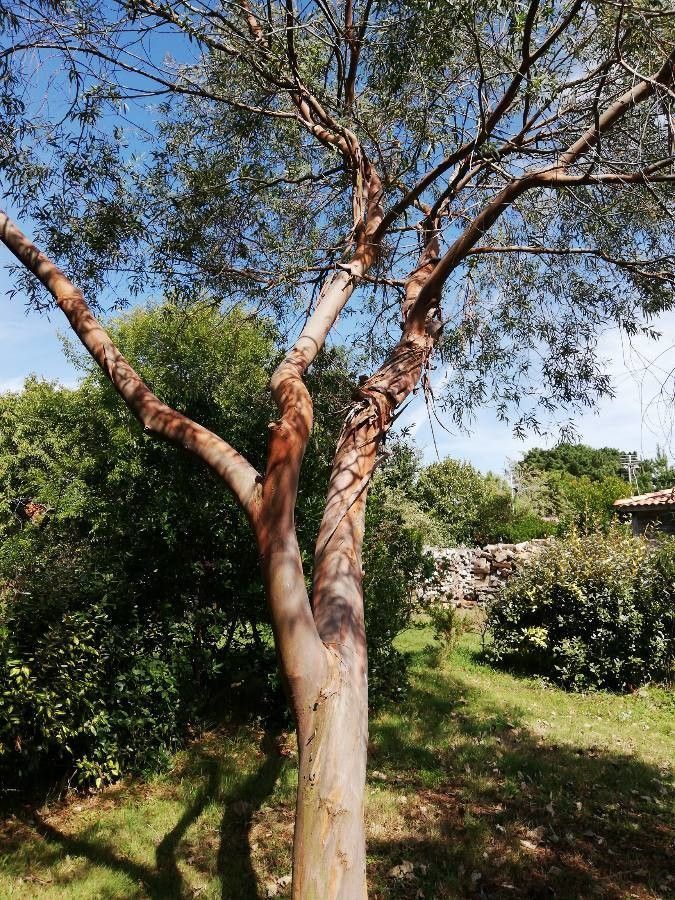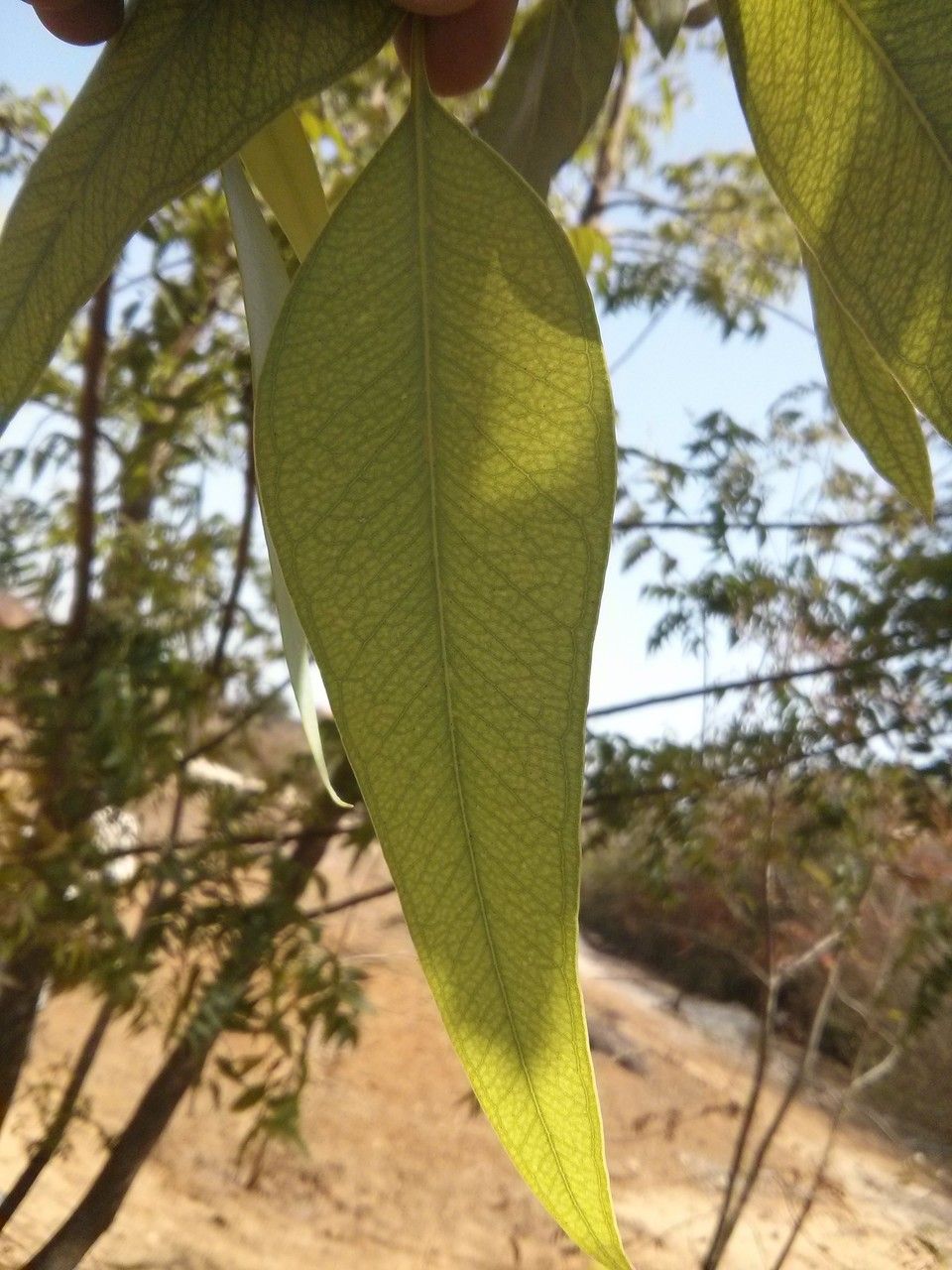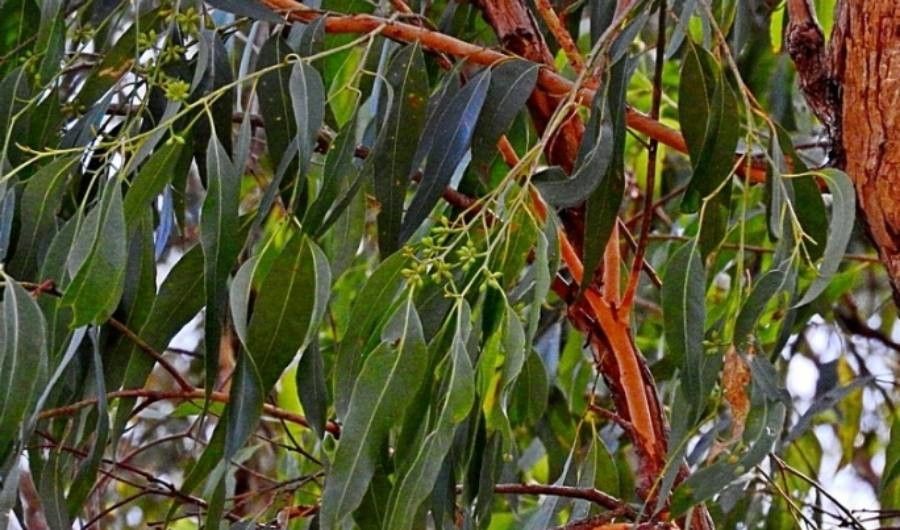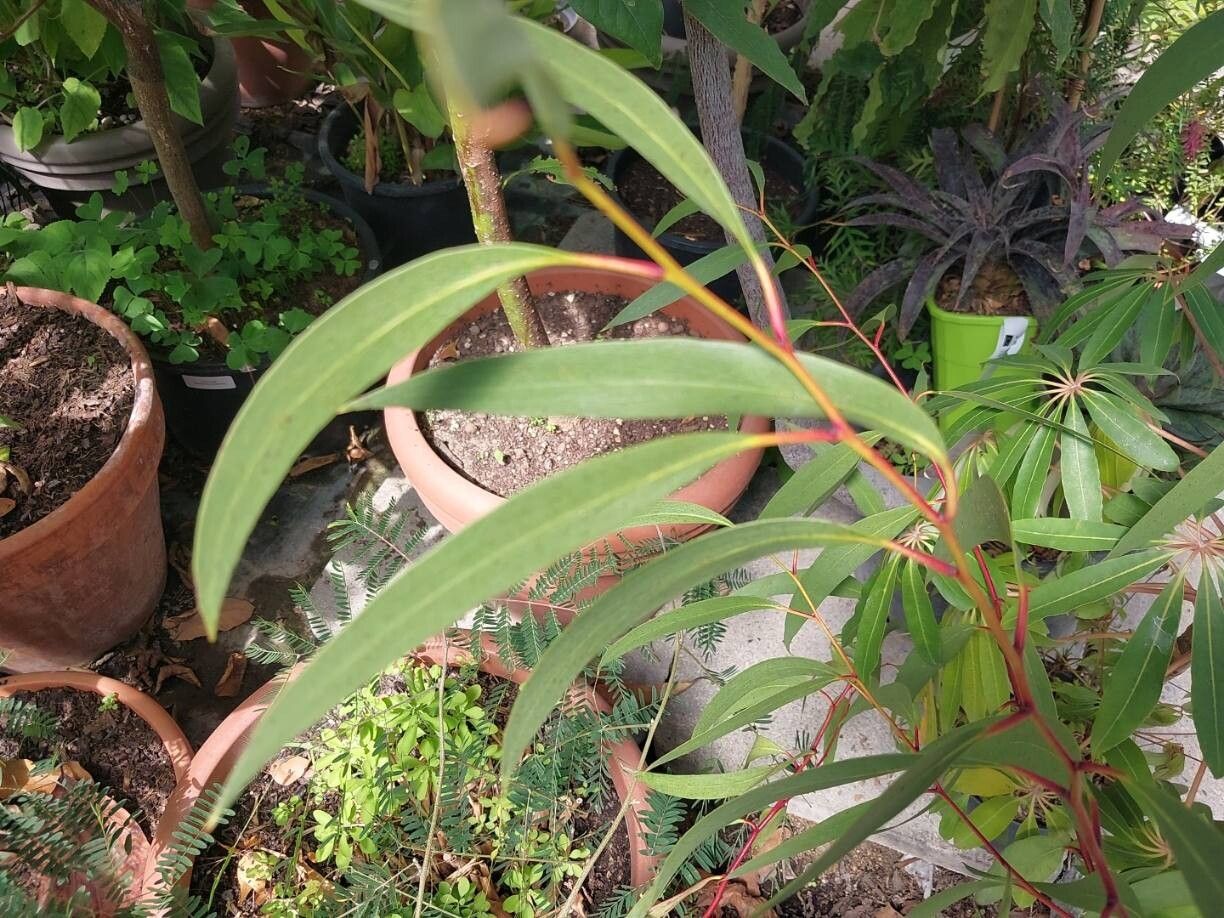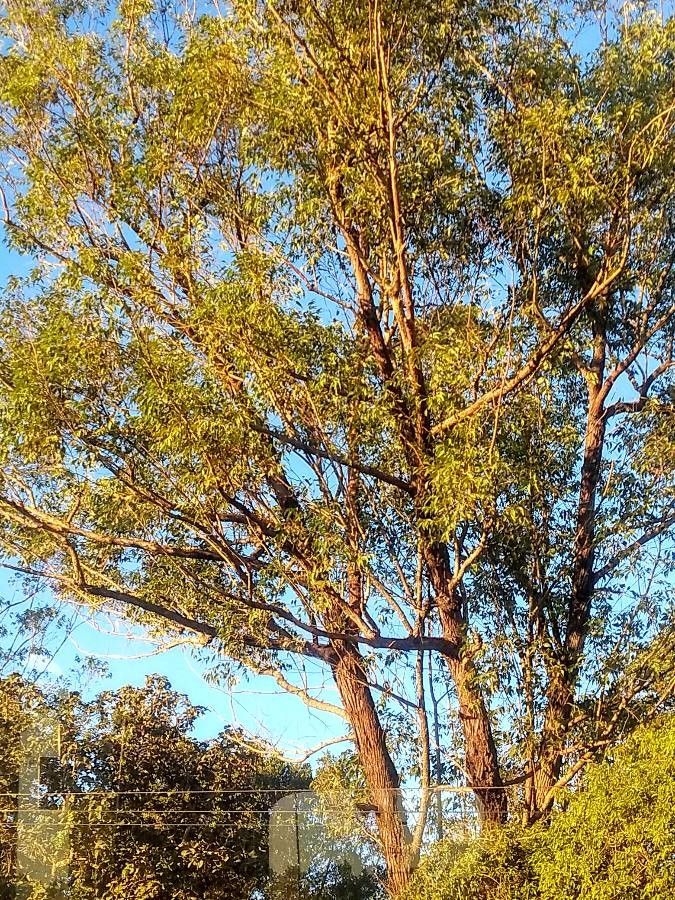
Eucalyptus crebra, commonly known as the narrow-leaved ironbark, narrow-leaved red ironbark or simply ironbark, and as muggago in the indigenous Dharawal language, is a species of small to medium-sized tree endemic to eastern Australia. It has hard, rough "ironbark" from its trunk to small branches, linear to lance-shaped adult leaves, flower buds in groups of seven, nine or eleven, white flowers and cup-shaped, barrel-shaped or hemispherical fruit. A variable species, it grows in woodland and forest from the Cape York Peninsula to near Sydney. It is an important source of nectar in the honey industry and its hard, strong timber is used in construction.
Narrow-leaved ironbark possesses good resistance to disease and is generally not susceptible to illnesses. As for care, this plant is relatively low-maintenance. Planted outdoors it needs only minimal watering, and larger specimens typically do not require pruning. Smaller plants, however, should be pruned after flowering. Narrow-leaved ironbark is suitable for anyone with an outdoor area, such as a garden or deck, and does not demand extensive care experience.
How to keep Eucalyptus Crebra.
Light
Narrow-leaved ironbark comes from open habitats, like sunny meadows and forest edges, where plenty of light is available. It grows best in full sun but will also tolerate partial sun, adapting well to different light conditions.
Water
The narrow-leaved ironbark is well-suited to arid landscapes due to its high drought tolerance and only needs watering once a week. As an outdoor plant, it thrives in well-draining soil, which prevents waterlogging and is crucial for healthy growth by replicating its natural habitat.
Temperature
Narrow-leaved ironbark is fairly adaptable to temperature, able to endure higher heat and considerable temperature fluctuations. In hot weather, care should be taken with watering and providing suitable shade to prevent sunburn. Conversely, Narrow-leaved ironbark has limited tolerance for low temperatures. While it can tolerate some cold, excessively low temperatures can cause frost damage.
Fertilizer
To encourage healthy development, fertilize your Narrow-leaved ironbark in early spring. Regular feeding improves overall health, producing vigorous growth, increased resilience to harsh conditions, and enhanced resistance to pests and diseases. Keep a consistent fertilization routine for your Narrow-leaved ironbark to maintain vibrant foliage with deep color and a lush appearance.
Pruning
Prune the narrow-leaved ironbark during its dormant period, from early to late winter, to encourage optimal growth. Focus on removing dead or diseased branches, and thin out overcrowded areas to improve air circulation and sunlight penetration. These techniques enhance the tree's health, structural integrity, and aesthetic appeal, promoting vigorous growth in the next season.
Botanical profile.
- Plant Type
- Tree
- Life Cycle
- Perennial
- Genus
- Eucalyptus
- Family
- Myrtaceae
- Hardiness Zone
- 9-11
- Mature Height
- 35.05 m
- Mature Spread
- 10.06 m to 14.94 m
- Leaf Color
- Dark Green, Gray
- Leaf Type
- Evergreen
- Flower Color
- White
- Flower Size
- 0.51 cm to 1.27 cm
- Bloom Time
- Late summer, Early fall, Mid fall
- Planting Time
- Spring, Summer, Autumn
- Harvest Time
- Late fall, Early winter, Mid winter
Other names.
Reader questions.
What are the sun requirements for Narrow-leaved ironbark (Eucalyptus crebra)?
The Narrow-leaved ironbark, scientifically known as Eucalyptus crebra, thrives in conditions where it can receive various amounts of sunlight. It requires full sun, which means it should be placed in locations that receive above 6 hours of sunlight daily. However, it can also adapt to partial sun, needing about 3-6 hours of sunlight each day. When choosing a location for your Narrow-leaved ironbark, it's important to observe the movement of sunlight through your garden. Select spots that offer the ideal mix of light and shade, which is crucial for the plant's health and success.
What is the common name for Eucalyptus crebra?
The common name for Eucalyptus crebra is Narrow-leaved ironbark. This name reflects specific characteristics of the tree, particularly its narrow leaves and the hard, iron-like quality of its bark.
What is the botanical name for Narrow-leaved ironbark?
The botanical name for Narrow-leaved ironbark is Eucalyptus crebra. This designation helps accurately identify and classify the species within the Eucalyptus genus and the broader plant kingdom.