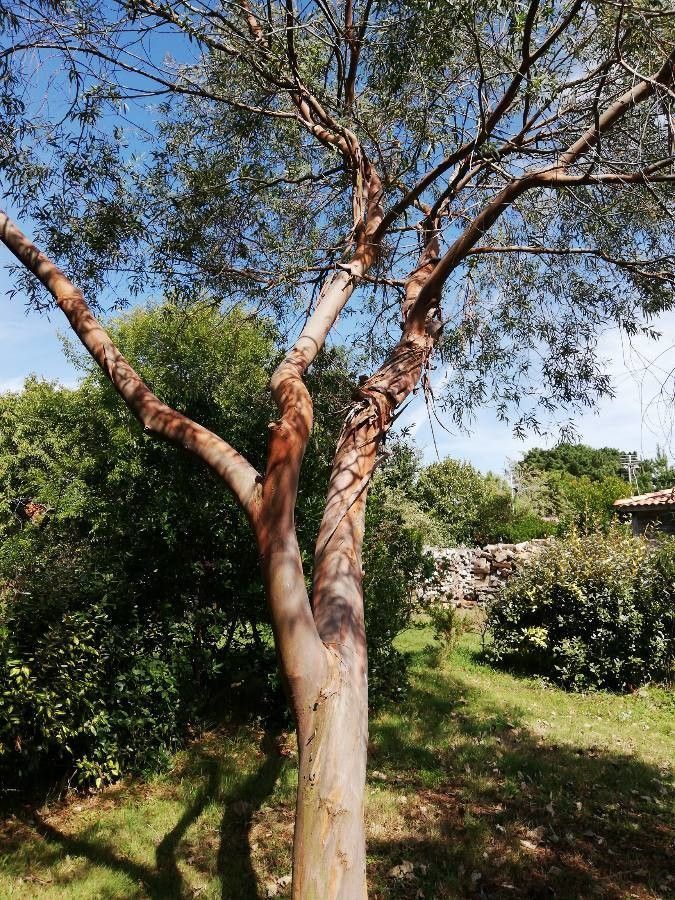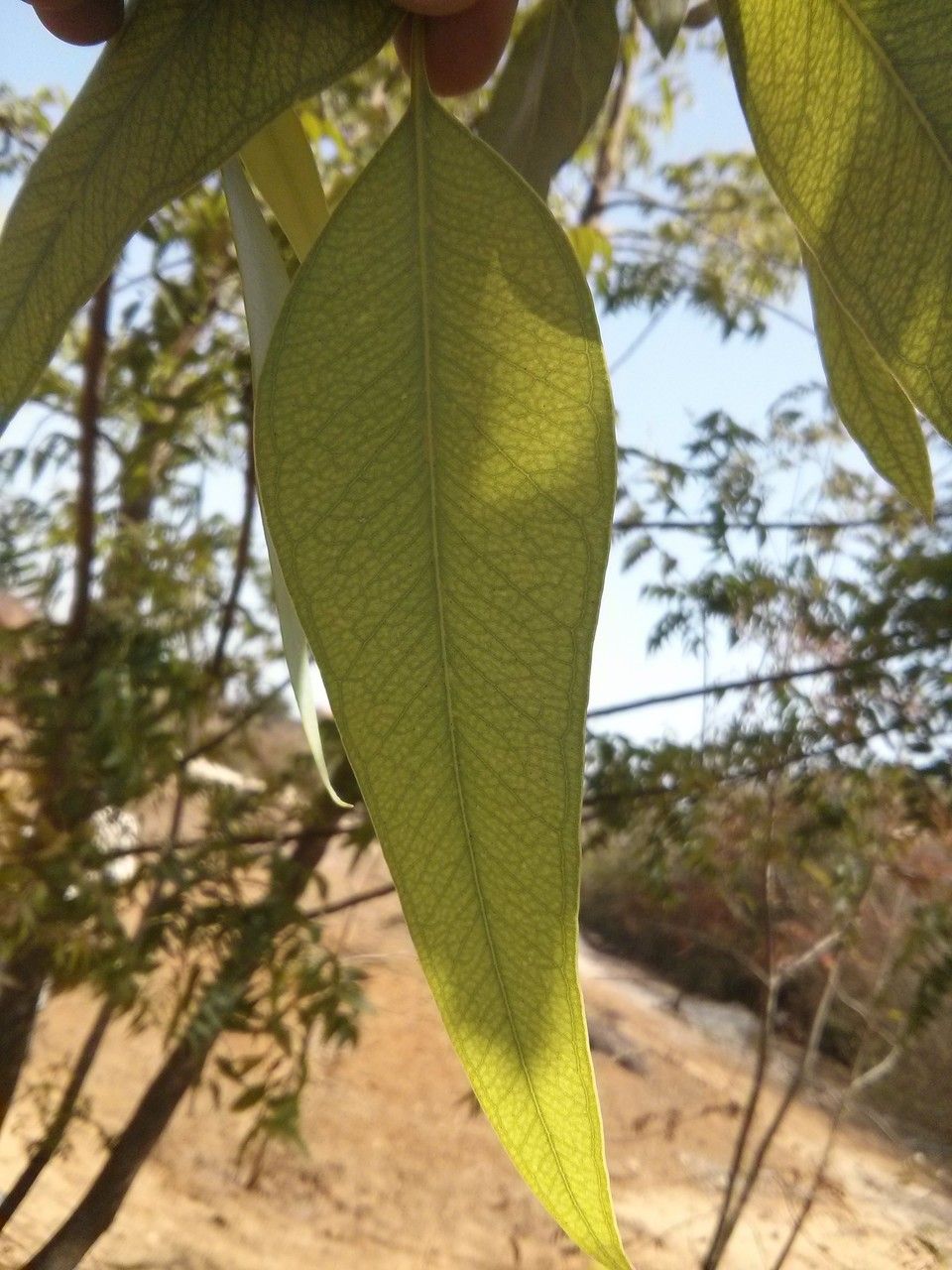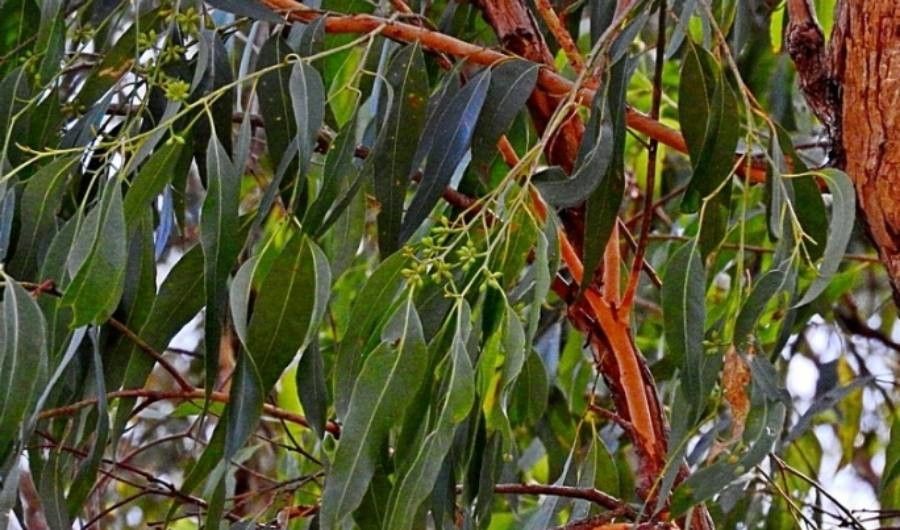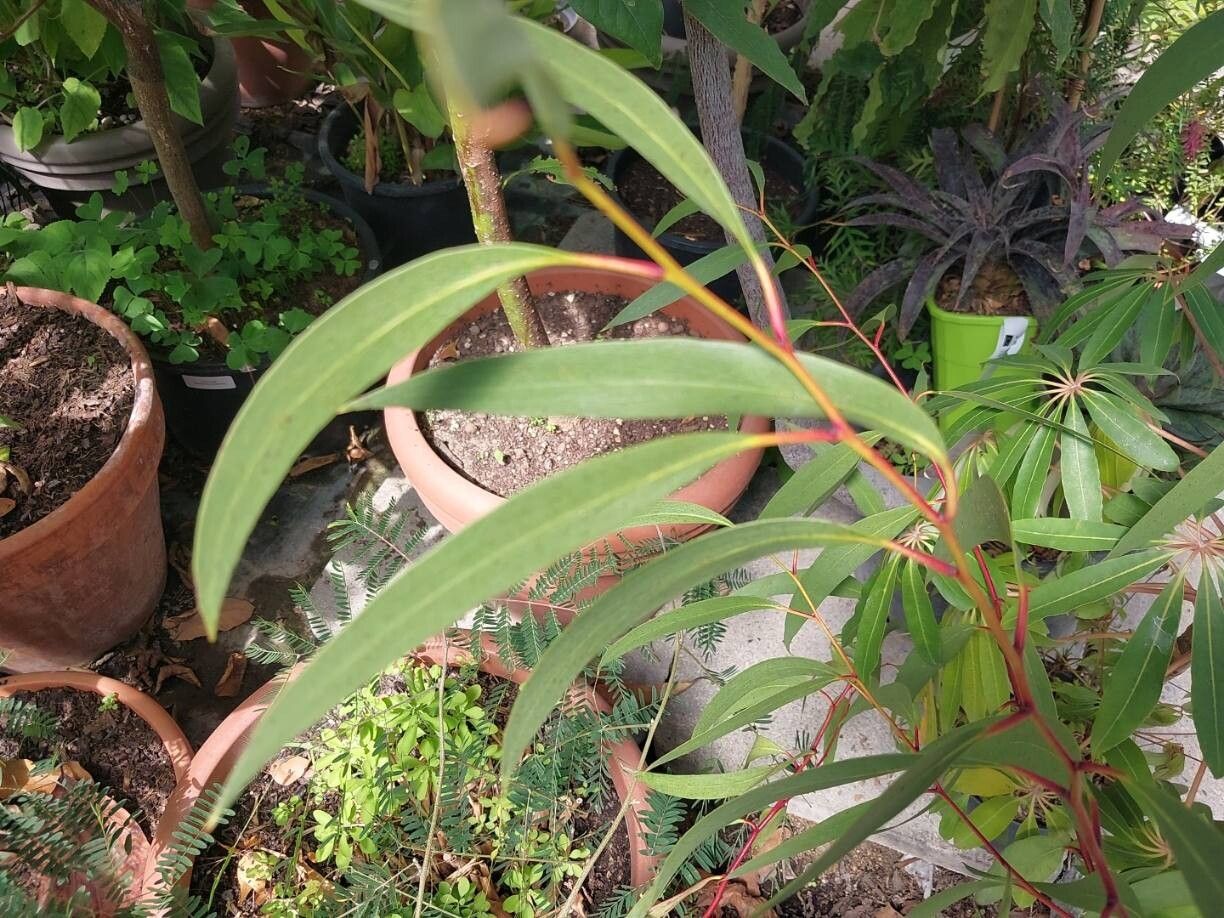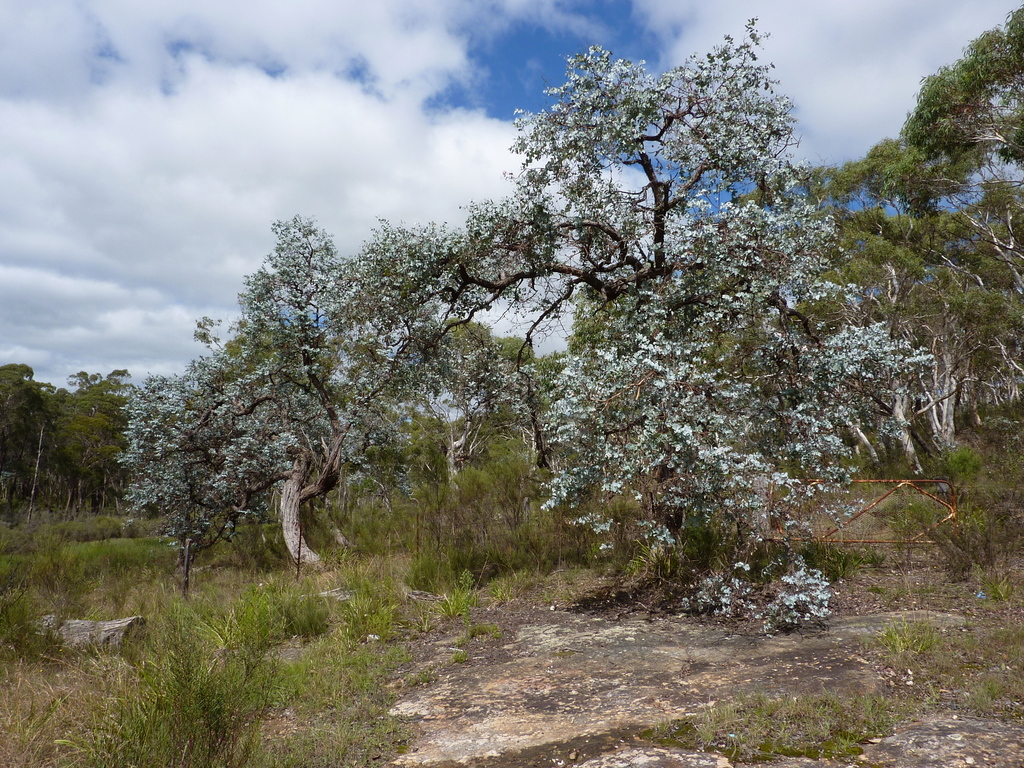
Eucalyptus cinerea, commonly known as the silver dollar tree, is a species of evergreen tree native to Australia. Belonging to the Myrtaceae family, this tree can reach heights of up to 30 meters. Its round, silvery-blue leaves give it a distinctive and attractive appearance. The bark is smooth and grayish-white, often marked with patches of pink or brown.
The silver dollar tree is widely cultivated for its ornamental value and for its essential oil, which possesses medicinal properties. The oil extracted from its leaves has antiseptic, anti-inflammatory, and decongestant qualities, making it useful for treating respiratory conditions such as asthma, bronchitis, and sinusitis.
This plant prefers well-drained soil and full sun exposure, although it can tolerate partial shade. It requires moderate watering during dry periods but is capable of withstanding drought conditions once established.
The young, silvery-green leaves of the plant are commonly used in flower arrangements and decorations, mainly as a backdrop material. However, the bark of the argyle apple may cause minor skin irritation in sensitive individuals. FUN FACT · FROM THE LIBRARY
Eucalyptus cinerea is popular among gardeners due to its attractive foliage that adds texture to any landscape design. Additionally, it provides a pleasant aroma that repels insects such as mosquitoes. Its fast growth rate makes it an excellent choice for use as windbreaks or privacy screens.
Overall, Eucalyptus cinerea is a visually appealing evergreen tree that offers both aesthetic and medicinal benefits, making it a favored choice among gardeners worldwide.
The Silver Dollar Tree, also known as the Silver Dollar Gum, Argyll Apple, or Argyle Apple, is an aromatic eucalyptus known for its distinctive rounded, silvery-green leaves that resemble dollar coins. This characteristic is the origin of its popular English names, Silver Dollar Tree and Silver Dollar Gum. The name Argyle Apple comes from its canopy shape, which reminded early Australian settlers of an apple tree.
Argyle apple is resistant to disease and is usually not susceptible to illnesses. When it comes to care, the plant is fairly low-maintenance. Planted outdoors, it needs only light watering, and larger specimens typically do not require pruning. Smaller plants, however, should be pruned after they finish blooming. Argyle applet is appropriate for anyone who has an outdoor area, like a garden or a deck, and it does not call for extensive care experience.
How to keep Eucalyptus Cinerea.
Light
The Argyle apple prefers ample sunlight to support healthy growth and good productivity. In its native habitat it comes from regions where sunlight is plentiful. It can tolerate sites with somewhat less sun, though inadequate light can restrict its growth. Conversely, excessive sun exposure can cause the plant to become stressed.
Water
The Argyle apple is well-suited to dry regions and is drought-tolerant, requiring watering only once every one to two weeks. Being an evergreen plant, it needs deep watering during the growing season to maintain its foliage and to remain resilient against temperature fluctuations.
Humidity
This plant prefers dry conditions, so don't mist it. However, watering it less often can also thrive in higher humidity.
Temperature
The Argyle apple is adapted to a temperature range of 41 to 95 °F (5 to 35 ℃), reflecting its native growing environment. Optimal growth occurs within this range. Adjust conditions according to seasonal variation to promote its prosperity.
Fertilizer
Fertilize your Argyle apple in early spring to encourage healthy growth. Regular fertilization boosts overall health, leading to vigorous growth, greater resilience to harsh conditions, and enhanced resistance to pests and diseases. Maintain a consistent fertilization schedule for your Argyle apple to keep the foliage vibrant, deeply colored, and lush.
Pruning
The Argyle apple is known for its distinctive silver-blue leaves. To maintain the tree's health, prune it from early to late winter while it is dormant. Focus on removing dead or crossing branches to improve airflow and manage its size. Light trimming helps preserve the tree's natural shape, prevent disease, and promote overall health. Always use sterilized tools to avoid infections.
Pot & Repot
When repotting an Argyle apple, choose a pot 1-2 inches (2.5–5.1 cm) larger with ample drainage. Use a well-draining potting mix. Repot in spring or fall, ensuring that the root ball is slightly lower than the rim of the flower pot. Water thoroughly after repotting and place in a warm spot with indirect sunlight.
Botanical profile.
- Plant Type
- Tree
- Life Cycle
- Perennial
- Genus
- Eucalyptus
- Family
- Myrtaceae
- Hardiness Zone
- 4-9
- Mature Height
- 14.94 m to 29.87 m
- Mature Spread
- 6.1 m to 11.89 m
- Leaf Color
- Green, Blue, White, Gray, Silver
- Leaf Type
- Evergreen
- Flower Color
- White
- Flower Size
- 0.51 cm to 0.51 cm
- Bloom Time
- Early spring, Mid fall, Late fall, Winter
- Planting Time
- Spring, Autumn
- Harvest Time
- Mid spring, Late spring, Early summer
- Native Area
- Australia
Other names.
Reader questions.
How should I water my Argyle apple tree?
Watering your Argyle apple is easy and flexible. You can use any common watering tool, such as watering cans, hoses, or even cups. Just make sure to water directly onto the soil, ensuring equal moisture throughout for the entire root system. It's best to use filtered water to avoid harmful particles. Additionally, use water that is either at room temperature or slightly above to prevent shocking the plant. However, the Argyle apple generally does well with any type of water you provide.
Why do I have to put fertilizer on my Argyle apple?
To achieve optimum health for your Argyle apple, regardless of the type you have, it is important to regularly fertilize it. By providing the right nutrients, you can promote robust growth and enhance its ability to withstand challenging conditions, as well as resist diseases and pests. Preserving the appealing foliage of your Argyle apple is essential, so be sure to establish and stick to a fertilization schedule tailored to its needs. This practice will encourage the development of vibrantly colored leaves and an overall luxuriant appearance.
What are the sunlight requirements for Argyle apple?
Argyle apple requires a generous amount of sun exposure for healthy growth and productivity, thriving best in environments with abundant sunlight. It can tolerate slightly less sun but may show limited growth under insufficient light conditions. Extreme sun exposure can also stress the plant. It's essential to observe the movement of sunlight through your garden and select spots that ensure an ideal balance of light and shade.
What is the Argyle apple and where does it naturally thrive?
The Argyle apple, botanically known as Eucalyptus cinerea, thrives in environments with temperatures ranging from 41 to 95 °F (5 to 35 °C). This temperature range reflects its natural habitat and provides optimal conditions for its growth. The plant is well-adapted to these temperatures, adjusting naturally to seasonal variances to maintain prosperity.
What should I do if I give my Argyle apple tree too much or too little water?
When it comes to outdoor plants, especially new or young ones, they can easily suffer from insufficient watering. It's important to remember that for the first few months after planting, you should make sure to water them adequately. This is because once the roots are established, the plant can rely on rain for most of its water needs. If you have an Argyle apple tree planted in a pot, you should be cautious about overwatering. In case you accidentally overwater it, you need to take immediate action to remedy the situation. First, stop watering the plant right away to minimize the effects. Then, remove the Argyle apple from its pot and check the roots for any signs of root rot. If you don't find any, you can return the plant to its pot. However, if there are signs of root rot, trim away the affected roots and consider applying a fungicide to prevent further damage. Finally, repot the Argyle apple in well-draining soil. On the other hand, if your Argyle apple is underwatered, it's a relatively easy fix. You'll notice the leaves drooping, drying out, and falling off. Once you water it sufficiently, the leaves will quickly regain their fullness. So, remember to adjust your watering frequency if you see signs of underwatering.
When should I fertilize my Argyle apple tree for best results?
To properly fertilize your Argyle apple tree, there are two recommended times to do so. The first is in late winter or early spring, which provides the necessary nutrients for healthy growth once the warmer weather arrives. If you live in a warm climate, it is also helpful to give your tree an extra fertilizer feeding in early fall. This not only adds nutrients for the following growing season but also makes your tree more capable of surviving the winter without foliage damage. Fertilizing earlier in the year will also ensure that new branches have enough time to grow and withstand the cold winter.
How should I use artificial lighting for indoor Argyle apple plants?
For indoor Argyle apple plants, adequate lighting is crucial, especially when natural sunlight is insufficient. Artificial lights, like LED lights, can be customized to provide specific light wavelengths needed by the plant. Full sun plants require 30-50W/sq ft, partial sun plants need 20-30W/sq ft, and full shade plants need 10-20W/sq ft. The light source should be placed 12-36 inches above the plant to mimic natural sunlight, ensuring the plant receives 8-12 hours of light per day.
Does the Argyle apple require special frost protection during winter?
The Argyle apple possesses strong cold resistance and usually does not require special frost protection measures during winter. However, in conditions where temperatures are expected to plunge below -30°C, it is crucial to provide additional cold protection. This can be done by wrapping the trunk and branches with insulating materials like non-woven fabric or cloth. To further safeguard the plant, it is advisable to water it abundantly before the first freeze in autumn, ensuring the soil remains moist and freezes, which helps prevent drought and water shortages during the colder months.
How often should I water my Argyle apple?
If your area doesn't get much rainfall, you'll need to water your outdoor plants every 2 weeks during the spring and fall. In the summer, you'll need to water more often. In the winter, when plants don't grow as much, you can water less frequently or not at all. If your Argyle apple is young or newly planted, it will need to be watered more often to help it establish and grow. For potted plants, you can either follow a set watering schedule or base it on the moisture level of the soil. If you choose a schedule, plan to water the plant once a week or every other week. However, this may not always be enough as it doesn't consider the specific conditions of your growing environment. Be aware that during summer, the plant will need more water than the schedule suggests. The alternative method is to only water when the top few inches of soil have completely dried out.
When is the best time to not fertilize my Argyle apple?
Avoid fertilizing your Argyle apple during certain times of the year. Firstly, refrain from fertilizing during the early and mid-winter months when the plant is dormant and doesn't require feeding. Additionally, it is not advisable to fertilize during the late spring and summer, as the weather is hotter and drier, increasing the chances of a negative response to fertilization. To prevent these problems, stick to a fertilization schedule that involves feeding only during early spring and early fall.
What are the symptoms of insufficient sunlight in Argyle apple?
Symptoms of insufficient sunlight in Argyle apple include smaller new leaves, leggy or sparse growth, faster leaf drop, slower or no new growth, and lighter-colored new leaves. Also, overexposure can cause chlorosis, sunscald, leaf curling, wilting, and leaf scorching. These symptoms can indicate the plant is not receiving the optimal level of light it requires for healthy growth.
What should I do if the Argyle apple is exposed to very low temperatures?
The Argyle apple is cold-tolerant, favoring temperatures above 5°C and can generally withstand winters if temperatures stay above -25°C. In the event that temperatures fall below -30°C, the plant may not show immediate damage during winter, but come spring, its branches may become brittle and dry, leading to a failure in producing new shoots. To combat this, it's recommended to prune any dead branches in spring, removing parts that have failed to sprout new leaves.