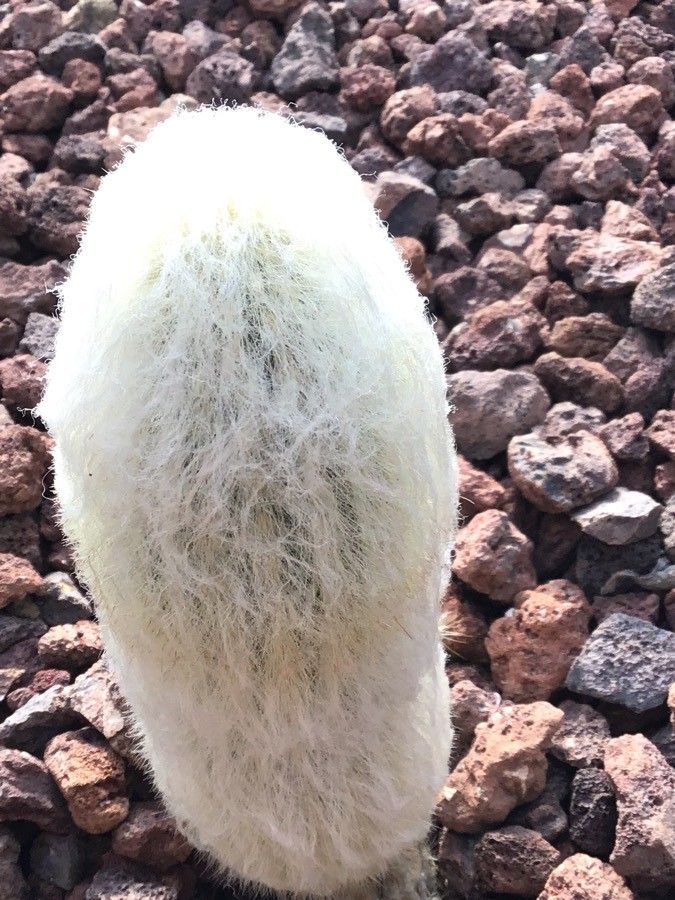
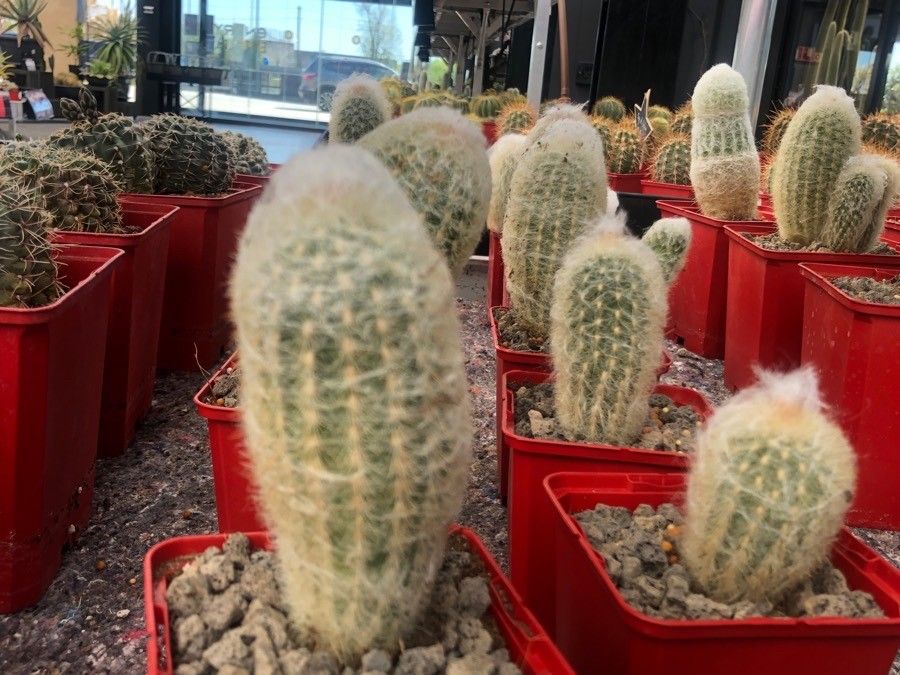
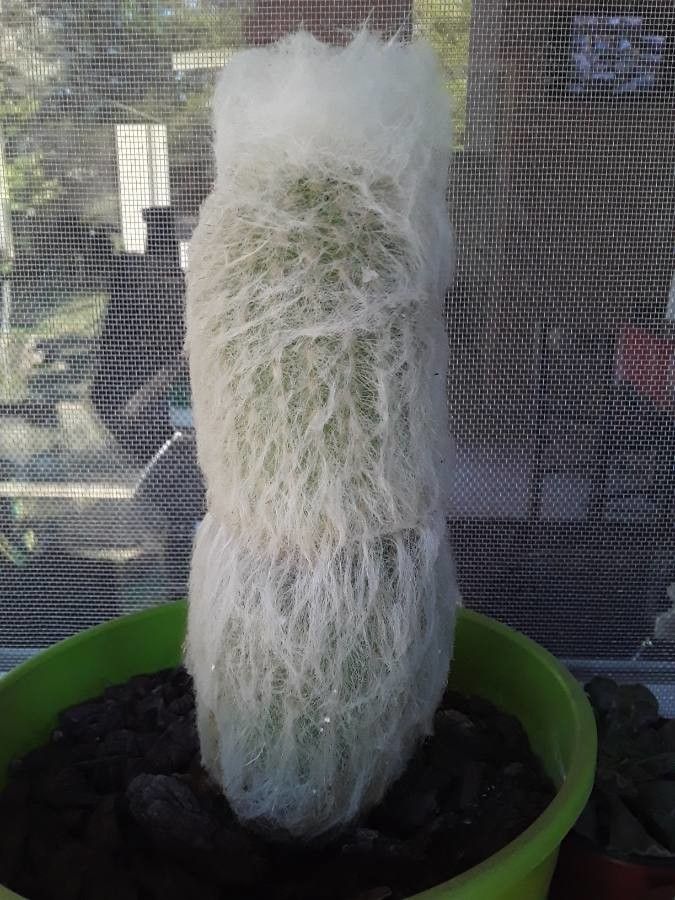
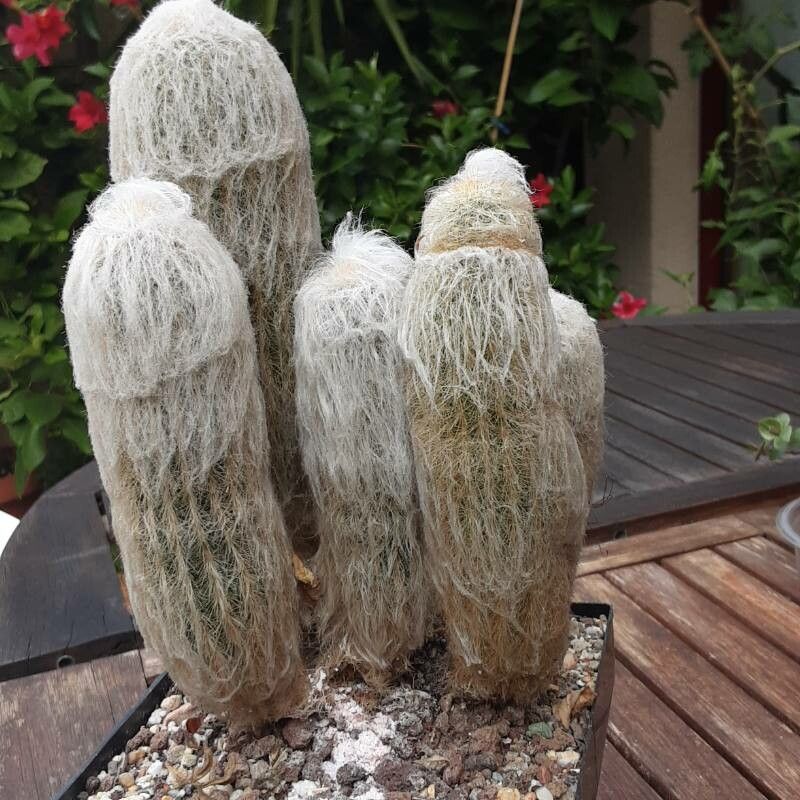
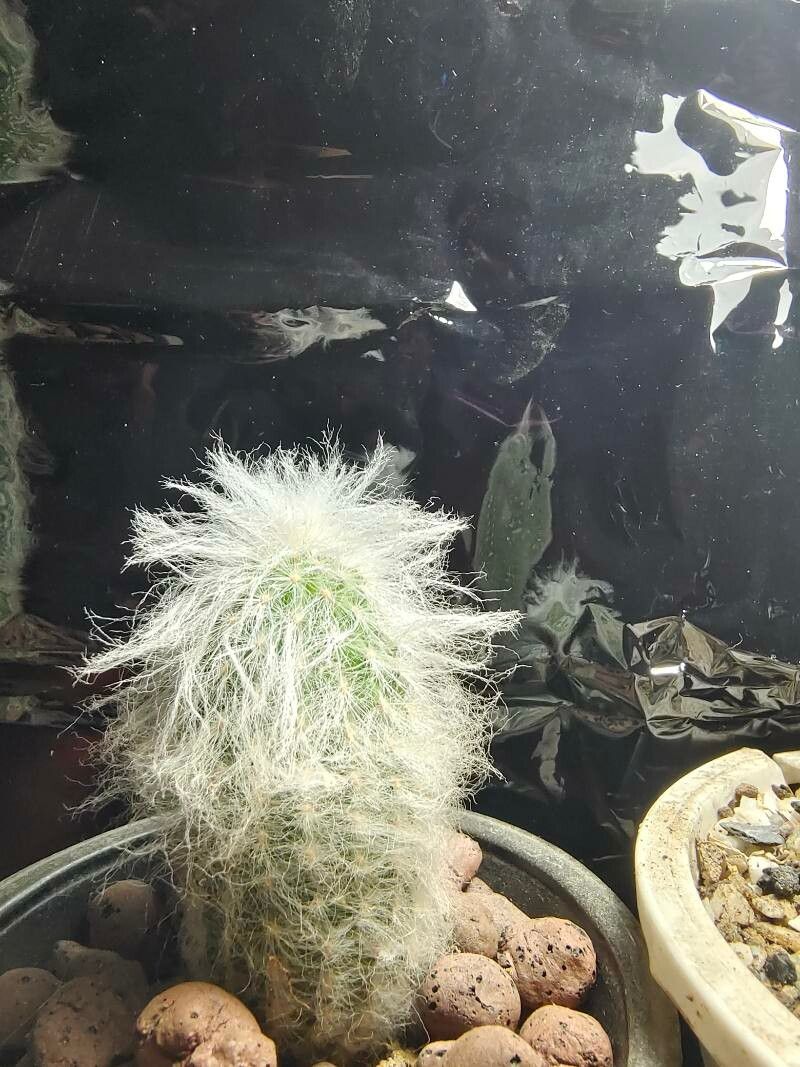
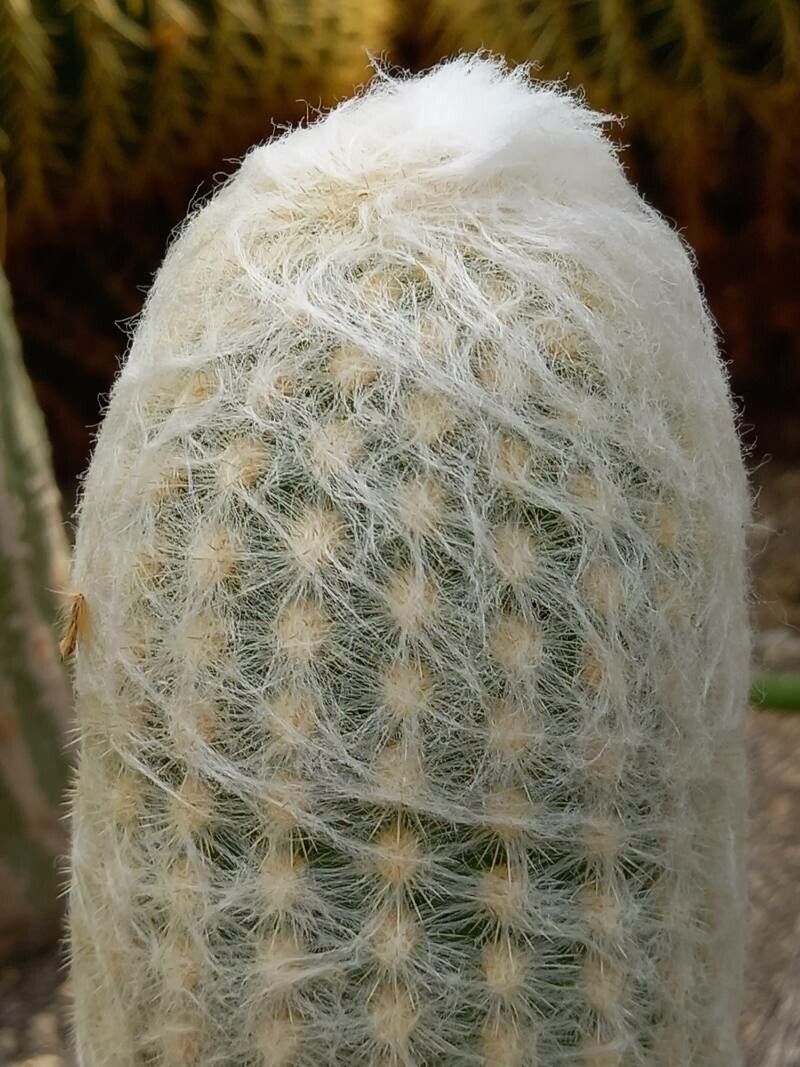
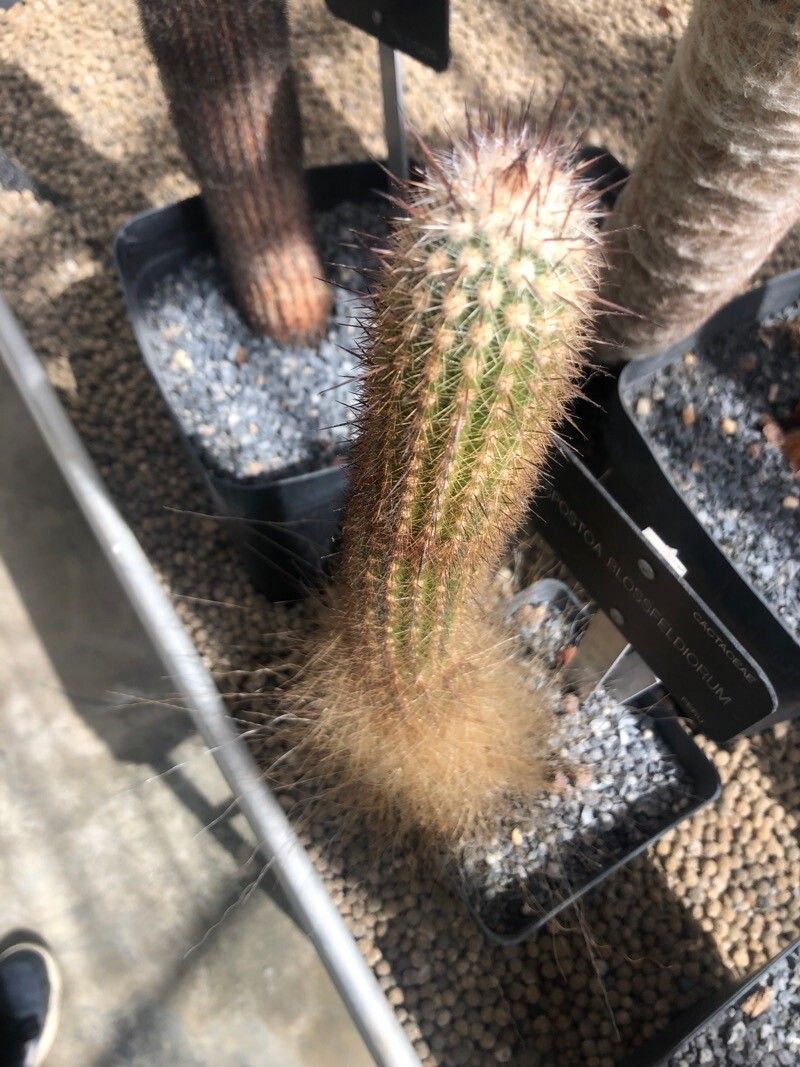
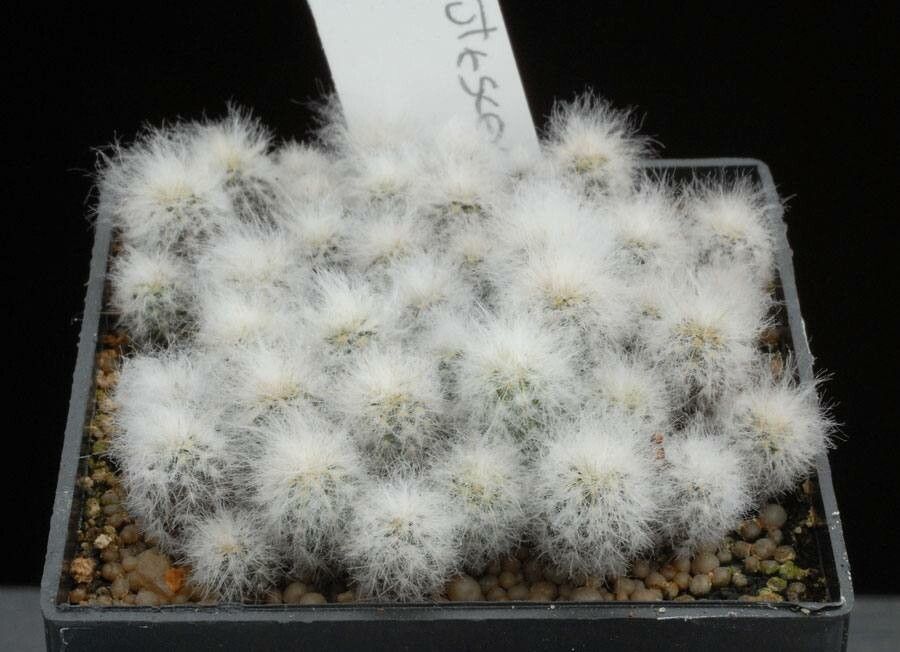
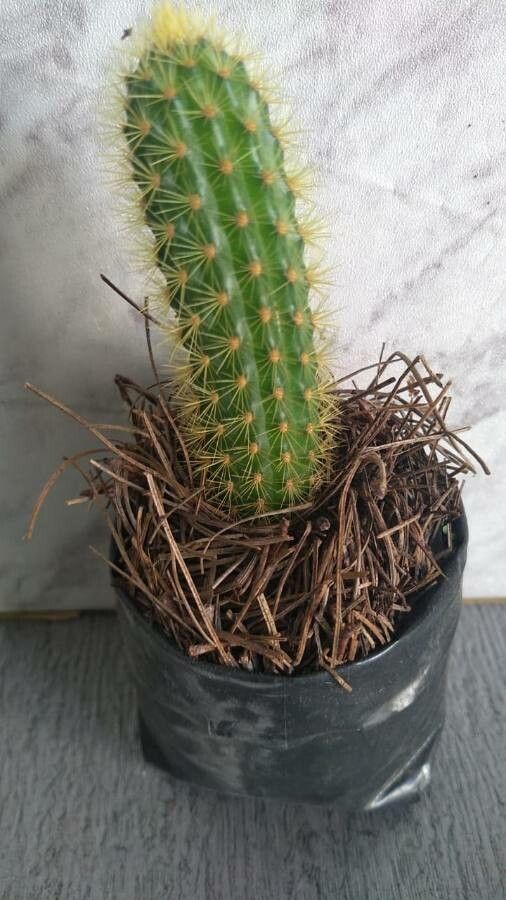
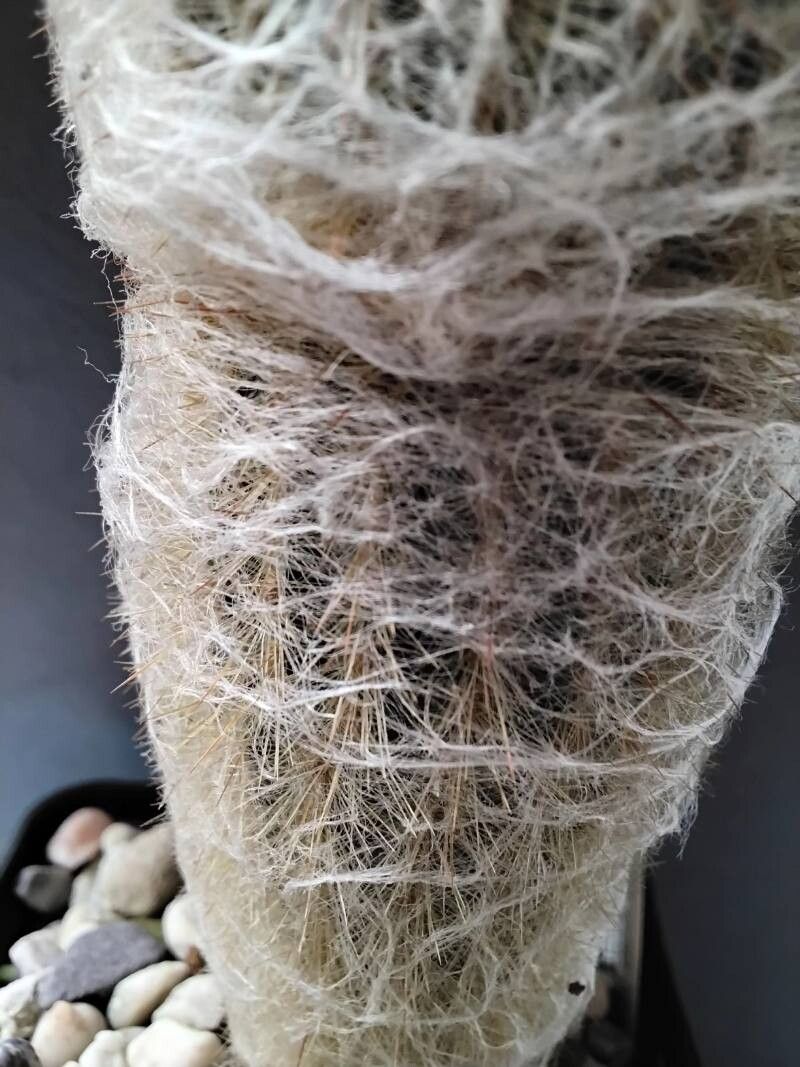
Espostoa melanostele is a cactus species native to the Andes Mountains in South America. It is commonly known as the Peruvian Old Man Cactus due to the long, white, hair-like spines that cover its cylindrical stem. The stem can grow up to 6 meters tall and 15 centimeters in diameter. This cactus species produces small white flowers that bloom at night, followed by small red or green fruits. It prefers well-draining soil and full sun exposure but can also tolerate partial shade. Indigenous people have used Espostoa melanostele for medicinal purposes such as treating fever, inflammation, and wounds. However, habitat loss from human activities, such as mining and agriculture, has led to the species being listed as vulnerable on the IUCN Red List of Threatened Species. Outside its native range, Espostoa melanostele is popular as an ornamental plant due to its unique appearance and low maintenance requirements.
Old lady cactus has strong resistance to disease and typically tolerates routine care without getting sick easily. It can, however, be vulnerable to mealybugs; these pests may inflict some damage but usually do not pose a major danger. Regarding care, Old lady cactus is drought-tolerant and does not require frequent watering. It can endure extended stretches without water and needs little fertilizer. That said, if light levels are low and the plant is overwatered, it is very prone to root rot. All in all, Old lady cactus is a good choice for those who prefer low-maintenance plants, though it remains important to know and meet its basic needs. It is especially appropriate for people who are away for long periods and might often forget to water their plants.
How to keep Espostoa Melanostele.
Light
Native to dry regions, the Old lady cactus flourishes in full sun, as its native habitat features intense sunlight and very little shade. It can also tolerate partial sun, offering some flexibility in its growth.
Temperature
Old lady cactus prefers warm conditions and needs higher temperatures during the growing season to support its growth and metabolic processes. It benefits from plenty of sunlight, suitable moisture, and good air circulation. However, it is vulnerable to harm from very low temperatures and from being overwatered. It’s also important to avoid extreme heat and overly dry conditions, so a balanced environment should be maintained.
Fertilizer
For the Old lady cactus, light applications of fertilizer once or twice a year during the growing season are enough. Avoid fertilizing in winter and in summer when it is dormant. Cut back on fertilizer for repotted plants and wait a couple of months after repotting before you start feeding. Fertilizing helps maintain healthy growth and promotes flowering.
Pruning
The Old Lady Cactus requires very little pruning. You should focus on removing any withered flowers and branches so the plant can direct its nutrients toward healthier growth.
Pot & Repot
Repot an Old Lady cactus in spring or summer, selecting a pot slightly larger than the current one with adequate drainage. Use a well-draining, sandy or gritty cactus soil. Handle it carefully to avoid the spines. Let the cactus dry out before repotting to help prevent root rot. After repotting, wait about a week before watering to give the roots time to heal.
Botanical profile.
- Plant Type
- Herb
- Life Cycle
- Perennial
- Genus
- Espostoa
- Family
- Cactaceae
- Hardiness Zone
- 9-11
- Mature Height
- 2.13 m
- Mature Spread
- 2.13 m
- Leaf Color
- Green
- Leaf Type
- Evergreen
- Flower Color
- White
- Flower Size
- 3.05 cm to 4.06 cm
- Bloom Time
- Summer, Early fall
- Planting Time
- Spring, Summer
- Harvest Time
- Late summer, Fall
Other names.