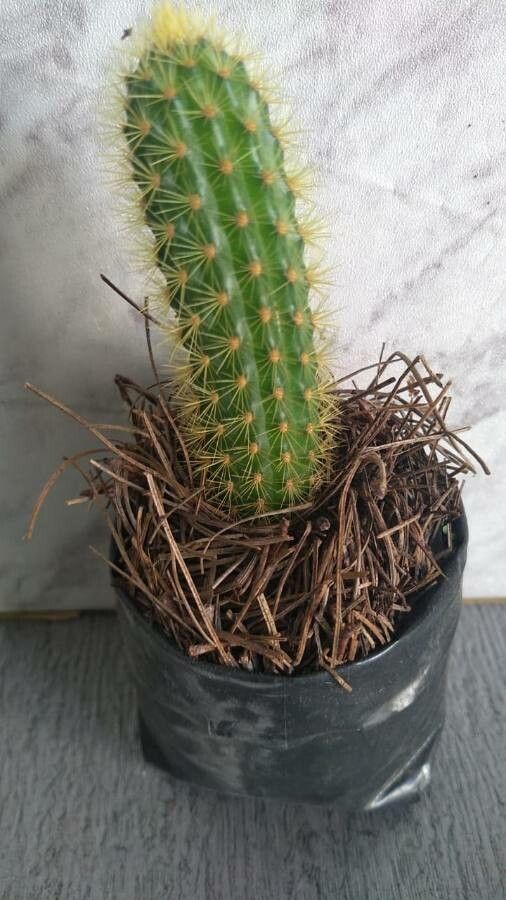
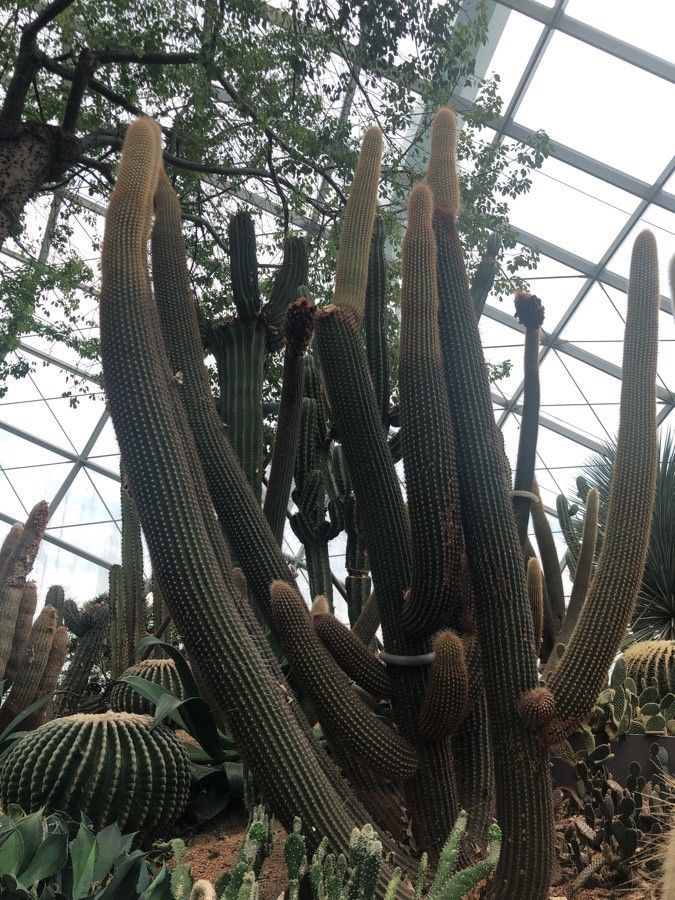
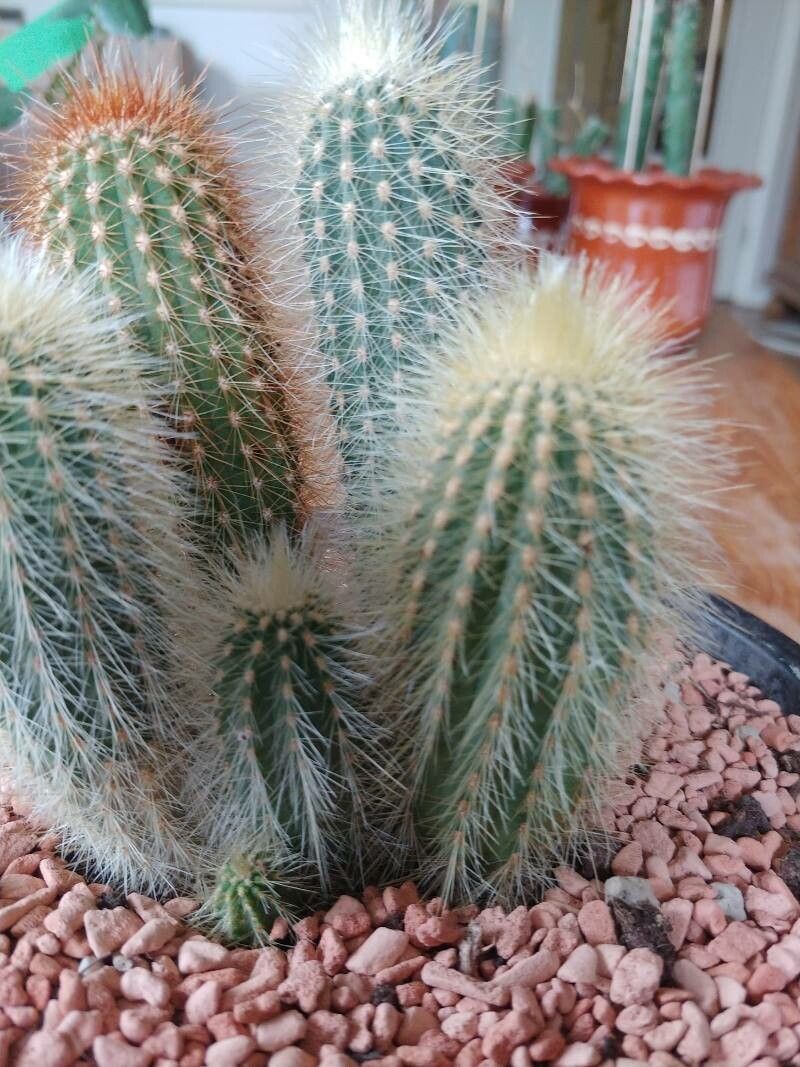
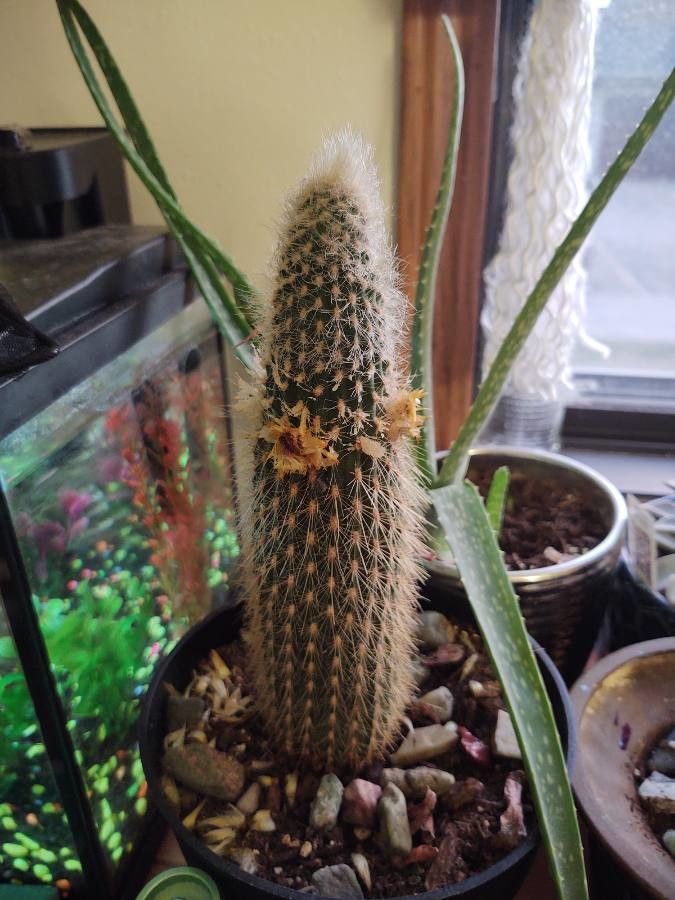
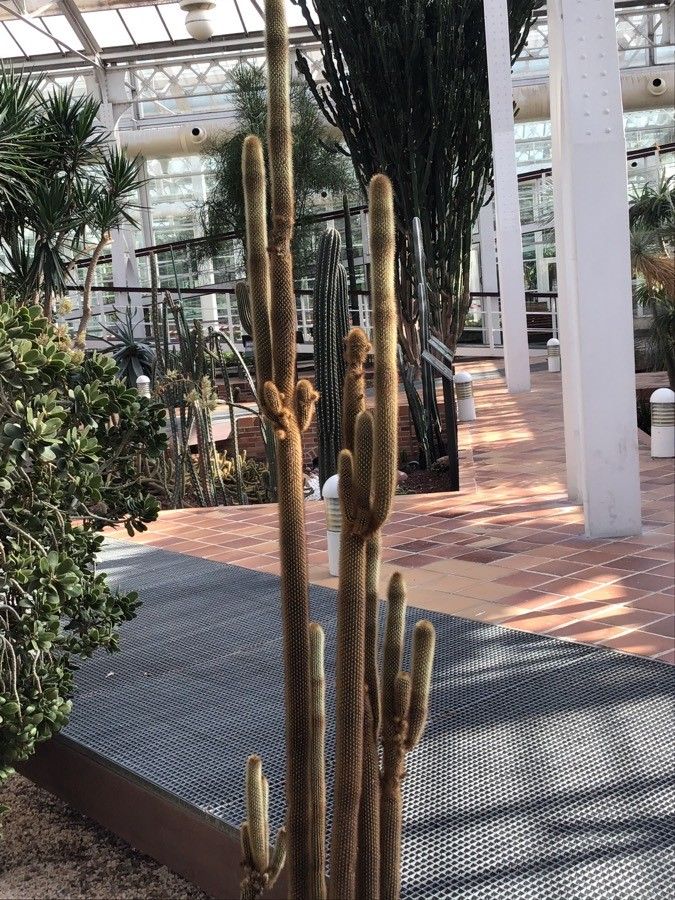
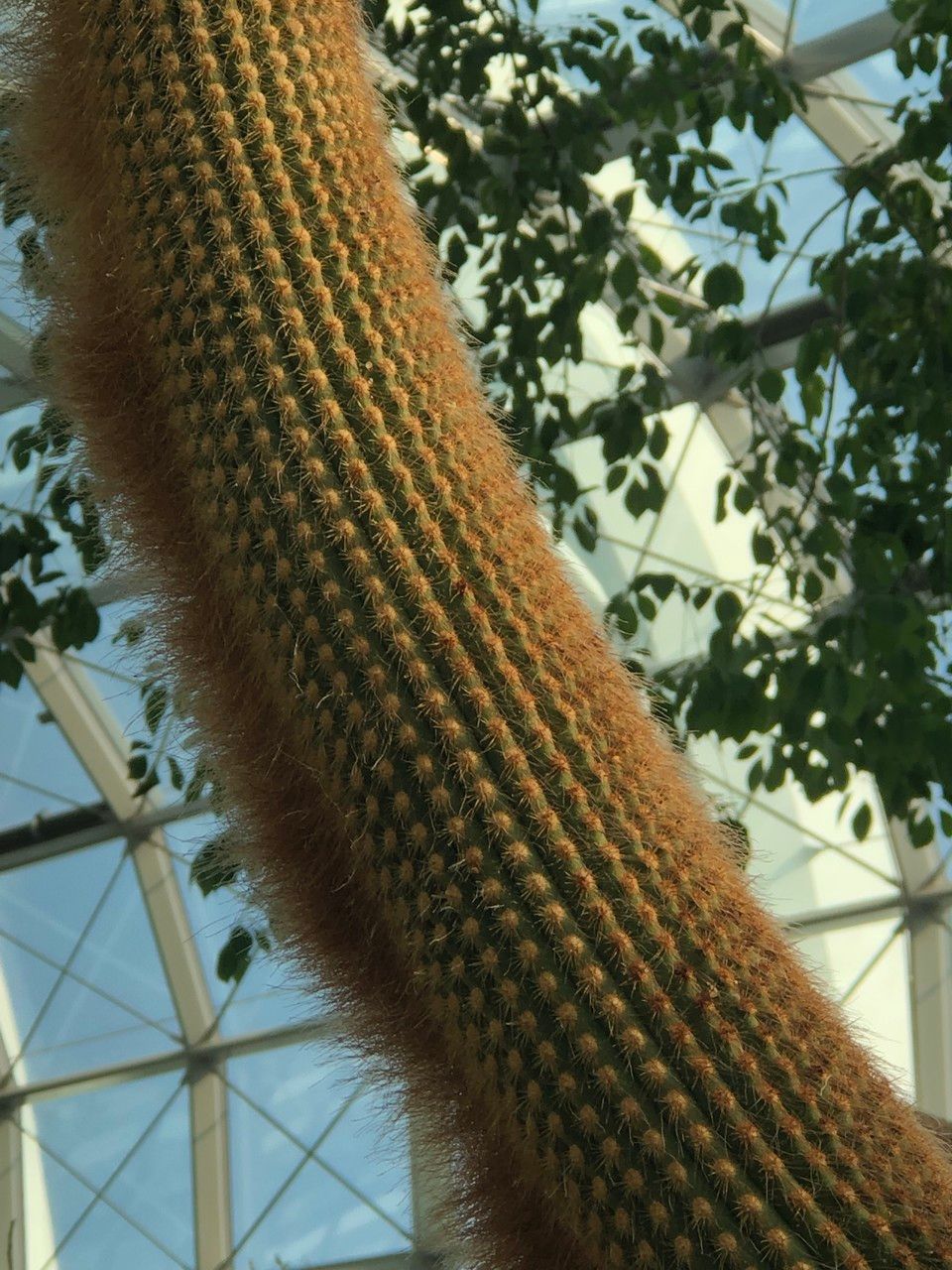
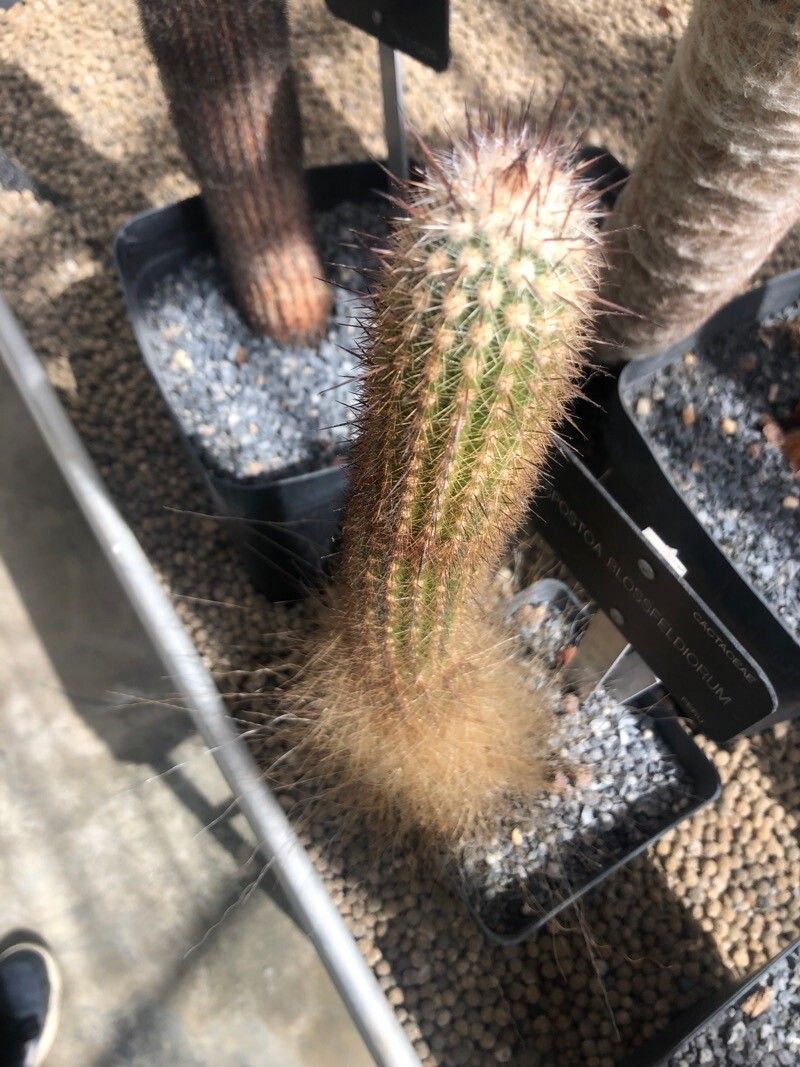
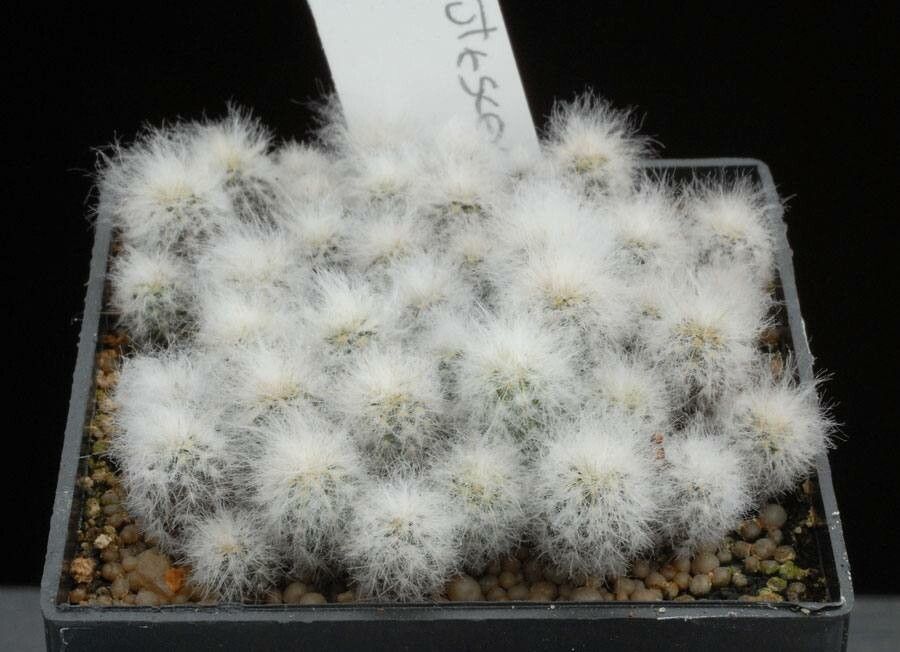
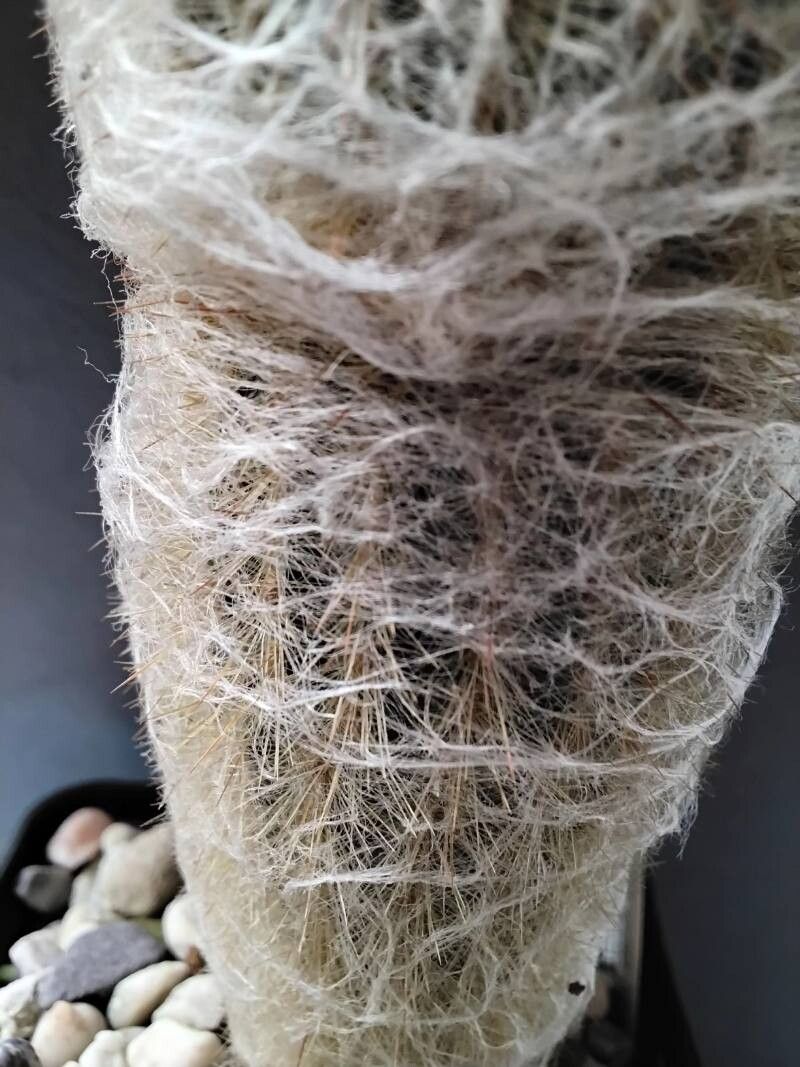
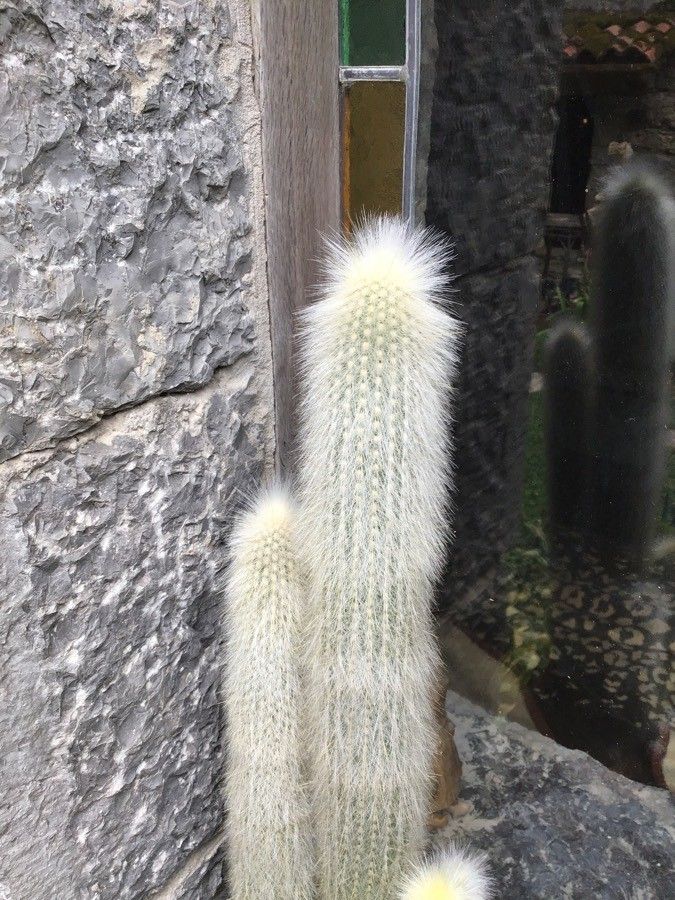
Espostoa guentheri is a species of cactus native to the Andes Mountains in South America. This columnar cactus can reach up to 10 meters in height and 20 centimeters in diameter. It features numerous ribs and spines that protect it from predators. During the summer, Espostoa guentheri produces large white flowers, which can be as wide as 10 centimeters in diameter. These flowers are followed by small red or green fruits, each containing numerous seeds. The plant thrives in well-drained soil with full sun exposure. It can withstand temperatures as low as -5°C but prefers a warmer climate ranging between 20-30°C. Espostoa guentheri has been used by indigenous people for medicinal purposes, such as treating fever, inflammation, and wounds. Additionally, it serves as a habitat for various animals, including birds and insects. Overall, Espostoa guentheri is an impressive cactus species with unique physical characteristics, making it an intriguing addition to any garden or plant collection.
Woolly cactus is fairly resistant to diseases and can tolerate regular care routines without becoming sick easily. That said, it can be vulnerable to mealybugs; these pests can inflict some harm but typically do not pose a major danger. Regarding care, Woolly cactus tolerates drought and does not need frequent watering. It can go for extended periods without water and requires little fertilizer. On the other hand, it is very prone to root rot if it receives poor light and is given too much water. In general, Woolly cactus is a good choice for people who prefer low-maintenance plants, though it remains important to know and fulfill its basic needs. It is especially appropriate for those who are often away for long stretches and might forget to water their plants regularly.
How to keep Espostoa Guentheri.
Light
The woolly cactus needs direct, unobstructed sunlight to be at its best, though it can tolerate lower light levels. Too much light can damage the plant, causing drying and scorching, while too little light can cause poor growth and prevent flowering. In its native habitat it receives abundant sunlight throughout the year.
Water
The woolly cactus, native to arid environments, is highly drought-tolerant and requires minimal watering. It only needs to be watered once every three weeks. This cactus thrives in full sunlight when grown outdoors, and it benefits from natural changes in temperature and moisture, which influence its growth cycle.
Humidity
This plant prefers dry conditions, so don't mist it. However, watering it less often can also thrive in higher humidity.
Temperature
Woolly cactus grows best in warm conditions and needs elevated temperatures during the growing season to stimulate growth and metabolism. It favors plenty of sunlight, suitable moisture, and good air circulation. However, it can be harmed by overly low temperatures and by excessive watering. It is important to maintain a balance and to avoid both excessively high heat and overly dry conditions.
Fertilizer
For Woolly cactus, light applications of fertilizer once or twice a year during the active growing season are enough. Avoid feeding it in winter and in summer when it is dormant. Use less fertilizer for plants that have been repotted and wait a couple of months after repotting before you resume fertilizing. Regular fertilization helps maintain healthy growth and promotes flowering.
Pruning
The woolly cactus needs very little pruning. To encourage healthy growth, remove any withered flowers and branches. This allows the plant to direct its nutrients to the parts that are flourishing.
Pot & Repot
Repot the woolly cactus in spring or summer, selecting a pot slightly larger than the current one with good drainage. Use a sandy or gritty cactus mix that drains well. Handle the plant carefully to avoid the spines. Let the cactus dry out before repotting to help prevent root rot. After repotting, wait for a week before watering so the roots can heal.
Botanical profile.
- Plant Type
- Succulent
- Life Cycle
- Perennial
- Genus
- Espostoa
- Family
- Cactaceae
- Hardiness Zone
- 9-11
- Mature Height
- 2.13 m
- Mature Spread
- 30 cm to 61 cm
- Leaf Color
- Green
- Leaf Type
- Evergreen
- Flower Color
- Yellow, White, Purple
- Flower Size
- 3.05 cm to 4.06 cm
- Bloom Time
- Summer
- Planting Time
- Spring, Summer
- Harvest Time
- Late summer, Early fall, Mid fall
- Native Area
- Bolivia
Other names.
Reader questions.
What are the sunlight requirements for Woolly Cactus?
Woolly cactus requires exposure to unobstructed sunlight for optimal health, thriving in full sun conditions with above 6 hours of sunlight daily. However, it can also endure partial sun conditions, receiving about 3-6 hours of sunlight. Insufficient or excessive exposure can lead to challenges for the plant, such as poor growth, no flowering, drying, or scorching. Its natural habitat enjoys ample sunlight year-round, highlighting the importance of adequate light for its well-being.
How can artificial lighting benefit indoor Woolly Cactus plants?
Artificial lighting is crucial for Woolly Cactus plants when natural sunlight is insufficient, especially during winter or in less sunny spaces. It promotes faster, healthier growth by providing the necessary light spectrum. For optimal growth under artificial light, use LED lights tailored to the plant's light requirements. Full sun plants need 30-50W/sq ft, partial sun plants require 20-30W/sq ft, and full shade plants need 10-20W/sq ft. The light source should be placed 12-36 inches above the plant, mimicking natural sunlight conditions for 8-12 hours per day.
What are the symptoms of inadequate light exposure for Woolly Cactus?
Woolly Cactus exposed to insufficient light may show various symptoms indicating light deficiency. These include smaller new leaves, leggy or sparse growth due to elongated spaces between leaves or stems, faster leaf drop as the plant conserves resources, slower or halted growth as it enters survival mode, and lighter-colored or chlorotic new leaves indicating a lack of chlorophyll. Excessive sunlight can cause symptoms like sunscald, leaf curling as a defense mechanism, wilting from increased water loss, and leaf scorching characterized by brown, dry edges on leaves.
What solutions are available for Woolly Cactus experiencing poor light conditions?
To address poor light conditions, gradually adjust your Woolly Cactus to sunnier locations. Indoors, this can be achieved by moving the plant closer to a south-facing window or using artificial light, such as desk lamps or professional grow lights, for at least 8 hours daily. Outdoors, move plants to spots with more sunlight gradually to prevent sunburn. Removing obstructions or transplanting smaller plants to sunnier locations with good drainage can also help. Although parts of the plant affected by insufficient light may not recover, new growth should be healthy with improved light conditions.