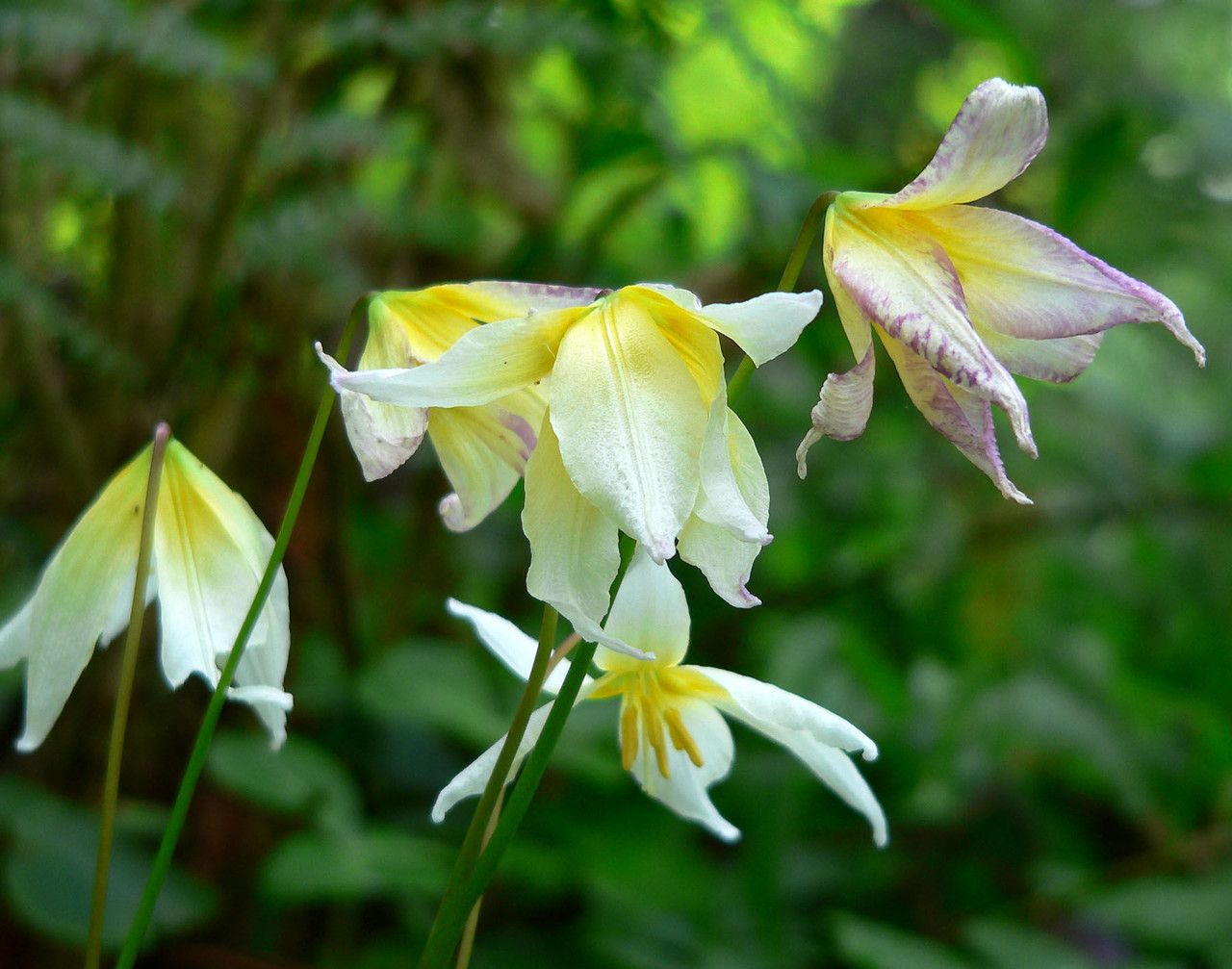
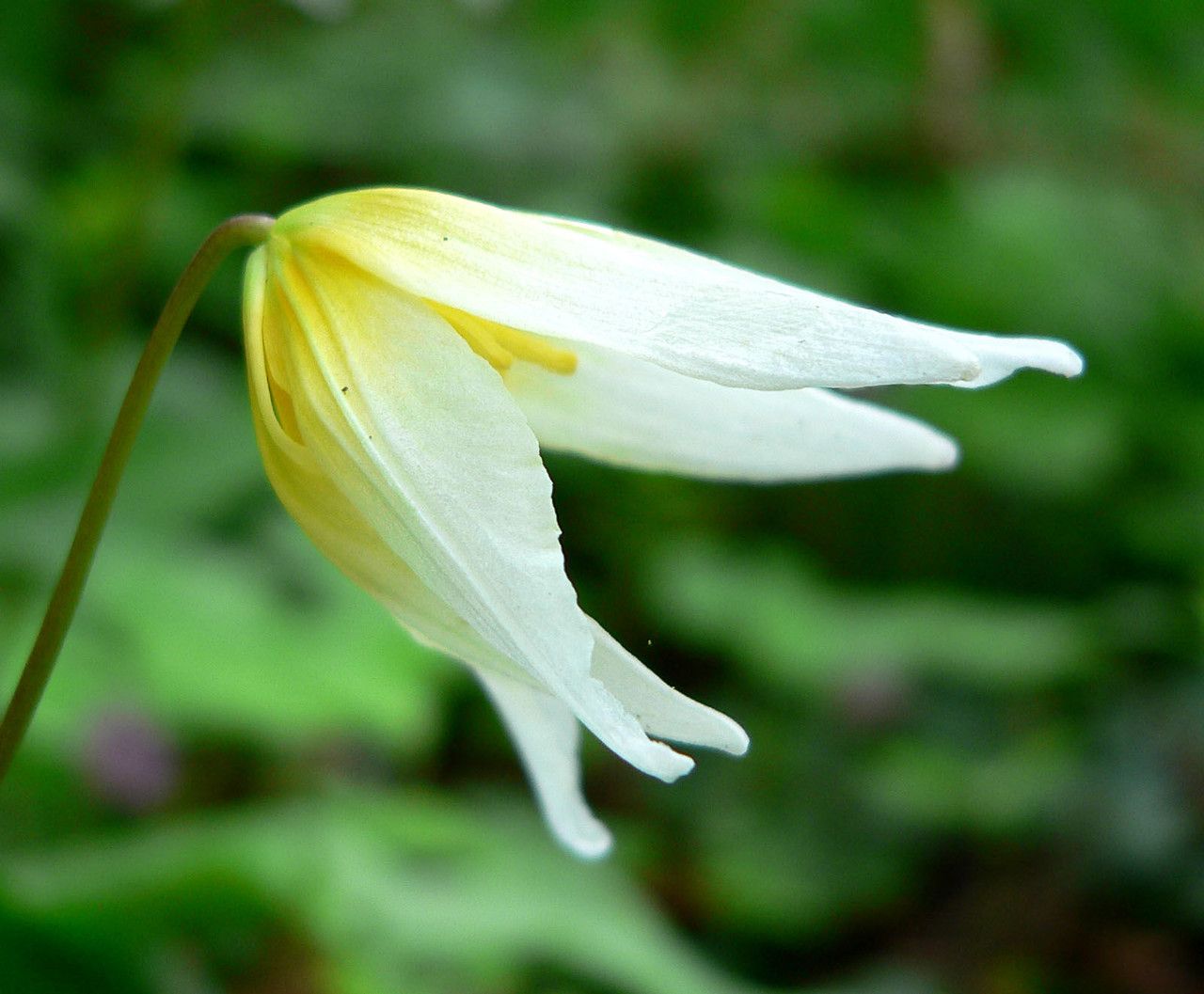
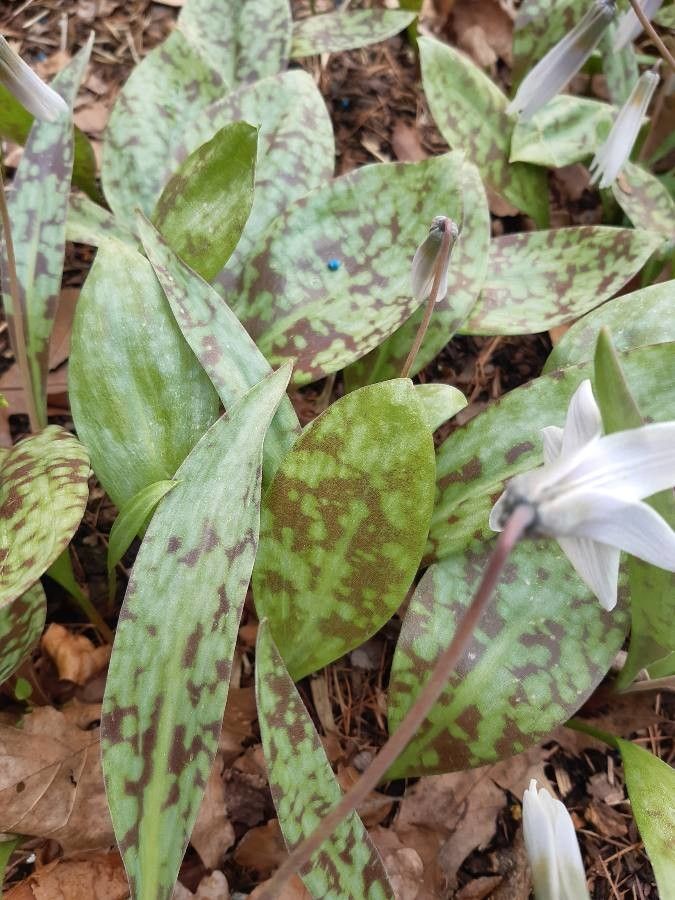
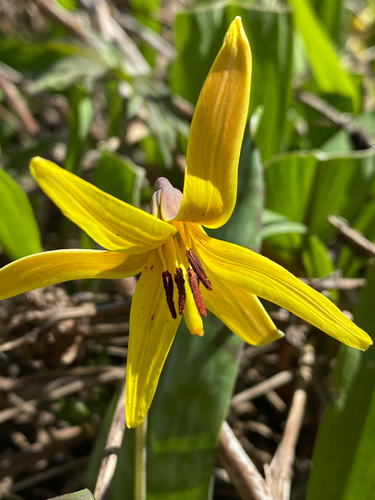
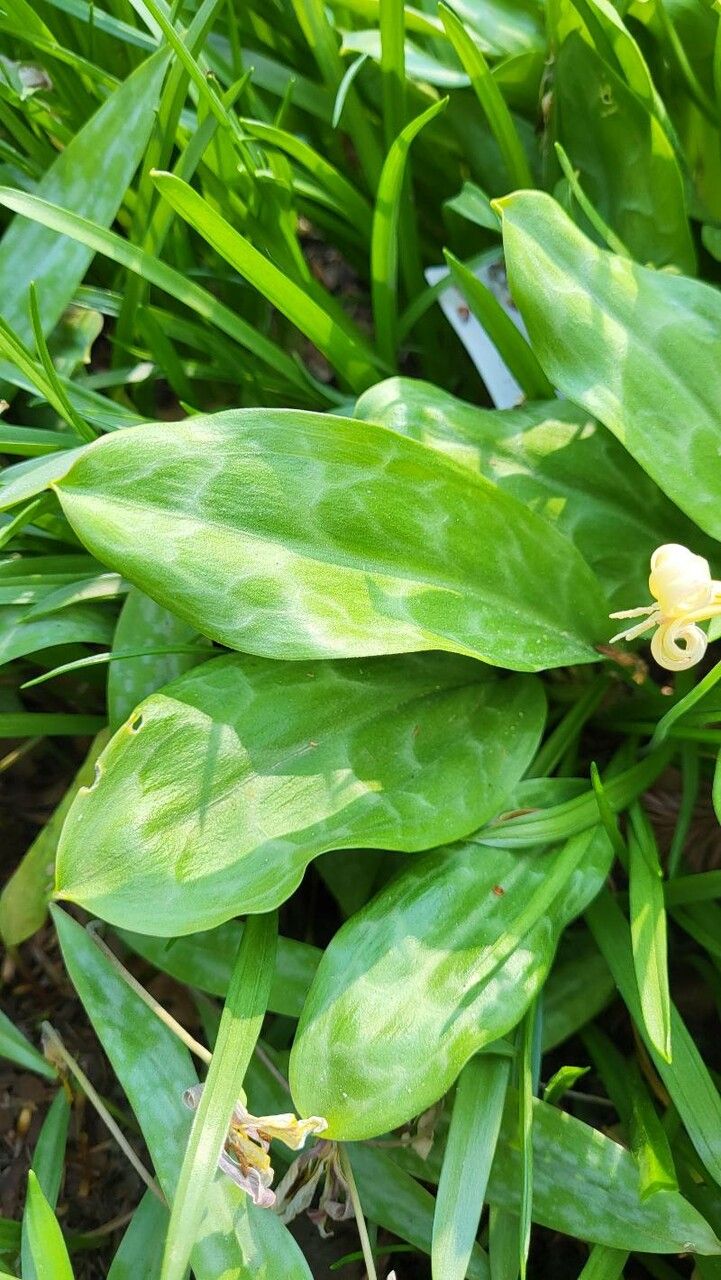
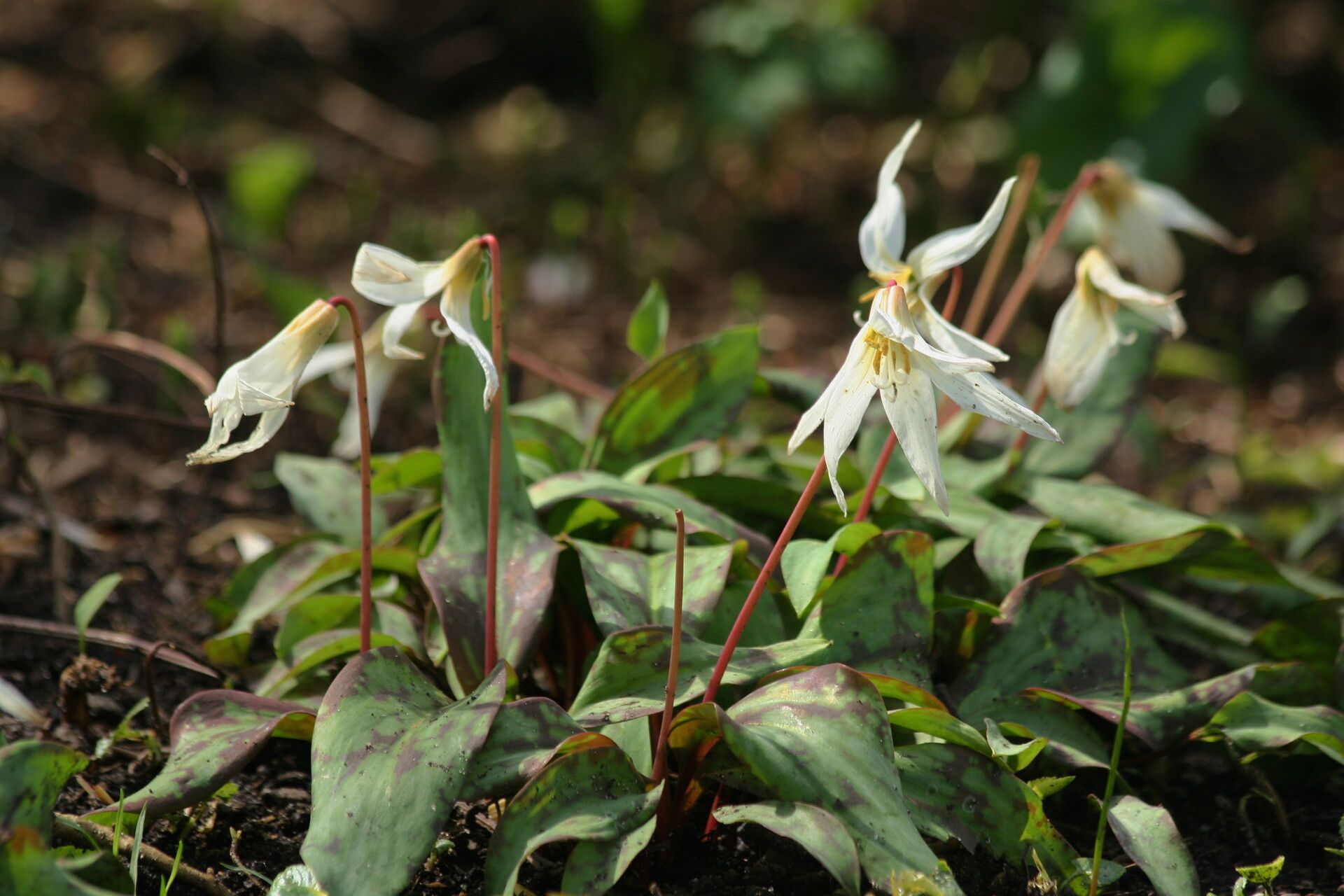
Erythronium helenae is a species of flowering plant in the lily family which is known by the common names Pacific fawn lily and St. Helena fawn lily. It is endemic to the coastal mountains north of the San Francisco Bay Area in California. It is named for the local peak Mount Saint Helena, forming the point where Napa, Sonoma and Lake Counties meet. It grows on the slopes of the mountain at elevations of 500–1200 m, often on serpentine soils.Erythronium helenae grows from a bulb 3 to 5 centimeters wide and produces two wide leaves up to 20 centimeters long which are green mottled with brown or white. It produces erect stalks up to 30 centimeters tall, each bearing one to three flowers. The flower has white tepals with yellowish bases 3 or 4 centimeters long. The tepals develop pink or purple streaks or mottling as they age. The flower has yellow stamens with large yellow anthers.
Napa fawn lily has moderate resistance to disease but can be prone to problems like leaf spot. Its vulnerability to insect pests varies by variety, although most cultivars are relatively less resistant to pests. For care, Napa fawn lily requires regular watering and fertilization, and yellow leaves should be pruned frequently. It is important to treat pests and diseases when they appear and to harvest the plant promptly. Napa fawn lily is suitable for people who can commit some time and effort to regular maintenance.
How to keep Erythronium Helenae.
Light
Napa fawn lily comes from habitats such as forest understories or rocky areas with natural shade. It prefers partial sunlight, though it can tolerate full sun when required. This flexibility lets it prosper under different levels of sunlight.
Water
The Napa fawn lily thrives in moist woodland environments and prefers consistent humidity. For optimal growth, it should be watered twice a week to maintain the right balance of moisture. This makes it particularly well-suited for outdoor cultivation, where it can also benefit from seasonal rainfall.
Temperature
For Napa fawn lily, moderate temperatures are preferable, similar to what people typically find comfortable. It performs best in conditions that are neither excessively hot nor excessively cold. The primary problem with high temperatures is the risk of sunburn, so providing some shade in summer is recommended to prevent overheating. When temperatures decline, Napa fawn lily enters dormancy. If continual growth is wanted, warmer conditions must be maintained through the winter. Frost can injure the plant and should be avoided.
Fertilizer
Napa fawn lily plants do well with one or two applications of natural organic fertilizers containing potassium and phosphorus. Apply the fertilizer before planting, work it into the soil and water thoroughly. Usually a single application is enough, but a second can be made once seedlings are established. Avoid overusing fertilizer to prevent damage to the plants.
Pruning
The Napa fawn lily requires minimal pruning for optimal growth. To improve the plant's health and appearance, focus on removing spent flowers and yellowing leaves from early to late spring. Regular light pruning can help manage disease and encourage blooming. For the best results, consult reliable horticultural guides to learn optimal techniques while minimizing disturbance to the plant.
Botanical profile.
- Plant Type
- Herb
- Life Cycle
- Perennial
- Genus
- Erythronium
- Family
- Liliaceae
- Hardiness Zone
- 3-7
- Leaf Type
- Deciduous
Other names.
Reader questions.
What are the sunlight requirements for a Napa fawn lily?
Napa fawn lily (Erythronium helenae) thrives in conditions of full shade, meaning it requires less than 3 hours of sunlight daily. It is important to observe how sunlight moves through your garden throughout the day to find spots that offer the ideal balance of light and shade. This careful selection will help ensure the happiness and health of your Napa fawn lily by providing it with the optimal growing conditions.