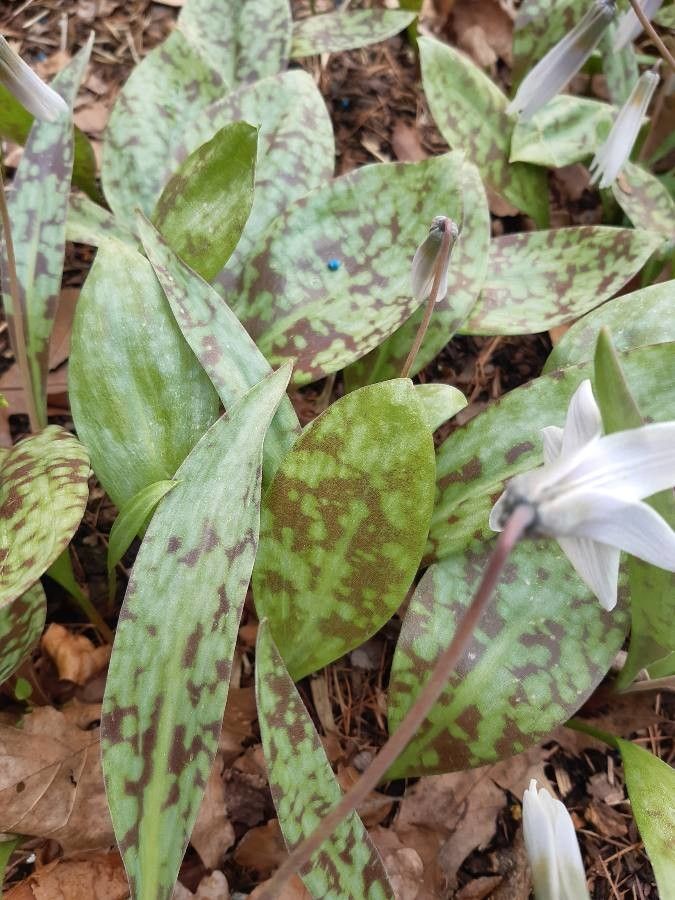
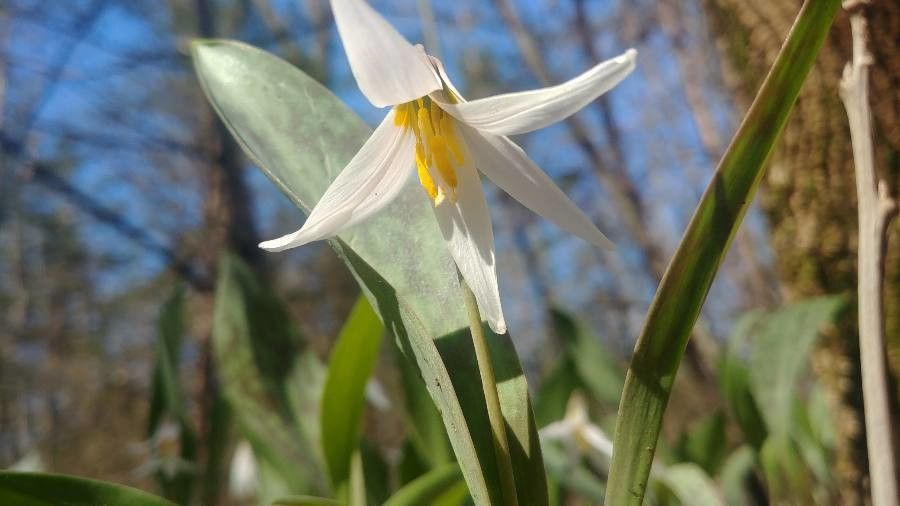
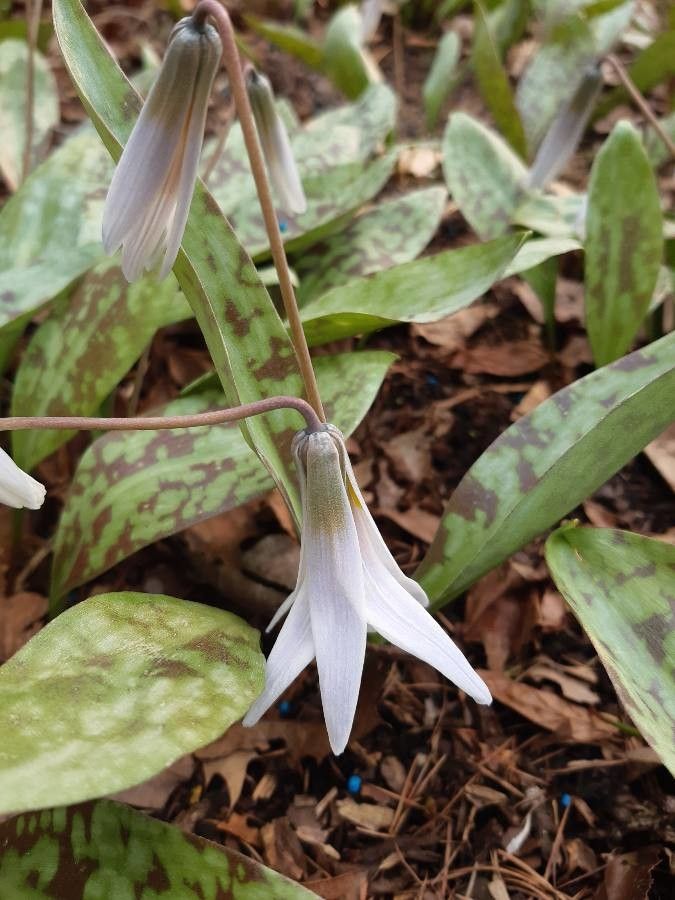
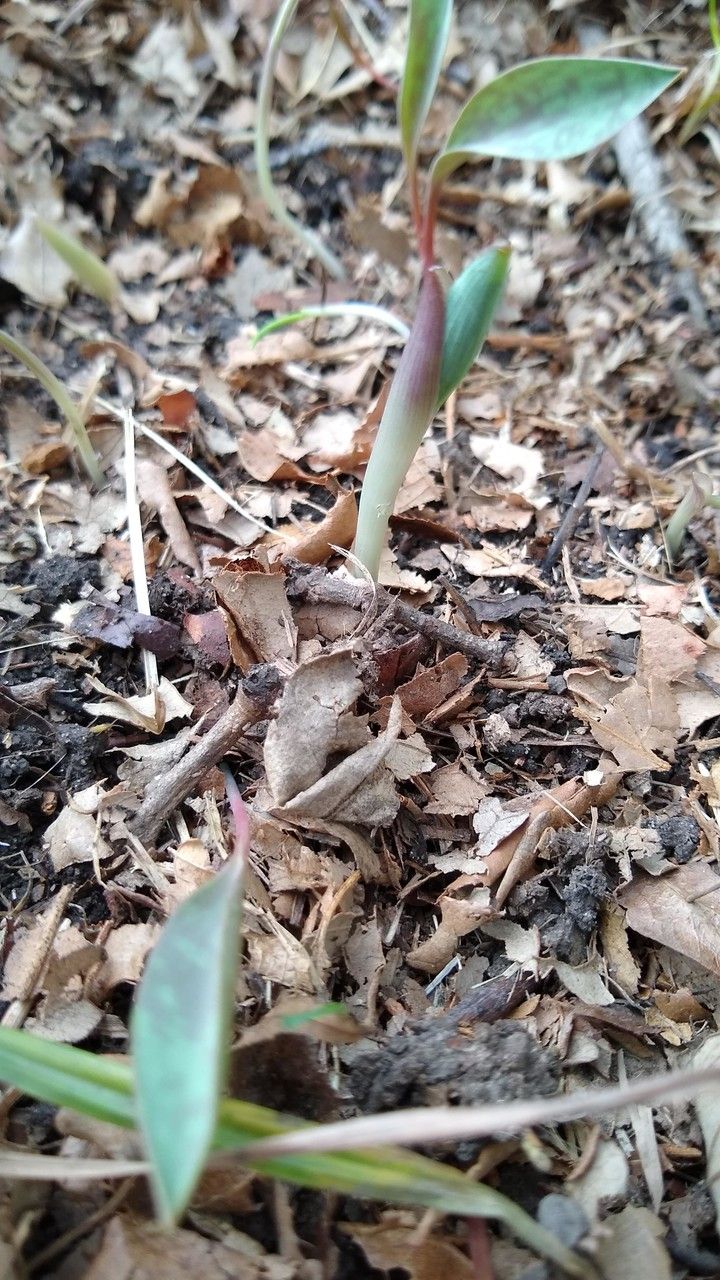
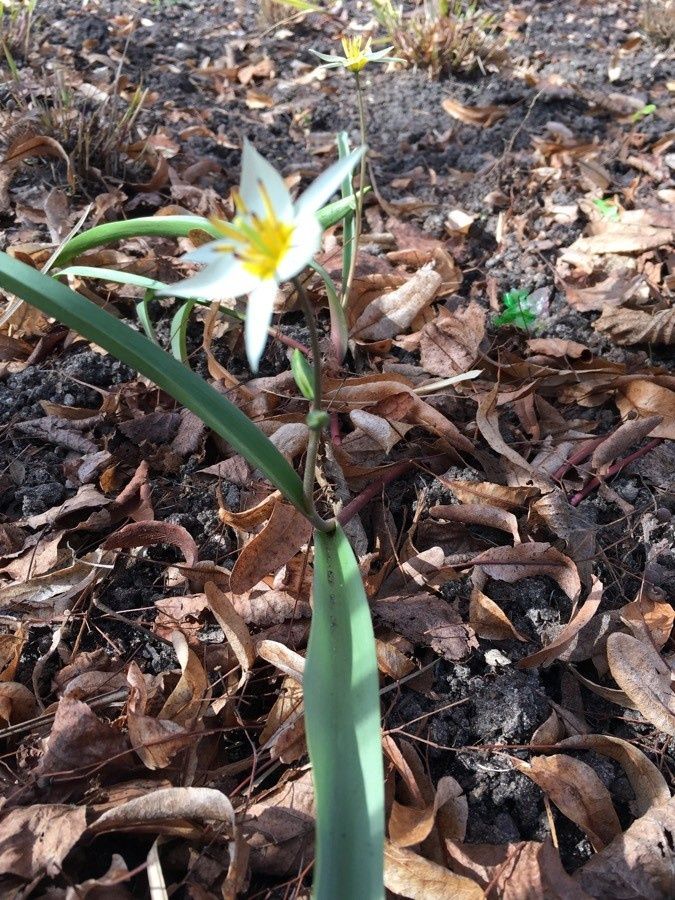
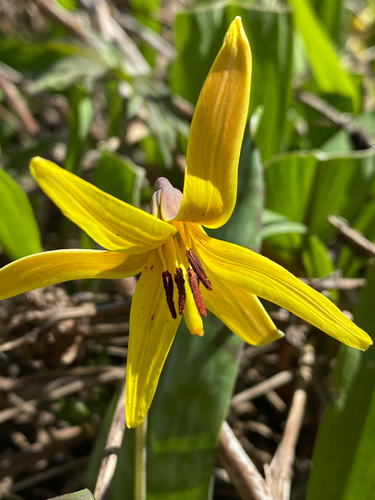
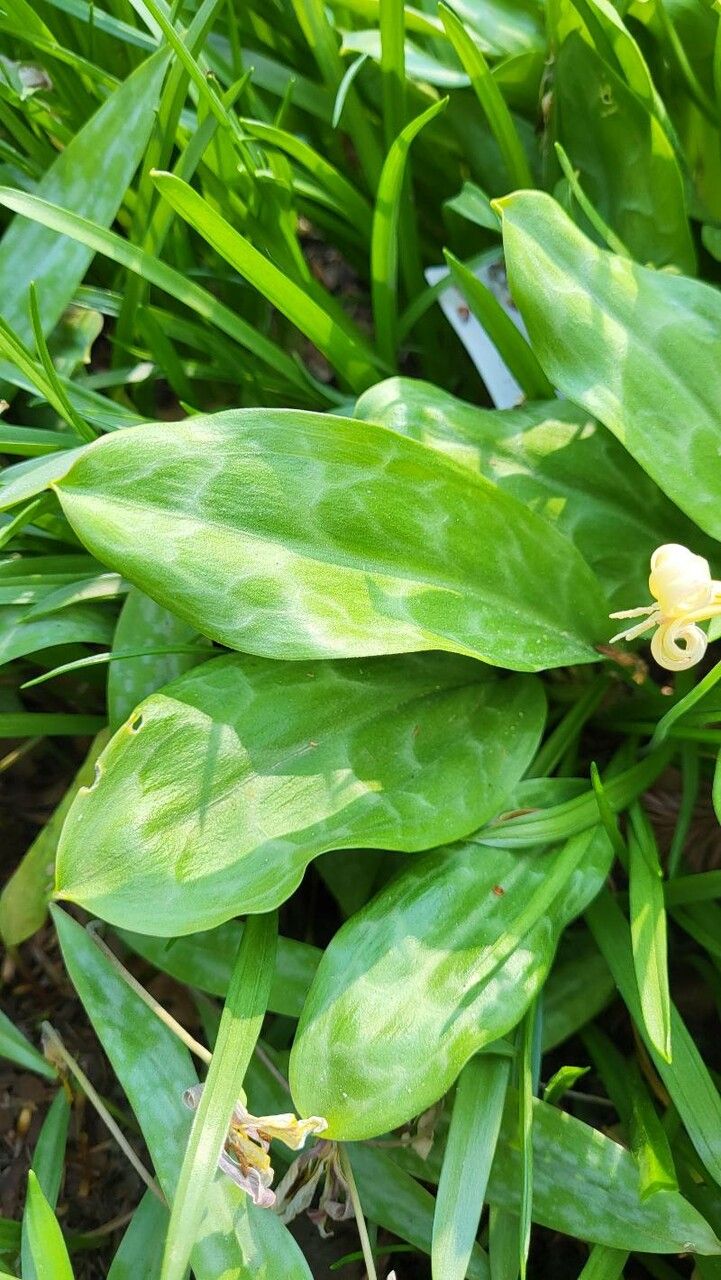
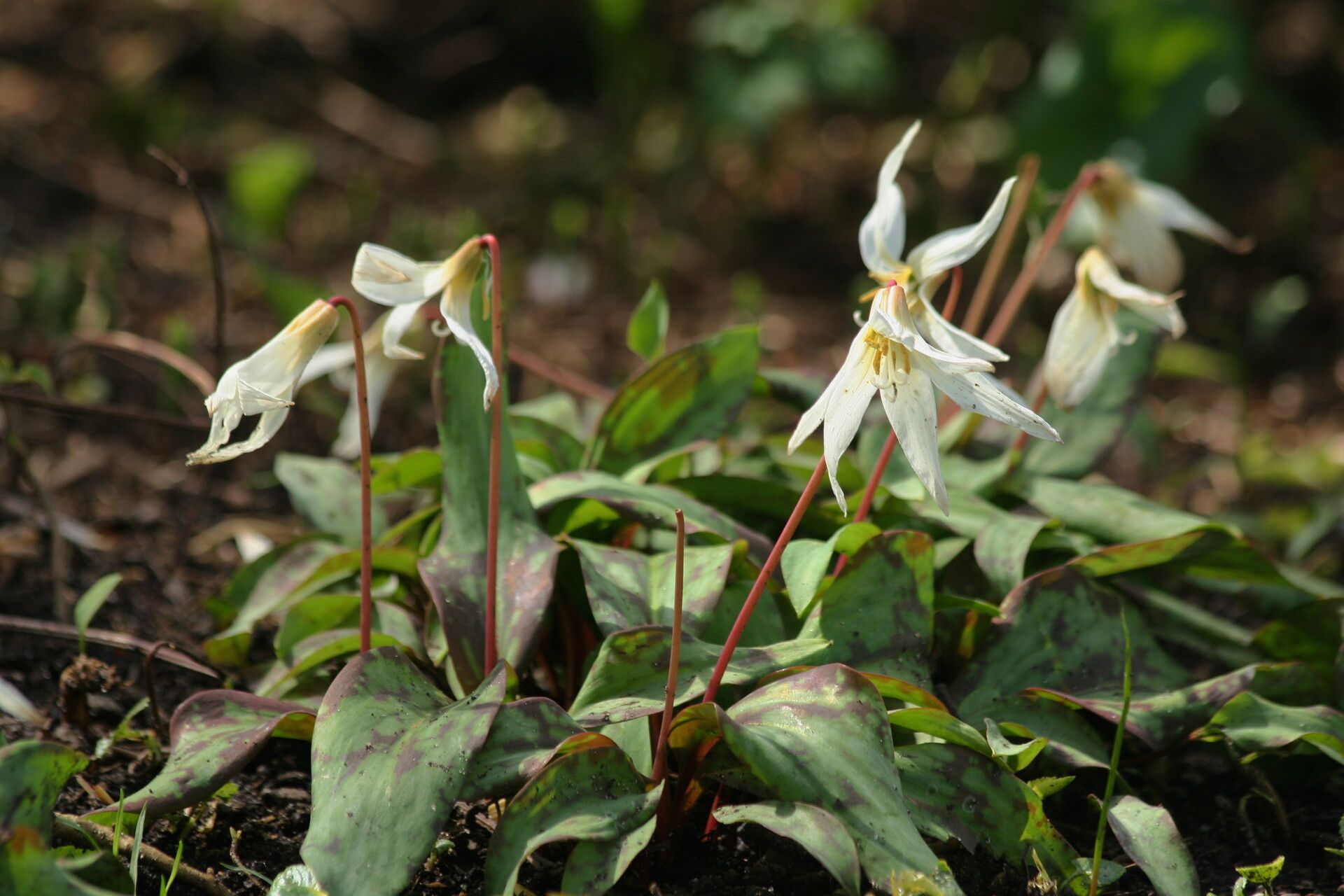
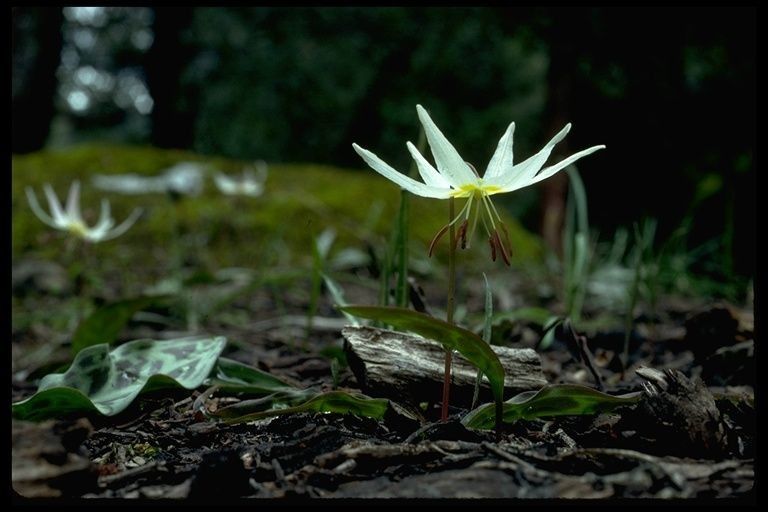
Erythronium albidum, commonly known as the white fawn lily, is a perennial plant native to North America. Belonging to the Liliaceae family, it is celebrated for its beautiful white flowers that bloom in early spring. The plant typically reaches a height of up to 30 cm and has two basal leaves that are green with brown spots.
The white fawn lily thrives in moist, well-drained soil and prefers partial shade. It can commonly be found in woodlands, meadows, and along streams, ranging from California to British Columbia in the western United States.
The bell-shaped flowers of Erythronium albidum feature six petals that curve backward. These flowers, usually 2-3 cm wide, emit a sweet fragrance that attracts pollinators such as bees.
Historically, Native American tribes have used the plant for its anti-inflammatory properties. However, it is important to note that the entire plant is toxic if ingested by humans or animals.
Overall, Erythronium albidum is a stunning addition to any garden or natural area, thanks to its delicate white flowers and uniquely spotted leaves.
White fawnlily has moderate resistance to disease but can be prone to issues such as leaf spot. Its vulnerability to insect pests varies with the variety, though most varieties are not very resistant to pests. For care, White fawnlily requires regular watering and fertilization, along with frequent removal of yellow leaves. It is important to manage pests and diseases when they occur and to harvest the plant promptly. White fawnlily is appropriate for people who can invest some time and energy in regular maintenance.
How to keep Erythronium Albidum.
Light
White fawnlily does well with moderate sunlight but can also tolerate shade. Its growth is not impeded in areas with less sun, since it originates from habitats with ample tree cover. Too much sun may cause wilting, while low light generally does not greatly affect its health.
Water
The white fawnlily flourishes in moist, woodland-like environments, needing evenly moist soil for best growth. Water it weekly to keep the desired moisture levels, but remember that it's moderately drought-tolerant once established. As an herbaceous perennial, natural rainfall helps sustain its growth rhythm in outdoor settings.
Temperature
White fawnlily is naturally adapted to cool, temperate conditions and grows best at temperatures between 41 and 89.6 °F (5 and 32 °C). To ensure optimal growth, adjust temperatures by season, providing cooler conditions in winter and warmer ones in summer.
Fertilizer
White fawnlily species do well with one or two applications of natural organic fertilizers that contain potassium and phosphorus. Apply the fertilizer before planting, work it into the soil, and water thoroughly. Usually a single application is enough, but you can apply a second dose once seedlings are established. Avoid overusing fertilizer, as excessive amounts can damage the plants.
Pruning
The white fawnlily is a spring-blooming bulb known for its delicate white flowers. To promote healthy growth and enhance its appearance, prune the spent blooms and any damaged foliage in early to mid-spring, right after the flowering period. This practice not only improves airflow and reduces pest issues but also helps the plant allocate energy towards producing vibrant flowers in the next season.
Botanical profile.
- Plant Type
- Herb
- Life Cycle
- Perennial
- Genus
- Erythronium
- Family
- Liliaceae
- Hardiness Zone
- 4-8
- Mature Height
- 10 cm to 15 cm
- Mature Spread
- 6 cm to 15 cm
- Leaf Color
- Green, Purple
- Leaf Type
- Deciduous
- Flower Color
- White
- Flower Size
- 3.05 cm to 4.06 cm
- Bloom Time
- Early spring, Mid spring
- Planting Time
- Autumn
- Harvest Time
- Late spring, Early summer
- Native Area
- Central and southern Europe
Other names.
Reader questions.
How should I water my White fawnlily?
The White fawnlily has specific preferences for its water needs and how it is provided. It is important to use the proper watering technique to avoid damaging your tomatoes. The best method is to apply water directly to the soil, in a slow and gentle manner. Avoid pouring all the water at once or doing overhead watering for the White fawnlily. Additionally, water slowly but make sure to water deeply to ensure sufficient moisture for the soil in which the White fawnlily grows.
Why should I put fertilizer on my White fawnlily plant?
White fawnlily is known for its fast growth and high energy usage in producing root vegetables. In addition to sunlight, oxygen, and water, White fawnlily species also need nutrients to thrive and develop roots. Usually, these nutrients are readily available in garden soil due to the decomposition of organic matter. However, there are instances where the soil lacks sufficient nutrients for optimal White fawnlily growth. In these situations, fertilizer can give the needed boost to support healthy White fawnlily growth.
What are the sunlight requirements for White Fawnlily?
White Fawnlily (Erythronium albidum) thrives in conditions ranging from moderate sunlight to shade, originating from environments rich in tree cover. It requires about 3-6 hours of sunlight per day (partial sun) but can also grow in areas receiving less than 3 hours of sunlight (full shade). Overexposure to sunlight may lead to wilting, while insufficient light doesn't significantly impact its health adversely. It's crucial to observe how sunlight moves through your garden and select planting spots that offer an ideal balance of light and shade.
What are the ideal temperature conditions for growing White fawnlily?
White fawnlily is best accustomed to cool and temperate environments, thriving in temperatures between 41 to 89.6 °F (5 to 32 °C). To ensure optimal growth, it's important to regulate the temperatures according to the season, offering cooler conditions during the winter and warmer conditions in the summer. The plant prefers relatively warm temperatures, with a critical point being to maintain temperatures above 5°C during winter cultivation to benefit growth. Furthermore, it's advisable to protect the plant from freezing damage by keeping the minimum temperature above the freezing point and considering indoor protection or a temporary greenhouse when outdoor temperatures drop to -5°C (25°F).
What should I do if I give my White fawnlily too much or too little water?
If you have overwatered your White fawnlily and are worried about disease, take immediate action. The best way to deal with an overwatered White fawnlily is to remove it from its current spot. Let the roots dry a bit before replanting it in a new location with well-draining soil. If you grow it in pots, you might consider using a pot with more or bigger drainage holes. On the other hand, if you underwater it, simply water it more frequently.
When should I fertilize my White fawnlily?
To prepare your soil for planting, apply natural fertilizer. There is no strict timeframe, but ensure you have enough time to mix the fertilizer into the soil and water it well before planting seeds or seedlings. Usually, one application of fertilizer is sufficient to maintain healthy growth of White fawnlily throughout the season. However, if you desire higher yields, you can apply an additional round of fertilizer once the seedlings have established themselves. Just be cautious not to use excessive fertilizer that may harm the plants.
How does artificial lighting benefit indoor White Fawnlily plants?
For indoor White Fawnlily plants where natural sunlight is limited, especially during winter or in less sunny spaces, artificial lighting can be a crucial solution for optimal growth. Choosing the right type of artificial light, such as LED lights, is important as they can provide specific wavelengths needed by the plants. The amount of artificial light required varies based on the plant's sun needs; full sun plants need 30-50W/sq ft, partial sun plants 20-30W/sq ft, and full shade plants 10-20W/sq ft. Additionally, the light source should be placed 12-36 inches above the plant to mimic natural sunlight, and the duration should match the natural daylight hours, typically 8-12 hours per day.
How does White fawnlily react to low temperatures?
White fawnlily has a moderate tolerance to low temperatures, ideally growing between 5°C and 32°C. It is crucial to keep the plant above -25°C during winter to avoid cold damage. Exposure to temperatures below -30°C can lead to changes in leaf color, including darkening, and in severe cases, results in water-soaked necrosis, wilting, and drooping with the leaves turning brown. Affected plants should have the frost-damaged parts trimmed away and be moved immediately indoors to a warmer environment or be shielded by a makeshift greenhouse. It is beneficial to place the plant near a south-facing window for sunlight or use supplementary lighting if sunlight is insufficient.
How many times should I water my White fawnlily?
White fawnlily needs a lot of water during the growing season. To meet this need, you should water it early and often in the spring and summer. In the beginning of the growing season, water it once or twice per week. As the season goes on, increase the frequency of watering. In the summer, you may need to water it twice per day or even more, depending on the weather. Once the major growth phases are over, you can reduce watering to about once per week until the end of the growing season.
When is the best time to not put fertilizer on my White fawnlily?
To ensure effective fertilization, remember to avoid applying fertilizer when the soil is dry. After fertilizing, make sure to water your plants thoroughly as this helps deliver the nutrients properly. If you prioritize the growth of foliage over the root crops, then high-nitrogen fertilizers might be suitable for you. However, take care not to let fertilizer come into contact with the base of the plant, leaves, or stems as it can potentially damage them.
What are the symptoms of inappropriate lighting for White Fawnlily?
White Fawnlily may exhibit several symptoms when exposed to inappropriate light conditions. These include smaller new leaves, leggy or sparse growth, faster leaf drop, slower or halted new growth, lighter-colored new leaves due to insufficient sunlight, and symptoms of excessive sunlight exposure such as chlorosis (leaves turning yellow), sunscald, leaf curling, wilting, and leaf scorching. These signs indicate the plant's struggle with either too much or too little light.
How should White fawnlily be cared for during high temperatures?
In the summer, it is important to ensure that White fawnlily's environment is kept below 32°C to prevent the plant from overheating. When temperatures rise above 35°C, the plant's growth may slow, its leaves can lighten in color, and it may become more prone to sunburn. In such cases, sunburned or dried parts should be removed, and the plant should be repositioned to a location with afternoon shade. To maintain health, it's also advised to water the plant in the morning and evening, keeping the soil moist.