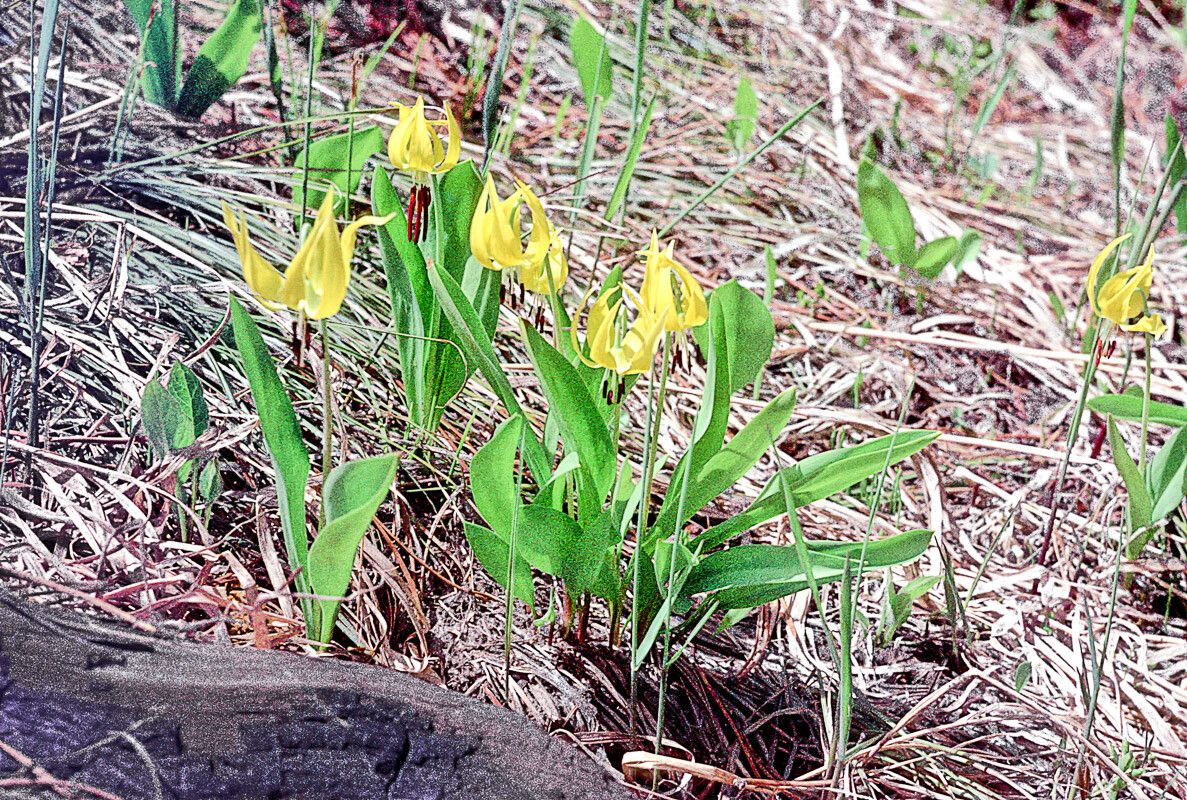
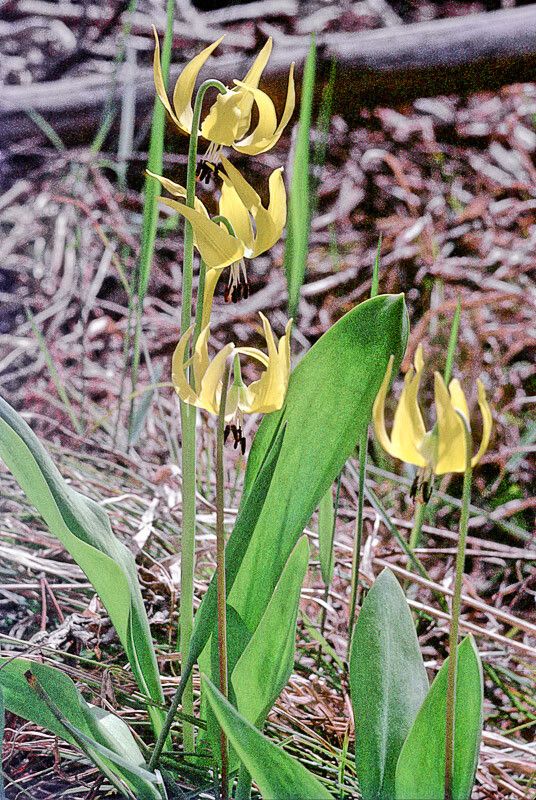
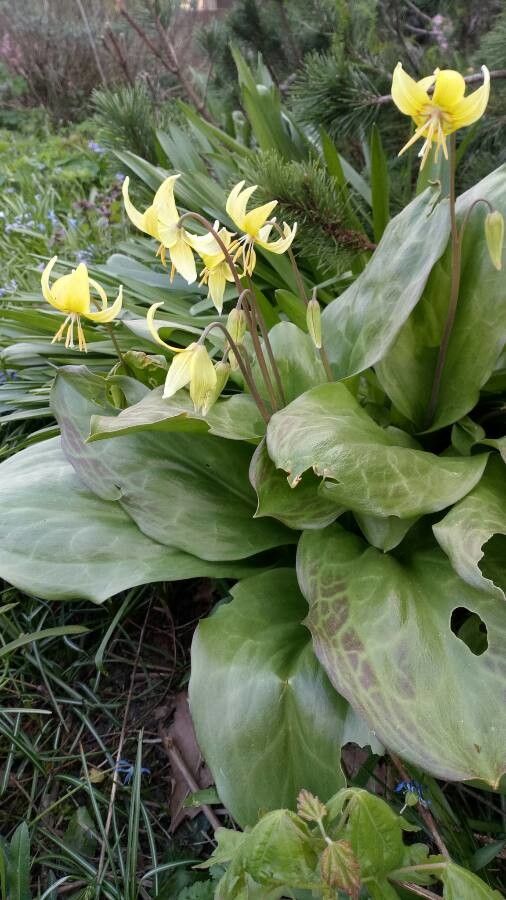
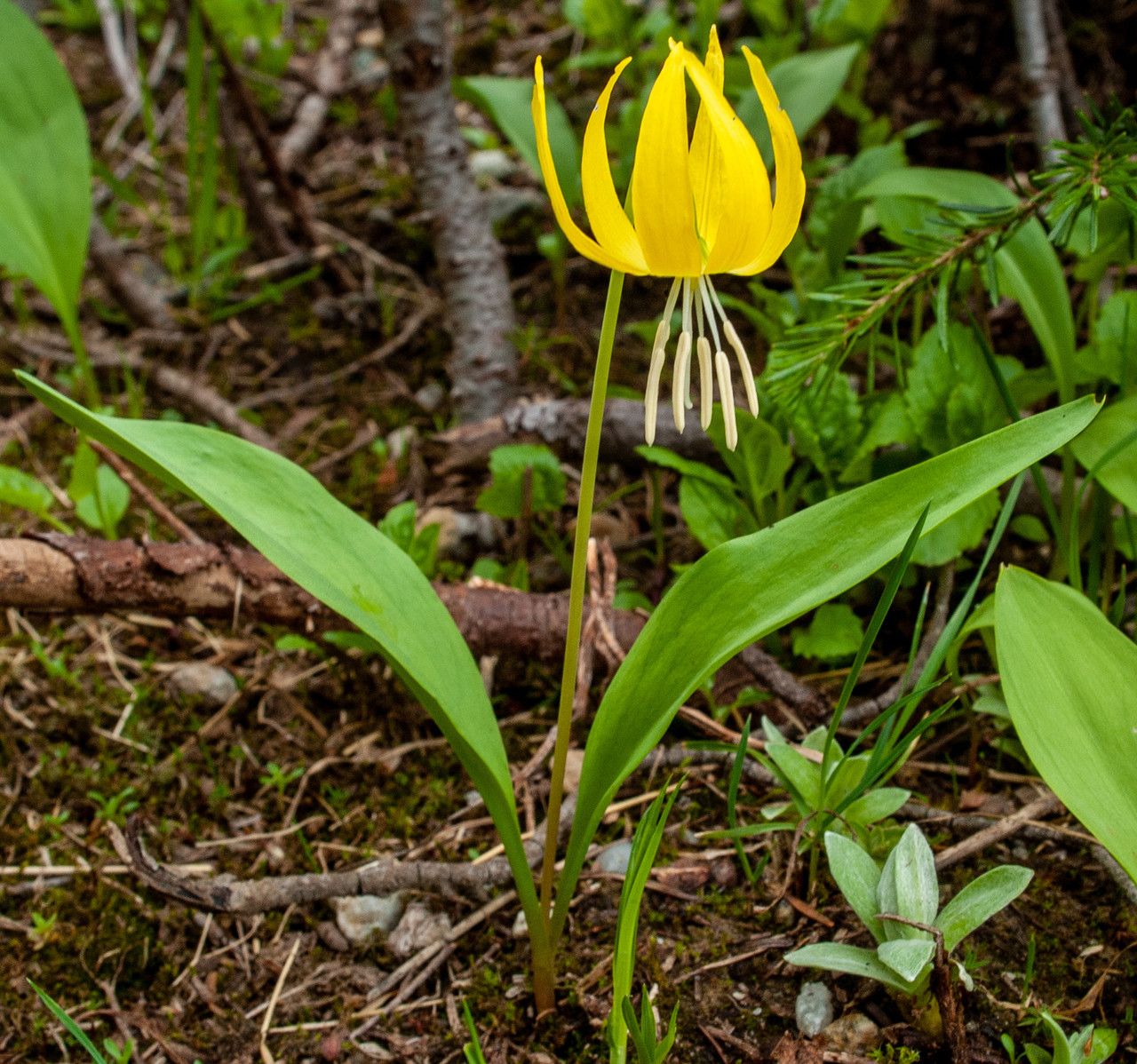
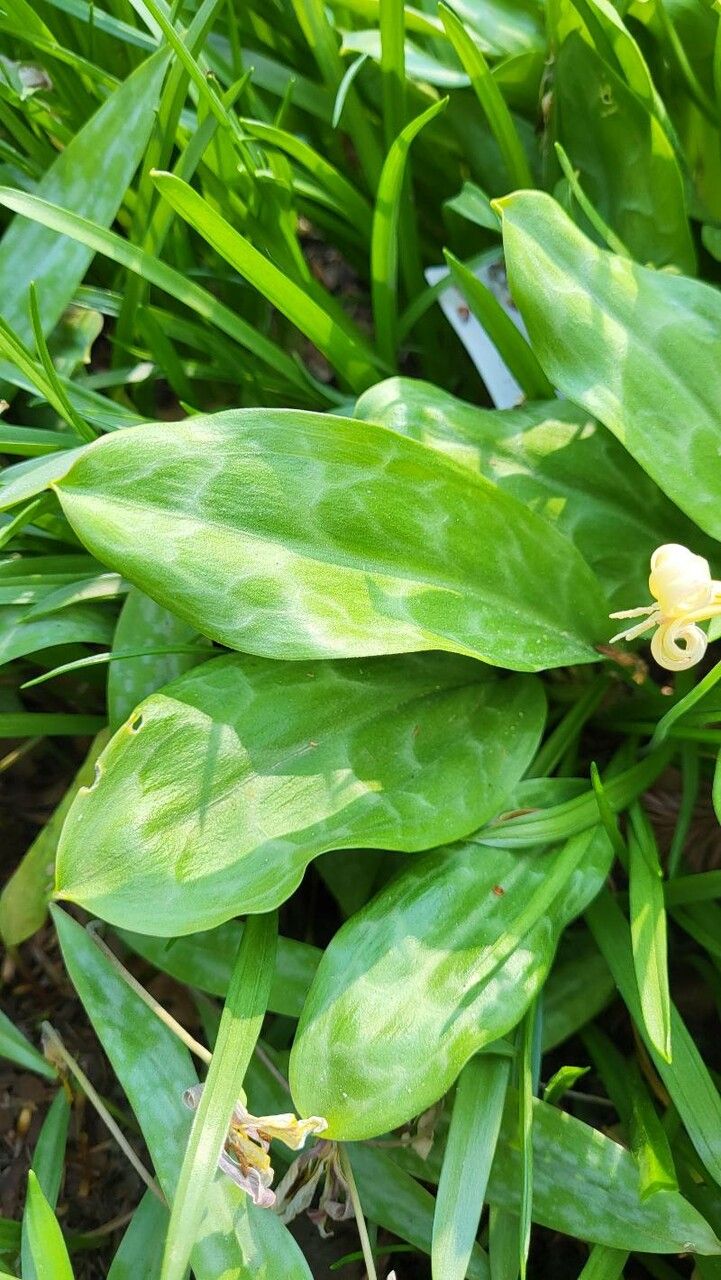
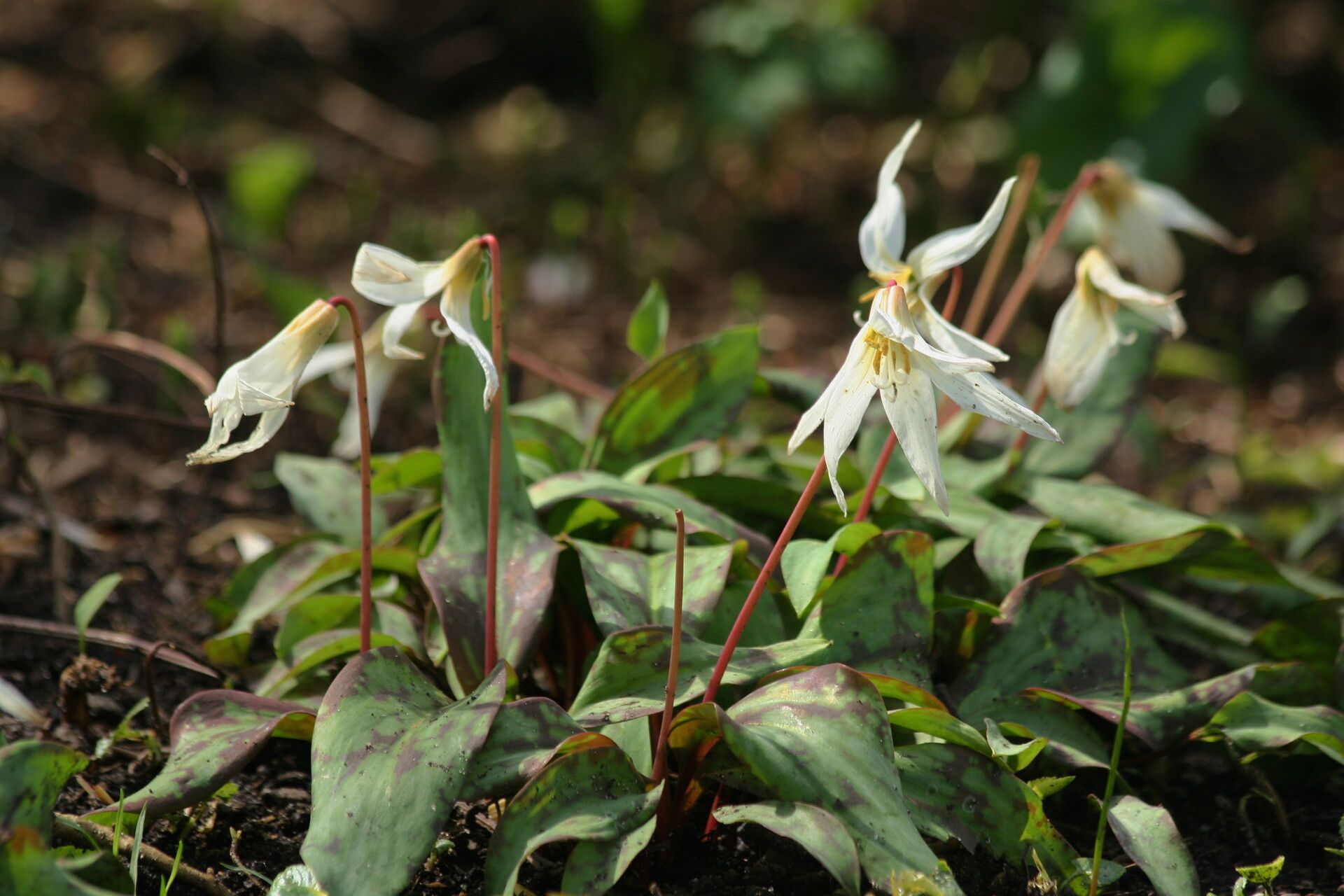
Erythronium grandiflorum, commonly known as the glacier lily or avalanche lily, is a perennial plant species in the Liliaceae family. Native to western North America, it thrives in alpine and subalpine meadows as well as moist forests.
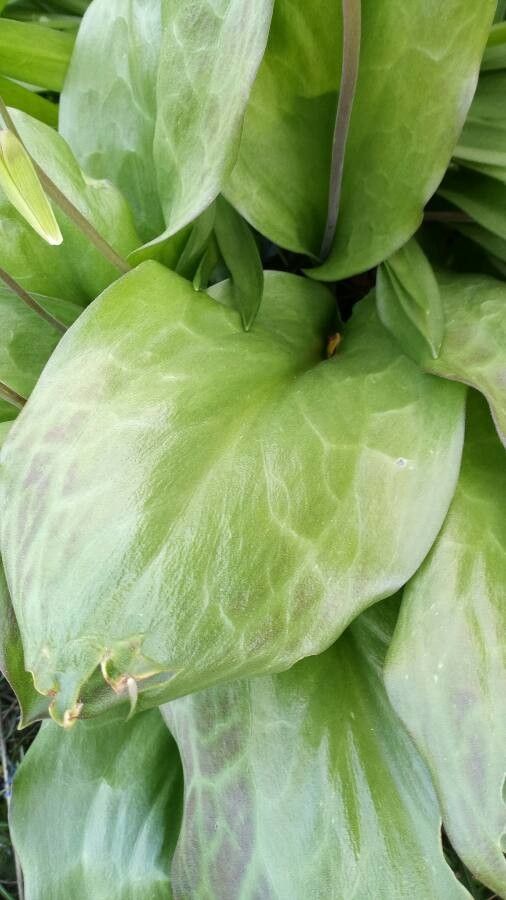
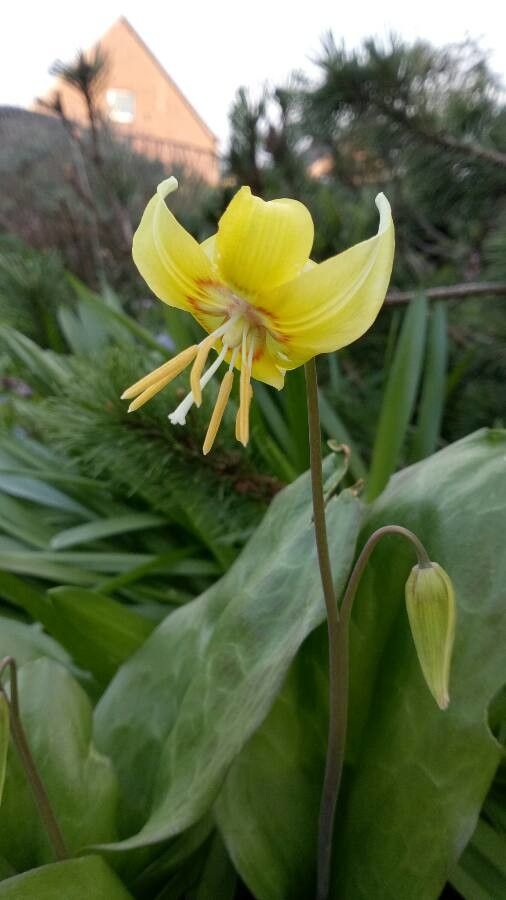
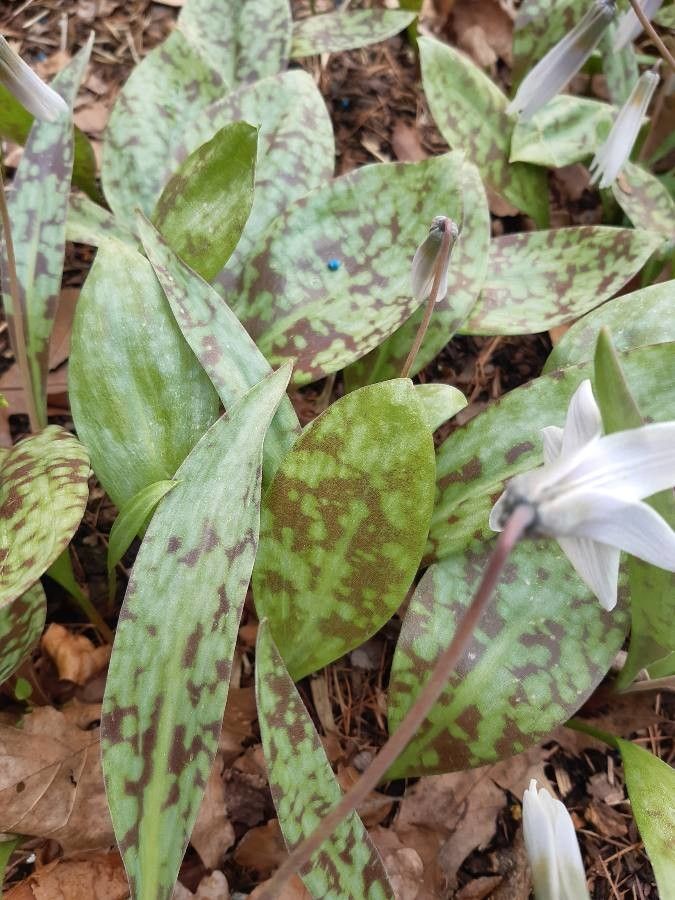
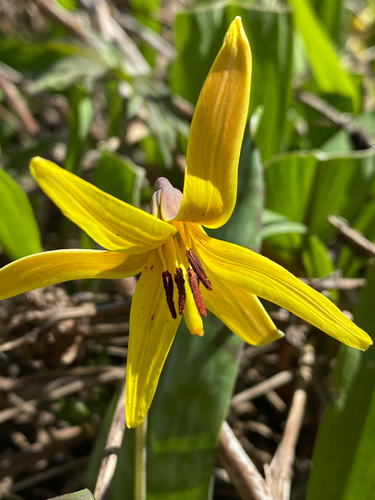
Typically growing up to 15 cm tall, the plant has one or two lance-shaped basal leaves with a smooth surface. These green leaves are often marked with brownish-purple spots. The flowers of Erythronium grandiflorum are large and showy, measuring up to 5 cm across, with six yellow petals that feature reddish-brown markings at their base.
Blooming early in spring when snow still blankets the ground, the glacier lily is one of the first wildflowers to appear after winter. It has adapted well to its environment by growing quickly before other plants can compete for resources.
Native American tribes have utilized Erythronium grandiflorum for medicinal purposes, such as treating coughs and colds, due to the anti-inflammatory properties found in its bulbs.
Overall, Erythronium grandiflorum is a beautiful wildflower that plays an important role in alpine ecosystems. It also holds cultural significance among indigenous communities, who have valued its medicinal properties for centuries.
Yellow Avalanche Lily has moderate resistance to disease and can be prone to problems such as leaf spot. Its sensitivity to insect pests differs by variety, but many cultivars are relatively less resistant to pest damage. Regarding care, Yellow Avalanche Lily requires regular watering and fertilizing, as well as frequent removal of yellow leaves. It is essential to address pests and diseases as they arise and to harvest the plant promptly. Yellow Avalanche Lily is appropriate for people who can allocate some time and energy to routine care.
How to keep Erythronium Grandiflorum.
Light
The yellow Avalanche Lily benefits from a substantial amount of daily sun. In its natural habitat it thrives beneath a canopy that allows a moderate amount of sunlight to filter through. Although it can tolerate full, unshaded sun, prolonged exposure can cause undue stress. Too little light can impede its growth and overall vigor.
Water
The Yellow Avalanche Lily thrives in mountainous regions where it receives regular rainfall. It has adapted to conserve water efficiently, striking a balance between staying hydrated and tolerating drought conditions. To mimic its natural environment, the plant needs to be watered weekly. The Yellow Avalanche Lily grows best outdoors, taking advantage of the seasonal rains that support its natural growth cycle.
Temperature
The Yellow Avalanche Lily naturally occurs in locations where temperatures range from 32 to 95 °F (0 to 35 °C). Although it can adapt to a variety of climates, it does best within this temperature interval. Making seasonal temperature changes may be helpful for successful propagation.
Fertilizer
Yellow Avalanche Lily species do well with one or two applications of natural organic fertilizer that supplies potassium and phosphorus. Apply the fertilizer before planting, work it into the soil, and water thoroughly. Usually a single application is enough, though a second dose can be applied after seedlings are established. Avoid overusing fertilizer to prevent harm to the plants.
Pruning
The Yellow Avalanche Lily is recognized for its bright yellow, star-shaped flowers and thrives during the spring season. To encourage healthy growth, prune the plants in early to late spring by removing any dead foliage. Be cautious not to prune too heavily, as this can affect blooming. Providing good airflow and adequate light will help prevent diseases, ensuring vibrant displays in the following growing season.
Botanical profile.
- Plant Type
- Herb
- Life Cycle
- Perennial
- Genus
- Erythronium
- Family
- Liliaceae
- Hardiness Zone
- 3-9
- Mature Height
- 30 cm to 40 cm
- Mature Spread
- 10 cm
- Leaf Color
- Green
- Leaf Type
- Deciduous
- Flower Color
- Yellow, White
- Flower Size
- 2.54 cm to 5.08 cm
- Bloom Time
- Early spring, Mid spring
- Planting Time
- Spring
- Harvest Time
- Late spring, Early summer
Other names.
Reader questions.
How should I water my Yellow Avalanche Lily?
The Yellow Avalanche Lily has specific preferences for water and how it is provided. It is important to use the proper watering technique to avoid harming your tomatoes. To water the Yellow Avalanche Lily effectively, apply water directly to the soil in a slow and gentle manner. Avoid pouring all the water into the soil at once or using overhead watering. It is recommended to water slowly but deeply to ensure the soil around the Yellow Avalanche Lily is adequately moist.
Why should I use fertilizer on my Yellow Avalanche Lily?
The Yellow Avalanche Lily is a fast-growing plant that uses a lot of energy to produce the root vegetables we love. Like any plant, it needs sunlight, oxygen, water, and nutrients to thrive. Usually, garden soil has enough nutrients due to organic matter decomposition, but sometimes there isn't enough for the Yellow Avalanche Lily to grow healthily. In such cases, fertilizer can provide the extra boost it needs.
What are the sunlight requirements for the Yellow Avalanche Lily?
The Yellow Avalanche Lily needs a fair share of daily sun exposure to thrive, preferring environments where a moderate amount of sun can filter through, similar to under a canopy in its native habitat. It can tolerate full sunlight, meaning above 6 hours of sun exposure, but long periods may stress the plant. Too little light may adversely affect its growth and health. Notably, this plant enjoys about 3-6 hours of sunlight (partial sun) to maintain its happiness, emphasizing the importance of selecting garden locations that offer a balance of light and shade.
What is the ideal temperature range for Yellow Avalanche Lily?
The Yellow Avalanche Lily, indigenous to a variety of climates, thrives best in temperatures ranging from 32 to 95°F (0 to 35°C). It is particularly suited to this temperature range for successful propagation. The plant prefers warm temperatures and thus, during winter, it benefits from efforts to maintain the environment above 0°C to prevent freezing damage. If outdoor temperatures approach -5°C (25°F), it's advisable to bring the plant indoors or protect it using methods such as a temporary greenhouse or wrapping with plastic film or fabric.
What should I do if I give my Yellow Avalanche Lily too much or too little water?
If you notice that you have given your Yellow Avalanche Lily too much water and are worried about the risk of disease, it is important to take action right away. The best approach for an overwatered Yellow Avalanche Lily is to remove it from its current growing spot. Once the plant is out of the ground, allow its roots to dry a little before planting it in a new location. Make sure the new spot has well-draining soil. If you have your plant in a pot, you might also want to transfer it to a pot with more or bigger drainage holes. On the other hand, if you have been underwatering your plant, all you need to do is water it more frequently.
When should I fertilize my Yellow Avalanche Lily?
To prepare your soil for planting, apply natural fertilizer. There is no strict timeline, but make sure you have sufficient time to mix the fertilizer into the soil and water it thoroughly before adding seeds or seedlings. Typically, one application of fertilizer is sufficient to support the growth of Yellow Avalanche Lily throughout the season. However, if you wish to enhance their yield further, you can apply an additional round of fertilizer once the seedlings have established themselves. Just ensure that you don't exceed the appropriate amount of fertilizer, as it could potentially harm the plants.
How can artificial lighting be used for indoor Yellow Avalanche Lilies?
When natural sunlight is insufficient for indoor Yellow Avalanche Lilies, especially during winter or in less sunny spaces, artificial lighting becomes a crucial support for optimal growth. LED lights are recommended due to their ability to provide specific wavelengths needed by your plants. Full sun plants require 30-50W/sq ft of light, partial sun plants need 20-30W/sq ft, and full shade plants 10-20W/sq ft. The artificial light source should be placed 12-36 inches above the plants, mimicking natural sunlight conditions, and should be on for 8-12 hours per day to simulate the length of natural daylight hours.
How does Yellow Avalanche Lily react to low temperatures and how can it be protected?
The Yellow Avalanche Lily has a moderate tolerance to low temperatures, flourishing best between 0°C and 35°C. During winter, the temperature should be kept above -30°C to avoid damaging the plant. If temperatures fall below -35°C, the plant's leaves may darken, showing signs of water-soaked necrosis, wilting, and drooping, eventually turning brown in severe cases. Protection involves trimming frost-damaged parts and moving the plant to a warm environment or setting up a makeshift greenhouse. Also, positioning the plant near a south-facing window ensures ample sunlight, with supplemental lighting as a viable alternative if necessary.
How frequently do I need to water my Yellow Avalanche Lily?
Yellow Avalanche Lily needs a lot of water during the growing season. To meet its high water needs, you should water it frequently from spring to summer. In the early part of the growing season, water it once or twice per week. As the season progresses, increase watering frequency. During the summer, you may need to water it twice per day or even more, depending on the weather. Once the Yellow Avalanche Lily has completed its major growth stages, you can reduce watering to once per week until the end of the growing season.
When should I not put fertilizer on my Yellow Avalanche Lily?
To ensure effective fertilization, remember to avoid applying fertilizer when the soil is dry. After fertilizing, make sure to water your plants thoroughly as this helps deliver the nutrients properly. If you prioritize the growth of foliage over the root crops, then high-nitrogen fertilizers might be suitable for you. However, take care not to let fertilizer come into contact with the base of the plant, leaves, or stems as it can potentially damage them.
What are the symptoms of improper lighting for Yellow Avalanche Lilies?
Yellow Avalanche Lilies show various symptoms when exposed to improper lighting, which include smaller new leaves, leggy or sparse growth, faster leaf drop, slower or halted growth, lighter-colored new leaves, chlorosis (leaves losing green color), sunscald (damage from intense sun), leaf curling, wilting, and leaf scorching. These symptoms reflect the plant's struggle with either too little or too much light, indicating the need for adjusted lighting conditions to promote healthy growth.
What should be done if Yellow Avalanche Lily is exposed to high temperatures?
During the summer, it's crucial to maintain the Yellow Avalanche Lily's environment below 35°C. Exposure to temperatures above 38°C can slow down its growth, lighten the leaf colors, and increase susceptibility to sunburn. To mitigate these effects, you should trim away the sunburned and dried parts of the plant, move it to a shaded location, especially from the afternoon sun, and ensure the soil remains moist by watering in the morning and evening.