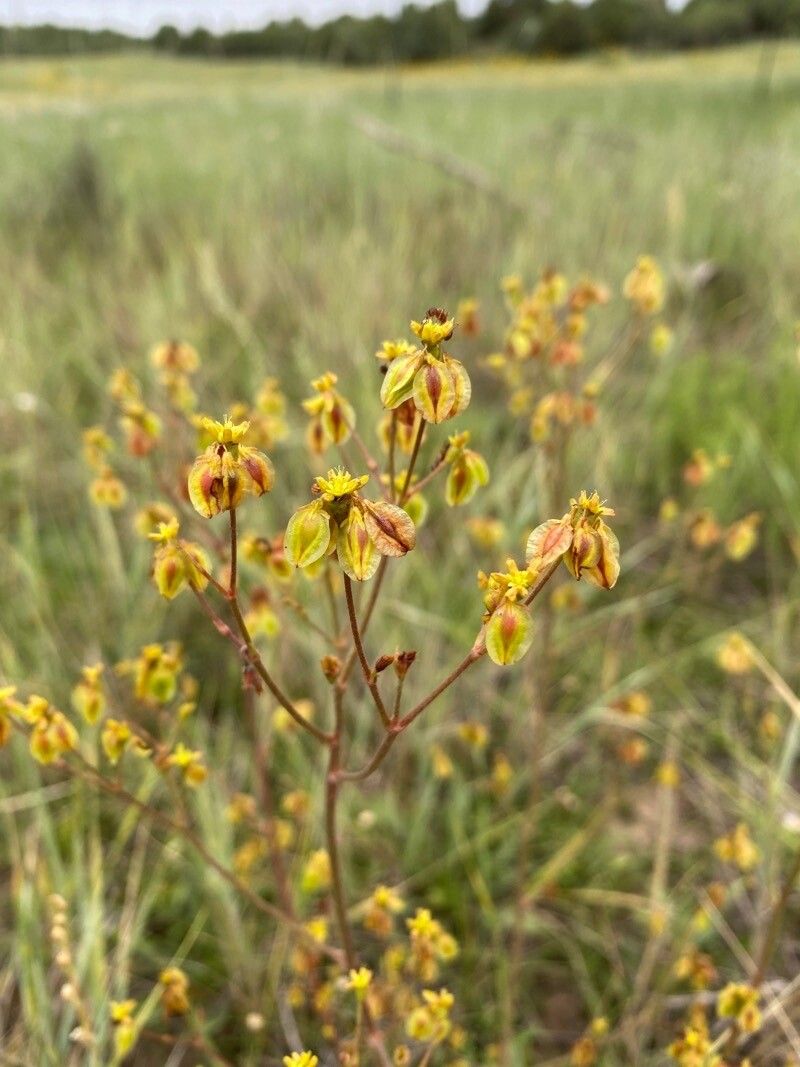
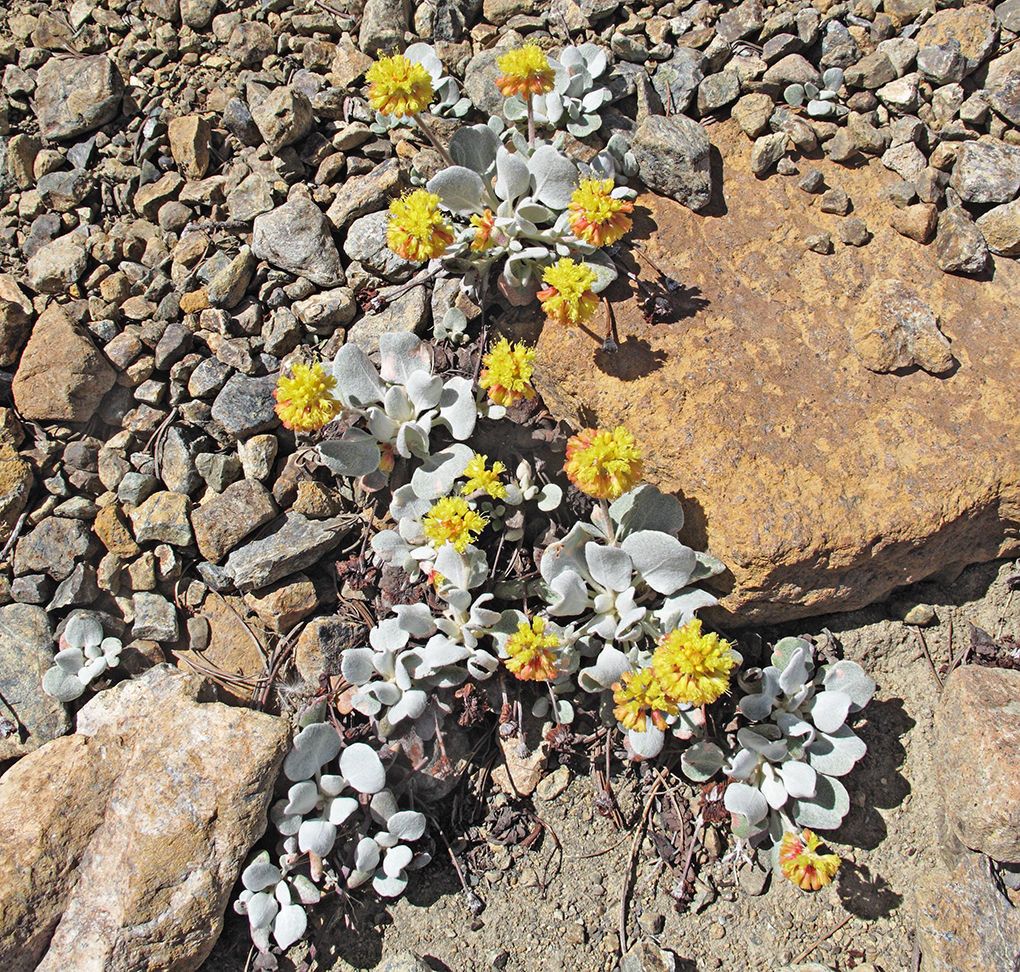
Eriogonum inflatum, the desert trumpet, is a perennial plant of the family Polygonaceae. The plant possesses very small yellow or pink flowers and an inflated stem just below branching segments. Eriogonum: from the Greek erion, "wool", and gonu, "joint or knee", in reference to the hairy or woolly joints of some of the species of the genus, but not particularly inflatum. It is found in the Mojave Desert and other deserts.
Desert trumpet is largely disease-resistant and typically not prone to illness. Still, it can be vulnerable to pests and diseases present in its environment. Such infections tend to be mild. In terms of care, this plant needs moderate maintenance. It should be pruned regularly to maintain a neat appearance and support healthy growth. Fertilizing can also encourage flowering. Desert trumpet is well-suited for anyone with outdoor space, like a garden or patio, and does not demand extensive experience in plant care. It may need more attention when kept indoors.
How to keep Eriogonum Inflatum.
Light
Desert trumpet does best in places where it gets sunlight throughout the day. Having come from areas without shade, it is adapted to intense light. Too little sun can restrict its growth, while too much is generally tolerated, reflecting its adaptation to a dry, sun-filled native habitat.
Water
The desert trumpet is well-suited to arid environments, thriving with minimal moisture and exhibiting exceptional drought tolerance. It thrives in dry settings and requires only minimal watering, ideally once a week. Its ability to store water in its inflated stems highlights its remarkable adaptation for survival in harsh desert climates.
Temperature
Desert trumpet is native to regions where temperatures range from 68 to 95 °F (20 to 35 ℃). This temperate plant favors warm surroundings. During colder seasons, it is recommended to raise the temperature gradually to avoid abrupt shocks.
Fertilizer
A single fertilizer application in spring is typically enough for Desert trumpet, although repeated feedings can boost growth to its fullest. Apply fertilizer about once every month to a month and a half. Fertilizing improves the leaves' appearance and function, maintaining even color and a healthy texture. It also encourages root development and better nutrient uptake, supporting the plant's long-term health.
Pruning
To ensure your desert trumpet plant thrives, it’s important to prune it in the spring. This will help remove dead stems, promote healthy new growth, and improve air circulation. Make sure to use sharp tools to prevent the spread of disease. Pruning at this time aligns with the plant's natural growth cycle, enhancing its vigor and resilience.
Botanical profile.
- Plant Type
- Herb
- Life Cycle
- Perennial, Annual
- Genus
- Eriogonum
- Family
- Polygonaceae
- Hardiness Zone
- 7-10
- Mature Height
- 30 cm to 61 cm
- Mature Spread
- 10 cm to 20 cm
- Leaf Color
- Green
- Leaf Type
- Deciduous
- Flower Color
- Yellow, White
- Flower Size
- 2.54 cm
- Bloom Time
- Late spring, Early summer, Mid summer
- Planting Time
- Spring, Summer, Autumn
- Harvest Time
- Mid summer, Late summer, Early fall
- Native Area
- Mexico
Other names.
Reader questions.
What are the sunlight requirements for Desert Trumpet?
Desert Trumpet requires full sun, defined as receiving above 6 hours of sunlight per day. It's crucial to watch the sunlight's path through your garden to choose spots offering the ideal balance of light and shade, ensuring the plants' health. Originated from environments with intense light exposure, Desert Trumpet is well-adapted to thriving under such conditions, and insufficient light can hinder its growth.
What are the ideal climate conditions for the Desert trumpet?
The Desert trumpet, scientifically known as Eriogonum inflatum, is indigenous to climates where temperatures range from 68 to 95°F (20 to 35°C). This temperate plant thrives in warm environments and has a strong cold resistance, making it adaptable to a variety of weather conditions. Although it doesn't generally require special frost protection measures during the winter, if temperatures are expected to drop below -15°C, it's important to provide cold protection by covering the plant with soil or straw. Moreover, watering the plant abundantly before the first freeze in autumn helps to ensure the soil remains moist and enters a frozen state, which aids in preventing water scarcity for the plant during the colder months.
Can Desert Trumpet be grown indoors, and how should artificial lighting be managed?
Yes, Desert Trumpet can be grown indoors but requires adequate lighting to mimic its natural arid, sun-drenched habitat. When natural sunlight is insufficient, especially in winter or less sunny spaces, artificial lighting becomes essential. Indoor plants benefit from artificial lights, such as LED, which can be customized to provide the wavelengths needed by the plants. Full sun plants need 30-50W/sq ft, partial sun plants 20-30W/sq ft, and full shade plants 10-20W/sq ft of artificial light. The light source should be placed 12-36 inches above the plant for 8-12 hours per day to mimic natural daylight hours effectively.
How does the Desert trumpet react to low temperatures?
The Desert trumpet is quite tolerant to low temperatures and typically thrives when the temperature stays above 20°C. During the winter season, it's crucial to maintain temperatures above 0°C to avoid damage to the plant. If temperatures fall below -15°C, you might not observe immediate changes during the winter; however, there could be a noticeable decrease in sprouting or even a complete absence of sprouting during the springtime. To counteract any negative impacts from such cold exposure, it's advised to remove any parts of the plant that have failed to sprout in the spring.
What are the symptoms of inadequate lighting for Desert Trumpet?
Symptoms of inadequate lighting for Desert Trumpet include smaller new leaves, leggy or sparse growth, faster leaf drop, slower or no new growth, lighter-colored new leaves indicating a lack of chlorophyll, and conditions such as chlorosis and sunscald, where leaves lose their green color or are damaged by intense light. Leaf curling, wilting, and leaf scorching are also signs of too much sunlight. These symptoms showcase the plant's struggle in adapting to insufficient or excessive light conditions.
How should I care for the Desert trumpet in high temperatures?
In high temperatures, particularly during the summer, it's essential to keep the Desert trumpet below 35°C to prevent stress on the plant. Exposure to temperatures above 41°C can lead to the leaves becoming lighter in color, prone to curling, and susceptible to sunburn. In severe cases, the entire plant may wilt and dry up. To mitigate these effects, trim away the sunburned and dried parts of the plant and relocate it to a shaded area or use a shade cloth to protect it from the midday and afternoon sun. Additionally, ensure to water the plant during the cooler morning and evening hours to maintain soil moisture and help the plant recover from heat stress.
How can I ensure my Desert Trumpet receives adequate sunlight, either indoors or outdoors?
To ensure adequate sunlight for Desert Trumpet, gradually acclimate the plant to sunnier locations. For indoor plants, move them closer to a south-facing window or use artificial lighting like desk lamps or professional grow lights for at least 8 hours daily. Outdoors, similarly transition the plants to sunnier spots weekly to prevent sunburn. Minimizing obstructions, such as pruning trees, or transplanting to sunnier locations with good drainage, can also improve sunlight exposure. Note that parts of the plant affected by previous light conditions may not recover, but new growth should adapt to the improved lighting.
What special care does the Desert trumpet need during winter?
During the winter, the Desert trumpet, with its strong cold resistance, typically doesn't require special care. However, if temperatures are anticipated to drop significantly below -15°C, it's crucial to provide additional protection for the plant. This can be done by covering the plant with insulating materials such as soil or straw to safeguard it against extreme cold. Before the onset of the first freeze during autumn, watering the plant abundantly to ensure that the soil is moist and then enters a frozen state can be beneficial. This technique helps prevent the plant from experiencing drought and provides it with necessary water resources during winter and early spring.