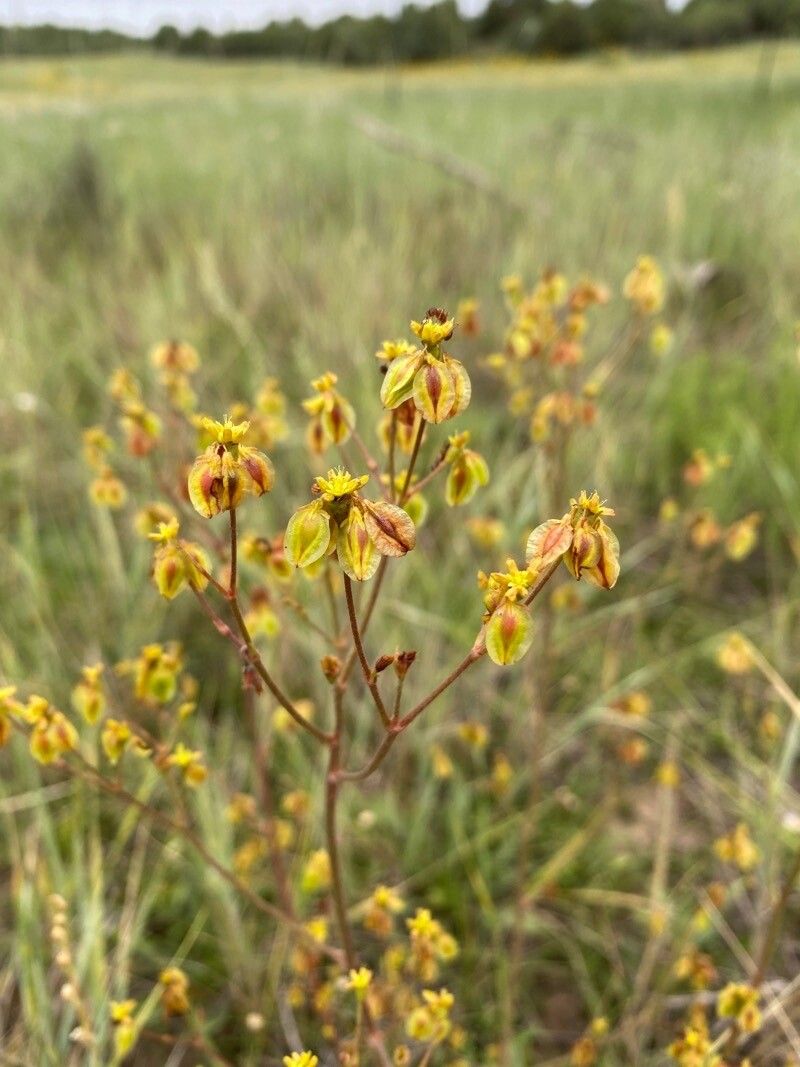
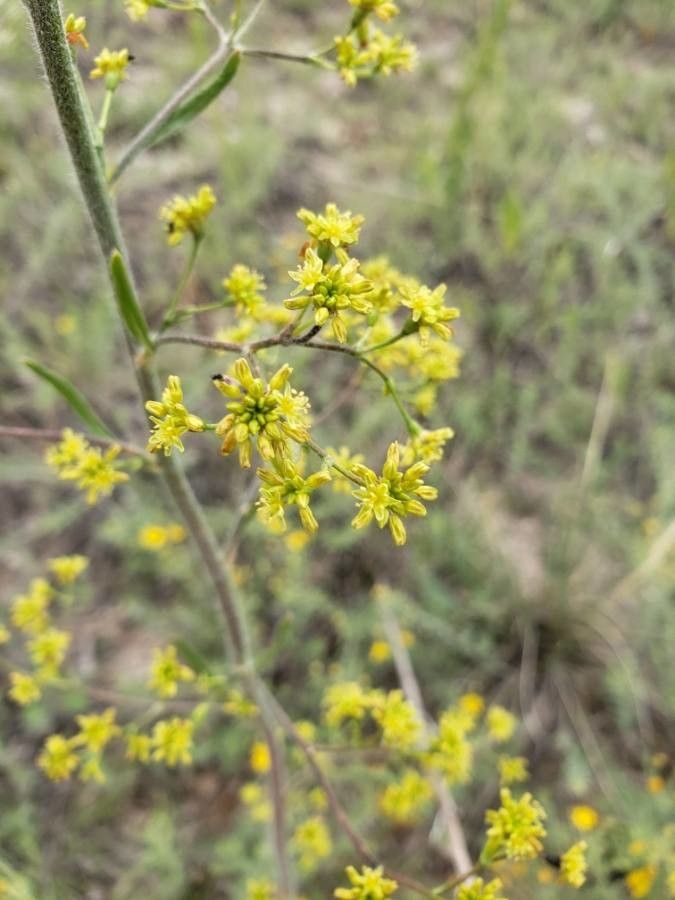
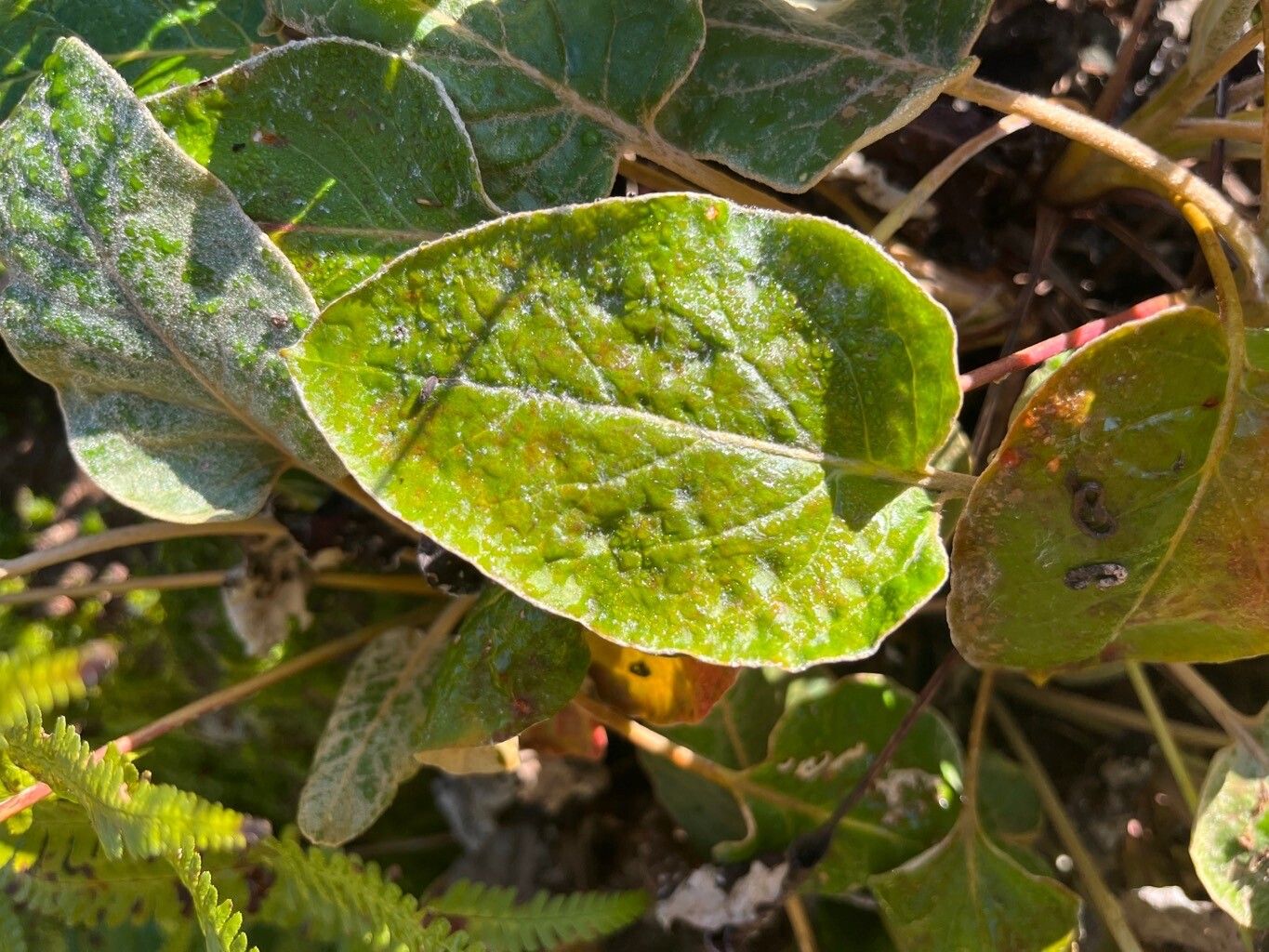
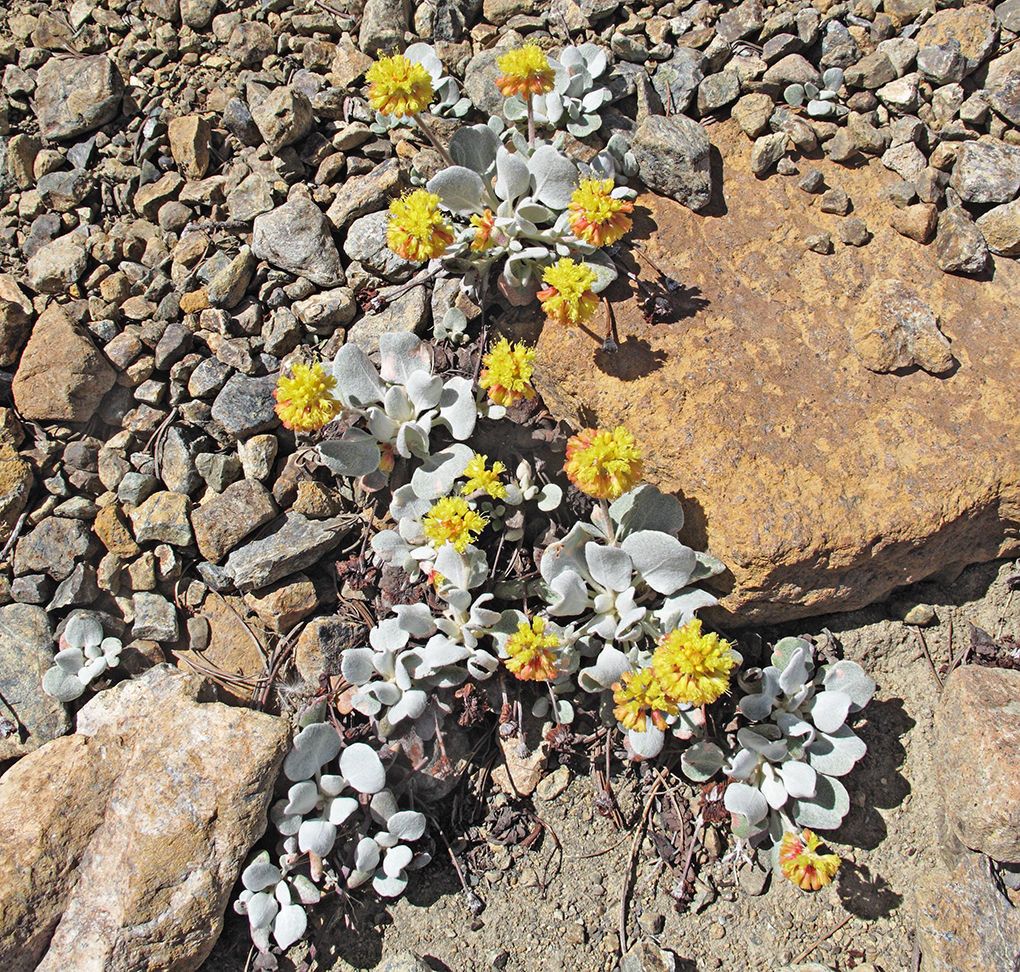
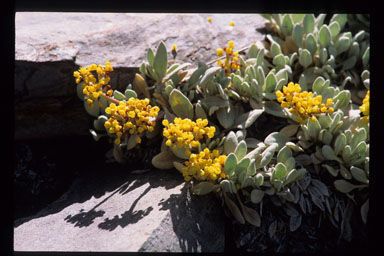
Eriogonum alatum, commonly known as winged buckwheat, is a perennial plant species that belongs to the Polygonaceae family. Native to the western United States, this plant thrives in various habitats, including dry slopes, rocky outcrops, and desert shrublands. Typically, it grows to a height of 1-2 feet and exhibits a spreading habit with woody stems covered in papery bark. The leaves of Eriogonum alatum are small, narrow, and gray-green in color. Its flowers, although small, are numerous and form clusters at the end of long stems that rise above the foliage. The flowers feature white or pinkish petals with yellow centers. Eriogonum alatum plays a crucial role in supporting wildlife by providing food for various pollinators, such as bees and butterflies. It also serves as a host plant for several butterfly species, including the Mormon metalmark butterfly. Native American tribes have historically used winged buckwheat for medicinal purposes, such as treating stomach ailments and making poultices to relieve pain from bruises or sprains. Overall, Eriogonum alatum is an attractive ornamental plant suitable for xeriscaping gardens due to its drought tolerance and low maintenance requirements.
Winged buckwheat has good disease resistance and is generally not very prone to illnesses. However, it can be affected by pests and diseases present in its environment. These infections are usually mild. In terms of care, this plant requires moderate maintenance. It should be pruned regularly to keep a good appearance and healthy growth. Fertilizing can also help encourage flowering. Winged buckwheat is suitable for anyone with outdoor space, such as a garden or patio, and does not need much experience in plant care. It may need more attention when grown indoors.
How to keep Eriogonum Alatum.
Light
Winged buckwheat is a sun-loving, perennial herbaceous plant native to open habitats and commonly found in meadows and grasslands. It prefers full sun but can also tolerate partial sun.
Water
Winged buckwheat excels in arid regions, thanks to its strong drought tolerance. To maintain its health, it is best to water the plant once a week, which mimics its natural conditions. Outdoors, it should be planted in well-draining soil to prevent waterlogging during the growing season. This approach balances the plant's resilience with its hydration needs.
Temperature
Winged buckwheat can tolerate a wide range of temperatures, but its distribution can still be restricted by various combinations of moisture and heat. It grows best in warm summer conditions with sufficient rainfall or irrigation. Long stretches of cloudy, rainy weather or extended high temperatures can raise the chance of Winged buckwheat dying. In winter, protecting the plant from cold can help increase its survival.
Fertilizer
One fertilizer application in spring is generally enough for Winged buckwheat, but several feedings can maximize growth. Feed about once every month to month and a half. Fertilization improves leaf appearance and function, maintaining even color and a healthy texture. It also promotes root growth and nutrient uptake for long-term plant health.
Pruning
Winged buckwheat is characterized by its delicate foliage and small flowers. To encourage healthy growth and shape the plant, prune it from early to late spring. After flowering, remove any dead stems and lightly prune the plant to maintain its appearance. Regular pruning is essential as it improves air circulation, helps prevent disease, and is crucial for the plant's overall health.
Botanical profile.
- Plant Type
- Herb, Shrub
- Life Cycle
- Perennial
- Genus
- Eriogonum
- Family
- Polygonaceae
- Hardiness Zone
- 4-8
- Mature Height
- 30 cm to 91 cm
- Mature Spread
- 30 cm to 61 cm
- Leaf Color
- Green, Gray
- Leaf Type
- Deciduous
- Flower Color
- White, Cream
- Flower Size
- 0.25 cm to 0.51 cm
- Bloom Time
- Early summer, Mid summer
- Planting Time
- Spring
- Harvest Time
- Late summer, Early fall
- Native Area
- Mexico
Other names.
Reader questions.
What are the sunlight requirements for Winged Buckwheat?
Winged buckwheat, botanically known as Eriogonum alatum, thrives best in full sun conditions, requiring above 6 hours of sunlight to flourish. It is a sun-loving perennial herbaceous plant often found in open habitats such as meadows and grasslands. While it prefers full sun, it can also tolerate partial sun conditions. However, it's essential to observe the movement of sunlight through your garden to select spots that provide a balanced environment of light and shade, ensuring the plant's health and happiness.
How can artificial lighting be used for Winged Buckwheat grown indoors?
For Winged buckwheat plants grown indoors or in areas with insufficient natural sunlight, especially during winter or in less sunny spaces, artificial lighting is a crucial alternative. LED lights are recommended for their ability to be customized to provide specific wavelengths needed for plant growth. Full sun plants need 30-50W/sq ft of artificial light, partial sun plants 20-30W/sq ft, and full shade plants 10-20W/sq ft. The light source should be placed 12-36 inches above the plant, mimicking natural sunlight, and most plants require 8-12 hours of light per day.
What are the common symptoms of inadequate lighting for Winged Buckwheat?
When Winged buckwheat is grown in rooms with inadequate lighting, several symptoms might not be immediately apparent but can affect the plant's health. These include the growth of smaller leaves than usual, leggy or sparse growth, faster leaf drop, slower or no new growth, lighter-colored new leaves, chlorosis (leaves turning yellow), sunscald (damage from intense light exposure), leaf curling, wilting, and leaf scorching.
What are the solutions for Winged Buckwheat facing insufficient sunlight?
To address insufficient sunlight, especially indoors, gradually move your Winged buckwheat plants to a location where they can receive at least 6 hours of direct sunlight daily, using a south-facing window for maximum exposure. For plants that are large or not easily movable, consider supplementing with artificial light for at least 8 hours daily. Outdoors, it's crucial to move your plants to sunnier spots gradually to avoid sunburn, and for ground-planted varieties, reducing obstruction from trees or structures by pruning or relocating the plant to a sunnier location can be beneficial. Remember, parts of the plant that suffered from low light might not recover, but new growth will be healthy.