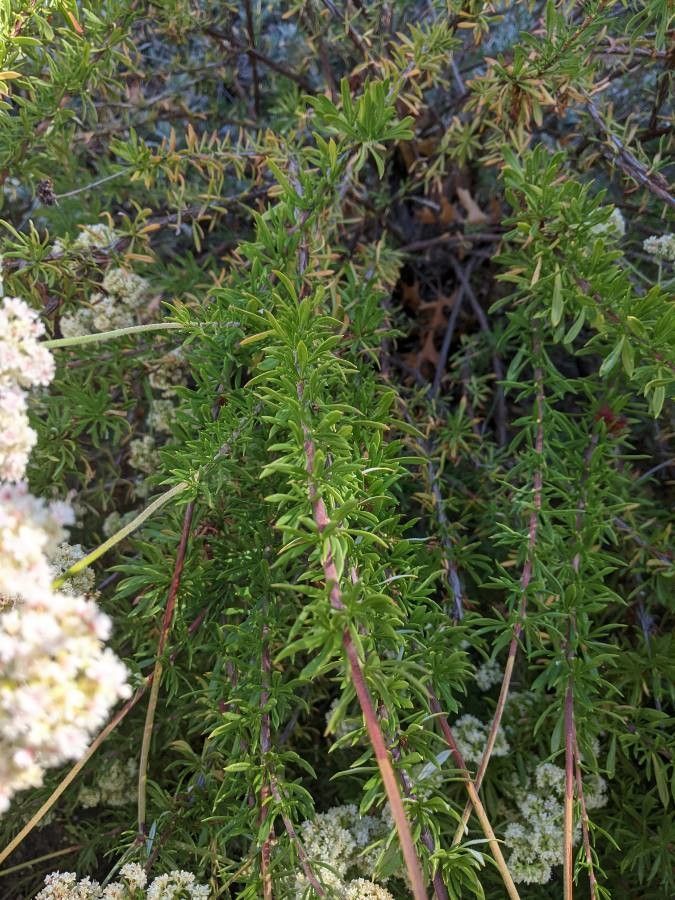
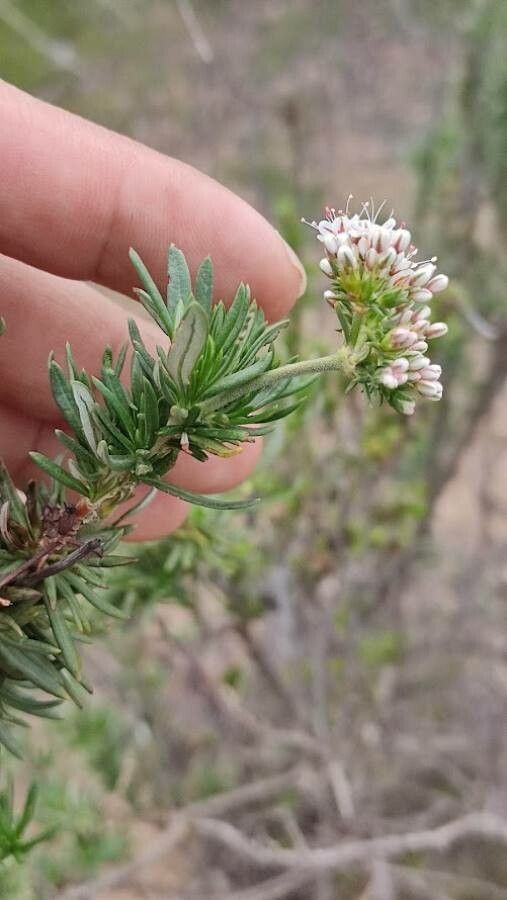
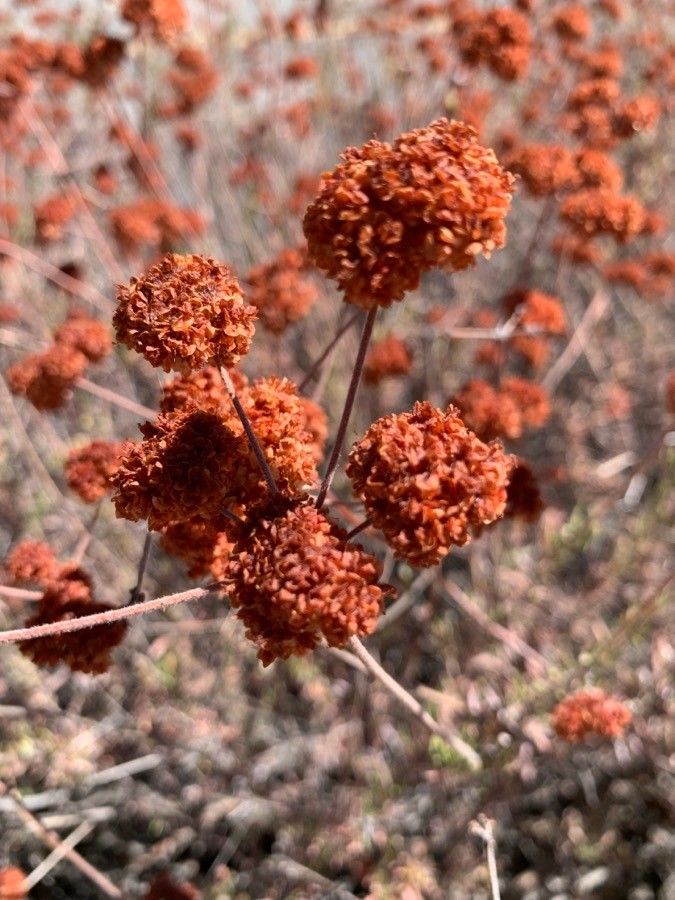
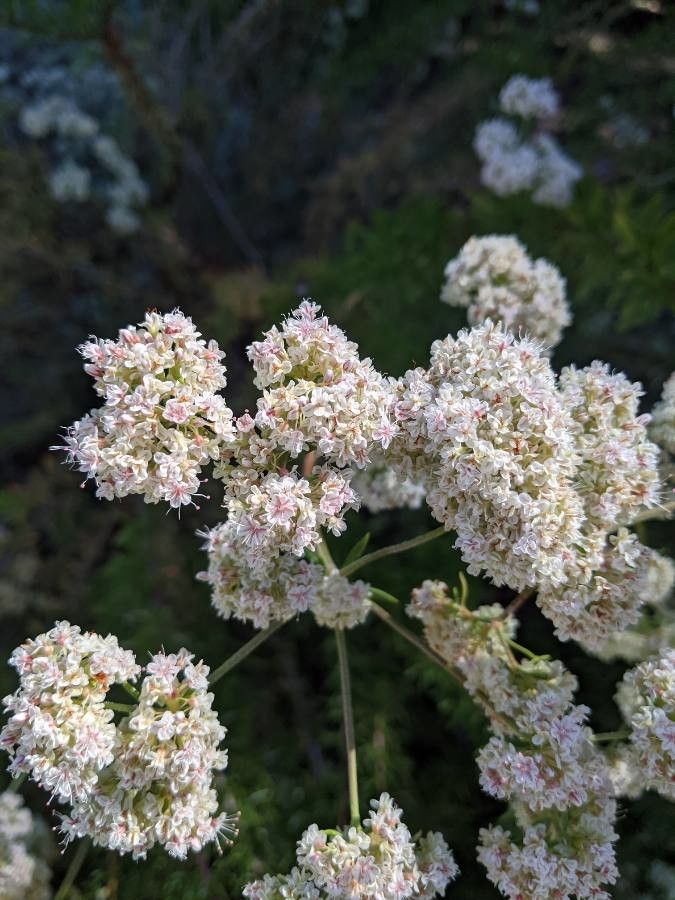
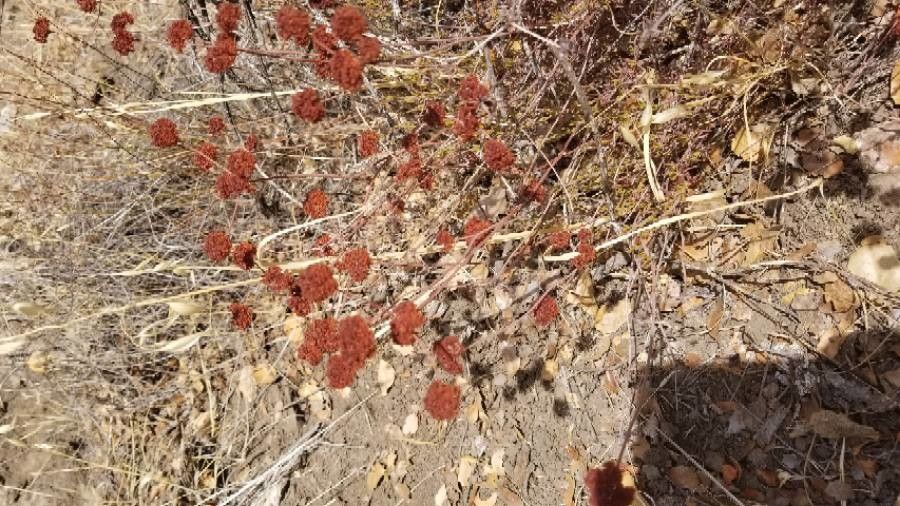
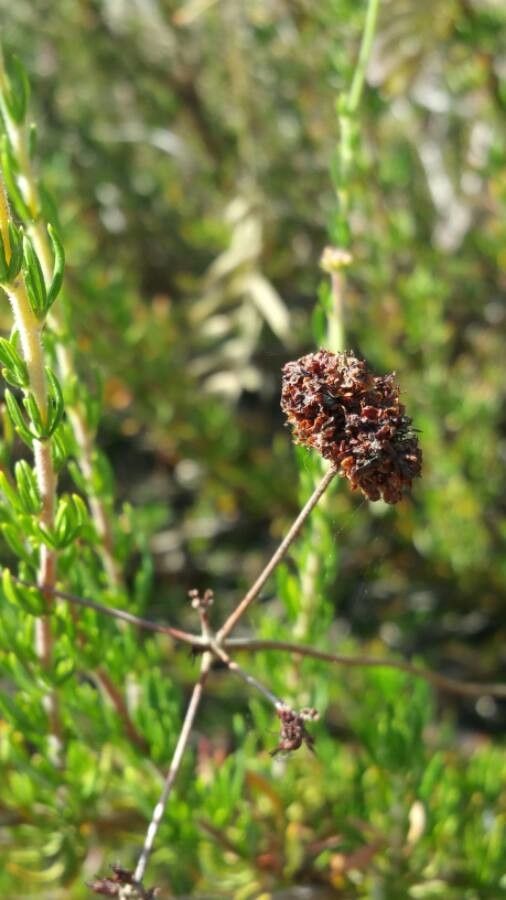
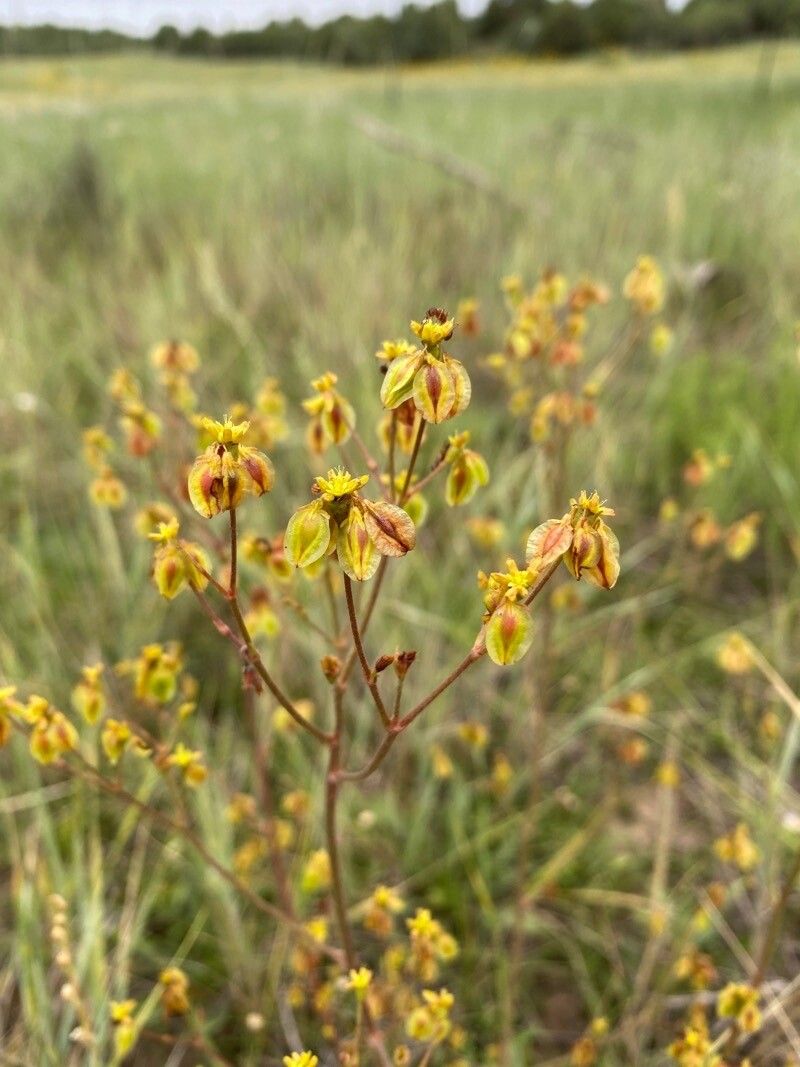
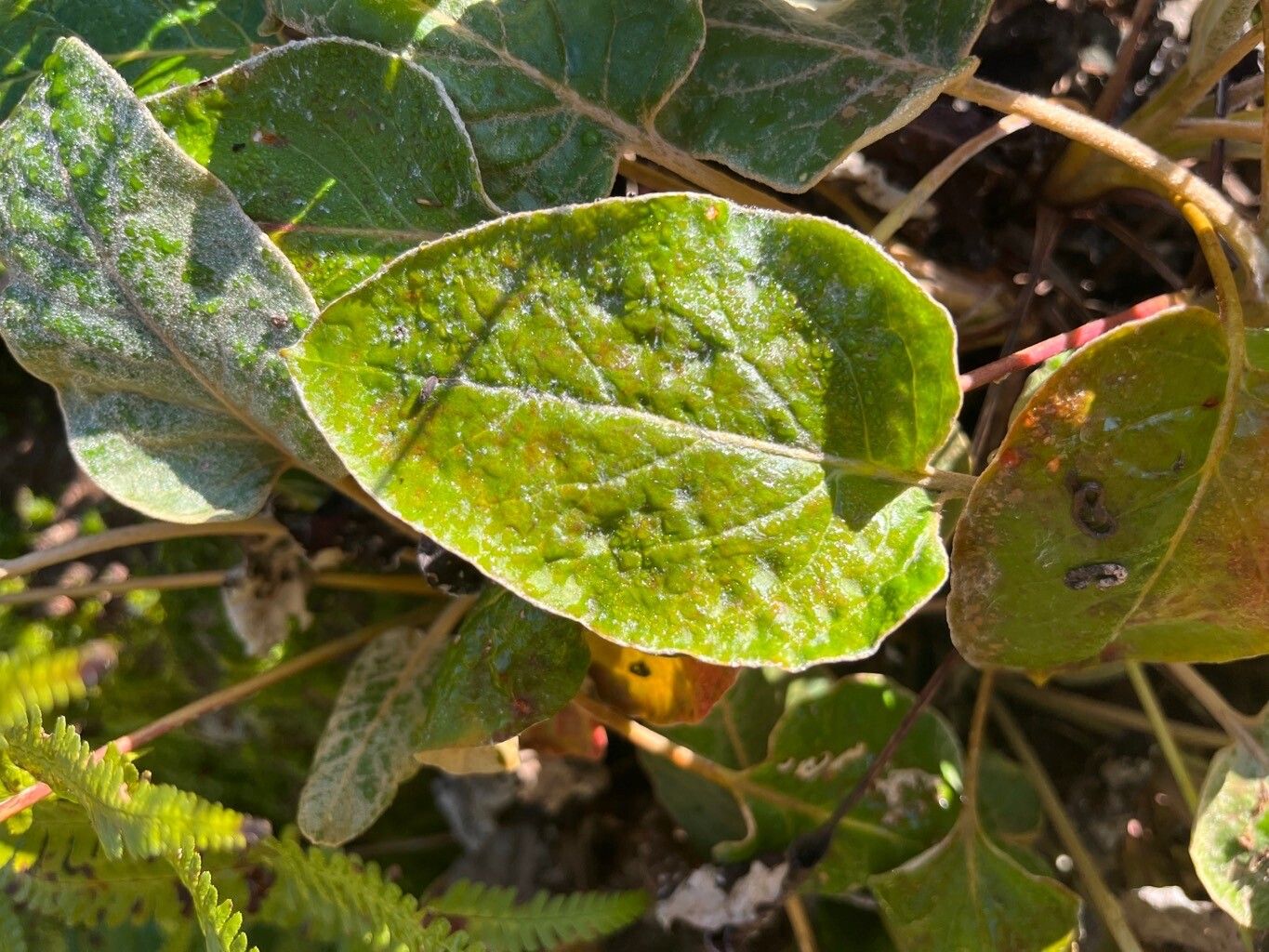
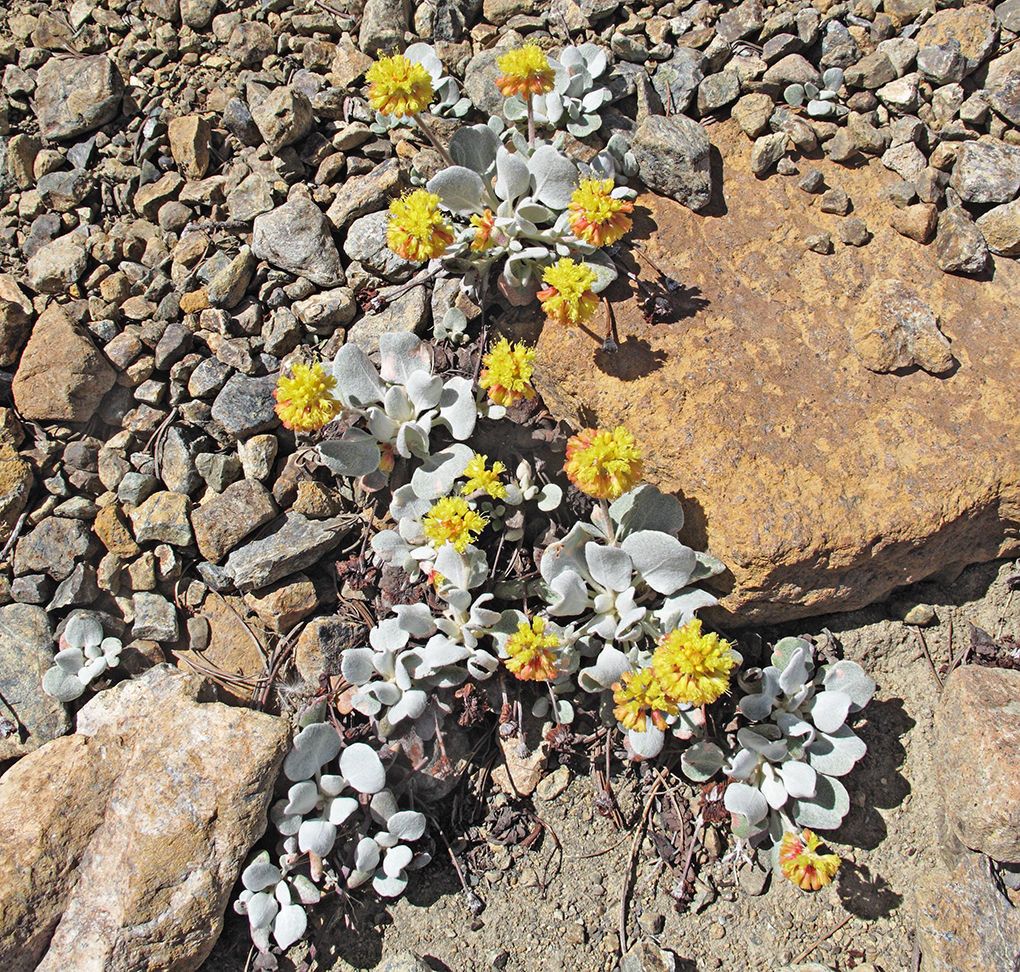
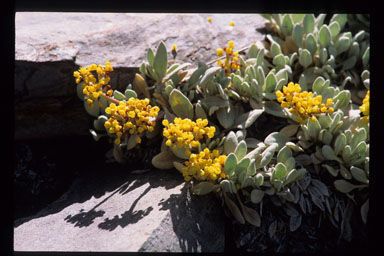
Eriogonum fasciculatum, commonly known as California buckwheat, is a perennial shrub native to California and parts of Nevada. Belonging to the family Polygonaceae, this plant can grow up to 3 feet tall. It features a dense, bushy growth habit with narrow, elongated green leaves.
The flowers of Eriogonum fasciculatum are small and come in shades of white or pink. They bloom in clusters from late spring through summer, attracting bees, butterflies, and other pollinators. The plant produces small fruits that contain seeds, which can be used for propagation.
Once established, Eriogonum fasciculatum is drought-tolerant and thrives in well-drained soils with full sun or partial shade. It is commonly used in landscaping for its attractive foliage and its ability to attract pollinators.
Native Americans have traditionally used this plant for medicinal purposes, such as treating colds, fevers, headaches, and stomachaches, due to its anti-inflammatory properties.
Overall, Eriogonum fasciculatum is an attractive shrub with ecological importance. It supports pollinators and has medicinal properties, making it a valuable part of the ecosystems it inhabits.
California buckwheat is fairly disease-resistant and typically does not suffer from many illnesses. However, it can be vulnerable to pests and diseases present in its environment. These infections are usually mild. In terms of care, the plant requires moderate maintenance. Regular pruning is needed to preserve its appearance and support healthy growth. Fertilizing can also help encourage flowering. California buckwheat is suitable for anyone with an outdoor area, such as a garden or patio, and does not demand extensive gardening experience. It may need extra attention when grown indoors.
How to keep Eriogonum Fasciculatum.
Light
California buckwheat does best with abundant sunlight but can tolerate somewhat reduced light. Native to sunny environments, it grows most favorably in open areas. Nevertheless, too little light or excessive sun can impede its growth or injure its leaves.
Water
California buckwheat is ideal for arid climates thanks to its drought tolerance and minimal water needs, requiring watering only every two weeks. It thrives in xeriscaping and is commonly grown outdoors because of its ability to withstand limited rainfall.
Temperature
Native to California, California buckwheat grows best in temperatures between 59 to 100 ℉ (15 to 38 ℃). In summer it can tolerate temperatures as high as 104 ℉ (40 ℃) by entering dormancy. In the fall the plant adapts to cooler conditions by dropping leaves and conserving energy.
Fertilizer
One fertilizer application in spring is typically enough for California buckwheat, though repeated feedings can maximize growth. Apply fertilizer once every month to a month and a half. Fertilization improves the leaves’ appearance and function, helping maintain even color and a healthy texture. It also promotes root development and enhances nutrient uptake for the plant’s long-term health.
Pruning
Prune California buckwheat between early and late spring to remove dead growth and shape the plant. Thinning cuts can help improve air circulation and reduce the risk of disease. Regular pruning encourages new growth and flowering while preserving the plant’s natural form. For detailed techniques and timing, consult horticultural guides.
Pot & Repot
When repotting California buckwheat, select a pot 1-2 inches (2.5–5.1 cm) larger that has good drainage. Use a well-draining potting mix. Repot in spring or fall, making sure the root ball sits slightly lower than the rim of the flower pot. Water thoroughly after repotting and place the plant in a warm spot with indirect sunlight.
Botanical profile.
- Plant Type
- Herb, Shrub
- Life Cycle
- Perennial
- Genus
- Eriogonum
- Family
- Polygonaceae
- Hardiness Zone
- 7-11
- Mature Height
- 0.91 m to 1.83 m
- Mature Spread
- 91 cm
- Leaf Color
- Green
- Leaf Type
- Deciduous, Evergreen
- Flower Color
- White, Pink, Green, Cream, Red, Brown
- Flower Size
- 2.54 cm
- Bloom Time
- Late spring, Summer
- Planting Time
- Spring
- Harvest Time
- Mid summer, Late summer, Early fall
- Native Area
- Mexico
Other names.
Reader questions.
How should I water my California buckwheat plant?
To properly water the California buckwheat, follow these guidelines: Use filtered water at room temperature or slightly warmer. Tap water may contain harmful particles. Since the California buckwheat originates from warm environments, avoid using cold water as it may shock the plant. It is best to avoid overhead watering, as this can lead to issues with the foliage. Instead, directly apply filtered room temperature water to the soil until it is fully soaked. This helps to moisten the roots, aiding their spread through the soil and nutrient absorption.
Why should I put fertilizer on my California buckwheat plant?
The structure of the California buckwheat is mainly made up of leaves. Fertilization plays a crucial role in maintaining the appearance and function of these leaves. By properly fertilizing, you can ensure that the leaves of your California buckwheat stay vibrant in color and have a healthy texture. Fertilization also has benefits below the soil's surface, promoting the growth of new roots and maintaining the existing root system. This not only keeps your plant healthy in the present, but also improves its ability to absorb nutrients from the soil in the future.
What are the sunlight requirements for California buckwheat?
California buckwheat thrives under generous exposure to sunlight, requiring full sun conditions of above 6 hours of sunlight daily or can manage in partial sun with about 3-6 hours of sunlight. It is native to habitats rich in sunlight, growing optimally under open skies. However, both insufficiency and overexposure can affect its growth negatively, causing damage to its foliage. It's crucial to monitor the sunlight exposure in your garden, selecting spots that offer a harmonious balance of light and shade to ensure the well-being of your plants.
What is California Buckwheat and where is it naturally found?
California buckwheat, botanically known as Eriogonum fasciculatum, is native to California. It thrives in temperatures ranging from 59 to 100 °F (15 to 38 °C), adapting to the changing seasons with unique survival strategies. During the hot summers, it can withstand temperatures up to 104 °F (40 °C) by entering a dormant state. As temperatures cool in the fall, the plant prepares for the colder season by shedding leaves to conserve energy, showing its strong cold resistance.
What should I do if I give my California buckwheat too much or too little water?
Overwatering and underwatering can harm your California buckwheat. However, overwatering is a more common problem. When your plant gets too much water, its stems and leaves may wilt and turn yellow. Overwatering for a long time can also cause diseases like root rot and mold, which can kill the plant. Underwatering is less likely with the California buckwheat since it tolerates drought well. But it can still happen, and when it does, the leaves may become brittle and brown. It's important to notice signs of overwatering early, as some diseases like root rot may be irreversible if left too long. If you see early signs, reduce watering immediately and check the soil's drainage. If the soil drains poorly, replace it with a loose, well-draining potting mix. If you notice signs of underwatering, simply water more regularly until the signs improve.
When should I fertilize my California buckwheat plant?
If you have a California buckwheat plant that you grow outside each year, it will start to shoot out new growth in early spring. This is when you should start fertilizing it for the year. Usually, a single application of fertilizer in the spring is enough for the plant to do well. But if you want to maximize its growth, you can fertilize it multiple times during the spring and early summer. If you choose to do this, you can feed the plant about once every month to a month and a half.
How can artificial lighting support California buckwheat's growth indoors?
When natural sunlight is inadequate, especially during winter or in regions receiving less sunlight, artificial lighting becomes essential for the growth of indoor plants like California buckwheat. Properly selected artificial lights can mimic natural sunlight, promoting healthier and faster growth. LED lights are recommended due to their efficiency and ability to provide specific light wavelengths needed by plants. The intensity of light required varies depending on the nature of the plant, with full sun plants needing 30-50W/sq ft, partial sun plants 20-30W/sq ft, and shade plants 10-20W/sq ft. The artificial light source should be placed 12-36 inches above the plant, ensuring it receives 8-12 hours of light per day to mimic natural daylight hours.
How should California Buckwheat be cared for in winter?
California buckwheat is quite cold-resistant and usually doesn't require special frost protection measures. However, if temperatures are expected to drop below 5°F (-15°C), it's important to protect the plant. Providing cold protection involves covering it with soil or straw, which helps preserve its warmth. Additionally, watering the plant abundantly before the first freeze in autumn is recommended to ensure the soil remains moist and enters a frozen state, which aids in preventing drought and water scarcity throughout winter and early spring.
How often should I give water to my California buckwheat?
If your California buckwheat plant is in a pot, the easiest way to determine if it needs watering is to stick your finger in the soil. If the top two to three inches of soil feel dry, it's time to water. If you have your California buckwheat planted outdoors in the ground, you can use the same method to check the soil moisture. Again, if the top few inches of soil are dry, it's time to water. Typically, during the spring and early fall, watering once a week based on this method is sufficient. However, during extremely hot weather, you may need to increase the frequency to twice a week or more. Nevertheless, mature and well-established California buckwheat plants have excellent drought tolerance.
When is it a bad idea to add fertilizer to my California buckwheat?
During late fall and winter, your California buckwheat goes into a dormant phase and stops growing. So, it's best not to fertilize it during this time. In spring and summer, you can fertilize it multiple times, but as summer approaches and the growth rate slows down, it's recommended to reduce the fertilization rate. In general, it's not a good idea to fertilize your California buckwheat when the weather is unusually hot or the soil is very dry. Fertilizing in these cases can stress the plant and lead to its premature death.
What are the symptoms of incorrect lighting for California buckwheat?
Incorrect lighting can manifest through various symptoms in California buckwheat. Insufficient light may result in smaller new leaves, leggy or sparse growth, early leaf drop, slower or stopped growth, and pale or lighter-colored new leaves, indicating a lack of chlorophyll and essential nutrients. Conversely, excessive sunlight exposure can cause chlorosis, where leaves lose their green color and turn yellow, sunscald with damage to leaves or stems, leaf curling as a defense against too much sunlight, wilting from increased water loss, and leaf scorching, characterized by brown, dry patches on the leaves. Adjusting the plant's exposure to sunlight, either by gradual relocation to suitable spots or by utilizing appropriate artificial lighting, can address these issues.
What are the signs of temperature distress in California Buckwheat and how can these be addressed?
Temperature distress in California buckwheat manifests differently across seasons. In cold conditions, particularly when temperatures fall below 5°F (-15°C), the plant may not show immediate damage, but it might experience reduced or absent sprouting in spring. The suggested solution for such damage is to remove parts that haven't sprouted in the spring. On the high end of the temperature spectrum, exposure to temperatures above 100°F (38°C) might result in lighter-colored leaves, curling, susceptibility to sunburn, and possibly complete wilting and drying of the plant. Addressing heat stress involves trimming away sunburned and dried parts, moving the plant to shaded areas during peak sun hours, or utilizing shade cloth. Moreover, keeping the soil moist with morning and evening watering is crucial.