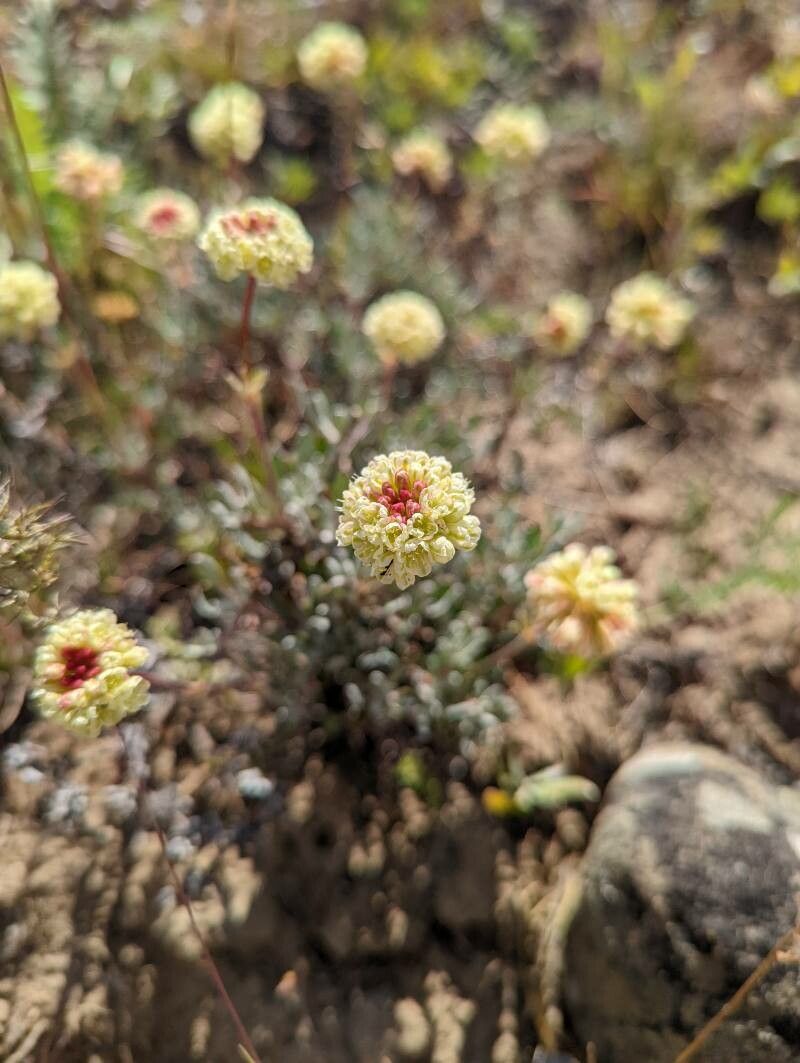
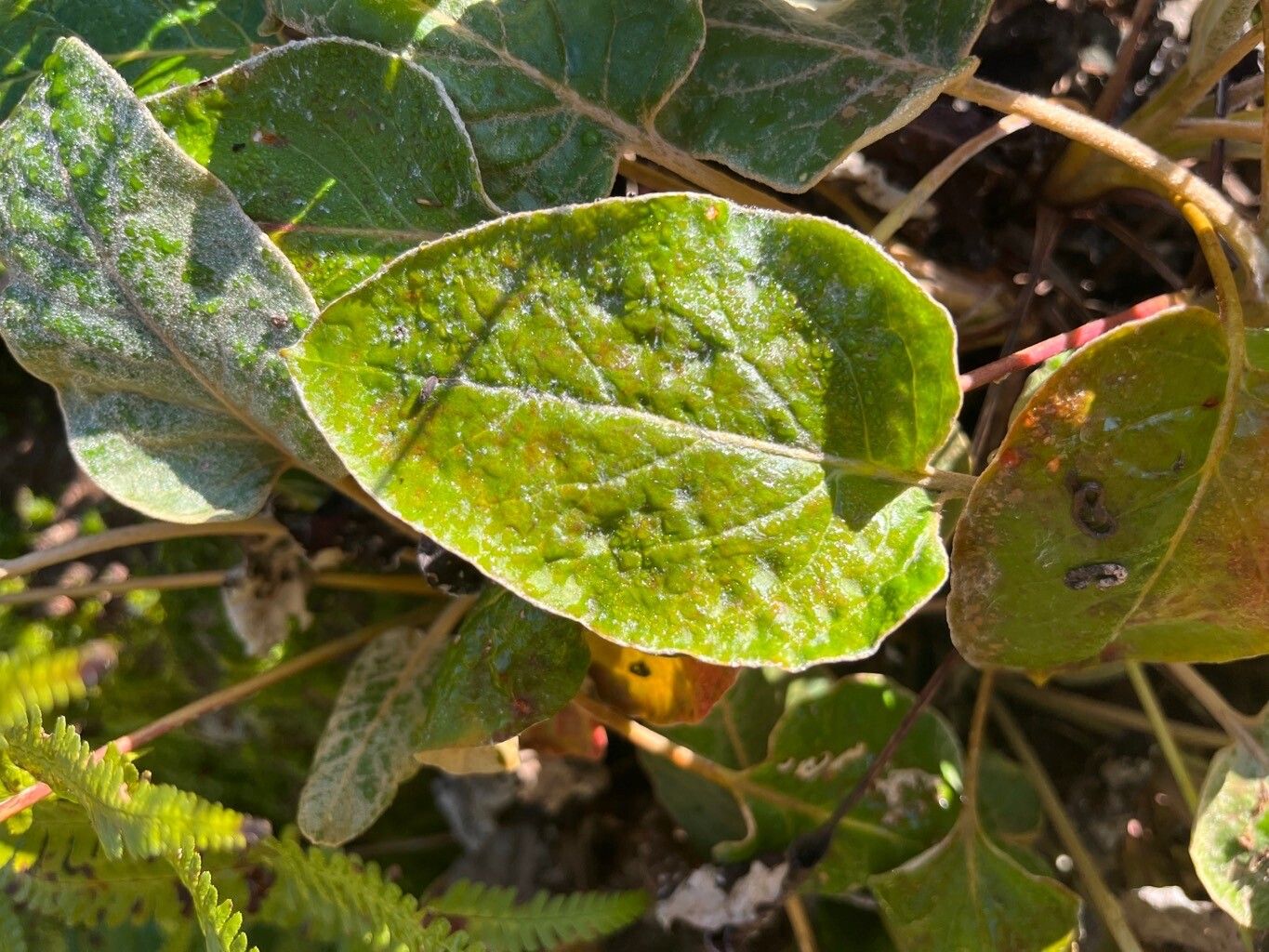
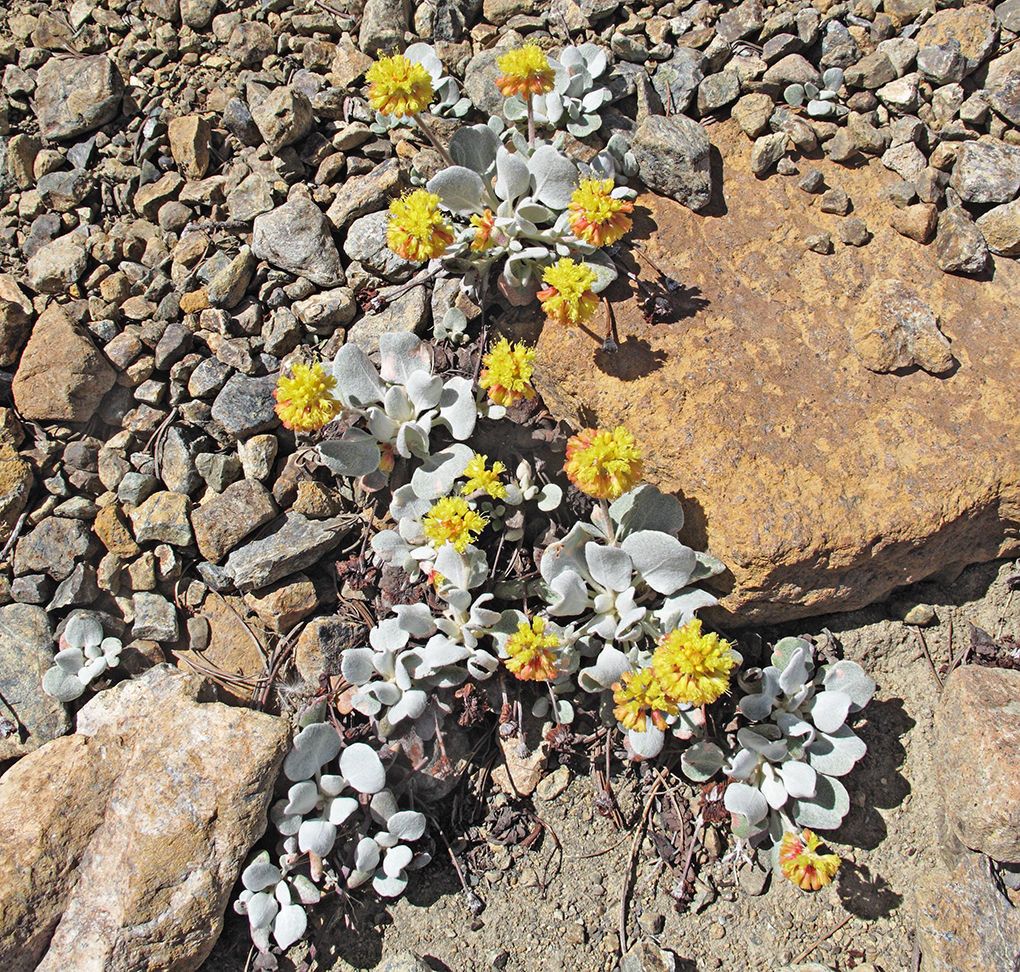
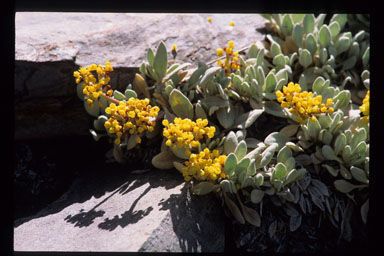
Eriogonum douglasii is a species of wild buckwheat known by the common name Douglas' buckwheat. It is native to the western United States, including the Pacific Northwest and part of the Great Basin. This plant forms a mat of hairy herbage around a caudex. There are rosettes of lance-shaped to oval leaves with blades 0.4 to nearly 2 centimeters long. The leaves are feltlike, covered in woolly hairs. The inflorescence arises on a solid, erect flowering stem up to 15 centimeters tall with a whorl of bracts midway up. It is a headlike cluster of cream, yellowish, or rose-pink flowers with protruding stamens.This plant grows in grassland, sagebrush, woodland, and pine forest habitat. There are three varieties of this species, including vars. douglasii and meridionale. The rare var. elkoense (Sunflower Flat wild buckwheat) is endemic to Elko County, Nevada.
Douglas' buckwheat has strong resistance to disease and is generally not likely to suffer from illnesses. Still, it can be vulnerable to pests and diseases present in its environment. Such infections tend to be mild. Regarding care, this plant needs a moderate level of attention. It should be pruned regularly to preserve its appearance and support healthy growth. Applying fertilizer can also encourage flowering. Douglas' buckwheat is appropriate for anyone with outdoor areas like a garden or patio and does not demand extensive gardening experience. It may need more attention if cultivated indoors.
How to keep Eriogonum Douglasii.
Fertilizer
Typically, a single fertilizer application in spring is enough for Douglas' buckwheat, but repeated feedings can maximize growth. Apply fertilizer once every month to a month and a half. Fertilization improves the leaves’ appearance and function, supporting consistent color and a healthy texture. It also promotes root development and nutrient uptake for long-term plant health.
Pruning
Douglas' buckwheat is a drought-tolerant shrub characterized by its round flower clusters and silver-grey foliage. To maintain its density, lightly prune it in early spring, removing any dead stems. Regular trimming not only enhances air circulation but also reduces the risk of disease, promoting robust health throughout the growing season.
Botanical profile.
- Plant Type
- Herb
- Life Cycle
- Perennial
- Genus
- Eriogonum
- Family
- Polygonaceae
- Mature Height
- 3 cm to 30 cm
Other names.