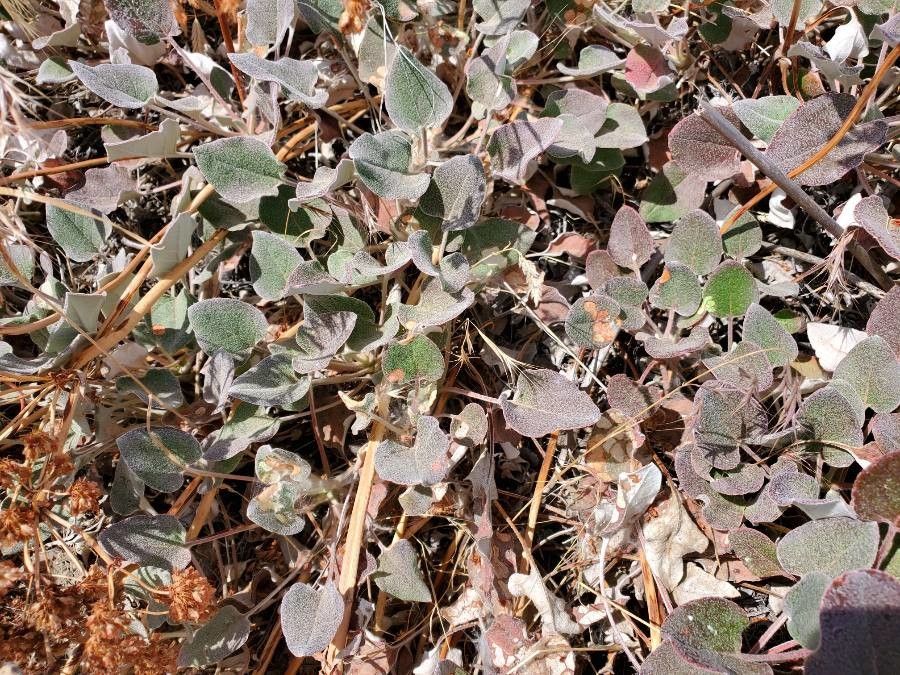
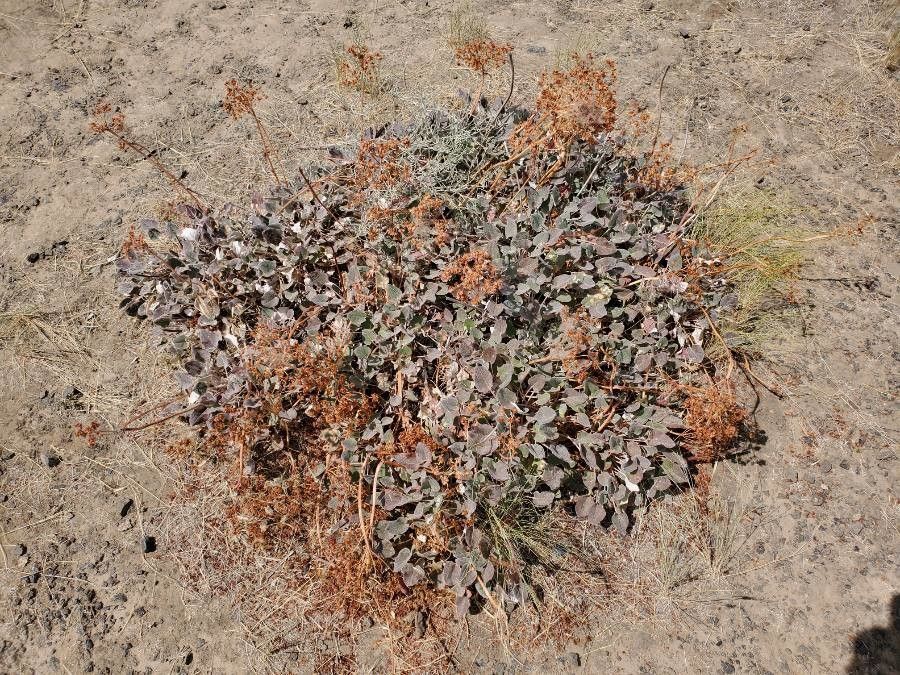
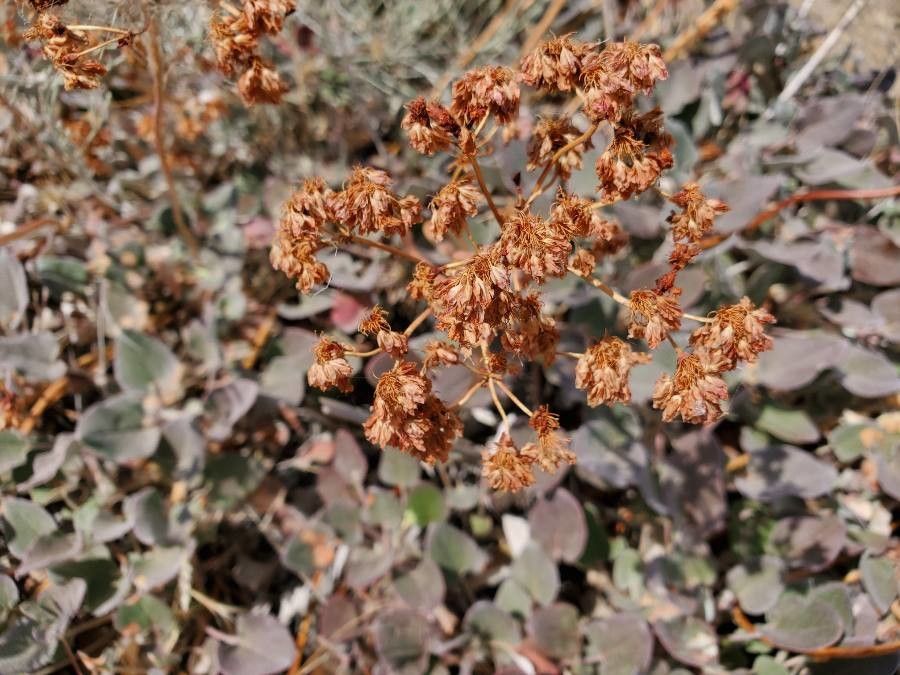
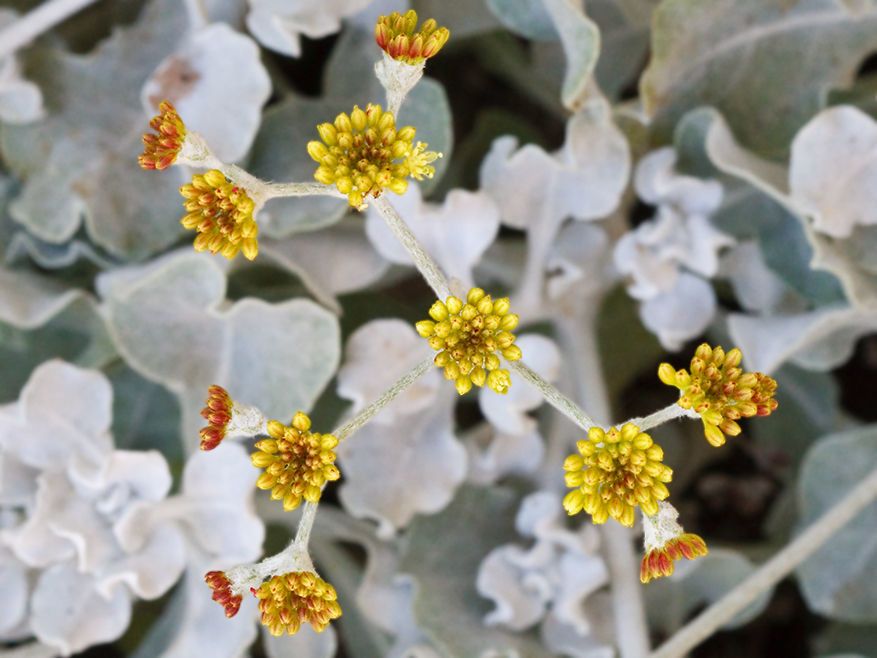
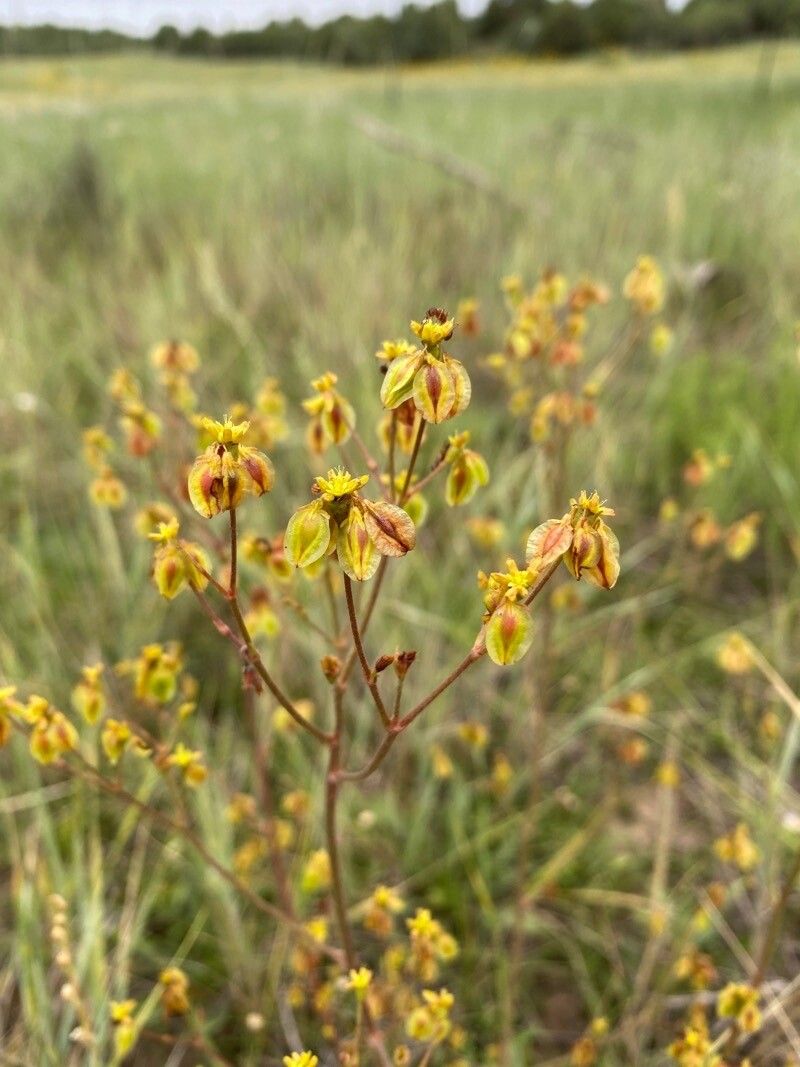
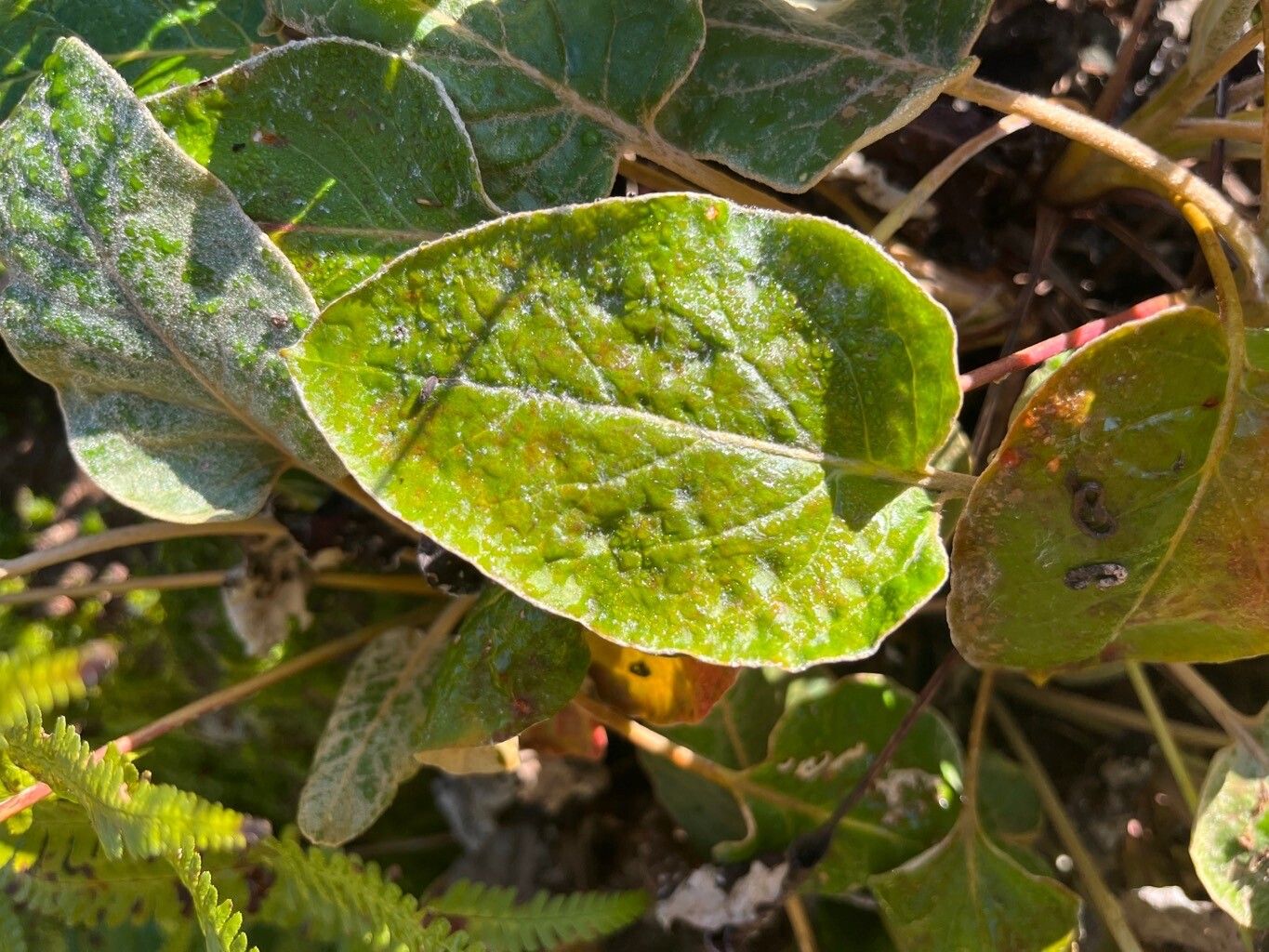
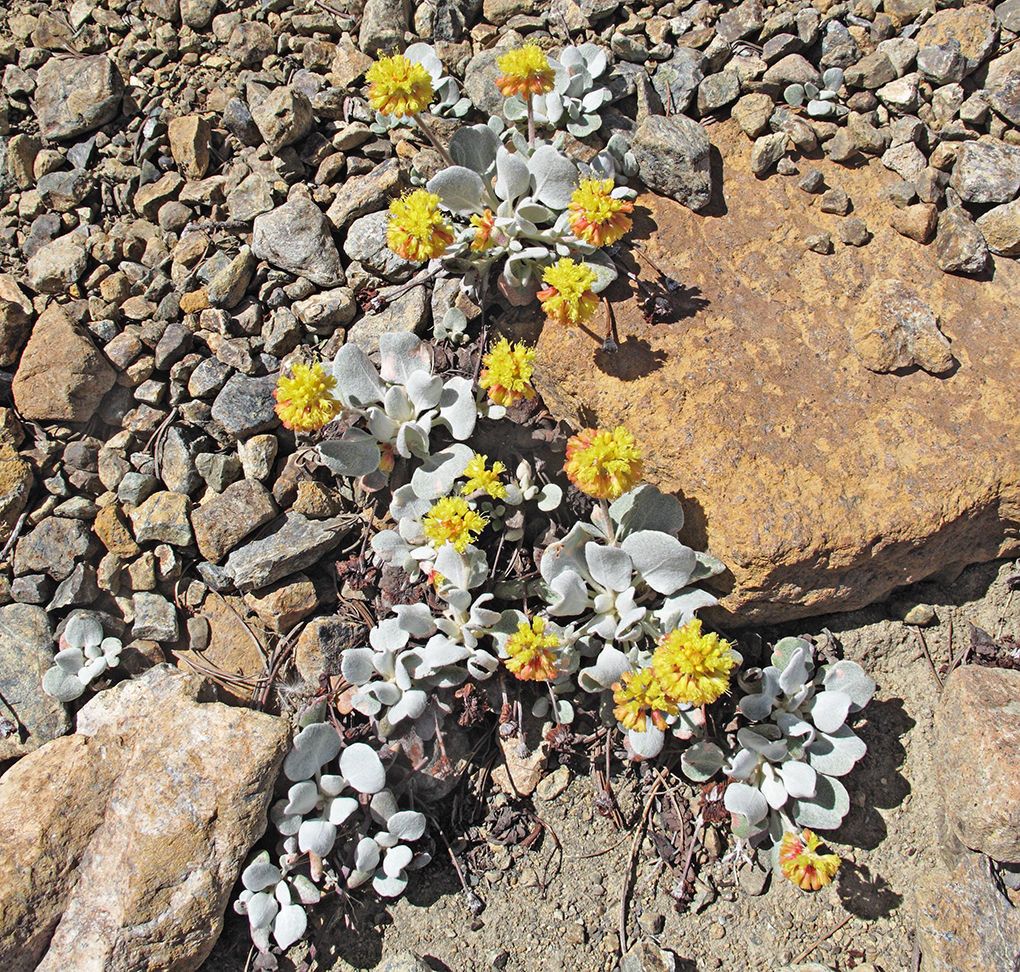
Eriogonum crocatum, commonly known as saffron buckwheat, is a perennial plant species in the Polygonaceae family. Native to California, this plant thrives in rocky and sandy soils within coastal sage scrub and chaparral habitats. Typically, Eriogonum crocatum grows to a height of 1 to 2 feet and spreads equally wide. Its narrow, gray-green leaves, about 3 inches long, are covered with fine hairs. The plant's bright yellow-orange flowers, which bloom from late spring through summer, inspired its common name "saffron buckwheat." These flowers are borne on tall stems that rise above the foliage. Eriogonum crocatum is crucial for pollinators such as bees and butterflies, providing nectar during its blooming period. Additionally, its seeds serve as an important food source for wildlife, including birds. This plant requires full sun and well-drained soil but can tolerate some drought once established. Eriogonums are generally low-maintenance, though occasional pruning may be necessary to maintain their shape or remove dead growth. Overall, Eriogonum crocatum is a stunning addition to any garden or landscape. Its vibrant blooms and ecological benefits, such as supporting pollinators and wildlife, make it a valuable plant in its natural habitat.
Conejo buckwheat is resistant to many diseases and is generally not prone to them. In terms of care, this plant is fairly low maintenance. When grown outdoors it needs minimal watering, and larger specimens typically do not require pruning. Smaller plants, however, should be pruned after they finish blooming. Conejo buckwheat is suitable for anyone with an outdoor area, such as a garden or deck, and does not demand extensive gardening experience.
How to keep Eriogonum Crocatum.
Light
Conejo buckwheat comes from open habitats, such as sunny meadows and forest edges, that offer abundant light. It does best in Full Sun but will also tolerate Partial Sun, adjusting well to various light conditions.
Water
Conejo buckwheat is a plant native to arid regions and is highly drought-tolerant, thriving with minimal moisture. To mimic its natural habitat, it should be watered every 2 to 3 weeks. Thanks to its deep root system, conejo buckwheat efficiently utilizes limited water resources, making it well-suited for rocky outdoor soils during the growing season.
Temperature
Conejo buckwheat is highly adaptable to a range of climatic conditions, from hot summers to cold winters. Nevertheless, it has an optimal temperature range for growth. If temperatures become too high, the plant can suffer from heat and humidity stress, which can lead to its death. In areas where temperatures approach the lower limit of its cold tolerance, taking steps to insulate and protect the plant is important.
Fertilizer
The timing of fertilization is important for Conejo buckwheat. Apply fertilizer in early spring and continue monthly until early summer. Fertilizer encourages attractive blooms and supplies energy during both dormant and active growth phases.
Pruning
Conejo buckwheat is known for its vibrant blooms and resilience. To promote healthy growth, prune it in late spring by removing any damaged stems, but avoid heavy pruning. Use clean, sharp tools to make precise cuts just above the nodes. Regular monitoring of the plant helps identify issues early, which enhances both its blooming and overall vigor.
Botanical profile.
- Plant Type
- Shrub
- Life Cycle
- Perennial
- Genus
- Eriogonum
- Family
- Polygonaceae
- Hardiness Zone
- 8-10
- Mature Height
- 15 cm to 30 cm
- Mature Spread
- 30 cm to 46 cm
- Leaf Color
- Gray, Silver
- Leaf Type
- Deciduous
- Flower Color
- Yellow
- Flower Size
- 0.51 cm to 0.76 cm
- Bloom Time
- Late spring, Early summer, Mid summer
- Planting Time
- Spring, Summer
- Harvest Time
- Late summer, Early fall, Mid fall
Other names.
Reader questions.
What are the sunlight requirements for Conejo buckwheat?
Conejo buckwheat thrives best in full sun conditions, requiring above 6 hours of sunlight daily, but it can also adapt to partial sun conditions, with about 3-6 hours of sunlight. It's important to watch how sunlight moves through your garden to ensure your plants get the perfect balance of light and shade, ensuring their happiness.
What are the essential growing conditions for Conejo buckwheat?
Conejo buckwheat, or Eriogonum crocatum, originates from open environments such as sunny meadows and forest edges, thriving in full sun but capable of tolerating partial sun. This adaptability makes it well-suited to various sunlight conditions. In cases where natural sunlight is insufficient, particularly during winter or in less sunny spaces, artificial lighting can play a crucial role in its growth, with LED lights being a popular solution. Full sun plants require 30-50W/sq ft of artificial light, partial sun plants need 20-30W/sq ft, and the recommended distance is 12-36 inches above the plant to mimic natural sunlight, with most plants benefiting from 8-12 hours of light per day.
What are the symptoms of inadequate sunlight for Conejo buckwheat?
When Conejo buckwheat receives insufficient sunlight, it may show several symptoms indicating light deficiency. These include smaller new leaves, leggy or sparse growth, faster leaf drop, slower or halted new growth, and lighter-colored or chlorotic leaves. Symptoms of too much sunlight include sunscald, leaf curling, wilting, and leaf scorching. Managing light exposure is crucial for preventing these issues and ensuring the health of the plant.
How can I address insufficient sunlight for my Conejo buckwheat?
To combat insufficient sunlight, gradually move Conejo buckwheat to sunnier spots, aim for at least 6 hours of direct sunlight daily, and use a south-facing window for indoor plants. For plants that are large or hard to move, consider using artificial light such as desk lamps or grow lights for at least 8 hours daily. If the issue is outdoor, gradually adjust your plants to sunnier spots to avoid sunburn. Also, reducing obstructions like pruning trees can help, and if dealing with smaller plants, transplanting them during their dormant period to a sunny location with good drainage may be beneficial. Note that parts of the plant affected by insufficient light may not recover, but new growth should be healthy after adjusting light exposure.