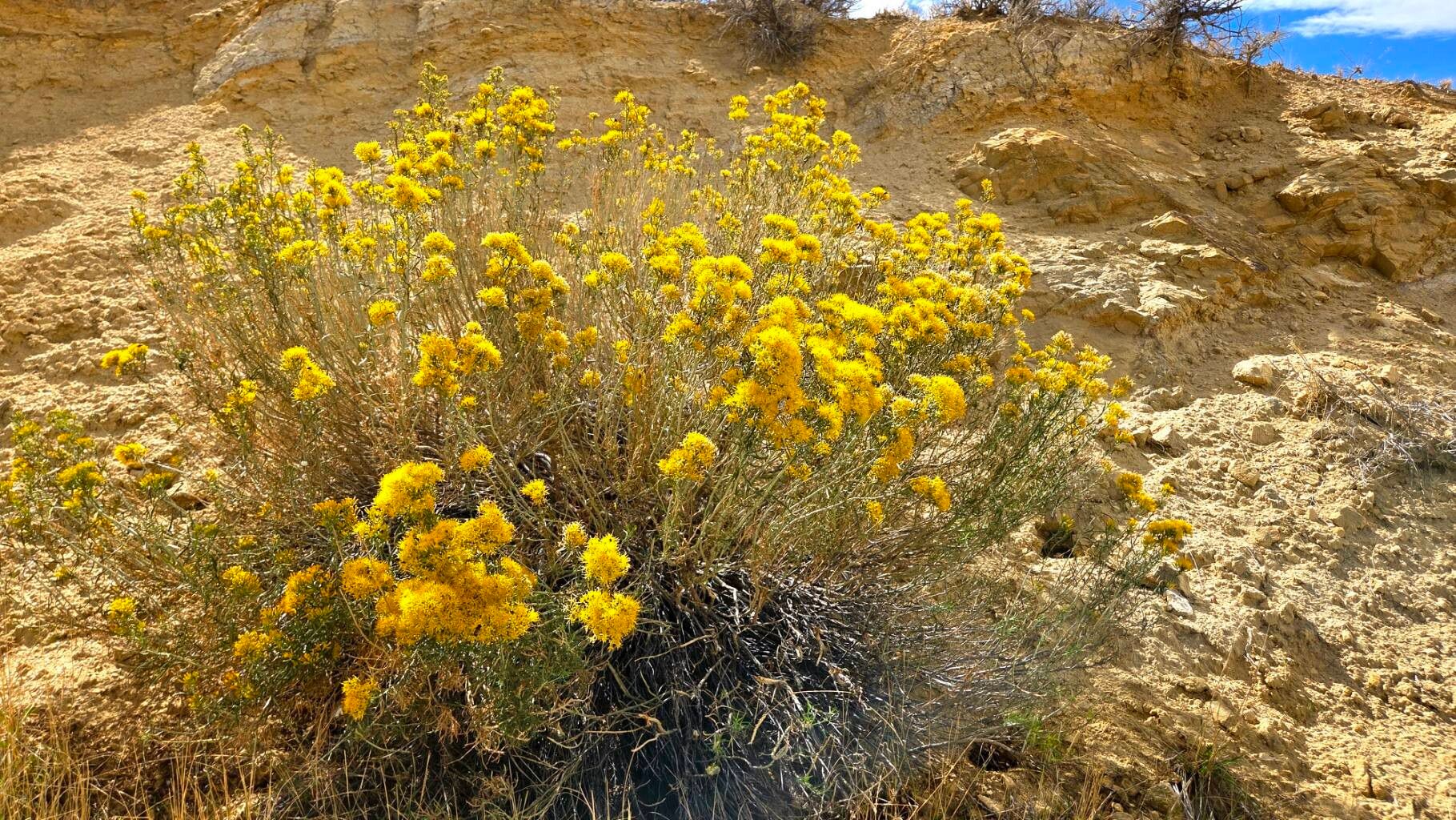
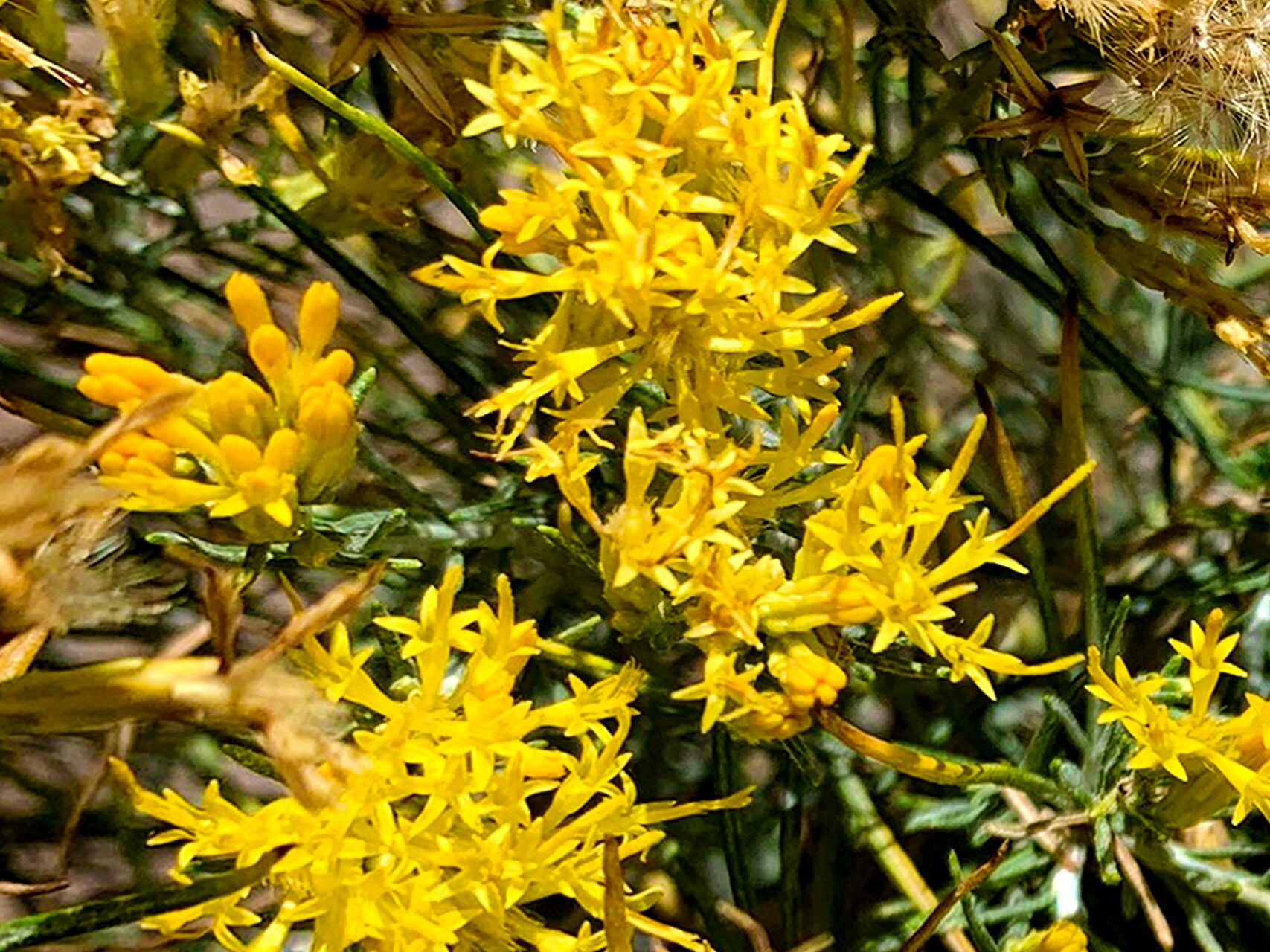
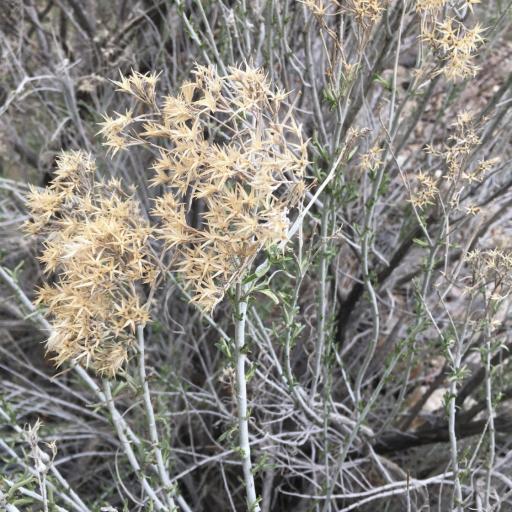
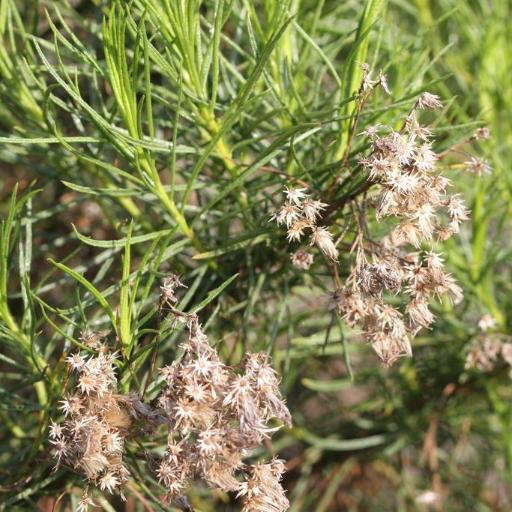
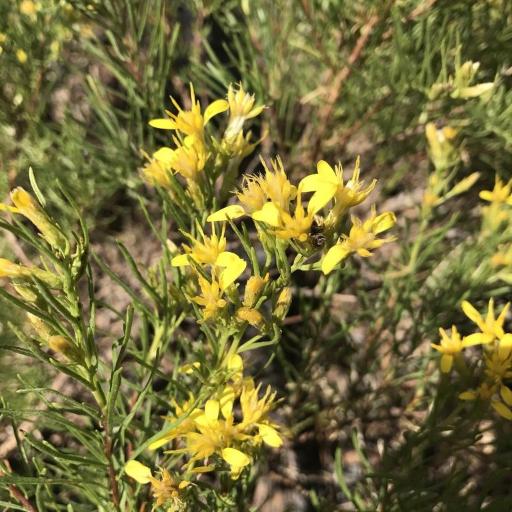
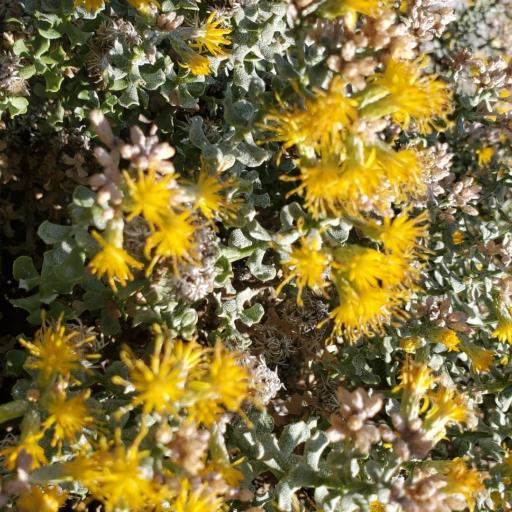
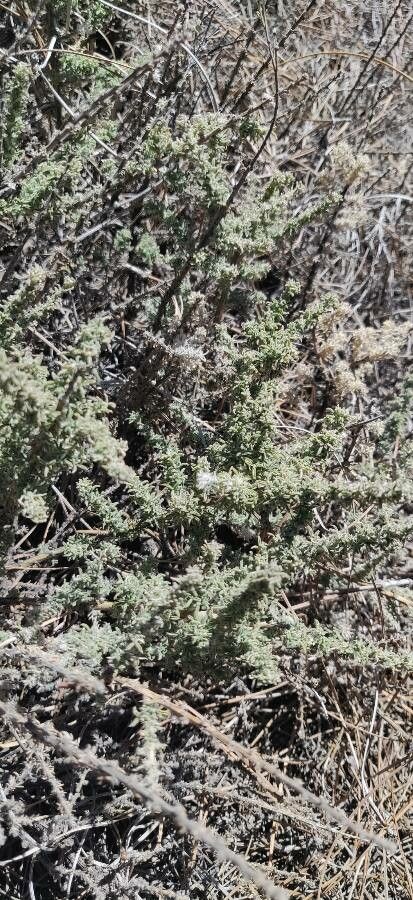
Ericameria nauseosa (formerly Chrysothamnus nauseosus), commonly known as Chamisa, rubber rabbitbrush, and gray rabbitbrush, is a North American shrub in the sunflower family (Aster). It grows in the arid regions of western Canada, western United States (from the western Great Plains to the Pacific) and northern Mexico. Two subspecies have been described, nauseosa (the gray form with 14 varieties) and consimilis (the green form with 8 varieties). Rubber rabbitbrush was moved from the genus Chrysothamnus to the genus Ericameria in a 1993 paper. The findings of a 2003 phylogenetic investigation of Ericameria were consistent with the move of the rubber rabbitbrush from Chrysothamnus to Ericameria. The second edition of the Jepson plant manual and the USDA Germplasm Resources Information Network have adopted the name Ericameria nauseosa.
Rubber rabbitbrush has strong resistance to disease and is generally not susceptible to illnesses. Regarding upkeep, this plant is fairly low-maintenance. Planted outdoors, it needs only minimal watering, and larger specimens typically do not require pruning. However, smaller specimens should be pruned after they finish blooming. Rubber rabbitbrusht is appropriate for anyone with an outdoor area, such as a garden or a deck, and does not demand much gardening experience.
How to keep Ericameria Nauseosa.
Light
The rubber rabbitbrush plant thrives on extensive daily sunlight for optimal growth. Although it can withstand lesser light during its developmental phases, this plant originates from sunny habitats and anything less than adequate sunlight can compromise its flourishing. The plant can bear the brunt of intense sunlight that may cause damage to the foliage, but it's generally resilient to such conditions.
Temperature
Rubber rabbitbrush favours a temperature spectrum of 41 to 95 ℉ (5 to 35 ℃). It flourishes in native habitats that have hot summers and gentle winters. For seasonal adaptation, it is suggested to apply moderate watering during the summer months and lessen the watering during winter to encourage dormancy.
Fertilizer
For the sake of promoting healthy development, supply fertilizer to your Rubber rabbitbrush during the early part of the spring season. Consistent fertilization boosts overall vitality, leading to robust growth, an increased capacity to tolerate severe conditions, and enhanced resistance towards diseases and pests. Adhere to a distinct fertilization regimen for your Rubber rabbitbrush to secure richly colored, vibrant leaves and a lush look.
Pot & Repot
When transplanting Rubber rabbitbrush, select a container that is 1-2 inches (2.5-5 cm) wider, ensuring it has sufficient drainage. Opt for a potting compound that drains well. Carry out the repotting during spring or autumn, placing the root mass a bit lower than the top edge of the plant pot. After the transplant, water it generously and locate it in a warm area with indirect sunlight.
Botanical profile.
- Plant Type
- Shrub
- Life Cycle
- Perennial
- Genus
- Ericameria
- Family
- Compositae
- Hardiness Zone
- 4-9
- Mature Height
- 0.61 m to 2.44 m
- Mature Spread
- 1.22 m to 2.13 m
- Leaf Color
- Green, Blue
- Leaf Type
- Deciduous
- Flower Color
- Yellow
- Flower Size
- 2.54 cm
- Bloom Time
- Mid summer, Late summer
- Planting Time
- Spring
- Harvest Time
- Late summer, Fall
- Native Area
- Mexico
Other names.