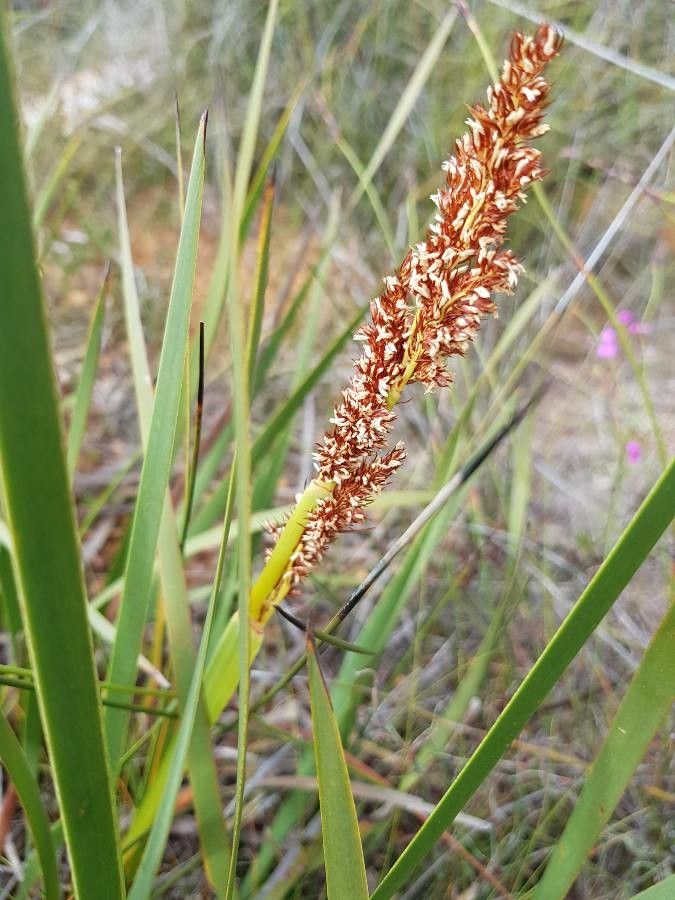
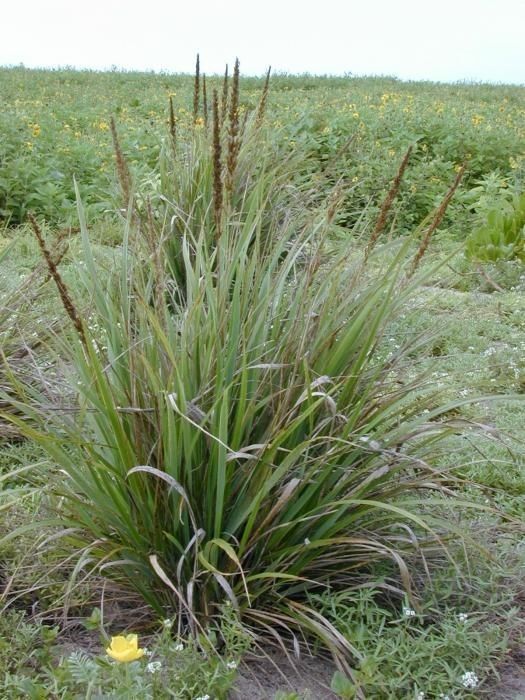
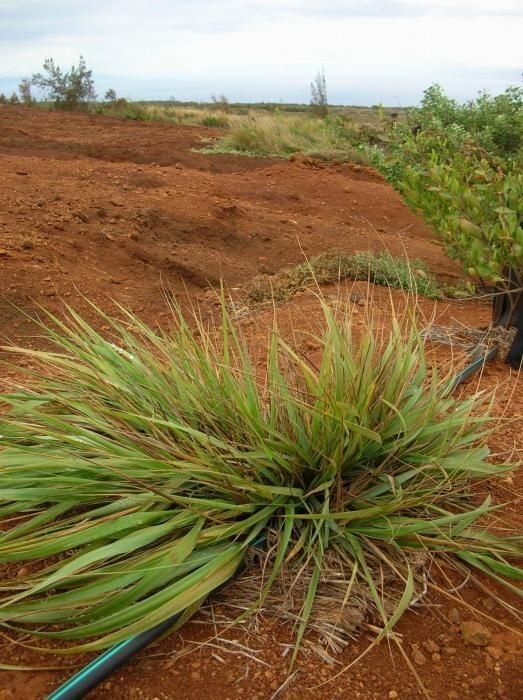
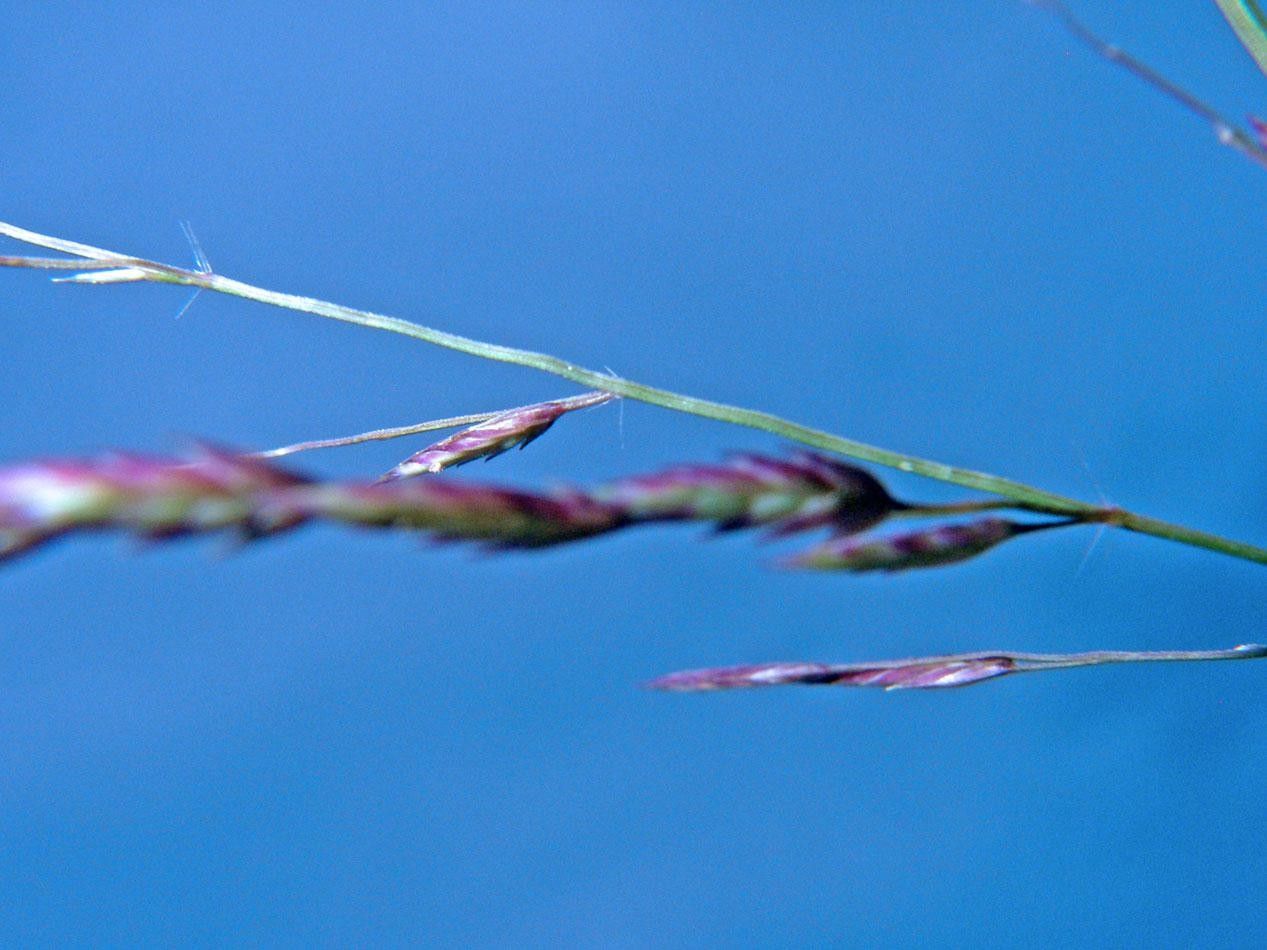
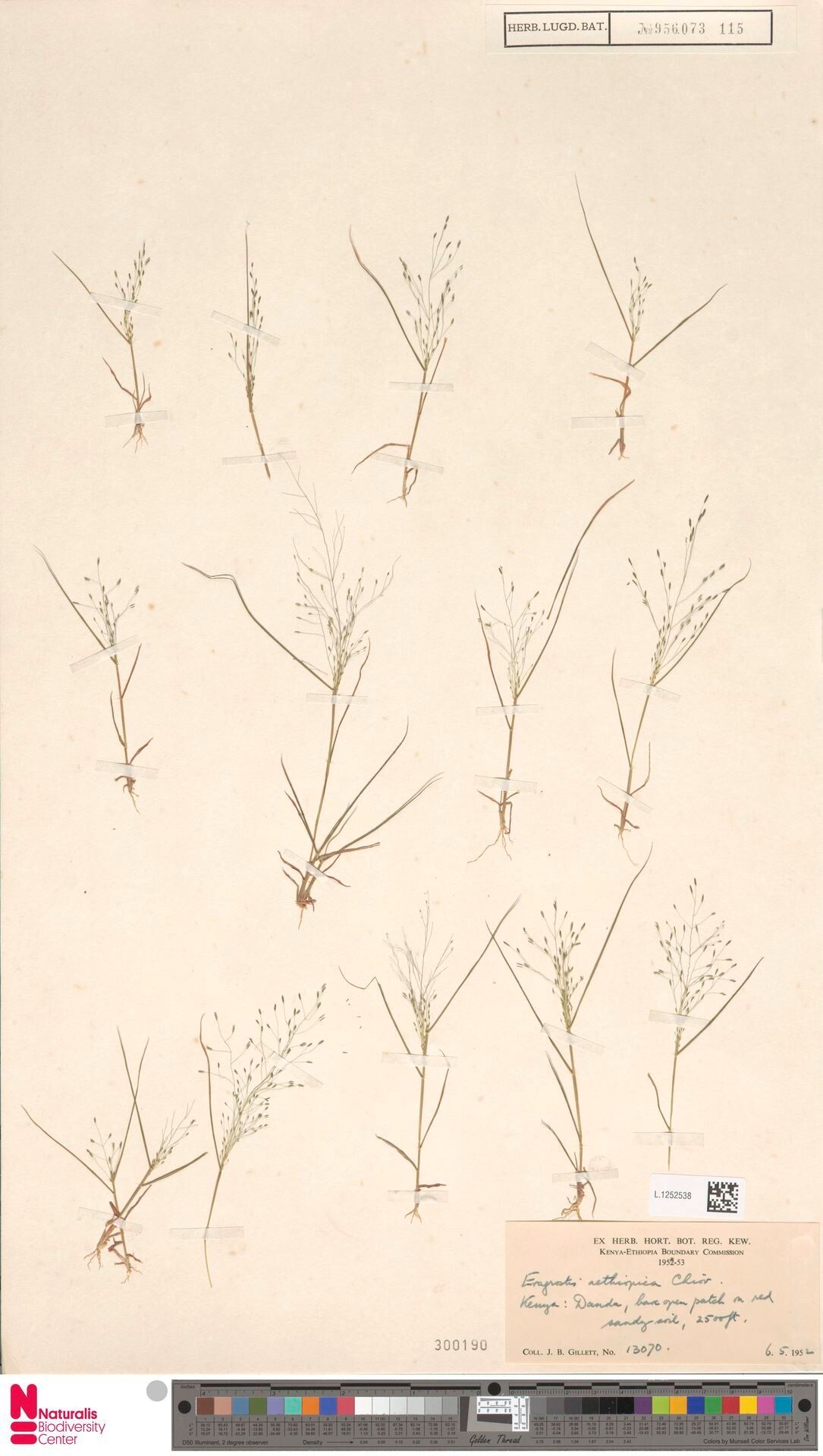
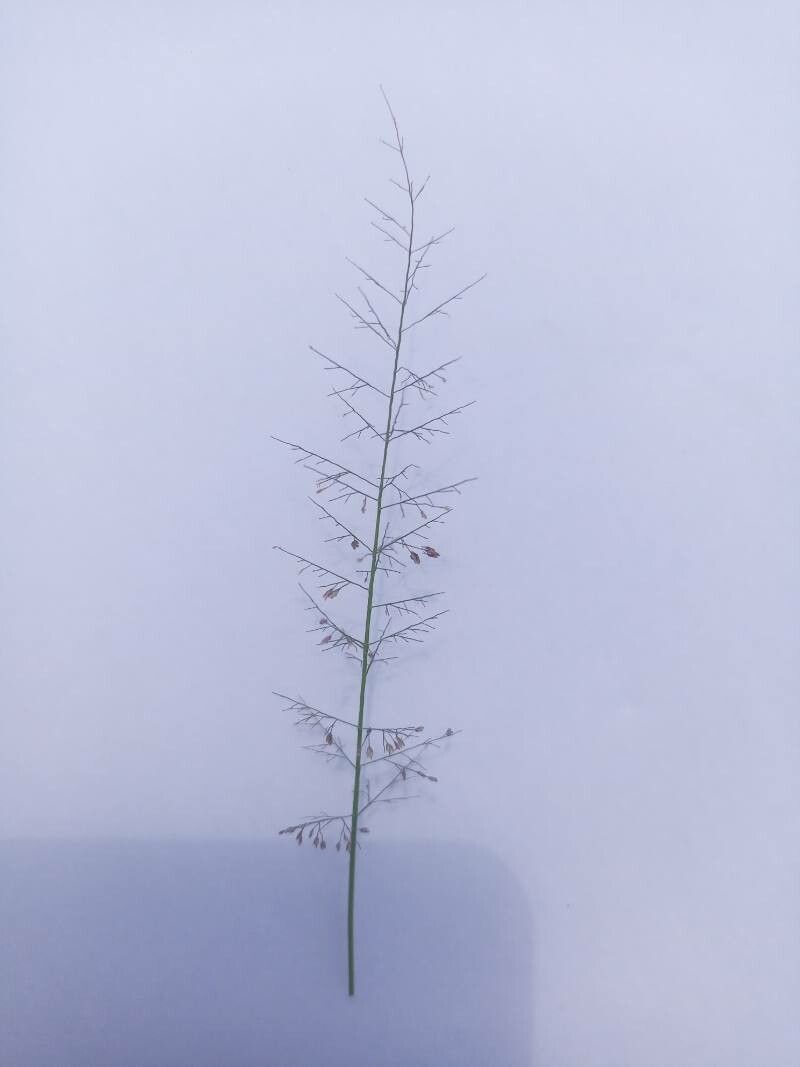
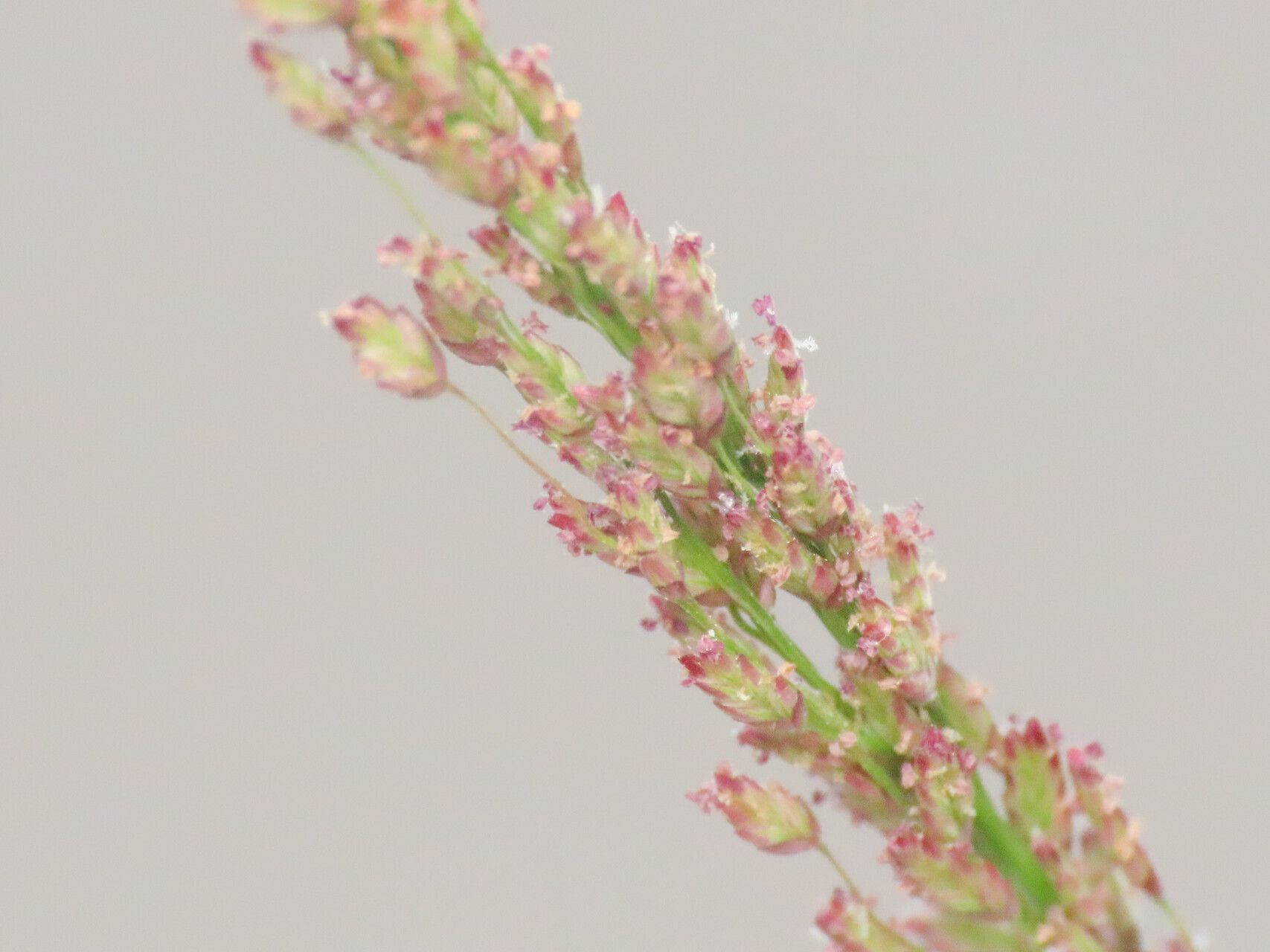
Eragrostis variabilis is a species of grass known by the common names variable lovegrass, kawelu, emoloa, and kalamalo. It is endemic to Hawaii, where it occurs on all the main islands plus Kure Atoll, Midway Atoll, Pearl and Hermes Atoll, Lisianski Island, Laysan, and Nihoa.This species is a perennial grass which is variable in appearance. The smooth, erect stems are up to 3 feet tall or more. The leaves and inflorescences are variable in length. The panicles are open and spreading or dense and spike-shaped. Plants from the main islands look different from those growing on the other Hawaiian islands. There are about 3,136,000 seeds in a pound.This plant grows in several types of island habitat from dunes at sea level to ridges and cliffs at up to 3700 feet in elevation. It grows in areas that receive 40 to 100 inches of precipitation per year.On Laysan Island this plant provides the main nesting habitat for the rare Laysan finch (Telespiza cantans). The bird hides its nest in clumps of the grass. The grass also provides important nesting cover for the rare Laysan duck (Anas laysanensis). It is used by other bird species, such as the brown noddy (Anous stolidus), wedge-tailed shearwater (Puffinus pacificus), and red-tailed tropicbird (Phaethon rubricauda).This plant was used as thatching by Native Hawaiians. It is also used as an ornamental grass.This grass is displaced by the introduced weed sandbur (Cenchrus echinatus). This displacement reduces the amount of available nesting habitat for birds.
Kawelu is resistant to disease and is generally not susceptible to illnesses. Carewise, this plant is fairly low-maintenance. When grown outdoors it needs minimal watering, and larger plants typically do not require pruning. Smaller plants, however, should be pruned after they have bloomed. Kawelut is appropriate for anyone with an outdoor area, such as a garden or deck, and does not need extensive care experience.
How to keep Eragrostis Variabilis.
Light
Kawelu is a sun-preferring perennial herbaceous plant native to open habitats and commonly found in meadows and grasslands. It prefers full sun but can tolerate partial sun.
Temperature
Kawelu comes from tropical areas, where the climate is usually warm and humid. Because of that, it is well suited to high heat and moisture. It dislikes sudden temperature shifts and prefers a steady thermal environment, so avoiding temperature fluctuations indoors is important. It generally cannot tolerate cold and needs relatively high temperatures to grow. If the surrounding temperature falls too low, the plant may stop growing or even die.
Fertilizer
Kawelu needs extra nutrients to encourage healthy new growth. In spring, putting some compost around the plant’s base can effectively supply the nutrition it requires. Fertilizing helps promote vigorous growth and improves the plant’s ability to resist diseases and pests.
Pruning
Kawelu is a hardy perennial grass that thrives with a bit of care. In early spring, it's beneficial to prune the plant to remove any dead foliage and promote new growth. Be sure to use sharp tools for clean, precise cuts. Avoid heavy pruning to minimize stress on the plant, promote its health, and prevent the spread of disease.
Botanical profile.
- Plant Type
- Grass
- Life Cycle
- Perennial
- Genus
- Eragrostis
- Family
- Poaceae
- Hardiness Zone
- 9-11
- Mature Height
- 0.61 m to 1.22 m
- Mature Spread
- 30 cm to 61 cm
- Leaf Color
- Green, Dark Green
- Leaf Type
- Semi-evergreen
- Bloom Time
- Summer
- Planting Time
- Spring, Summer, Autumn
- Harvest Time
- Late summer, Early fall, Mid fall
Other names.