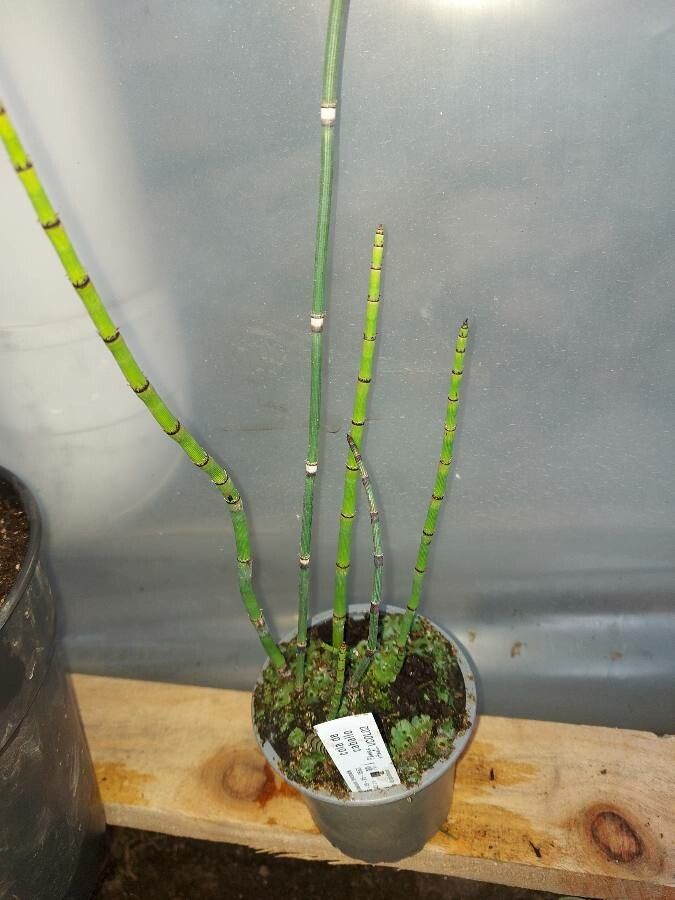
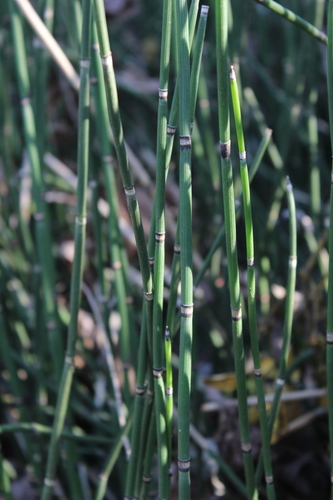
Equisetum giganteum, commonly known as giant horsetail or giant scouring rush, is a perennial plant species belonging to the Equisetaceae family. Native to South America, it thrives in wetlands, marshes, and along riverbanks.
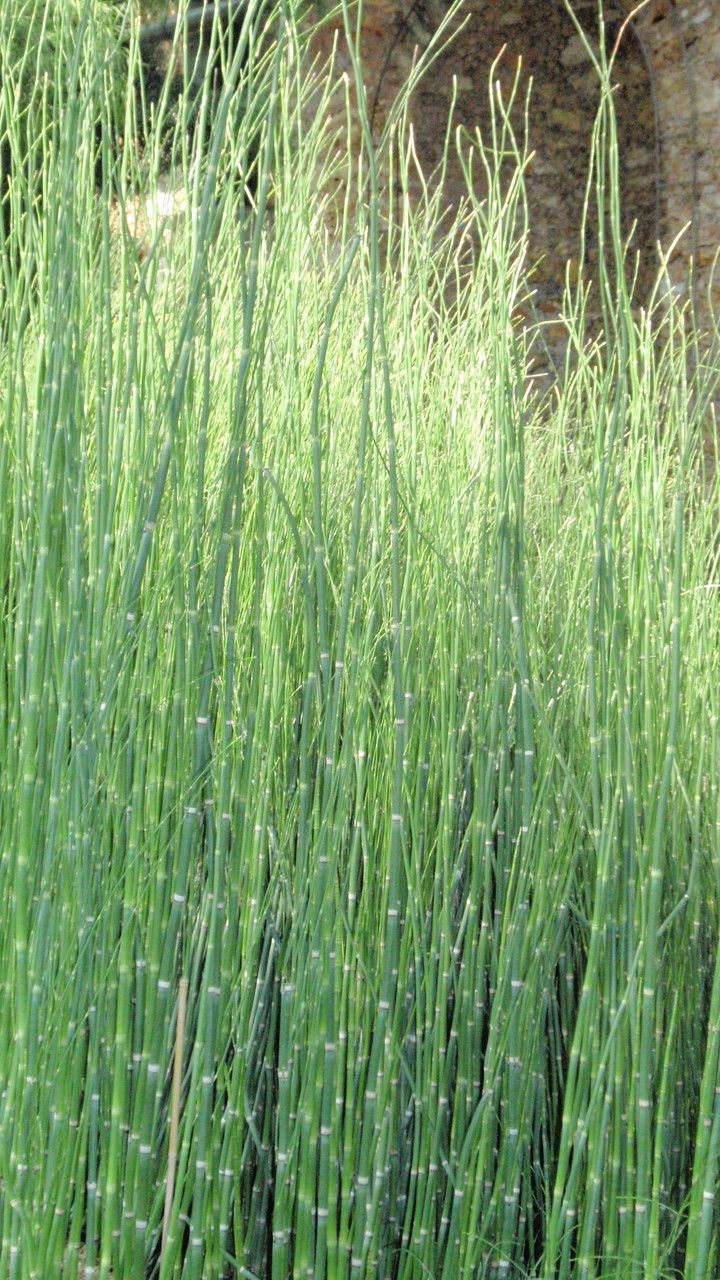
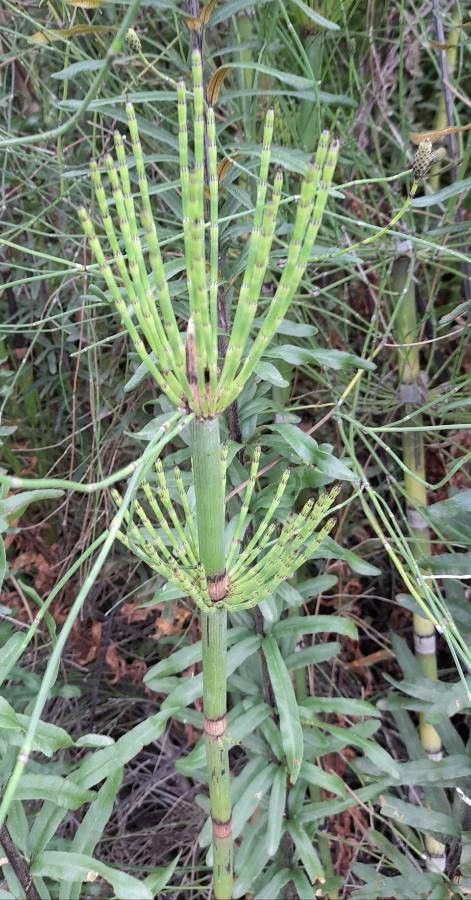
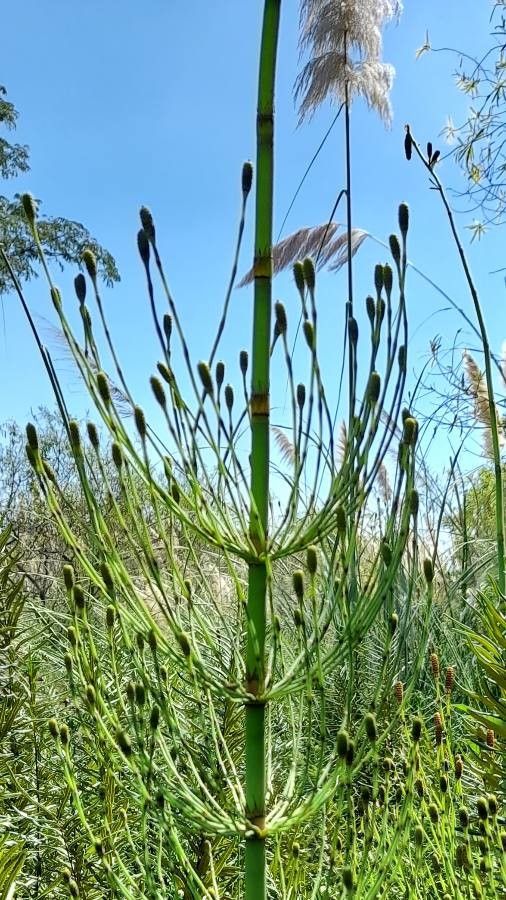
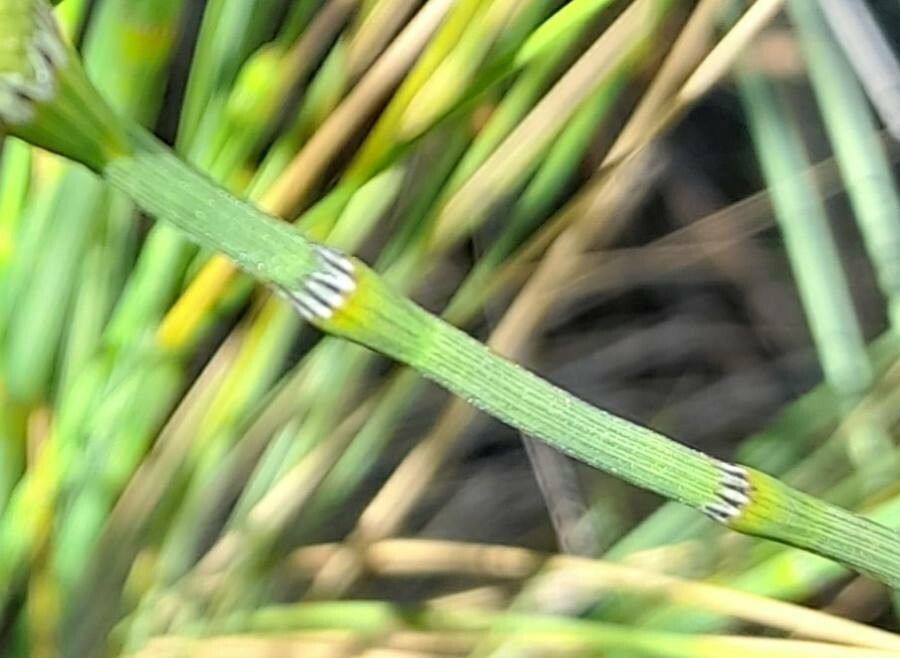
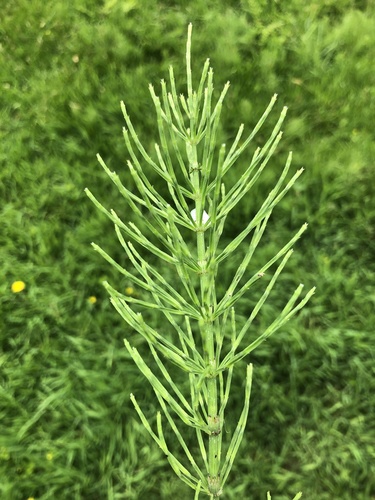
This plant features striking tall stems that can reach heights of up to 6 meters and diameters of approximately 2 centimeters. The stems are hollow, characterized by distinct ridges, and are segmented by nodes at regular intervals. The leaves of the plant are reduced to small scales that grow at these stem nodes.
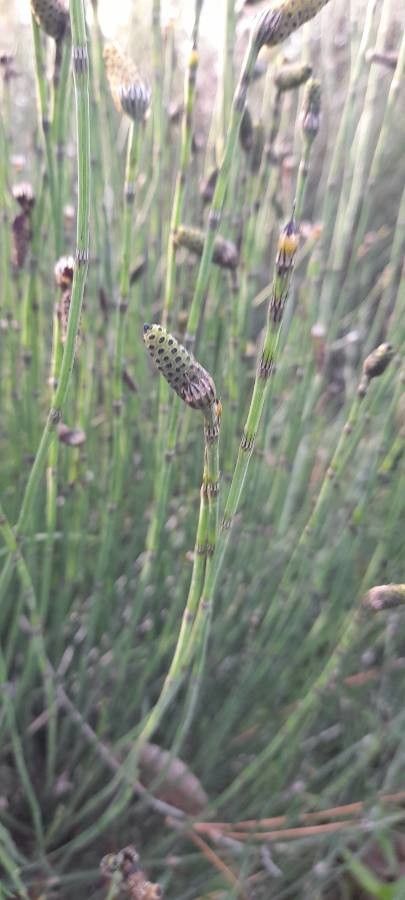
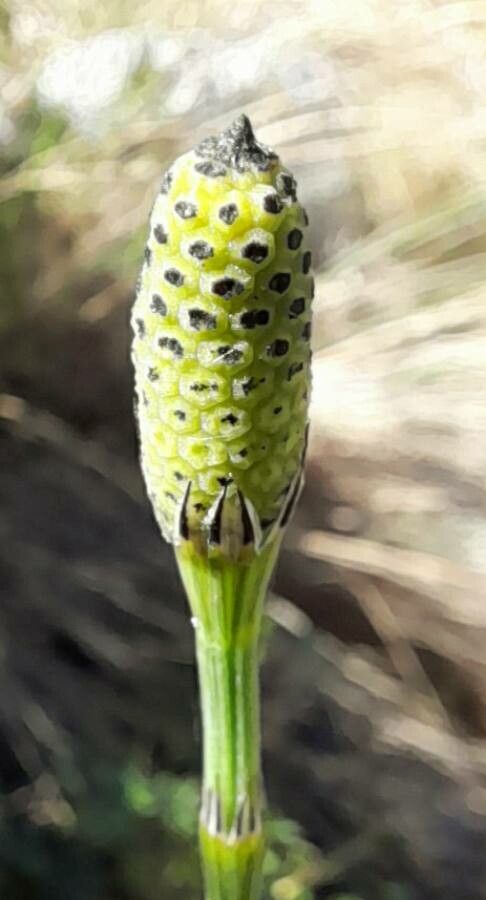
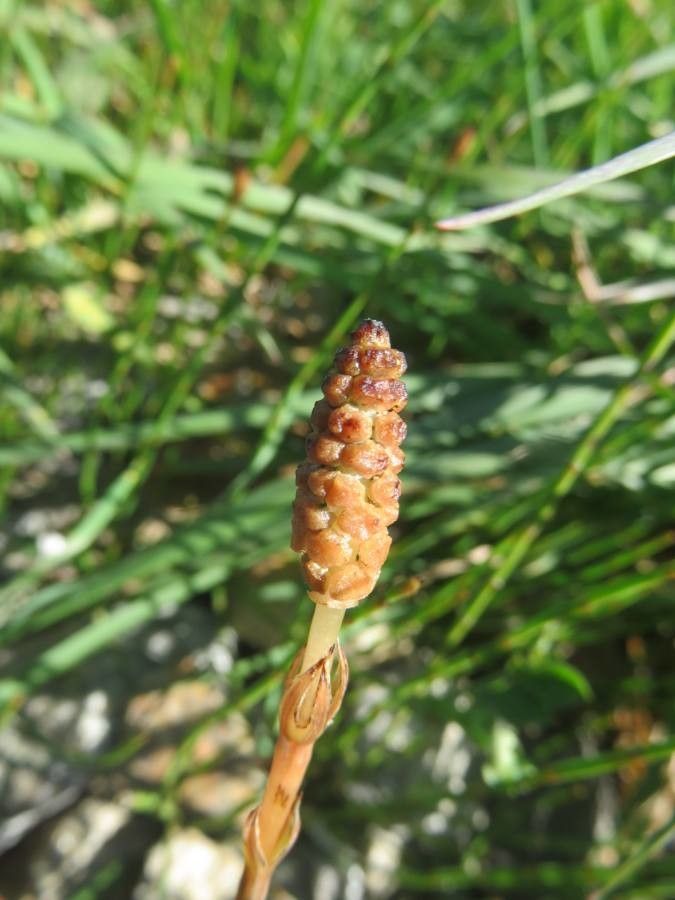
Unlike most plants that reproduce through seeds, Equisetum giganteum reproduces via spores. These spores develop on cone-like structures called strobili, which grow at the tips of select stems.
For centuries, indigenous people have used this plant for medicinal purposes. Its high silica content makes it particularly effective for treating wounds and skin conditions.
Despite its unique appearance, Equisetum giganteum is rarely cultivated as an ornamental plant due to its invasive nature when grown outside its natural habitat.
In summary, Equisetum giganteum is a fascinating species with a distinctive appearance. It plays a crucial role in wetland ecosystems and possesses medicinal properties that are valued in some cultures.
Giant horsetail is generally resistant to disease and has relatively few insect pests. Its care is considered difficult because it needs a consistently moist environment and frequent watering. However, the roots are susceptible to rot if overwatered or if the surroundings lack good ventilation. Giant horsetail is better suited to someone with some growing experience, as many people can keep it alive for a period. Nevertheless, it may struggle to thrive, with its leaves drying out and becoming less healthy over time.
How to keep Equisetum Giganteum.
Light
Giant horsetail is found in habitats like forest understories and rocky areas, providing natural shade. Its preferred sunlight exposure is Full Shade, but it can tolerate Partial Sun.
Temperature
Giant horsetail comes from tropical areas, where the climate is usually warm and humid. Consequently, it is adapted to high temperatures and moisture. It does not tolerate sudden temperature changes and prefers a steady thermal environment, so avoiding temperature fluctuations indoors is important. It generally cannot withstand cold and requires warmer conditions to grow. If the surrounding temperature becomes too low, the plant may stop growing or even die.
Botanical profile.
- Plant Type
- Fern
- Life Cycle
- Perennial
- Genus
- Equisetum
- Family
- Equisetaceae
- Hardiness Zone
- 7-11
- Mature Height
- 2.13 m to 4.88 m
- Mature Spread
- 0.91 m to 2.13 m
- Leaf Color
- Dark Green
- Leaf Type
- Evergreen
- Planting Time
- Spring, Summer, Autumn
- Native Area
- Belize, Honduras, Mexico, Guatemala, Peru, Panama, Jamaica, Colombia, Cuba, Bolivia, Venezuela, Brazil, El Salvador, Nicaragua, Ecuador, Costa Rica
Other names.