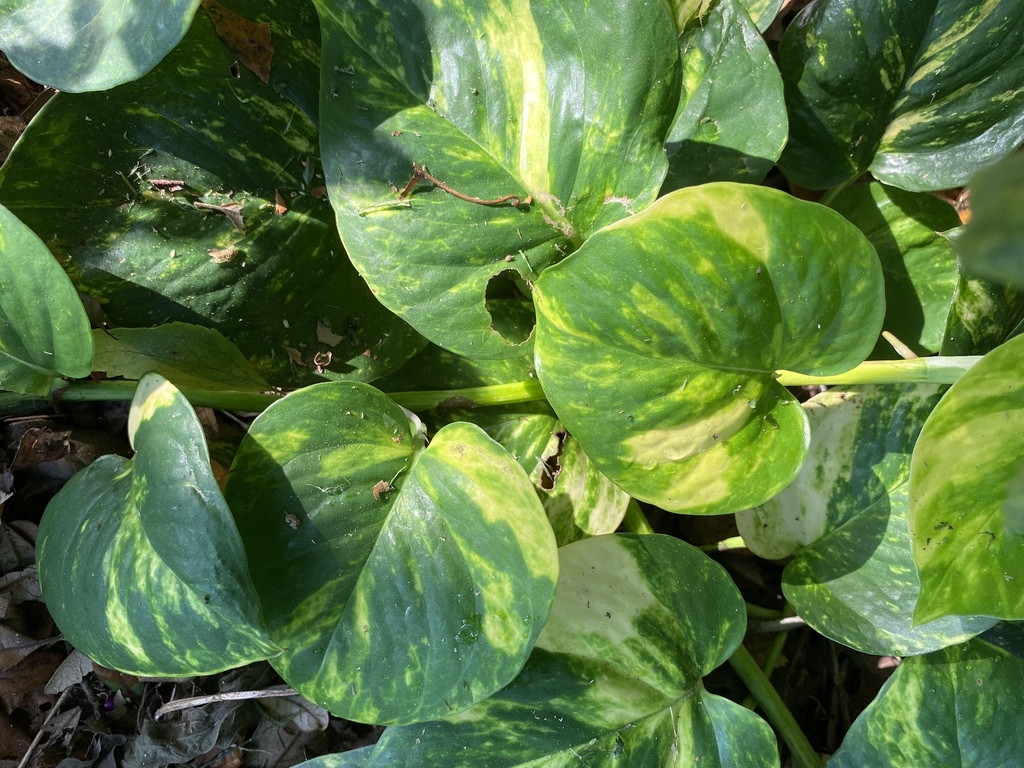
Epipremnum aureum, commonly known as Golden Pothos or Devil's Ivy, is a popular houseplant native to Southeast Asia. This member of the Araceae family is a climbing vine that can grow up to 20 meters in length. Its heart-shaped leaves are glossy and variegated with shades of green and yellow.
Golden Pothos is easy to care for and thrives in low-light conditions, making it an ideal choice for indoor spaces. It prefers well-draining soil with moderate moisture levels but can tolerate occasional dry spells.
This plant has air-purifying qualities, removing toxins such as formaldehyde, benzene, and xylene from the air, thus enhancing indoor air quality.
The golden pothos is a popular houseplant, mainly because of its air-purifying abilities. In newly renovated homes, it has been shown to absorb harmful chemicals such as benzene, trichloroethylene, and formaldehyde. However, you should not rely solely on the plant to eliminate all harmful gases from a room. Despite this, the golden pothos has remarkable vitality. It can rapidly convert formaldehyde into sugars or amino acids and break down benzene emitted by devices like photocopiers and printers. This plant's resilience makes it a common choice for both homes and offices. FUN FACT · FROM THE LIBRARY
Propagation of Epipremnum aureum can be done through stem cuttings or by layering. Occasional pruning is needed to control its growth and maintain its shape.
Overall, Epipremnum aureum is a low-maintenance houseplant that adds beauty and freshness to any indoor space while also providing health benefits by purifying the surrounding air.
Golden Pothos, named for its green leaves streaked with gold, has a complex naming history. Originally classified as Pothos aureus, this plant underwent several reclassifications over time. In 1962, researchers discovered its ability to blossom, prompting closer study of its flowers, leaves, and growth patterns. As a result, the plant was given its current scientific name, Epipremnum aureum.
Golden pothos is fairly disease-resistant and typically not vulnerable to illnesses. It can, however, develop leaf spots if light and ventilation are poor and watering is excessive. This plant is regarded as easy to care for, since it only needs regular watering and little else. Golden pothos is appropriate for people who lack the time and energy to commit to routine care.
How to keep Epipremnum Aureum.
Light
Golden pothos prefers spots with low light and tolerates situations where sunlight is partially blocked. It originates from habitats with limited illumination, which supports this preference. Excessive sun can scorch its leaves, while too little light may impede its growth and overall health.
Water
Golden pothos thrives in high humidity and requires consistent moisture. It should be watered weekly to keep it healthy. While it can handle brief periods of dryness, regular hydration is essential for maintaining its lush appearance. As an evergreen plant often grown indoors, golden pothos also benefits from occasional misting to mimic its natural tropical environment.
Humidity
This plant needs special care because it loves high humidity levels of 60-80% or more. The best way to achieve this is by placing a humidifier near the plant. Daily misting is also essential! Make sure the room has good ventilation.
Temperature
Golden pothos originates from tropical regions and needs warm temperatures to thrive. It prefers a temperature range of 68 to 105 ℉ (20 to 41 ℃). In winter, maintain temperatures above 60 ℉ (15.5 ℃) to prevent the leaves from dropping.
Fertilizer
Golden pothos needs the most fertilizer during its active growth period, which takes place mainly in spring, summer, and early fall. Fertilization supplies essential nutrients that may be deficient in the soil, supporting healthy root and stem development and encouraging the attractive foliage that is a defining feature of this plant.
Pruning
Golden pothos is a resilient, trailing plant known for its heart-shaped leaves. To keep it healthy and looking its best, prune it from early to late spring. Make your cuts just above the leaf nodes to encourage fullness and control its size. Regular pruning not only enhances the plant's appearance and health but also helps prevent pests, ensuring that the golden pothos remains vibrant and thriving.
Pot & Repot
Repot Golden pothos in spring or summer once it’s warm enough, choosing a pot that’s slightly larger and has good drainage. Water thoroughly after repotting, and place the plant in bright, indirect light. Consider adding a moss pole for support as the plant grows.
Botanical profile.
- Plant Type
- Vine, Herb
- Life Cycle
- Perennial
- Genus
- Epipremnum
- Family
- Araceae
- Hardiness Zone
- 10-13
- Mature Height
- 0.3 m to 20.12 m
- Mature Spread
- 20 cm to 30 cm
- Leaf Color
- Green, Yellow, Variegated
- Leaf Type
- Evergreen
- Flower Color
- Green
- Flower Size
- 2.54 cm
- Bloom Time
- Summer, Early fall
- Planting Time
- Spring, Summer, Autumn, Winter
- Harvest Time
- Late summer, Fall
- Native Area
- Solomon Islands
Other names.
Reader questions.
When Should I Water My Golden Pothos?
Timely watering of golden pothos is essential for its health and growth, facilitating nutrient absorption and photosynthesis. Check the top 1-2 inches of the soil; if dry, it's watering time. Beware of over-watering to avoid root rot. Signs your golden pothos needs water include drooping and yellowing leaves, while browning leaf edges suggest under-watering. Delay in growth or shrinking indicates the plant is thirsty. Imbalances in watering can lead to conditions like root rot or slow growth, affecting the plant's longevity.
Why should I add fertilizer to my Golden pothos plant?
Plants like the Golden pothos need soil nutrients to grow. However, it's not always guaranteed that the soil they're planted in will have all the necessary nutrients. That's why fertilization and soil amendments are important. These methods help ensure that your garden plants have the basic nutrients they need, as well as specific ones they require. In the case of the Golden pothos, it needs fertilizer to support the healthy development of its roots and stems throughout the growing season. Fertilization also enhances the appearance of its leaves, which is important as the foliage of this plant is its main attraction.
What are the sunlight requirements for Golden Pothos?
Golden Pothos, or Epipremnum aureum, thrives in various lighting conditions but prefers environments with meager to partial sunlight exposure. Specifically, it does well in full shade areas where it receives less than 3 hours of sunlight or in partial sun with about 3-6 hours of sunlight. It's essential to watch how sunlight moves through your garden or indoor space and choose spots that offer a balance of light and shade, ensuring the plants' happiness and preventing issues like scorching of leaves or inadequate growth due to too much or too little light.
What is the preferred temperature range for Golden Pothos?
Golden pothos, native to tropical regions, thrives in warm temperatures, preferring a range between 68 to 105°F (20 to 41°C). During winter months, it's crucial to keep the surroundings above 60°F (15.5°C) to prevent the leaves from dropping. This heat-loving plant can suffer from any exposure to cold temperatures. In autumn, it is advised to move outdoor plants indoors, placing them near a bright window yet away from direct heat sources, to maintain ideal growth conditions.
How Should I Water My Golden Pothos?
Water your golden pothos by allowing its soil to slightly dry between waterings, adhering to its preference for well-drained soil. Utilize the base-watering technique to encourage deep root growth, avoid getting foliage wet to prevent diseases, and use a moisture meter to gauge when to water next. Employ a watering can with a narrow spout for precise watering, ensuring to avoid over-watering which leads to root rot. Ensure proper drainage to prevent the plant from sitting in water.
When should I fertilize my Golden pothos plant?
A Golden pothos requires the most fertilizer when it is actively growing, which usually occurs during spring, summer, and early fall. After winter, feed the plant every two to four weeks until fall arrives. In autumn, gradually decrease the fertilization rate until you stop feeding it completely in preparation for the less active growth period in winter.
What essential care does Golden Pothos need?
Essential care for Golden Pothos involves ensuring the plant is placed in areas with the right amount of light exposure. Origins in environments with limited illumination mean this plant can withstand conditions where the sun is partly obscured. Too much sun may scorch its leaves, whereas not enough light could hinder its growth and vitality. When natural sunlight is insufficient, particularly during winter or in spaces that don’t get much sun, artificial lighting, such as LED lights, can be utilized. These artificial lights should provide 10-50W/sq ft of light depending on the plant's requirements, be placed 12-36 inches above the plant, and be left on for 8-12 hours per day to mimic natural daylight hours.
How does low temperature affect Golden Pothos and what are the solutions?
Golden pothos requires warm temperatures for optimal growth and isn't tolerant of low temperatures. It is best to keep the plant in conditions above the minimum suitable growth temperature. During winter, temperatures should not drop below the minimum tolerable growth temperature to avoid leaf discoloration. Frost damage can cause the leaves to turn brown or black with symptoms such as wilting and drooping apparent. To mitigate cold damage, trim off frost-damaged parts and move the plant to a warmer, indoor environment immediately. Placing the plant near a south-facing window ensures ample sunlight without the risk posed by heaters or air conditioning vents, which can excessively dry out the air.
How Much Water Does Golden Pothos Really Need?
Golden pothos, native to tropical rainforests, requires moderate watering. Its water need varies based on pot size, root depth, and plant size. Thoroughly water until the soil is moist but not waterlogged, allowing soil to partially dry out between sessions. A well-hydrated pothos has vibrant leaves and firm stems, while signs of over or underwatering include yellow or wilting leaves. Maintain a balance in watering, complemented by regular misting and ensuring good drainage, for the plant's optimal growth.
When is it not a good idea to add fertilizer to my Golden pothos plant?
For most of the year - spring, summer, and the majority of fall - it's important to regularly feed your Golden pothos. However, there are exceptions. If you accidentally over-fertilize or use the wrong type of fertilizer, you'll need to fix the issue before continuing with regular feeding. During the winter, it's important to note that Golden pothos goes into a dormant phase if grown indoors in a cold area. Feeding the plant during this dormant phase is unnecessary and could cause fertilizer burn.
What are symptoms of inadequate light for Golden Pothos, and how can they be treated?
Golden Pothos may exhibit several symptoms when it doesn't receive adequate light, including slower or halted growth, loss of variegation, smaller leaves, chlorosis, sunscald, leaf curling, wilting, and leaf scorching. To address these issues, move your plants to a location where they can get sufficient filtered light, including brief periods of direct morning sunlight, ideally 1-2 meters away from a window. For large or hard-to-move plants, consider supplemental artificial light, keeping a lamp on for at least 8 hours daily or using professional plant grow lights. If transitioning plants outdoors, do so gradually to prevent sunburn, allowing plants to adjust to increased light exposure. Pruning obstructions or transplanting to sunnier locations can also help for ground-planted specimens.
What should be done if Golden Pothos is exposed to high temperatures?
During summertime, it is important to ensure that the surroundings of a Golden pothos remain below the maximum suitable growth temperature. Exceeding the tolerable high temperature mark can lead to leaf discoloration and make the plant more prone to sunburn. In case of exposure to high temperatures, affected areas should be trimmed away. Relocating the plant to a shaded area, especially from the midday and afternoon sun, along with watering it during cooler times like morning or evening, can help maintain the soil's moisture and protect the plant from heat stress.