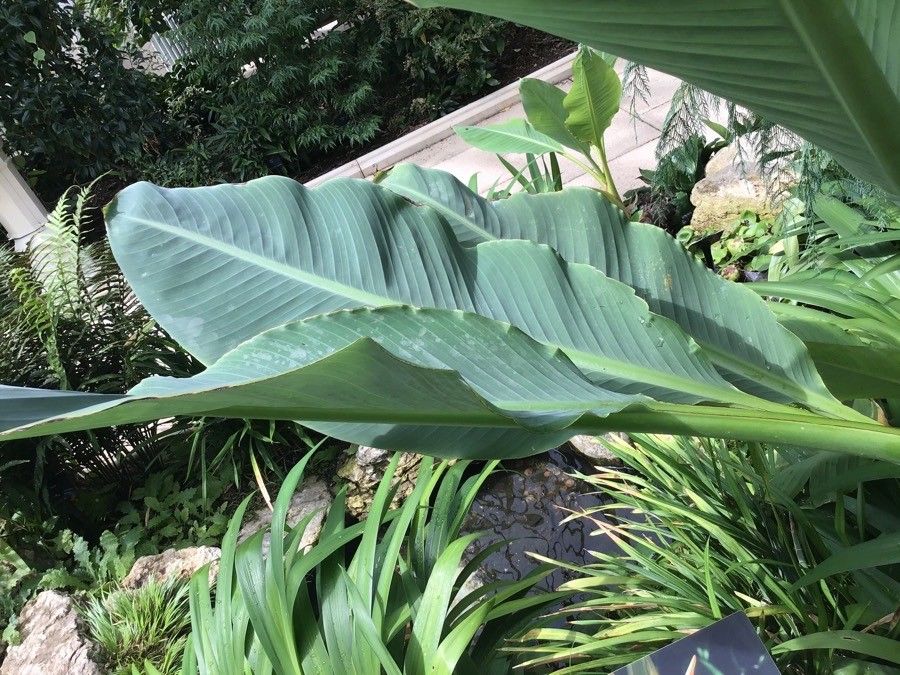
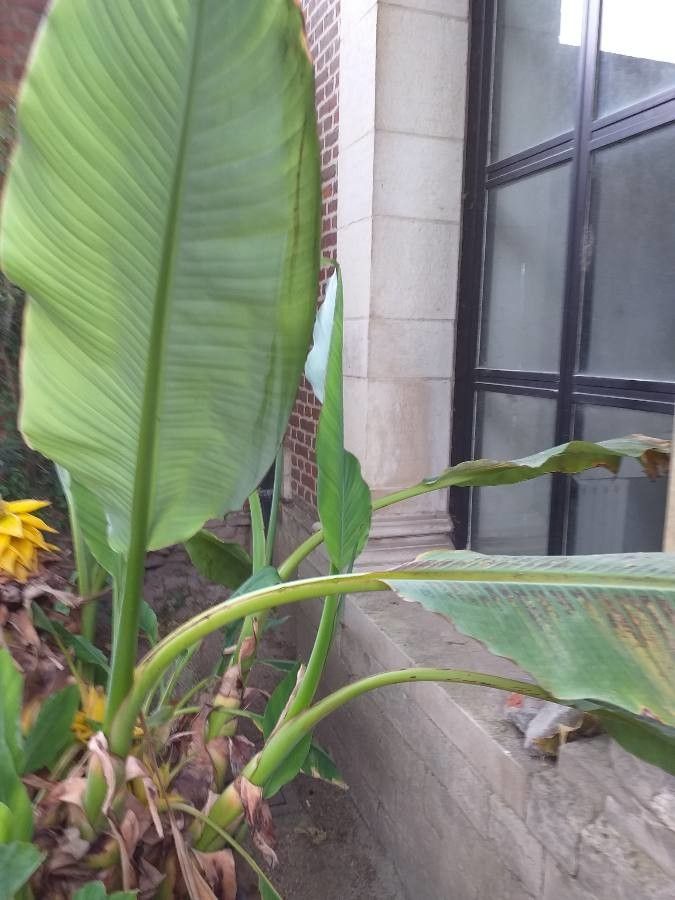
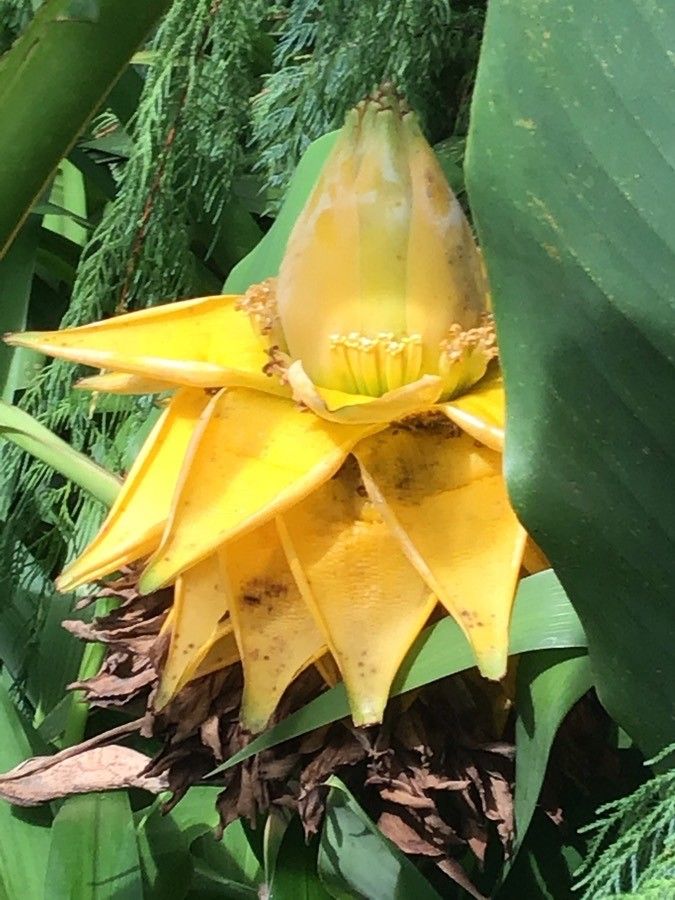
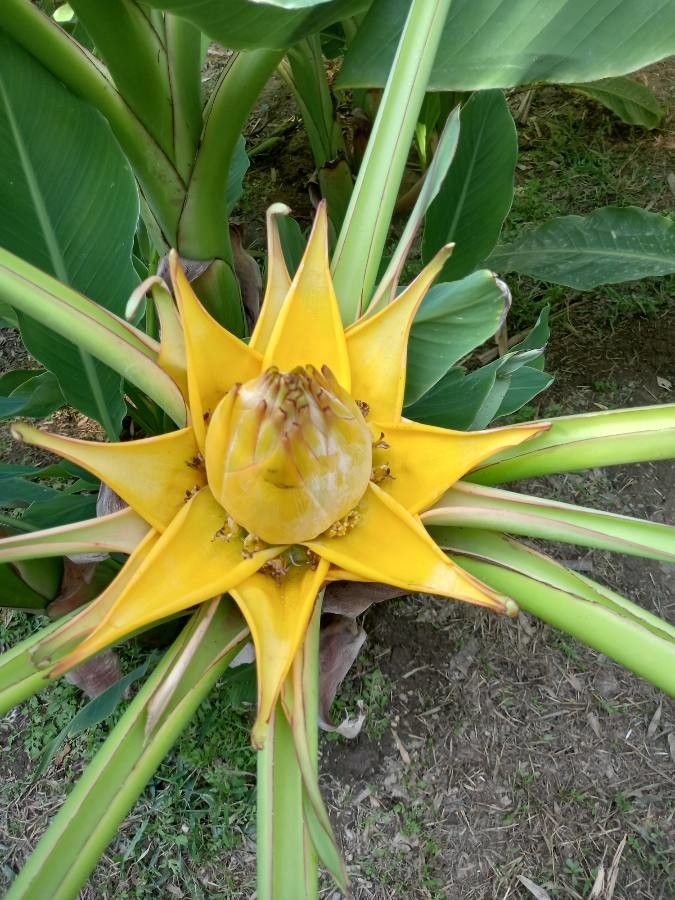
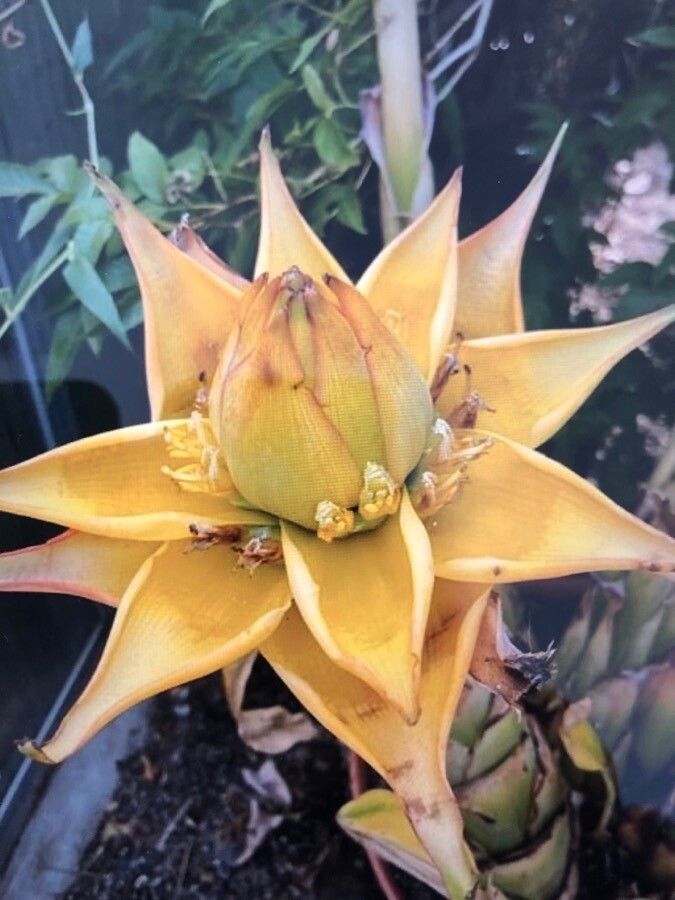
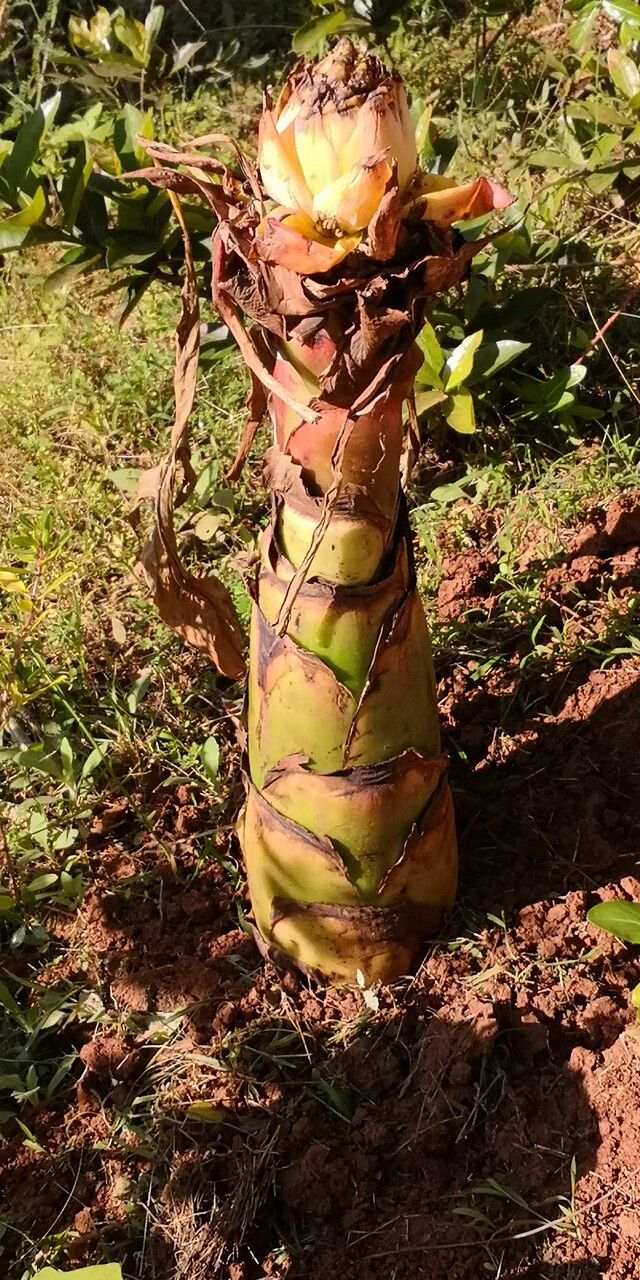
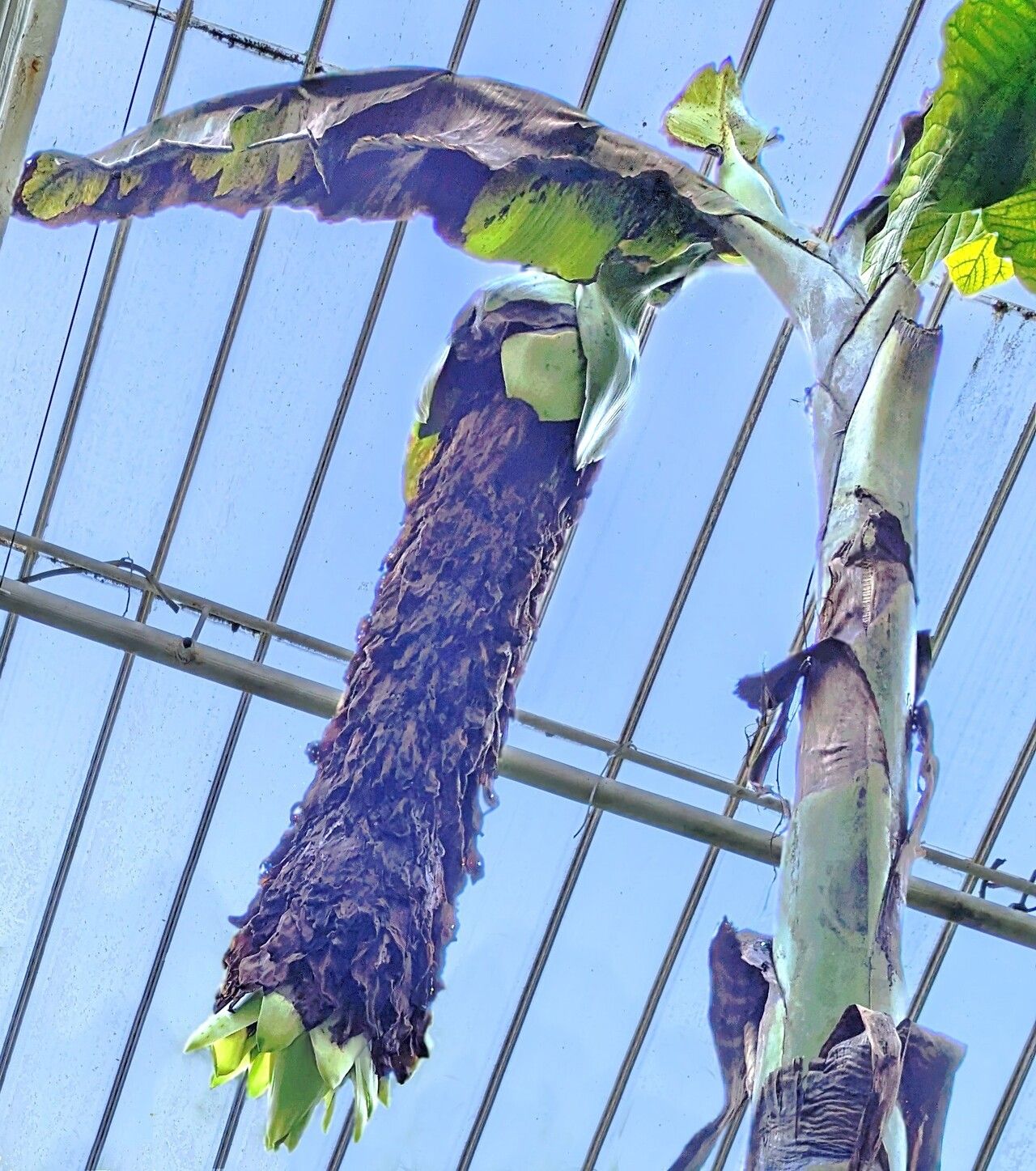
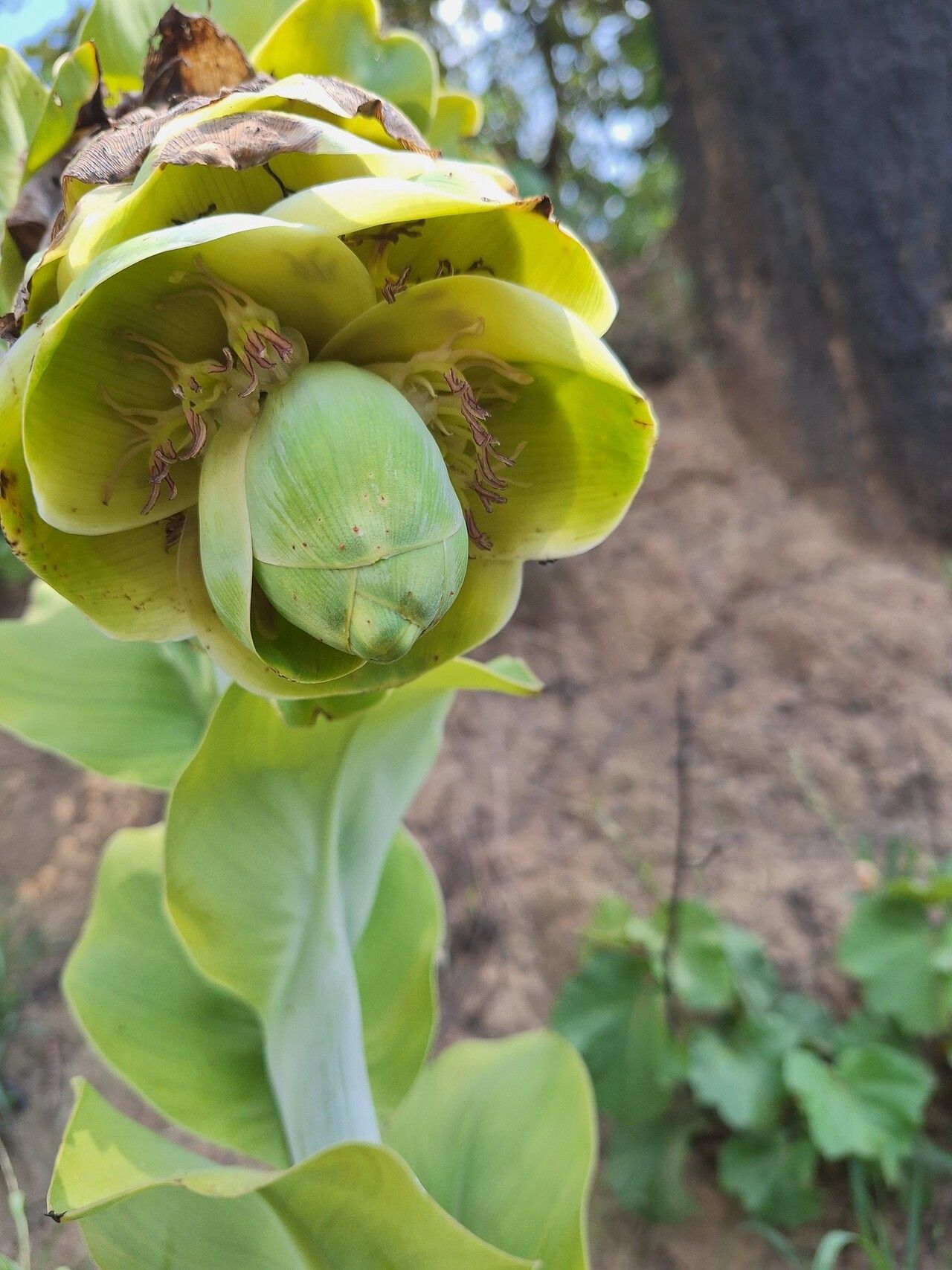
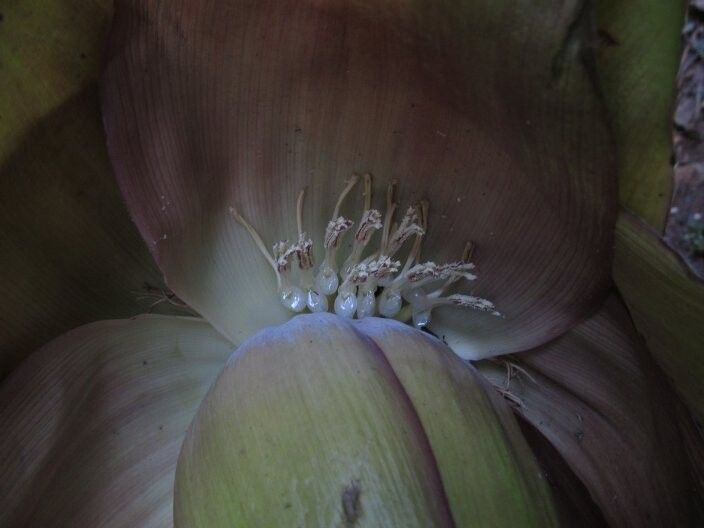
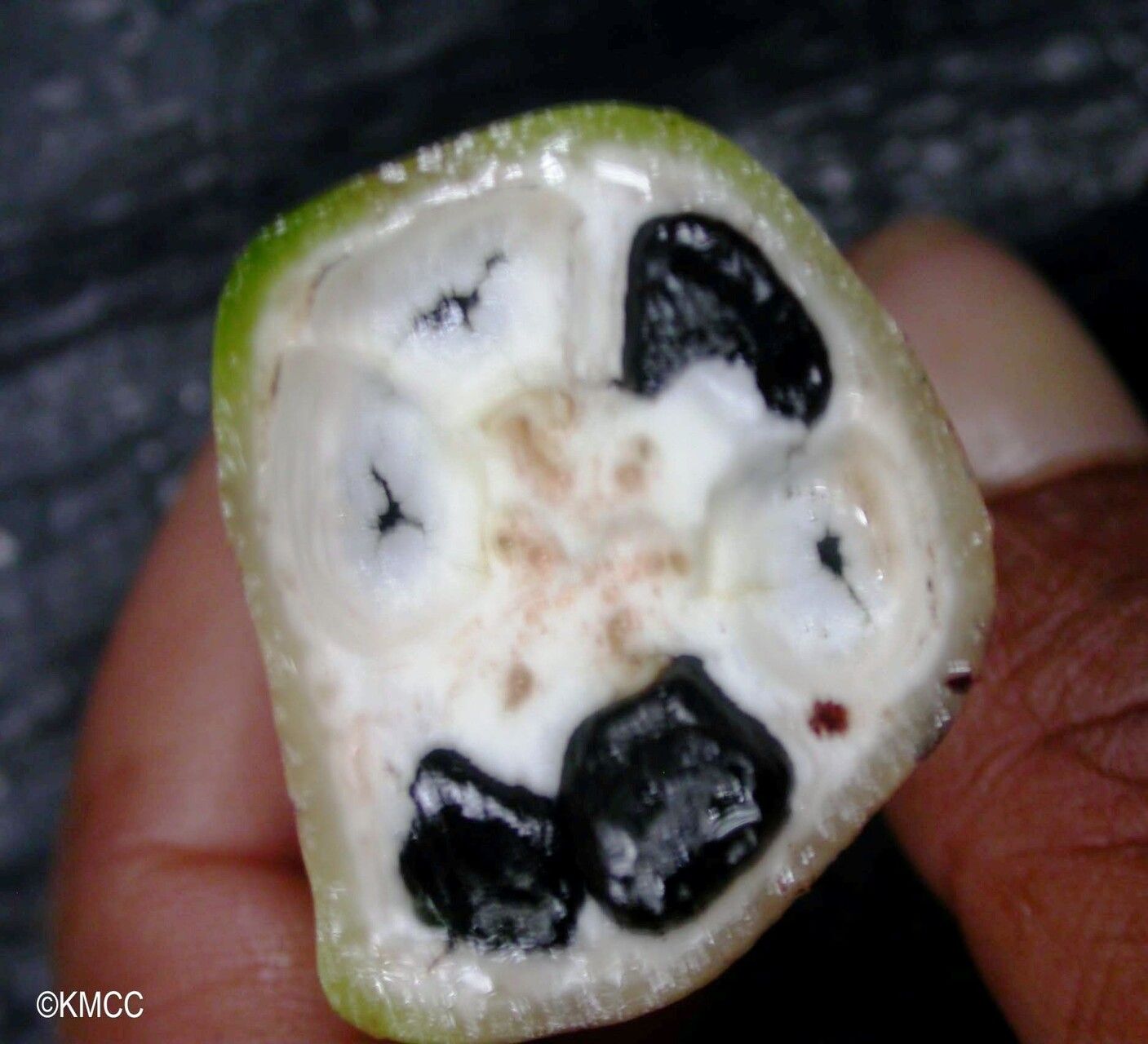
Musella lasiocarpa (syn. Musa lasiocarpa), commonly known as Chinese dwarf banana, golden lotus banana or Chinese yellow banana, is the sole species in the genus Musella. It is thus a close relative of bananas, and also a member of the family Musaceae. The plant is native to the Yunnan province in China, where it grows high in the mountains up to an altitude of 2500 m. It is known for its erect, yellow pseudostems (see image), generally appearing during the second year of cultivation, that can last a few months. Just before opening, the yellow, flower-like pseudostem resembles a lotus - from which the plant gets one of its names. Under its synonym Musa lasiocarpa, this plant has won the Royal Horticultural Society's Award of Garden Merit. It can be grown outside, but requires protection from freezing temperatures.
Chinese dwarf banana has moderate resistance to disease but can be prone to problems like leaf spot. Its vulnerability to insect pests varies by variety, although most types are not very resistant to pests. For care, Chinese dwarf banana requires regular watering and feeding, and yellow leaves should be pruned often. It is important to address pests and diseases when they occur and to harvest the plant at the proper time. Chinese dwarf banana is suited to people who can dedicate some time and effort to regular maintenance.
How to keep Ensete Lasiocarpum.
Light
The Chinese dwarf banana does best with abundant light but can also endure moderately lit conditions. Originating from sun-drenched habitats, it takes in sunlight efficiently for photosynthesis, promoting healthy growth. Both insufficient and excessive light can impede its development or cause harmful effects.
Temperature
The Chinese dwarf banana originates from areas with a natural temperature range of 59 to 95 °F (15 to 35 ℃). It displays optimal growth within this range. In different seasons, small temperature adjustments may be necessary to mimic those native conditions.
Fertilizer
For Chinese dwarf banana, use natural organic options such as compost, grass clippings, or manure. Slow-release granular fertilizer or commercial fertilizer can be applied sparingly. Work the organic fertilizer into the soil before planting. Typically, one to two fertilizer applications per growing season are sufficient for a bountiful harvest.
Botanical profile.
- Plant Type
- Herb
- Life Cycle
- Perennial
- Genus
- Ensete
- Family
- Musaceae
- Hardiness Zone
- 7-10
- Mature Height
- 2.13 m
- Mature Spread
- 2.13 m
- Leaf Color
- Green, Blue, Gray, Silver
- Leaf Type
- Evergreen
- Flower Color
- Yellow, Gold
- Flower Size
- 15.24 cm to 30.48 cm
- Bloom Time
- Late spring, Summer, Early fall
- Planting Time
- Spring, Summer, Autumn
- Harvest Time
- Late summer, Fall
- Native Area
- Myanmar, China
Other names.