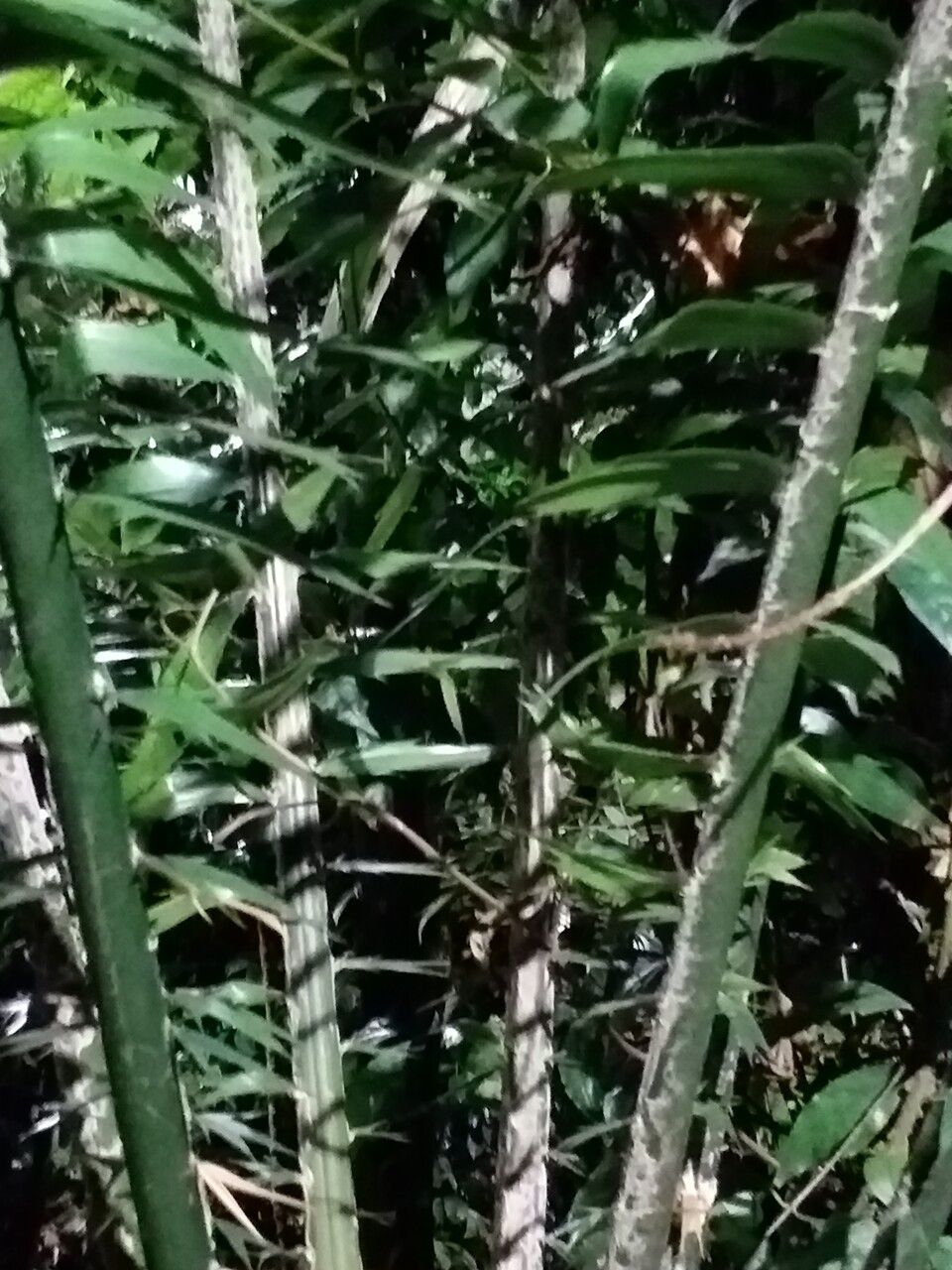
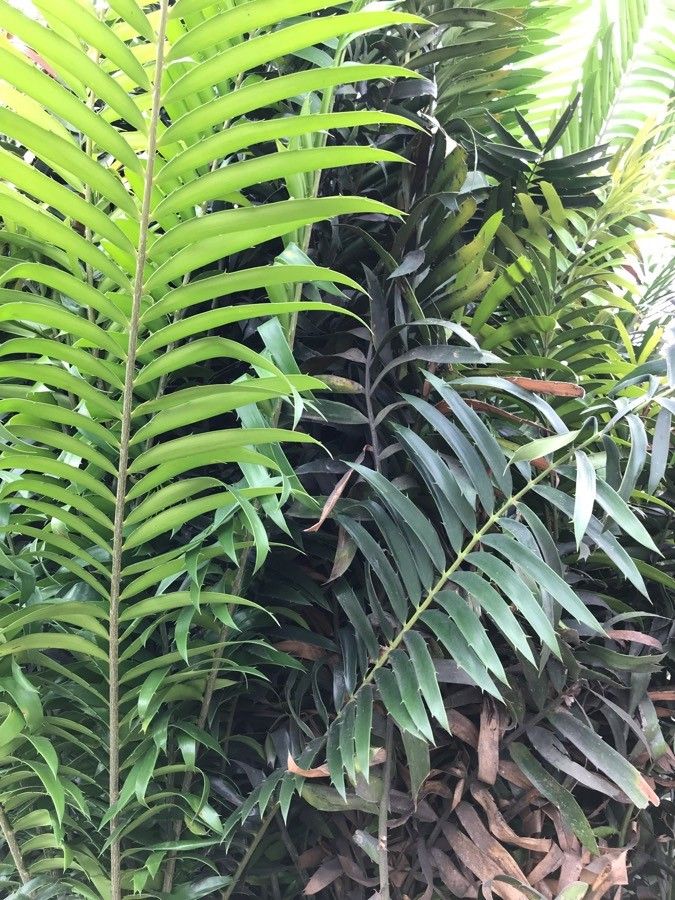
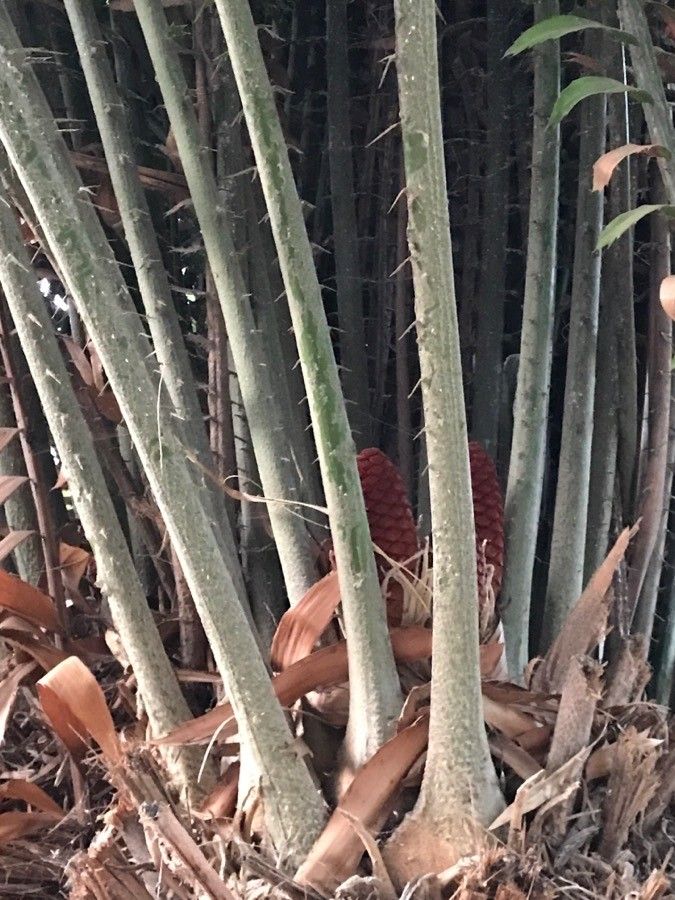
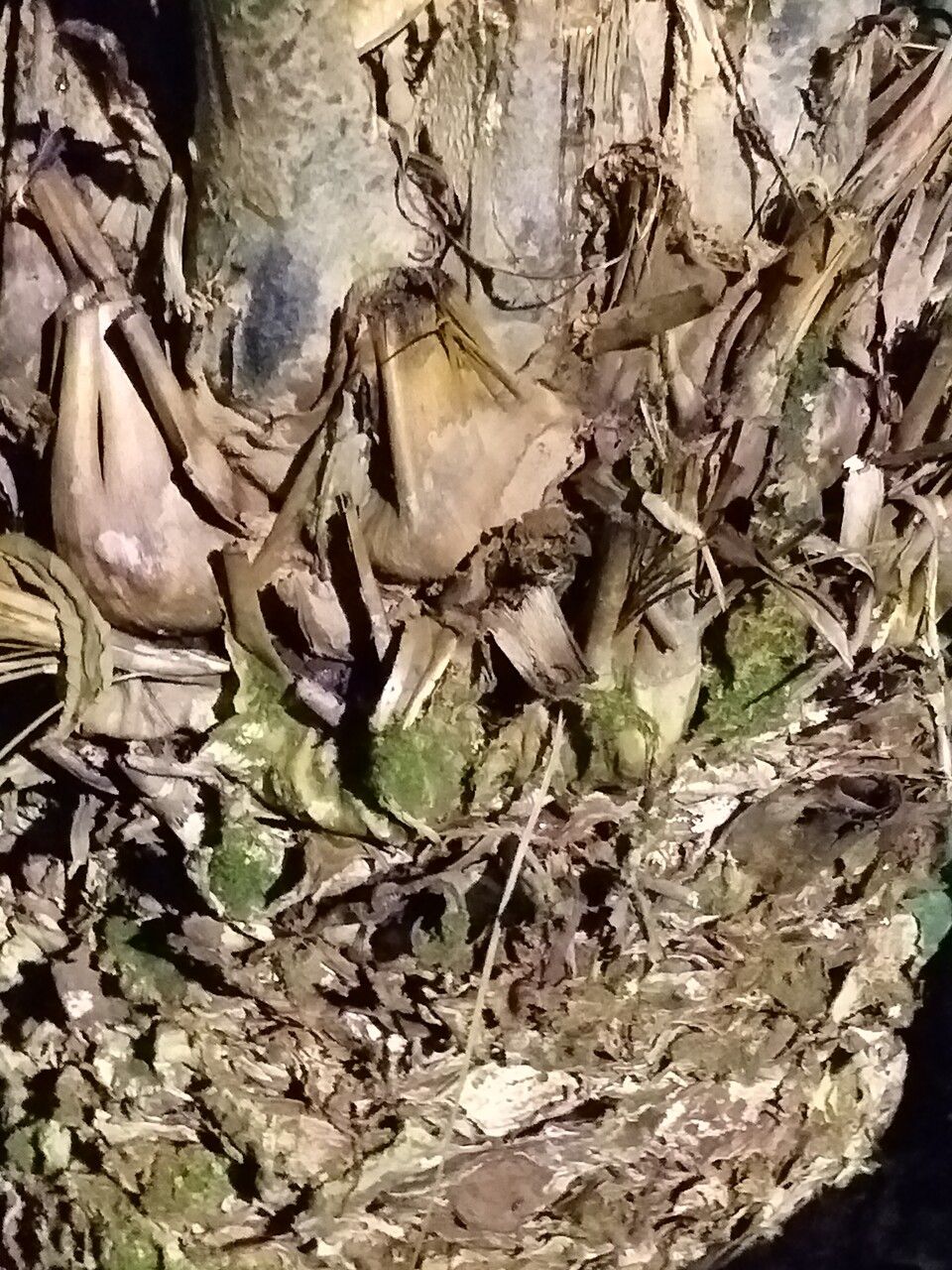
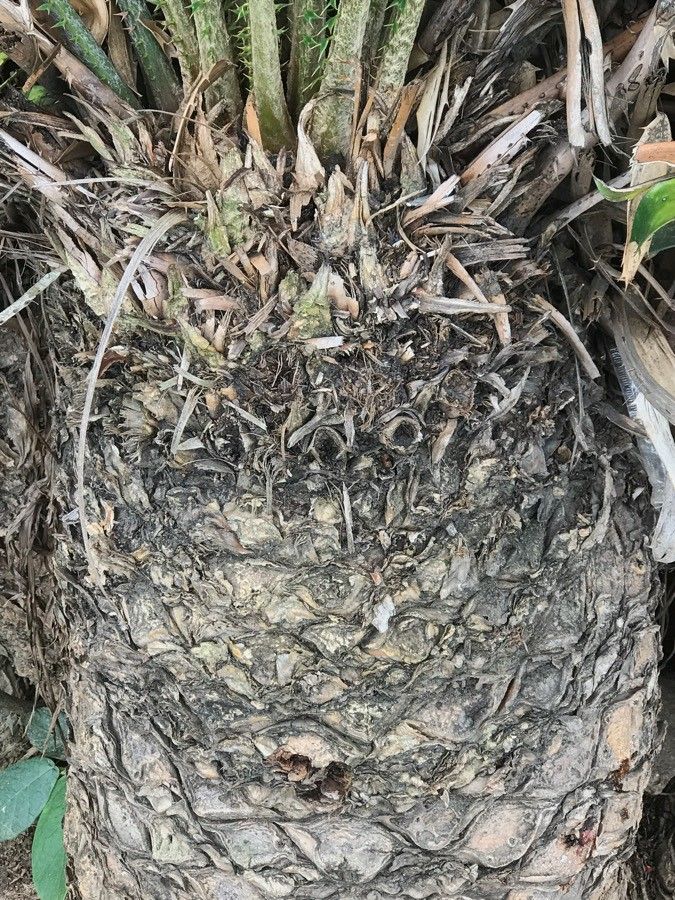
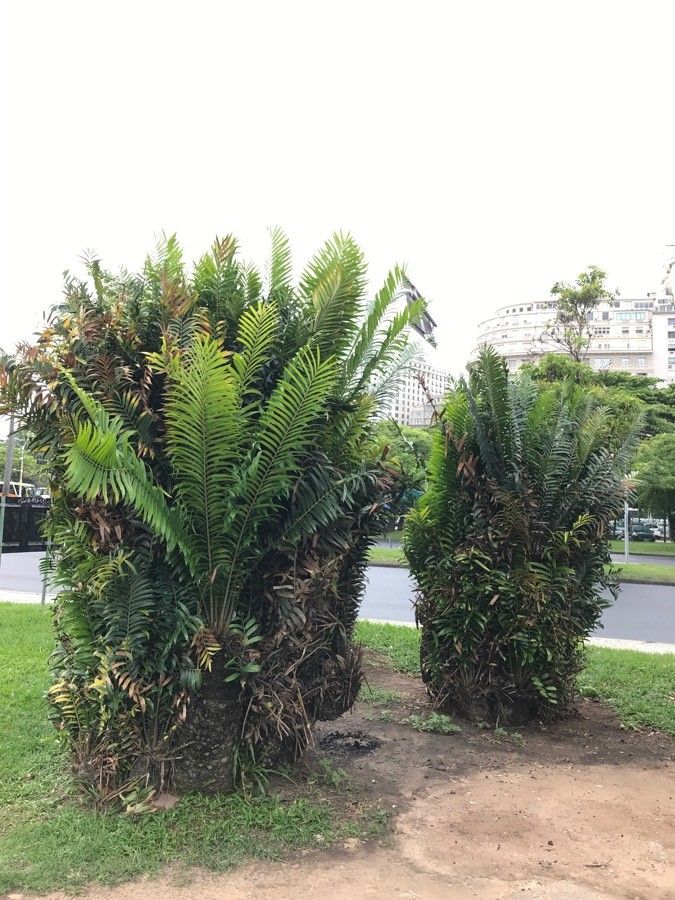
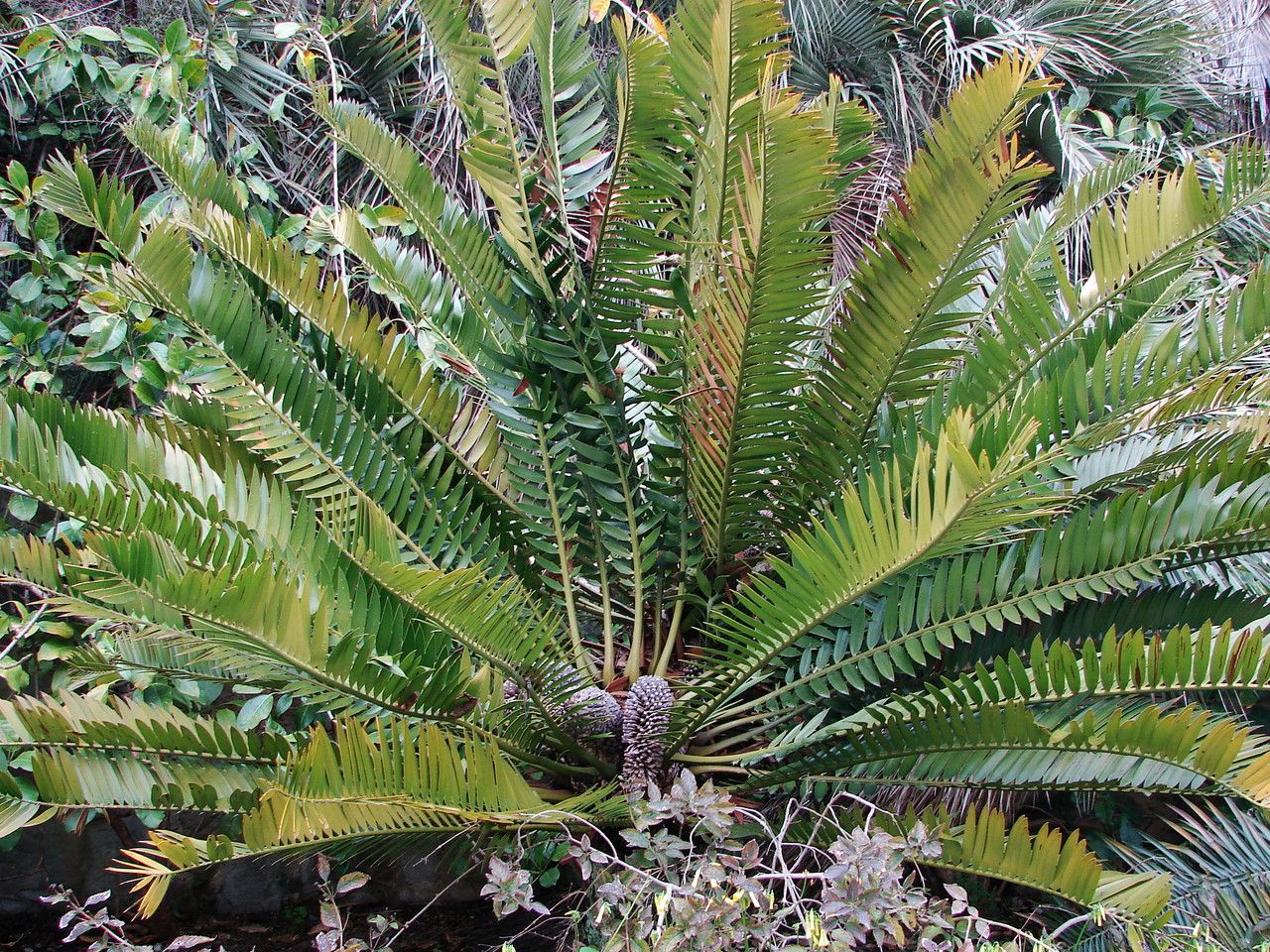
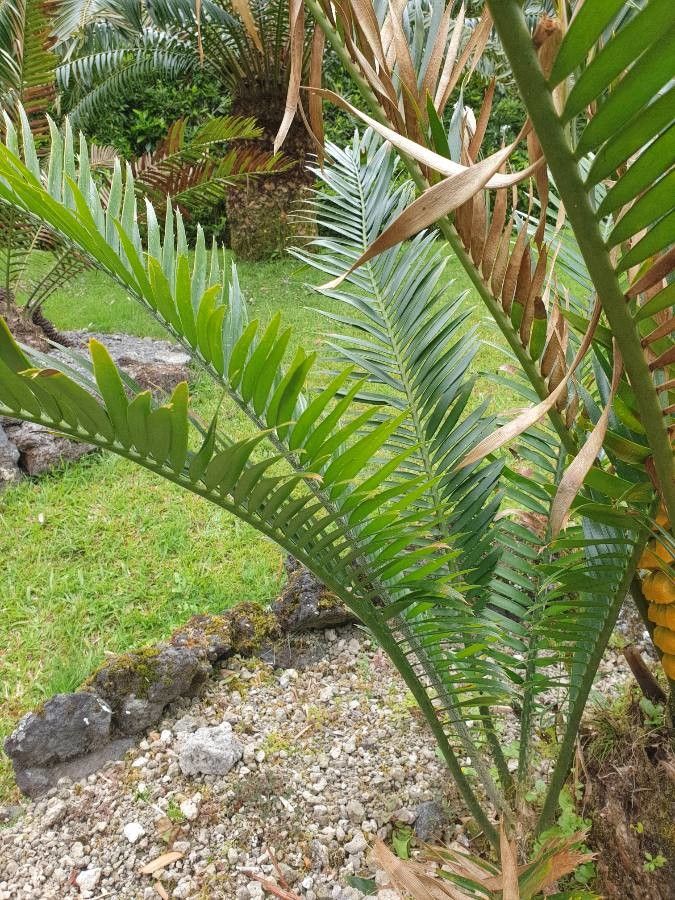
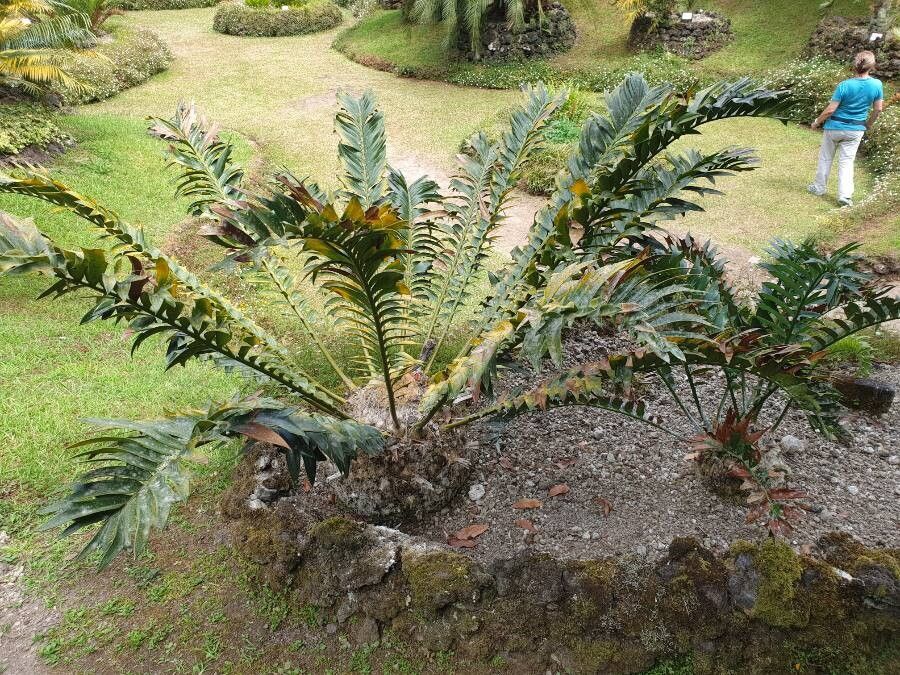
Encephalartos laurentianus, commonly called the malele or Kwango giant cycad, is a species of cycad that is native to northern Angola and southern Congo (Zaire), mostly along the Kwango River. It is the largest of all cycads, with multiple stems both upright and prostrate, each as much as sixty feet (18 meters) in length, and bearing a rosette of massive once-pinnate fronds up to 25 feet (eight meters) in length, forty inches (100 cm) in width, and with a petiole or stalk up to three inches (7.6 cm) thick where it joins the stem or trunk. Each stem can be up to four feet (120 cm) in thickness. This is also said to be the fastest growing cycad, producing up to five "flushes" (rosettes, or clusters) of leaves each year. The species was discovered in 1902 by Louis Gentil.
The Kwango giant cycad is resistant to disease and is usually not easily affected by illnesses. Care-wise, this species is fairly low-maintenance. When grown outdoors it needs only light watering, and larger specimens typically do not require pruning. Smaller plants, however, should be pruned after they have finished blooming. The Kwango giant cycad is suitable for anyone with outdoor space, such as a garden or a deck, and does not demand extensive plant-care experience.
How to keep Encephalartos Laurentianus.
Light
The Kwango giant cycad occurs naturally in habitats like forest understories and rocky areas, where it grows under natural shade. It prefers partial sun but can tolerate both full sun and full shade, reflecting its versatile, hardy nature.
Humidity
This plant will thrive in moderate humidity, which is probably the level in your home. However, misting it a few times a week can be very beneficial. Make sure the room has good ventilation.
Temperature
Kwango giant cycad comes from tropical areas, where the climate is generally warm and humid. As a result, it is well suited to high temperatures and moisture. It dislikes abrupt shifts in temperature and favors a steady thermal environment, so preventing temperature swings indoors is important. It generally cannot tolerate cold and requires relatively high temperatures for growth. If the surrounding temperature falls too low, the plant may stop growing or even die.
Fertilizer
Kwango giant cycad has specific nutrient needs and does not require heavy fertilization. Spring is the best time to fertilize for optimal growth. Supplying nutrients enhances its health, increases its resistance to pests and diseases, and helps maintain its long lifespan.
Botanical profile.
- Plant Type
- Palm, Tree
- Life Cycle
- Perennial
- Genus
- Encephalartos
- Family
- Zamiaceae
- Hardiness Zone
- 10-12
- Mature Height
- 2.13 m to 3.96 m
- Mature Spread
- 3.05 m to 4.88 m
- Leaf Color
- Dark Green
- Leaf Type
- Evergreen
- Bloom Time
- Early summer, Mid summer
- Planting Time
- Spring, Summer
- Harvest Time
- Fall
- Native Area
- Congo (DRC), Angola
Other names.