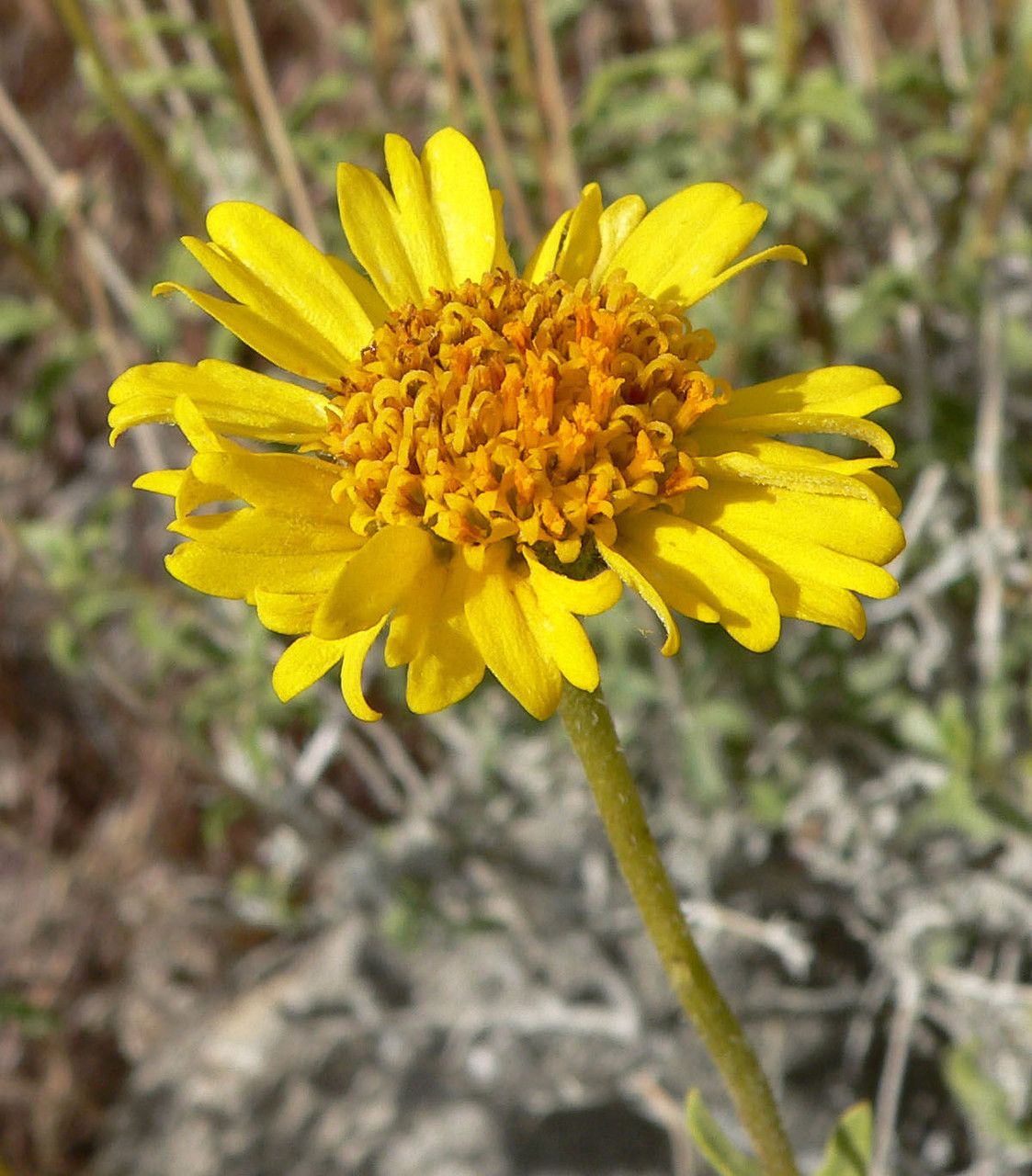
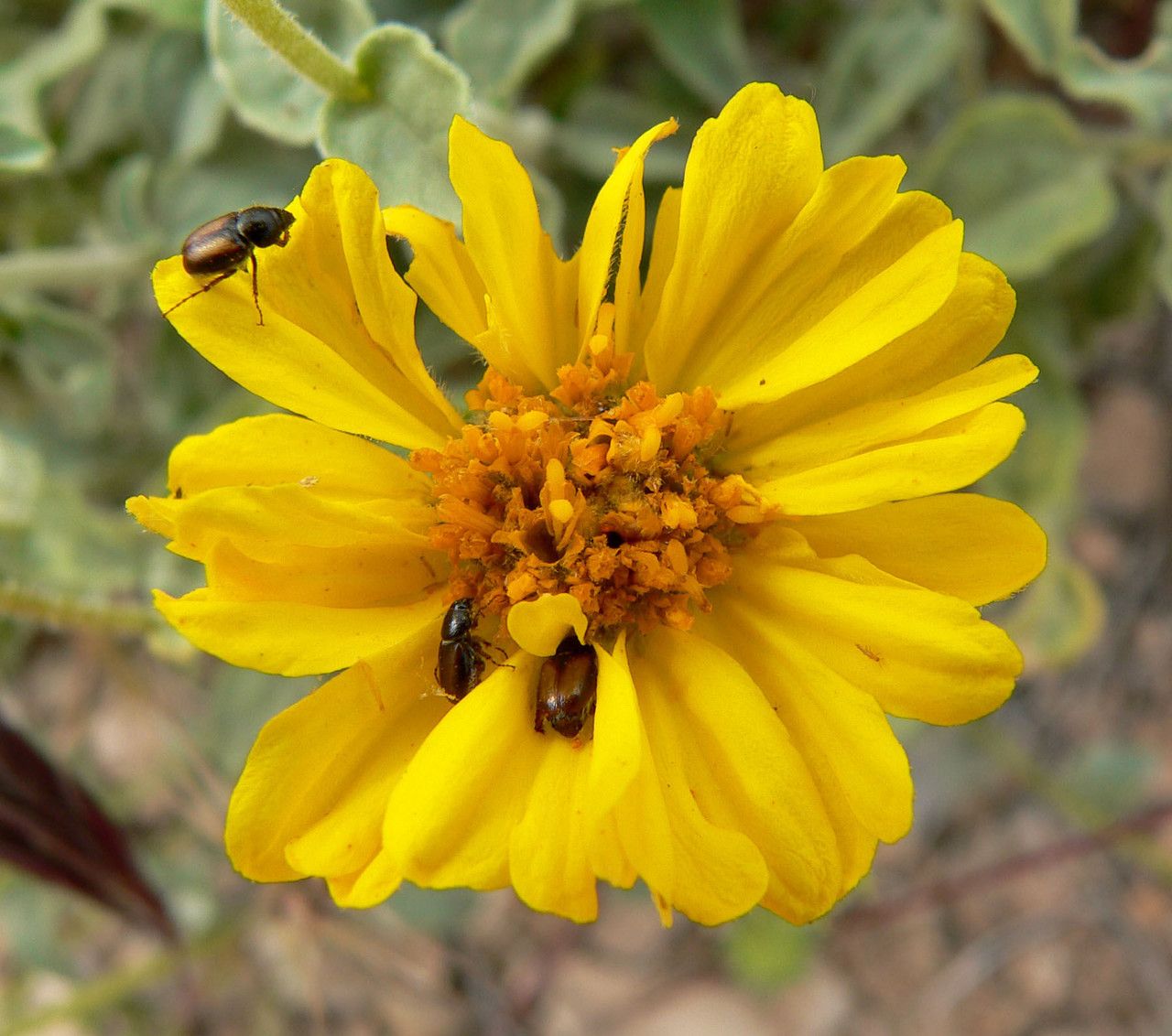
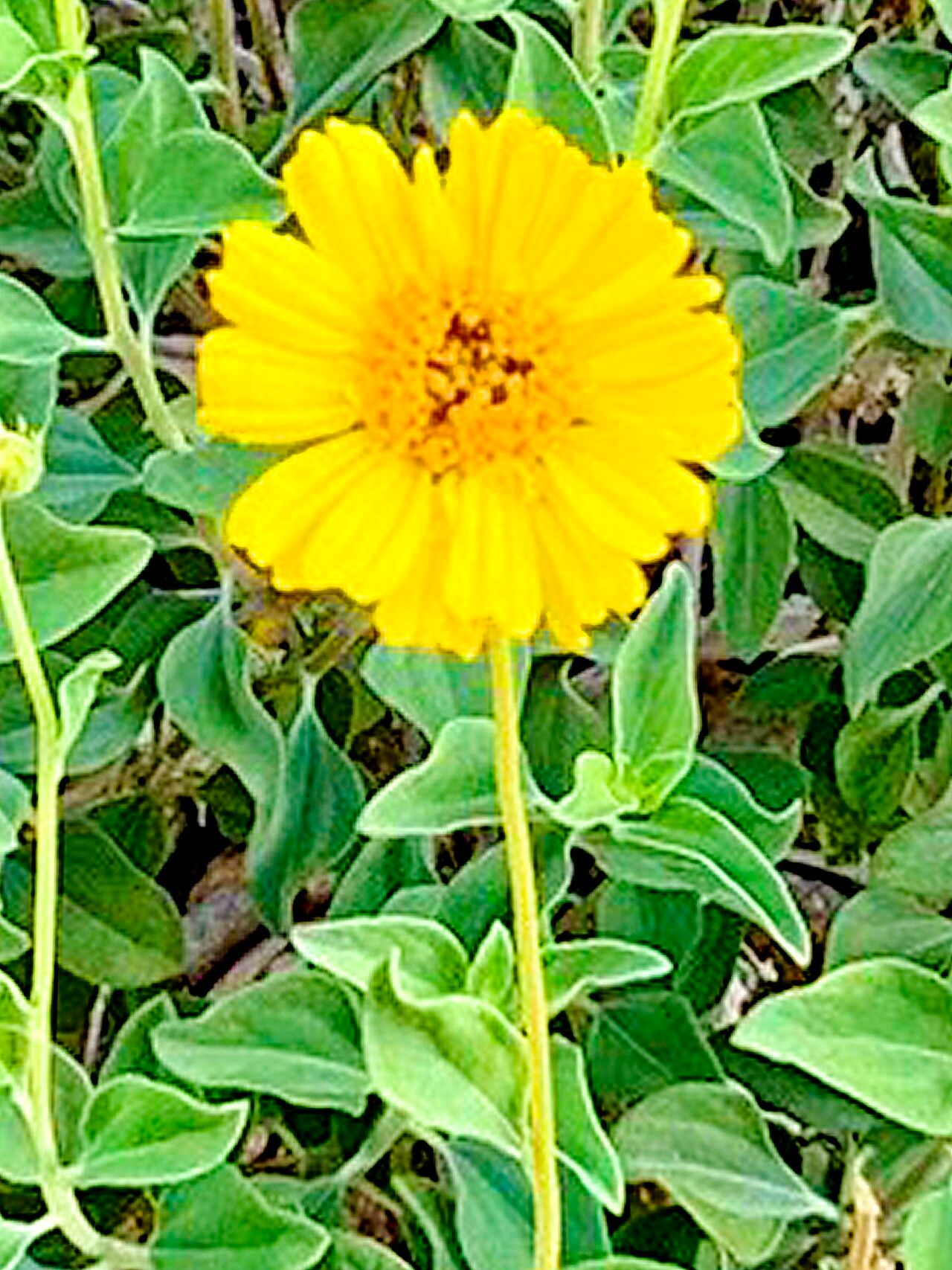
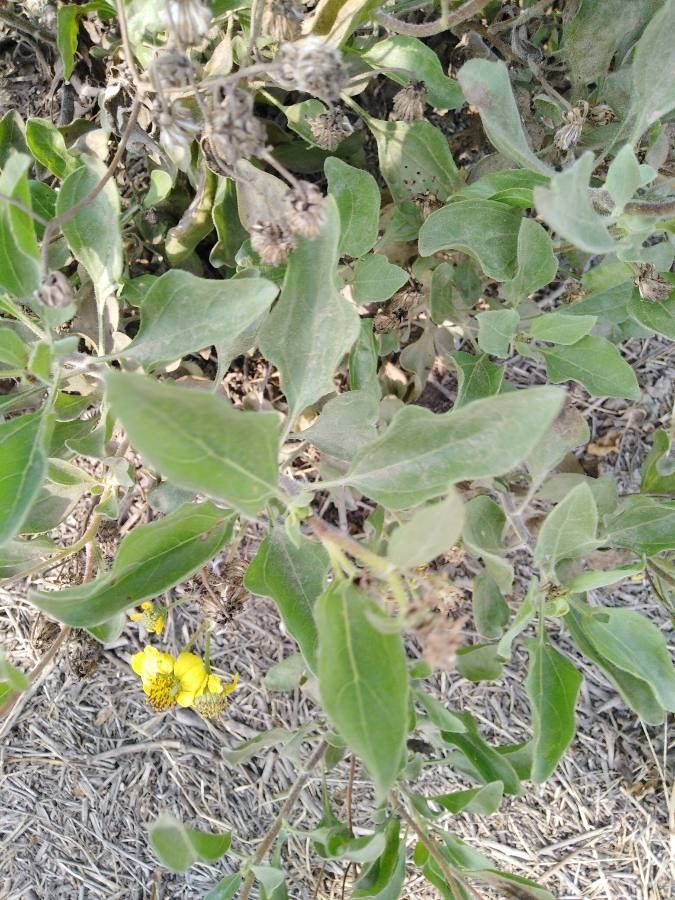
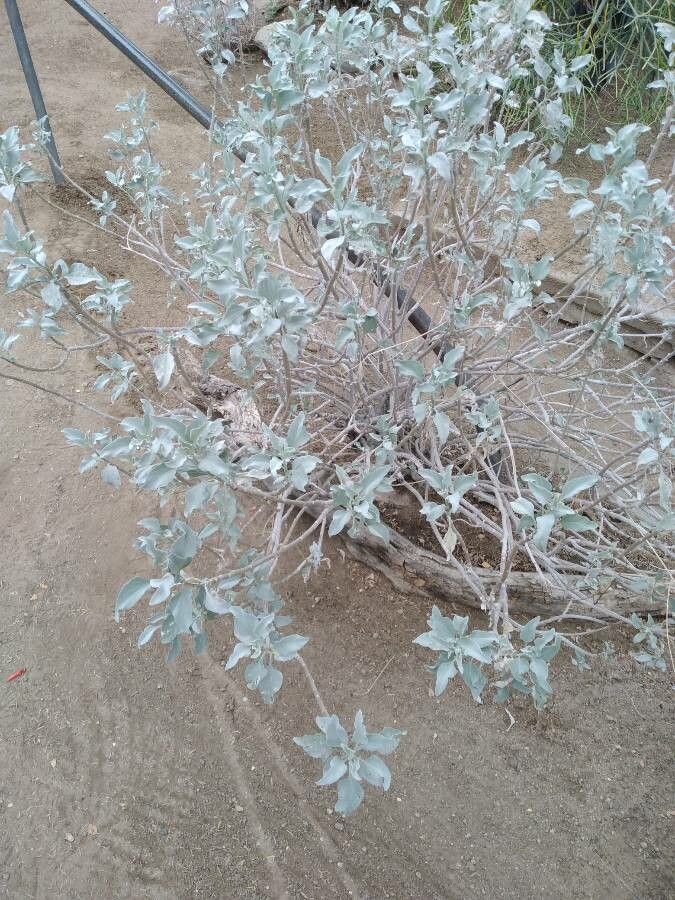
Encelia virginensis is a North American species of flowering plants in the family Asteraceae known by the common name Virgin River brittlebush. This shrub is native to the southwestern United States and northwestern Mexico, particularly the Mojave Desert and the Sonoran Desert. It has been found in Baja California, southern California, Nevada, Arizona, southwestern Utah, and southwestern New Mexico.Encelia virginensis is a bushy, sprawling shrub reaching heights between 100 and 150 cm (40-60 inches). It has many branches, with the younger parts hairy and the older stems developing a thickened bark. The gray-green, fuzzy to hairy foliage may be sparse, appearing pale because of the presence of many small hairs on the surface. Atop many erect, hairy stems are solitary daisy-like flower heads with 11 to 21 ray florets which are generally yellow, and a center of yellow disc florets. The fruit is an achene 5 to 8 millimeters long and usually lacking a pappus. VarietiesEncelia virginensis var. actonii (Elmer) B.L.Turner - California, Nevada, Baja California Encelia virginensis var. virginensis - southern California, Nevada, Arizona, southwestern Utah, and southwestern New Mexico
Virgin river brittlebush resists disease well and is usually not susceptible to illnesses. Regarding care, this plant is fairly low-maintenance. When grown outdoors it needs minimal watering, and larger plants typically do not require pruning. Smaller plants, however, should be pruned after they have finished blooming. Virgin river brittlebusht is appropriate for anyone with an outdoor area, such as a garden or deck, and does not require much experience in plant care.
How to keep Encelia Virginensis.
Light
Virgin river brittlebush originates from open habitats, such as sunlit meadows and forest margins, which provide abundant light. It flourishes in Full Sun but will also tolerate Partial Sun, adapting well to a range of sunlight conditions.
Water
Virgin River Brittlebush is well-suited to arid environments, displaying outstanding drought resistance and requiring very little water. It's best to water this plant every 2-3 weeks, ensuring that the soil dries out between waterings. This desert plant thrives in well-draining soil, which is essential to prevent water accumulation and to maintain healthy roots.
Temperature
Virgin River brittlebush adapts well to warm conditions and can handle higher temperatures and wide temperature swings. In hot weather, you should ensure adequate watering and provide some shade to prevent sunburn. Its resistance to cold is relatively weak; it can tolerate a bit of chill, but very cold conditions may cause frost damage.
Fertilizer
The timing of fertilization is critical for Virgin river brittlebush. Fertilize in early spring and continue monthly until early summer. Fertilizer promotes attractive blooms and supplies energy during both dormant and active growth phases.
Pruning
The Virgin River brittlebush is known for its bright yellow flowers and its ability to adapt to drought conditions. For optimal health, prune the plant from early to late winter, removing any dead or diseased stems. Trim older, woody stems to encourage rejuvenation, promote denser growth, and prevent legginess. Always use clean, sharp tools to minimize the risk of infection.
Botanical profile.
- Plant Type
- Shrub
- Life Cycle
- Perennial
- Genus
- Encelia
- Family
- Asteraceae
- Hardiness Zone
- 7-10
- Mature Height
- 1.07 m to 1.52 m
- Mature Spread
- 61 cm to 91 cm
- Leaf Color
- Gray, Green
- Leaf Type
- Evergreen
- Flower Color
- Yellow
- Flower Size
- 5.08 cm
- Bloom Time
- Spring
- Planting Time
- Spring, Summer
- Harvest Time
- Late spring, Early summer, Mid summer
Other names.
Reader questions.
What are the sunlight requirements for Virgin River Brittlebush?
Virgin River Brittlebush requires full sun, meaning it thrives best in areas that receive more than 6 hours of sunlight daily. However, it can also tolerate partial sun conditions, which provide about 3-6 hours of sunlight. It's essential to observe how sunlight moves through your garden to ensure the plants are placed in spots with the perfect balance of light and shade, optimizing their growth and health.
How does Virgin River Brittlebush adapt to different lighting conditions?
Originating from open environments such as sunny meadows and forest edges, Virgin River Brittlebush is well adapted to both full sun and partial sun conditions. When natural sunlight is insufficient, especially during winter or in less sunny spaces, artificial lighting can be a vital solution. Adequate artificial lighting promotes faster, healthier growth, with LED lights being a popular choice due to their ability to be customized to the specific wavelengths needed by plants. For optimal growth indoors, it's important to adjust the amount of artificial light according to the plant's needs, ensuring it mimics natural sunlight conditions as closely as possible.
What are some common symptoms of improper lighting for Virgin River Brittlebush?
Virgin River Brittlebush may show several symptoms when exposed to suboptimal lighting conditions, including smaller new leaves, leggy or sparse growth, faster leaf drop, slower or halted growth, lighter-colored new leaves, chlorosis, sunscald, leaf curling, wilting, and leaf scorching. These symptoms can help indicate if the plant is not receiving enough light, or if it's being exposed to too much sunlight, allowing you to adjust its environment accordingly.
What steps can be taken to improve lighting for Virgin River Brittlebush?
To ensure Virgin River Brittlebush receives optimal light, gradually moving the plant to a sunnier location can help, targeting at least 6 hours of direct sunlight daily, especially through a south-facing window. For indoor plants that are large or not easily movable, consider supplementing with artificial light, keeping a lamp on for at least 8 hours daily or investing in professional grow lights. For outdoor plants, a gradual relocation to sunnier spots is key to avoiding sunburn. Additionally, reducing obstructions like pruning trees or relocating plants can help maximize sunlight exposure. Note that parts of the plant affected by insufficient sunlight may not recover, but new growth will be healthy following improved light exposure.