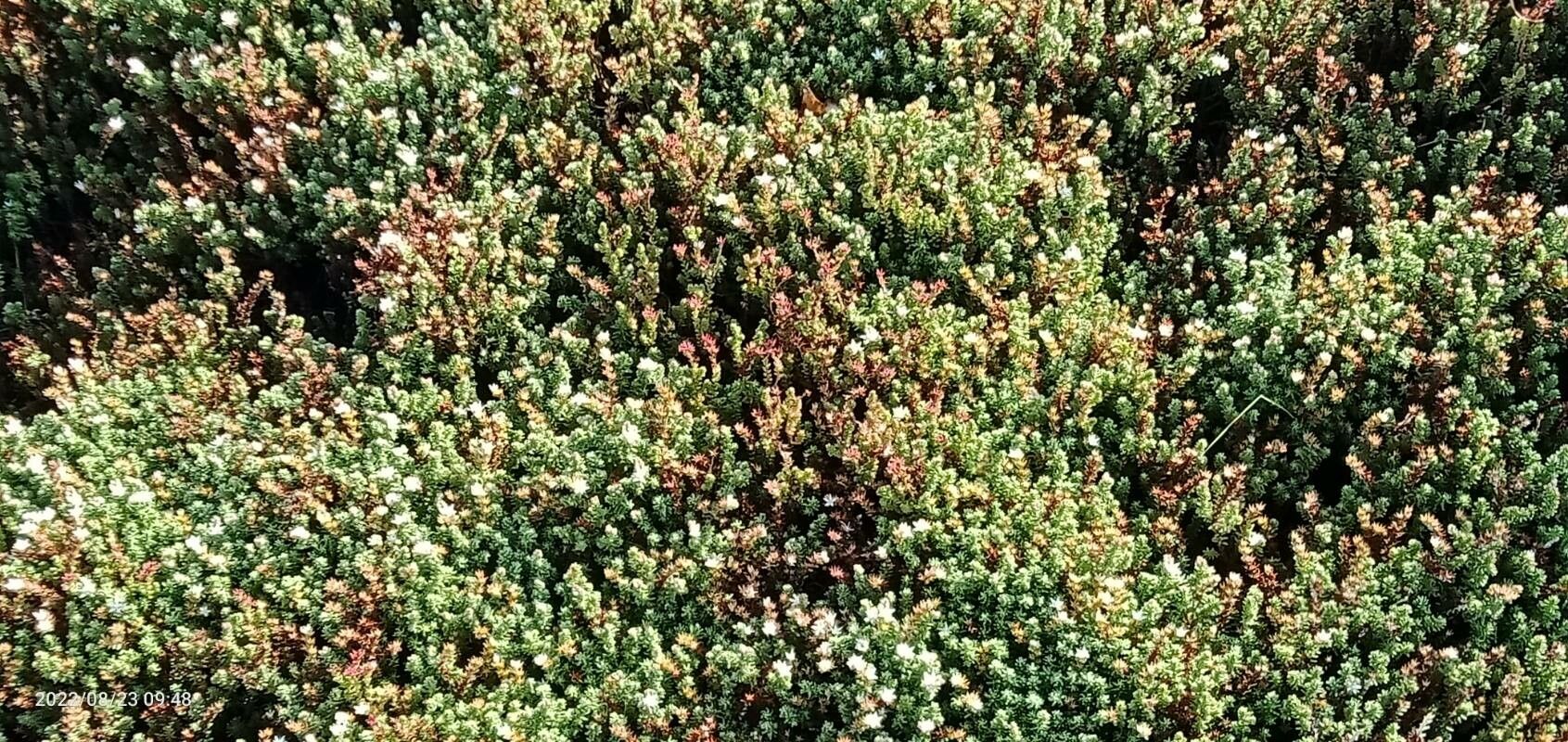
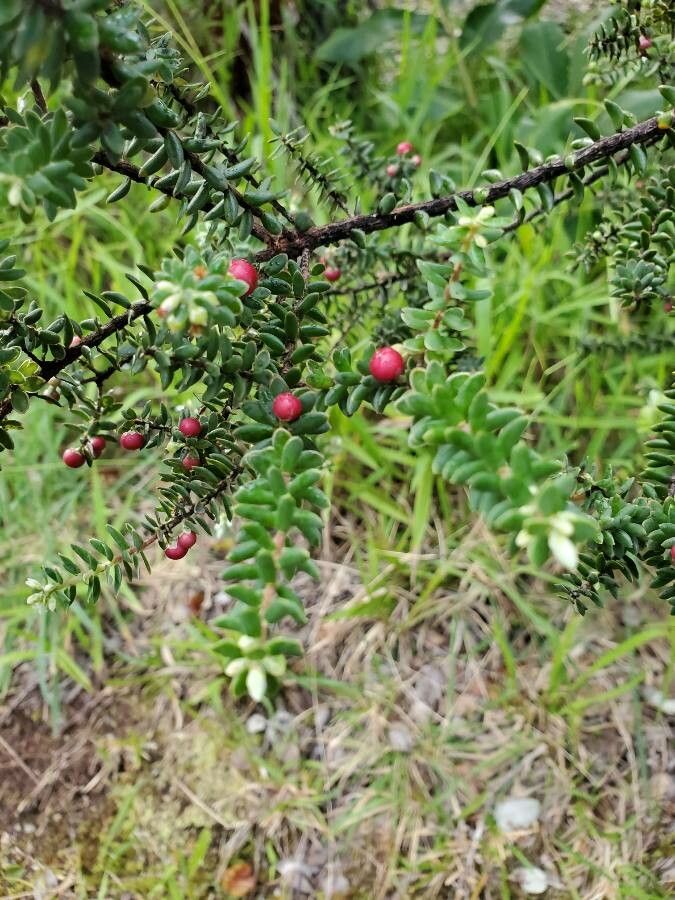
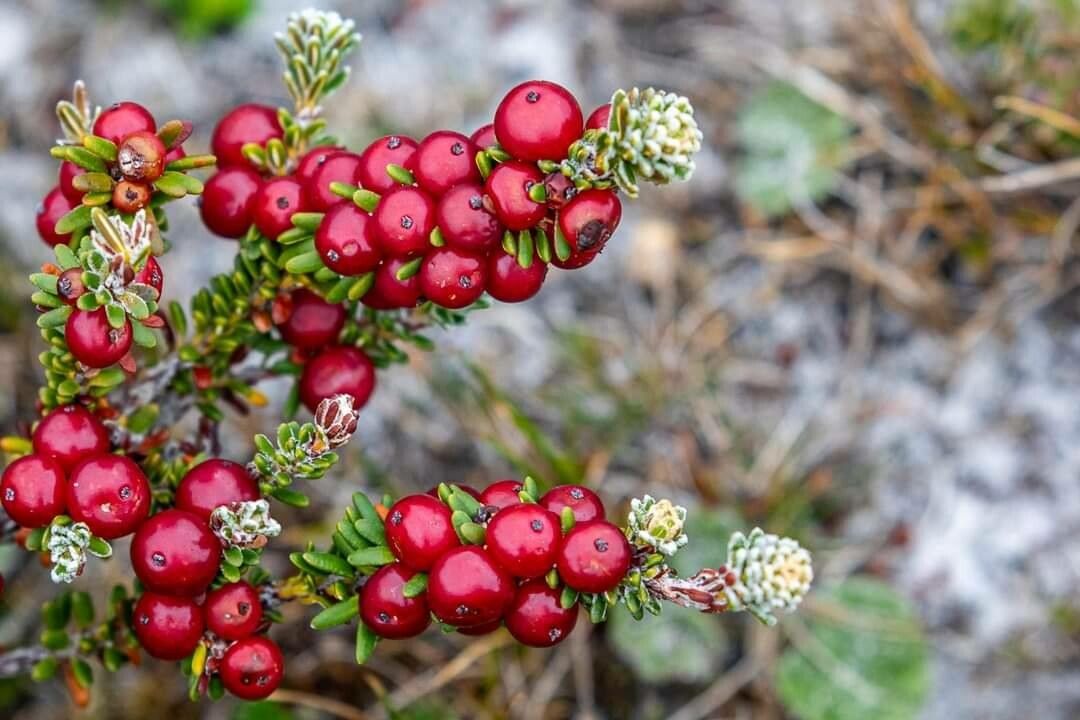
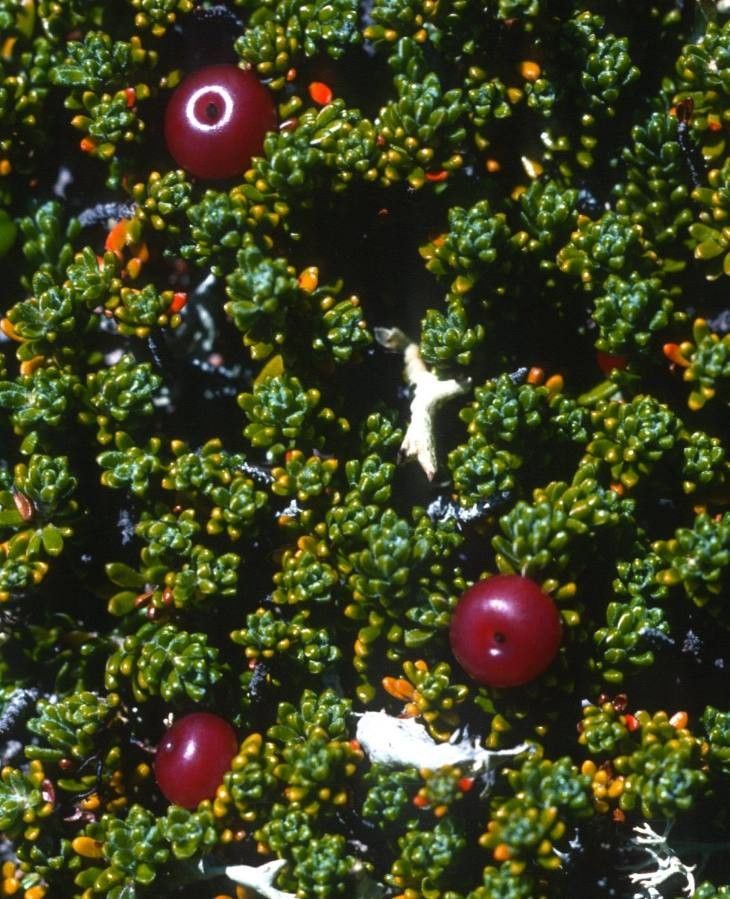
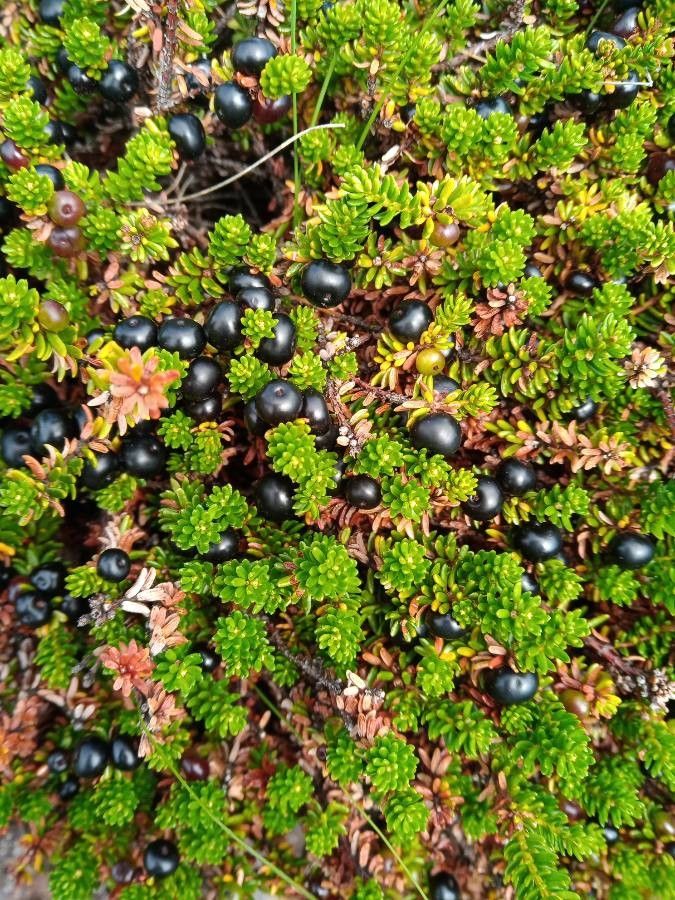
Empetrum rubrum, known as red crowberry or diddle-dee (Chilean Spanish: Murtilla de Magallanes), is a species of plant in the family Ericaceae with a distributional range in Chile from Talca (35°S) to Cape Horn (55°S); in areas of adjacent Argentina; in the Falkland Islands; and in Tristan da Cunha. One of its northernmost natural growing places is Laguna del Maule. In Chile this species often grows in high altitude areas close to the tree line and can tolerate alpine conditions such as strong winds and high sun exposure. In the Falkland Islands it is the dominant species across large areas of lowland and upland dwarf shrub heath, and is referenced in the islands' unofficial national anthem. Its fruits are edible.
Diddle-dee has strong resistance to disease and is generally not susceptible to illnesses. Regarding care, this plant is fairly low maintenance. When grown outdoors it needs little watering, and larger plants usually do not require pruning. Smaller plants, however, should be pruned after they finish blooming. Diddle-deet is suitable for anyone with an outdoor area, such as a garden or deck, and does not need much care experience.
How to keep Empetrum Rubrum.
Light
Diddle-dee comes from open habitats, like sunny meadows and forest edges, that offer abundant light. It performs best in Full Sun but will also tolerate Partial Sun, adapting well to a range of sunlight conditions.
Temperature
Diddle-dee is highly adaptable to a wide range of climate conditions, from very hot summers to cold winters. However, it does have an optimal temperature range for growth. If temperatures become too high, the plant is vulnerable to heat and humidity stress, which can lead to its death. In areas where temperatures approach the lower limit of its cold tolerance, it is important to provide insulation to protect the plant.
Fertilizer
Fertilize your Diddle-dee in early spring to encourage healthy growth. Regular feeding improves overall health, producing vigorous development, increased tolerance of difficult conditions, and enhanced resistance to pests and diseases. Keep a set fertilization schedule for your Diddle-dee to preserve foliage that is bright, richly colored, and lush in appearance.
Pruning
Empetrum rubrum is an evergreen shrub characterized by its needle-like leaves and small fruits. To maintain its health and shape, prune the shrub in early spring by removing dead branches and thinning out the interior. Light trimming encourages dense foliage, which enhances fruit production. Be sure to use clean, sharp tools to prevent infection.
Botanical profile.
- Plant Type
- Shrub
- Life Cycle
- Perennial
- Genus
- Empetrum
- Family
- Ericaceae
- Hardiness Zone
- 3-7
- Mature Height
- 10 cm to 30 cm
- Mature Spread
- 30 cm to 91 cm
- Leaf Color
- Dark Green
- Leaf Type
- Evergreen
- Flower Size
- 0.25 cm to 0.51 cm
- Bloom Time
- Early spring, Mid spring
- Planting Time
- Winter
- Harvest Time
- Mid summer, Late summer, Early fall