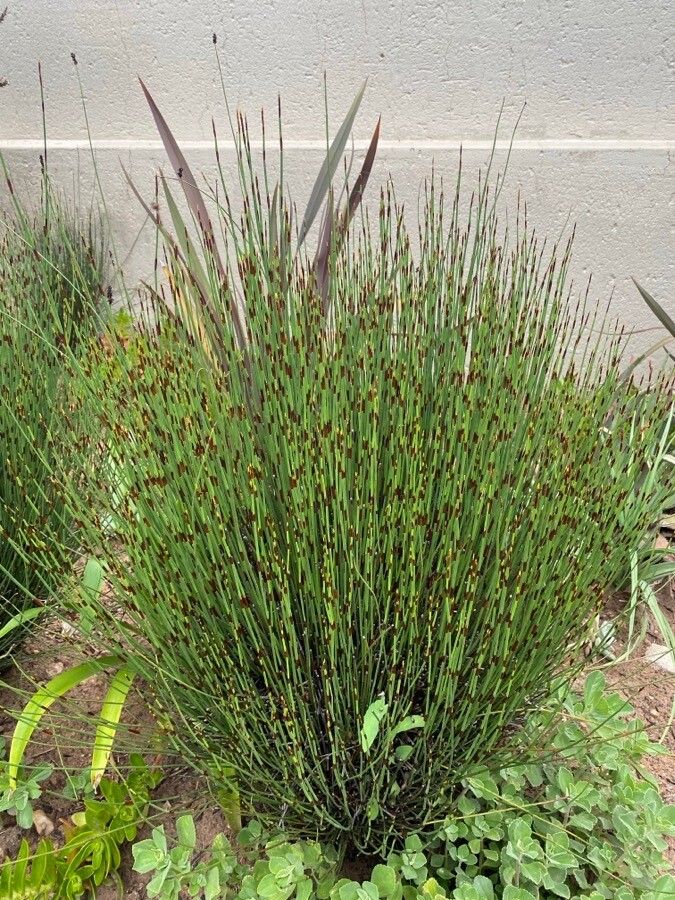
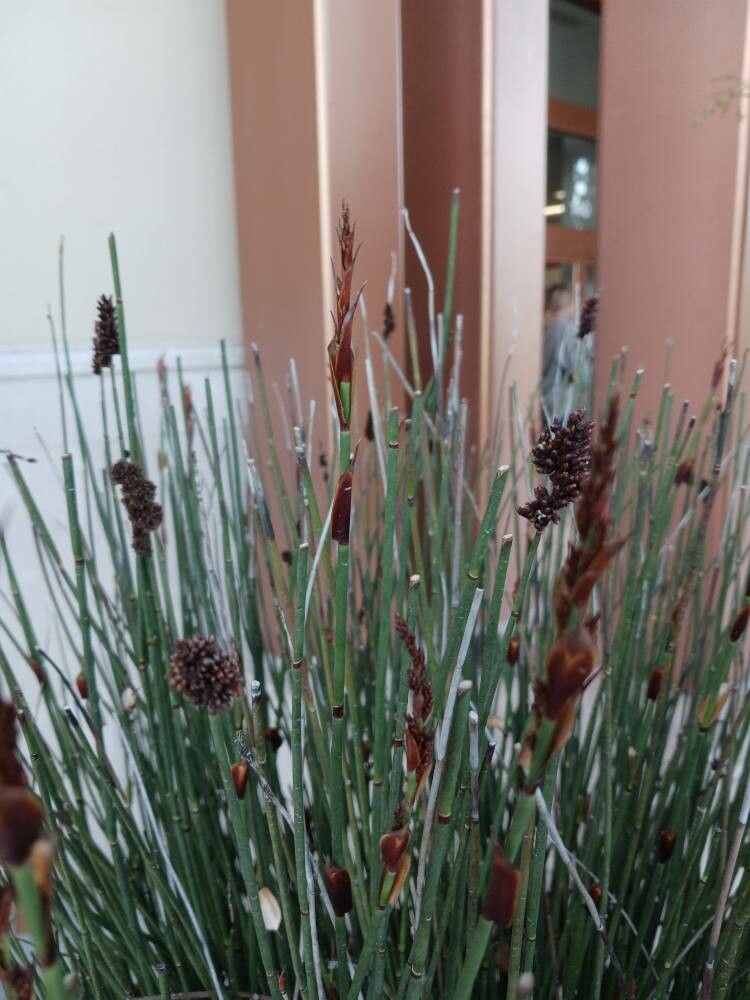
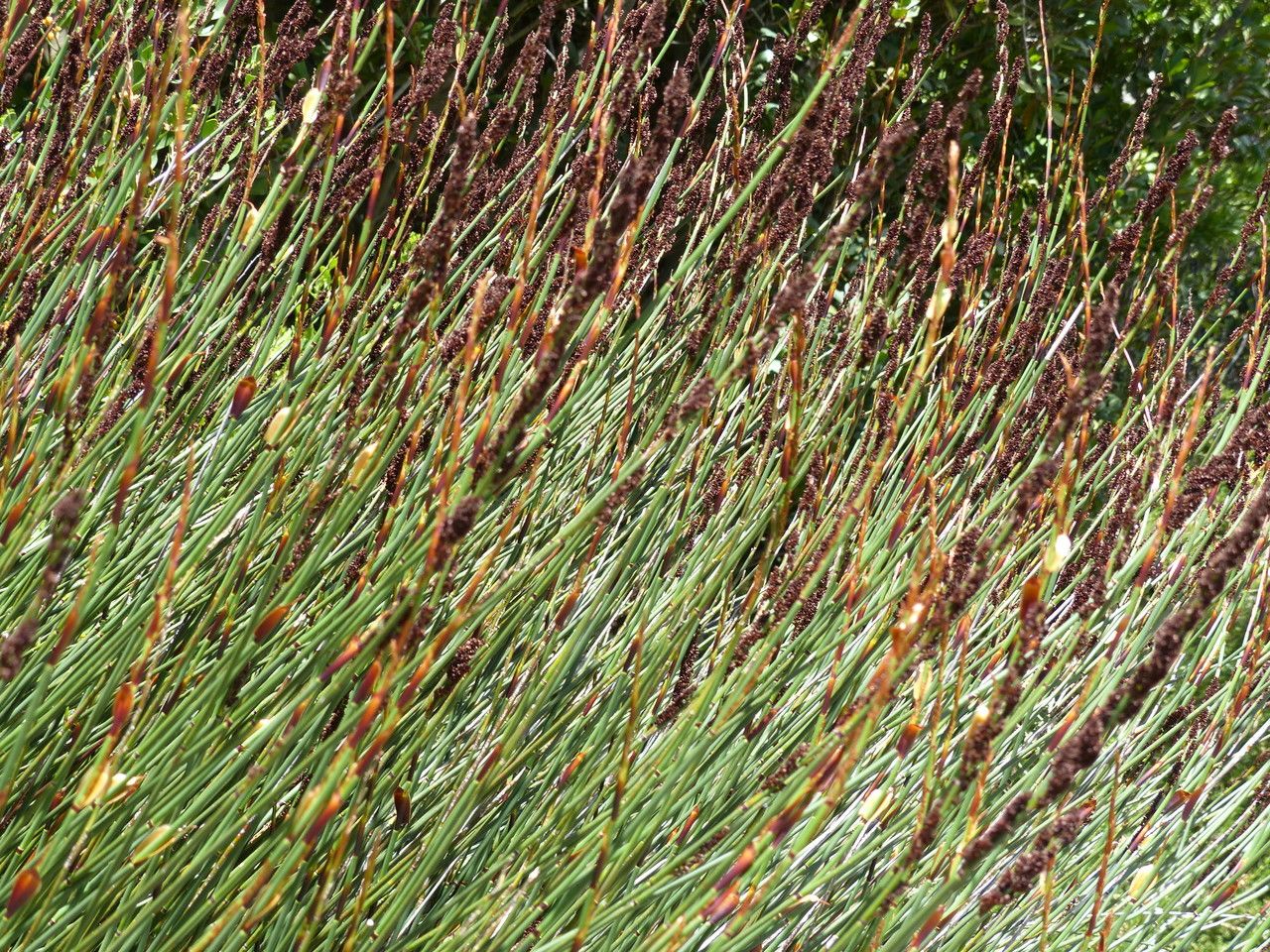
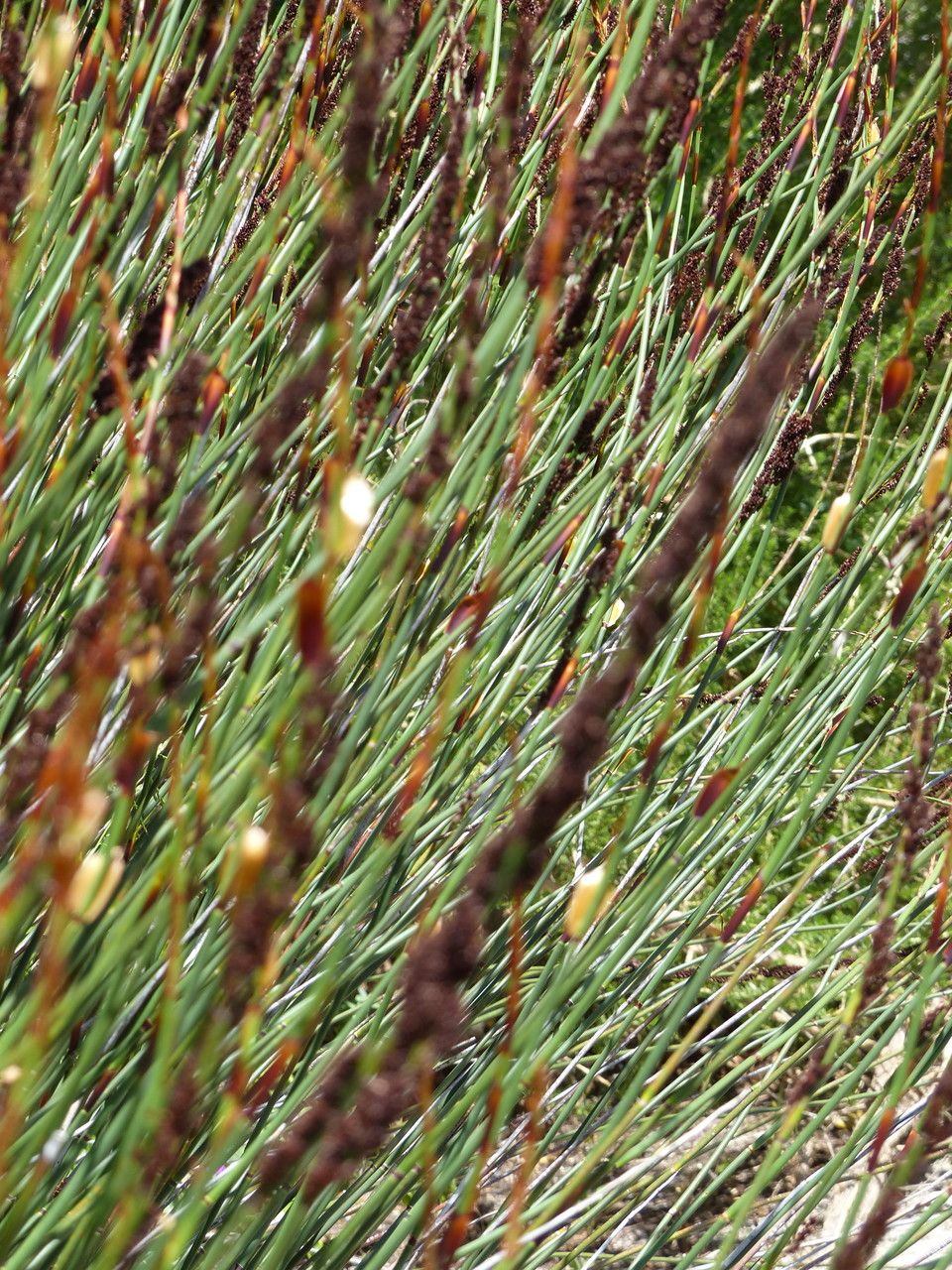
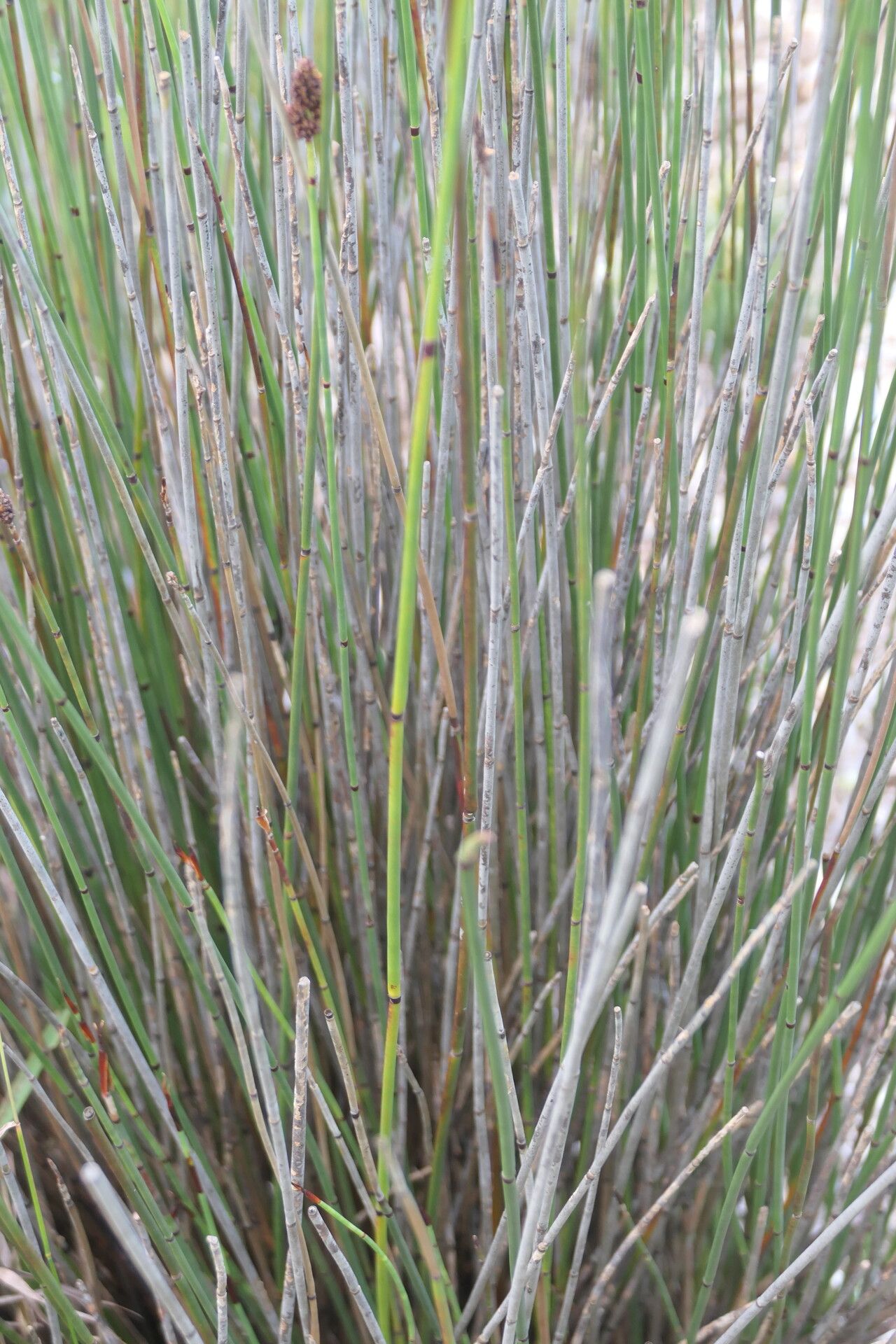
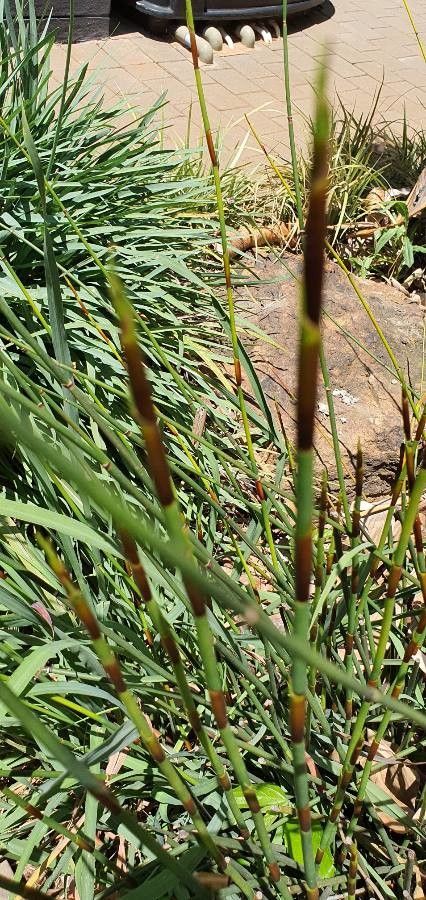
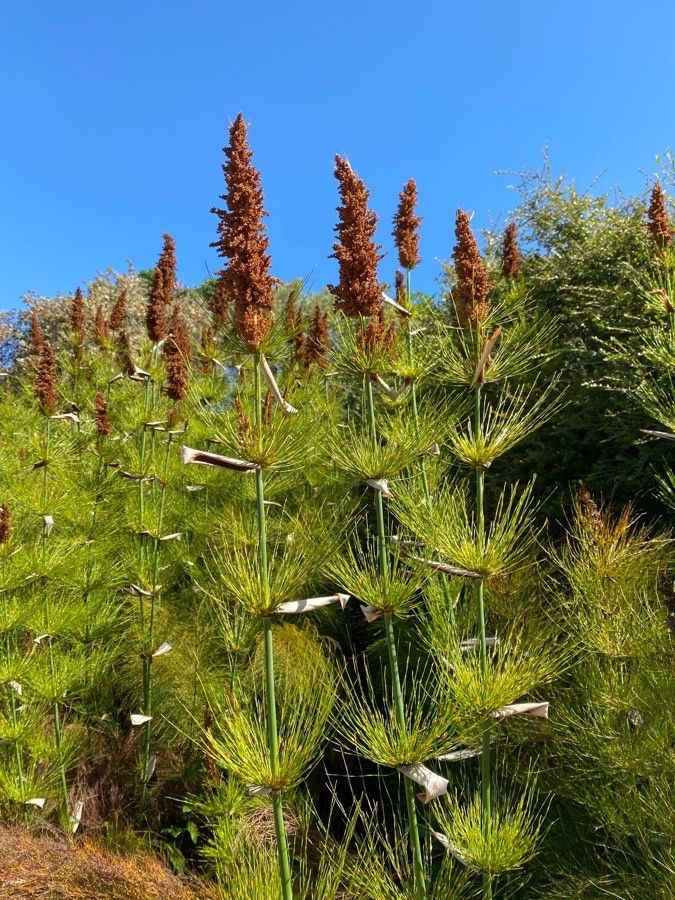
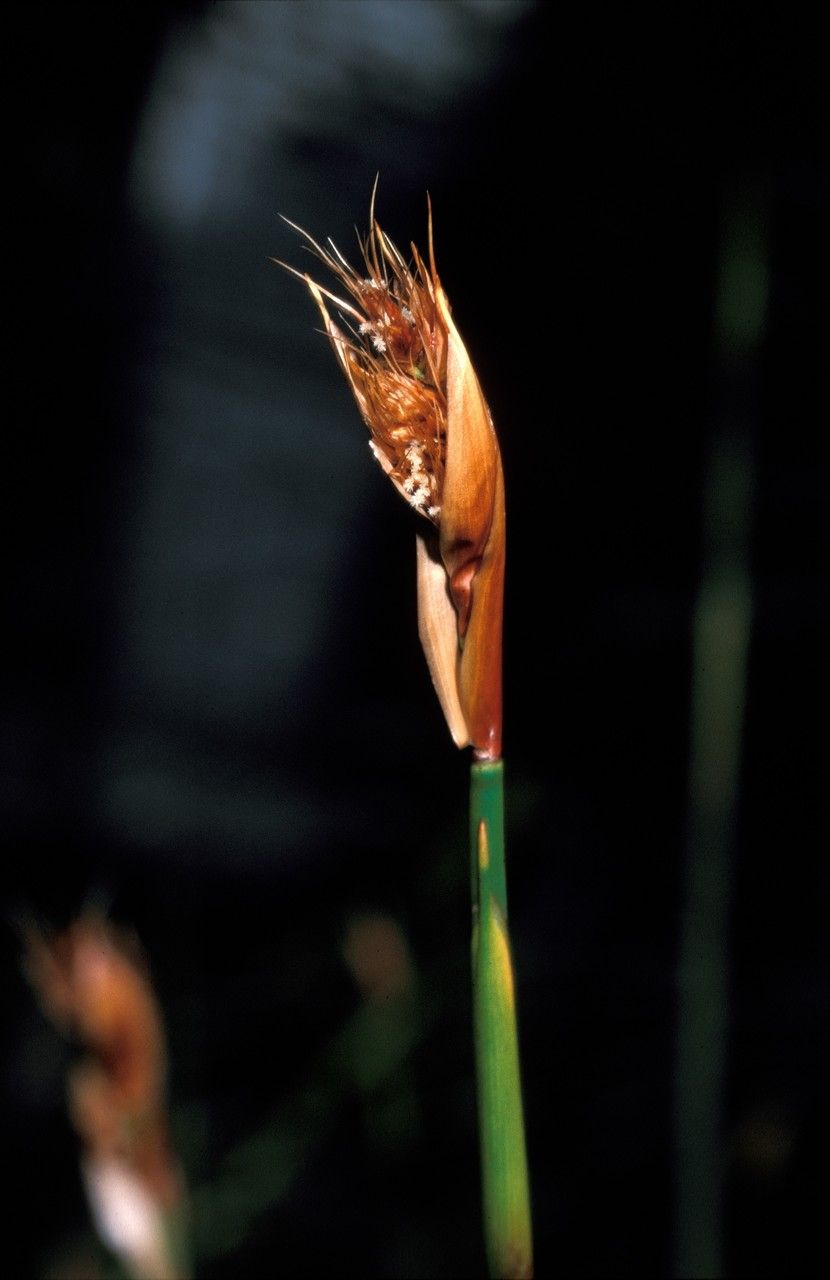
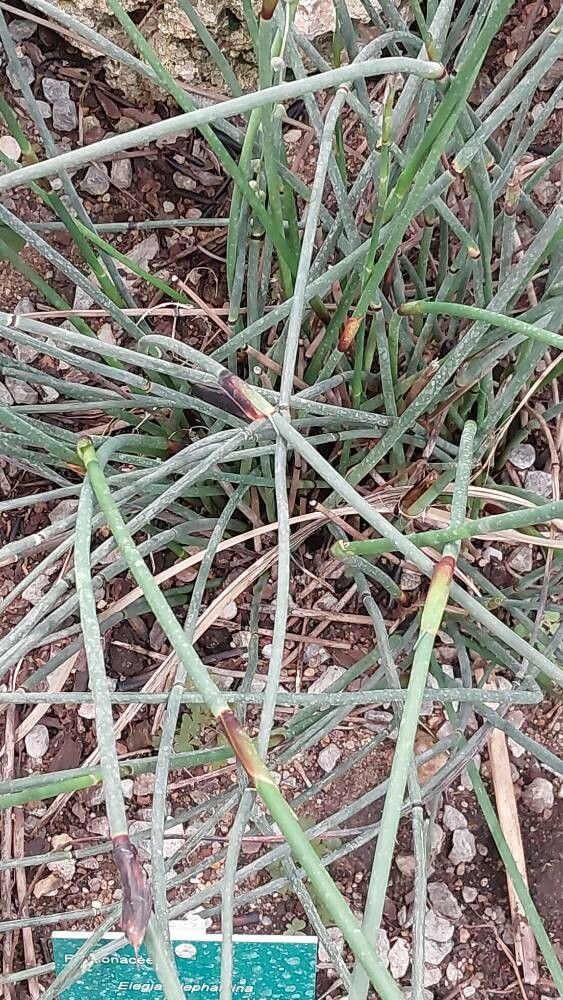
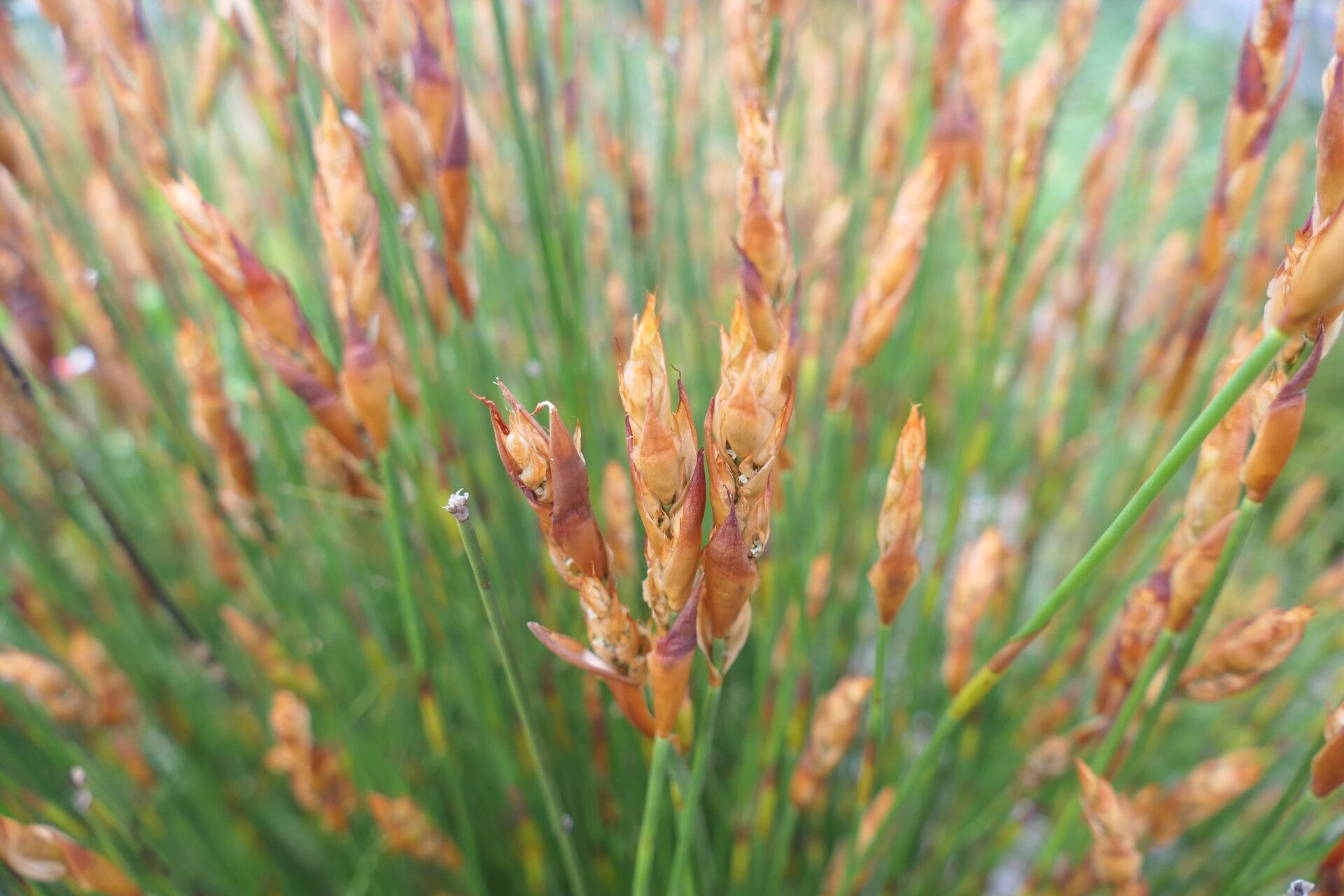
Elegia tectorum, previously Chondropetalum tectorum or Restio tectorum, more commonly Cape thatching reed, or dakriet (in Afrikaans), is a member of the restio family, Restionaceae. It is a tufted perennial growing to between 1.5 and 2.25 m, with deciduous leaf sheaths. Flowers are less than 3 mm long. Petals are smooth or hairy in the upper half. E. tectorum is found in marshes and seeps on deep sand in the Western Cape and Eastern Cape of South Africa. The species was originally noted by Carl Linnaeus the Younger. In 1838, E. tectorum was noted by Irish botanist William Henry Harvey (as R. Tectorum) for its use as a thatching material, and in the making of brooms and baskets. Historically, only the taller forms of the species, growing in the surroundings of Malmesbury, was used for thatching; the more popular thatching reed was Thamnochortus insignis. Carl Peter Thunberg also noted the use in thatching in 1793, as did English botanist John Lindley in 1846. Thurnberg notes the Dutch East India Company had a farm at Zeekoe Valley (17 km SSE of the Castle of Good Hope), where the reed was cultivated. He describes its use at the Cape of Good Hope as follows: A bundle or sheath, after it is cut with a sickle is held by the top, and all the shorter stalks that are loose in it, are shaken off from it. The remaining long ones are then spread out in rows to dry, and afterwards tied up in bundles. With this the houses are commonly thatched both in town and in country; and sometimes whole huts are built with it. A roof made of it lasts 20 or 30 years, and would last much longer if the south-east wind did not blow a great deal of dirt between the thatch, in consequence of which it rots the sooner. Elegia tectorum was later called Chondropetalum tectorum, but cladistic analysis, conducted by Moline and Linder (2005) found that the genera of Chondropetalum and Dovea were imbedded in Elegia.In cultivation in the UK this plant has gained the Royal Horticultural Society's Award of Garden Merit.
Cape thatching reed is fairly disease-resistant and usually not prone to illnesses. Nevertheless, it can be affected by pests and diseases present in its environment. These problems are typically not serious. Regarding care, this plant needs moderate maintenance. It should be pruned regularly to keep a good appearance and support healthy growth. Fertilizing can also encourage flowering. Cape thatching reed is appropriate for anyone with outdoor space, such as a garden or patio, and does not demand extensive care experience. It may require more attention when grown indoors.
How to keep Elegia Tectorum.
Light
Cape thatching reed naturally occurs in habitats like forest understories or rocky areas, where it grows under natural shade. It prefers partial sun but can tolerate full sun or full shade, showing its versatile and hardy nature.
Temperature
Cape thatching reed can tolerate a broad range of temperatures, though its distribution can still be constrained by different combinations of moisture and heat. It performs best in warm summer climates with sufficient rainfall or watering. Extended periods of cloudy, rainy weather, as well as prolonged high temperatures, can raise the chance of Cape thatching reed dying. In winter, adequate protection from cold can increase the plant's survival rate.
Fertilizer
Usually a single fertilizer application in spring is enough for Cape thatching reed, although several feedings can maximize growth. Feed every month to every month and a half. Fertilizing improves the leaves' appearance and function, encouraging even color and a healthy texture. It also promotes root development and nutrient uptake, supporting long-term plant health.
Pruning
Cape thatching reed is a sturdy plant with tall, reed-like stems. To encourage growth and maintain health, it should be pruned from early to late spring. During this time, remove any dead stems to improve air circulation and reduce the risk of disease. Regular pruning not only supports a vigorous appearance but also helps keep your garden in great condition.
Pot & Repot
When repotting Cape thatching reed, select a pot 1–2 inches (2.5–5.1 cm) larger with ample drainage. Use a well-draining potting mix. Repot in spring or fall, making sure the root ball is slightly lower than the rim of the flower pot. Water thoroughly after repotting and place it in a warm spot with indirect sunlight.
Botanical profile.
- Plant Type
- Herb
- Life Cycle
- Perennial
- Genus
- Elegia
- Family
- Restionaceae
- Hardiness Zone
- 7-11
- Mature Height
- 6 0
- Mature Spread
- 91 cm
- Leaf Color
- Green
- Leaf Type
- Evergreen
- Flower Color
- Brown
- Bloom Time
- Early fall, Mid fall
- Planting Time
- Spring, Autumn
- Harvest Time
- Late fall, Early winter
- Native Area
- South Africa
Other names.