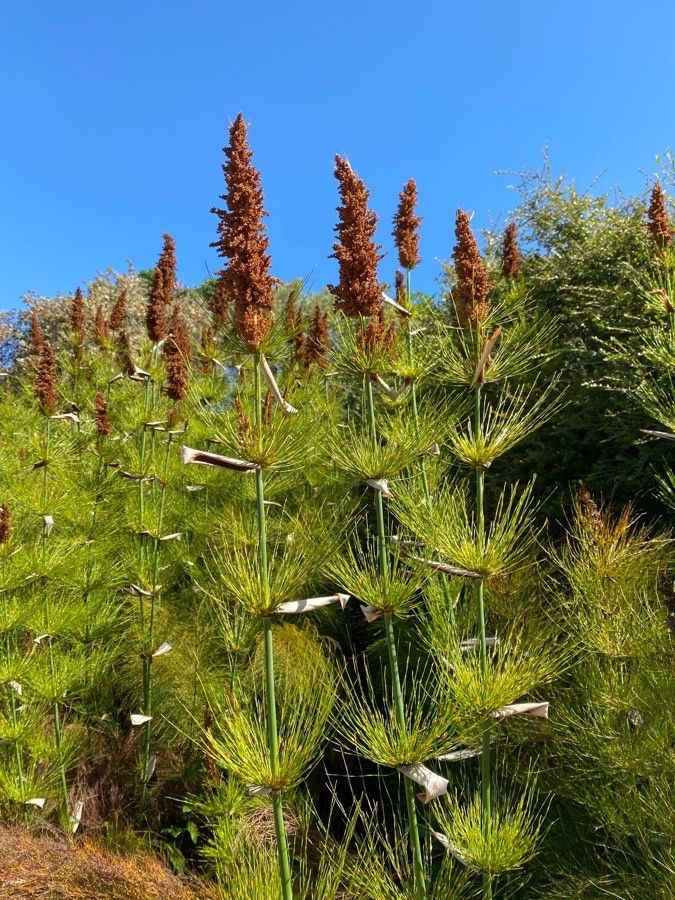
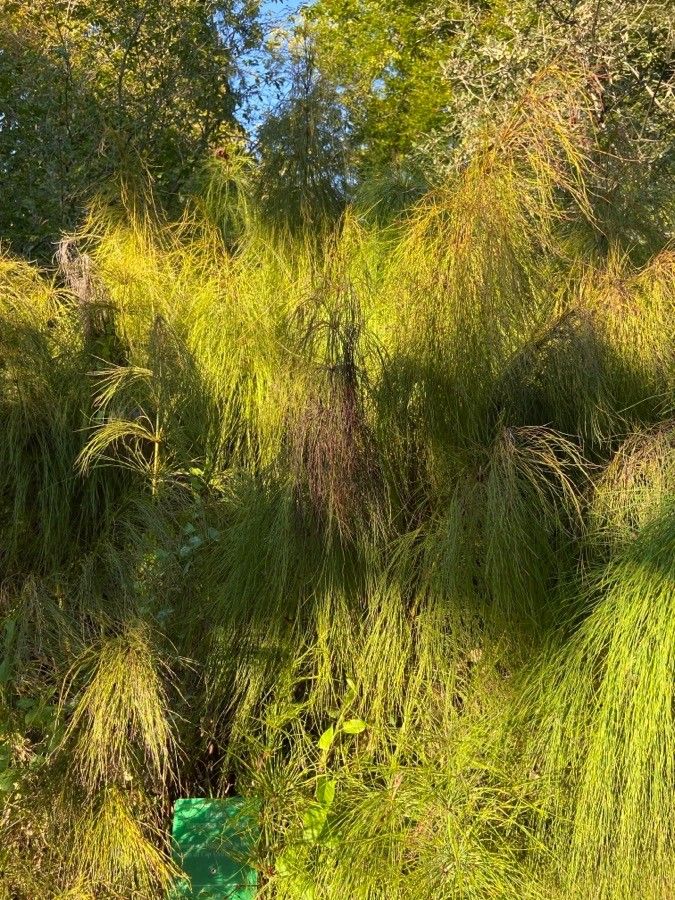
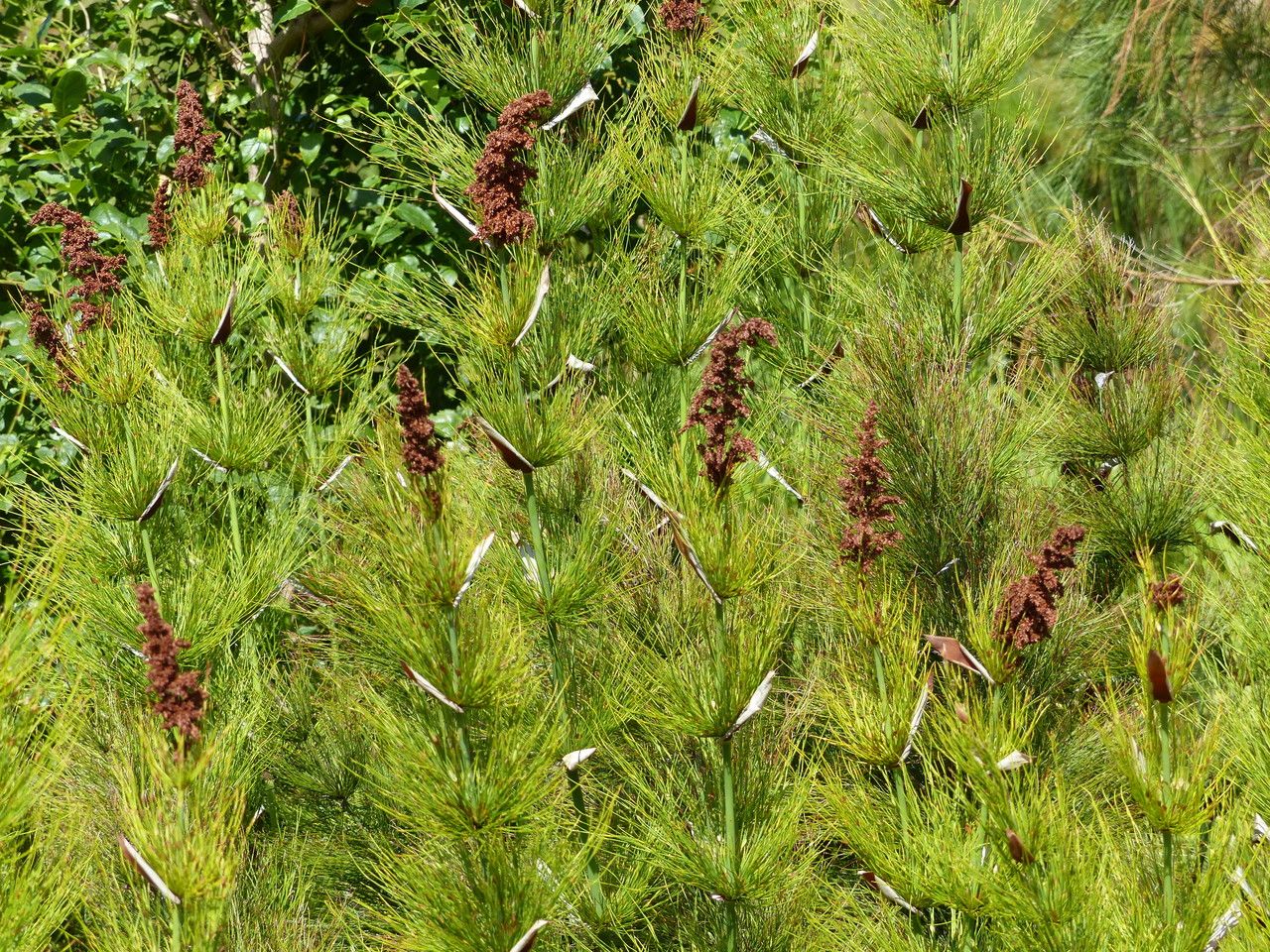
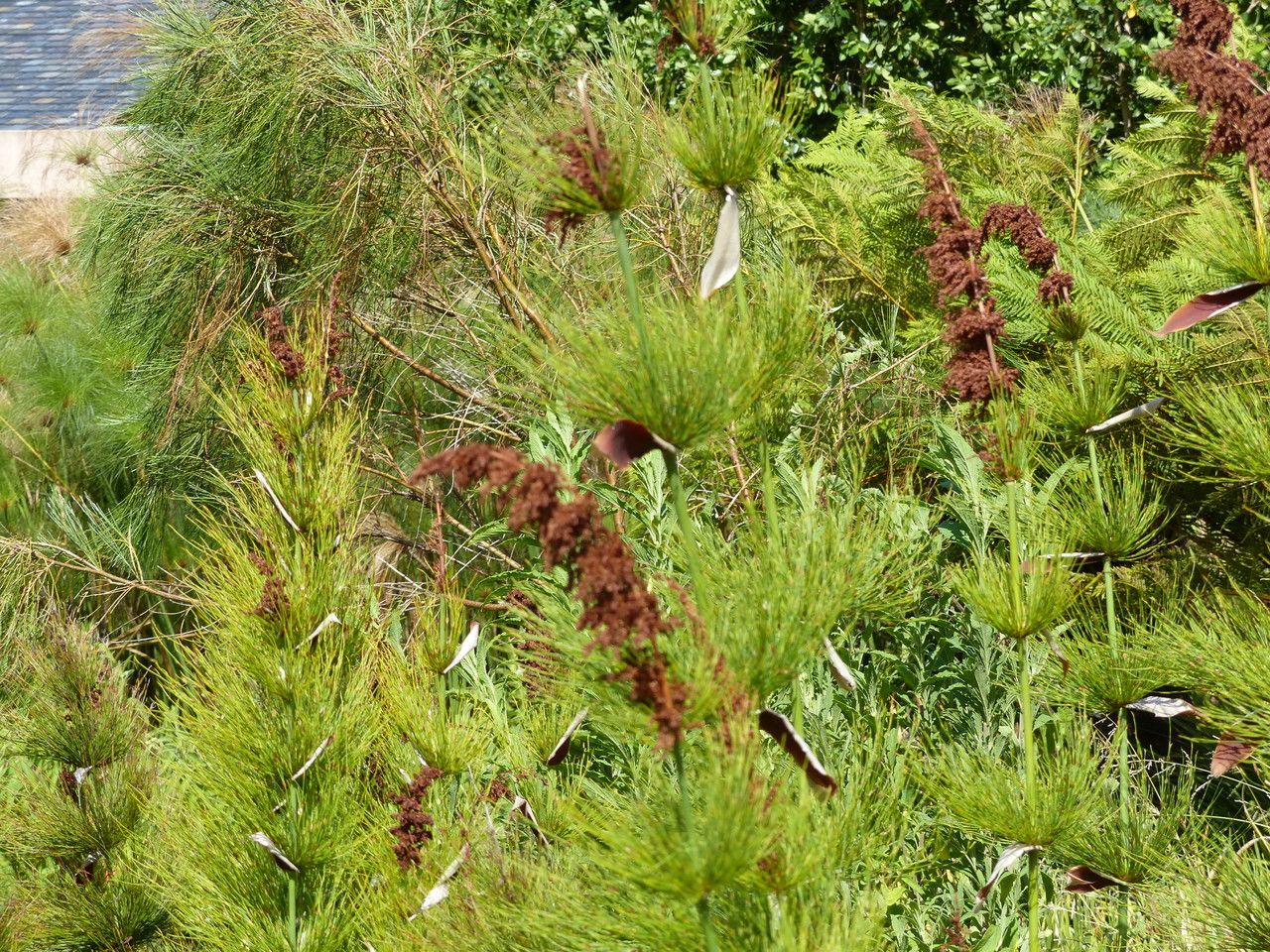
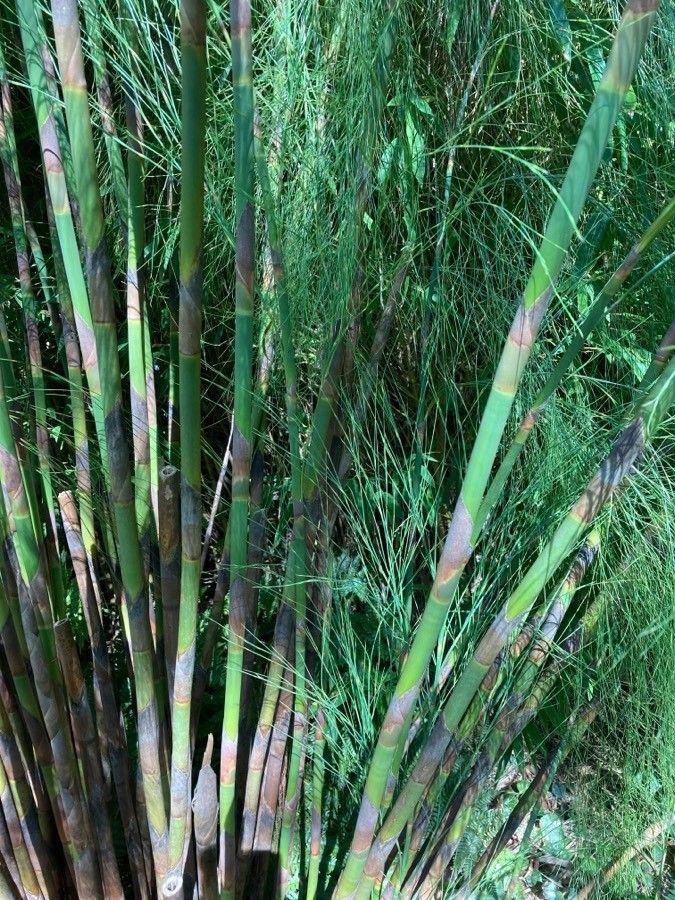
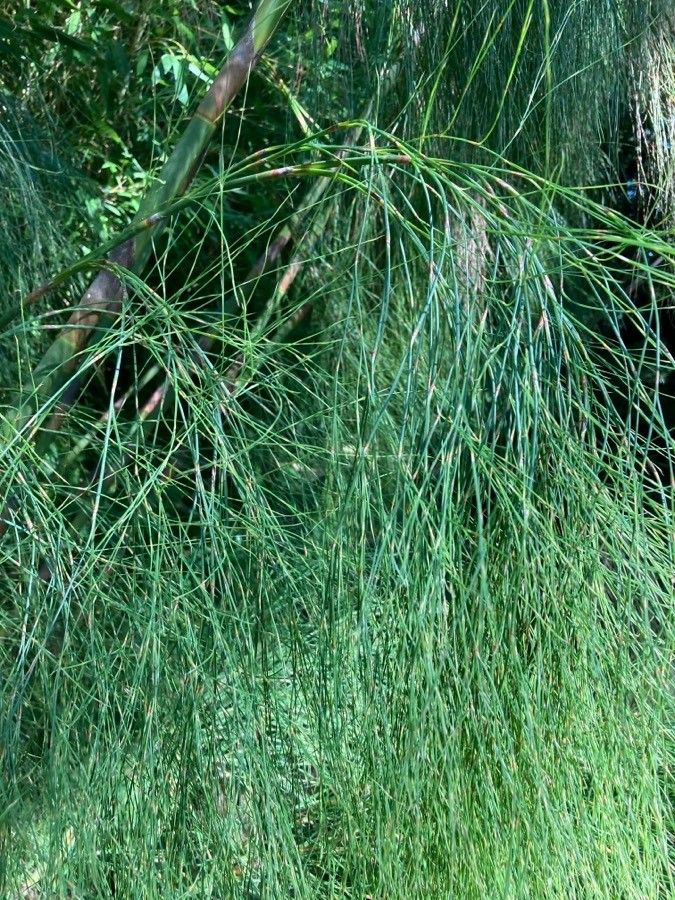
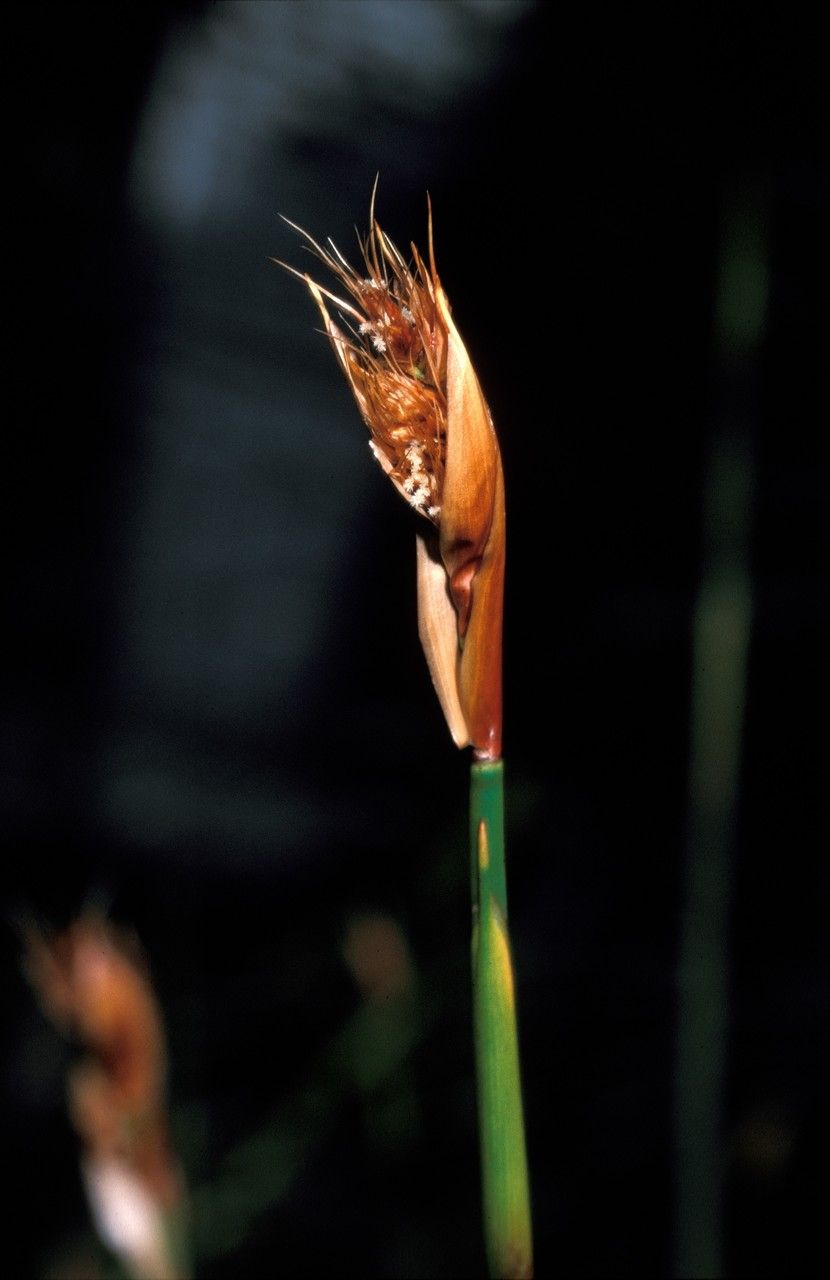
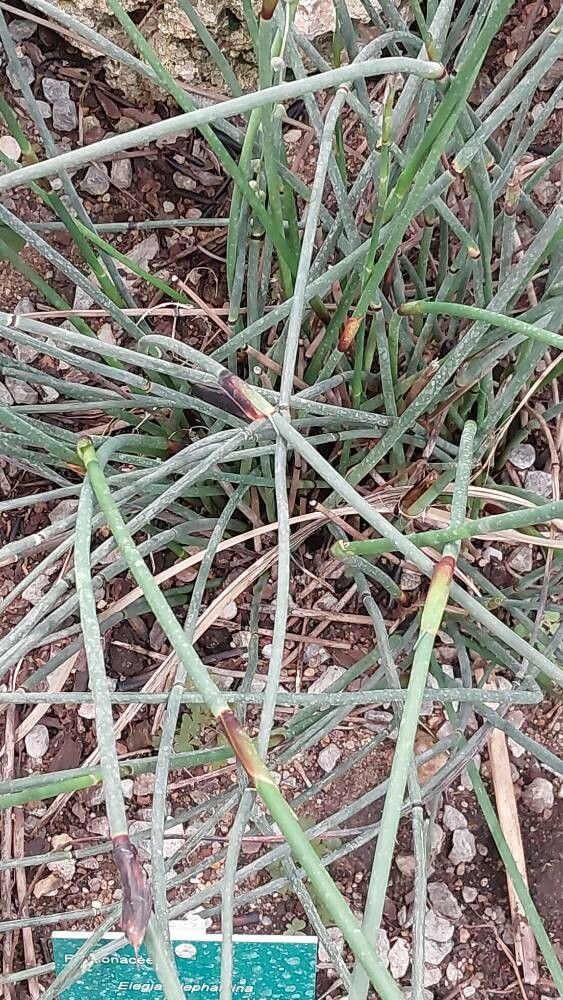
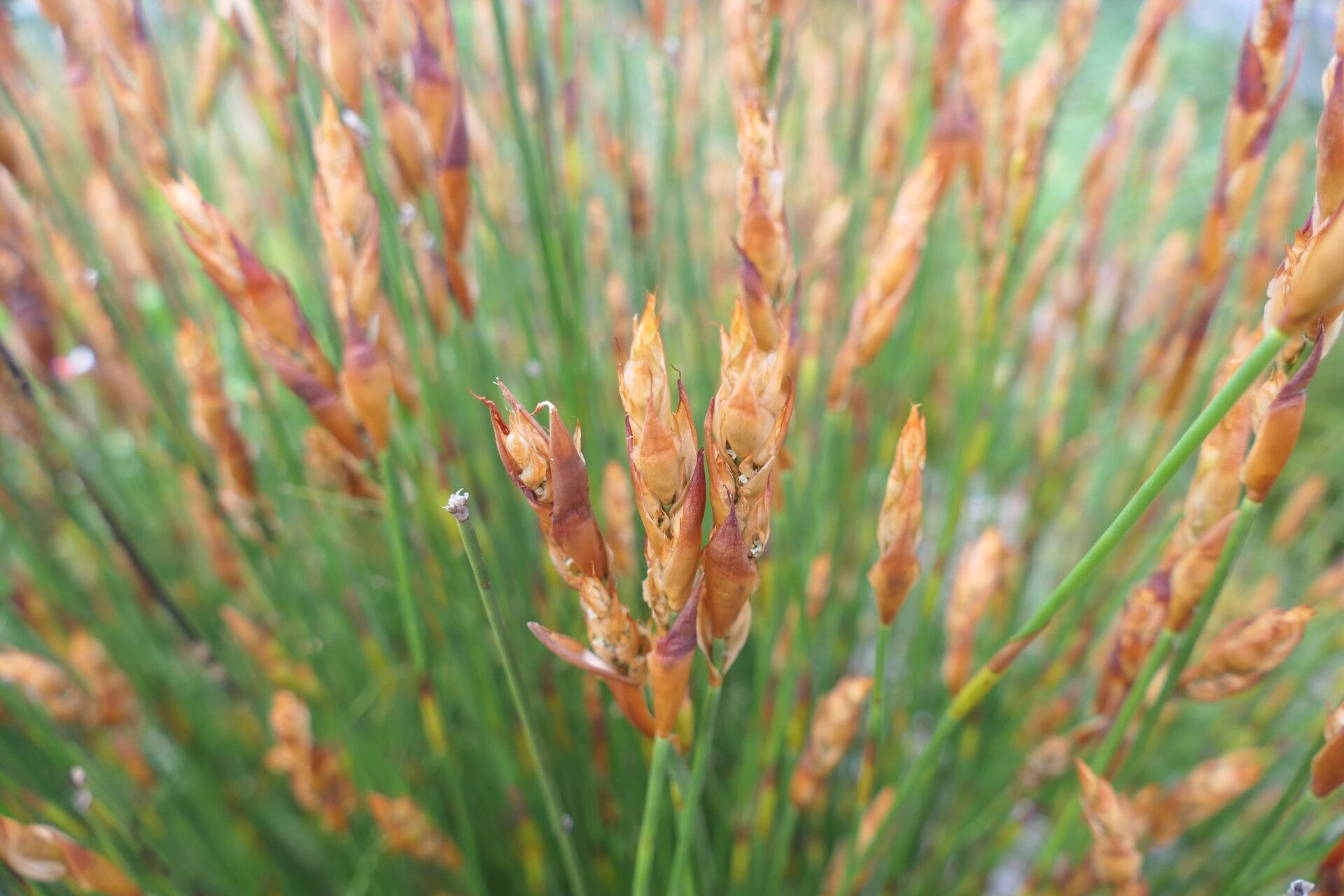
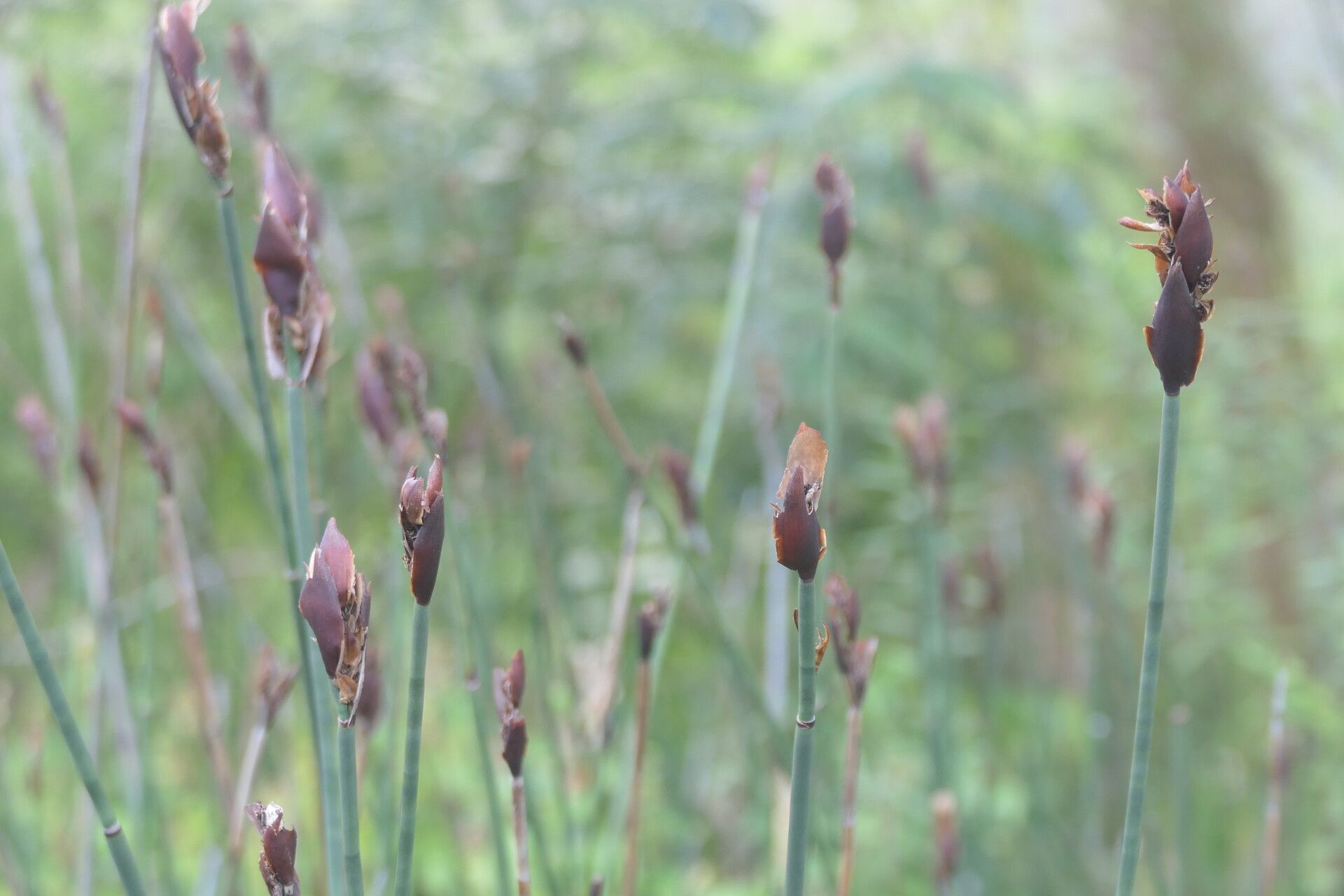
Elegia capensis, called the horsetail restio, is a species of grass‑like flowering plant in the genus Elegia, native to the Cape Provinces of South Africa. It has gained the Royal Horticultural Society's Award of Garden Merit.
Broom reed has strong resistance to disease and is generally not susceptible to diseases. In terms of care, this plant is fairly low-maintenance. When grown outdoors it needs minimal watering, and larger plants typically do not require pruning. Smaller plants, however, should be trimmed after they have finished blooming. Broom reed is appropriate for anyone with an outdoor area, such as a garden or deck, and does not demand much experience in plant care.
How to keep Elegia Capensis.
Light
The broom reed grows best with continuous sunlight, which is necessary for its healthy development. Its native environments receive plenty of sun, highlighting its preference for such conditions. It tolerates varying light levels and can persist with somewhat reduced sunlight. However, large departures from sunlit conditions can harm the plant's health.
Water
Broom reed, a plant native to the fynbos region of South Africa, thrives in a Mediterranean climate that features wet winters and dry summers. It should be watered every 1-2 weeks, with attention to allowing the soil to dry out slightly between waterings. As an evergreen, broom reed requires moderate hydration to maintain its foliage, making it a valuable addition to garden landscapes.
Temperature
Broom reed grows best at temperatures between 68 and 100°F (20 to 38℃), as found in its native temperate habitats. Seasonal adjustment of temperatures to replicate its natural climate may be needed for optimal growth.
Fertilizer
The best time to fertilize a Broom reed is in early spring, when it is coming out of dormancy. This encourages overall growth and flower formation. Applying fertilizer improves the foliage, stems, and branches, while encouraging large, vibrant, and long-lasting flowers. It helps move nutrients from the roots to the flowers and enhances the plant’s health and resistance to disease.
Pruning
Broom reed has tall stems and tufted flowers. To keep it healthy and looking its best, prune it from early to late winter. When pruning, remove any dead or weak stems and thin out the plant to improve air circulation. This practice encourages new growth, strengthens the plant's structure, and enhances its appearance. Regular pruning during the dormant season reduces stress on the plant and promotes vigorous growth in the spring.
Pot & Repot
When repotting Broom reed, select a pot 1-2 inches (2.5–5.1 cm) larger that provides good drainage. Use a well-draining potting mix. Repot in spring or fall, making sure the root ball sits slightly below the rim of the pot. Water thoroughly after repotting and place the plant in a warm spot with indirect sunlight.
Botanical profile.
- Plant Type
- Shrub
- Life Cycle
- Perennial
- Genus
- Elegia
- Family
- Restionaceae
- Hardiness Zone
- 11
- Mature Height
- 91 cm
- Mature Spread
- 4.88 m
- Leaf Color
- Green, Bronze
- Leaf Type
- Evergreen
- Flower Color
- Yellow, Brown
- Flower Size
- 33.53 cm
- Bloom Time
- Early fall, Mid fall
- Planting Time
- Spring, Summer
- Harvest Time
- Late fall, Early winter
- Native Area
- South Africa
Other names.
Reader questions.
How should I water my Broom reed plant?
Your Broom reed is not fussy about how you water it. You can use various watering tools like watering cans, hoses, or cups. Regardless of the tool you choose, it's important to water the soil directly and make sure all areas of the soil are evenly moistened to provide water to the entire root system. Filtered water is preferred as tap water may contain harmful particles. It's also best to use water that is at or slightly above room temperature, as extremely cold or hot water can be a bit shocking to the Broom reed. However, the Broom reed generally reacts well to any type of water you use.
Why do I have to put fertilizer on my Broom reed plant?
Regular fertilization is necessary for Broom reed because it has showy leaves that require a lot of energy to produce and maintain. Not only do the leaves need sufficient energy to stay healthy, but the plant also needs energy for growth and maintenance of its stems, branches, roots, and other vital structures. If fertilization is neglected, there are two likely outcomes. First, the leaves will lose their natural color and texture, making the plant look unhealthy and less attractive. Second, the overall growth of the Broom reed will slow down, and weak growth may occur, increasing the risk of breakage.
What are the sunlight requirements for Broom Reed?
Broom reed, scientifically known as Elegia capensis, thrives best in full sun conditions, characterized by receiving above 6 hours of direct sunlight daily. It can also adapt to partial sun, which involves about 3-6 hours of sunlight. For optimal growth and health, it's crucial to monitor the movement of sunlight through your garden throughout the day to identify spots that offer the right balance of light and shade suitable for Broom reed. Remember, while Broom reed is adaptable to varying light intensities, ensuring it receives adequate sunlight is essential for its well-being.
What is the optimal temperature range for growing Broom reed?
Broom reed, or Elegia capensis, thrives best in a temperature range of 68 to 100°F (20 to 38°C), which is typical of its native temperate environments. For optimal growth, it's important to mimic the plant's native climatic patterns, including modulating temperatures seasonally. The plant is extremely heat-loving, and exposure to cold temperatures can be harmful. During winter, it's recommended to keep Broom reed indoors in a bright location, away from direct heat sources, and maintain temperatures above 20°C. Temperatures nearing 10°C or lower are particularly detrimental to the plant's health.
What should I do if I give my Broom reed plant too much water or too little water?
Outdoor plants, especially new ones or seedlings, are vulnerable to not being watered enough. It's important to consistently water these plants for a few months until they establish their roots and can rely on rainfall. When Broom reeds are in pots, there is a higher risk of overwatering. If you accidentally overwater your Broom reed, act quickly to fix the situation. Stop watering the plant immediately to minimize the impact of overwatering. Then, take out the Broom reed from its pot to check the roots. If there is no root rot, you can return the plant to its container. However, if you find signs of root rot, trim the affected roots and use a fungicide to prevent further damage. Finally, repot the Broom reed in well-draining soil. When underwatered, simply water the Broom reed more frequently. The leaves will droop, dry out, and fall off, but they will regain fullness once properly watered. Adjust your watering frequency promptly when you notice underwatering.
When should I fertilize my Broom reed?
To help your Broom reed thrive, it's best to give it occasional feedings instead of sticking to a strict schedule. One simple way to fertilize it is to apply fertilizer while watering the plant occasionally. During the growing season, it's important to provide the plant with an adequate amount of water. Feeding the plant every two to three weeks is recommended, especially when it is producing new growth.
What essentials are needed for Broom Reed's growth?
The essential requirement for Broom reed's (Elegia capensis) growth is abundant sunlight, as it flourishes predominantly under unabated solar exposure. While the plant is native to environments with plentiful sunshine and can tolerate some variance in light intensity, significant deviations from these sun-drenched conditions can negatively impact its health. For indoor plants where natural sunlight may be insufficient, especially during winter or in less sunny spaces, using artificial lighting can offer a viable solution. Proper selection of artificial light type, determining the appropriate distance from the plants, and mimicking natural daylight hours will promote healthier and faster growth. Typically, full sun plants need 30-50W/sq ft, partial sun plants 20-30W/sq ft, and full shade plants 10-20W/sq ft of artificial light.
How do you care for Broom reed in low temperatures?
In low temperatures, Broom reed requires special care due to its preference for warmth. If the temperature drops below 5°C, you may notice the leaves lightening in color, and frost damage can turn the leaves brown or black, causing wilting and drooping. To manage this, trim off the frost-damaged parts immediately and move the plant to a warm indoor environment, ideally near a south-facing window to ensure it gets enough sunlight. It's also important to avoid placing the plant too close to heaters or air conditioning vents, as this can lead to excessively dry air that's harmful to the plant.
How frequently do I need to water my Broom reed?
Most outdoor plants can rely on rainfall for their watering needs. However, if you live in an area with little rainfall, you should water your plants every 2 weeks in the spring and fall, and more frequently in the summer. In the winter, when plants grow slower and require less water, you can water them less often or not at all. If your Broom reed is young or newly planted, it may need more frequent watering to help it establish and grow into a drought-tolerant plant. When it comes to potted plants, there are two main approaches to determining their watering frequency. The first is to follow a set watering schedule, such as once a week or every other week. However, this may not always be suitable for your specific Broom reed, as it doesn't consider the unique conditions of its growing environment. The second approach is to base your watering frequency on soil moisture. It's generally best to wait until the top two to four inches of soil have completely dried out before watering again. This corresponds to about 1/3 to 1/2 depth of the pots. Adjusting your watering frequency according to the season is also important, as your Broom reed will have higher water needs in the summer compared to other times of the year.
When is the best time to not use fertilizer on my Broom reed?
You can continue fertilizing your Broom reed regularly throughout most of the year, specifically during the active growing season of spring, summer, and early fall. However, it is important to refrain from fertilizing during the winter. This is because the plant enters a dormant growth phase during this time, meaning it either grows very little or not at all. Since there is minimal growth and the plant requires less energy during this phase, fertilization becomes unnecessary.
What are the key symptoms of light deficiency in Broom Reed?
When Broom reed is exposed to insufficient lighting, especially indoors during winter, several key symptoms can be easily noticed, indicating a deficiency. These include the development of smaller leaves compared to the older ones, leggy or sparse growth reflecting a thin appearance due to elongated spaces between leaves or stems, premature leaf drop as the plant conserves its resources, delayed or ceased growth as a survival response to poor light, lighter-colored or irregularly patterned new leaves suggesting a lack of chlorophyll, and specific conditions like chlorosis where leaves lose their green color, sunscald causing damage from intense sunlight, leaf curling as a defense against excessive sunlight, wilting due to loss of water through transpiration, and leaf scorching from too much sunlight. Observing any of these signs should prompt a reassessment of the plant's light conditions and adjustments as necessary.
What should I do if Broom reed is exposed to high temperatures?
Broom reed should ideally be kept below 38°C during the summer months. Exposure to temperatures above 43°C can cause the leaves to lighten and increase the risk of sunburn. To protect the plant in such conditions, trim away any sunburned or dried-up parts and move it to a shaded area, particularly away from the harsh midday and afternoon sun. Ensuring the plant is watered in the morning and evening will help keep the soil moist and further protect the plant from the effects of high temperature.