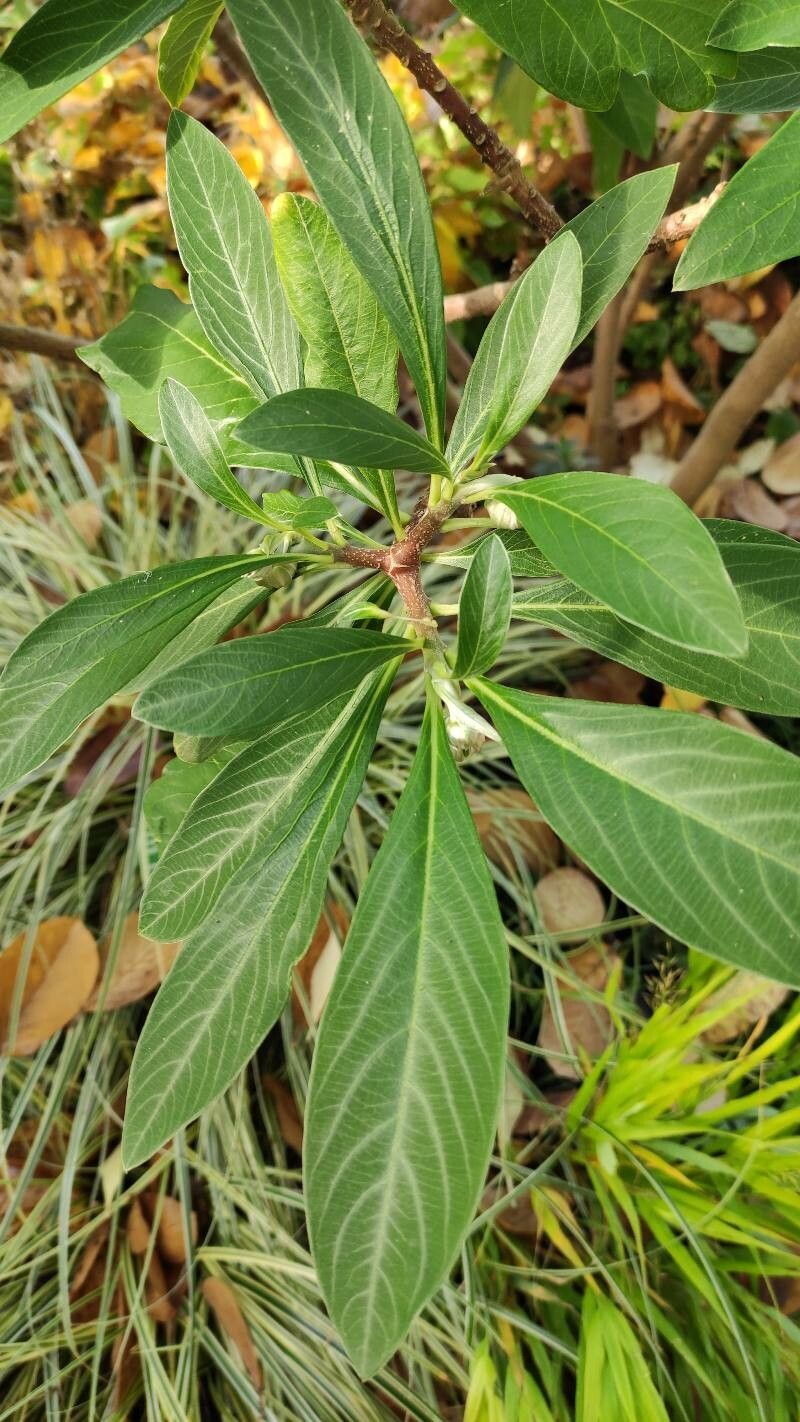
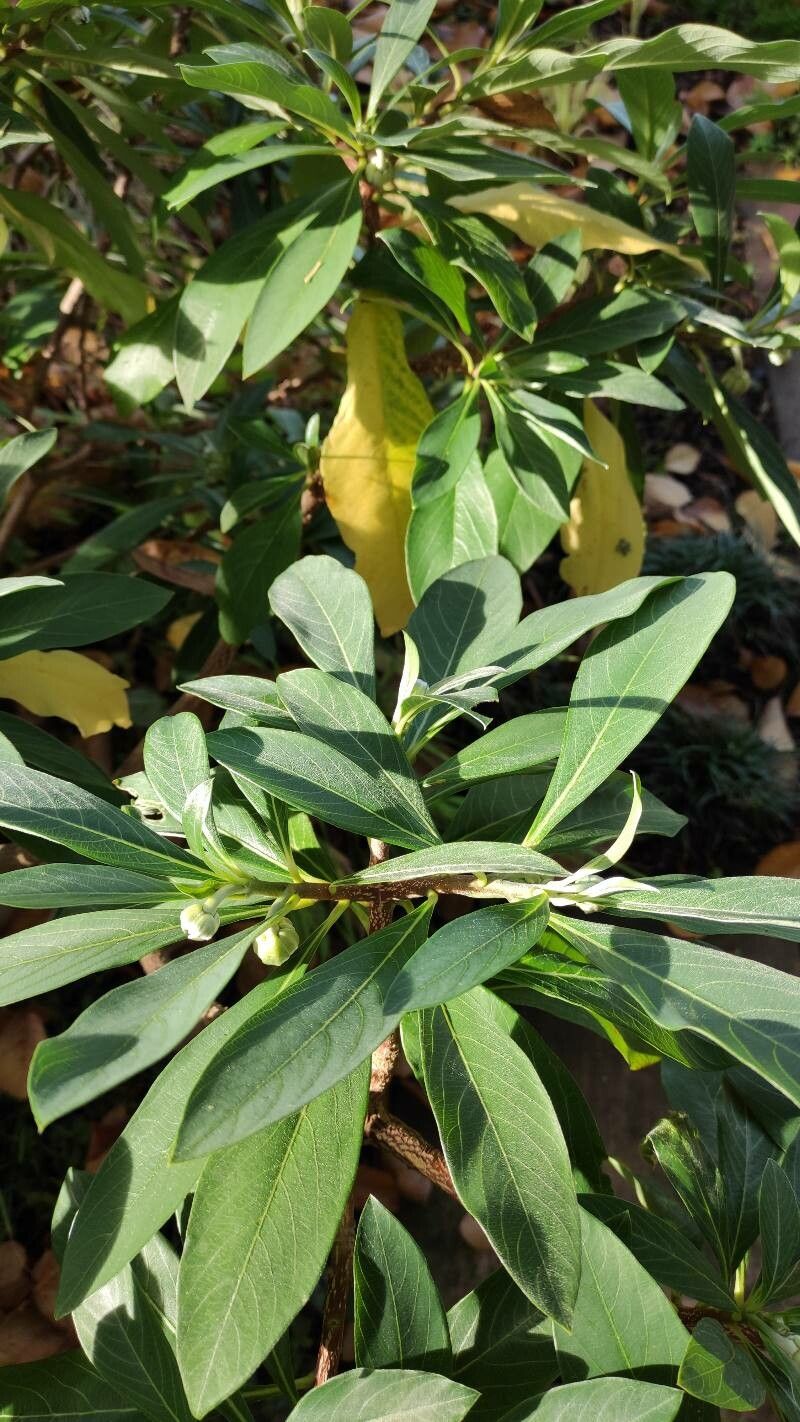
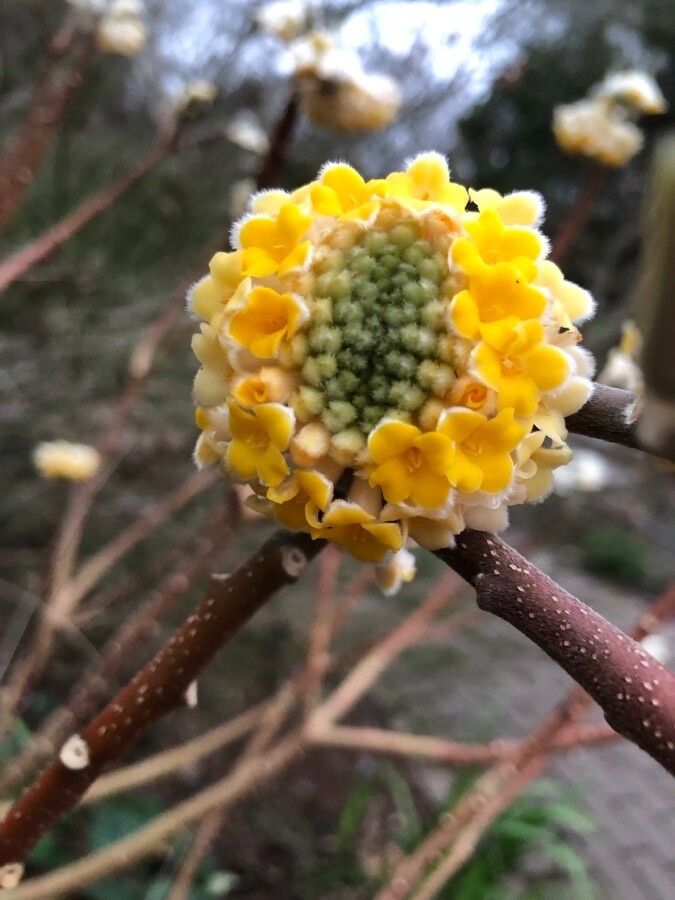
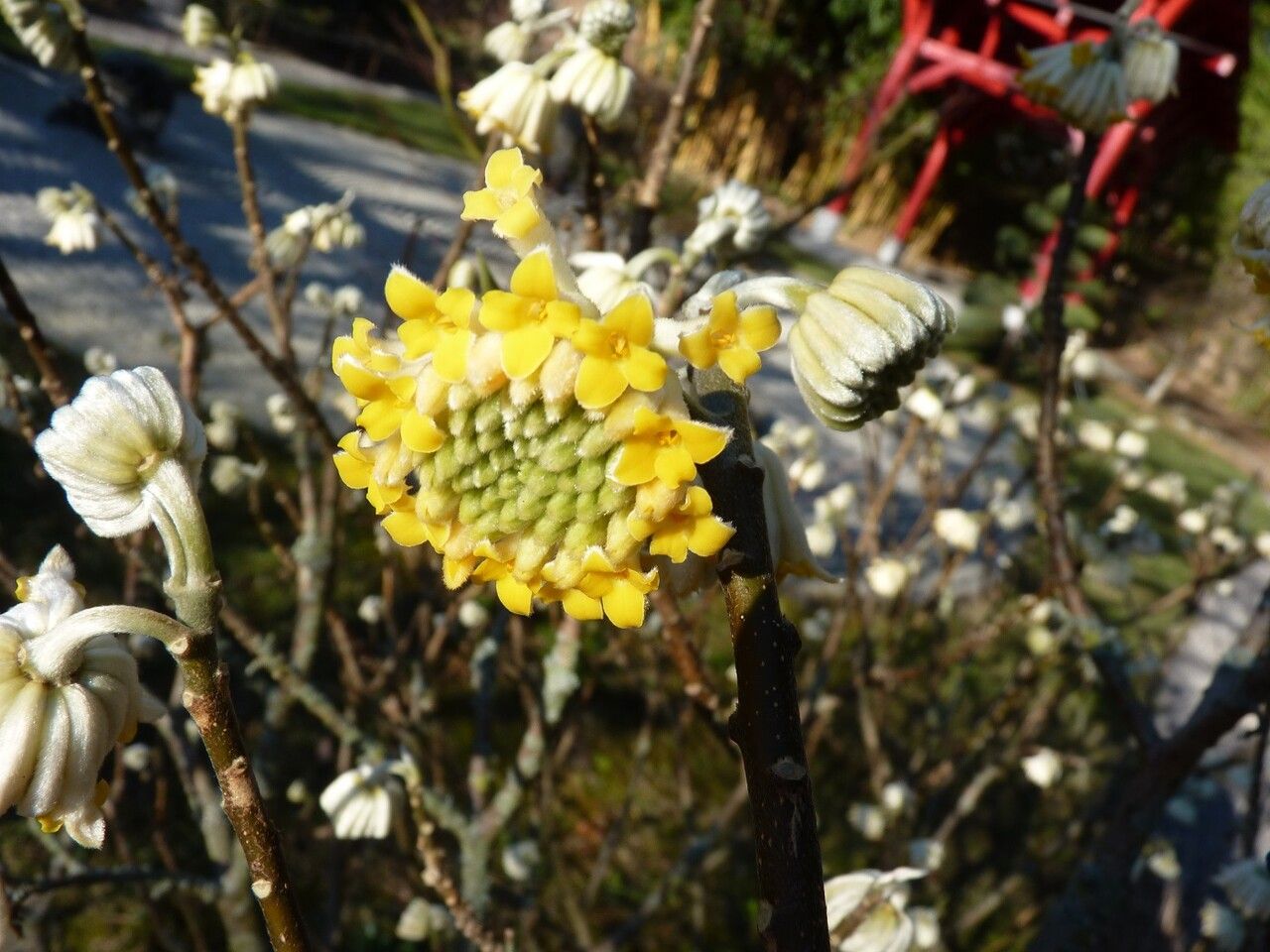
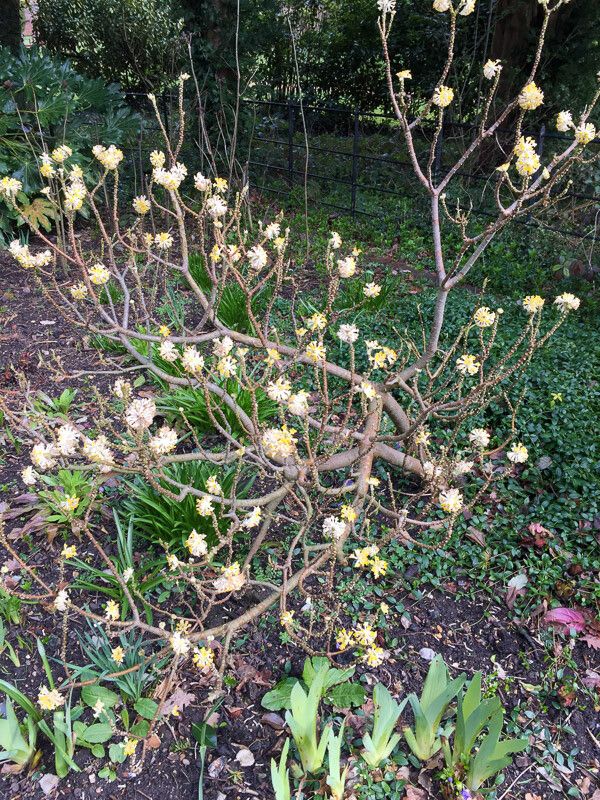
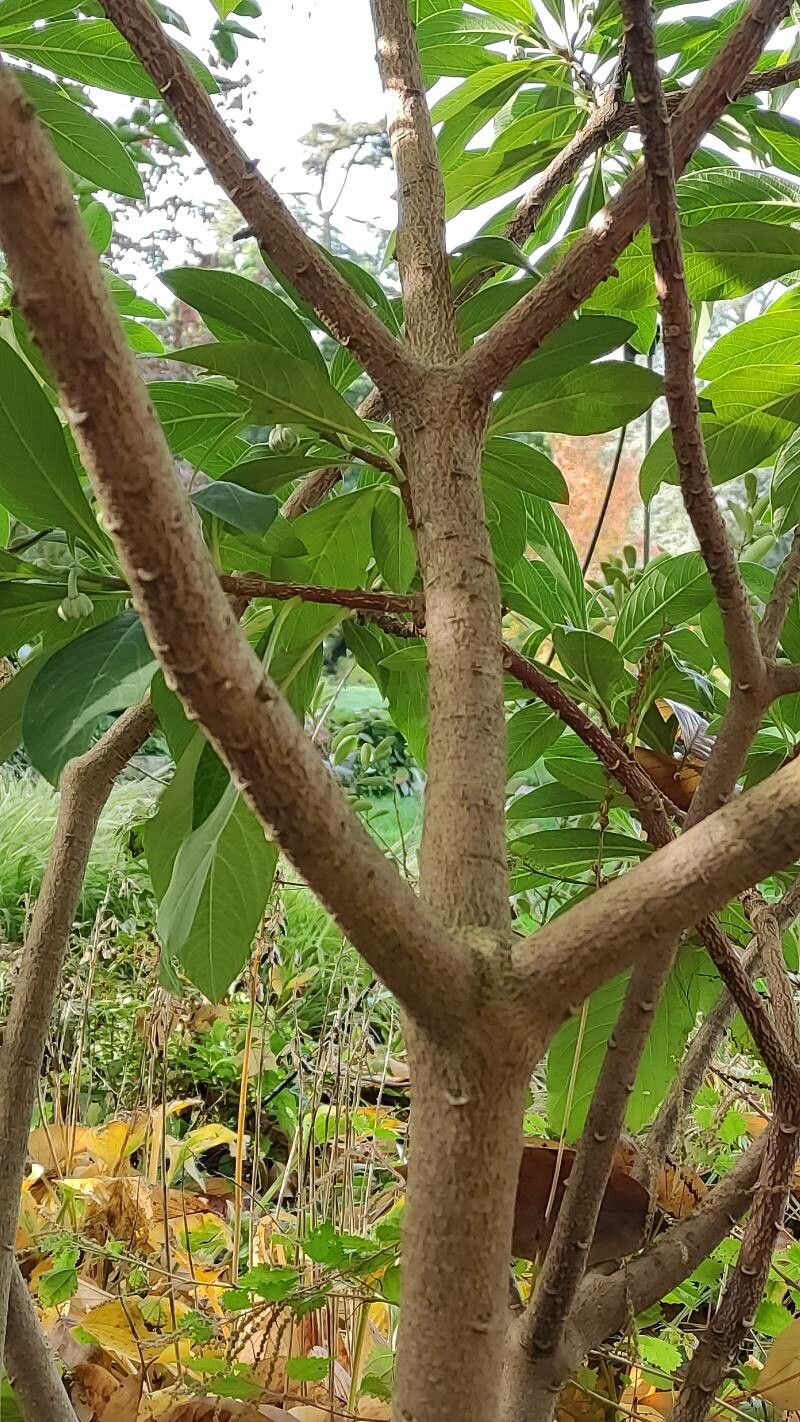
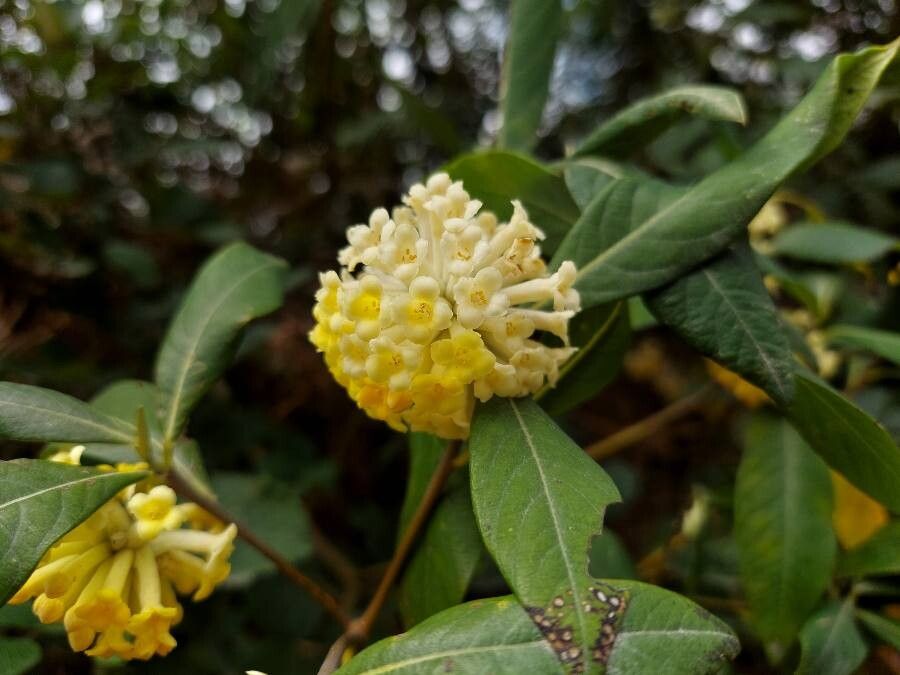
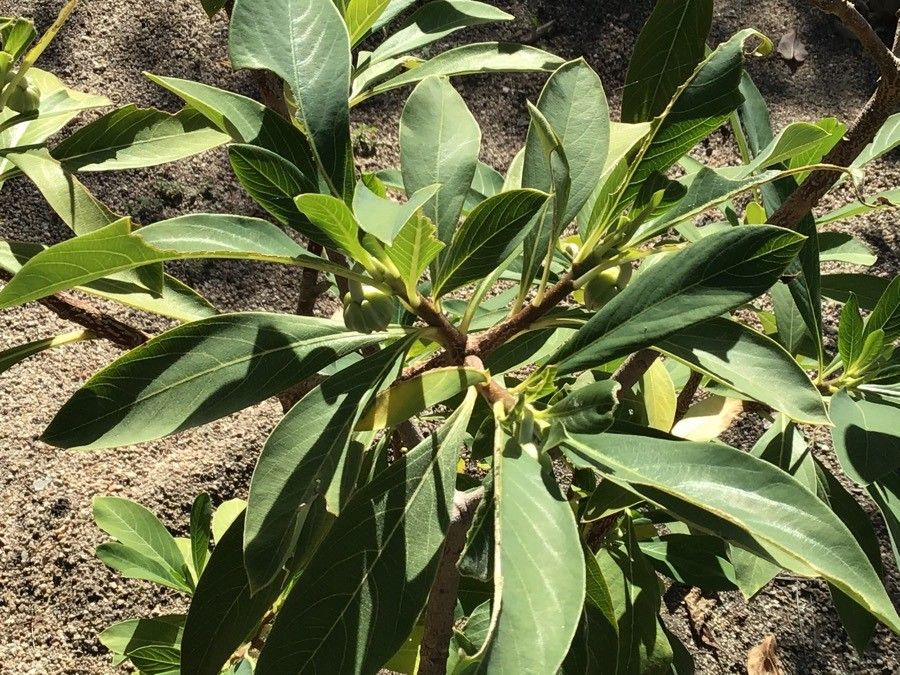
Edgeworthia chrysantha, commonly known as the paperbush plant, is a deciduous shrub native to China and Japan. Belonging to the Thymelaeaceae family, this plant can grow up to 6 feet tall and wide. It features attractive gray-green, oval-shaped leaves with pointed tips. In late winter or early spring, the paperbush produces clusters of fragrant yellow flowers that look like small pom-poms.
This plant thrives in partial shade to full sun and prefers well-draining soil rich in organic matter. Although it can tolerate some drought, it benefits from regular watering during dry spells.
Edgeworthia chrysantha has a history of use in traditional Chinese medicine for its anti-inflammatory properties and for treating coughs and other respiratory ailments.
In Japan, the paperbush, scientifically known as Edgeworthia chrysantha, is utilized to produce a variety of functional and decorative papers, collectively referred to as washi. This plant is valued for its long-lasting fibers, which make it ideal for creating both delicate writing papers and durable banknotes. FUN FACT · FROM THE LIBRARY
Overall, this beautiful shrub adds interest to any garden with its unique flowers and attractive foliage, while also offering potential health benefits through traditional medicinal practices.
The Oriental paperbush belongs to a genus named in honor of Michael Pakenham Edgeworth, a Victorian-era Irish botanist, and his sister, Maria Edgeworth. Maria was a writer known for her realist novels for both children and adults. It is fitting that this paper-producing plant carries her name.
Paperbush has strong resistance to disease and is generally not susceptible to diseases. In terms of care, this plant is fairly low-maintenance. When grown outdoors it needs only light watering, and larger specimens typically do not need pruning. Smaller plants, however, should be pruned after they have finished blooming. Paperbusht is suitable for anyone with an outdoor area, such as a garden or a deck, and does not require much plant-care experience.
How to keep Edgeworthia Chrysantha.
Light
Paperbush needs continuous exposure to abundant sunlight to do well. While it can tolerate slightly obscured sun for a while, truly thriving requires a large amount of light. Its light needs do not change with different growth stages. Native to sunny habitats, too little light causes weak, spindly growth, while too much can burn the leaves.
Water
The paperbush plant originates from the forested hillsides of China, where it thrives in consistent humidity and needs moderate watering every 1-2 weeks. As a deciduous plant, it sheds its leaves seasonally, which impacts its water absorption and requires careful monitoring. Typically grown outdoors for its size and ornamental appeal, the paperbush can tolerate short periods of dryness.
Temperature
The paperbush is a temperate woody plant that does best at temperatures of 59 to 95℉ (15 to 35℃). It is native to regions with temperatures ranging from 53 to 86℉ (12 to 30℃). In winter, it is recommended to set temperatures to roughly 32 to 50℉ (0 to 10℃) to encourage dormancy.
Fertilizer
Timing is important for fertilizing Paperbush. Apply fertilizer in early spring and continue monthly through early summer. Fertilizer encourages attractive blooms and supplies energy during both dormant and active growth phases.
Pruning
Paperbush displays its fragrant, yellow flowers on bare stems in late winter. After the flowers have bloomed, prune the plant in late spring. Focus on removing dead branches and thinning crowded areas to improve air circulation. Avoid heavy pruning to preserve the plant's shape, which encourages vigorous growth and enhances blooms for the following season.
Pot & Repot
When repotting Paperbush, select a container 1-2 inches (2.5–5.1 cm) larger with good drainage. Use a well-draining potting mix. Repot in spring or fall, making sure the root ball sits slightly lower than the pot rim. Water thoroughly after repotting and place it in a warm spot with indirect sunlight.
Botanical profile.
- Plant Type
- Shrub
- Life Cycle
- Perennial
- Genus
- Edgeworthia
- Family
- Thymelaeaceae
- Hardiness Zone
- 8-10
- Mature Height
- 0.61 m to 2.13 m
- Mature Spread
- 1.22 m to 1.83 m
- Leaf Color
- Green, Silver
- Leaf Type
- Deciduous
- Flower Color
- Yellow
- Flower Size
- 3.05 cm to 5.08 cm
- Bloom Time
- Early spring, Winter
- Planting Time
- Spring, Autumn
- Harvest Time
- Mid spring, Late spring
- Native Area
- Myanmar, China
Other names.
Reader questions.
How should I water my Paperbush plant to keep it healthy?
To promote excellent root development, consider placing a garden hose at the base of your plant. Avoid spraying the leaves directly, as this can be detrimental. Keep in mind that leaves may require more water if they are exposed to direct sunlight outdoors. You can also utilize bubblers specifically designed for each plant to keep the roots moist. Soaker hoses, which can cover the whole garden or bed, are also effective when adding or removing plants, as they encourage deep root growth. Make sure to drain any excess water and allow the soil to dry before watering again. Watering at ground level is recommended to prevent diseases. Additionally, on a sunny day, it may be beneficial to spray the entire bush with water. Regardless of whether your Paperbush is potted or in-ground, remember that it prefers deep watering rather than light sprinkling.
Why should I put fertilizer on my Paperbush?
Fertilizing a Paperbush is important for several reasons. Firstly, it helps the plant produce beautiful blooms. To ensure excellent flowers in the upcoming season, it is recommended to fertilize in early spring. Additionally, fertilizer provides the plant with energy that can be stored in the ground during dormant growth phases. By giving extra nutrients in the fall planting process or late spring, the Paperbush can store more energy to use when it becomes active again.
What are the sunlight requirements for Paperbush (Edgeworthia chrysantha)?
Paperbush (Edgeworthia chrysantha) needs full sun, defined as more than 6 hours of sunlight daily, to thrive optimally. It can also tolerate partial sun, which means about 3-6 hours of sunlight. However, it's crucial to observe the way sunlight moves through your garden to find spots that offer a perfect balance of light and shade. This ensures the plants remain happy by receiving the amount of light suited to their needs.
What are the ideal temperature conditions for Paperbush?
The Paperbush, also known as Edgeworthia chrysantha, is a temperate woody plant that thrives best in temperatures ranging from 59 to 95°F (15 to 35°C). It originates from regions where the temperatures typically vary between 53 to 86°F (12 to 30°C). To promote dormancy during the winter, it is advised to maintain the temperature around 32 to 50°F (0 to 10°C). The Paperbush has some degree of cold tolerance and doesn't usually require special care for temperatures above -5°C. However, if temperatures are expected to fall below this threshold, protective measures such as wrapping the plant in plastic, fabric, or other materials should be taken but removed once warmer temperatures resume.
What should I do if I give Paperbush too much or too little water?
Overwatering a Paperbush can cause yellowing, dropping, and wilting of leaves. The plant may also look unhealthy with mushy stems. When these signs appear, it's best to adjust your watering schedule. Wilting can also indicate under watering, with leaves turning crispy and dry. If the soil is dry and watering alone is not enough, give the plant a thorough watering. However, even with enough water, the Paperbush may still have dry and yellow leaves due to a damaged root system. Once the plant recovers, the yellowing of leaves will stop. When growing a Paperbush indoors, always check the moisture levels and avoid overwatering. Look for signs of black spots, which indicate overwatering, and allow the soil to dry out if these signs are present. Overwatering can lead to root rot, so transfer the plant to a different pot if discolored and slimy roots are visible. Prevent root rot by avoiding overly soggy soil. When planting the Paperbush outdoors, check the moisture level by digging a bit deeper with your fingers. If the soil is too dry, it may indicate underwatering. Provide adequate watering to help the plant recover.
When should I put fertilizer on my Paperbush?
To effectively fertilize Paperbush, timing is crucial. Applying fertilizer too early while the plant is still dormant will be ineffective and susceptible to being washed away by rainwater, resulting in waste and pollution. It is best to apply the first application of fertilizer in early spring and continue fertilizing monthly until early summer.
What essentials should I provide for Paperbush for it to grow properly?
Paperbush plants require constant exposure to ample sunlight for proper growth, as they originate from environments with generous sunlight. Consistent, bright light is crucial for all growth stages of the plant, with a lack of light leading to weak, spindly growth and excessive light possibly causing leaf scorching. Indoor Paperbush plants benefit significantly from artificial lighting, especially in less sunny spaces or during winter. LED lights are advisable, providing 30-50W/sq ft for full sun plants, 20-30W/sq ft for partial sun plants, and 10-20W/sq ft for full shade plants. It's important to mimic natural sunlight conditions in terms of intensity, distance (12-36 inches above the plant), and duration (8-12 hours per day).
How does Paperbush respond to low temperatures, and what are the recommended solutions?
Paperbush possesses moderate tolerance to low temperatures, functioning optimally when the temperature remains above 15°C. It should be protected during the winter to keep temperatures above -5°C. Exposure to temperatures below -10°C may result in drooping leaves; they might recover in milder cases, but severe exposure leads to wilting and leaf fall. To address frost damage, trim off the affected areas. To prepare for future cold spells, wrap the plant in non-woven fabric or cloth, and erect a wind barrier to safeguard against cold winds.
How frequently do I need to give water to my Paperbush?
The Paperbush plant prefers deep and infrequent watering, especially when it is in a pot. To ensure proper watering, soak the plant in a gallon of water each time. In pots, the water storage is limited, causing the soil to dry out quickly. In colder regions, water the plant every 3 to 5 days. It's best to water early in the morning when the soil is dry, whether you have the plant indoors or outdoors. You can check the moisture level by touching the soil. If the top 2-3 inches are dry, it's time for a full watering. On hot days, monitor the moisture level daily as the pot's soil can dry out rapidly. If you have a garden, proper irrigation is necessary, especially in hot climates where watering once a week may be required. Only water when the soil is too dry, about 2 to 3 inches deep. Be mindful of rainfall and avoid overwatering to prevent root rot. Paperbush typically grows in spring and fall. If the plants are outside, adding a 3 to 4-inch layer of mulch can help conserve water. Sandy soil requires more frequent watering due to its fast drainage, while clay soil needs less watering to prevent root rot. To keep track of watering, mark the calendar and pay attention to drooping leaves, which may indicate the need for water.
When is it best to not fertilize my Paperbush?
To ensure Paperbush's optimal growth, it is important to be mindful of its fertilizer choices. Excessive nitrogen content should be avoided as it tends to promote leaf development rather than blooming. Look for fertilizers with lower nitrogen levels compared to other nutrients. It is advisable to refrain from fertilizing after early autumn, as this can lead to excessive growth right before winter. Additionally, avoid fertilizing Paperbush during hot and dry periods, as dry soil does not effectively deliver fertilizer and can cause unnecessary growth that requires more water, often unavailable. It is best to apply fertilizer earlier in the season when temperatures are cooler. Lastly, be cautious when applying fertilizer near Paperbush, as it can absorb fertilizer from nearby plants, potentially causing an unintentional double dose.
What are the common symptoms of incorrect light exposure in Paperbush plants?
Paperbush plants exhibit several symptoms when exposed to suboptimal light conditions. They include smaller new leaves, leggy or sparse growth, faster leaf drop, slower or no new growth, and lighter-colored new leaves indicating a lack of chlorophyll. Excessive light exposure can cause chlorosis (yellowing of leaves), sunscald (damage from intense light), leaf curling as a defense against sunlight, wilting from water loss, and leaf scorching. These symptoms help in diagnosing the plant's health related to its light exposure.
How should I care for Paperbush during high temperatures?
In the summer, it's crucial to ensure that the Paperbush is kept below 35°C to prevent stress. When temperatures exceed 41°C, the plant may show signs of stress such as lighter leaf color, dry and withered leaf tips, leaf curling, and increased risk of sunburn. To mitigate damage, trim the sunburned and dried parts and relocate the plant to a shaded area during the intense midday and afternoon sun, or employ a shade cloth. Watering the plant during the morning and evening helps maintain soil moisture, which is vital for the plant's well-being in high temperatures.