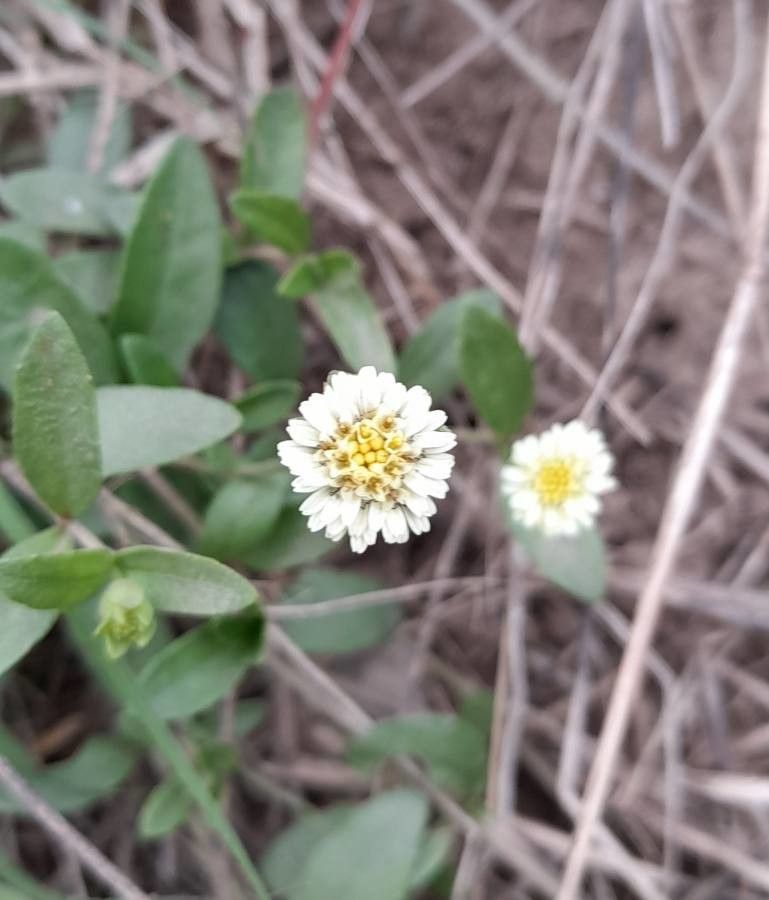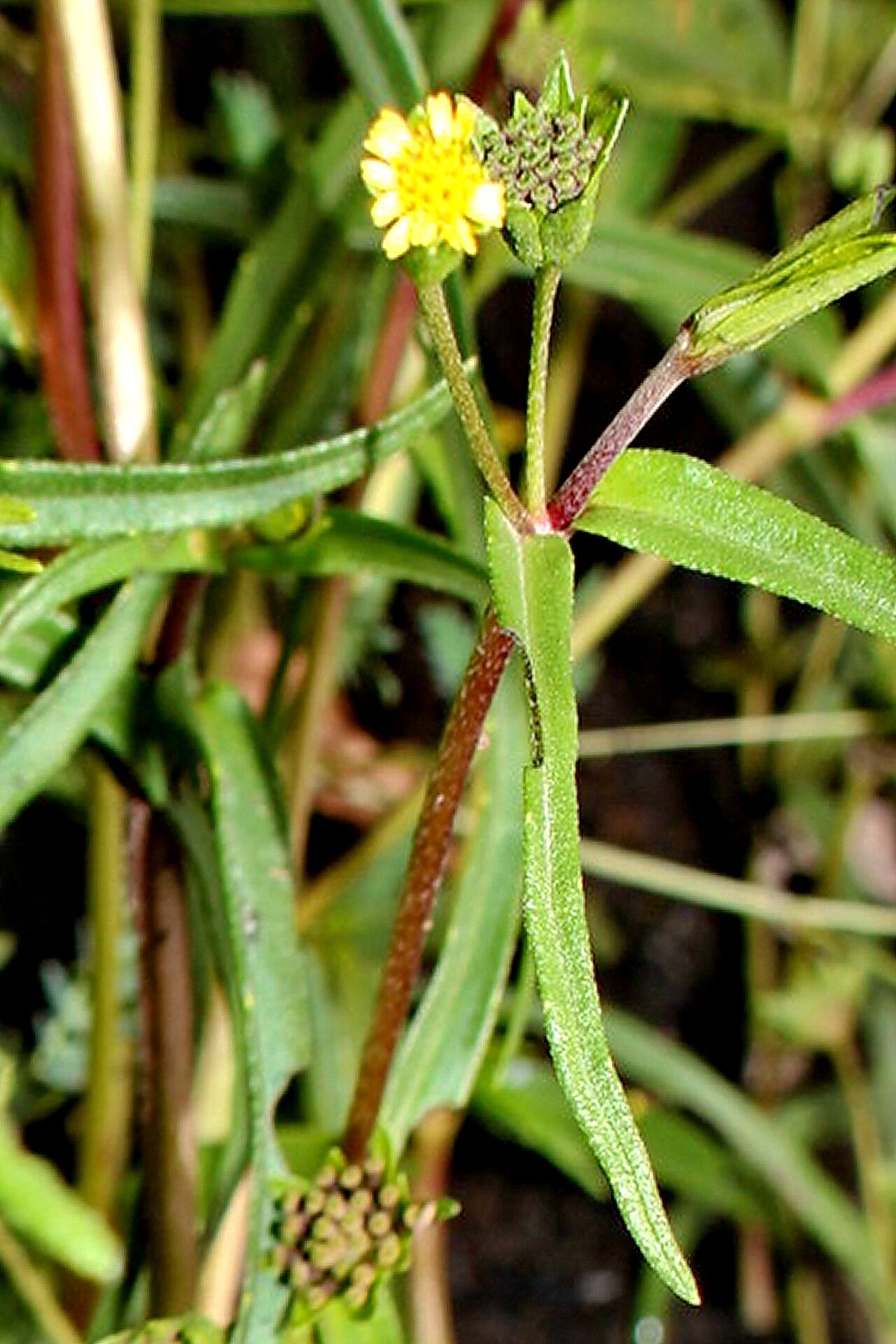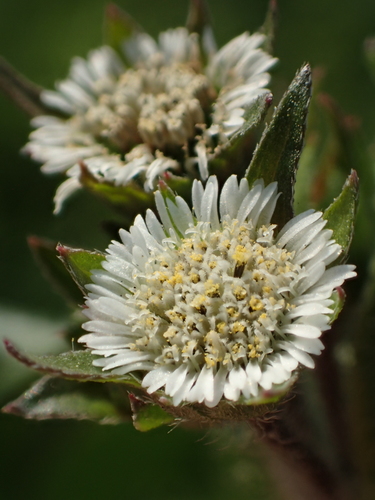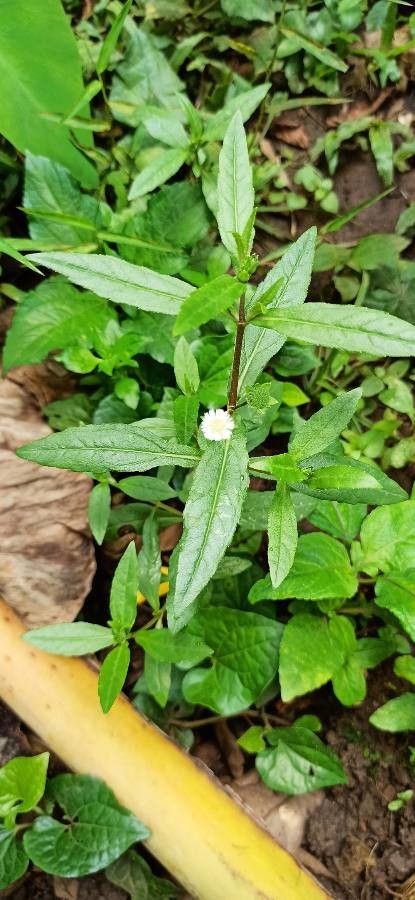
Eclipta prostrata, commonly known as false daisy, yerba de tago, Gunta kalagaraku/Gunta galagaraku, Karisalankanni, and bhringraj, is a species of plant in the family Asteraceae. It is widespread across much of the world.This plant has cylindrical, grayish roots. Leaves arranged in opposite pairs, hairy in two-sided, 2–8 cm long, 5-15 mm wide. The solitary flower heads are 6–8 mm (0.24–0.31 in) in diameter, with white florets. The achenes are compressed and narrowly winged.
This species grows commonly in moist places in warm temperate to tropical areas worldwide. It is widely distributed throughout India, Nepal, China, Thailand, and Brazil.
False daisy is fairly resistant to diseases and is generally not prone to them. However, it can be vulnerable to pests and diseases present in its environment. These problems are typically not severe. In terms of care, the plant requires moderate maintenance. Regular pruning is needed to keep a neat appearance and support healthy growth. Fertilizing can also help encourage flowering. False daisy is a good choice for anyone with outdoor space, such as a garden or patio, and does not demand much gardening experience. It may need more attention when grown indoors.
How to keep Eclipta Alba.
Light
False daisy prefers plentiful sunlight. It can also tolerate partial light or low amounts of sun, though that may affect the plant’s wellbeing. In its native habitat it requires abundant sun for growth and development, but too much sunlight can still harm it.
Temperature
False daisy is indigenous to temperate zones and performs best in temperatures of 68 to 100 °F (20 to 38 ℃). To mimic its natural environment, keep temperatures within this range year-round.
Fertilizer
False daisy responds well to regular, light applications of fertilizer to encourage healthy leaf growth. You should feed False daisy about once a month during the summer. Nitrogen is vital for foliage, and providing nitrogen-rich sources helps False daisy thrive.
Pot & Repot
When repotting False daisy, choose a pot that is 1–2 inches (2.5–5.1 cm) larger in diameter, making sure it has good drainage. Use a well-draining potting mix and consider adding perlite for extra drainage. Repot in spring or early summer, then water thoroughly and place it in a shady spot at first.
Botanical profile.
- Plant Type
- Herb
- Life Cycle
- Annual, Perennial
- Genus
- Eclipta
- Family
- Asteraceae
- Hardiness Zone
- 5-11
- Mature Height
- 91 cm
- Mature Spread
- 30 cm to 91 cm
- Leaf Color
- Green, Blue, Black
- Leaf Type
- Deciduous
- Flower Color
- White
- Flower Size
- 0.51 cm to 0.76 cm
- Bloom Time
- Summer
- Planting Time
- Spring
- Harvest Time
- Mid summer, Late summer, Early fall
- Native Area
- Belize, Canada, Honduras, Mexico, Guatemala, United States, Bolivia, Japan, El Salvador, Nicaragua, Costa Rica, Panama