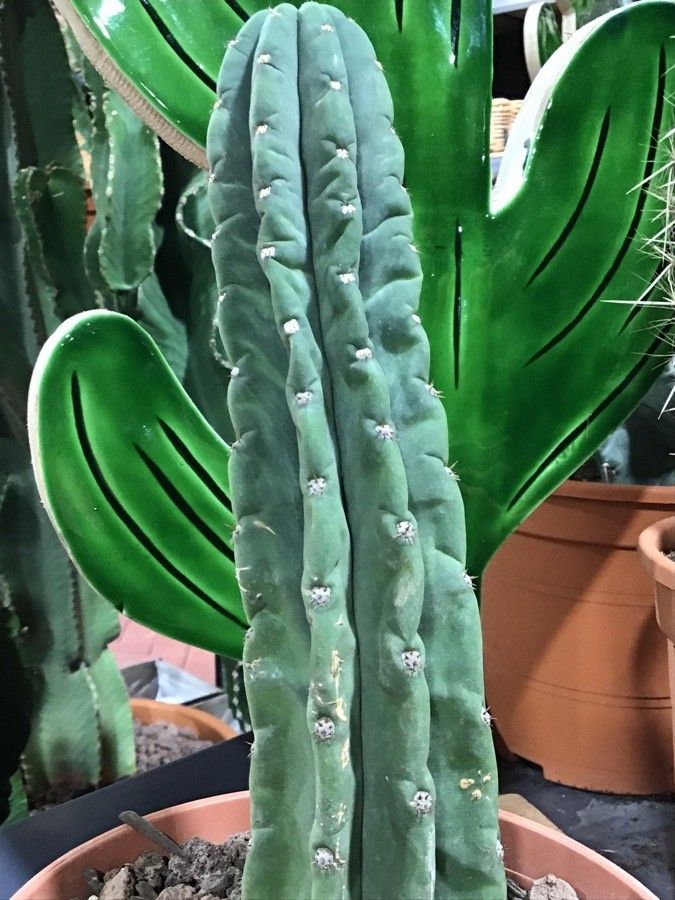
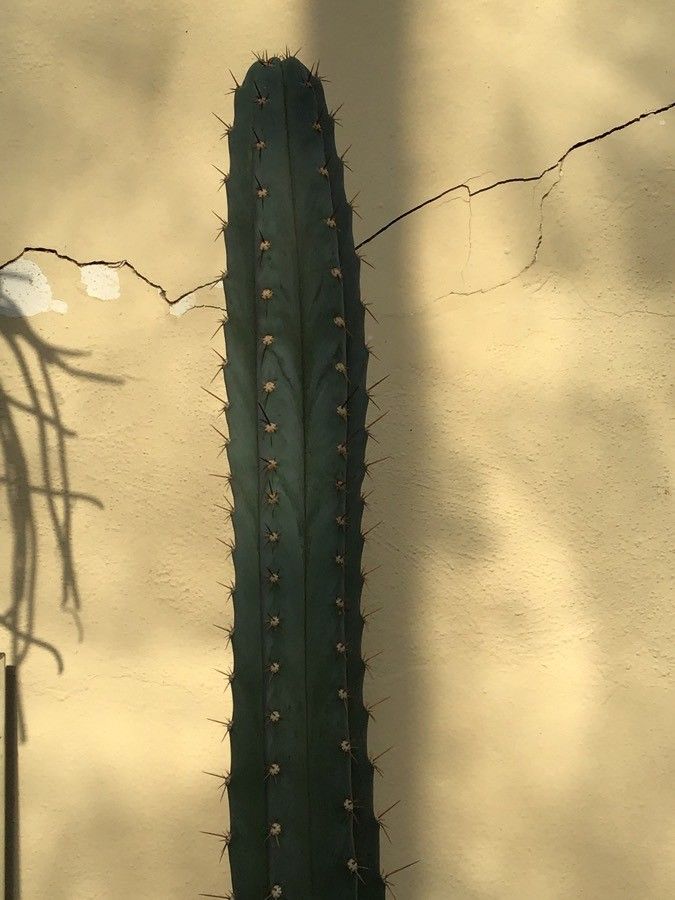
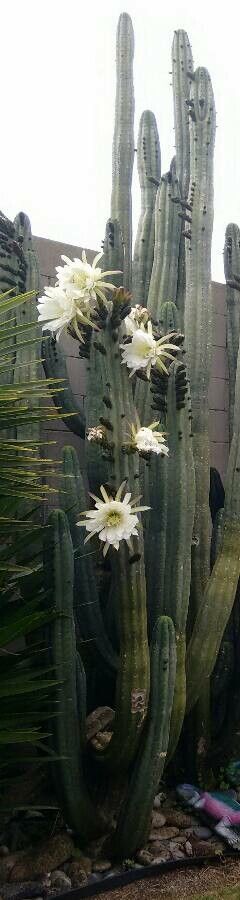
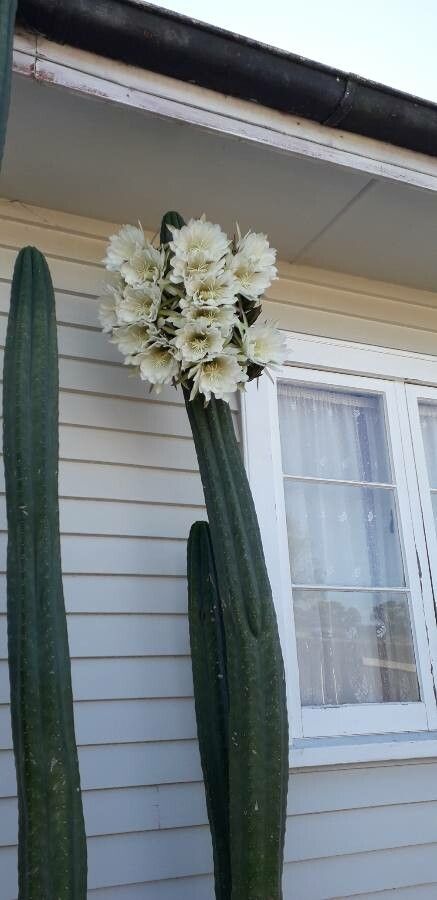
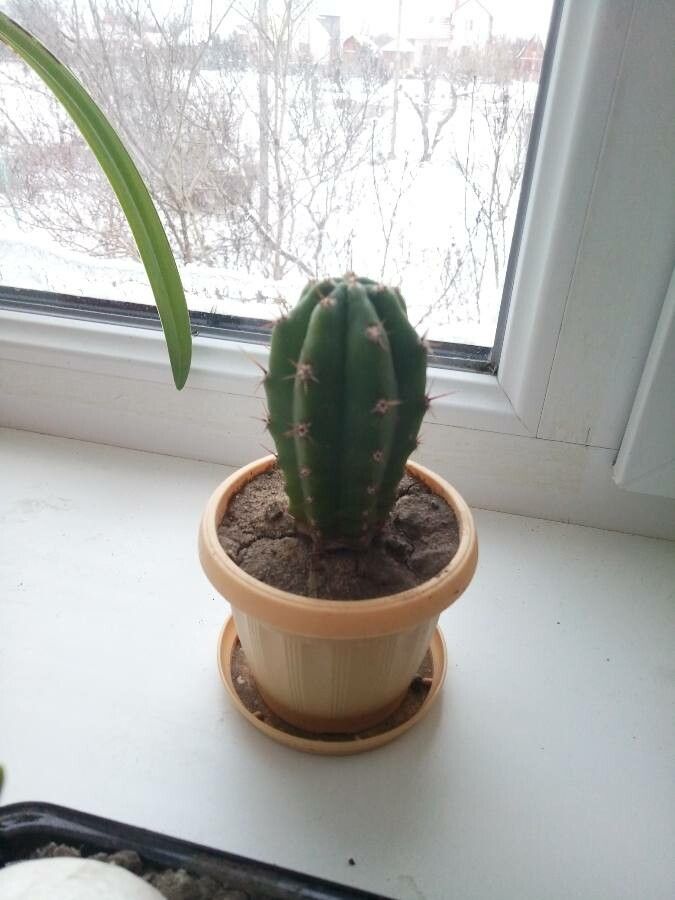
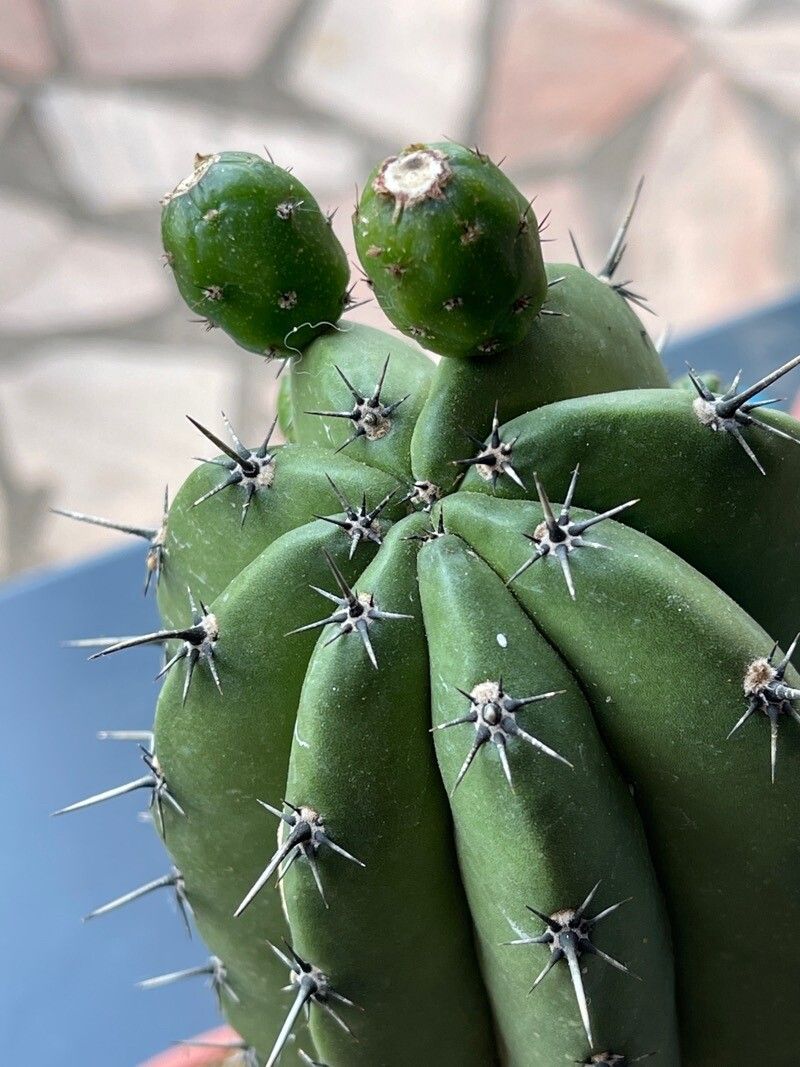
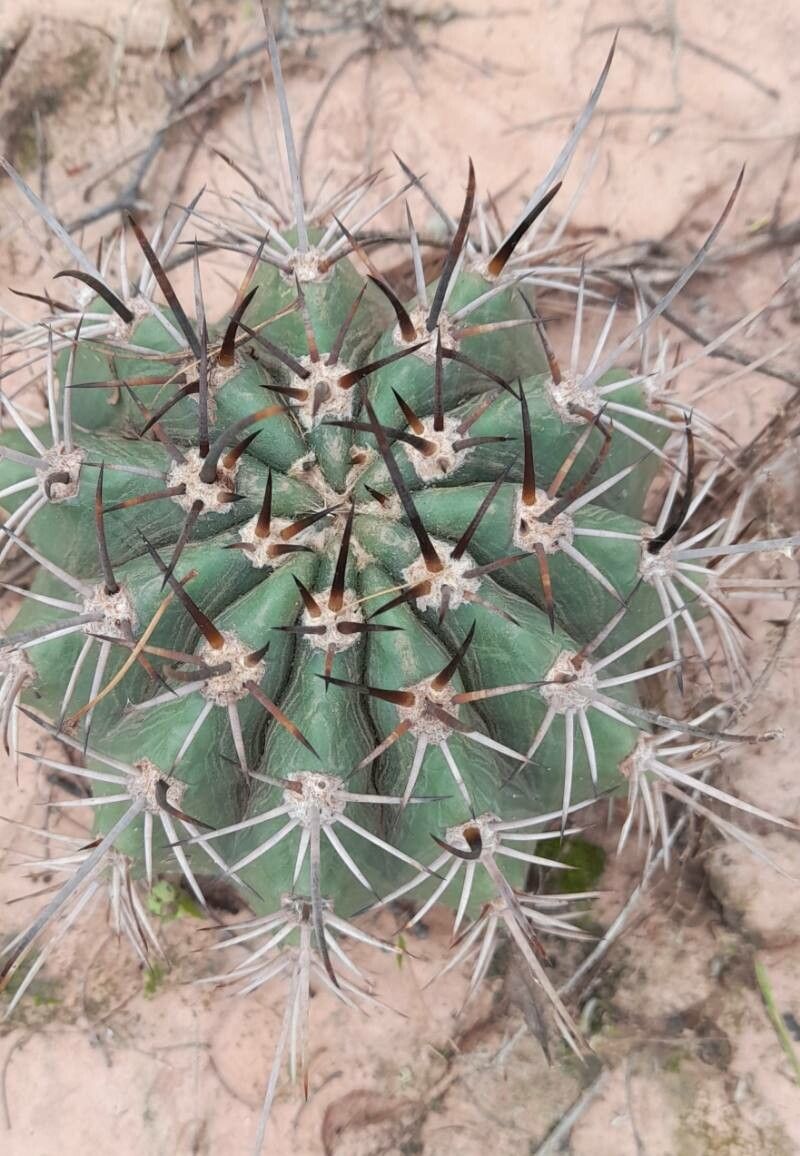
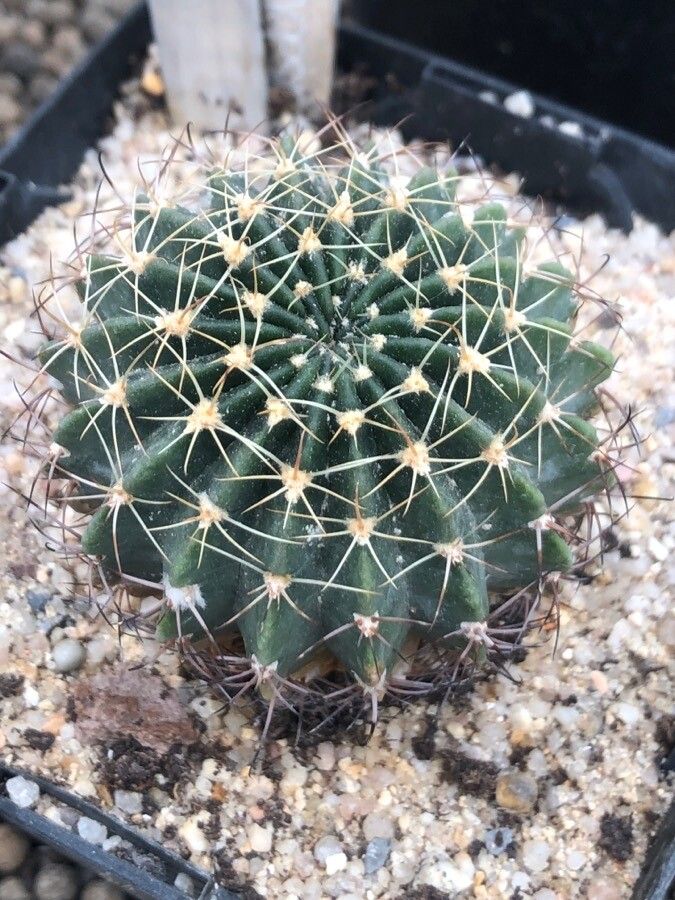
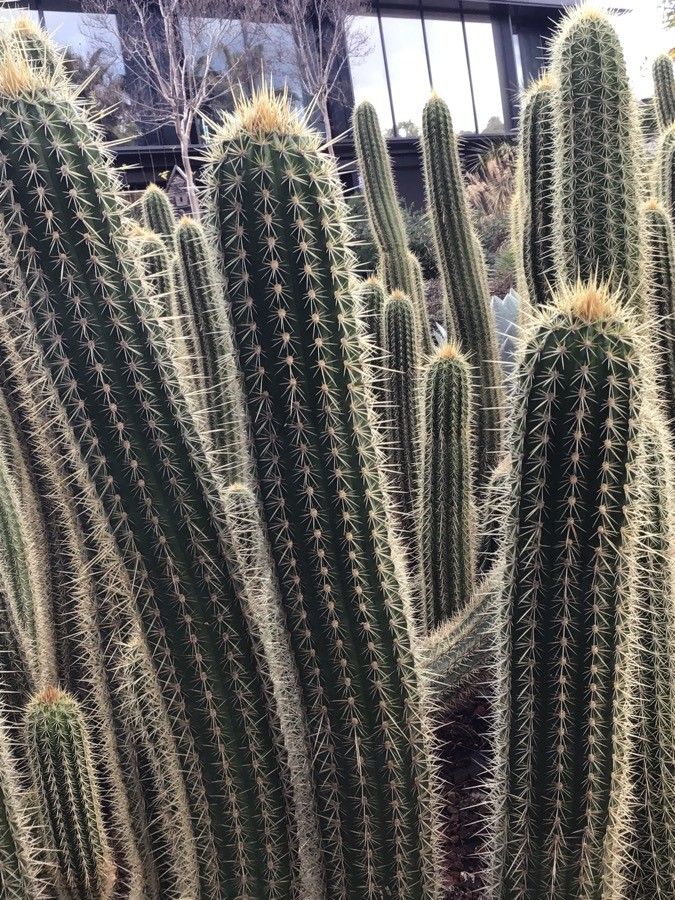
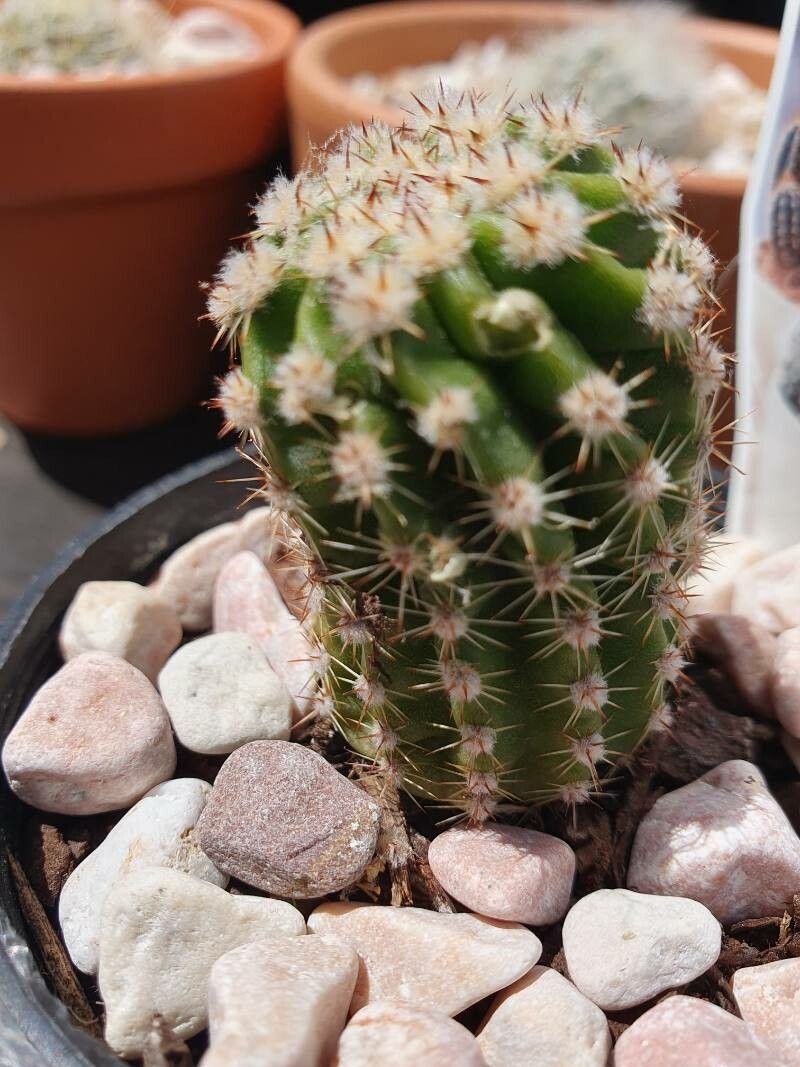
Echinopsis pachanoi, commonly known as the San Pedro cactus, is a columnar cactus species native to the Andes Mountains of South America. This fast-growing plant can reach heights of up to six meters and have a diameter ranging from 15 to 20 centimeters. Its stem features numerous ribs adorned with small spines and areoles from which flowers and new growth emerge.
The San Pedro cactus has been used for centuries by indigenous people for its medicinal properties and psychoactive effects. The plant contains mescaline, a potent hallucinogen that can induce altered states of consciousness when ingested.
Beyond its cultural significance, Echinopsis pachanoi is appreciated for its ornamental qualities. Its large, white flowers bloom at night, releasing a sweet fragrance that attracts pollinators such as moths.
Echinopsis × wilkensii was initially a frail plant. It was as delicate as water and could be easily harmed by the slightest touch. Observing its vulnerability, God took pity on it and provided a suit of armor to protect its heart. This armor was as hard as iron and adorned with sharp, steel-like thorns. Any creature that ventured too close would inevitably be wounded. FUN FACT · FROM THE LIBRARY
The San Pedro cactus thrives in well-draining soil and requires plenty of sunlight. It can be propagated from cuttings or seeds, but patience is necessary as it takes several years to reach maturity.
In summary, Echinopsis pachanoi is a captivating plant with both cultural and ornamental value, continuing to fascinate people around the world.
San pedro column cactus has strong resistance to disease and can tolerate ordinary care without becoming ill easily. That said, it can be vulnerable to mealybugs; these pests can cause some harm but are usually not a major danger. Regarding care, san pedro column cactus is drought-tolerant and does not require frequent watering. It can endure extended intervals between waterings and needs little fertilizer. Yet it is very prone to root rot when light is inadequate and it is overwatered. In general, san pedro column cactus is a good choice for those who prefer low-maintenance plants, but it's important to know and meet its basic requirements. It is especially appropriate for people who are away for long stretches and might forget to water their plants regularly.
How to keep Echinopsis Pachanoi.
Light
San Pedro column cactus does best with strong, all-day sun but can adjust to lower light. At times of the year, outdoor plants may need some shade, while potted indoor specimens should be placed in the sunniest spot. Too little light can limit growth or damage their health.
Water
The San Pedro column cactus is a drought-tolerant plant that requires thorough watering only when the soil is dry. During the growing season, which lasts from spring to fall, water the cactus weekly to keep the soil slightly moist. In winter, reduce watering significantly. It's best to use rainwater or distilled water to avoid soil compaction, and be careful not to splash water on the stem to prevent rot.
Humidity
This plant prefers dry conditions, so don't mist it. However, watering it less often can also thrive in higher humidity.
Temperature
San pedro column cactus prospers in warm settings and needs higher temperatures during the growing season to encourage growth and metabolic activity. It prefers plenty of sunlight, appropriate moisture, and good ventilation. However, it is vulnerable to damage from very low temperatures and from overwatering. It's important to maintain a balance and avoid both excessively high temperatures and overly dry conditions.
Fertilizer
Light feeding with fertilizer once or twice a year during the growing season is enough for the San Pedro column cactus. Avoid fertilizing in winter and in summer when it is dormant. Cut back on fertilizer for repotted plants and wait a couple of months after repotting before you fertilize. Fertilizing helps maintain healthy growth and encourages flowering.
Pruning
The San Pedro column cactus is a fast-growing, columnar cactus that benefits from pruning in early spring to maintain optimal health. To do this, use sterile tools to remove any damaged sections, cutting just above the growth nodes. This practice helps improve the cactus's shape, enhance air circulation, and promote vibrant growth. Be sure to wear gloves to protect yourself from the cactus's spines.
Botanical profile.
- Plant Type
- Succulent
- Life Cycle
- Perennial
- Genus
- Echinopsis
- Family
- Cactaceae
- Hardiness Zone
- 9-11
- Mature Height
- 20 cm
- Mature Spread
- 40 cm
- Leaf Color
- Dark Green, Forest Green
- Leaf Type
- Deciduous
- Flower Color
- White
- Flower Size
- 15.24 cm to 20.32 cm
- Bloom Time
- Summer, Early fall
- Planting Time
- Spring, Summer, Autumn
- Harvest Time
- Late summer, Fall
- Native Area
- Ecuador, Peru
Other names.
Reader questions.
What are the sunlight requirements for San Pedro Column Cactus (Echinopsis pachanoi)?
San Pedro Column Cactus (Echinopsis pachanoi) thrives best in conditions that meet specific sunlight requirements. For optimal growth, it requires 'full sun,' which is defined as receiving more than 6 hours of sunlight daily. However, it can also adapt to 'partial sun' conditions, meaning it should get about 3-6 hours of sunlight each day. It's essential to observe the movement of sunlight through your garden meticulously to identify spots that offer an ideal mix of light and shade to ensure the cactus's well-being.