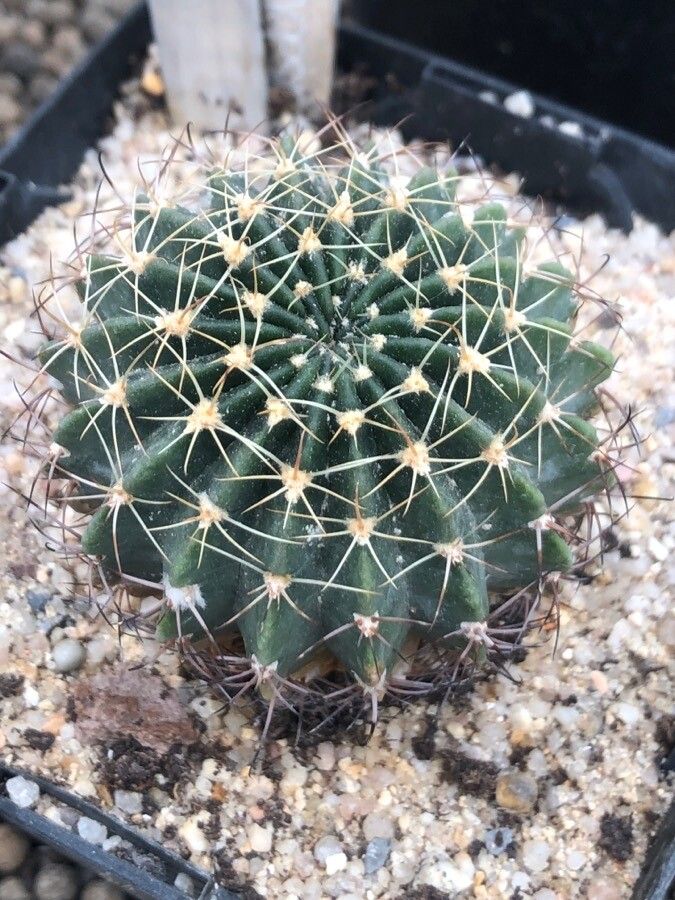
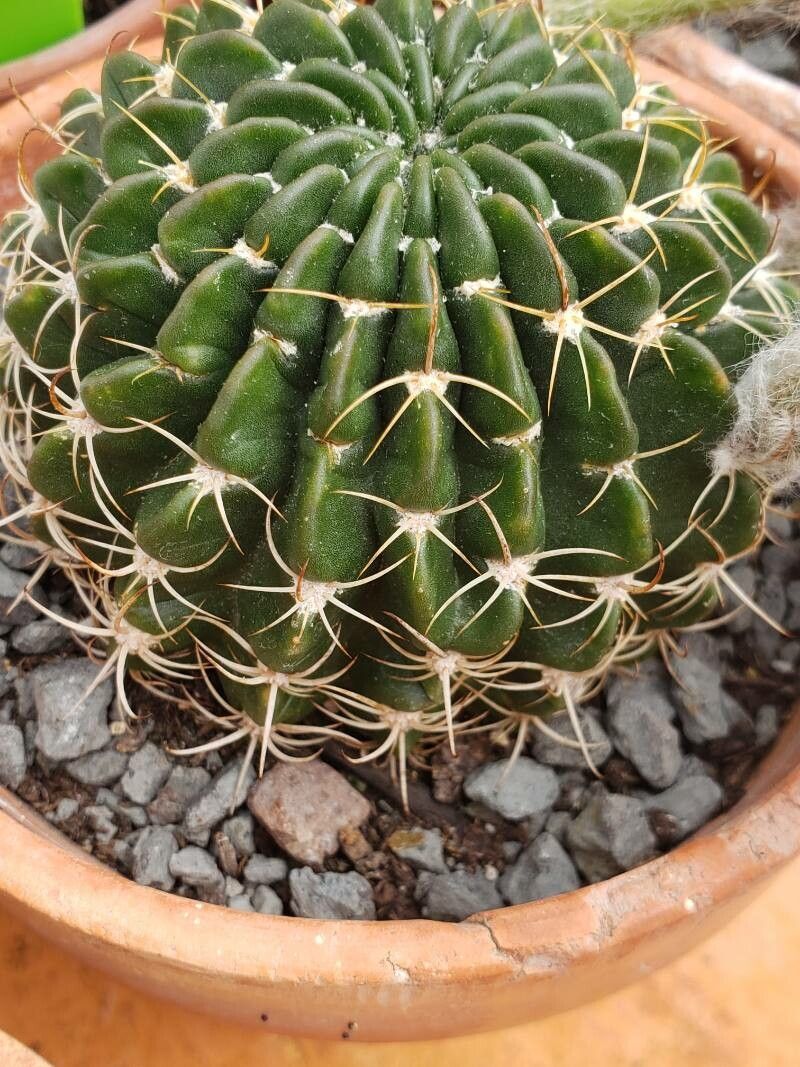
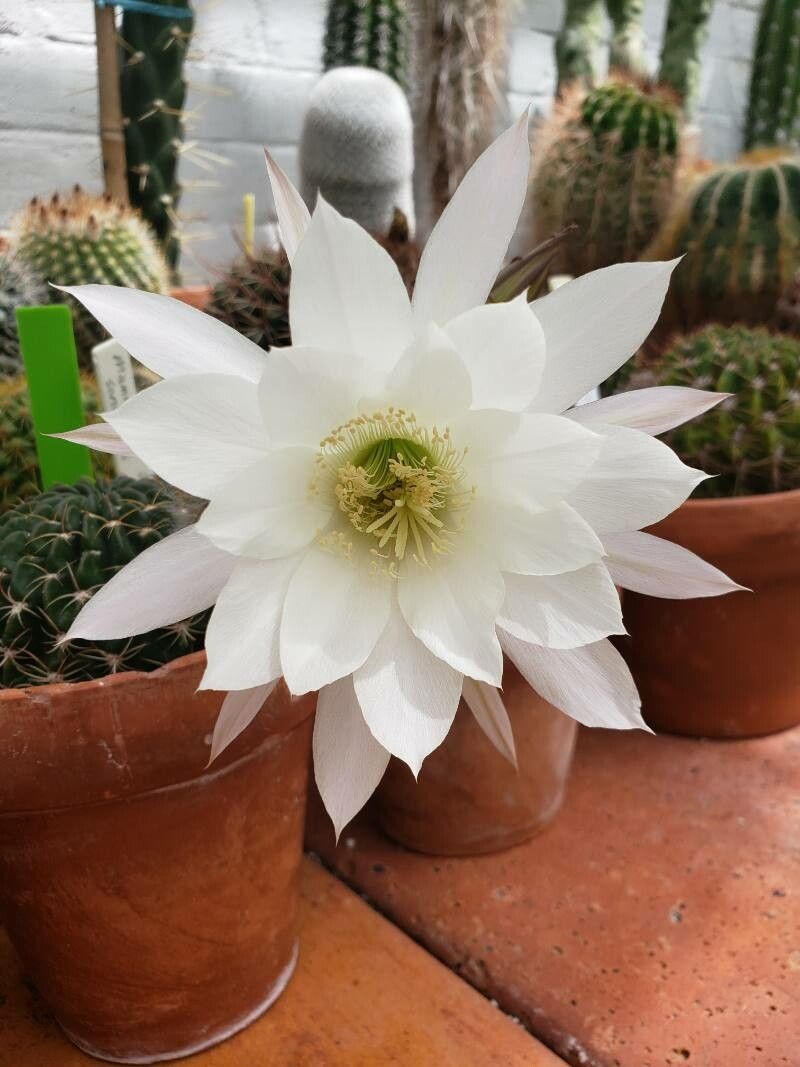
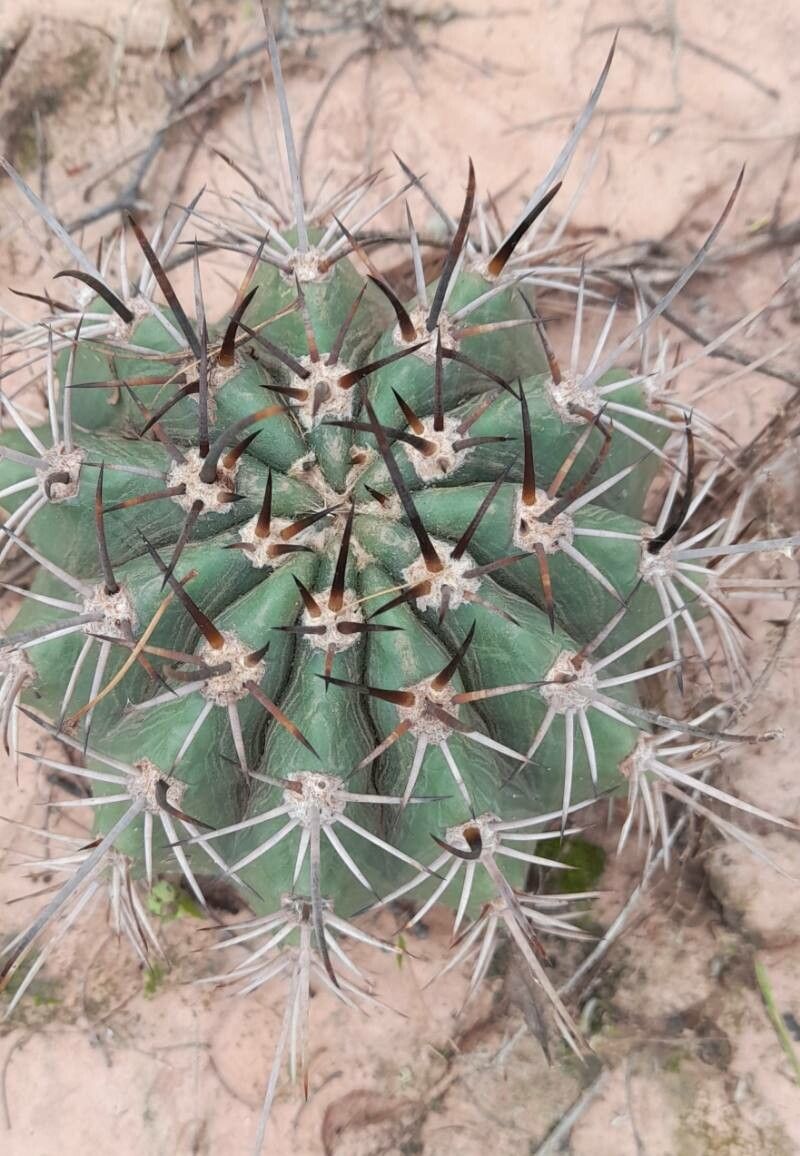
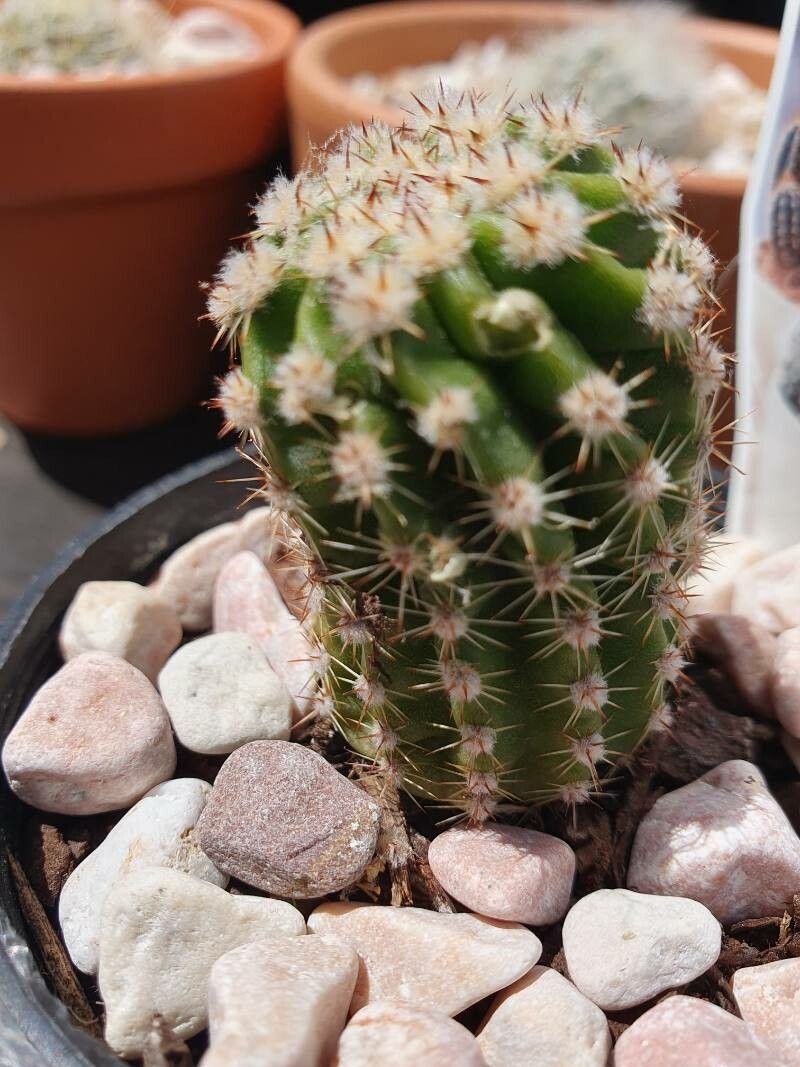
Echinopsis subdenudata (commonly called domino cactus, night blooming hedgehog, Easter lily cactus) is a species of cactus. It has a globular shape, few spines, with large, white flowers attached to long, green tubes. It occurs in Bolivia, at altitudes of 600–1800 metres. Under its synonym Echinopsis ancistrophora it has gained the Royal Horticultural Society's Award of Garden Merit.
Easter lily cactus has strong resistance to disease and can endure normal care routines without becoming ill easily. It can, however, be vulnerable to mealybugs; these pests may cause some harm but are typically not a major danger. Regarding care, the Easter lily cactus tolerates drought and does not require frequent watering. It can handle extended stretches without water and needs little fertilizer. That said, it is very prone to root rot if light is inadequate and it is given too much water. In general, the Easter lily cactus is a good fit for people who want to spend less time on plant care, though it remains important to know and meet its basic needs. It is especially suitable for those who are away for long periods and might forget to water their plants regularly.
How to keep Echinopsis Ancistrophora.
Light
Native to dry areas, the Easter lily cactus does best in full sun, as its native habitat has intense sunlight and very little shade. It can also tolerate partial sun, providing some flexibility in its growth.
Water
The Easter lily cactus is drought-tolerant and needs to be watered thoroughly only when the soil is dry. In spring, summer, and fall, water the cactus once or twice a week. During winter, reduce the watering to about once a week. It is best to use rainwater or distilled water rather than tap water to prevent soil compaction and rotting.
Temperature
Easter lily cactus does best in warm conditions and needs higher temperatures during the growing season to stimulate growth and metabolism. It prefers plenty of sunlight, suitable moisture, and good airflow. It can be harmed by very low temperatures and by excessive watering. Likewise, it’s important to avoid extreme heat and overly dry conditions.
Fertilizer
Light applications of fertilizer once or twice a year during the growing season are enough for Easter lily cactus. Do not fertilize in winter or summer when it is dormant. Reduce fertilizer for plants that have been repotted and wait a couple of months after repotting before fertilizing. Fertilizing helps maintain healthy growth and promotes flowering.
Pruning
The Easter lily cactus is known for its stunning flowers and round shape, and it requires very little pruning. To encourage growth and maintain its shape, trim any dead stems in the spring. This also helps to control offsets. Make sure to use sterilized tools to prevent infections. Pruning at the right time improves airflow and overall plant health, ensuring vibrant blooms each season.
Pot & Repot
Repot the Easter lily cactus in spring or summer, selecting a pot slightly larger than the current one that provides good drainage. Use a sandy or gritty cactus mix that drains well. Handle the plant carefully to avoid its spikes. Let the cactus dry out before repotting to prevent root rot. After repotting, wait one week before watering so the roots can heal.
Botanical profile.
- Plant Type
- Succulent
- Life Cycle
- Perennial
- Genus
- Echinopsis
- Family
- Cactaceae
- Hardiness Zone
- 9-13
- Mature Height
- 20 cm
- Mature Spread
- 20 cm
- Leaf Color
- Green, Dark Green
- Leaf Type
- Evergreen
- Flower Color
- White, Pink
- Flower Size
- 7.62 cm to 11.43 cm
- Bloom Time
- Summer
- Planting Time
- Spring, Summer, Autumn
- Harvest Time
- Late summer, Early fall, Mid fall
- Native Area
- Bolivia
Other names.
Reader questions.
What are the sunlight requirements for an Easter lily cactus to thrive?
The Easter lily cactus (Echinopsis ancistrophora) thrives in conditions that meet its specific sunlight requirements. It needs full sun, which is above 6 hours of sunlight daily, to prosper. However, it can also tolerate partial sun, defined as about 3-6 hours of sunlight per day. It's important to observe the sunlight patterns in your garden, aiming to find spots that provide the perfect balance of light and shade. This careful placement ensures the happiness and health of your Easter lily cactus.
What is the Easter lily cactus?
The Easter lily cactus, known botanically as Echinopsis ancistrophora, is a type of flowering cactus. Unfortunately, there are no further details provided about its essentials or symptoms.