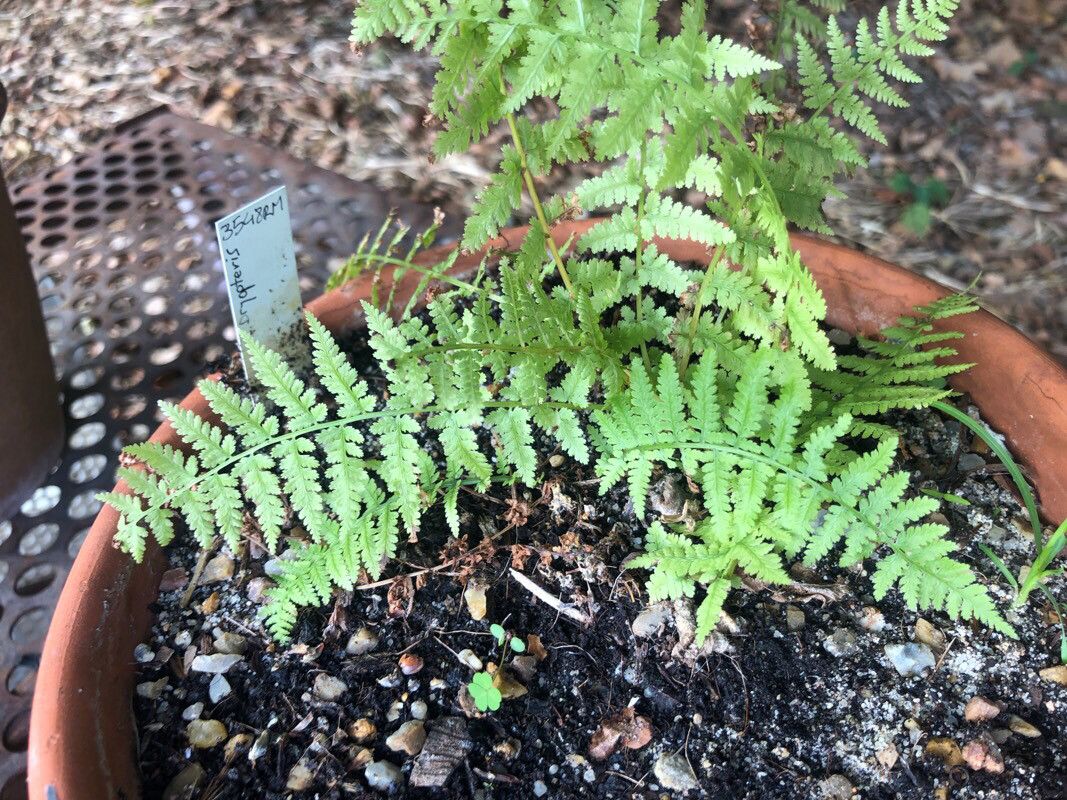
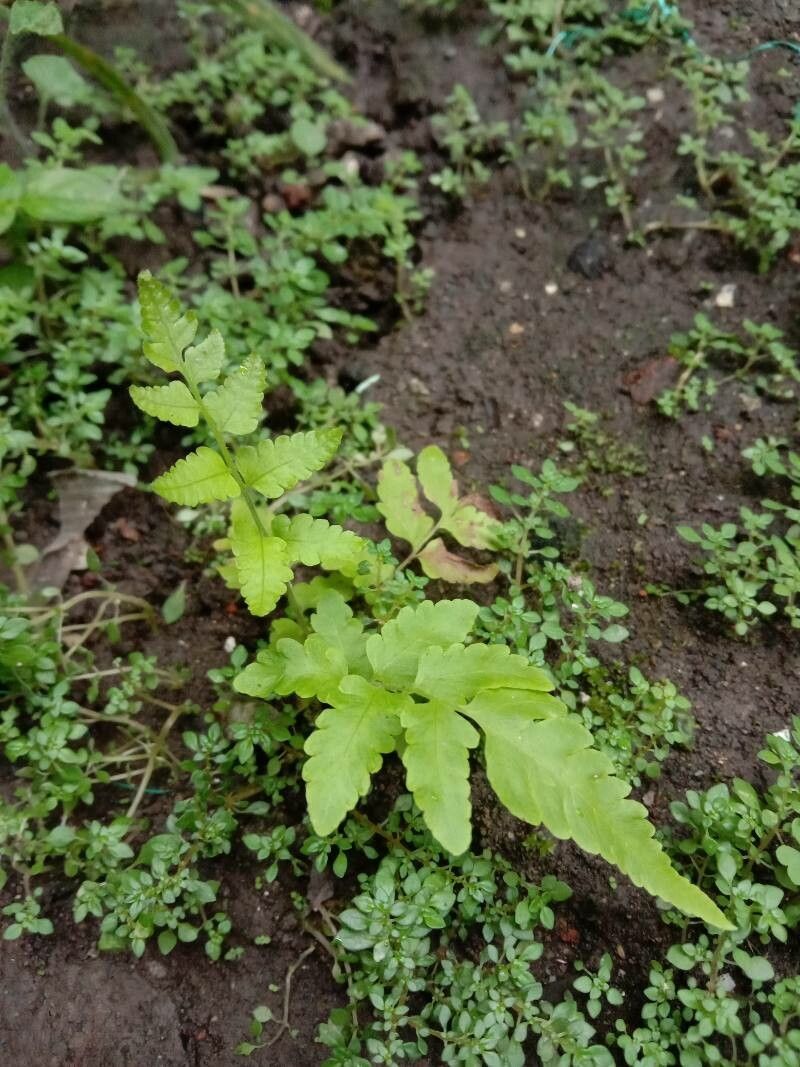
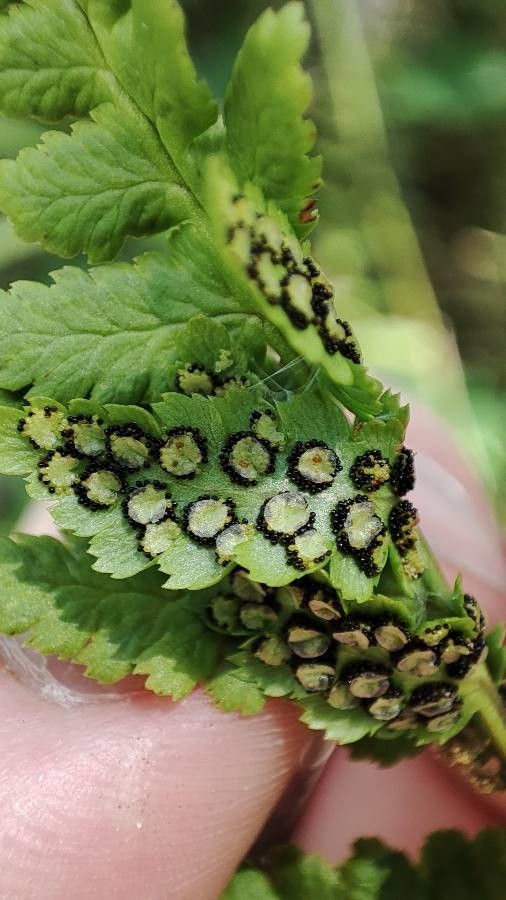
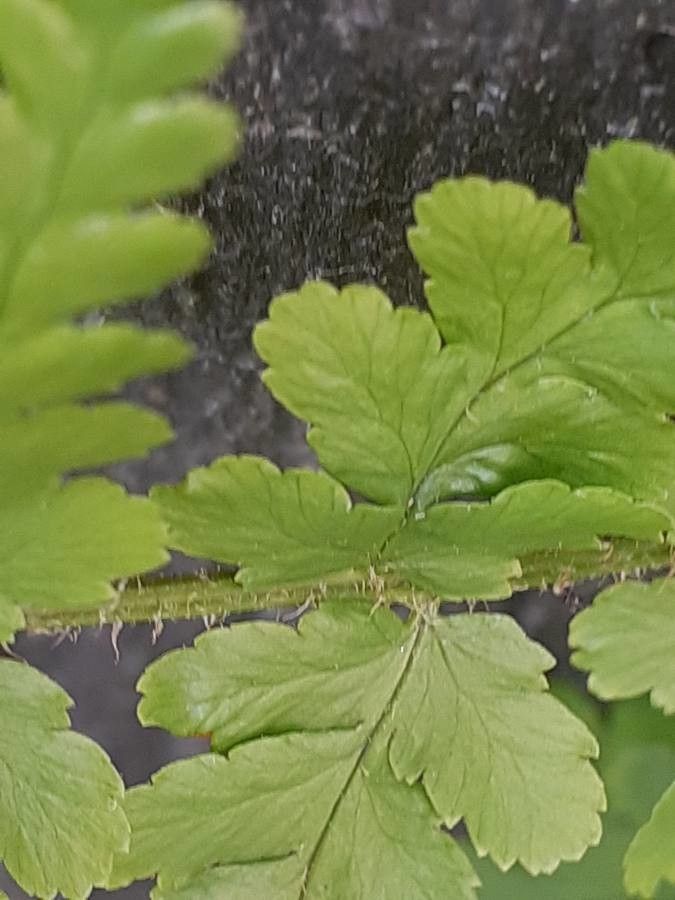
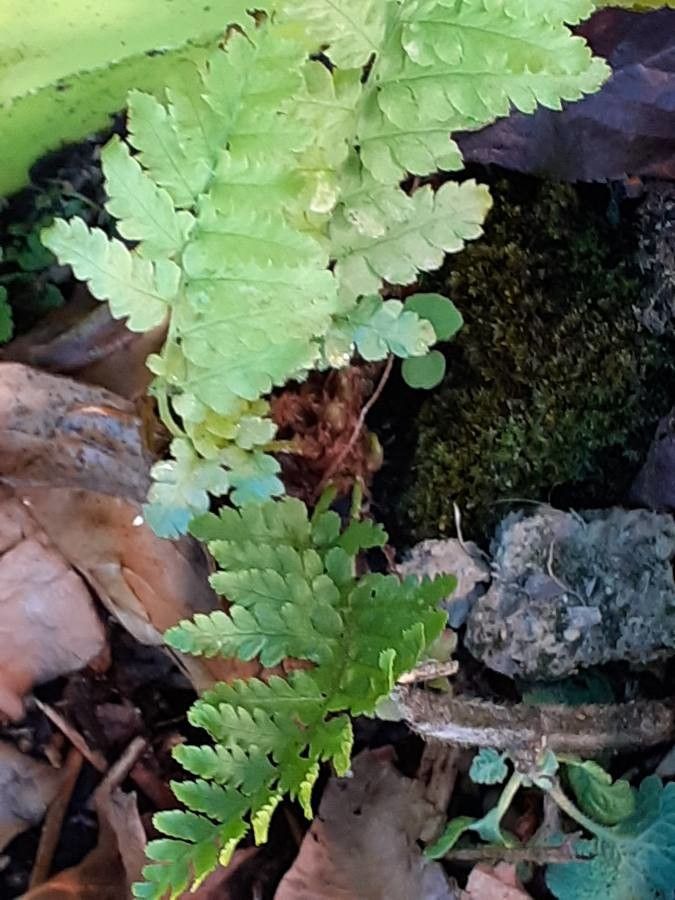
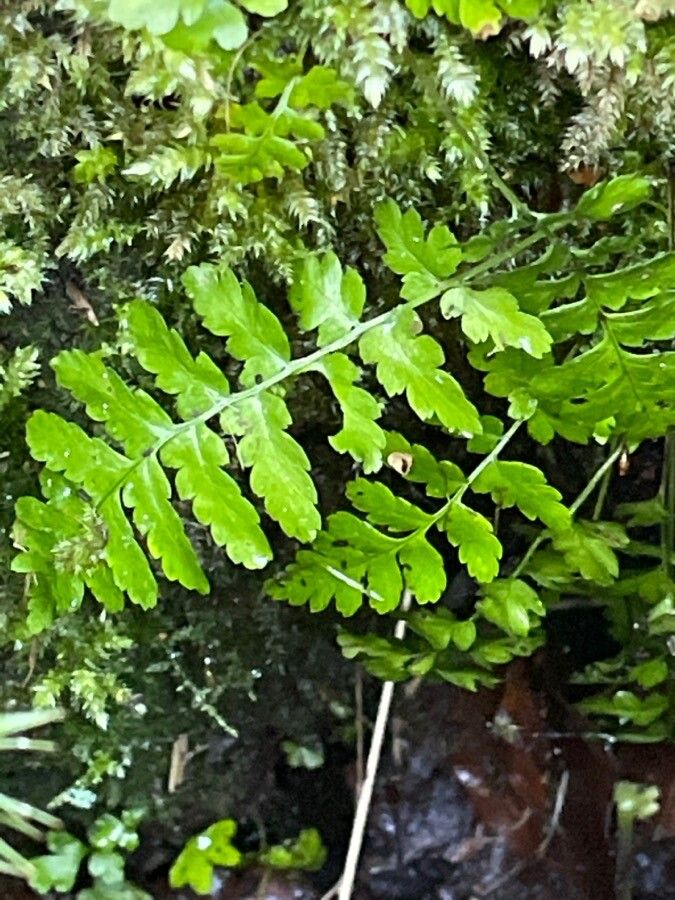
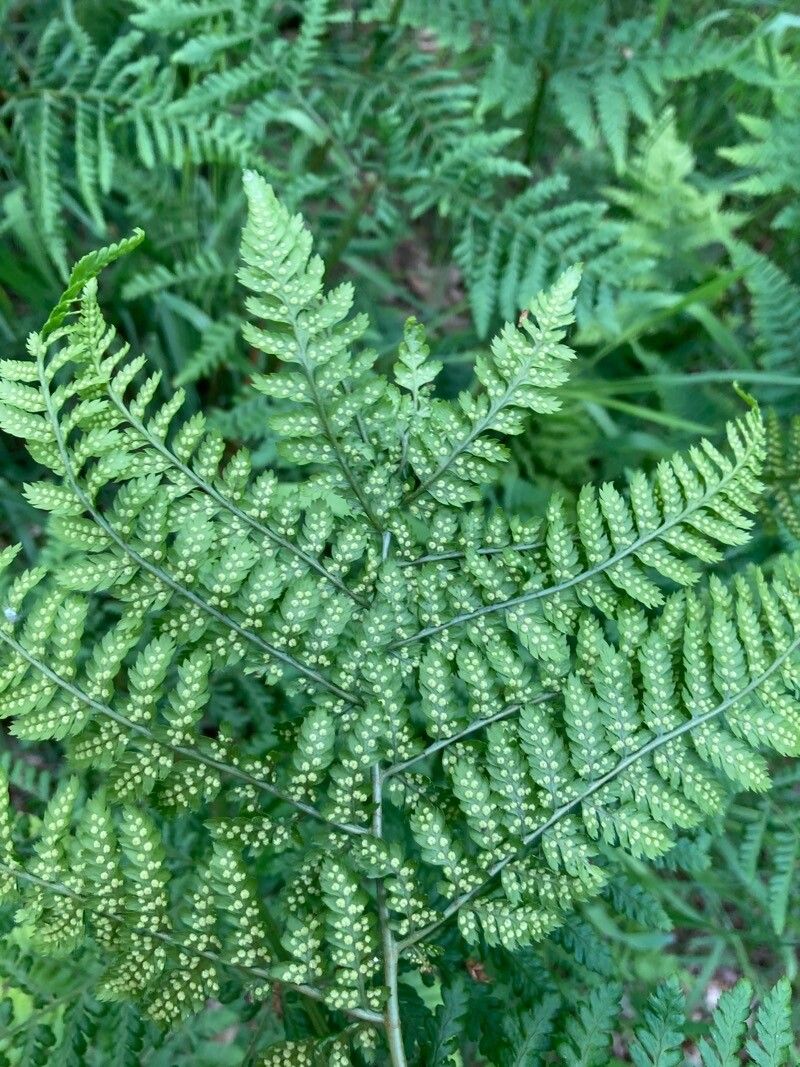
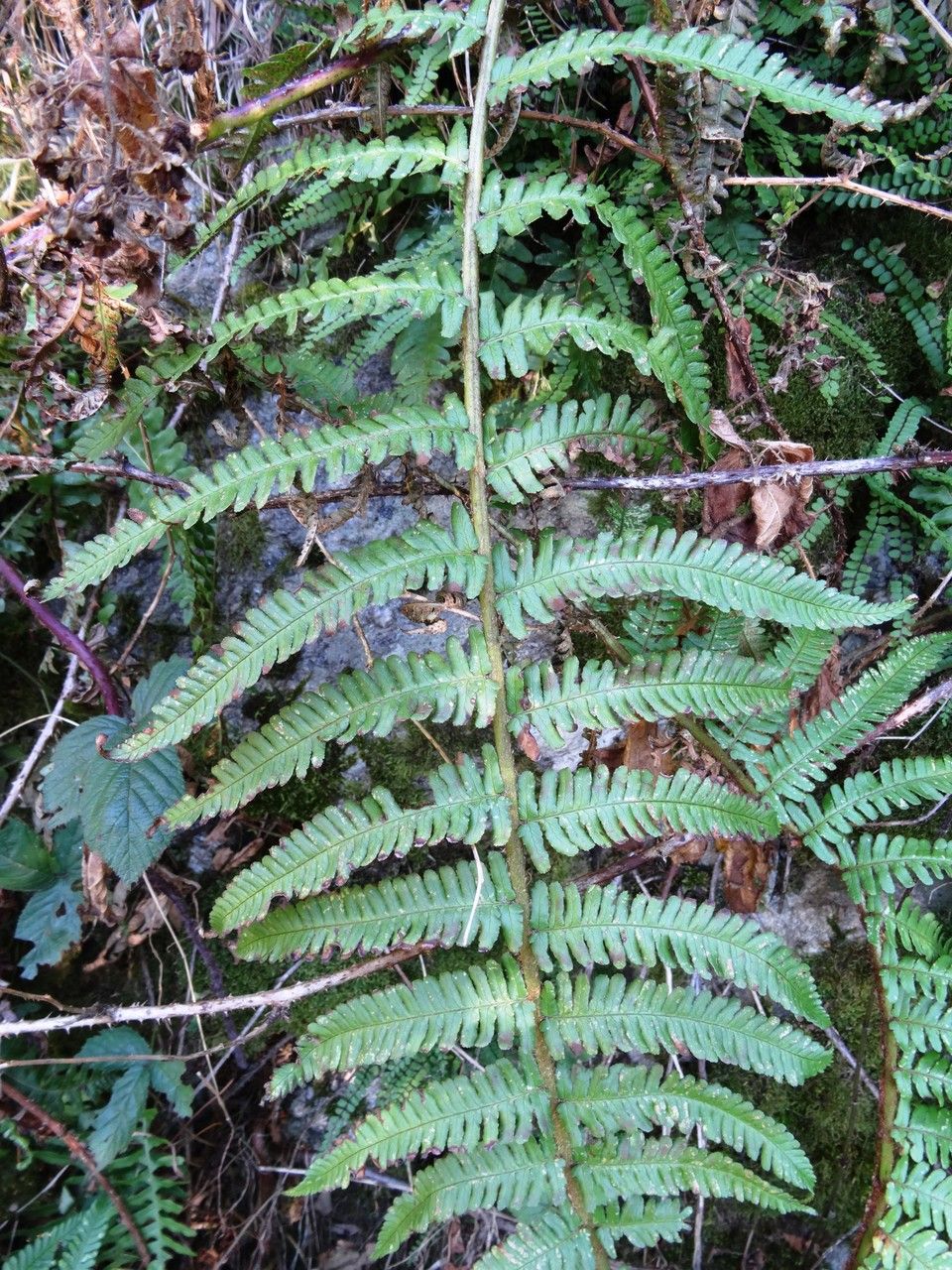
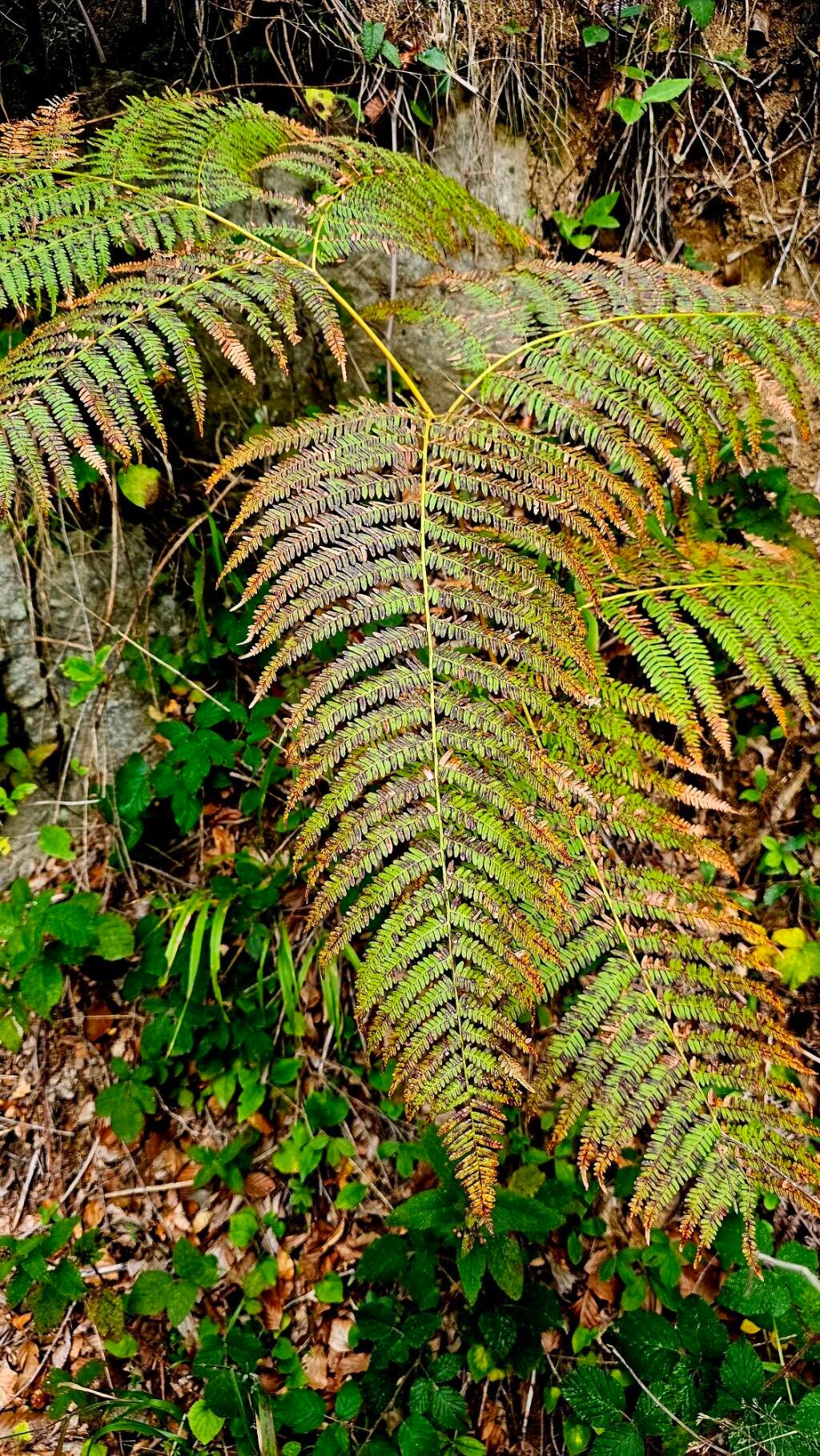
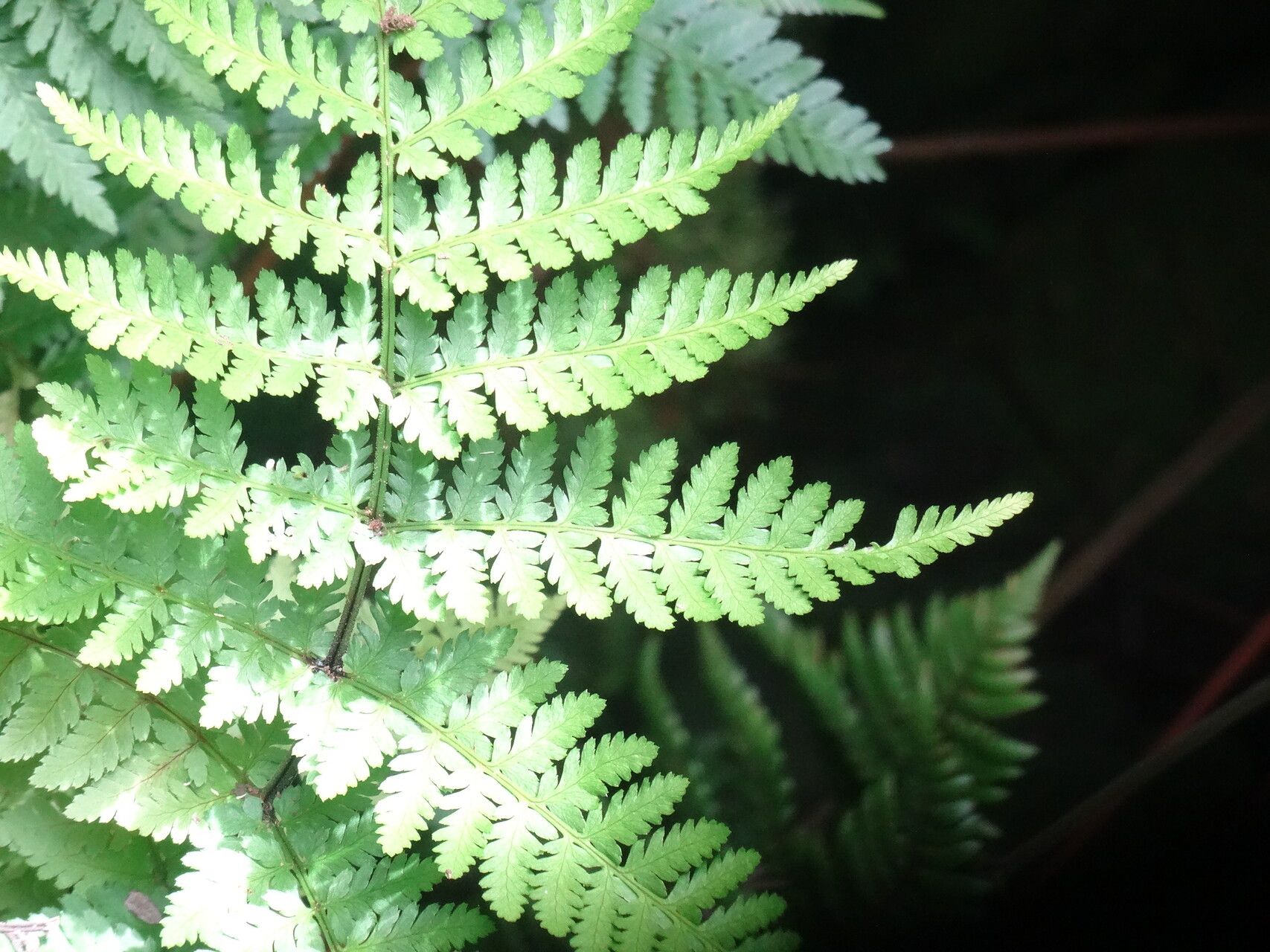
Dryopteris cristata, commonly known as the crested wood fern, is a deciduous fern species belonging to the Dryopteridaceae family. Native to North America, it thrives in diverse habitats such as forests, wetlands, and rocky slopes.
The crested wood fern stands out due to its distinct appearance. Its fronds can grow up to 3 feet long and 6 inches wide, showcasing a dark green, glossy texture. These triangular fronds taper to pointed tips and feature serrated or toothed edges.
This plant prefers moist soil conditions but can tolerate some drought once established. It thrives in partial shade but can also withstand full shade or full sun if given adequate moisture.
Woodfern leaves resemble a squirrel's tail, with each leaf neatly arranged along the stem. The leaves gradually shorten as they extend from the base to the tip. This orderly arrangement of woodfern leaves can be quite soothing for those with obsessive-compulsive tendencies. FUN FACT · FROM THE LIBRARY
The crested wood fern is a valuable addition to any garden or landscape, offering both aesthetic appeal and low maintenance. It also serves as habitat for various wildlife, including birds, insects, and small mammals.
Traditionally, this fern has been used for its anti-inflammatory properties, helping to relieve pain associated with arthritis and other inflammatory conditions.
Overall, Dryopteris cristata is an attractive native plant that provides both aesthetic and ecological benefits. It is an excellent choice for garden enthusiasts seeking low-maintenance plants that enhance both beauty and biodiversity.
Crested woodfern is fairly disease-resistant and generally not prone to illnesses. However, it can be affected by pests and diseases present in its surroundings. These infections are usually mild. Regarding care, this plant requires a moderate level of maintenance. Regular pruning is needed to maintain a tidy appearance and healthy growth. Fertilizing can also help encourage flowering. Crested woodfern is suitable for anyone with outdoor space, such as a garden or patio, and does not demand extensive care experience. It may need more attention when grown indoors.
How to keep Dryopteris Cristata.
Light
Crested woodfern does best with moderate sunlight and can tolerate fairly bright light, though strong sun may stress the plant. In its native range it occurs in habitats with filtered light, which determine its light requirements. Too little or too much light can hinder healthy growth and may cause damage.
Water
The crested woodfern flourishes in moist woodland settings, where it prefers consistently damp soil and requires weekly watering. While it can withstand short dry periods, it benefits from natural rainfall in temperate regions. This often reduces the need for extra watering during the growing season.
Temperature
Crested woodfern is native to temperate regions and typically thrives in temperatures between 32 and 90°F (0 to 32°C). During winter it can tolerate lower temperatures. Temperatures should be adjusted appropriately in spring and autumn to support its growth.
Fertilizer
A single fertilizer application in spring is generally enough for Crested woodfern, though repeated feedings can boost growth. Apply fertilizer about every month to a month and a half. Fertilization improves leaf appearance and function, helping maintain uniform color and a healthy texture. It also encourages root development and nutrient uptake for the plant's long-term health.
Pruning
The crested woodfern is a perennial plant with broad fronds and distinctive crested tips. To maintain its health, prune it from early to late spring. When pruning, cut the dead fronds at the base, being careful to avoid damaging the crown. This practice encourages new growth, improves air circulation, and lowers the risk of pests and diseases, resulting in a healthier fern in your garden.
Botanical profile.
- Plant Type
- Herb
- Life Cycle
- Perennial
- Genus
- Dryopteris
- Family
- Polypodiaceae
- Hardiness Zone
- 2-7
- Mature Height
- 25 cm to 76 cm
- Mature Spread
- 0.61 m to 1.83 m
- Leaf Color
- Green, Brown
- Leaf Type
- Evergreen
- Planting Time
- Spring, Summer, Autumn
- Native Area
- Sweden, Austria, Georgia, Czech Republic, Slovakia, Poland, Croatia, Slovenia, Belarus, Ukraine, Serbia, Russia, Lithuania, Norway, Hungary, Germany, Italy, Kazakhstan, Switzerland, Denmark, Estonia, Finland, France, United Kingdom, Romania, Latvia, Belgium, Netherlands
Other names.
Reader questions.
How should I water my Crested woodfern?
To properly water the Crested woodfern, use filtered water at room temperature. Tap water may contain harmful particles, so filtered water is preferred. Since the Crested woodfern is accustomed to a warm environment, avoid using cold water as it can be a shock to the plant. Additionally, do not water from above as it may cause problems with the foliage. Instead, gently pour filtered room temperature water onto the soil until it is completely saturated. This will benefit the plant by providing moisture to the roots and helping them spread and gather nutrients in the soil.
Why should I add fertilizer to my Crested woodfern?
The Crested woodfern's leaves are a crucial component of its overall structure. Fertilizing is an effective method to ensure that the leaves maintain their appearance and functionality. Proper fertilization leads to consistent color and a healthy texture in the leaves. Additionally, fertilization supports root growth and maintenance beneath the soil. This not only promotes current plant health but also enhances the plant's ability to absorb nutrients from the soil in the long run.
What are the sunlight requirements for Crested woodfern?
Crested woodfern requires partial to full sun exposure to thrive. Partial sun means the plant should receive about 3-6 hours of sunlight, while full sun refers to more than 6 hours of sunlight. It's important to observe how sunlight moves through your garden to find spots that offer the ideal balance of light and shade, ensuring your plant's health and happiness.
What is the native climate for Crested woodfern?
Crested woodfern, botanically known as Dryopteris cristata, thrives in temperate climate regions. It flourishes in a wide temperature range, from 32 to 90°F (0 to 32°C), and can withstand colder winters. The plant's growth is nurtured by making appropriate temperature adjustments during the spring and autumn seasons. Due to its high cold tolerance, it doesn't require additional frost protection in winter. However, it's beneficial to water the plant generously before the first freeze in autumn to ensure the soil remains moist and enters a frozen state, aiding the plant through winter and early spring.
What do I do if I give my Crested woodfern too much or too little water?
Overwatering is a common issue for Crested woodferns and can cause wilting and yellowing of the leaves. It can also lead to diseases like root rot, mold, and mildew, which can be fatal for the plant. Underwatering is less common but can cause brittle and brown leaves. It's important to watch for signs of overwatering and take immediate action by reducing watering and improving soil drainage. If underwatering is detected, simply increase the frequency of watering until the plant recovers.
When should I fertilize my Crested woodfern?
To maximize the growth of your outdoor Crested woodfern, pay attention to the emergence of its new leaves in early spring. This signals that it's the right time to start fertilizing for the year. Generally, one application of fertilizer is sufficient, but if you want to boost its growth even further, you can feed the plant multiple times throughout the spring and early summer. In this case, feed it about once every month to a month and a half.
What are some essential care tips for Crested woodfern regarding light exposure?
Crested woodfern prospers under moderate solar exposure and can endure substantial light levels, though it might experience stress under harsh solar conditions. Originally from habitats with filtered light, it's accustomed to a certain standard of light absorption. Insufficient or intense light may prevent its optimal growth, potentially causing damage. For indoor plants, utilizing artificial lighting is crucial in locations with inadequate natural sunlight, especially in winter or less sunny areas. LED lights are recommended for their ability to provide specific wavelengths of light necessary for plant growth. Full sun plants typically need 30-50W/sq ft, partial sun plants require 20-30W/sq ft, and full shade plants need 10-20W/sq ft of artificial light. The light source should be placed 12-36 inches above the plant, mimicking natural sunlight as closely as possible. Furthermore, most plants benefit from 8-12 hours of light per day.
How does Crested woodfern react to low temperatures?
Crested woodfern is extremely cold-tolerant, with the ability to withstand winters as long as the temperature stays above -40°C. Dropping below this threshold doesn't usually cause noticeable changes during the winter; however, it could lead to a decreased ability to sprout or even prevent sprouting altogether come springtime. If this occurs, the recommended solution is to remove any parts of the Crested woodfern that have failed to sprout in the spring.
How often should I give water to my Crested woodfern?
If you have a potted Crested woodfern, the best way to check if it needs water is by sticking your finger into the soil. If the top two to three inches of soil are dry, then it's time to water it. If you have a Crested woodfern planted in the ground outdoors, you can use the same method to test the soil. If the top few inches of soil are dry, it's time to water it. Typically, during spring and early fall, watering once a week is sufficient. However, during extremely hot weather, you may need to water it twice or more per week. It's worth mentioning that mature, well-established Crested woodferns have a good ability to withstand drought.
When is it a bad idea to add fertilizer to my Crested woodfern?
During late fall and winter, your Crested woodfern goes into a dormant phase and stops producing new growth. So, avoid fertilizing it during this time. If you choose to fertilize in spring and summer, start reducing the frequency as summer approaches because the fern's growth rate slows down. In general, it's not a good idea to fertilize your Crested woodfern during exceptionally hot weather or when the soil is extremely dry. Doing so can stress the fern and cause it to die prematurely.
What symptoms indicate Crested woodfern is getting insufficient light?
When Crested woodfern is grown under inadequate light conditions, several symptoms may indicate light deficiency. These include smaller new leaves compared to older ones, leggy or sparse growth due to elongated spaces between leaves or stems, faster leaf drop as a resource conservation measure, slower or halted growth as the plant enters survival mode, lighter-colored or irregularly pigmented new leaves indicating chlorophyll and nutrient deficiency, and symptoms of excessive light exposure such as chlorosis (yellowing leaves due to chlorophyll breakdown), sunscald (damage from intense sunlight exposure), leaf curling (a defense mechanism against water loss), wilting (loss of turgor pressure from overexposure), and leaf scorching (brown, dry, and crispy edges from excessive sunlight).
What should I do if the Crested woodfern experiences high temperatures?
Crested woodfern struggles in high temperatures, particularly when they exceed 32°C. In such conditions, its growth halts, and the plant becomes more prone to rot. To mitigate heat stress, it's advised to trim away any sunburned or dried-up parts of the plant. Relocating the plant to a shaded area or using a shade cloth to protect it from the midday and afternoon sun can be beneficial. Additionally, keep the soil moist by watering the fern in the morning and evening.