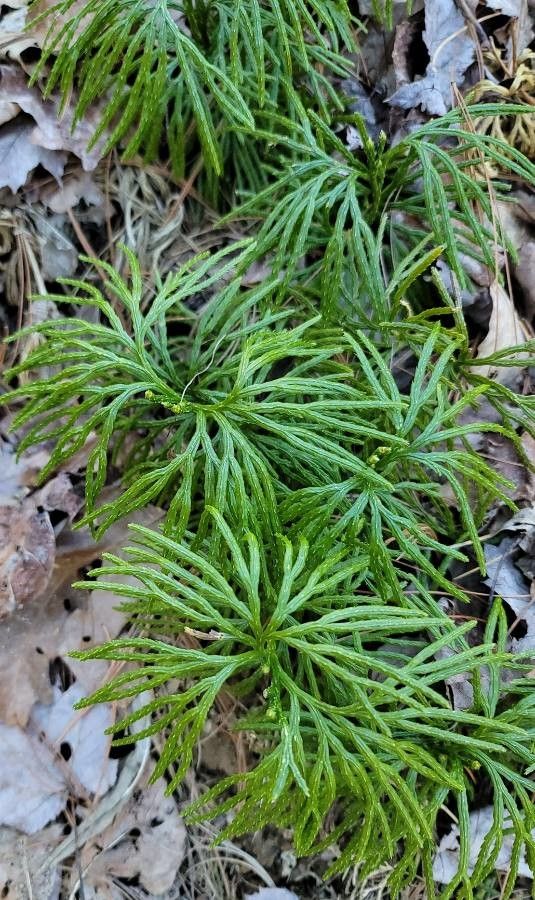
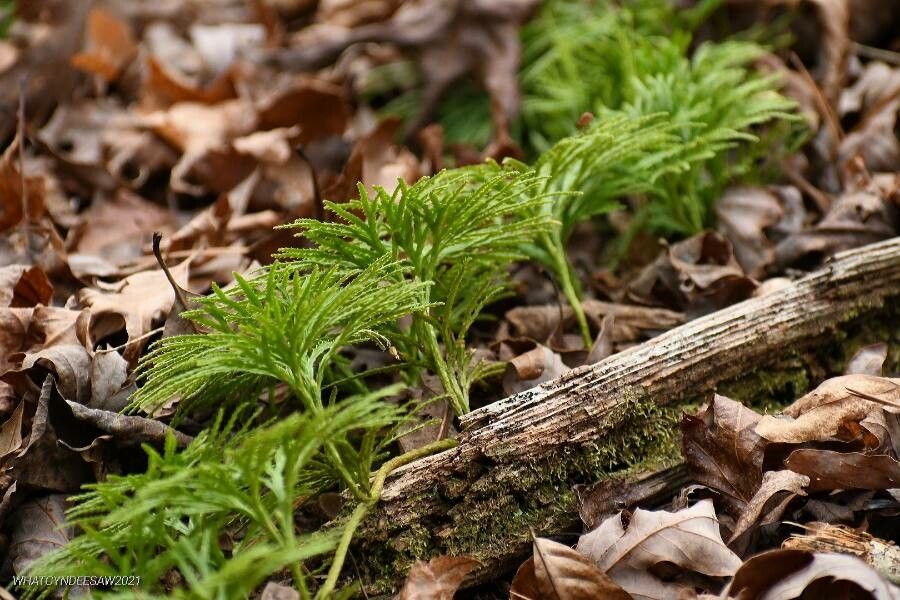
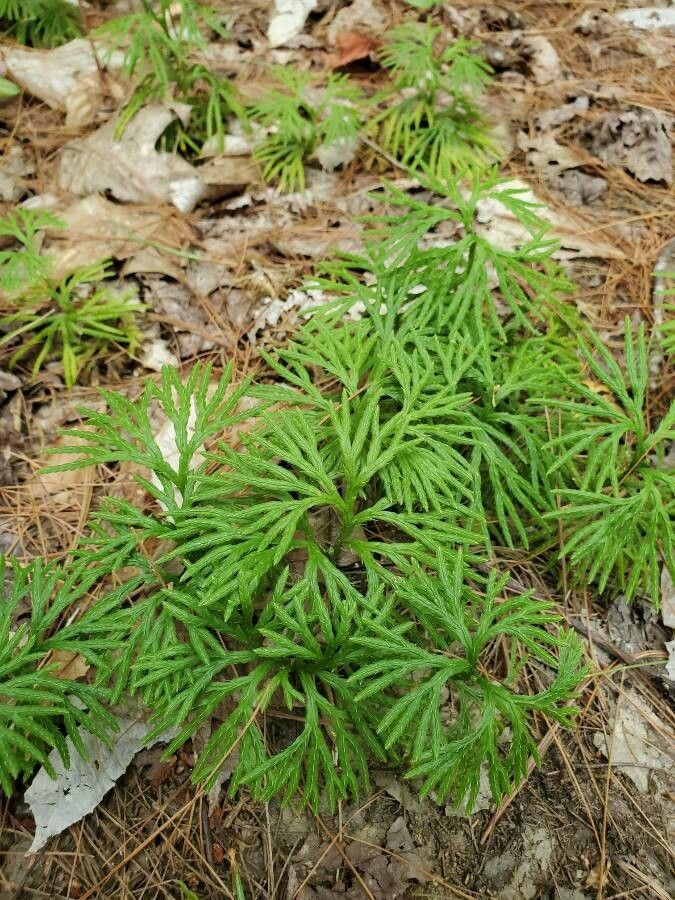
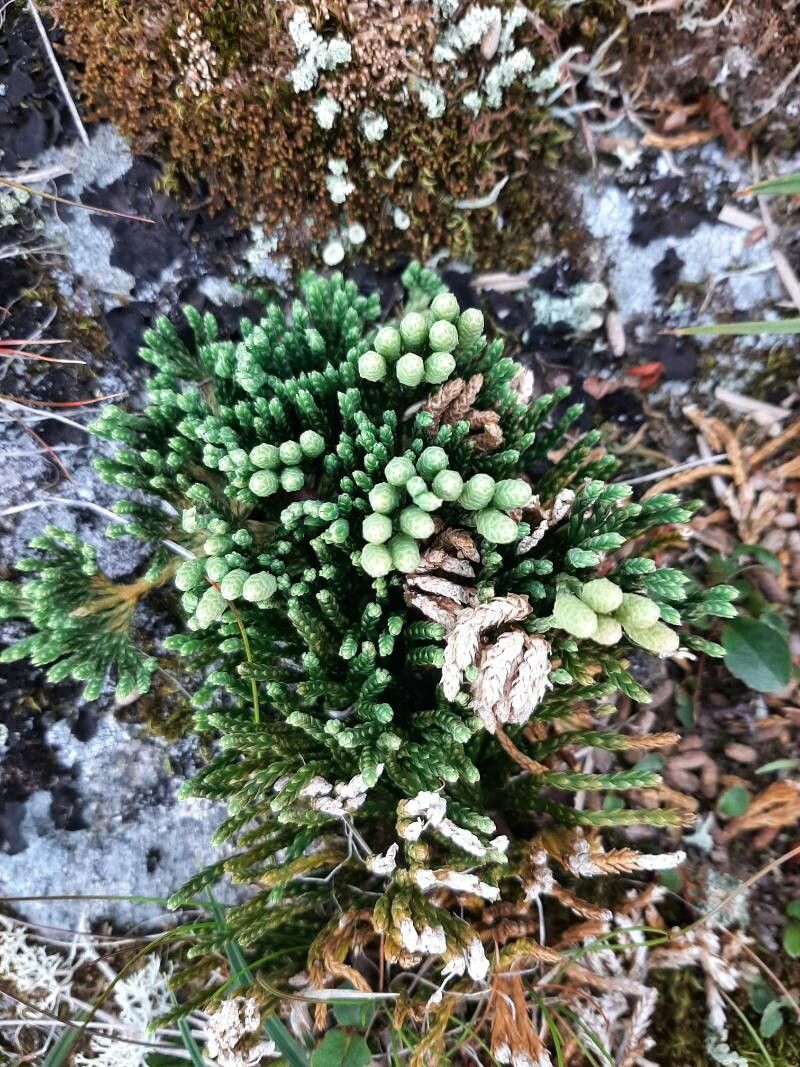
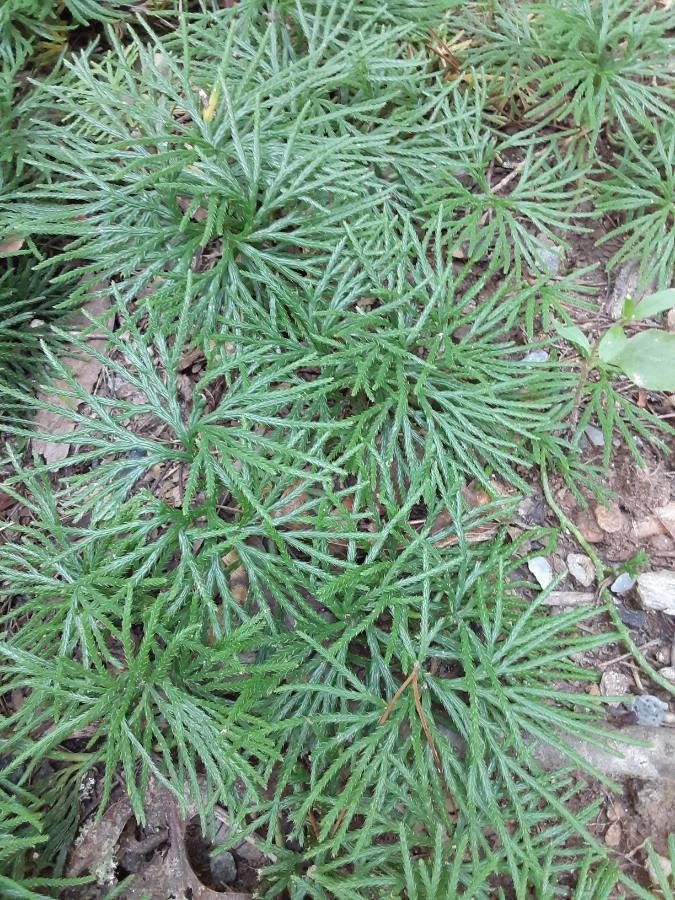
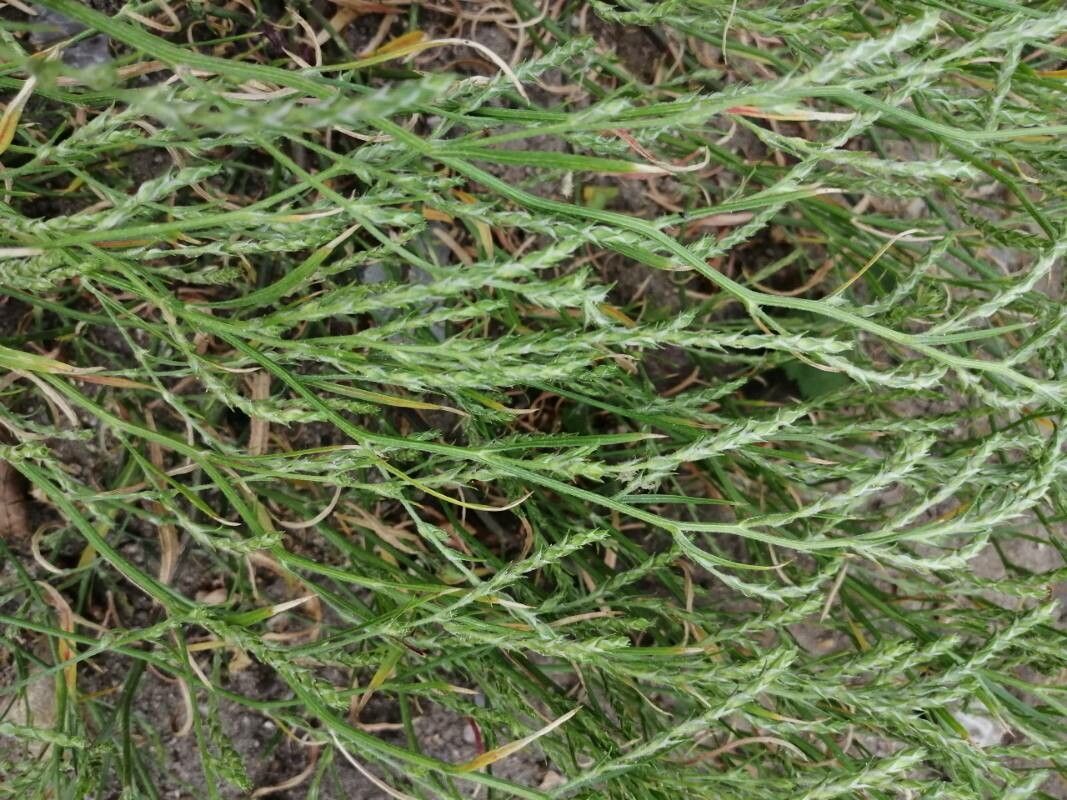
Diphasiastrum digitatum is known as groundcedar, running cedar or crowsfoot, along with other members of its genus, but the common name fan clubmoss can be used to refer to it specifically. It is the most common species of Diphasiastrum in North America. It is a type of plant known as a clubmoss, which is within one of the three main divisions of living vascular plants. It was formerly included in the superspecies Diphasiastrum complanatum. For many years, this species was known as Lycopodium flabelliforme or Lycopodium digitatum.Its common name is due to its resemblance to cedar boughs lying on the ground. Its leaves are scale-like and appressed, like a mature cedar, and it is glossy and evergreen. It normally grows to a height of about four inches (10 cm), with the spore-bearing strobili held higher. This plant was once widely harvested and sold as Christmas greenery, and populations were widely depleted for this reason. However, it has recovered throughout its range, and makes large clonal colonies, carpeting the forest floor.It prefers disturbed areas and coniferous forests, where it can form dense monocultures. The subterranean, brown gametophytes may live for years in the soil before developing vegetative shoots. Its range is in the higher Appalachian mountains northward, and its range ends in northern Georgia and Alabama, but isolated stands have sprung up elsewhere.In the Appalachian Mountains of Southwest Virginia, the plant is known locally as "Bear's Paw." This species was also once one of the principal clubmoss species used for collection of lycopodium powder, used as a primitive flashpowder.
Fan clubmoss typically resists disease well and faces relatively few insect pests. Its care is regarded as difficult because it needs a consistently moist environment and frequent watering. At the same time, the roots are prone to rot if the plant is overwatered or kept in poorly ventilated conditions. Fan clubmoss is appropriate for people with some growing experience, as most individuals can keep it alive for a period. Still, the plant may have difficulty thriving and its leaves can dry out and become less healthy over time.
How to keep Diphasiastrum Digitatum.
Light
Fan clubmoss flourishes under conditions of shade, gaining substantial advantages from the lack of direct sunlight. This preference is derived from its natural environment which is typically devoid of intense sunlight. Excessive light may be potentially detrimental to the plant, leading to strain or potential injury to its unique leaves.
Water
Fan clubmoss thrives in the consistently moist, high-humidity conditions of its native temperate forest understory. To keep the soil damp but not waterlogged, water the plant twice a week. It can tolerate low light, which makes it a good choice for an indoor ornamental ground cover. To ensure it stays healthy, give it regular misting to maintain humidity.
Temperature
The thermal preferences of the fan clubmoss are intrinsically linked to its natural habitat. It flourishes in climate zones where the temperatures consistently fall between 41 and 90 ℉ (5 to 32 ℃). In the cold winter months, it can cope with lower temperatures by entering a state of dormancy. Conversely, in the warmer summer months, regular hydration is essential for it to acclimate to the increased heat.
Pruning
Early spring is the ideal time to prune fan clubmoss. Trimming the tips helps control its size and enhances the density of its foliage. During pruning, be sure to remove any dead or damaged stems, but avoid excessive cutting to prevent putting the plant under stress. Pruning during this period aligns with the natural recovery phase of fan clubmoss and promotes healthy growth throughout the season.
Pot & Repot
When you decide to repot the Fan Clubmoss, opt for a container that is 1-2 inches (2.5-5 cm) larger in size and provides sufficient drainage. Ensure the potting mixture drains well. It’s best to repot in spring or autumn and ensure that the plant's root ball is positioned slightly beneath the rim of the pot. Provide plenty of water once repotting is complete and position it in a cozy location that gets indirect sun exposure.
Botanical profile.
- Plant Type
- Fern
- Life Cycle
- Perennial
- Genus
- Diphasiastrum
- Family
- Lycopodiaceae
- Hardiness Zone
- 4-7
- Mature Height
- 13 cm to 25 cm
- Mature Spread
- 15 cm to 30 cm
- Leaf Color
- Green
- Leaf Type
- Evergreen
- Flower Color
- Green, Yellow, Brown
- Bloom Time
- Summer
- Planting Time
- Spring, Summer, Autumn
- Harvest Time
- Mid summer, Late summer, Early fall
Other names.
Reader questions.
What do I need to do if I give my Fan clubmoss too much or too little water?
The Fan clubmoss can be overwatered if it sits in a pool of water or if the planter doesn't have drainage holes. This can prevent the roots from getting nutrients and lead to fungal or bacterial diseases. Signs of overwatering include wilted and yellow leaves, drooping stems, and soft/mushy texture. However, it's important to consider other causes and it's hard to give this plant too much water. On the other hand, the Fan clubmoss can also be underwatered if not monitored closely. In dry conditions, it can quickly turn brown and crispy. Even if it appears completely dried up, the plant may still be saved if some roots are healthy. Remove the dead stems, water thoroughly, and return the plant to its normal spot. With proper care, the plant can rebound and grow new fronds, though it may take several months to reach its previous size.
Why should I add fertilizer to my Fan clubmoss?
Fertilizing Fan clubmoss is important because it provides essential nutrients for healthy new growth. It also helps maintain the health of existing growth and enhances the plant's ability to resist diseases and pests.
What kind of sunlight does Fan clubmoss require?
Fan clubmoss should be exposed to a small amount of indirect light each day, preferably from a tree canopy. It is best to limit the daily light exposure to a maximum of three hours. If the plant receives more than three hours of light per day or if the light is too direct, it may burn, dry out, and ultimately die.
What temperature is best for Fan clubmoss?
To maximize the growth of Fan clubmoss, it is best to keep it within a specific temperature range. This range is between 65-75℉ (18-25℃), which is the ideal temperature for Fan clubmoss to thrive. However, Fan clubmoss can tolerate higher and lower temperatures to some extent. If possible, it is recommended to keep the area where you grow Fan clubmoss within a few degrees of the optimal temperature range. If you cannot maintain the precise range, it does not mean that the plants will stop growing altogether. They can tolerate temperatures outside the ideal range without suffering too much damage or reduced growth. On the higher end, Fan clubmoss can handle temperatures between 75-85℉ (25-30℃). On the lower end, it can withstand temperatures as low as 5℉ (-15℃). However, it is important to be cautious of higher temperatures since Fan clubmoss prefers cooler environments. If the temperature exceeds 85℉ (30℃), the plant's growth may slow down significantly, and in extreme cases, it could even die.
How should I give my Fan clubmoss the right amount of water?
To keep your Fan clubmoss happy, it is important to provide consistently moist soil that resembles its natural habitat. This may require watering every one or two days to prevent the plant from drying out. When the top layer of soil starts to feel slightly dry, it is a sign that it's time to water again. Make sure to thoroughly soak the soil until water drains out from the bottom of the pot. Afterward, remove any excess water to avoid the pot sitting in standing water. Following this watering routine will help prevent the soil from becoming too dry.
When should I put fertilizer on my Fan clubmoss?
The feeding schedule for Fan clubmoss depends on its location. While it is not a very hungry plant, it does need some extra nutrients. Outdoor plants should be fertilized once in the spring, while indoor plants should be fed monthly from spring to summer.
Should I keep Fan clubmoss away from the sun?
To ensure the well-being of your Fan clubmoss, it is important to avoid excessive sun exposure and sudden shifts into direct sunlight. Fan clubmosses tend to tolerate morning and afternoon sunlight better than the intense midday sun, which can quickly harm them. If you choose to grow your Fan clubmoss indoors, it should not be placed in direct light from a window. Instead, find a spot that receives a small amount of indirect light each day, similar to an outdoor setting. Ideally, the correct amount of sun exposure should be provided from the beginning, regardless of whether it is grown indoors or outdoors. However, if you find that your Fan clubmoss is receiving too much light, it is advisable to promptly move it to a different location if it is in a container, or transplant it to a more shaded area if it is growing in the ground.
Does Fan clubmoss need different temperatures at different stages of growth?
To ensure a healthy appearance, it is vital to maintain the right temperature for the early growth stages of Fan clubmoss. Keep the growing space between 65~75℉(18~25℃), with a preference for the lower end of this range. Avoid going below -5℉(-20℃) as extremely cold temperatures can hinder growth. However, it is important to note that very hot temperatures are more damaging than cold ones. If temperatures remain high during the budding stage, Fan clubmoss may not flower at all.
What do I need to think about when I water my Fan clubmoss?
The watering needs of your Fan clubmoss are influenced by the humidity in the air. Higher humidity means less frequent watering. Avoid placing the plant near heating or cooling vents as it will dry out quickly. Instead, choose a draft-free location. These ferns prefer dappled and indirect sunlight, as well as temperatures between 55-80 degrees F (13-27 degrees C). Placing them on a warm and sunny windowsill may cause them to become dehydrated quickly. Rainwater or distilled water is best, but tap water works fine in most places. Tap water may cause brown leaf tips due to certain minerals and chemicals. Fan clubmoss can dry out faster in small pots, so provide more space in the pot. Consider using a self-watering planter for continuous moisture, as it benefits the plant's roots.
When is it not a good idea to add fertilizer to my Fan clubmoss?
To ensure optimal growth and avoid potential issues, it is advised not to apply fertilizer after early autumn when winter is approaching. Additionally, it is not recommended to fertilize Fan clubmoss during hot and dry periods as dry soil is less effective in delivering nutrients, and stimulating growth at this time may result in increased water requirements that might not be met. It is best to reserve fertilizer application for earlier in the season when temperatures are cooler. Lastly, keep in mind that Fan clubmoss can absorb fertilizer from neighboring plants or lawns, so be careful not to unintentionally give ferns an excess amount of fertilizer.
What happens if Fan clubmoss doesn't get enough sunlight?
The Fan clubmoss doesn't need a lot of light, but it does need a few hours to grow properly. If it doesn't get enough indirect light, its foliage color may fade and it may not grow well. However, since the Fan clubmoss prefers shade, it is more likely to have too much sunlight than not enough.
Here are three ways to control the temperature of your Fan clubmoss.
Here are some tips to help in growing Fan clubmoss indoors: 1. Tip #1: Choose the coldest room: When growing Fan clubmoss indoors, select the coldest room in your home. This room should be located on the side that is not exposed to direct harsh sunlight in the middle of the day. However, make sure the room still receives a decent amount of sunlight. Completely depriving Fan clubmoss of sunlight can greatly hinder its growth. 2. Tip #2: Watch out for high temperatures: During the growing season of Fan clubmoss (spring and early summer), there may be occasional high temperatures that can negatively impact the plant's growth. Too much heat can cause flowering buds to transform into non-flowering buds. These buds might partially open or fail to open at all, thereby reducing the plant's aesthetic appeal. To avoid this, it is crucial to maintain a temperature range between 65-75℉ (18-25℃) to allow Fan clubmoss to flower properly. 3. Tip #3: Protect from frost: Although Fan clubmoss can tolerate low temperatures as low as -5℉(-20℃), it is not resilient to significant frost. Exposing the plant to freezing temperatures during late fall or winter can lead to frost damage. Signs of frost damage include wilting, discoloration, and eventually browning or blackening of affected parts. Unfortunately, parts that turn these colors cannot be saved and will need to be pruned if you want to keep the plant alive.