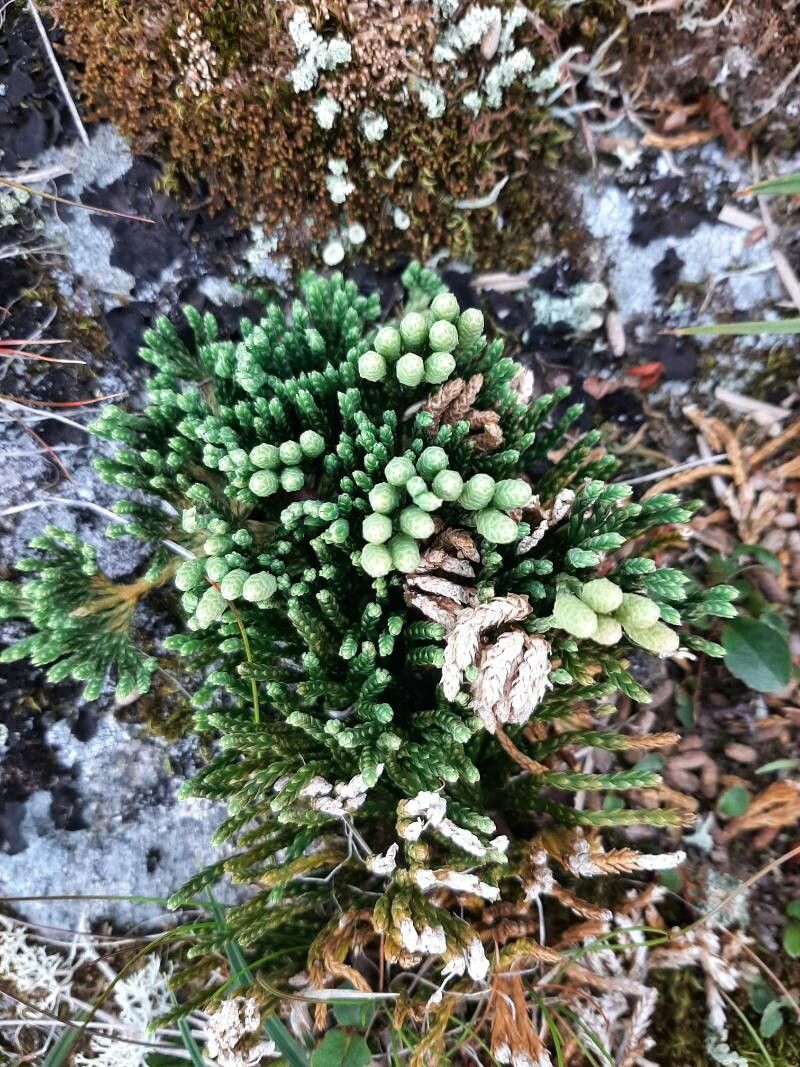
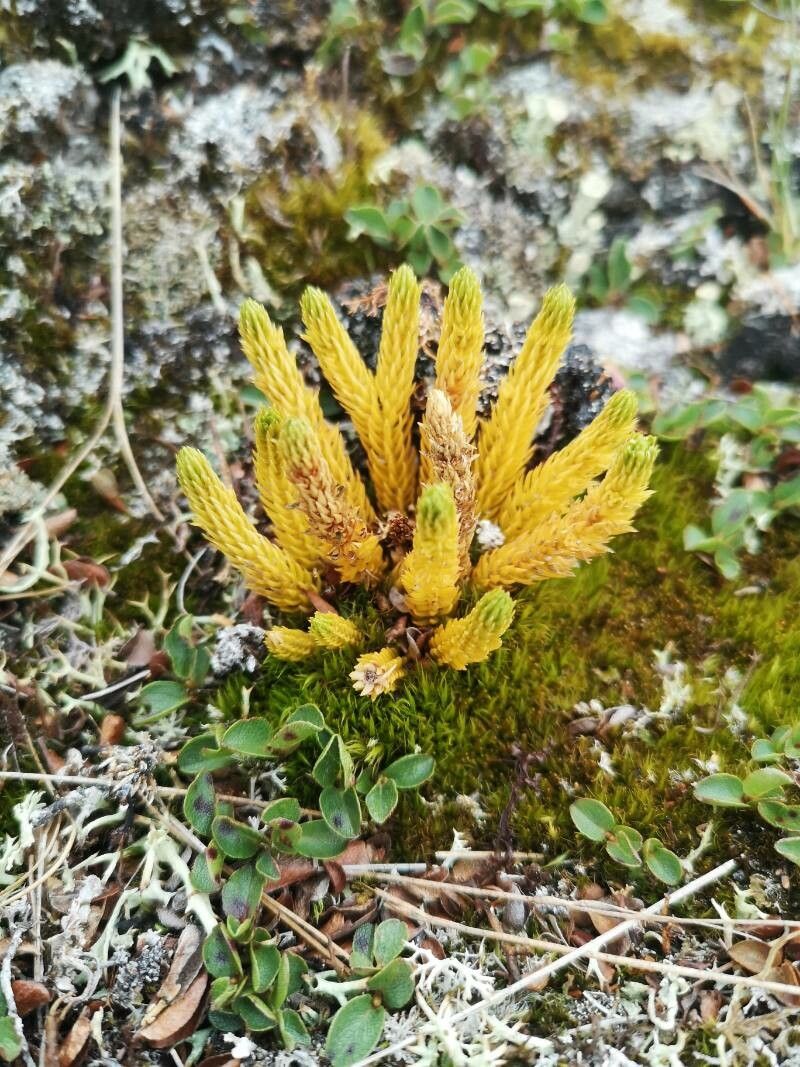
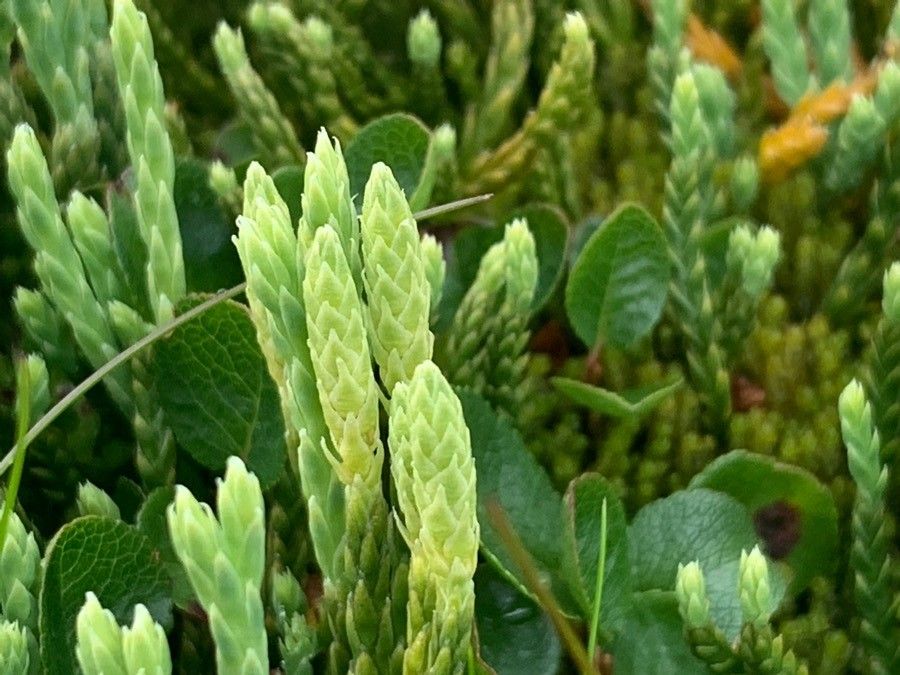
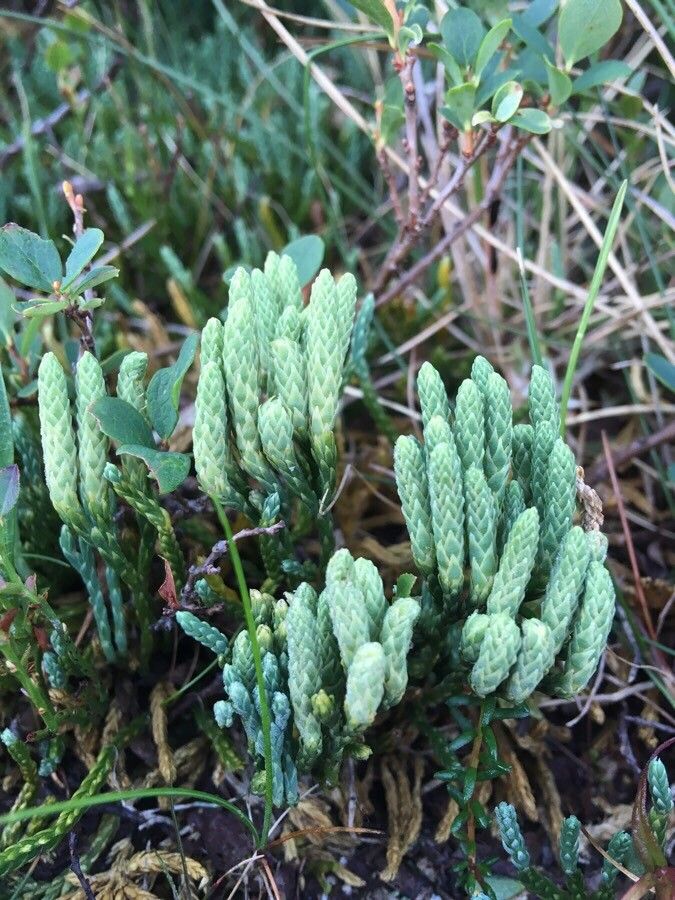
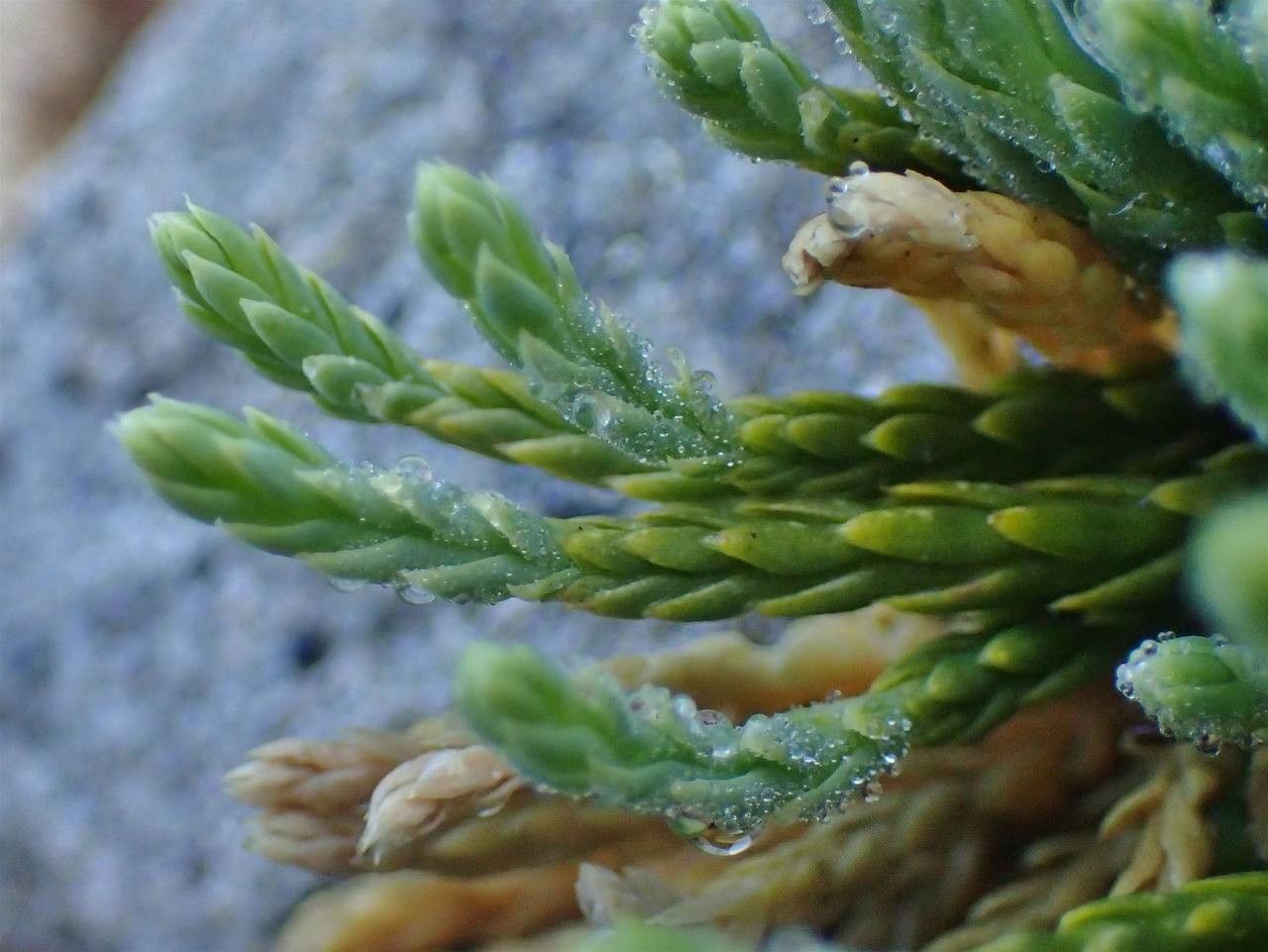
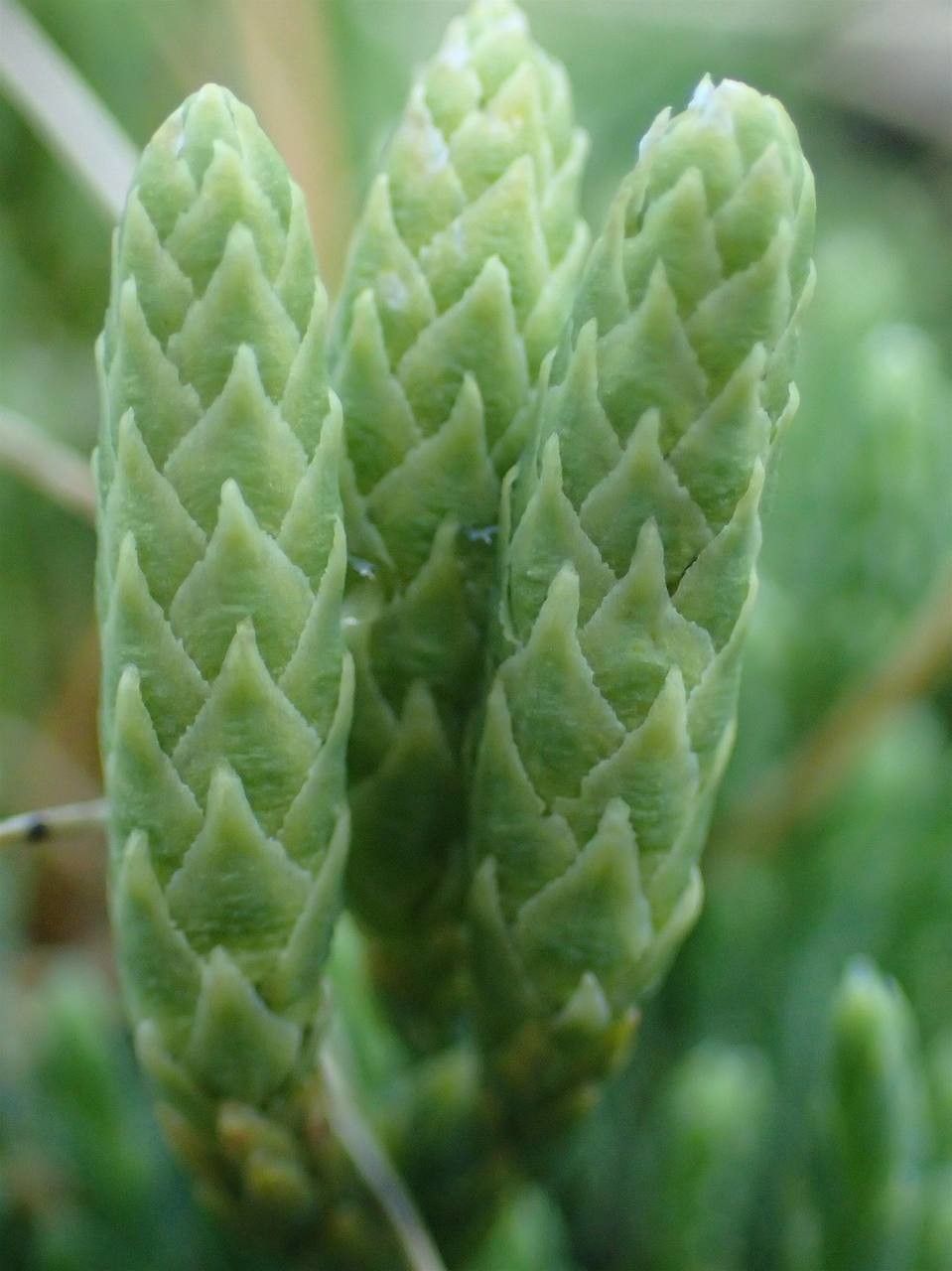
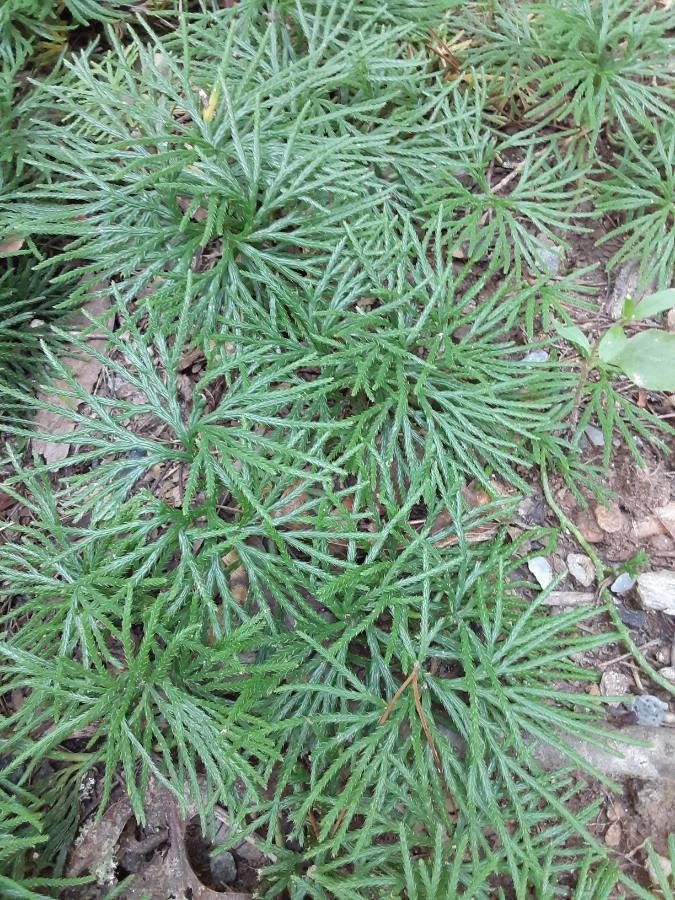
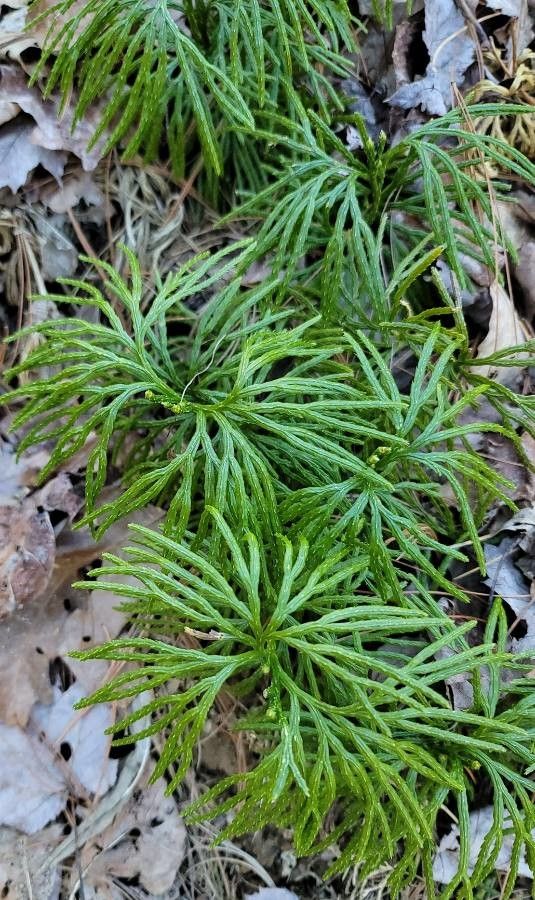
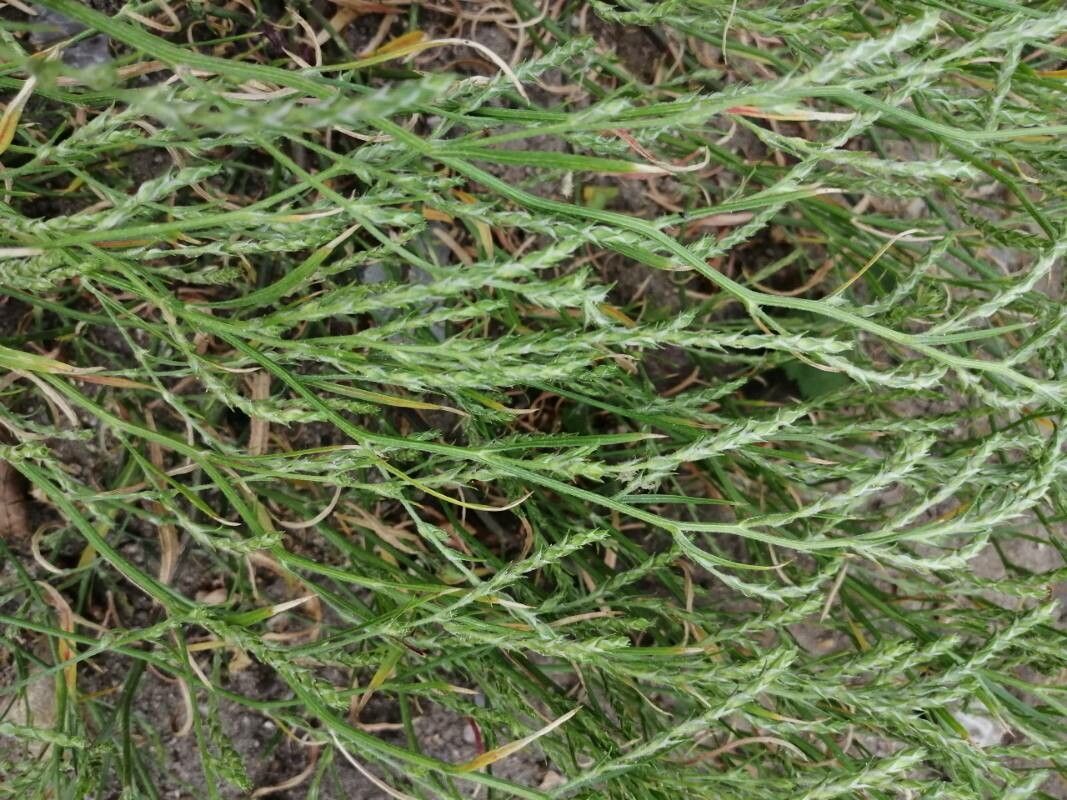
Diphasiastrum alpinum, commonly known as alpine clubmoss, is a perennial plant in the Lycopodiaceae family. Native to the northern hemisphere, it thrives in arctic and alpine regions across Europe, Asia, and North America. This plant features a creeping growth habit with stems that can extend up to 20 centimeters in length. Its small leaves, each less than 1 centimeter long, are arranged in whorls along the stem. The leaves are dark green on top and paler underneath. Alpine clubmoss reproduces through spores, which are produced on cone-like structures called strobili located at the tips of its stems during the summer months. The plant is well-adapted to harsh environments such as rocky slopes, tundra regions, and high-altitude areas. It grows slowly but steadily, forming dense mats or carpets on rocky surfaces. For centuries, indigenous people have utilized Diphasiastrum alpinum for its medicinal properties, particularly for its anti-inflammatory effects, using it to treat wounds and skin irritations. Overall, Diphasiastrum alpinum is a fascinating species due to its unique morphology and ecological adaptations, making it an important component of arctic-alpine ecosystems around the world.
Alpine clubmoss is fairly resistant to disease and generally does not tend to develop many illnesses. However, it can be vulnerable to pests and diseases present in its environment. These problems are usually not serious. In terms of care, this plant requires moderate maintenance. It should be pruned regularly to maintain a good appearance and support healthy growth. Fertilizing can also help encourage flowering. Alpine clubmoss is suitable for anyone with an outdoor space, such as a garden or patio, and does not demand extensive care experience. It may need more attention when grown indoors.
How to keep Diphasiastrum Alpinum.
Light
Alpine clubmoss occurs naturally in habitats like forest understories or rocky areas, where it grows in natural shade. It prefers partial sun but can tolerate both full sun and full shade, reflecting its hardy and adaptable nature.
Water
Alpine clubmoss, native to montane forests, thrives in environments with high humidity and requires regular moisture. It needs to be watered weekly to stay healthy. This evergreen plant benefits from a layer of mulch, which helps retain soil moisture and shields its roots from temperature fluctuations.
Fertilizer
Generally one fertilizer application in spring is adequate for Alpine clubmoss, although multiple feedings can enhance growth. Apply fertilizer once every month to a month and a half. Feeding improves the leaves’ appearance and function, helping maintain uniform color and a healthy texture. It also promotes root development and nutrient uptake, supporting long-term plant health.
Pruning
Alpine clubmoss, known for its dense, needle-like leaves, thrives in alpine regions. To encourage growth and prevent overcrowding, it is beneficial to prune the plant in early spring. Careful trimming helps maintain its shape, improve airflow, and reduce the risk of disease. For the best care practices, consult reliable horticultural sources.
Botanical profile.
- Plant Type
- Herb, Shrub
- Life Cycle
- Perennial
- Genus
- Diphasiastrum
- Family
- Lycopodiaceae
- Hardiness Zone
- 3-7
- Mature Height
- 5 cm to 15 cm
- Mature Spread
- 10 cm to 30 cm
- Leaf Color
- Green
- Leaf Type
- Evergreen
- Flower Color
- Yellow, Green
- Planting Time
- Spring, Summer
- Native Area
- Turkey, Sweden, Austria, Slovakia, Montenegro, Slovenia, Russia, Germany, Iceland, Koppen, Romania, Belgium, France, Czech Republic, Bulgaria, Poland, Ukraine, Serbia, China, Norway, Italy, Kazakhstan, Spain, Switzerland, Denmark, Japan, Mongolia, Finland, Ireland, United Kingdom
Other names.
Reader questions.
How should I water my Alpine clubmoss?
To properly water the Alpine clubmoss, it is best to use filtered water that is at room temperature. Tap water may contain harmful particles, so filtered water is preferred. Since the Alpine clubmoss originates from a warm environment, it is important to avoid using cold water, as this may shock the plant. Additionally, it is recommended to avoid watering from above, as it can cause problems with the plant's foliage. Instead, thoroughly soak the soil with filtered room temperature water. This helps to moisten the roots and allows them to spread through the soil and absorb necessary nutrients.
What should I do if I give my Alpine clubmoss too much water or too little water?
Overwatering is a more common problem than underwatering for Alpine clubmoss. When this plant is overwatered, its stems and leaves may wilt and turn yellow. Overwatering for a long time can also cause diseases like root rot, mold, and mildew, which can be fatal for the plant. Underwatering is less common but still possible, resulting in brittle and brown leaves. It's important to recognize signs of overwatering early on, as some diseases cannot be reversed if left untreated. If you notice signs of overwatering, reduce watering immediately and check the soil drainage. If the soil drains poorly, replace it with a well-draining mix. If you notice signs of underwatering, increase watering until the signs subside.
How often should I water my Alpine clubmoss plant?
If your Alpine clubmoss is in a pot, the best way to determine if it needs water is to check the soil with your finger. If the top few inches of soil are dry, it's time to water. If your Alpine clubmoss is planted outdoors in the ground, you can use the same method. When the top few inches of soil are dry, it's time to water. In spring and early fall, this typically means watering about once a week. In very hot weather, you may need to water twice a week or more. However, mature, well-established Alpine clubmoss plants are usually able to tolerate periods of drought.
How much water does my Alpine clubmoss require?
When it's time to water your Alpine clubmoss, don't hold back on the amount of water you give it. Make sure the top two to three inches of soil are dry before watering, and then give it a good, thorough watering. You want to completely soak the soil, and make sure there is enough water to cause excess water to drain out of the pot's drainage holes. If you don't see excess water draining out, then you likely didn't give it enough water. However, you also want to avoid letting water accumulate inside the soil, as that can be very harmful to the plant. If you notice that water isn't draining well, it could be due to poorly draining soils, which is not good for the health of the plant. On the other hand, if the plant is outside, receiving about 1 inch of rain per week should be enough.
How should I water my Alpine clubmoss when it is growing?
The water needs of the Alpine clubmoss can vary based on its growth stages. In the first few years of its life or when it's been recently transplanted, it requires more water. During these stages, the focus is on developing new roots to support future growth, which requires additional moisture. However, as the plant matures, it will require less water. Additionally, during the bloom period, when flowers are developing, more water may be necessary to provide sufficient moisture.
How should I water my Alpine clubmoss throughout the year?
The Alpine clubmoss has different water needs depending on the season. In the hottest months of the year, it requires more water, and you may need to water it more than once per week, depending on how quickly the soil dries out. However, during the winter, the plant goes into a dormant phase and requires much less water. In fact, you might not need to water it at all during the winter months. If you choose to water it during this time, do so only once a month to avoid the risk of disease.
What's the difference between watering my Alpine clubmoss inside and outside?
The Alpine clubmoss is commonly grown indoors by gardeners who live in non-temperate and non-tropical regions. If you are one of these gardeners, it is important to remember that the soil in a container may dry out faster than soil in the ground. Additionally, if you have drying elements like air conditioning units, your Alpine clubmoss may need to be watered more frequently compared to if it were planted outside. In outdoor settings with regular rainfall, you may not need to water your Alpine clubmoss very often, as the rain will be sufficient. However, those who grow this plant indoors will need to water it more frequently since they cannot rely on rainwater to soak the soil.