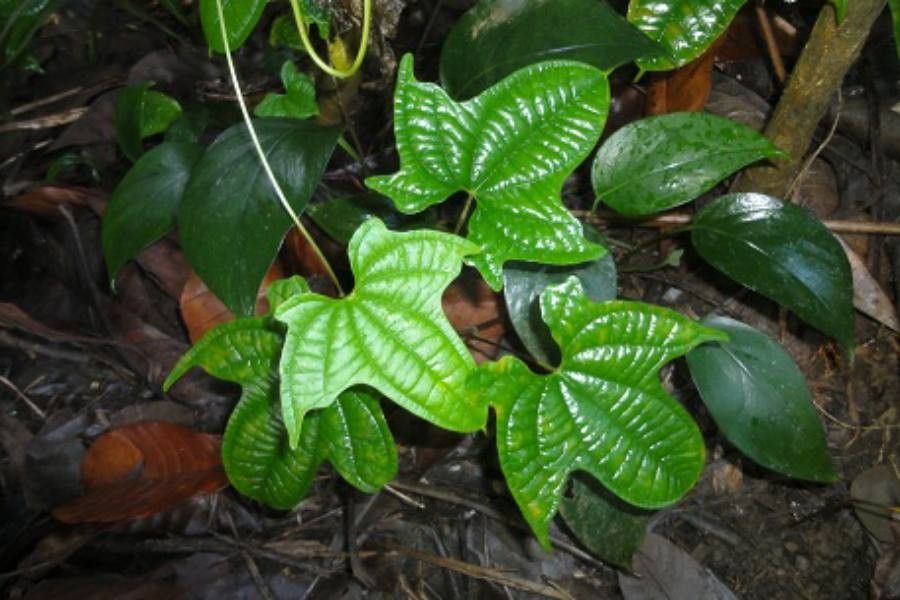
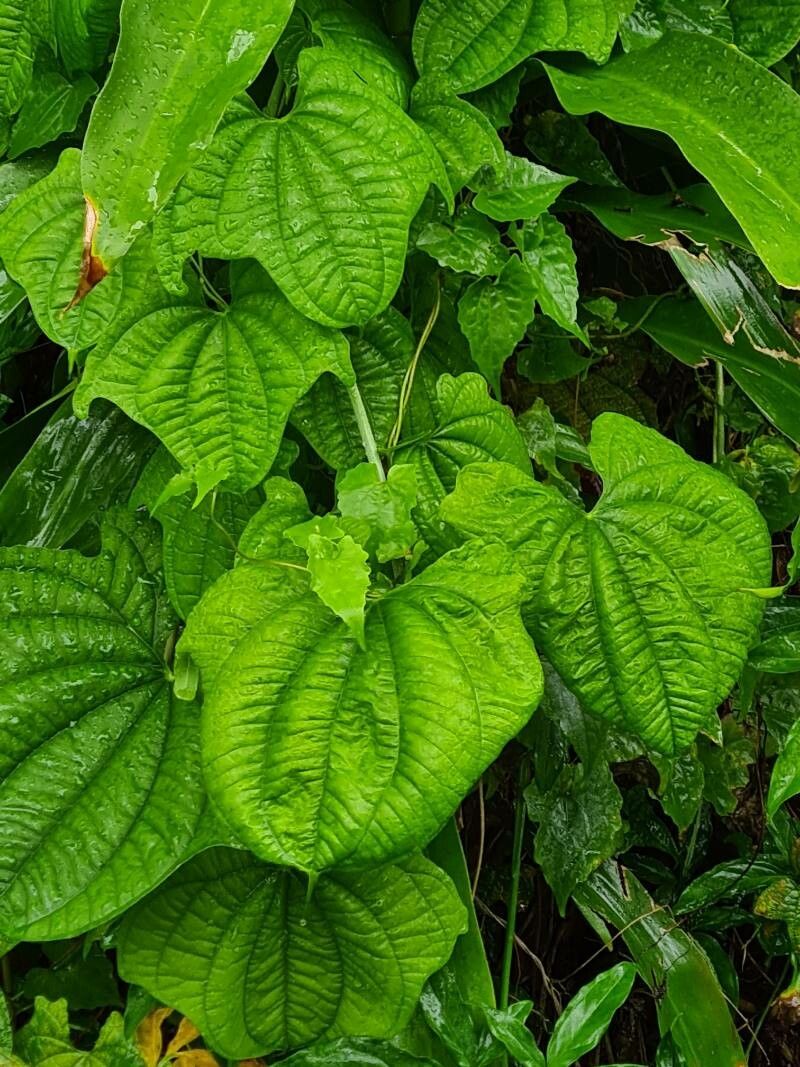
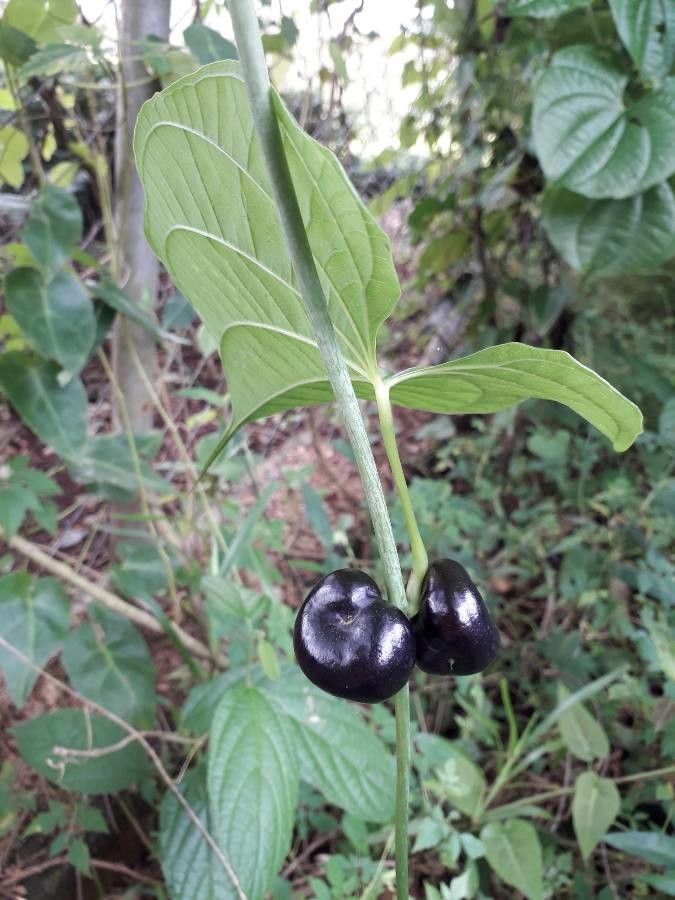
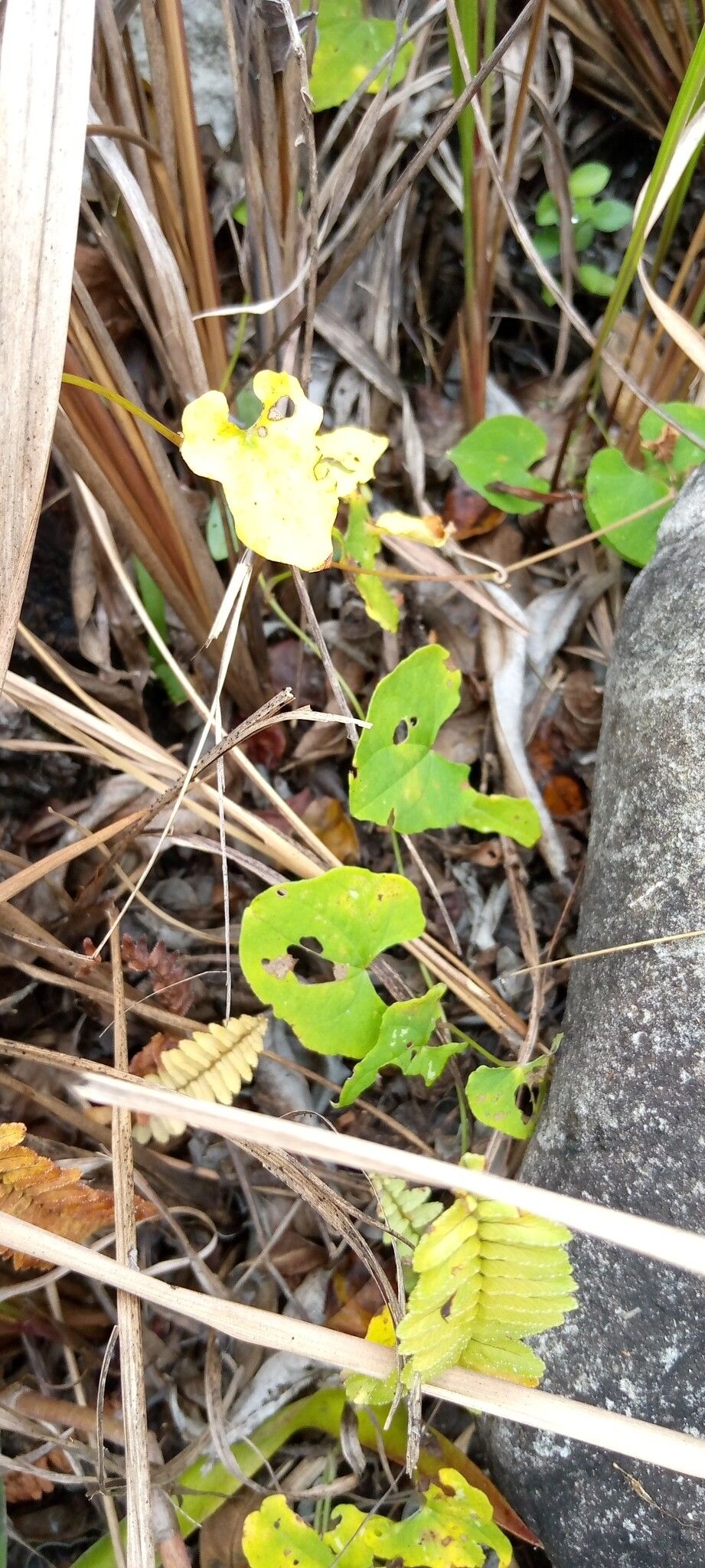
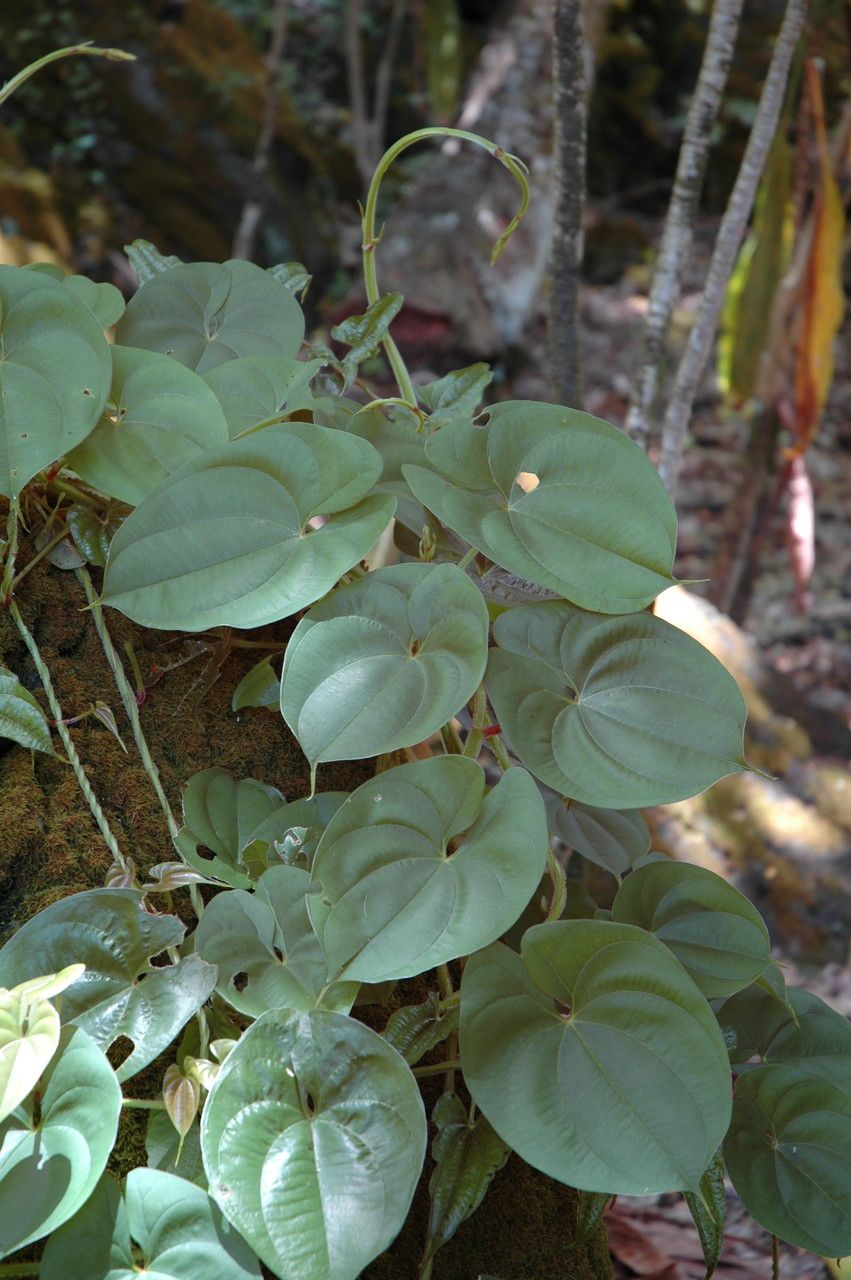
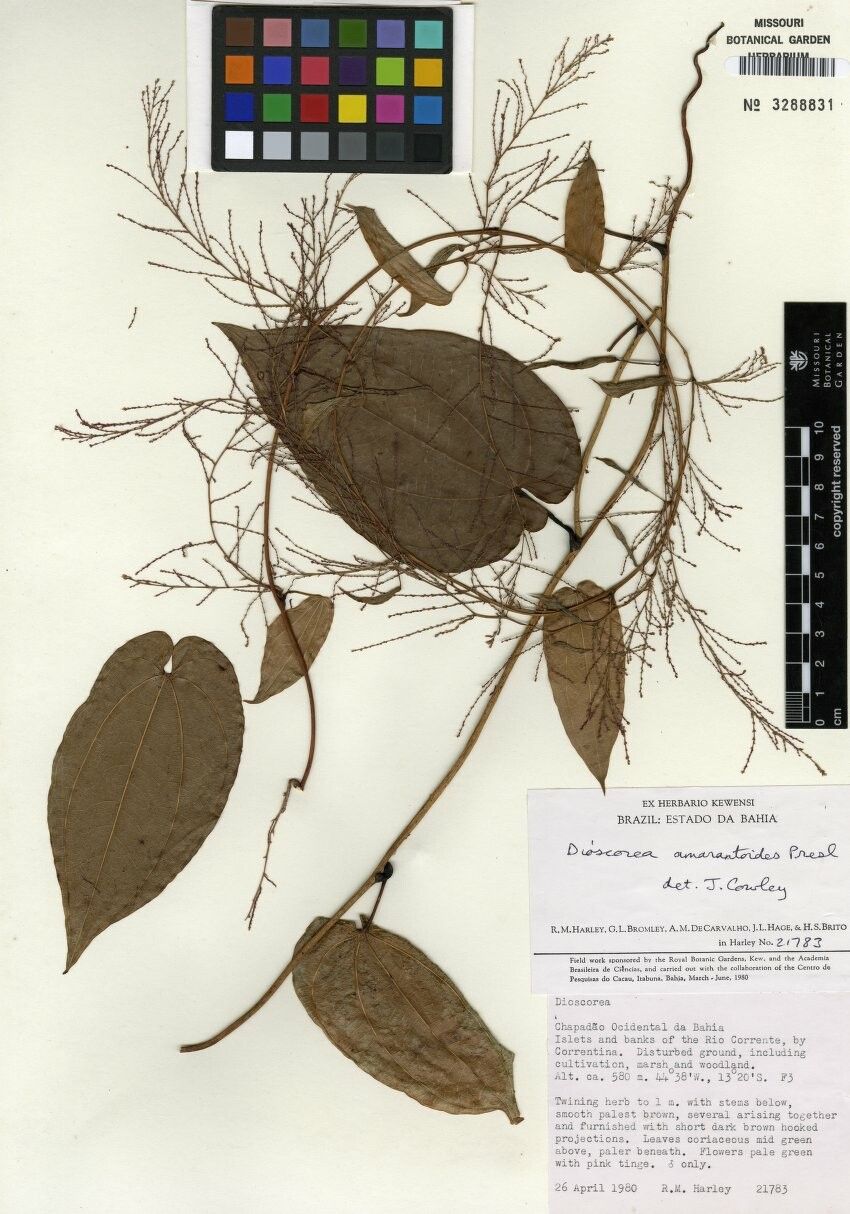
Dioscorea sansibarensis is a species of flowering plant in the yam family known by the common name Zanzibar yam. It is native to Madagascar and to tropical Africa from Tanzania west to Guinea and south to Mozambique, and it is known elsewhere as an introduced species (including in southern Florida).Dioscorea sansibarensis grows from a tuber up to 40 centimeters wide. The vine may exceed 7 meters in length and can be 3 centimeters wide. It twines counterclockwise and can reach and grasp supporting trees before it produces its first leaf. The heart-shaped leaves are up to 46 centimeters long by 58 wide. The tip may taper into a tail-like extension. The bulbils are up to 6 centimeters wide and may be purplish.In parts of Africa this plant is thought to have magical properties. The tubers and bulbils are toxic.
Zanzibar yam has moderate resistance to disease but can be prone to problems such as leaf spot. Its vulnerability to insect pests varies by variety, although most varieties are relatively less resistant to pests. Regarding care, Zanzibar yam requires regular watering and fertilization and frequent removal of yellow leaves. It is important to manage pests and diseases when they occur and to harvest the plant promptly. Zanzibar yam is suitable for people who can dedicate some time and energy to regular care.
How to keep Dioscorea Sansibarensis.
Light
Zanzibar yam is native to habitats with plentiful sunlight, such as open fields and sunny meadows. It prefers full sun but can also tolerate partial sun.
Water
Zanzibar yam comes from the humid regions of Zanzibar, making it well-suited to environments with consistent humidity. It has moderate drought tolerance, but for optimal growth even outside its natural habitat, it should be watered twice a week and misted regularly to simulate its tropical climate.
Temperature
The Zanzibar yam originates from habitats where temperatures range from 68 to 100°F (20 to 38℃). It prospers in these warm climates. To cope with seasonal variations, provide sufficient warmth during the colder months.
Fertilizer
When growing Zanzibar yam, use natural organic materials like compost, grass clippings, or manure. Slow-release granular fertilizer or commercial fertilizer may be applied, but only sparingly. Mix the organic fertilizer into the soil before planting. Generally, one to two fertilizer applications per growing season are enough for a bountiful harvest.
Pruning
To ensure the health and proper size management of Zanzibar yam, it is important to prune them in early spring. Use clean tools to trim away dead or overly long stems. This will improve air circulation and light penetration, which in turn encourages growth and flowering. Additionally, regular pruning helps maintain a neat appearance and can increase tuber production.
Botanical profile.
- Plant Type
- Herb, Vine
- Life Cycle
- Perennial
- Genus
- Dioscorea
- Family
- Dioscoreaceae
- Hardiness Zone
- 10-11
- Mature Height
- 7.01 m
- Mature Spread
- 40 cm
- Leaf Color
- Dark Green
- Leaf Type
- Deciduous
- Flower Color
- White
- Flower Size
- 2.54 cm
- Bloom Time
- Summer
- Planting Time
- Spring, Summer
- Harvest Time
- Late summer, Fall
- Native Area
- Malawi, Angola, Zambia, Madagascar, Sudan, Nigeria, Congo, Guinea, Gabon, Kenya, Uganda, Tanzania, Zimbabwe, Benin, Equatorial Guinea, Cameroon, Mozambique, Togo, Côte d'Ivoire, Congo (DRC), Central African Republic
Other names.
Reader questions.
What are the sunlight requirements for a Zanzibar yam?
The Zanzibar yam (Dioscorea sansibarensis) thrives in varying sunlight conditions. For optimal growth, it requires full sun, which means it should receive above 6 hours of sunlight daily. However, it can also grow well in partial sun, with about 3-6 hours of sunlight. It's essential to observe the way sunlight moves through your garden to find the perfect spot that offers a good balance of light and shade. This ensures the plant's health and happiness.
What is the native climate for Zanzibar yam?
The Zanzibar yam, scientifically known as Dioscorea sansibarensis, is native to environments where temperatures range between 68 to 100°F (20 to 38°C). It thrives in warm climates, making it essential to ensure it receives adequate warmth, especially during colder months to adjust to seasonal temperature fluctuations.