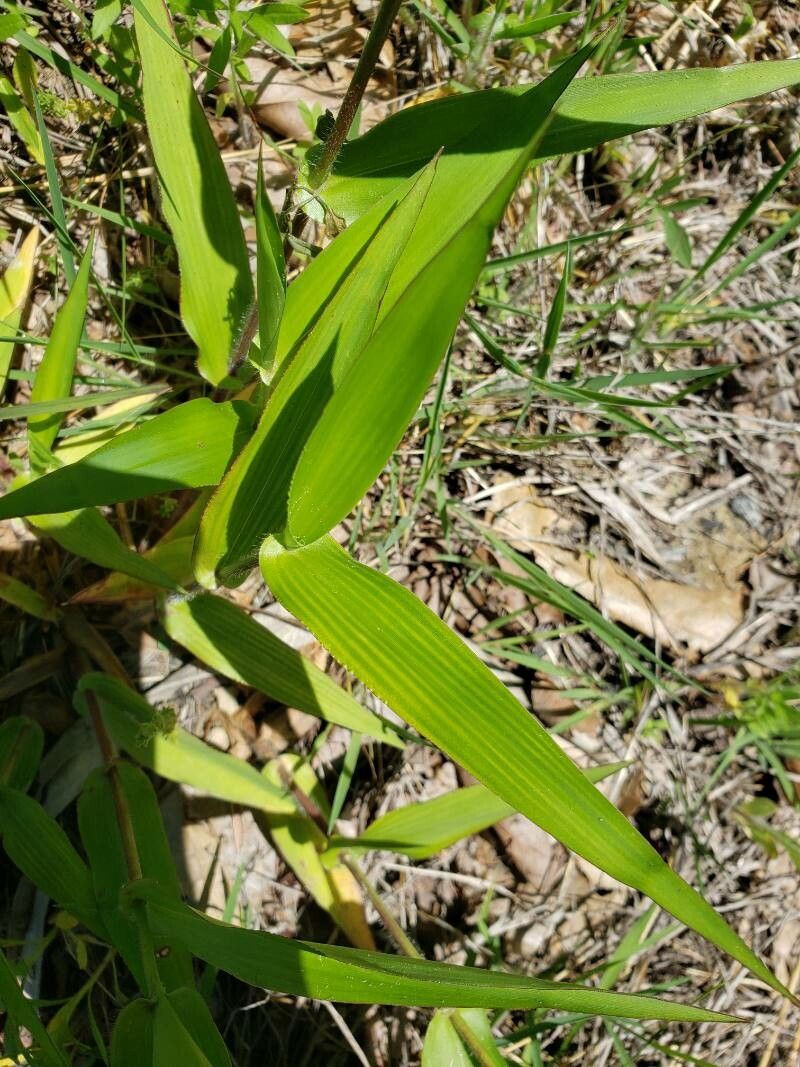
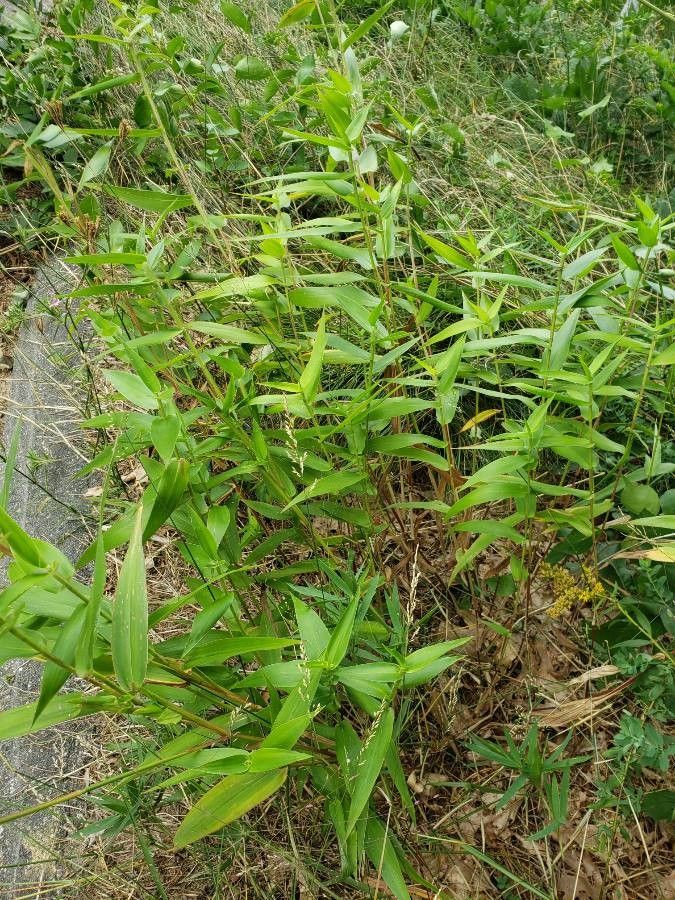
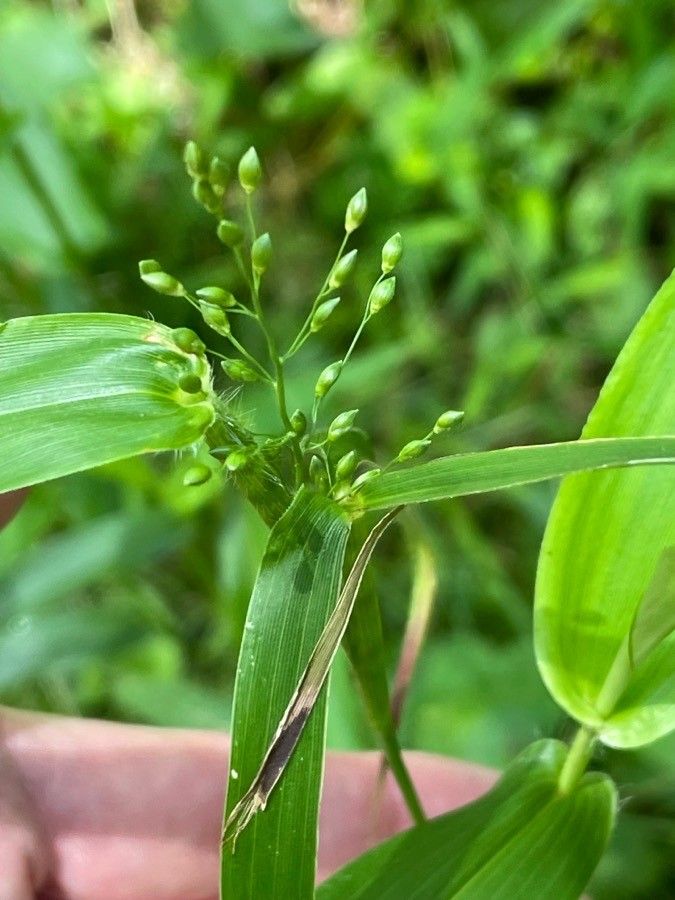
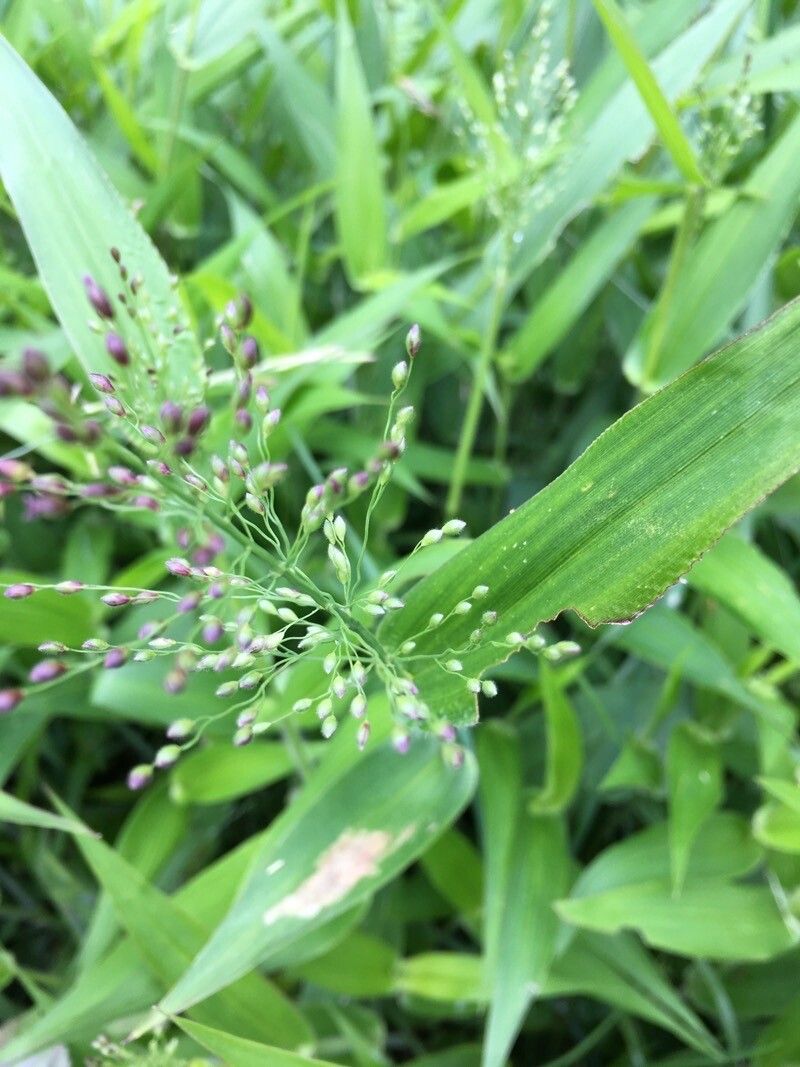
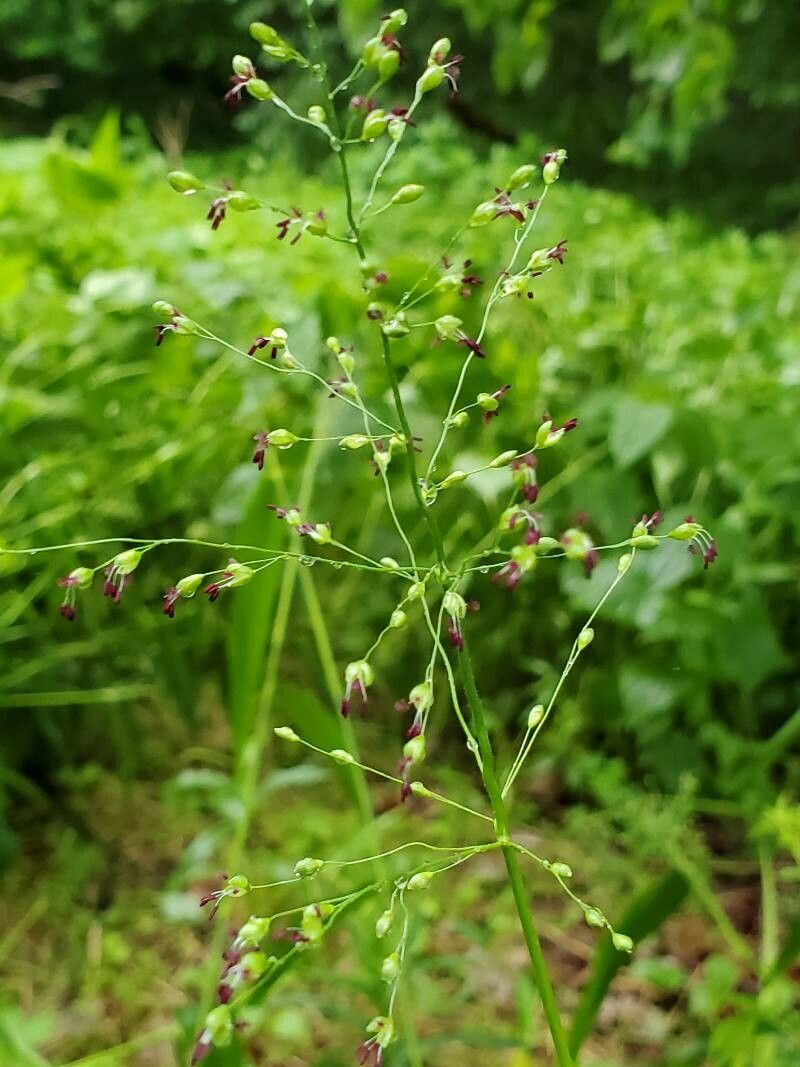
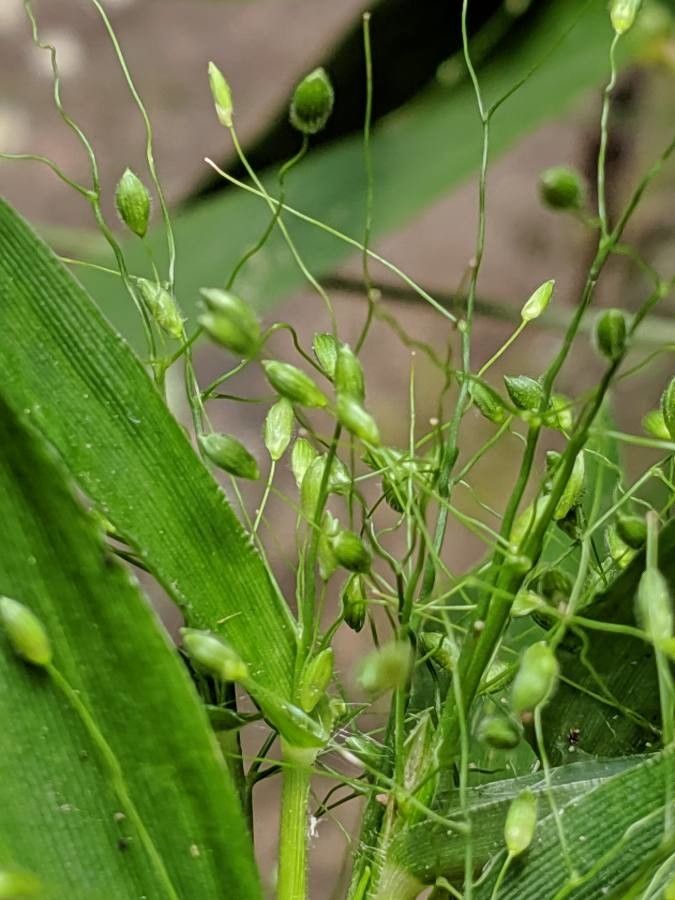
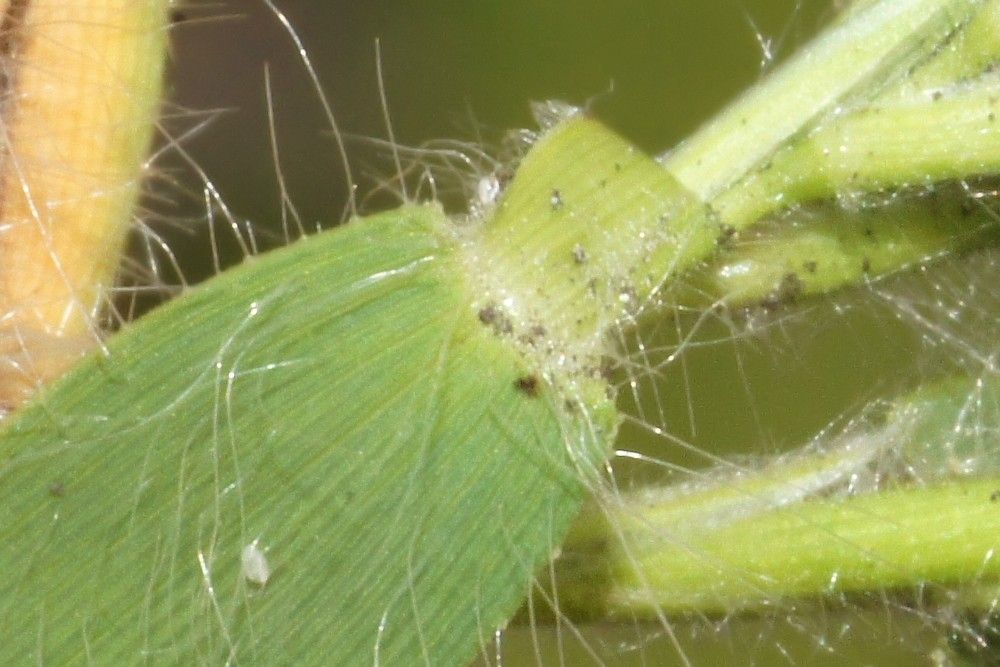
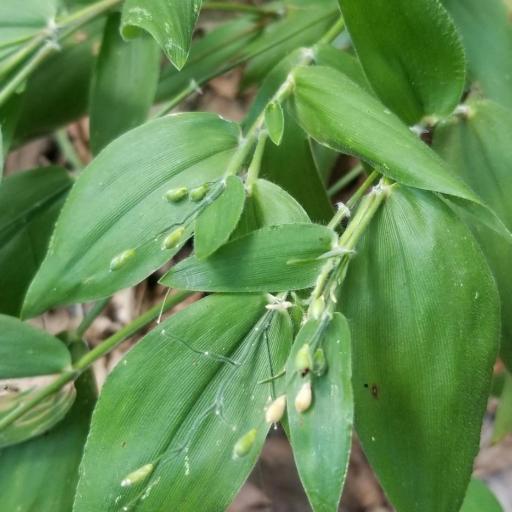
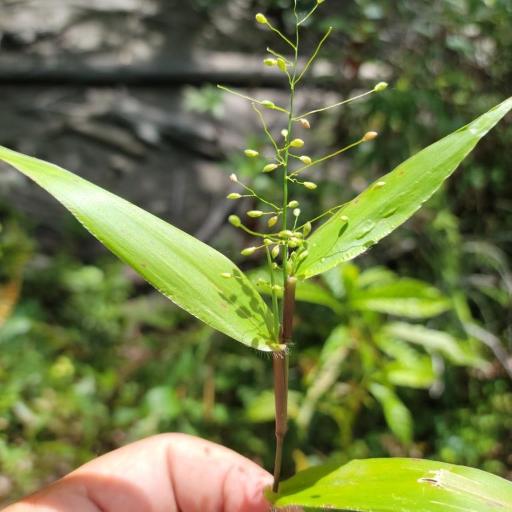
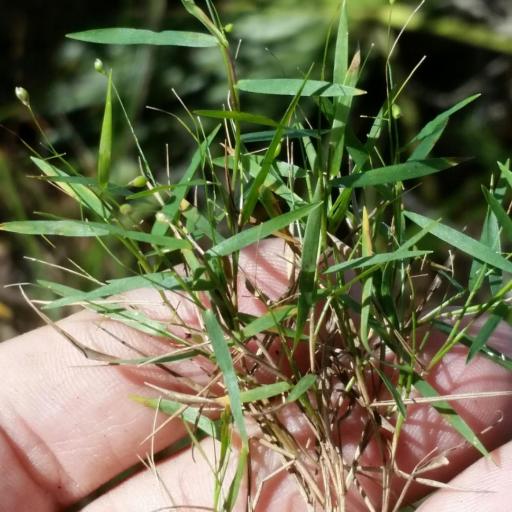
Dichanthelium clandestinum is a species of grass known by the common name deertongue. It is native to eastern North America, including eastern Canada and the eastern United States.This species is a rhizomatous perennial grass forming clumps of hairy stems up to 1.4 meters tall. Five to 10 leaves are located along the stem. Each is up to 25 centimeters long by 3 wide, lance-shaped, sometimes rigid, and hairless to slightly hairy. There are two types of inflorescence. The main panicle contains many spikelets with flowers that open and are pollinated. Another type of inflorescence contains cleistogamous flowers: flowers which do not open and pollinate themselves. These are located in the sheaths of the stem leaves and are sometimes hidden. They are produced later in the year than the open panicle. There are about 400,000 seeds per pound.This plant is tolerant of high levels of aluminum in soils. It tolerates acid soils and thin, infertile soils. It can be used to revegetate reclaimed land such as mine spoils. The cultivar 'Tioga' has been available since 1975.The seeds of deertongue attract many types of birds, such as turkeys. The grass is not considered a good forage for livestock because it is low in nutrients.
Deertongue grass has good disease resistance and is generally not prone to diseases. In terms of care, this plant is relatively low-maintenance. When grown outdoors it requires minimal watering, and larger plants typically do not need pruning. Smaller plants should be pruned after they have finished blooming. Deertongue grass is suitable for anyone with an outdoor space, such as a garden or deck, and does not require a lot of care experience.
How to keep Dichanthelium Clandestinum.
Light
Deertongue grass favors a location with abundant sunlight but can tolerate spots with somewhat reduced light. Because it originates from regions with minimal shade, it performs best in places where sunlight is plentiful for healthy growth. Still, extended periods of low light can weaken its vigor.
Temperature
Deertongue grass thrives in temperate climates, preferring temperatures of 41 to 89.6 ℉ (5 to 32 ℃). It can endure colder winter conditions, but excessive summer heat may cause it to become dormant. During hot periods, provide regular watering and partial shade to help keep the soil cool.
Fertilizer
Deertongue grass needs extra nutrients to encourage healthy new growth. In spring, placing some compost around the plant’s base can effectively supply the nutrition it requires. Fertilizing helps support vigorous growth and aids the plant in resisting diseases and pests.
Botanical profile.
- Plant Type
- Grass
- Life Cycle
- Perennial
- Genus
- Dichanthelium
- Family
- Poaceae
- Hardiness Zone
- 4-8
- Mature Height
- 0.3 m to 1.22 m
- Mature Spread
- 30 cm to 61 cm
- Leaf Color
- Green
- Leaf Type
- Semi-evergreen
- Flower Color
- Green, White, Yellow, Purple, Brown
- Flower Size
- 2.54 cm
- Bloom Time
- Late spring, Early summer, Mid summer
- Planting Time
- Spring
- Harvest Time
- Early summer, Mid summer
Other names.