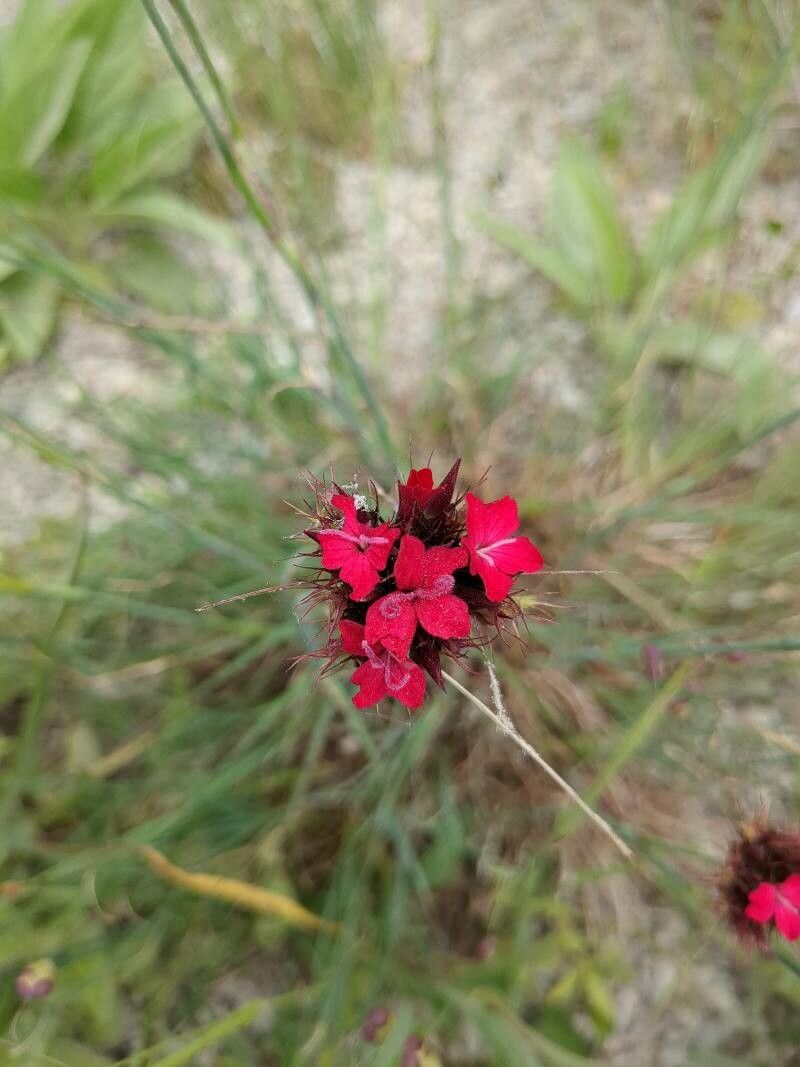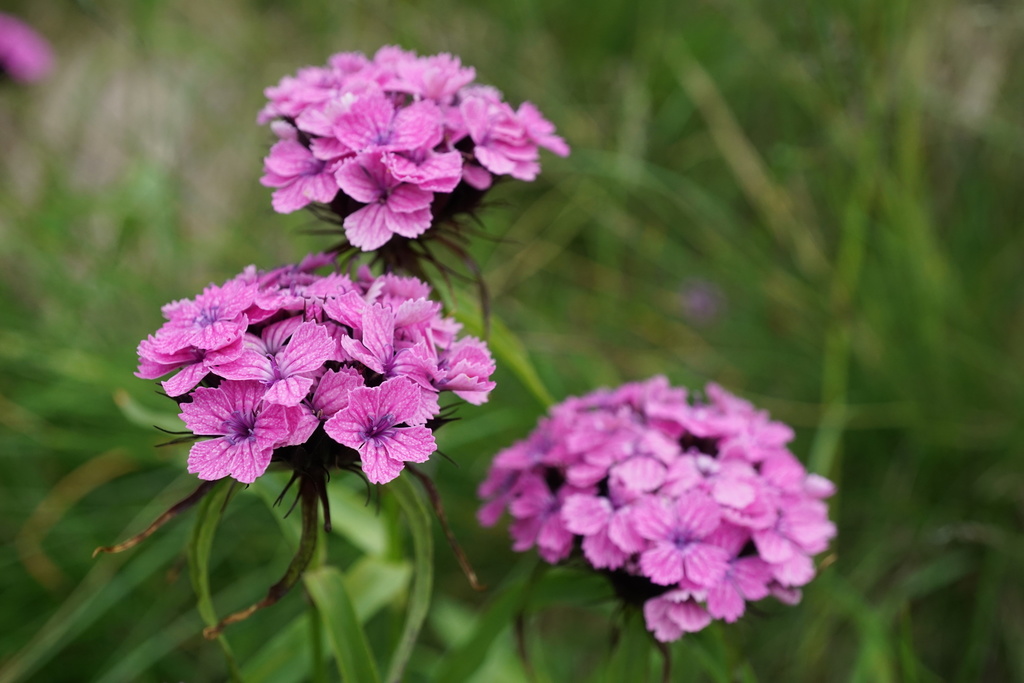
Dianthus barbatus, commonly known as Sweet William, is a beloved flowering plant from the family Caryophyllaceae. Native to Europe and Asia, it has been extensively cultivated in gardens and landscapes across the globe. This plant typically reaches a height of up to 60 cm and produces clusters of fragrant flowers in shades of pink, red, white, or purple, blooming from late spring through summer.
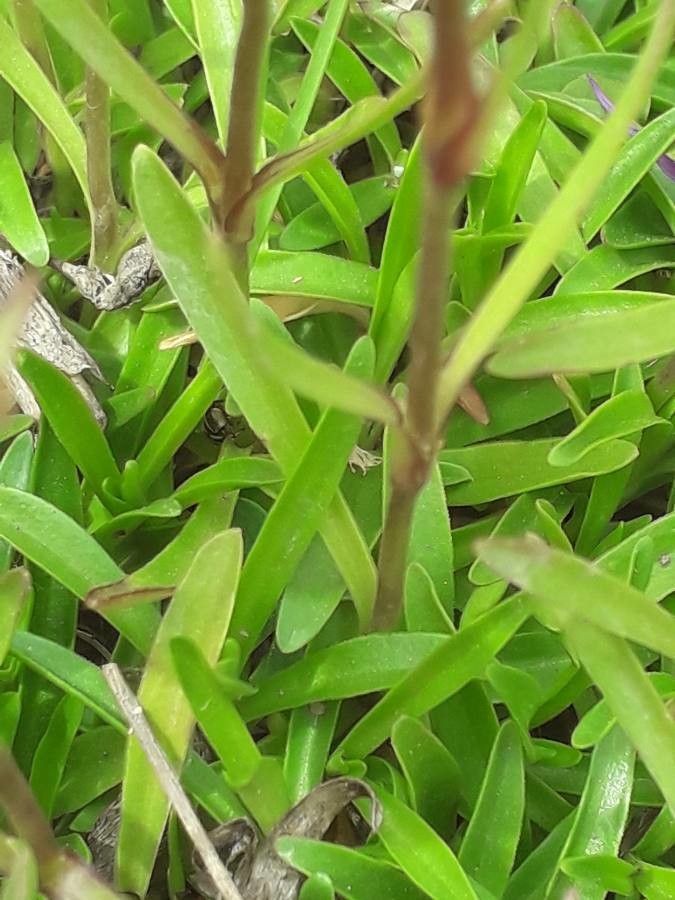
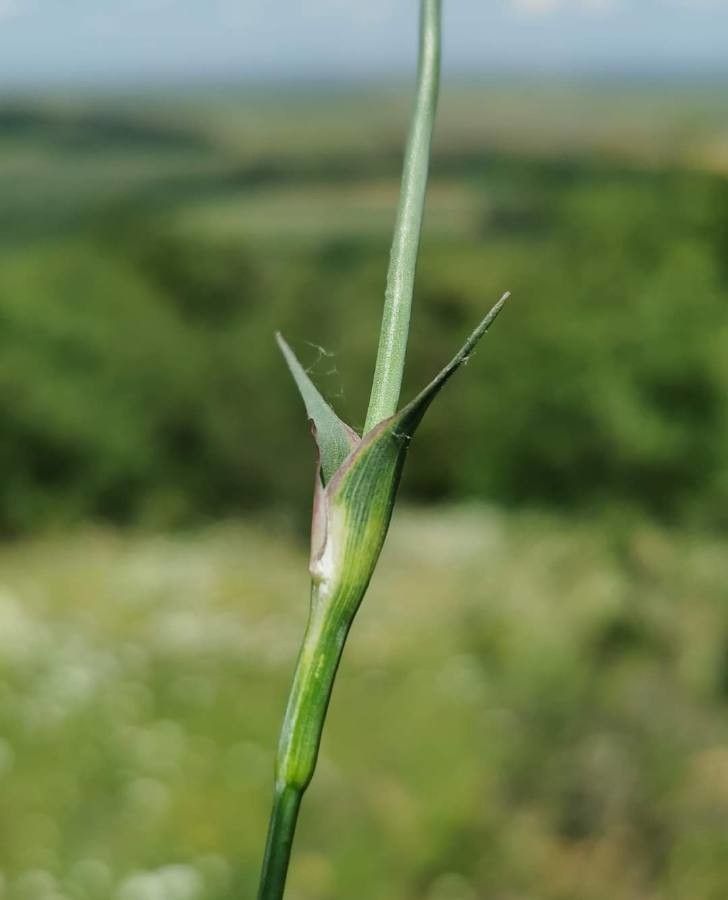
The leaves of Dianthus barbatus are narrow and lance-shaped with a distinctive blue-green coloration. The flowers, though small, are striking, featuring five petals that are deeply fringed or toothed at the edges. They bloom in dense clusters on sturdy stems that rise above the foliage.
Sweet William is an easy-to-grow plant that thrives in well-drained soil and full sun exposure for optimal growth. While it can tolerate some shade, doing so may result in fewer blooms. The plant requires regular watering during dry periods but can endure short droughts once established.
Cultivated for centuries as an ornamental garden flower, Sweet William is prized for its attractive appearance, sweet fragrance, extended blooming period, and ease of cultivation. It is commonly used as a border or bedding plant in gardens or grown in containers on patios or balconies.
Beyond its ornamental appeal, Sweet William also has medicinal uses. Its essential oils possess anti-inflammatory properties, making it effective for treating various ailments, including digestive disorders.
Overall, Dianthus barbatus remains a popular choice among gardeners worldwide due to its beauty and ease of care, making it an excellent addition to any garden setting.
Sweet William: There are two common beliefs about the origin of the flower's name. Some people think it was named to honor Prince William, Duke of Cumberland, from the 18th century. Others speculate that the flower was named after William Shakespeare, a contemporary of the botanist John Gerard.
Sweet William has strong resistance to disease and is generally not prone to illness. However, it can be susceptible to leaf spots if light and ventilation are poor and if watering is excessive. The plant's care level is considered easy, since it only needs regular watering and little else. Sweet William is well suited to people who do not have the time or energy to devote to regular care.
How to keep Dianthus Barbatus.
Light
Sweet William thrives with continuous sunlight but can also tolerate a moderate amount of sun. These traits are determined by the conditions of its native habitat and enable the plant to grow healthily. Excessive or insufficient sunlight can weaken it and impede its proper development.
Water
Sweet William, native to Europe's woodlands, thrives in moderate moisture conditions while also being drought-tolerant. For optimal growth, weekly watering is ideal, ensuring that the soil is kept slightly dry yet not too damp. When grown outdoors, this plant benefits greatly from rainwater during the growing season, resulting in vibrant blooms and healthy foliage.
Humidity
This plant will thrive in moderate humidity, which is probably the level in your home. However, misting it a few times a week can be very beneficial. Make sure the room has good ventilation.
Temperature
Sweet William is native to temperate regions and grows best in temperatures of 68 to 95°F (20 to 35℃). It prefers milder climates, so giving it partial shade during hot periods can help preserve the plant's health. In colder weather it may require protection from frost.
Fertilizer
The best time to fertilize a Sweet William is in early spring, as it breaks dormancy and starts active growth. Applying fertilizer supplies essential nutrients for healthy development. Although Sweet William has modest fertilizer requirements, feeding it annually can improve its survival and encourage better, longer-lasting blooms.
Pruning
Sweet William is a biennial plant known for its vibrant clusters of flowers. To promote healthy growth and abundant flowering, prune it from early to late spring. Remove spent blooms and dead stems, cutting back to healthy leaves or buds. This helps maintain the plant's shape, prevents disease, and ensures continued growth and blooming cycles.
Pot & Repot
When repotting Sweet William, select a container 1-2 inches (2.5–5 cm) larger that has ample drainage. Use a well-draining potting mix. Repot in spring or fall, making sure the root ball sits slightly lower than the rim of the flower pot. Water thoroughly after repotting and place the plant in a warm spot with indirect sunlight.
Botanical profile.
- Plant Type
- Herb
- Life Cycle
- Perennial, Annual, Biennial
- Genus
- Dianthus
- Family
- Caryophyllaceae
- Hardiness Zone
- 3-9
- Mature Height
- 13 cm to 91 cm
- Mature Spread
- 15 cm to 30 cm
- Leaf Color
- Green
- Leaf Type
- Deciduous
- Flower Color
- Pink, Red, White
- Flower Size
- 2.03 cm to 3.05 cm
- Bloom Time
- Late spring, Early summer, Mid summer
- Planting Time
- Spring
- Harvest Time
- Mid summer
- Native Area
- Europe
Other names.
Reader questions.
When Should I Water My Sweet William?
Proper watering is vital for the health and development of Sweet William, affecting its growth, flower production, and disease resistance. To determine the best time to water, check the soil moisture by inserting your finger into the soil up to the first knuckle; if dry, it's time to water. Wilting leaves, yellowing or browning of leaves, stunted growth, poor flower bud development, and the effects of hot, dry conditions all indicate a need for watering. However, be cautious of watering too early or too late, as this can lead to root rot or plant stress, respectively. Understanding these signs will help you manage Sweet William's watering needs effectively.
Why should I add fertilizer to my Sweet william plant?
Fertilization plays an important role in the growth of Sweet william and other plants. It provides essential nutrients for both above-ground and below-ground growth. Although Sweet william has relatively low fertilization needs and can survive without it, annual fertilization is highly beneficial. It helps keep the plant alive and enhances the quality and longevity of its flowers. To ensure your Sweet william looks its best, it is advisable to maintain regular annual fertilization.
What are the sunlight requirements for Sweet William?
Sweet William requires full sun, characterized by more than 6 hours of sunlight daily, but can also thrive in partial sun, with about 3-6 hours of sunlight. It's essential to observe the movement of sunlight through your garden to ensure plants are positioned to benefit from the optimal balance of light and shade, which supports their growth and health.
What are the ideal growing conditions for Sweet William?
Sweet William thrives in temperate regions with temperatures ranging from 68 to 95°F (20 to 35°C). It prefers milder temperatures, so partial shade may be necessary during hot seasons to maintain the plant's vitality. Although Sweet William has strong cold resistance and generally does not require special frost protection measures in winter, if temperatures are expected to drop below -35°C, it's important to protect the plant by covering it with soil or straw. Additionally, watering the plant abundantly before the first freeze in autumn helps ensure the soil stays moist and enters a frozen state, which aids in preventing drought and water scarcity during winter and early spring.
How Should I Water My Sweet William?
Sweet William requires careful watering to thrive. A bottom-watering technique, where water is poured into a tray beneath the plant allowing the roots to absorb moisture from the bottom, is effective in preventing over-saturation and fungal diseases. When using a watering can, opt for one with a narrow spout to focus water at the base of the plant, minimizing foliage wetness and disease risk. This precise watering approach ensures the roots receive adequate moisture without the plant being overwhelmed.
What is the ideal time to fertilize my Sweet william?
The best time to fertilize a Sweet William is in late winter to early spring. This is when the plant is coming out of dormancy and starting to grow actively. Fertilizing at this time will promote healthy growth and give the plant a good start for the season. Fertilizing in the fall is also possible, but it's generally best to do so in the early spring. Avoid fertilizing in the summer and winter, as it's not beneficial for the Sweet William plant.
How does sunlight affect the growth of Sweet William?
The growth of Sweet William is significantly influenced by sunlight exposure. The plant flourishes under constant sun exposure yet can tolerate moderate levels of sunlight, a trait dictated by its native habitat's conditions. However, both overexposure and inadequate sunlight can negatively affect the plant's robustness and hinder its proper development. To support growth in less sunny conditions or during winter, artificial lighting, such as LED lights, can provide the necessary wavelengths of light, with requirements varying based on the plant's sunlight needs.
How does Sweet William respond to low temperatures, and what should be done?
Sweet William is cold-tolerant and thrives best when temperatures stay above 20°C, ideally remaining above 0°C during winter. Although the plant may not show noticeable changes when temperatures fall below -35°C, it might experience a decrease in sprouting or fail to sprout at all in the spring. To counteract this, remove any parts of the plant that have failed to sprout in the spring.
How Much Water Does Sweet William Really Need?
Sweet William, native to Europe, prefers moderate, consistent moisture in well-drained soil, reflecting its natural habitat's moderate rainfall. The right watering amount makes the soil evenly moist, with a recommended 1 inch of water per week, adjusting for pot size, plant size, and environmental conditions. Overwatering or underwatering can stress the plant, leading to issues like root rot or stunted growth. Signs of proper hydration include vibrant leaves, sturdy stems, and even soil moisture. Regular, appropriate watering, along with good drainage and mulching, will support Sweet William's health and growth.
When is the best time to not fertilize my Sweet william?
To avoid overfertilization and complications, it is recommended to only fertilize your Sweet william in late winter and early spring. One annual feeding during this time is sufficient. Fertilizing during spring, summer, and fall can easily lead to overfertilization. The exception is if you missed fertilizing in spring, then it is acceptable to feed the plant in fall. Additionally, there is no need to fertilize during the winter when the plant is in a dormant phase and not producing new growth.
What are some common symptoms of light deficiency in Sweet William?
Common symptoms of light deficiency in Sweet William include smaller new leaves, leggy or sparse growth, faster leaf drop, slower or no new growth, lighter-colored new leaves, and specific conditions like chlorosis, sunscald, leaf curling, wilting, and leaf scorching. These symptoms indicate that the plant is not receiving the adequate amount of sunlight it needs for optimal growth.
What are the effects of high temperatures on Sweet William and how can it be protected?
During summer, it's important to keep Sweet William below 35°C. Temperatures exceeding 38°C can cause the leaves to lighten in color, curl, become susceptible to sunburn, and in severe cases, the entire plant may wilt and dry up. To protect the plant, trim away sunburned and dried-up parts, move it to a location that provides shade from the midday and afternoon sun, or use a shade cloth. Watering in the morning and evening helps keep the soil moist and supports the plant in coping with high temperatures.