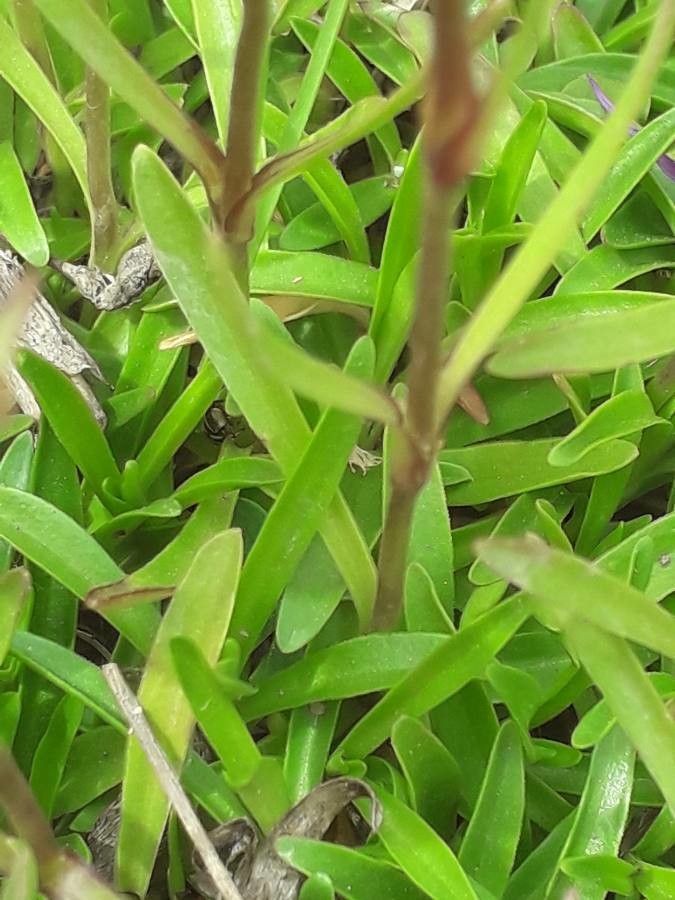
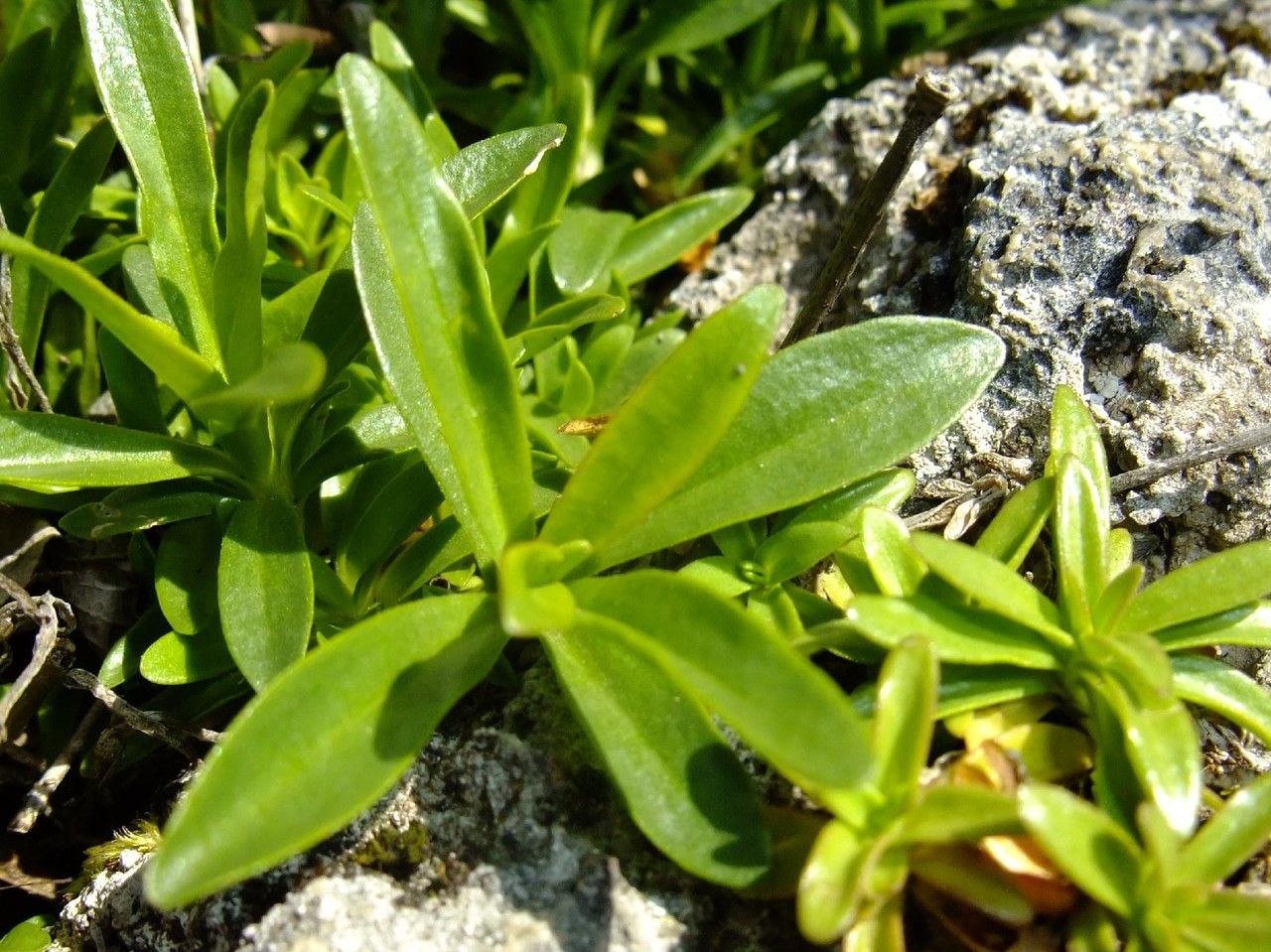
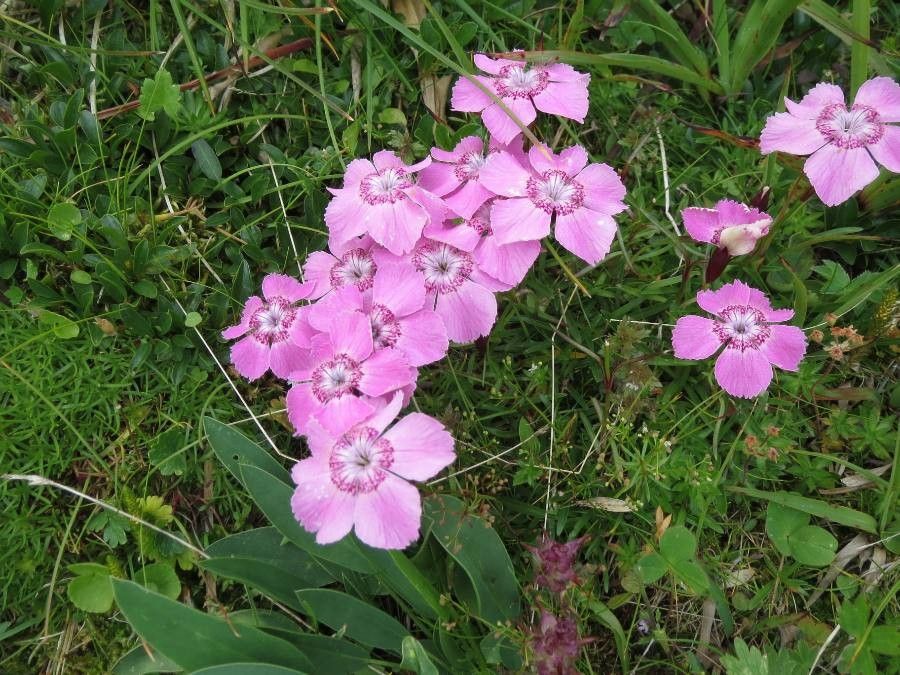
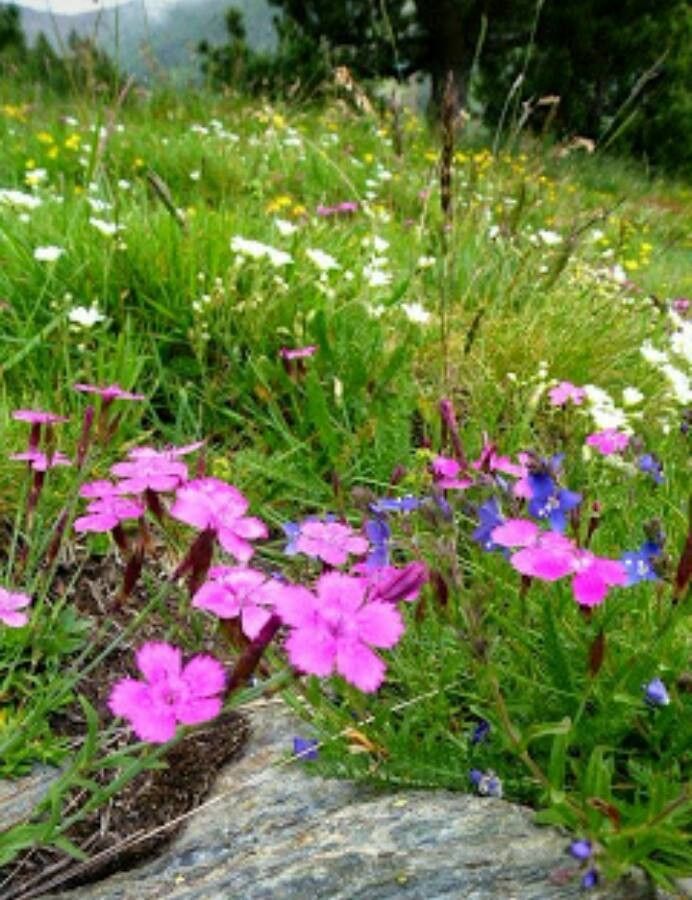
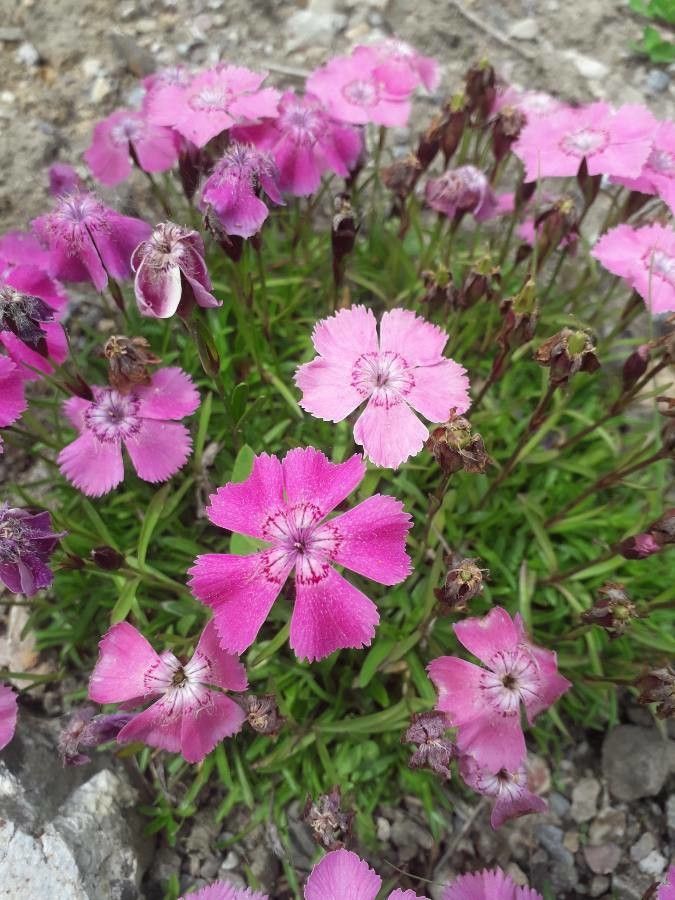
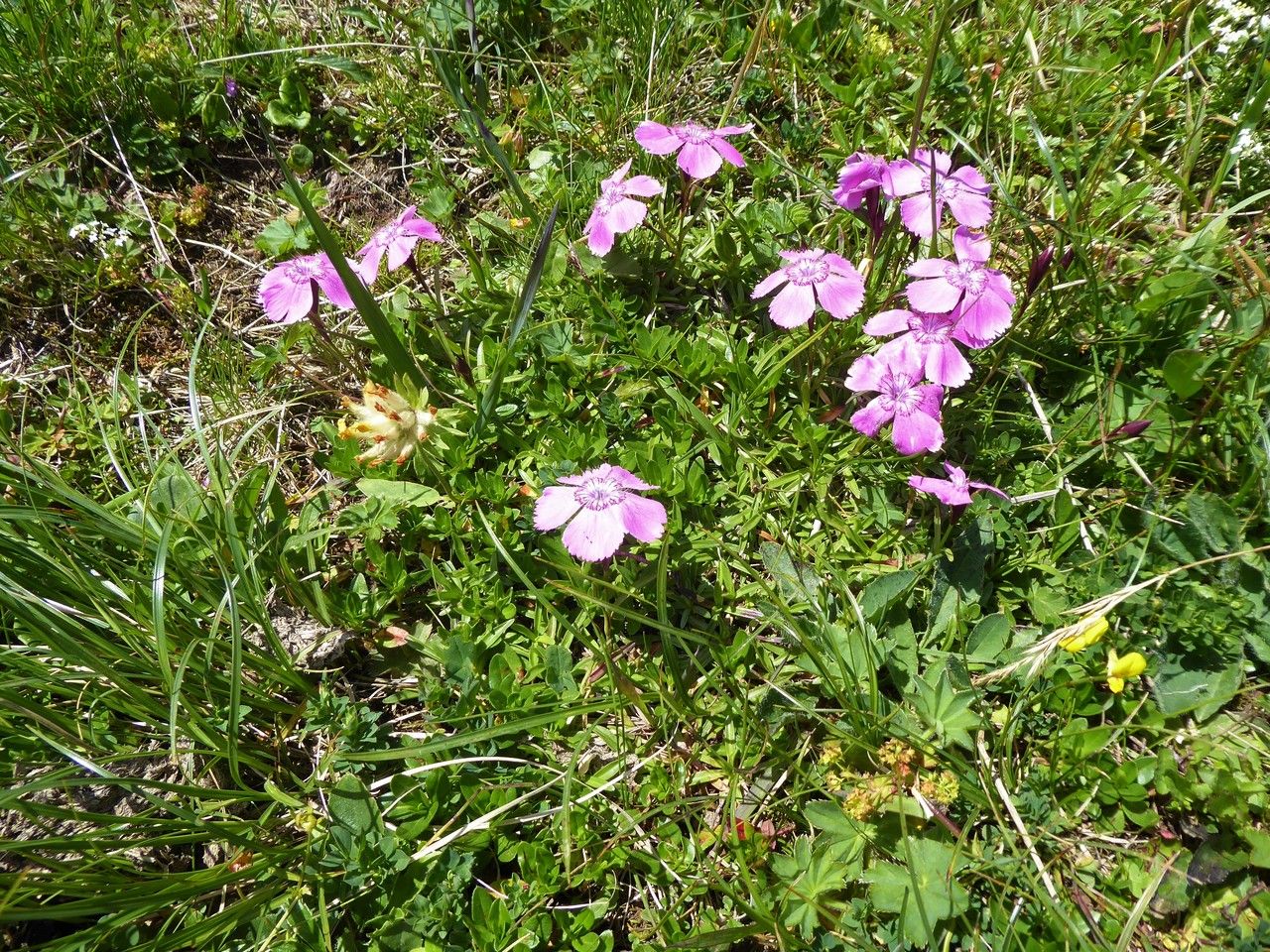
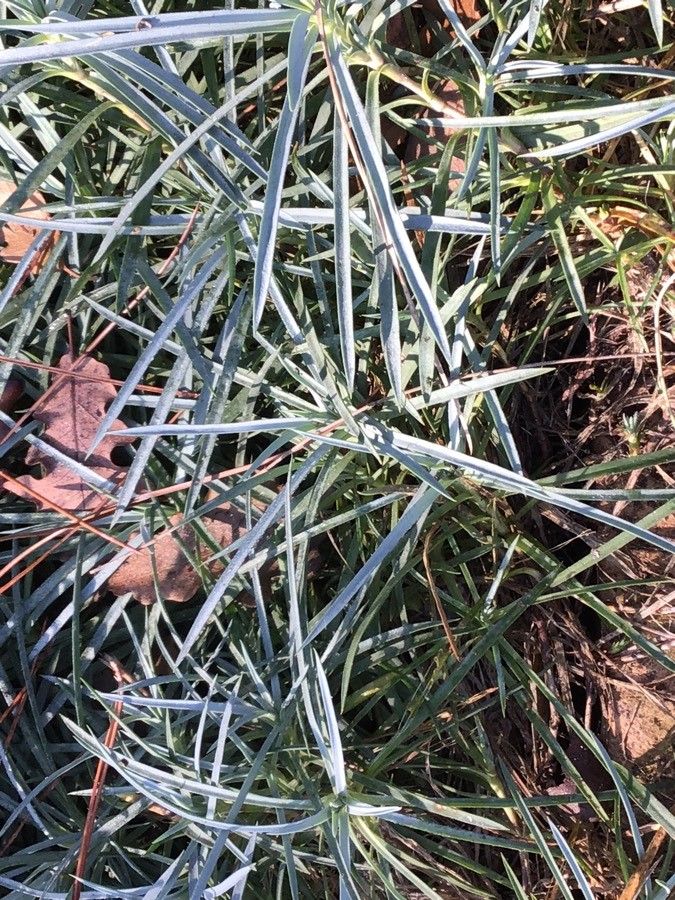
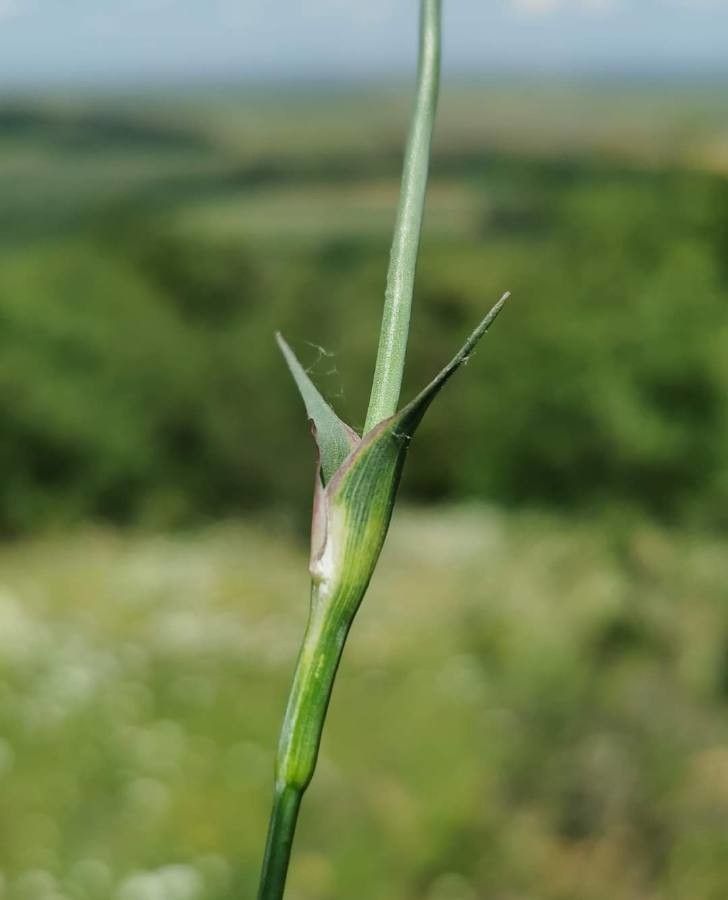
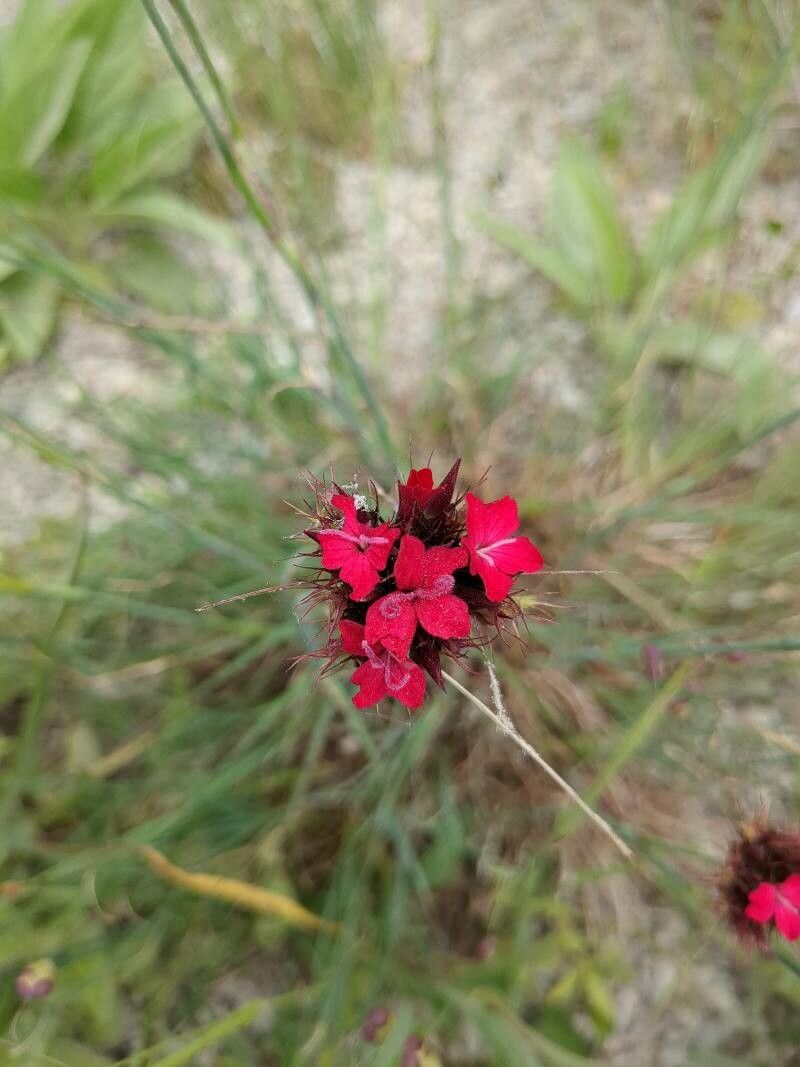
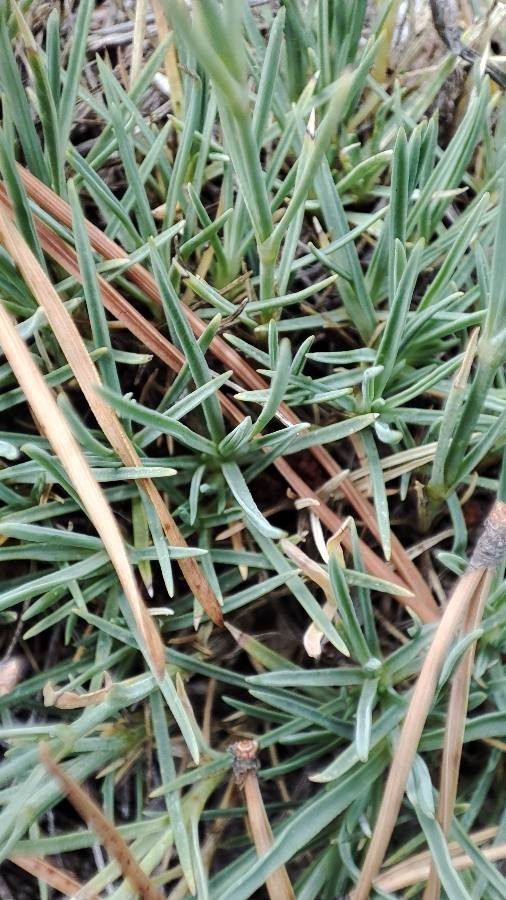
Dianthus alpinus, the alpine pink, is a species of flowering plant in the family Caryophyllaceae, endemic to the Alps of Eastern Austria. It is a short (2–10 cm high) mat-forming herbaceous perennial, with linear to lanceolate leaves, 15–25 mm long and 2–5 mm wide. The flowers are a deep cerise pink with white spots, appearing from June to August. A calcicole, the species is found in the north-eastern limestone Alps of Austria from the Totes Gebirge in the west to Semmering and the Schneeberg in the east. In cultivation in the UK. it has gained the Royal Horticultural Society's Award of Garden Merit. It requires a well-drained position in full sun, such as a rock garden. It may be short-lived in cultivation.
Alpine pink is fairly disease-resistant and usually not prone to illness. However, it can be vulnerable to pests and diseases present in its surroundings. These problems are typically not severe. Regarding care, this plant needs moderate maintenance. It should be pruned regularly to maintain a neat appearance and healthy growth. Fertilizing can also help encourage flowering. Alpine pink is appropriate for anyone with an outdoor area, such as a garden or patio, and does not require extensive care experience. It may need more attention if grown indoors.
How to keep Dianthus Alpinus.
Light
Alpine pink is a sun-loving perennial herbaceous plant that comes from open habitats, commonly growing in meadows and grasslands. It prefers full sun but can also tolerate partial sun.
Water
Alpine pink, which originates from mountainous regions, thrives with minimal watering and only needs hydration once a week. It prefers well-draining soil, similar to its natural alpine habitat. When planted outdoors in rock gardens, alpine pink benefits from cooler temperatures and natural rainfall, which support its growth without the need for excessive irrigation.
Fertilizer
The best time to fertilize an Alpine pink is early in spring, as it comes out of dormancy and begins active growth. Fertilizing supplies essential nutrients for healthy development. Although the Alpine pink needs relatively little fertilizer, applying it once a year can improve its survival and encourage better, longer-lasting flowers.
Pruning
Alpine pink is a low-growing perennial known for its pink flowers and grassy foliage. For best results, prune it from early to late spring to shape the plant and remove spent blooms. Regular deadheading will encourage more flowering and prevent the plant from self-seeding. Additionally, removing any damaged foliage will promote healthy growth and improve air circulation, which can help reduce the risk of disease.
Pot & Repot
Repot alpine pink every 2-3 years in early spring to keep it healthy. Choose a slightly larger container with well-draining soil, and water it moderately. Place the plant in a sunny spot and feed it occasionally to encourage optimal bloom recovery and growth. This care will ensure the vibrant growth of this compact, evergreen perennial.
Botanical profile.
- Plant Type
- Herb
- Life Cycle
- Perennial
- Genus
- Dianthus
- Family
- Caryophyllaceae
- Hardiness Zone
- 3-8
- Mature Height
- 10 cm
- Mature Spread
- 25 cm
- Leaf Color
- Green
- Leaf Type
- Evergreen
- Flower Color
- Pink, Red
- Flower Size
- 2.03 cm to 3.05 cm
- Bloom Time
- Late spring, Early summer, Mid summer
- Planting Time
- Spring, Summer
- Harvest Time
- Late summer, Early fall
- Native Area
- Slovenia, Austria, Italy
Other names.
Reader questions.
What are the sunlight requirements for Alpine Pink?
Alpine Pink (Dianthus alpinus) thrives in varying sunlight conditions. It requires full sun, which means it should receive above 6 hours of sunlight daily, to flourish properly. However, it can also tolerate partial sun, needing about 3-6 hours of sunlight. It's important to observe how sunlight moves through your garden throughout the day to find the ideal location that offers a perfect balance of light and shade for these plants, ensuring their growth and happiness.
What is the Alpine pink?
The Alpine pink, known botanically as Dianthus alpinus, is a plant species recognized for its distinctive characteristics and significance in the botanical world. Unfortunately, the provided data does not include information on its essentials, symptoms, or any additional details.
What warning is there for cultivating Alpine Pink in terms of sunlight?
When cultivating Alpine Pink (Dianthus alpinus), it's crucial to monitor the sunlight patterns in your garden. The warning to heed is to watch how sunlight gracefully shifts across your garden space and to select planting spots that ensure a harmonious balance of light and shade. This careful selection is key to guaranteeing the well-being and flourishing of your Alpine Pinks by meeting their sunlight needs accurately.