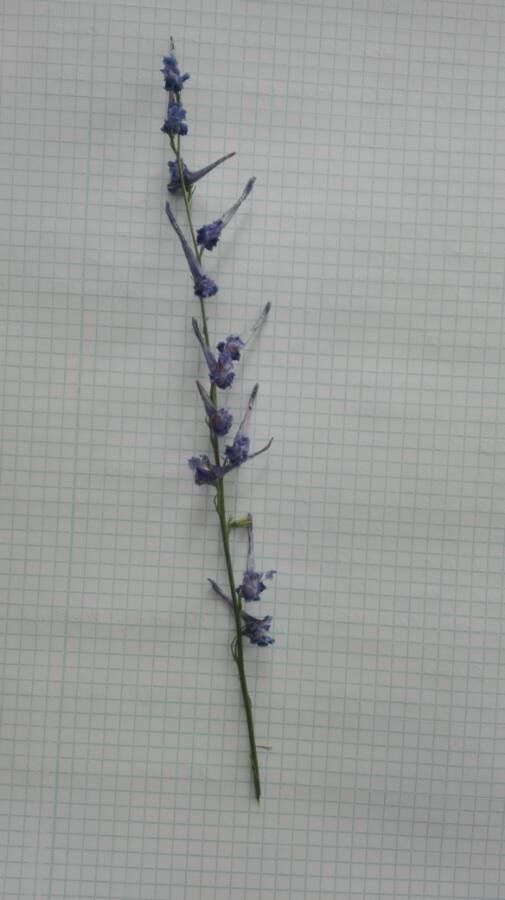
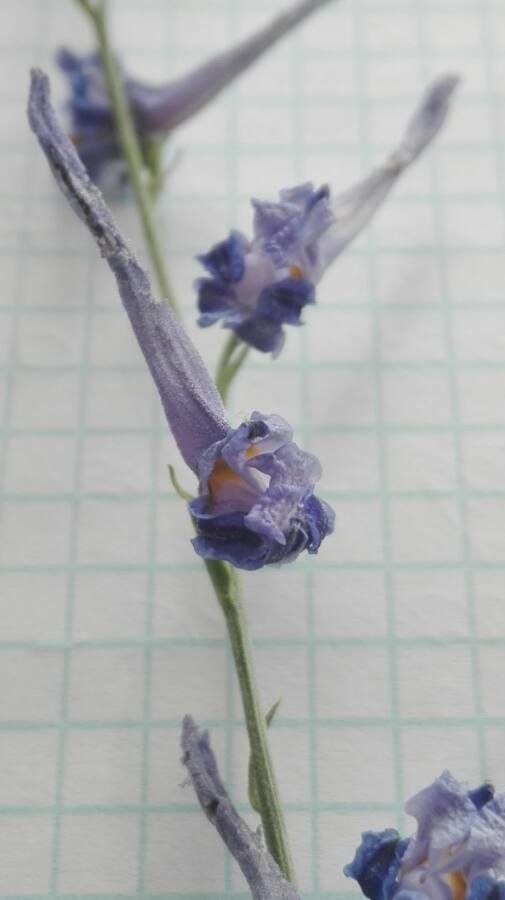
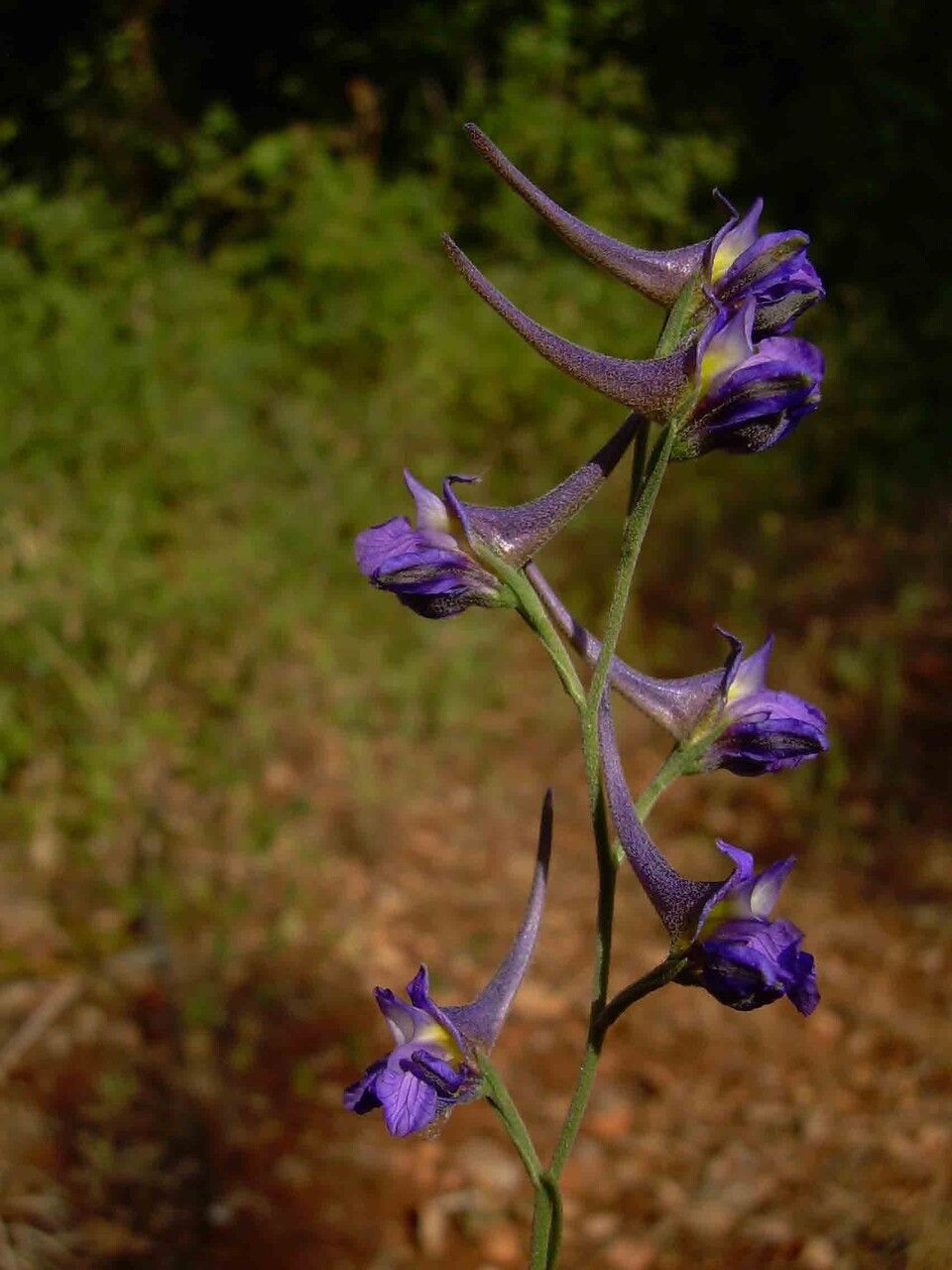
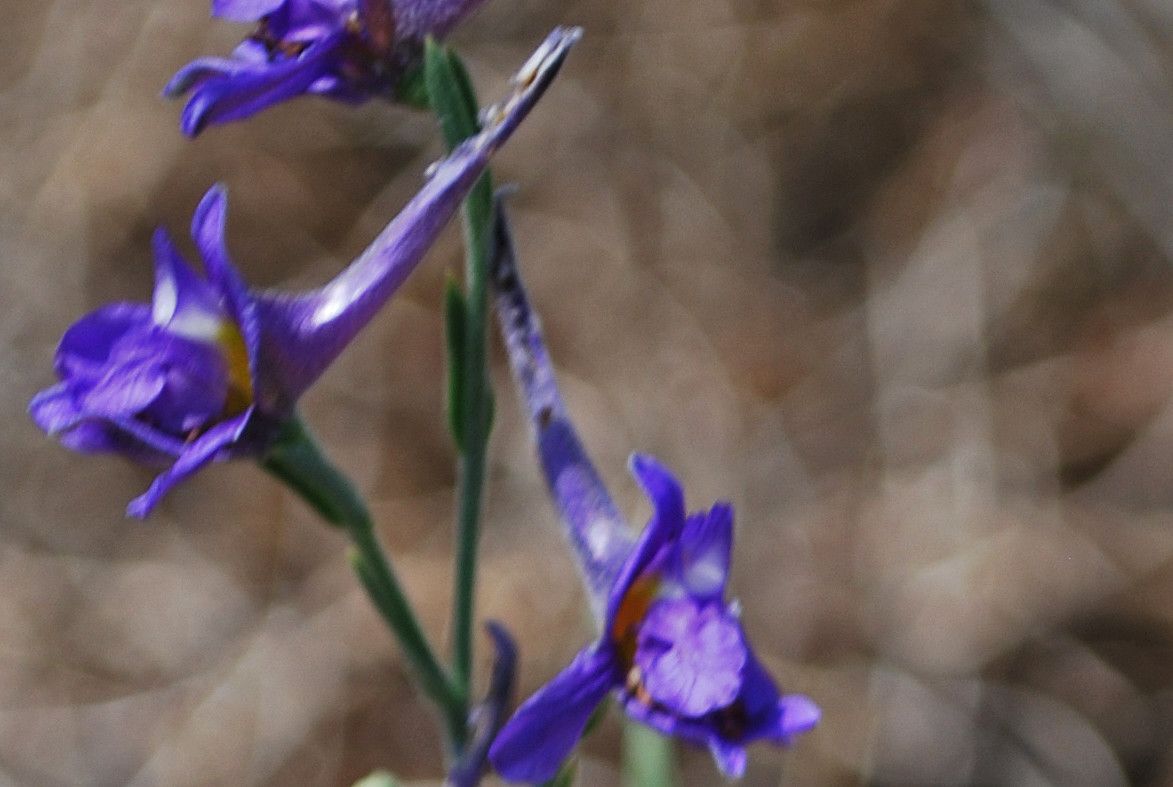
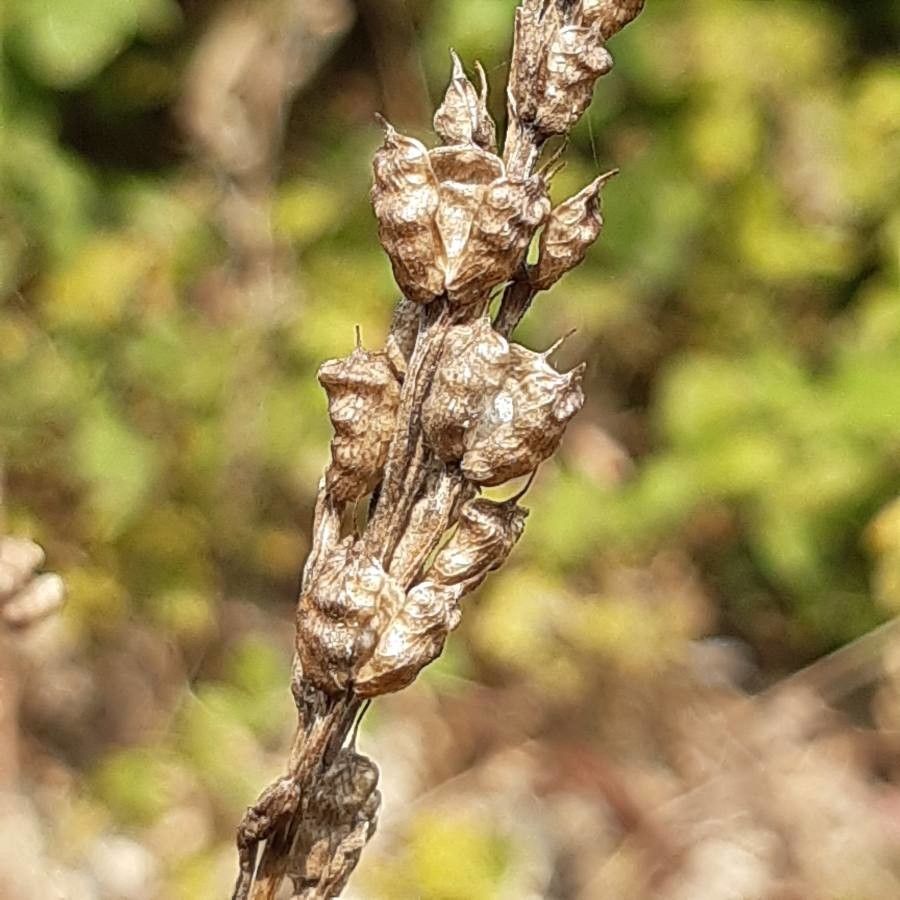
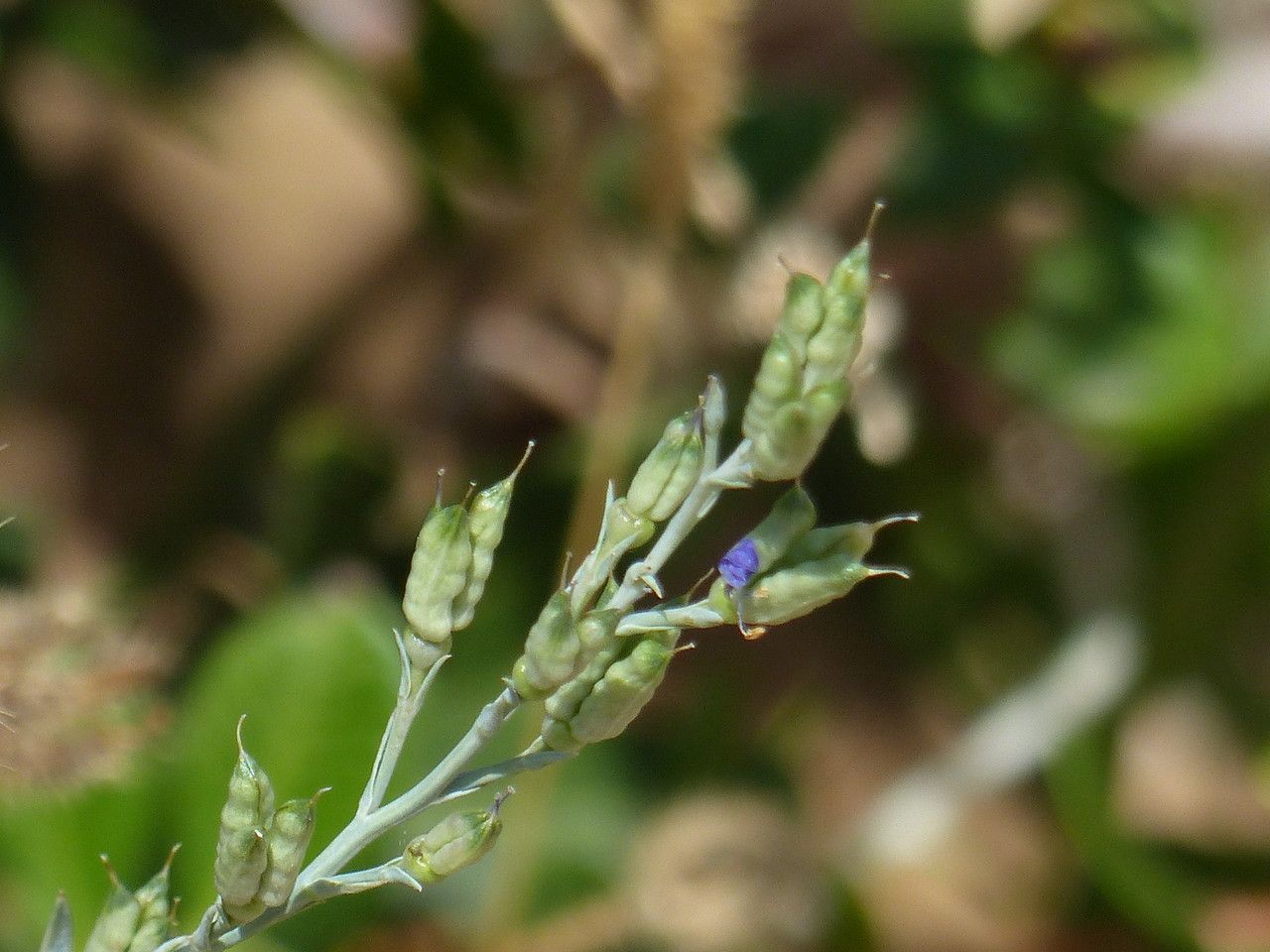
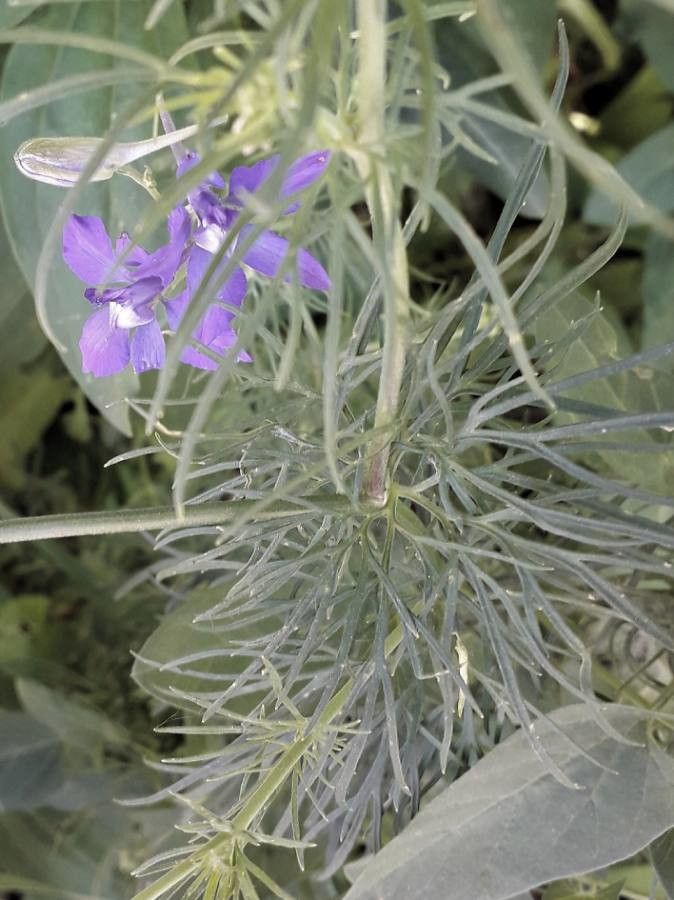
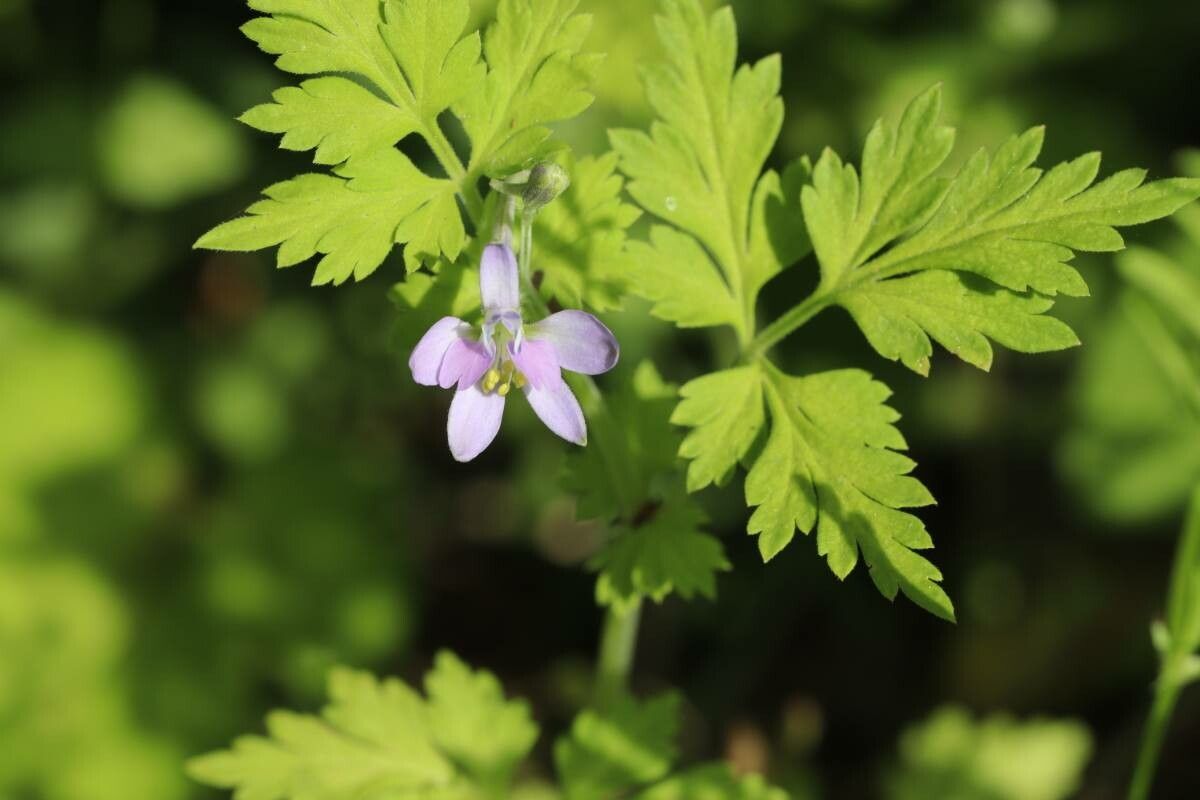
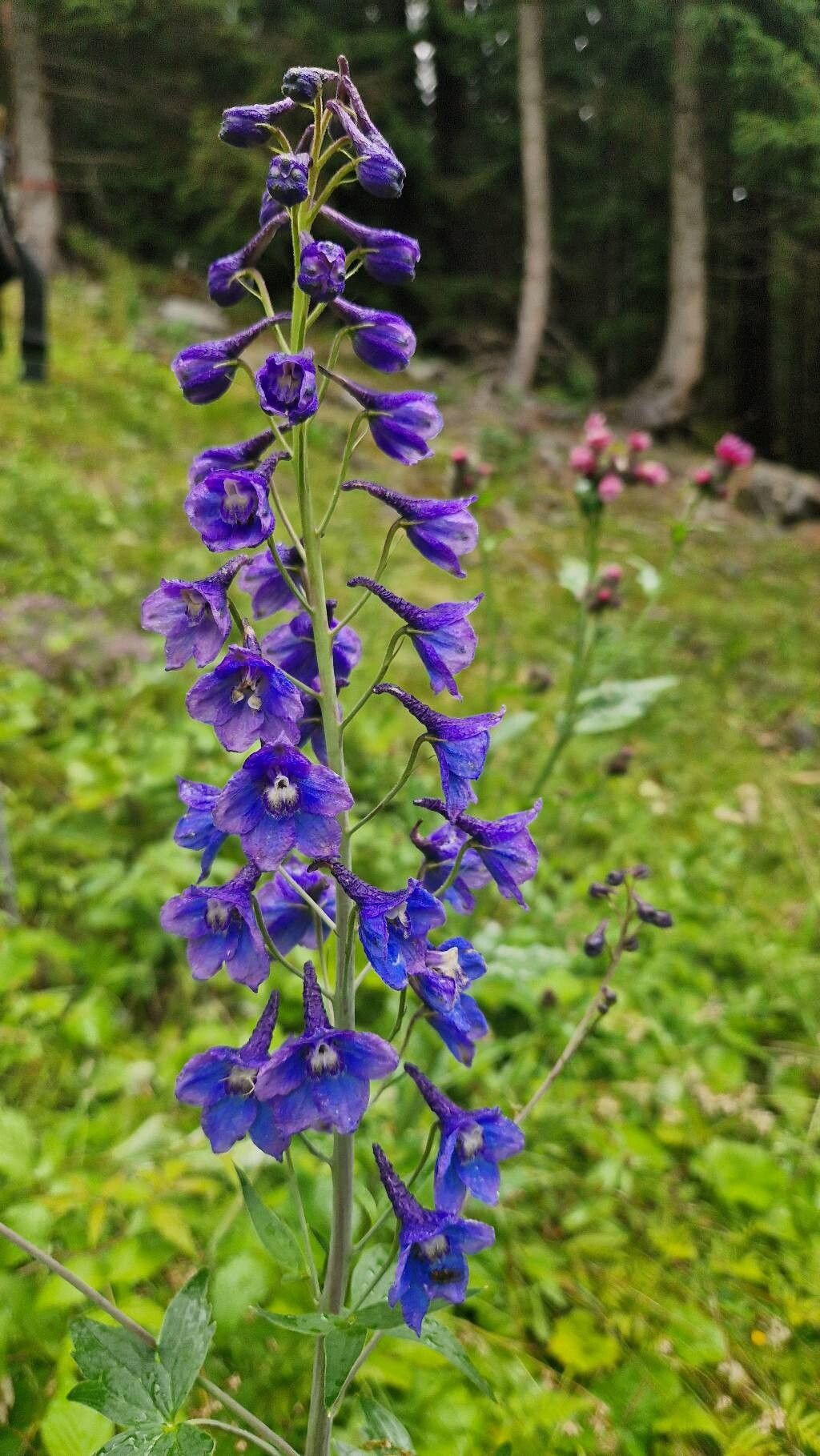
Delphinium peregrinum, also commonly known as violet larkspur, is a Eurasian flowering plant, belonging to the genus Delphinium, endemic to Turkey, the Eastern Mediterranean and Western Irano-Turanian region, bearing an erect, annual stem with glabrous compound leaves and reaching a height of 27–35 cm. The plant, which blossoms between April and August, bears five colorful sepals (calyx), petaloid, the posterior sepal spurred, the two lateral sepals and the two lower sepals without spurs; while the anterior sepals can either be fused or separated. The inflorescence (corollas) are sparsely arranged, irregular, and are borne on long pedicels subtended by bracts. The plant is readily recognized by its deep purple to lavender-coloured flowers which resemble scorpion tails (scorpioid). Flowers are pollinated by bumblebees.
Violet larkspur has strong resistance to disease and typically does not suffer from illnesses. Nonetheless, it can be affected by pests and diseases found in its environment. These problems are generally mild. Regarding care, this plant needs a moderate level of maintenance. It should be pruned regularly to preserve a neat appearance and encourage healthy growth. Applying fertilizer can also help boost flowering. Violet larkspur is suitable for anyone who has an outdoor area, such as a garden or patio, and does not demand extensive plant-care experience. It may need additional attention if grown indoors.
How to keep Delphinium Peregrinum.
Light
Violet larkspur is a perennial herb that prefers sunny locations and comes from open habitats, frequently flourishing in meadows and grasslands. It favors full sun exposure but can also tolerate partial sun conditions.
Water
The violet larkspur comes from areas with moderate rainfall and needs balanced moisture to grow well. Although it is drought-tolerant, it thrives with regular weekly watering. This plant does best outdoors, where it can take advantage of natural rainfall, especially during its active growth periods when consistent water supply is essential.
Temperature
Violet larkspur can tolerate a wide range of temperatures, but its range may still be restricted by various combinations of moisture and heat. It does best in warm summer climates when it receives adequate rainfall or watering. Extended periods of cloudy, rainy weather or prolonged high temperatures increase the chance of Violet larkspur dying. In winter, appropriate protection from cold can enhance the plant's survival rate.
Fertilizer
Early spring, as the Violet larkspur emerges from dormancy and begins active growth, is the best time to fertilize. Fertilization supplies essential nutrients for healthy growth. While Violet larkspur has relatively low fertilizer requirements, feeding it once a year can improve its survival and encourage better, longer-lasting flowers.
Pruning
Violet larkspur benefits from regular pruning, which includes removing deadheads and thinning out crowded stems. This is best done from early to late spring. Such practices improve growth and air circulation, reduce the risk of disease, and encourage vibrant blooms. For detailed techniques, consult reputable horticultural sources.
Botanical profile.
- Plant Type
- Herb
- Life Cycle
- Perennial
- Genus
- Delphinium
- Family
- Ranunculaceae
- Hardiness Zone
- 4-8
- Mature Height
- 30 cm to 76 cm
- Mature Spread
- 20 cm to 40 cm
- Leaf Color
- Dark Green
- Leaf Type
- Semi-evergreen
- Flower Color
- Blue, Purple
- Flower Size
- 2.03 cm to 3.05 cm
- Bloom Time
- Summer
- Planting Time
- Spring, Summer
- Harvest Time
- Late summer, Early fall, Mid fall
- Native Area
- Iraq, Turkey, Syria, Italy, Montenegro, Iran, Cyprus, Bulgaria, Greece, Croatia, Albania, Lebanon
Other names.