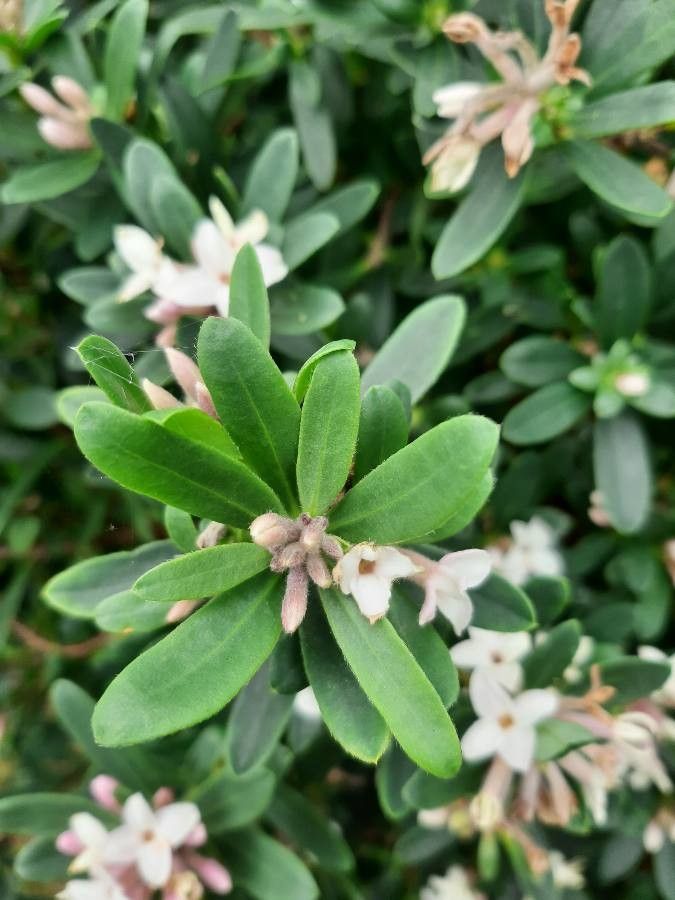
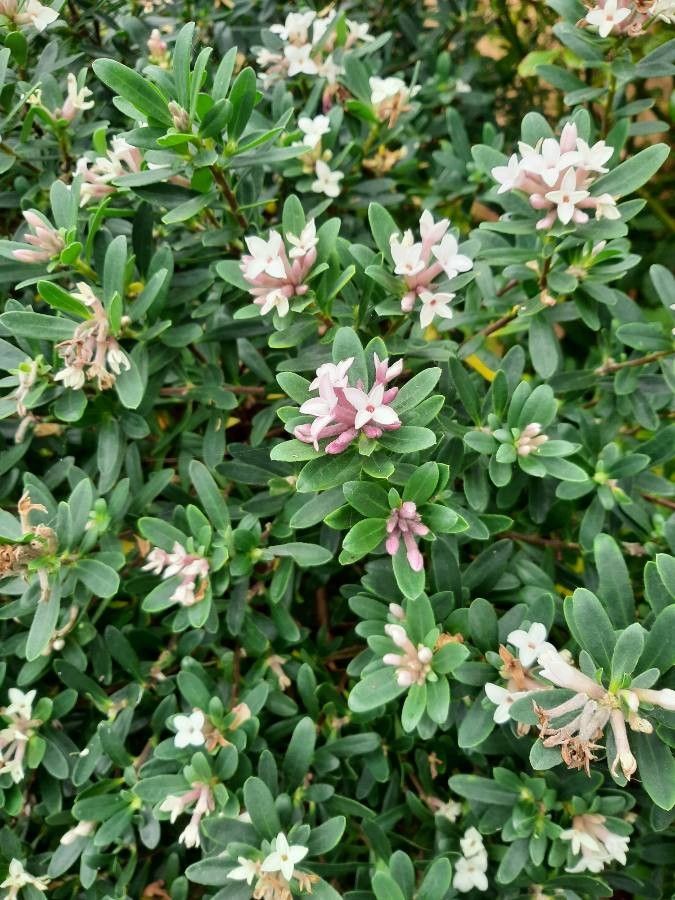
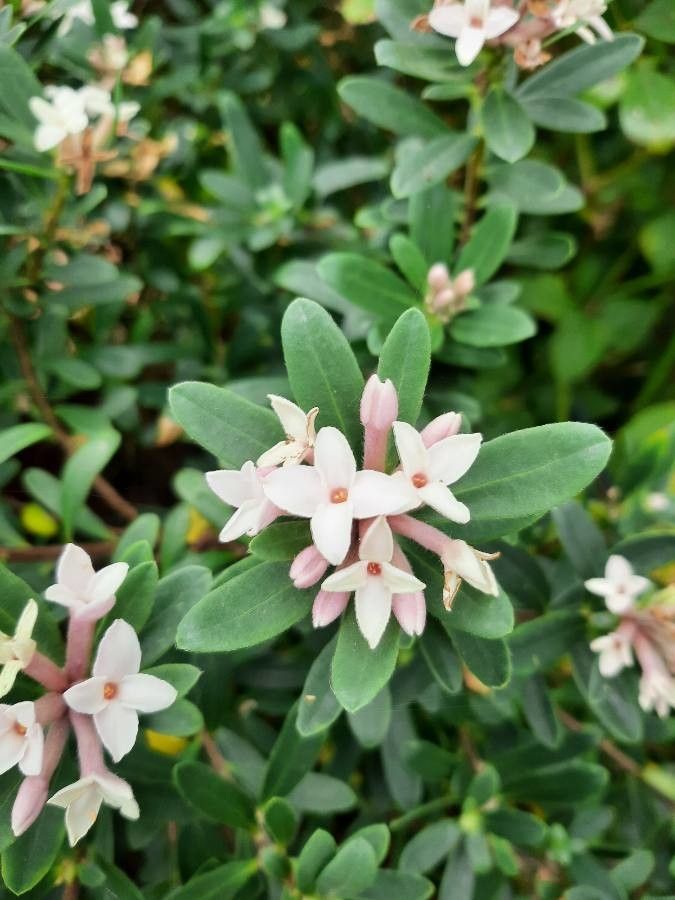
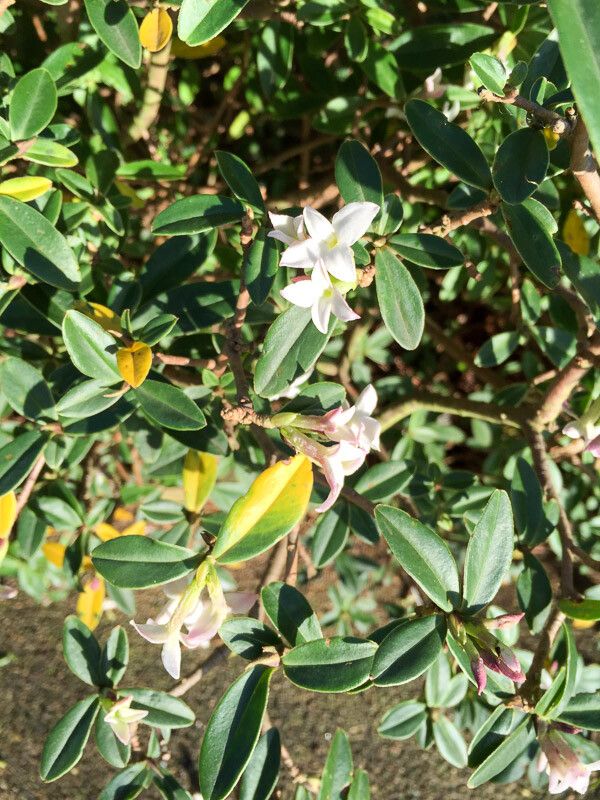
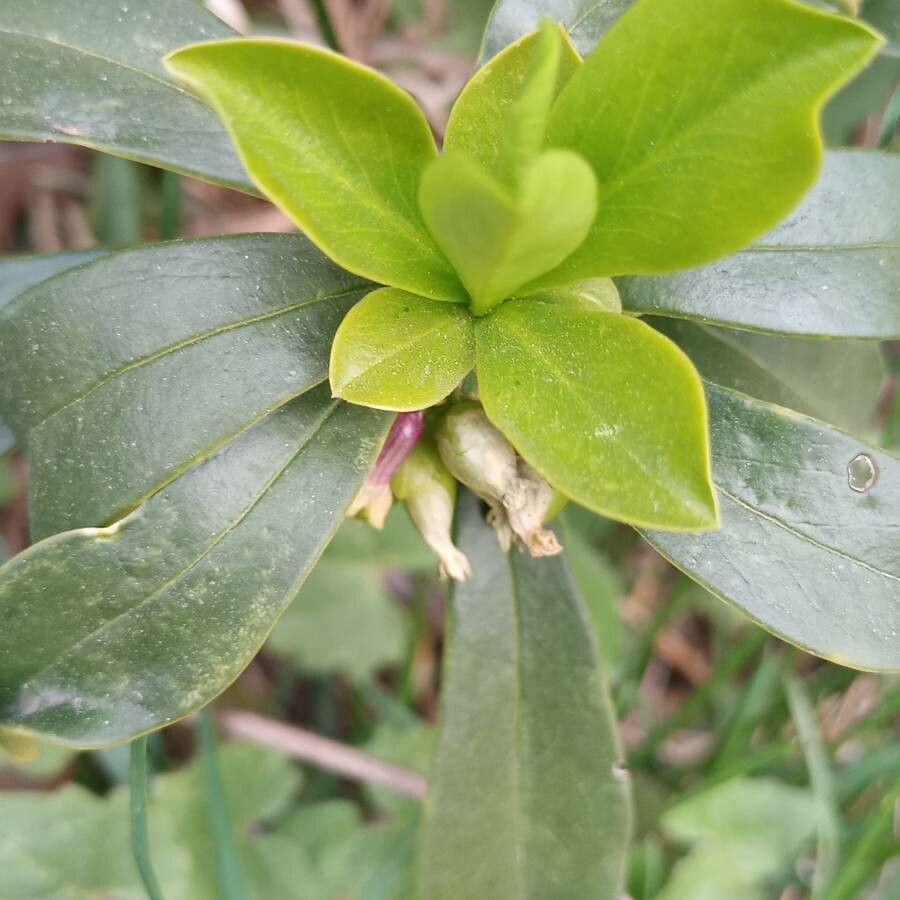
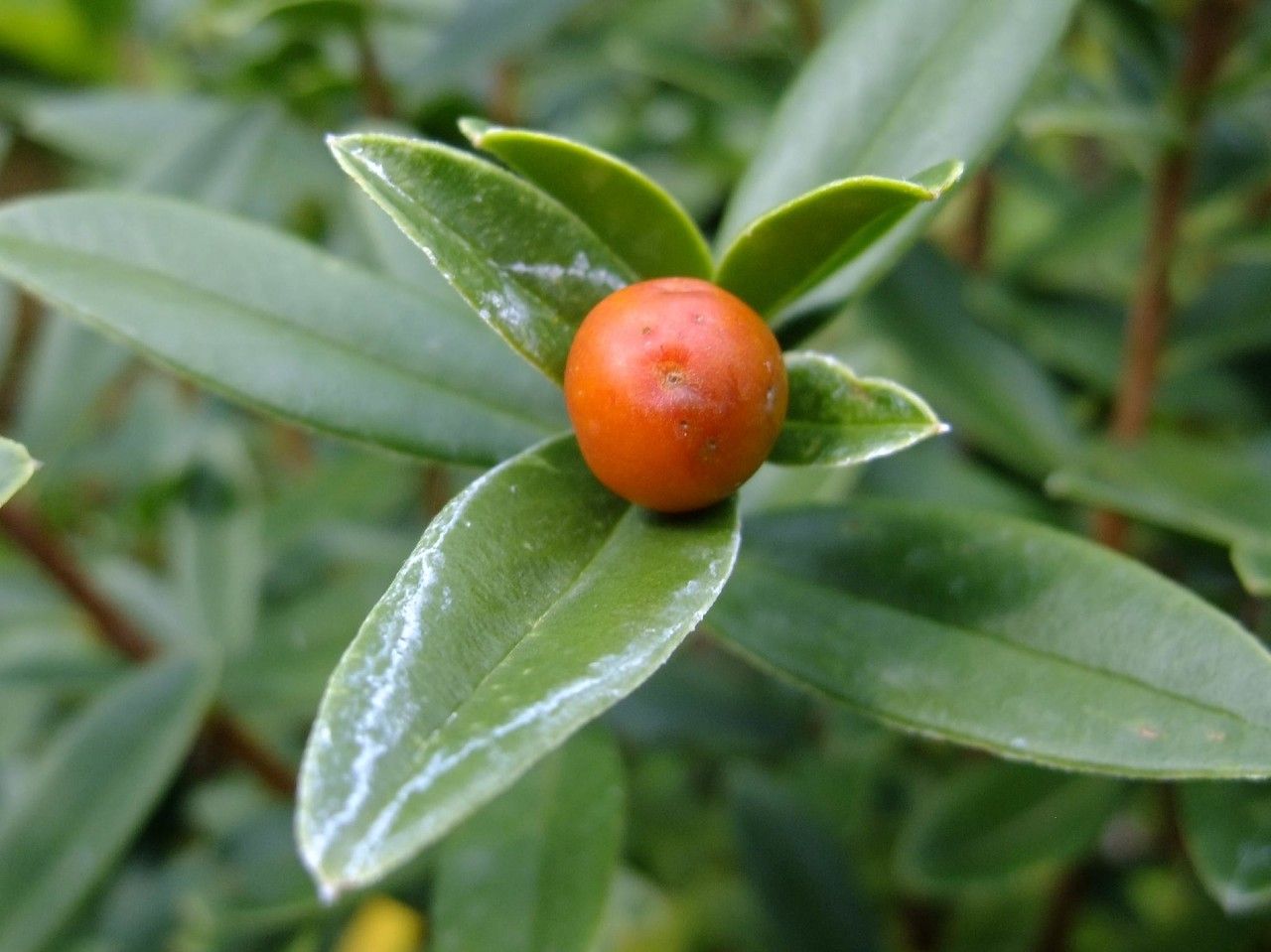
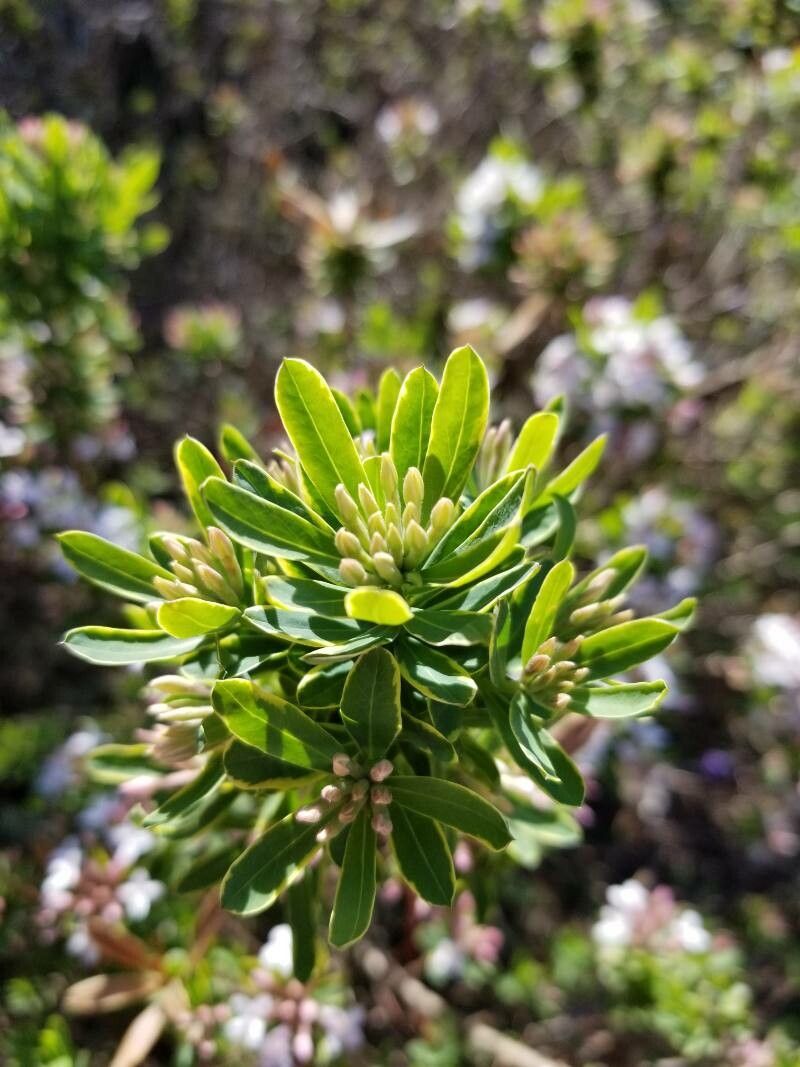
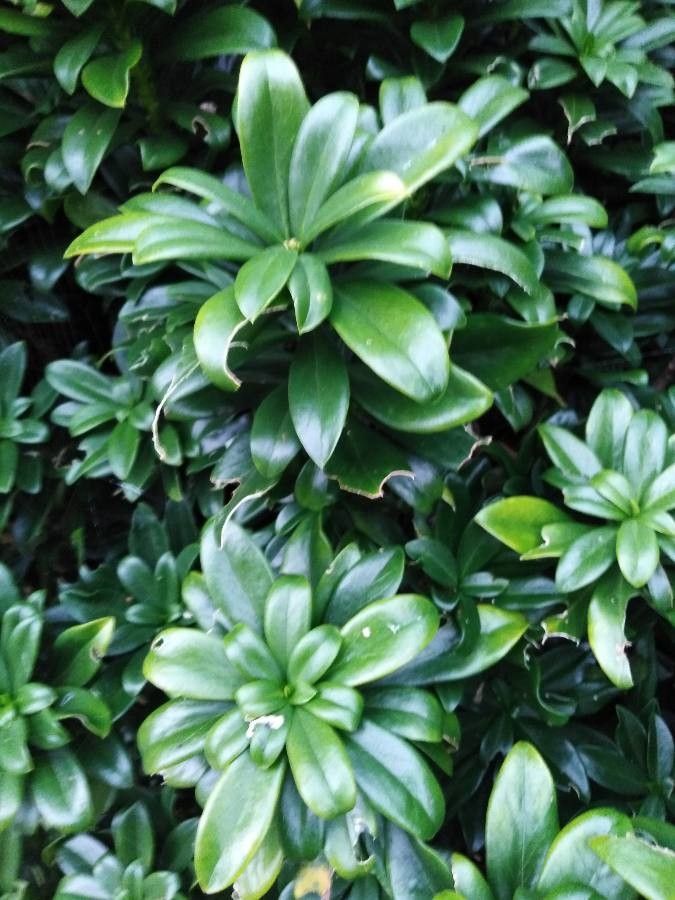
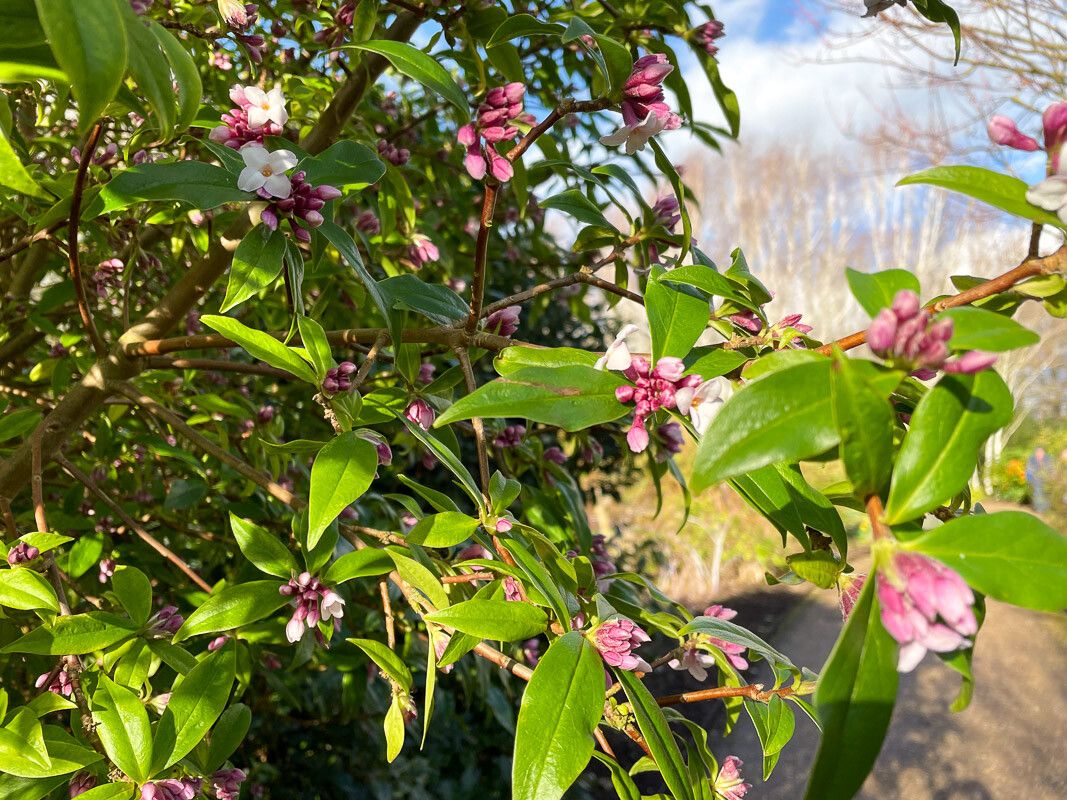
Daphne tangutica, syn. Daphne retusa, is a species of flowering plant in the family Thymelaeaceae, native to Tibet, China, and possibly Taiwan. It is an evergreen shrub growing to 1 m (3 ft 3 in) tall and wide, with leathery leaves and clusters of fragrant white and pink flowers in spring. The flowers are often followed by red berries. It grows in forests.The Latin specific epithet tangutica refers to an historical tribe in what is now north western China, but has become a synonym for Tibet, part of the plant's native range.This plant has gained the Royal Horticultural Society's Award of Garden Merit, as has D. tangutica Retusa Group.
Tangut daphne has strong resistance to disease and is generally not susceptible to illnesses. As for care, this plant is fairly low-maintenance. When grown outdoors it needs little watering, and larger specimens typically do not require pruning. Smaller plants, however, should be pruned after they finish blooming. Tangut daphnet is suitable for anyone with an outdoor area, such as a garden or deck, and does not demand much gardening experience.
How to keep Daphne Tangutica.
Light
Tangut daphne prefers locations that receive abundant sunlight throughout the day, though it can also grow well in areas with partial shade. Its native habitats showed the same conditions. Excessive shade can restrict growth, while prolonged exposure to intense sun can cause damage.
Water
Tangut daphne flourishes in mountainous areas, where it can adapt to low moisture conditions. It prefers moderate humidity and has a decent level of drought tolerance. Water the plant once every 2 to 3 weeks, ensuring the soil dries out between waterings. Although typically cultivated outdoors, tangut daphne benefits from mulching during its active growing season to help retain moisture.
Temperature
Tangut daphne is native to temperature climates and prefers temperatures between 41 and 95 °F (5 to 35 ℃). It is adaptable but may need some temperature adjustments throughout the year to mimic its native climate.
Fertilizer
Timing is important when fertilizing Tangut daphne. Apply fertilizer in early spring and repeat monthly through early summer. Fertilizer encourages attractive blooms and supplies energy both during dormancy and in periods of active growth.
Pruning
Tangut Daphne is known for its delicate, fragrant flowers and dense foliage. To keep it healthy and shapely, prune it in late spring after it has finished flowering. This encourages growth and helps maintain its form. Be sure to remove any dead wood and thin out crowded branches to improve air circulation. However, be cautious not to over-prune, as this can weaken the plant and affect its appearance and blooming in future seasons.
Botanical profile.
- Plant Type
- Shrub
- Life Cycle
- Perennial
- Genus
- Daphne
- Family
- Thymelaeaceae
- Hardiness Zone
- 5-9
- Mature Height
- 91 cm
- Mature Spread
- 91 cm
- Leaf Color
- Green
- Leaf Type
- Evergreen
- Flower Color
- Pink, White
- Flower Size
- 2.54 cm
- Bloom Time
- Early spring, Mid spring
- Planting Time
- Spring, Autumn
- Harvest Time
- Early summer, Mid summer
- Native Area
- China
Other names.
Reader questions.
How should I water my Tangut daphne plant?
You can water your Tangut daphne using any common watering tool, such as a watering can, hose, or even a cup. Just make sure to apply the water directly to the soil, ensuring equal moisture throughout to nourish the entire root system. Filtering tap water is helpful to avoid harmful particles, and using water at or slightly above room temperature is ideal to prevent shocking the plant. However, the Tangut daphne generally thrives with any kind of water you provide.
Why do I have to put fertilizer on my Tangut daphne plant?
Fertilizing a Tangut daphne is important for several reasons. Firstly, it helps the plant produce beautiful blooms. To ensure excellent flowers during spring, it is best to fertilize in early spring. Additionally, fertilizer provides the plant with energy that it can store during dormant growth phases. By giving the plant extra nutrients in the fall planting process or late spring, it can store more energy to use when active growth resumes.
How many hours of sunlight should Tangut daphne get each day to grow well?
To ensure healthy growth, Tangut daphne needs a minimum of 3-6 hours of sun each day. Most plants that can tolerate part sun can also do well in full sun. However, Tangut daphne is more adaptable since it requires less light for photosynthesis compared to plants that need either full sun or part shade.
What is the indigenous climate of Tangut daphne?
Tangut daphne, or Daphne tangutica, is indigenous to temperate climates and thrives in a temperature range of 41 to 95°F (5 to 35°C). It can adapt to various conditions but may require some adjustments throughout the year to closely mimic its native climate. The plant possesses strong cold resistance, usually obviating the need for special frost protection measures during winter. However, in conditions where winter temperatures are expected to plummet below -25°C, it becomes crucial to protect the plant by wrapping the trunk and branches with non-woven fabric or cloth. Additionally, to shield against winter drought and water scarcity, it's recommended to water the plant abundantly before the first freeze in autumn, ensuring the soil is moist as it enters a frozen state.
What should I do if I give my Tangut daphne too much water or not enough water?
Outdoor plants, especially new ones or seedlings, are prone to not getting enough water. Make sure you water them consistently for a few months when they are small or newly planted. Once their roots are established, Tangut daphne plants can rely on rainfall most of the time. When Tangut daphne plants are in pots, overwatering is more likely. If you accidentally overwater them, take immediate action to fix the problem. Stop watering the plant right away to minimize the impact of overwatering. Then, remove the plant from its pot and inspect the roots. If there is no root rot, you can put the plant back in its container. But if there are signs of root rot, trim the affected roots and consider applying fungicide to prevent further damage. Finally, repot the Tangut daphne using well-draining soil. In the case of underwatering, simply water the Tangut daphne plant more frequently. This is an easy fix as the leaves will droop, dry out, and fall off when the plant is underwatered. They will quickly return to fullness after sufficient watering. Remember to adjust your watering frequency promptly when you notice the plant is being underwatered.
When should I fertilize my Tangut daphne plant?
When fertilizing Tangut daphne, it's important to time it right. Applying fertilizer too early, while the plant is still dormant, is ineffective and can be washed away by rainwater, leading to waste and pollution. To ensure proper fertilization, the first application should be done in early spring and then continue monthly until early summer.
What kind of sunlight does Tangut daphne need?
Tangut daphne thrives in full or partial sun. It prefers direct morning light, although it should be shielded from the intense afternoon sun during summer. Excessive afternoon sun in temperate areas can scorch the leaves, leading to an unsightly and unhealthy plant.
How does Tangut daphne handle low temperatures?
Tangut daphne is noted for its cold tolerance, prospering most when temperatures remain above 5°C. Despite this resilience, winter temperatures should ideally stay above -20°C. If temperatures dip below -25°C, you might not notice immediate changes during winter; however, by spring, it becomes evident as the branches might turn brittle, dry, and fail to sprout new shoots. To mitigate this, it's advisable to prune any dead branches that have not produced new leaves in the spring, supporting the plant in its recovery and new growth.
How frequently should I water my Tangut daphne plant?
To properly care for outdoor plants, it usually suffices to rely on natural rainfall. However, in areas with limited rainfall, it is important to provide adequate watering every two weeks in the spring and fall. Summer months may require more frequent watering, while in the slower-growing winter months, watering should be reduced. In fact, during winter, additional watering may not be necessary at all. If you have recently planted a young Tangut daphne, more frequent watering is recommended to help it establish and become more adaptable to drought conditions. For potted plants, there are two main approaches to determine watering frequency for Tangut daphne. The first option is to follow a set watering schedule, typically once a week or once every other week. However, this method may not consider the specific growing environment of your Tangut daphne. Alternatively, you can monitor soil moisture and water accordingly. Ideally, wait until the top two to four inches of soil (about one-third to one-half depth of the pots) have completely dried out before watering again. Please note that during the summertime, when the plant's water needs are highest, a predetermined watering schedule may not be sufficient.
When is it best to not put fertilizer on my Tangut daphne?
To avoid excessive leaf growth without many blooms, it is best to avoid fertilizers with high levels of nitrogen for Tangut daphne. Look for fertilizers that have a lower nitrogen content compared to other nutrients. Additionally, refrain from fertilizing after early autumn, as it can lead to excess growth right before winter. Avoid fertilizing during hot and dry times, as dry soil does not effectively deliver fertilizer and can stimulate growth that requires more water. It is advisable to fertilize earlier in the season when temperatures are cooler. Lastly, be cautious about inadvertently doubling the fertilizer dose for Tangut daphne, as it can also absorb fertilizer from nearby plants or lawns.
Can the sun harm Tangut daphne? How can I keep Tangut daphne safe from sunlight and overheating?
When moving Tangut daphne plants from indoors to outdoors, it is important to be cautious about direct sunlight as it can cause damage. To prevent sunburn, it is advised to gradually transition the pots from a shaded area to a brighter spot. However, even if the plants are accustomed to the summer sun, extreme heat can still harm them. In such cases, it is crucial to keep the soil consistently moist to help the plants cope with excessive heat levels. In the event of a heatwave, it is recommended to either move the potted plants to areas with afternoon shade or use a shade cloth to protect the sensitive Tangut daphne from extreme weather conditions.
How does Tangut daphne fare in high temperatures?
During the warmer months, it's best to keep the Tangut daphne's surrounding temperature below 35°C. Exposing the plant to temperatures above 38°C may result in lighter-colored leaves, with the tips turning dry and withered, and makes the plant more susceptible to sunburn. To help the plant cope, trim away the sunburned and dried-up parts. Moving the plant to a shaded area or using a shade cloth can protect it from the harsh midday and afternoon sun. Ensuring the soil remains moist by watering in the morning and evening can also help in preventing heat stress.